Decompression Illness Recognition and Initial Treatment Michelle Arnesen
- Slides: 38
Decompression Illness: Recognition and Initial Treatment Michelle Arnesen, PA-C
Decompression Illness �Arterial gas embolism (AGE) �Decompression sickness (DCS or “the bends”)
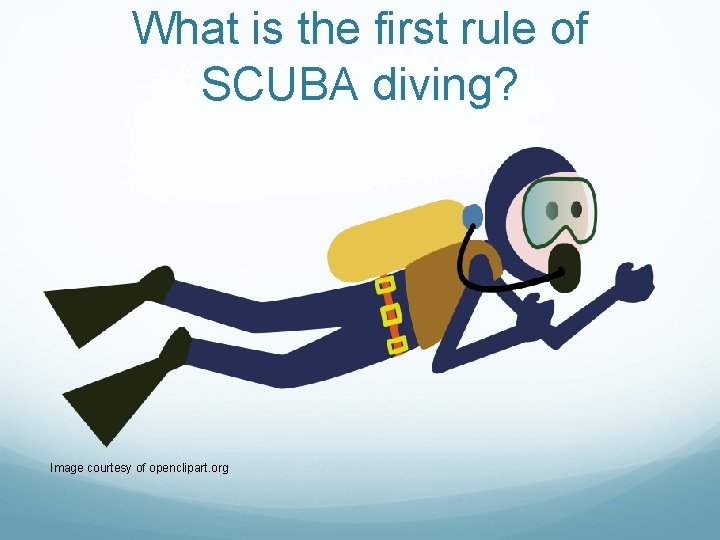
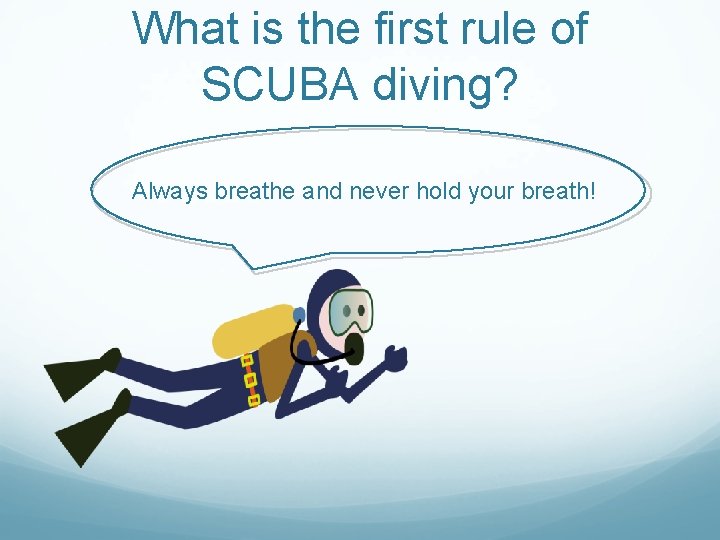
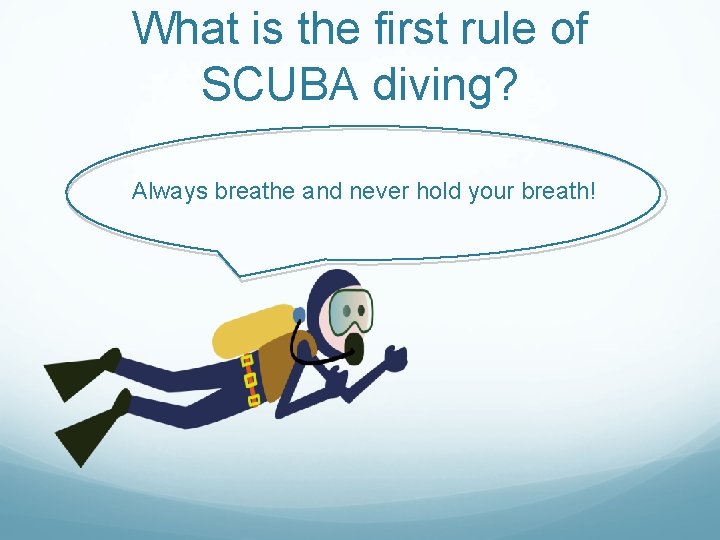
What is the first rule of SCUBA diving? Image courtesy of openclipart. org
What is the first rule of SCUBA diving? Always breathe and never hold your breath!
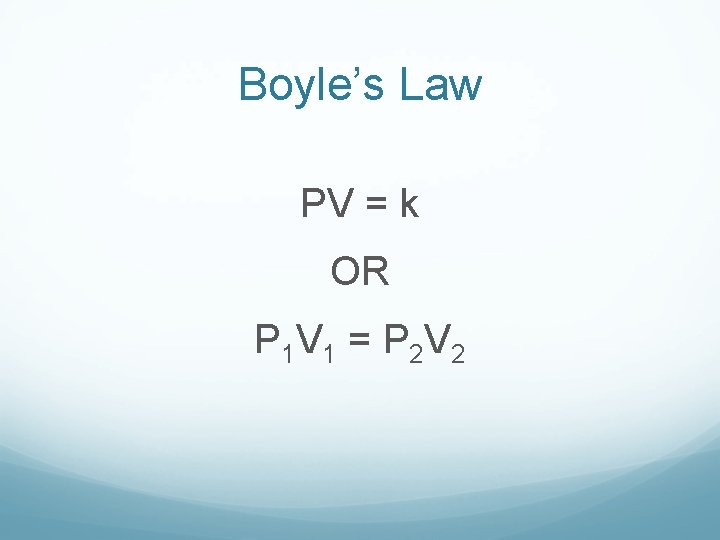
Boyle’s Law PV = k OR P 1 V 1 = P 2 V 2
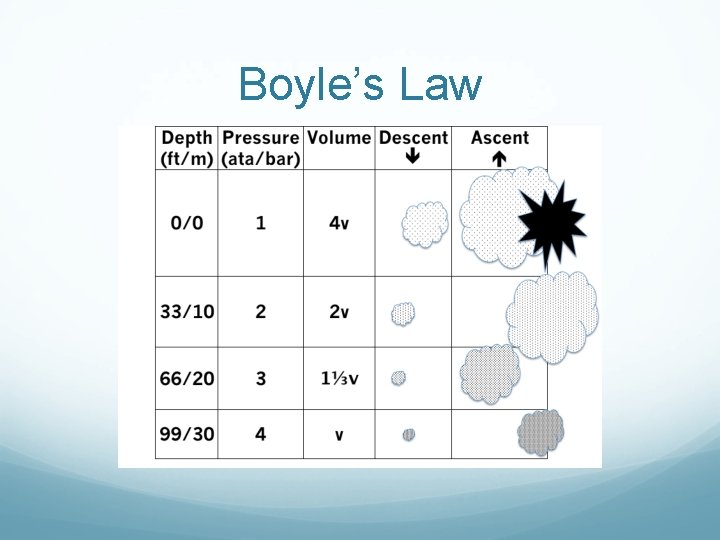
Boyle’s Law
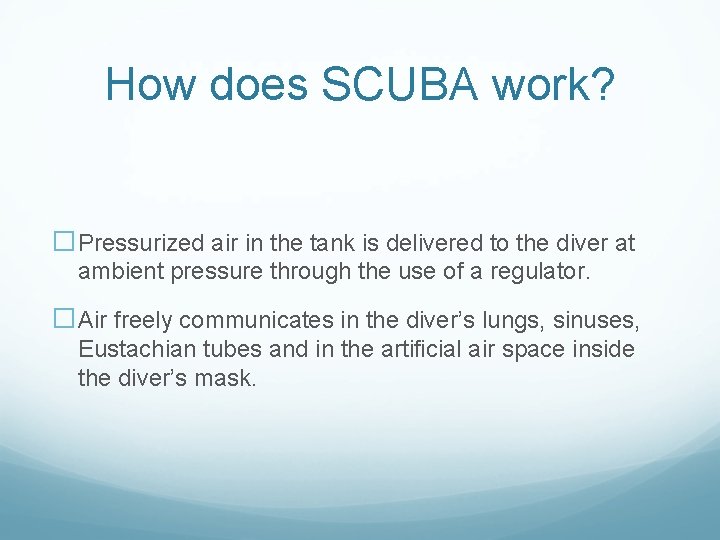
How does SCUBA work? �Pressurized air in the tank is delivered to the diver at ambient pressure through the use of a regulator. �Air freely communicates in the diver’s lungs, sinuses, Eustachian tubes and in the artificial air space inside the diver’s mask.
How does SCUBA work? �The diver must perform a Valsalva maneuver every few feet during descent to equalize the air pressure in all of these spaces. �A slow ascent with continuous breathing generally ensures that the air spaces will be able to equalize naturally.
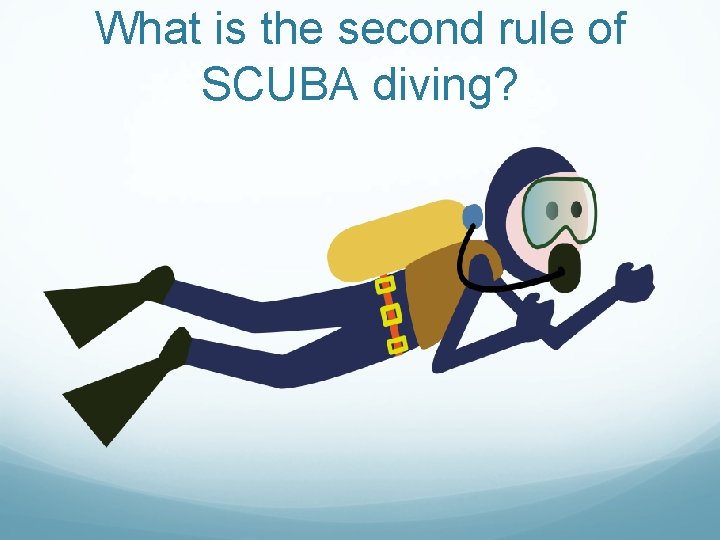
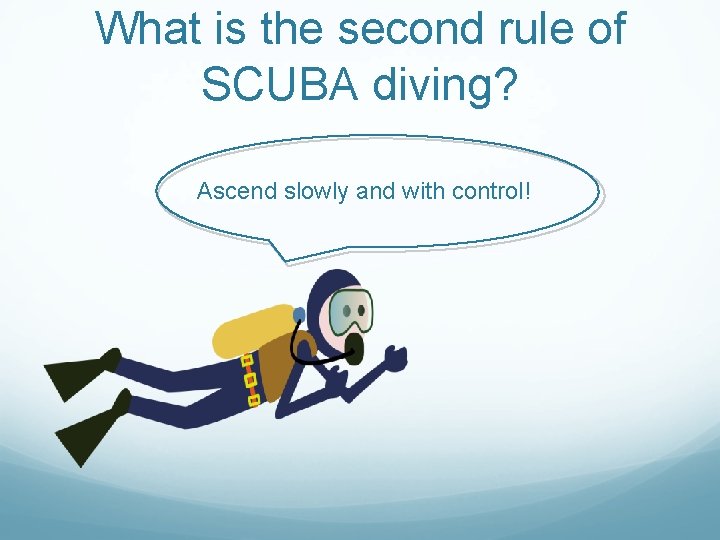
What is the second rule of SCUBA diving?
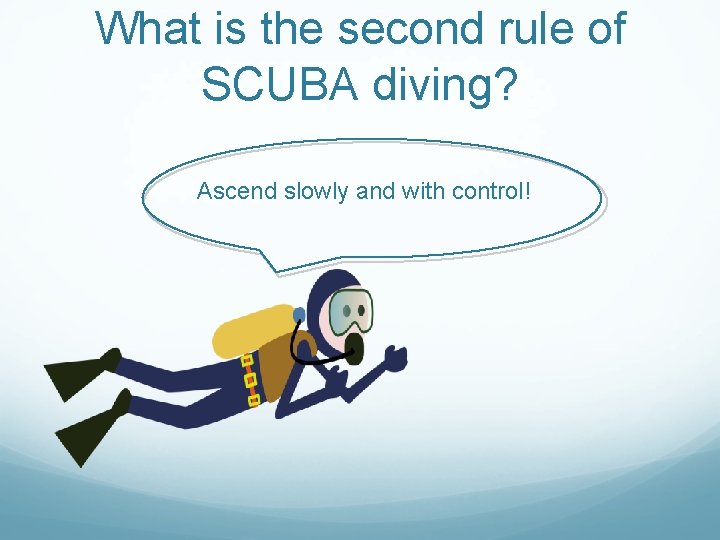
What is the second rule of SCUBA diving? Ascend slowly and with control!
Breathing compressed air at depth � 21% O 2, 79% N 2 �N 2 not used on a cellular level. �N 2 is absorbed into body tissues in proportion to the surrounding pressure. �N 2 dissolves back into the bloodstream during ascent.
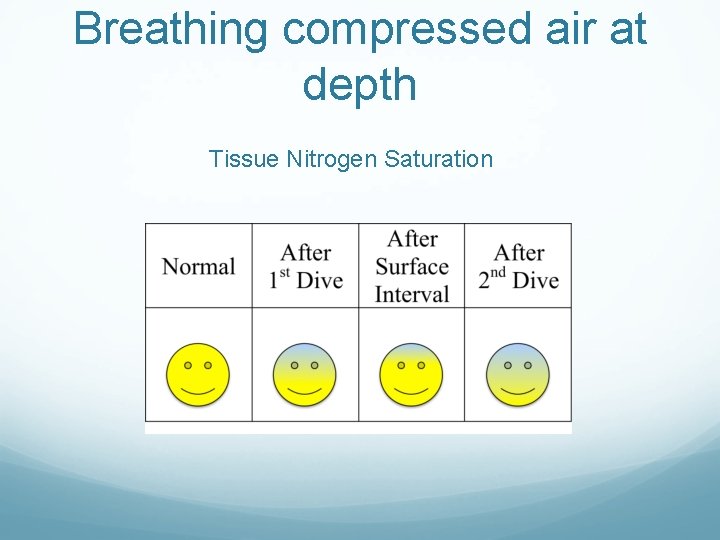
Breathing compressed air at depth �N 2 is off-gassed during ascent and at the surface until it returns to normal levels. �Repetitive diving (more than 1 dive in 24 hours) causes more and more nitrogen to be absorbed in the tissues.
Breathing compressed air at depth Tissue Nitrogen Saturation
Arterial Gas Embolism Failure to always breathe and never hold your breath!
Arterial Gas Embolism Pathophysiology �Air expands in the lungs, causing alveolar rupture �Gas escapes into the pulmonary veins �Gas becomes lodged in small vessels �Can lead to cerebral arterial gas embolism (CAGE)
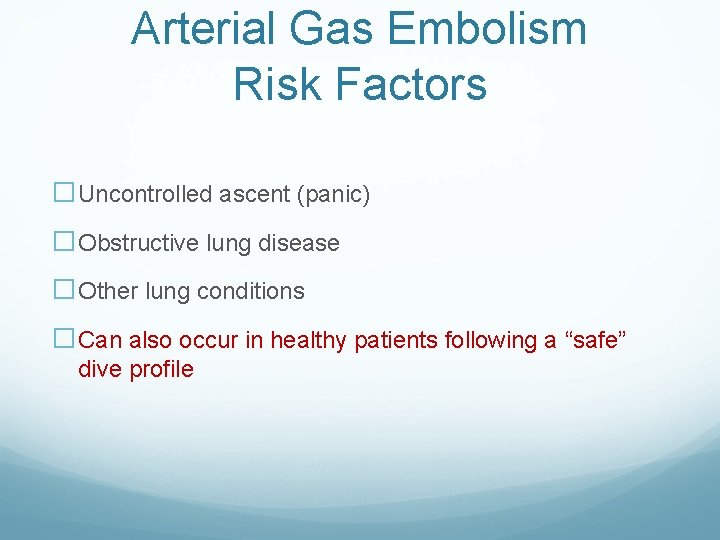
Arterial Gas Embolism Risk Factors �Uncontrolled ascent (panic) �Obstructive lung disease �Other lung conditions �Can also occur in healthy patients following a “safe” dive profile
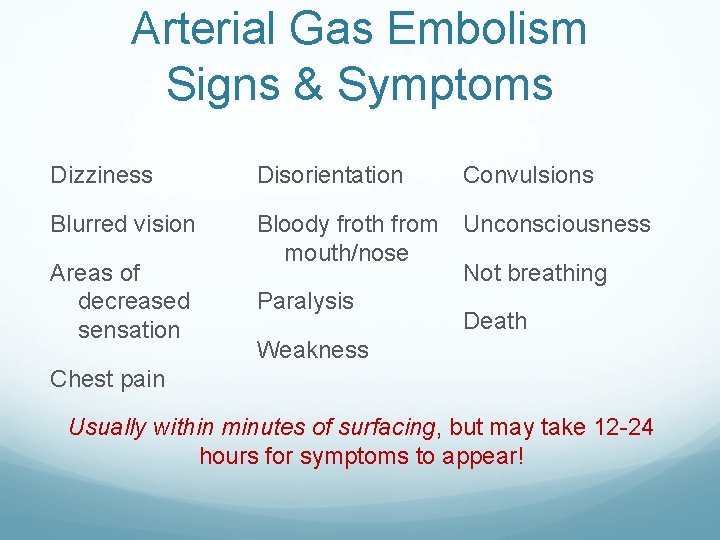
Arterial Gas Embolism Signs & Symptoms Dizziness Disorientation Blurred vision Bloody froth from Unconsciousness mouth/nose Not breathing Paralysis Death Weakness Areas of decreased sensation Convulsions Chest pain Usually within minutes of surfacing, but may take 12 -24 hours for symptoms to appear!
Decompression Sickness Failure to ascend slowly and with control!
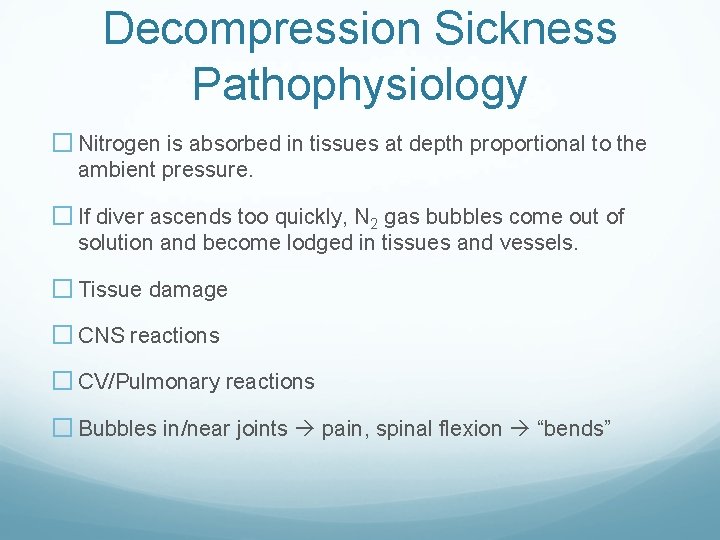
Decompression Sickness Pathophysiology � Nitrogen is absorbed in tissues at depth proportional to the ambient pressure. � If diver ascends too quickly, N 2 gas bubbles come out of solution and become lodged in tissues and vessels. � Tissue damage � CNS reactions � CV/Pulmonary reactions � Bubbles in/near joints pain, spinal flexion “bends”
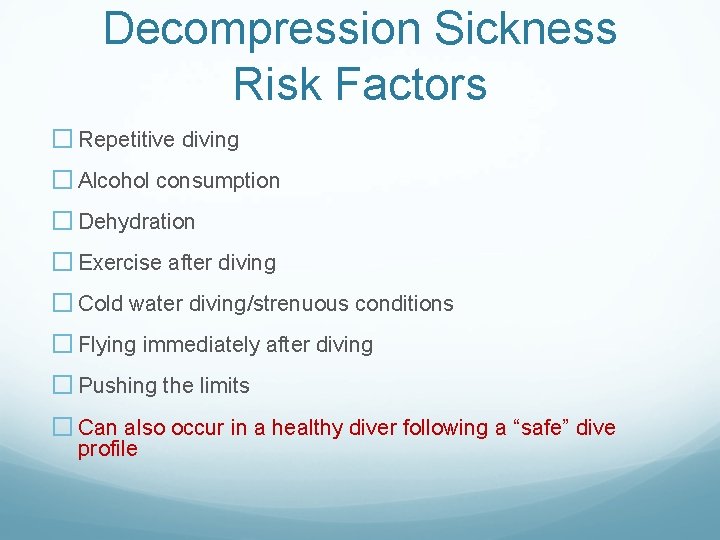
Decompression Sickness Risk Factors � Repetitive diving � Alcohol consumption � Dehydration � Exercise after diving � Cold water diving/strenuous conditions � Flying immediately after diving � Pushing the limits � Can also occur in a healthy diver following a “safe” dive profile
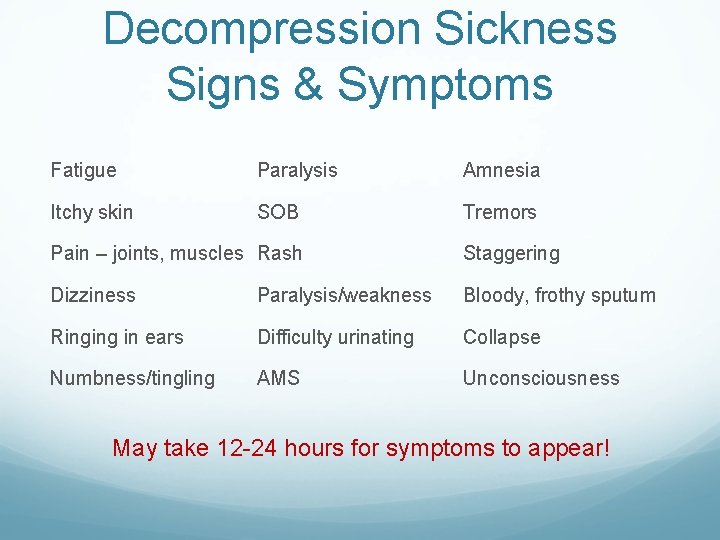
Decompression Sickness Signs & Symptoms Fatigue Paralysis Amnesia Itchy skin SOB Tremors Pain – joints, muscles Rash Staggering Dizziness Paralysis/weakness Bloody, frothy sputum Ringing in ears Difficulty urinating Collapse Numbness/tingling AMS Unconsciousness May take 12 -24 hours for symptoms to appear!
DCI History �Onset/progression of symptoms �Patient �Dive computer �Dive buddy/divemaster
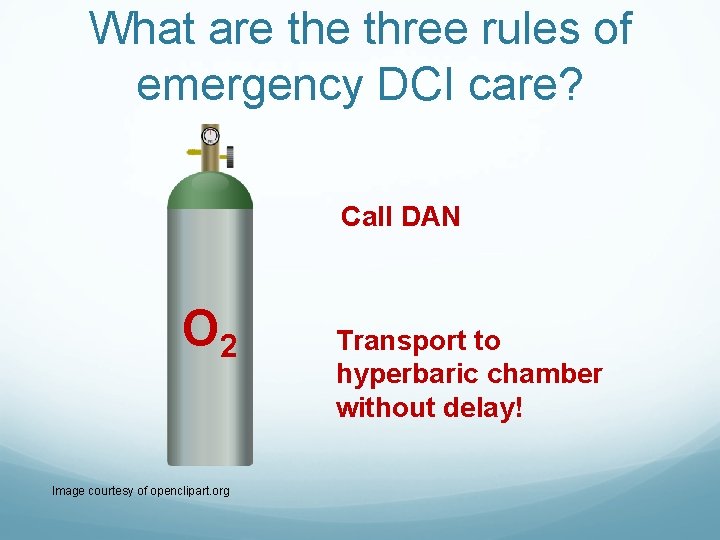
DCI Rescue Care �Oxygen �CPR �Transport
DCI Exam �Head-to-toe �Focus on neuro �Serial neuro checks
DCI Differential Diagnosis �R/O other causes �Bloodwork �CXR �Head CT �DCS is a true clinical diagnosis
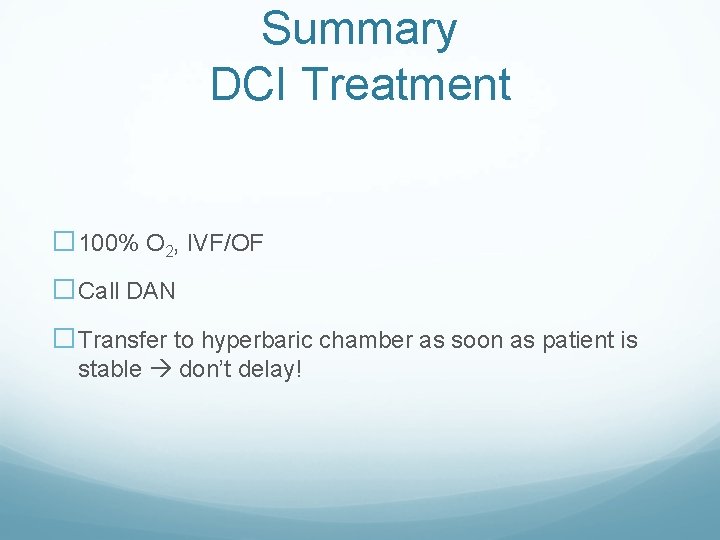
DCI Treatment � 100% O 2, IVF/OF �Assess urgency � Early & severe S/Sx >> Delayed & mild S/Sx �Call DAN Emergency Medical line for assistance �Symptoms may improve quickly with O 2, but may reappear with cessation of O 2 don’t delay!
DCI Treatment �Hyperbaric/Recompression Chamber � ASAP, definitely within 24 hours � Patient is re-pressurized while breathing supplemental oxygen and de-pressurized slowly
DCI Prognosis �Complete resolution �Significant neurological dysfunction � Bladder dysfunction � Sexual dysfunction � Paralysis/weakness �Osteonecrosis (DCS) �Return to diving/flying in several days to months, maybe never
Summary AGE �Failure to always breathe and never hold your breath. �Uncontrolled ascent �Alveolar rupture causing arterial gas embolism �Can be cerebral (CAGE)
Summary DCS �Failure to ascend slowly and with control. �Quick ascent, pushing the limits �Nitrogen bubbles in tissues/vessels �Joint pain, tissue damage, CNS reactions
Summary DCI History/Exam �Onset/progression of symptoms �Get the dive computer �Perform serial neuro checks �R/O other causes
Summary DCI Treatment � 100% O 2, IVF/OF �Call DAN �Transfer to hyperbaric chamber as soon as patient is stable don’t delay!
What is the first rule of SCUBA diving? Always breathe and never hold your breath!
What is the second rule of SCUBA diving? Ascend slowly and with control!
What are three rules of emergency DCI care? Image courtesy of openclipart. org
What are three rules of emergency DCI care? Call DAN O 2 Image courtesy of openclipart. org Transport to hyperbaric chamber without delay!
References � Divers Alert Network (DAN) � www. diversalertnetwork. com � Emergency Medical 1 -919 -684 -9111 � Non-Emergency Medical 1 -919 -684 -2948 � Professional Association of Diving Instructors www. padi. com � SCUBA Diving International www. tdisdi. com � Powell, Mark. Deco for Divers. Essex: Aqua. Press Ltd and Mark Powell, 2008. Print.
Thanks for listening! Michelle Arnesen, PA-C michelle. arnesen@gmail. com 847 -334 -3208