CULTURAL COMPETENCE RACE AND ETHNICITY NEREIDA CORREA MD















- Slides: 44
CULTURAL COMPETENCE : RACE AND ETHNICITY NEREIDA CORREA, MD ASSISTANT PROFESSOR OBS/GYN & FAMILY PRACTICE ALBERT EINSTEIN COLLEGE OF MEDICINE JANUARY 24, 2001
CULTURE INTEGRATED PATTERN OF HUMAN BEHAVIOR INFLUENCES THOUGHT, ACTIONS, CUSTOMS, BELIEFS AND VALUES RELATED TO ETHNIC, RACIAL RELIGIOUS OR SOCIAL GROUP
CULTURES IN THE BRONX WHITE -ALL ETHNIC GROUPS BLACK- ALL ETHNIC GROUPS ASIAN - ALL ETHNIC GROUPS INDIAN- EAST AND WEST HISPANIC- MOST GROUPS
COMPETENCE ACQUISITION OF KNOWLEDGE DEVELOPMENT OF SKILLS EXPERIENCE APPLIED TOWARDS INTERVENTIONS ADAPTIVE TO THE DIFFERENT GROUPS SERVED
CULTURAL COMPETENCE CONGRUENT BEHAVIORS, ATTITUDES AND POLICIES COME TOGETHER TO WORK EFFECTIVELY IN CROSS CULTURAL SITUATIONS SERVICES PERCEIVED AS RELEVANT AND HELPFUL
DIVERSITY TRAINING ACCEPTANCE AND TOLERANCE LOWERS PREJUDICE DEVELOPS CULTURAL AWARENESS AND SENSITIVITY IS A BEGINNING TOWARDS SHOWING THE DIFFERENCES BUT DOES NOT GIVE TOOLS
COMPETENCY TRAINING PROMOTES SKILLS AND KNOWLEDGE CONTENT BASED DIFFICULT TO TEACH INDIVIDUALIZED TRAINING DEVELOPS PRACTICAL SKILLS
CULTURAL AWARENESS GENDER AGE ETHNIC IDENTITY RACE SOCIAL STATUS ROLES
CULTURAL ASSESSMENT BIRTH PLACE AND ETHNICITY SUPPORT FAMILY MEMBERS LANGUAGES AND NONVERBALS RELIGION AND PRACTICES ECONOMIC SITUATION HEALTH/ILLNESS BELIEFS BIRTH/DEATH BELIEFS
COMMUNICATION INTERPRETORS CONVERSATIONAL STYLE PERSONAL SPACE EYE CONTACT TOUCH TIME ORIENTATION
DIVERSITY ISSUES MIGRATION STATUS ETHNICITY/RACIAL GROUP SOCIOECONOMIC STATUS SEXUAL ORIENTATION DISABILITY
BELIEFS HEALTH AND WELLNESS BIRTHING PRACTICES USE OF ALTERNATIVE SYSTEMS DEATH AND DYING BEHAVIOR WITH HEALTH WORKERS RESPONSE TO HISTORY TAKING
NYC POPULATIONS BLACK AMERICAN PUERTO RICAN RUSSIAN WEST INDIAN CHINESE EAST INDIAN 2. 8 M 1. O M 455 K 452 K 285 K 133 K
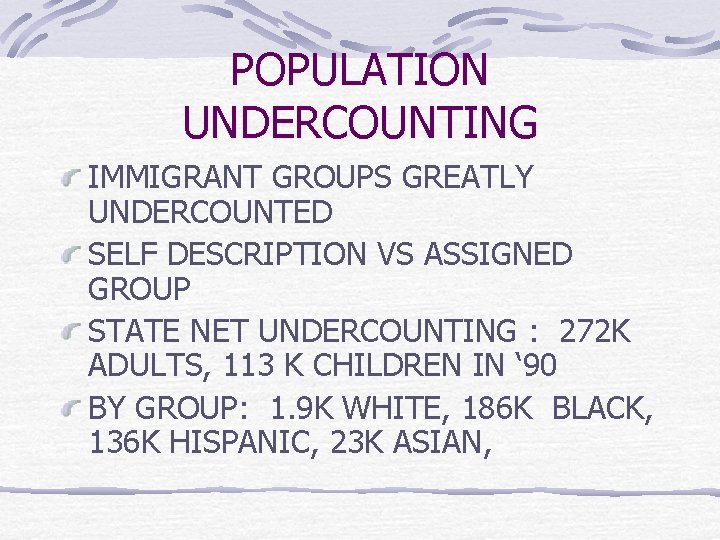
POPULATION UNDERCOUNTING IMMIGRANT GROUPS GREATLY UNDERCOUNTED SELF DESCRIPTION VS ASSIGNED GROUP STATE NET UNDERCOUNTING : 272 K ADULTS, 113 K CHILDREN IN ‘ 90 BY GROUP: 1. 9 K WHITE, 186 K BLACK, 136 K HISPANIC, 23 K ASIAN,
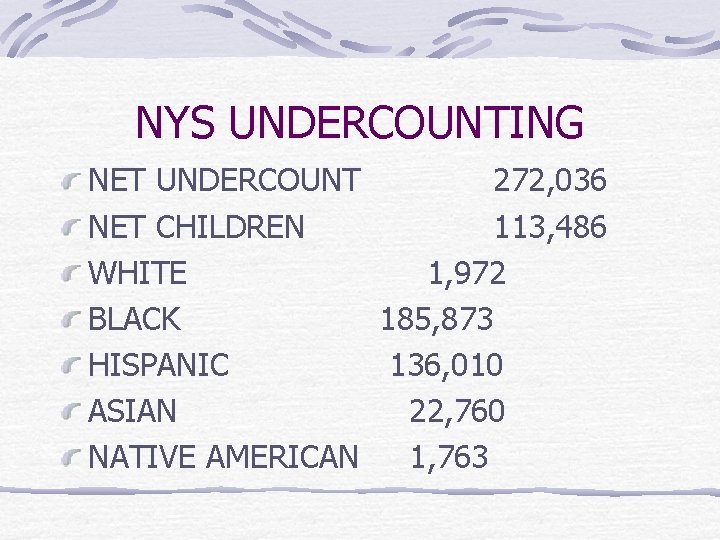
NYS UNDERCOUNTING NET UNDERCOUNT 272, 036 NET CHILDREN 113, 486 WHITE 1, 972 BLACK 185, 873 HISPANIC 136, 010 ASIAN 22, 760 NATIVE AMERICAN 1, 763
LEARN LISTEN WITH EMPATHY EXPLAIN YOUR PERCEPTION ACKNOWLEDGE RECOMMEND TREATMENT NEGOTIATE TREATMENT MODALITIES
DISPARITIES MATERNAL AND INFANT MORTALITY ACCESS TO HEALTH CARE EMPLOYMENT EDUCATION PREVALENCE OF DISEASES RELATED TO DIET AND EXERCISE HOMICIDE AND SUICIDE
HEALTH PROFILE ON MINORITIES BREAST CANCER INCREASED 3. 9% FOR BLACK WOMEN TUBERCULOSIS INCREASED BY 51% FOR ASIAN AMERICANS AND 30% FOR HISPANICS AIDS/HIV DISEASE INCREASED FOR BLACKS, HISPANICS, ASIANS AND NATIVE AMERICANS
HEALTH PROFILE INFANT MORTALITY RELATIVE INCREASE LIFE EXPECTANCY 6. 6 YEARS LESS HEART ATTACK DEATH DECLINED 21% FOR BLACKS VS 29% FOR WHITES DEATH FROM HIV DECLINED 13 -22% VS 32% FOR WHITES
HEALTH PROFILE HOMICIDE AND SPINAL CORD INJURY DOMESTIC VIOLENCE EXPOSURE OF CHILDREN TO DRUGS CIGARETTES AND ALCOHOL TEEN PREGNANCY SCHOOL FAILURE AND DROP-OUT
INTERVENTION STRATEGIES INVOLVEMENT IN COMMUNITY GROUPS INVOLVEMENT IN LEADERSHIP OF PROFESSIONAL GROUPS MENTORING OF YOUTH POLITICAL ACTIVISM RESEARCH
VIGNETTES
RACE AND ETHNICITY PRACTICE VIGNETTES
PRACTICUM: RISKS Stereotyping can occur Oversimplification of true values May be misinterpreted May offend members of the group
PRACTICUM: BENEFITS Increases awareness of behavior Inculcates sensitivity Promotes understanding between groups Develops strategies in practitioners that will help them to give care to diverse populations
OBJECTIVES Demonstrate by illustration how culture impacts on the physician-patient interaction Provide examples of various ethnic groups in the Bronx and some common beliefs with in the culture Explore the impact of a lack of understanding on therapeutic relationship
ETHNIC GROUPS African-American Arab Haitian Mexican Puerto Rican Vietnamese West Indian
AFRICAN-AMERICAN A 14 year old teenage boy is brought in for a routine physical exam His mother wants routine exams done and is concerned about school performance Beliefs: Strong family links; demanding of respect Issues around gender identity, expected roles and independence
AFRICAN-AMERICAN Assess developmental level and institute age appropriate counseling regarding safety issues, sex and pregnancy prevention, career issues Provide flexible access for questions Appreciate gestures such as lack of eye contact and looking down related to respect
ARAB A 24 year old woman pregnant for the first time Visit with her husband Establishing plans for her care Beliefs Concerns Outcomes
ARAB Beliefs: Birth is a natural process Modesty to be conserved-privacy, veils Husband, father, brother make decisions Children are sacred
ARABS Concerns: Usually requesting female provider Male family member to be involved in decision making Prefer natural delivery, will accept pain medication Prayer time essential for strict Moslems Amulets: blue stone to ward off evil eye
ARAB Prenatal care with female providers Delivery plan made with negotiations regarding the need for some male practitioners Actual delivery with husband presentinvolved in decisions Patient wore veils and robes when in halls
PUERTO RICAN Couple seen for evaluation of infertility Partner has one child from previous marriage Suspicion is male factor infertility Beliefs: Male sexual productivity is indication of masculinity Concerns: Inability to impregnate partner can be interpreted as loss Outcomes
PUERTO RICAN Assurance of language competence and use of translator if needed, not family member Presentation of data on infertility and the facts related to male factor Reassurance that there is no correlation with sexual performance Privacy
VIETNAMESE A 5 year old girl brought in for fever and a cold Bruising noted on chest wall in reddish streaks Several cup marks seen on her back Beliefs: Hot and cold theory of medicine and use of alternative medicines; illness related to sins of past life Concerns: Distinguish injury to child
VIETNAMESE Assurance of language competency; use of translator unless fluent in English History taking to include beliefs and practices in an open-ended way Negotiate plan to include parental belief to improve compliance Help family to deal with guilt at illness
HAITIAN A 50 Year old man diagnosed with cancer of the stomach Has experience gradual illness and now is dying Beliefs: Illness a continuum Kompa bon Moin malad moin malad anpil moin pap refe bon die vs loa
HAITIAN Assurance of language competency Discuss beliefs about illness and death; believer in spiritualism, or catholic or both Allow space for as much family as possible Final bath given by family member Prefer to die at home
WEST INDIAN 35 Year old woman with new diagnosis of hypertension Sees herself as healthy, has no pain Told to avoid salt and fatty foods in diet Beliefs: Diet with strong broths and organ meats will build up the body Fatigue and pain are symptoms of disease Hot and cold foods
WEST INDIAN Nutritional interventions with cultural beliefs in mind; hot and cold combinations and restrictions Discussions regarding asymptomatic nature of her diagnosis and the need for preventive interventions Regard for issues of respect, eye contact and touching
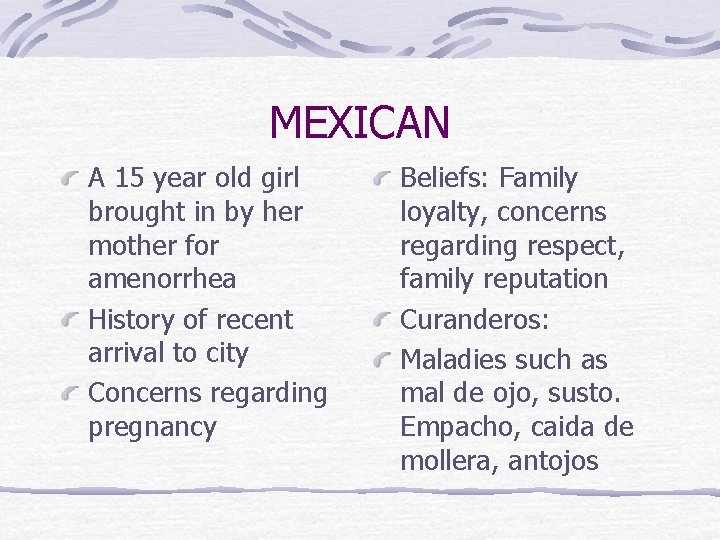
MEXICAN A 15 year old girl brought in by her mother for amenorrhea History of recent arrival to city Concerns regarding pregnancy Beliefs: Family loyalty, concerns regarding respect, family reputation Curanderos: Maladies such as mal de ojo, susto. Empacho, caida de mollera, antojos
MEXICAN Assurance of language competency Including mother in the interview Speaking to the teenager alone Exploring cultural beliefs and issues Providing interventions and bridging cultural gap
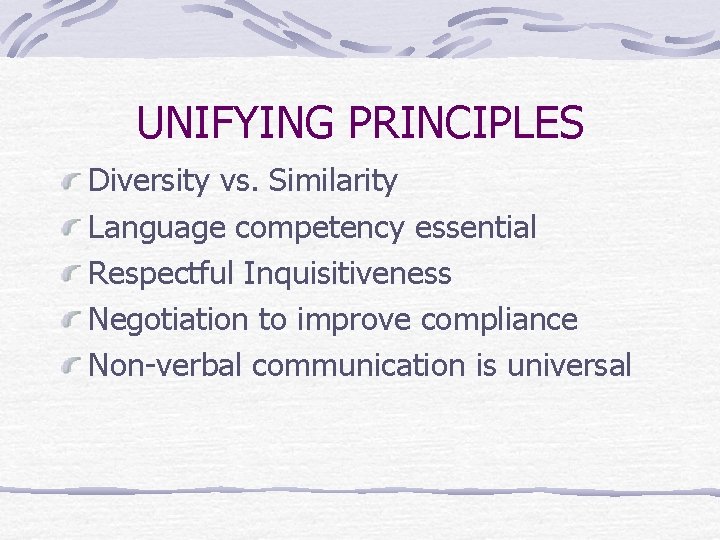
UNIFYING PRINCIPLES Diversity vs. Similarity Language competency essential Respectful Inquisitiveness Negotiation to improve compliance Non-verbal communication is universal