Crossing SFAPopliteal Artery CTOs Tyrone J Collins MD

- Slides: 30
Crossing SFA-Popliteal Artery CTO’s Tyrone J. Collins, MD, FSCAI, FACC, FAHA John Ochsner Heart and Vascular Insititute New Orleans, LA
Tyrone J. Collins, MD I/we have no real or apparent conflicts of interest to report.
Background PAD affects 12 -14% of the general population The treatment of patients with peripheral vascular disease has undergone impressive changes There has been an explosive development of endovascular techniques and devices Traditional surgical techniques have been replaced by minimally invasive procedures
PAD Marketplace and Devices Underpenetrated compared to coronary Device advances are expanding the patients that can be treated Products designed to improve durability and safety Reduce need for surgery Reduce rate of amputation in critical limb ischemia
Problems with PAD Therapy Lack large randomized trials comparing newer devices to PTA and surgery No consensus of technology superiority
Superficial Femoral Artery (SFA) and Popliteal Artery 60% of lower extremity occlusions and > ½ of all endovascular procedures Often diffuse, calcified and large plaque burden Restenosis is an issue Lesions around knee subject to mechanical forces that increase risk of stent compromise
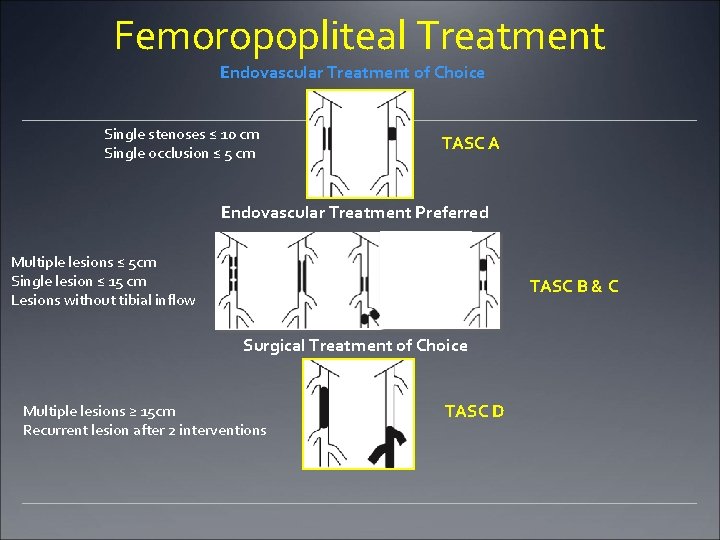
Femoropopliteal Treatment Endovascular Treatment of Choice Single stenoses ≤ 10 cm Single occlusion ≤ 5 cm TASC A Endovascular Treatment Preferred Multiple lesions ≤ 5 cm Single lesion ≤ 15 cm Lesions without tibial inflow TASC B & C Surgical Treatment of Choice Multiple lesions ≥ 15 cm Recurrent lesion after 2 interventions TASC D
CTO’s Have to cross and re-enter Procedure safe with few complications Similar to coronary intervention Effectiveness of planned therapy must be considered
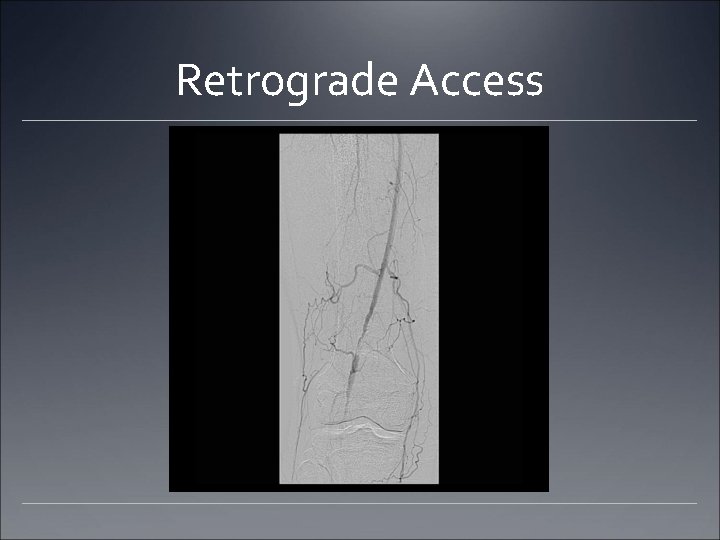
Access Contralateral Ipsilateral Antegrade Retrograde Popliteal Tibial
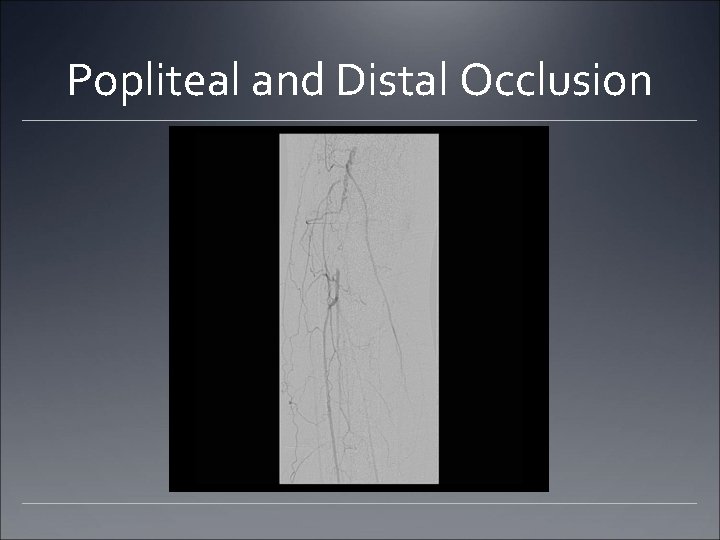
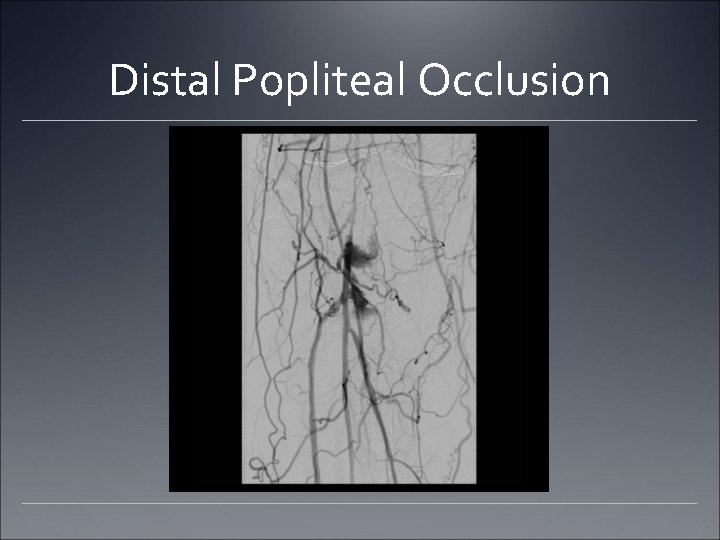
Difficult Anatomy Flush occlusions Heavily calcified Long occlusions Popliteal involvement
CTO’s 0. 014 in. wire and catheter 0. 035 in. guidewire and catheter Laser Frontrunner Crosser Truepath Reentry devices
Frontrunner®XP CTO Catheter Blunt micro- dissection Creates lumen for the wire
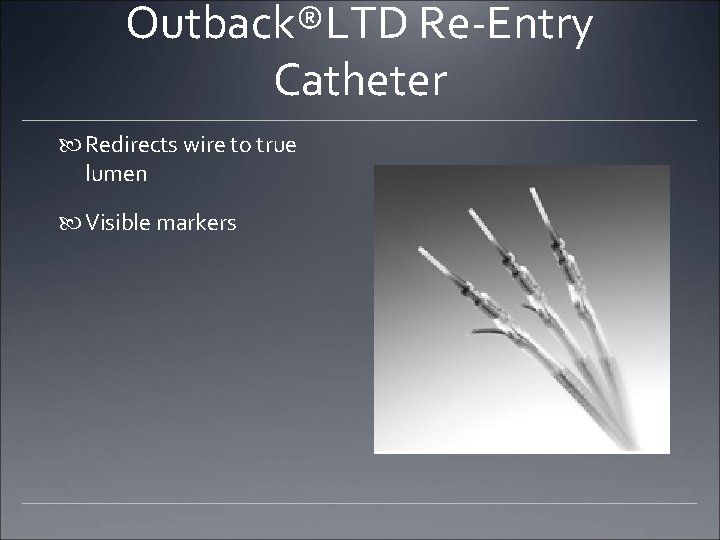
Outback®LTD Re-Entry Catheter Redirects wire to true lumen Visible markers
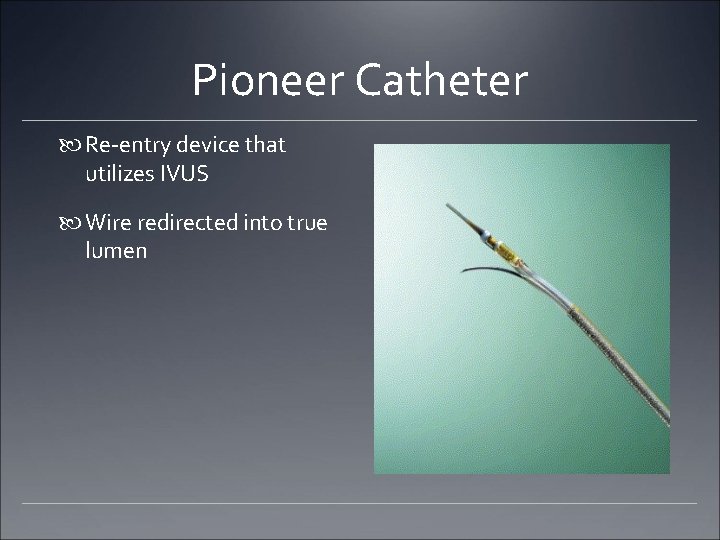
Pioneer Catheter Re-entry device that utilizes IVUS Wire redirected into true lumen
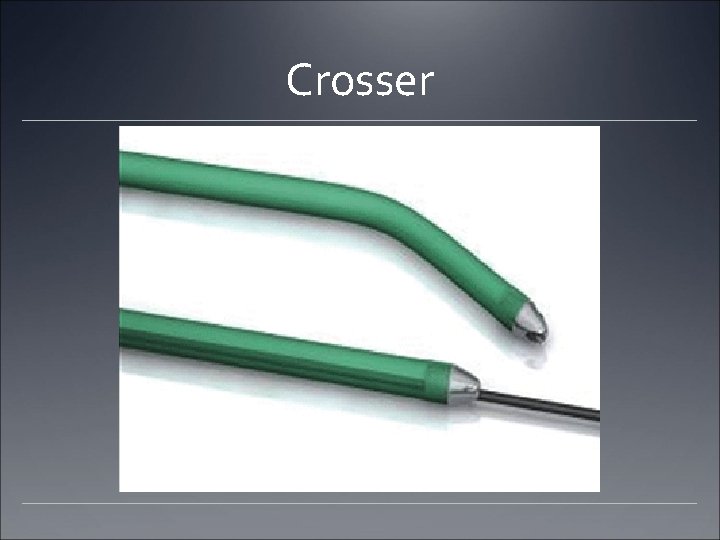
Crosser
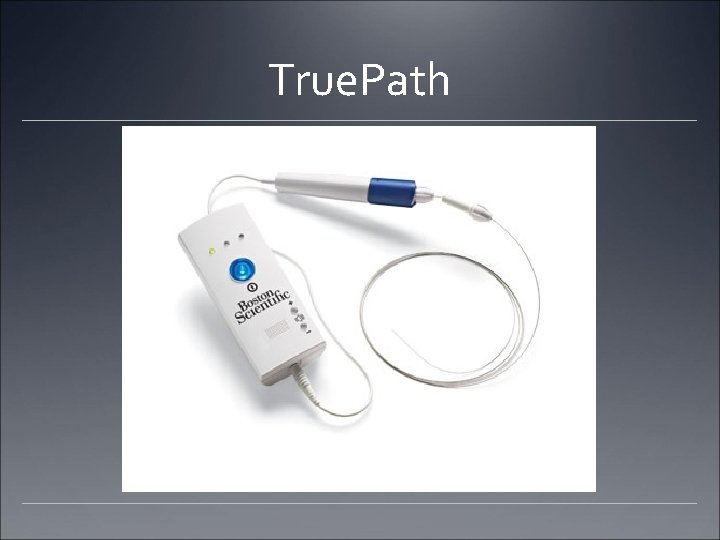
True. Path
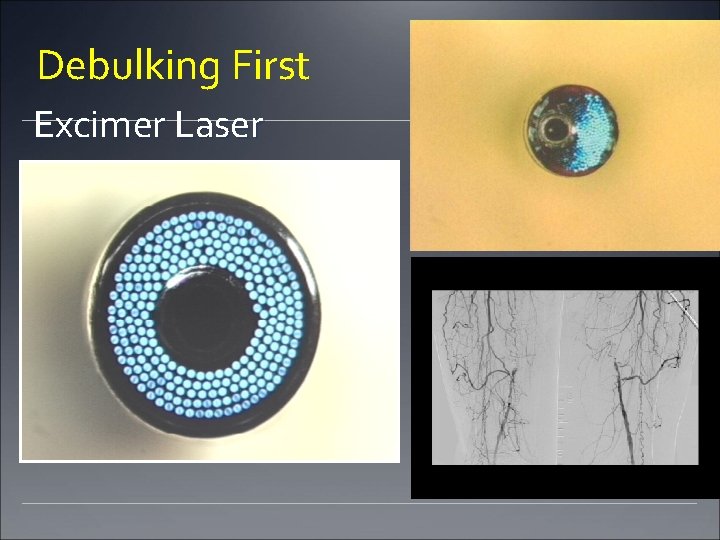
Excimer Laser PELA (Peripheral Excimer Laser Angioplasty)
Debulking First Excimer Laser
Subintimal technique Hydrophilic guide wire Catheter Pass the occlusion and re-enter the lumen distally Cannot use for all lesions
CTO’s Some of the most challenging cases Require more time Higher risk of complications Patience Equipment requirements Necessary skills
Dissections Unavoidable with subintimal technique Try to redirect wire May need retrograde approach May have to stage intervention
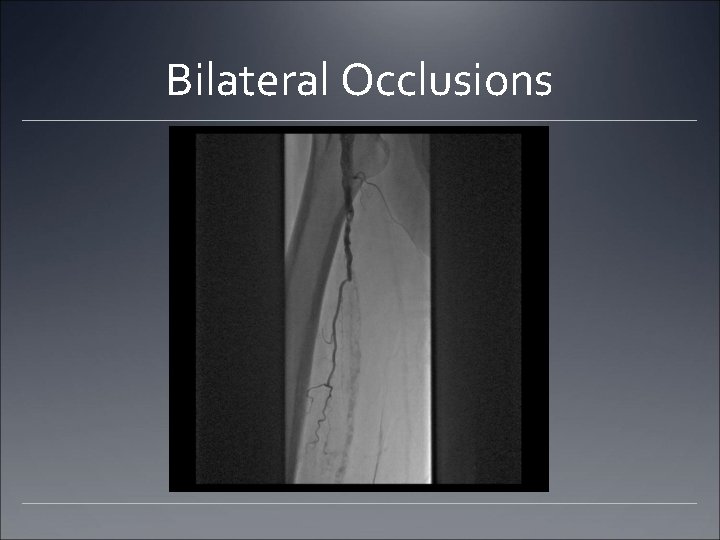
Bilateral Occlusions
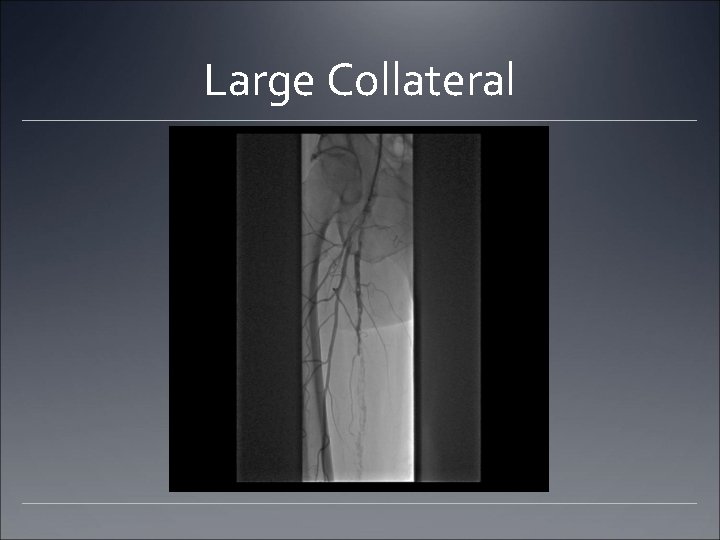
Large Collateral
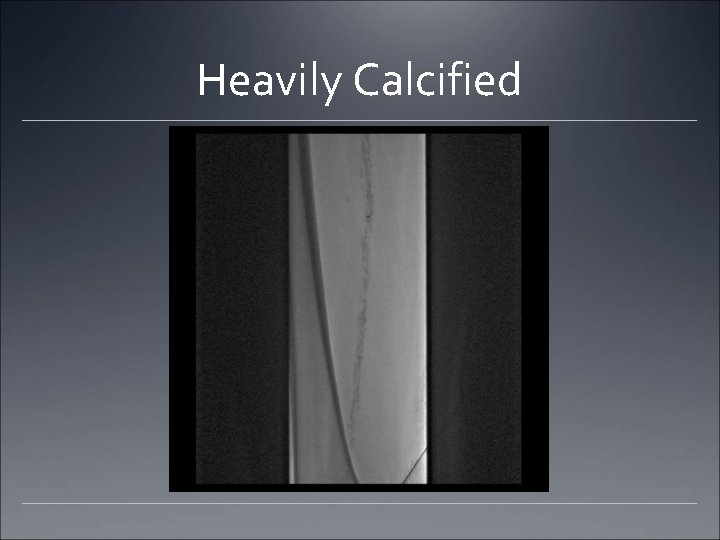
Heavily Calcified
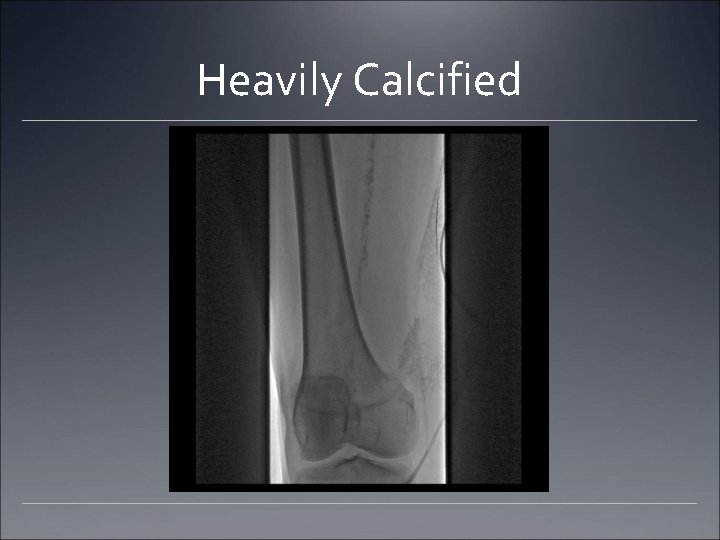
Heavily Calcified
Retrograde Access
Popliteal and Distal Occlusion
Distal Popliteal Occlusion
Perforation
Conclusions Most SFA-Popliteal occlusions can be treated with a endovascular technique Choose patients carefully Appropriate equipment and technique(s) Consider the alternatives