Cost of Production and Perfect Competition June 23











- Slides: 55
Cost of Production and Perfect Competition June 23, 2020 Theresa Fischer ecofisch@gmail. com
Econ. Ed. Link Membership You can now access CEE’s professional development webinars directly on Econ. Ed. Link. org! To receive these new professional development benefits, become an Econ. Ed. Link member. As a member, you will now be able to: • Automatically receive a professional development certificate via e-mail within 24 hours after viewing any webinar for a minimum of 45 minutes • Register for upcoming webinars with a simple one-click process • Easily download presentations, lesson plan materials, and activities for each webinar • Search and view all webinars at your convenience • Save webinars to your Econ. Ed. Link dashboard for easy access to the event You may access our new Professional Development page here
Professional Development Certificate To earn your professional development certificate for this webinar, you must: • Watch a minimum of 45 -minutes and you will automatically receive a professional development certificate via e-mail within 24 hours. Accessing resources: • You can now easily download presentations, lesson plan materials, and activities for each webinar from Econ. Ed. Link. org/professionaldevelopment/
Objectives for This Lesson 1. How to present costs to your students in the class 2. How to get students to UNDERSTAND the importance of costs for a business. 3. Get students to learn the cost curves and their relations to each other. 4. Understand the characteristics of perfect competition firm 5. How to use the cost curves they learns and apply them to perfect competition. 6. Sources to use for this topic
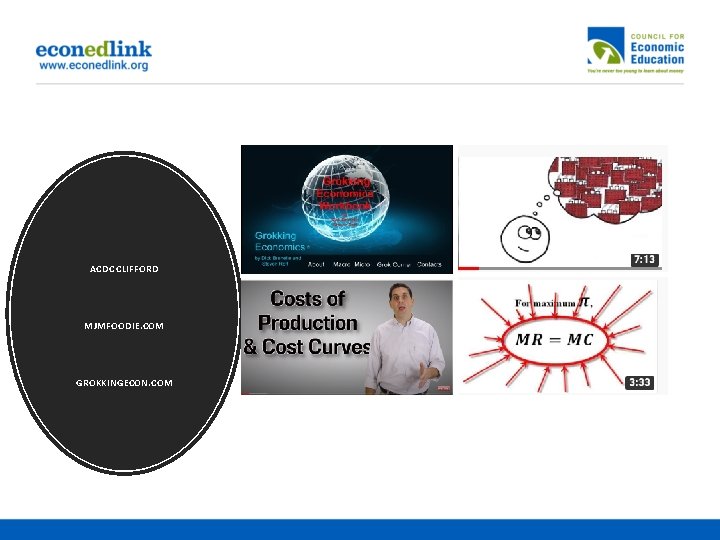
ACDC CLIFFORD MJMFOODIE. COM GROKKINGECON. COM
How I Built This with Guy Raz
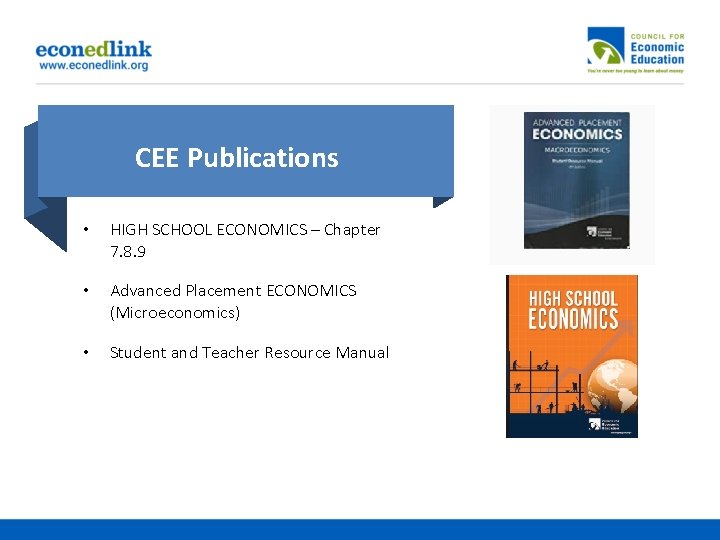
CEE Publications • HIGH SCHOOL ECONOMICS – Chapter 7. 8. 9 • Advanced Placement ECONOMICS (Microeconomics) • Student and Teacher Resource Manual
Junior Achievement
DECA https: //www. deca. org/high-school-programs/ Distributive Education Clubs of America • DECA prepares emerging leaders and entrepreneurs in marketing, finance, hospitality and management in high schools and colleges around the globe. . DECA prepares the next generation to be academically prepared, community-oriented, professionally responsible, experienced leaders.
Shark Tank
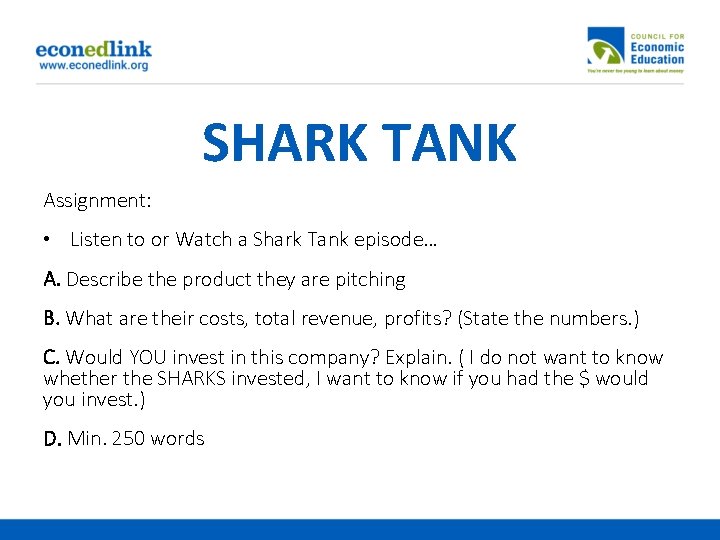
SHARK TANK Assignment: • Listen to or Watch a Shark Tank episode… A. Describe the product they are pitching B. What are their costs, total revenue, profits? (State the numbers. ) C. Would YOU invest in this company? Explain. ( I do not want to know whether the SHARKS invested, I want to know if you had the $ would you invest. ) D. Min. 250 words
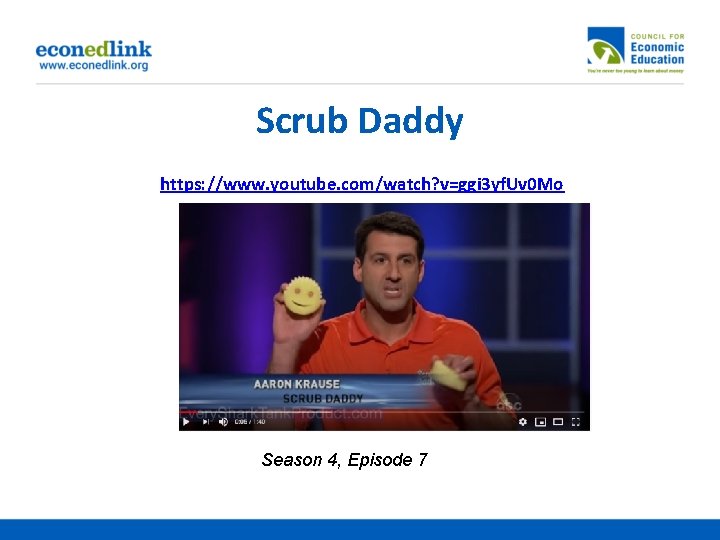
Scrub Daddy https: //www. youtube. com/watch? v=ggi 3 yf. Uv 0 Mo Season 4, Episode 7
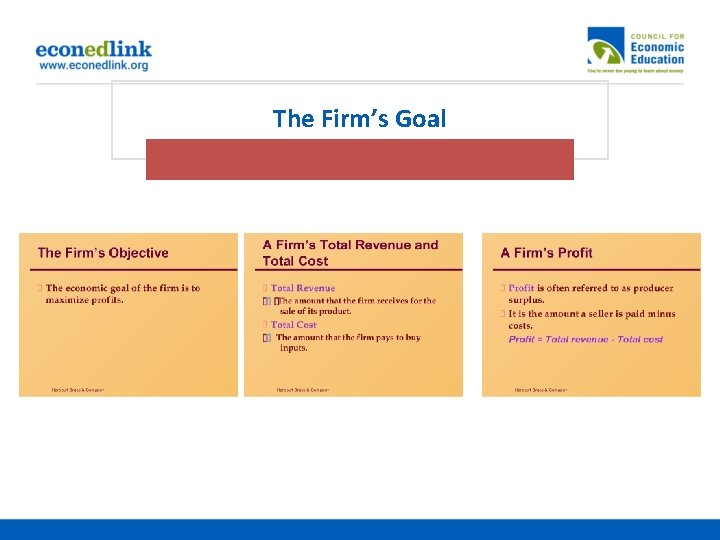
The Firm’s Goal
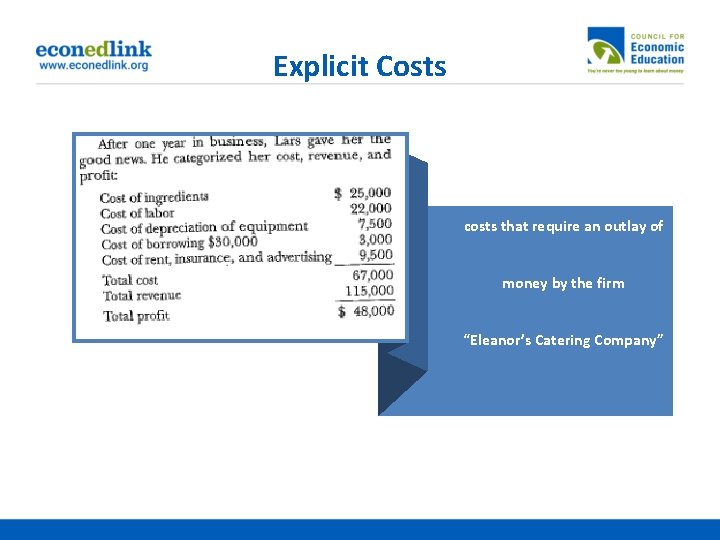
Explicit Costs – costs that require an outlay of money by the firm “Eleanor’s Catering Company”
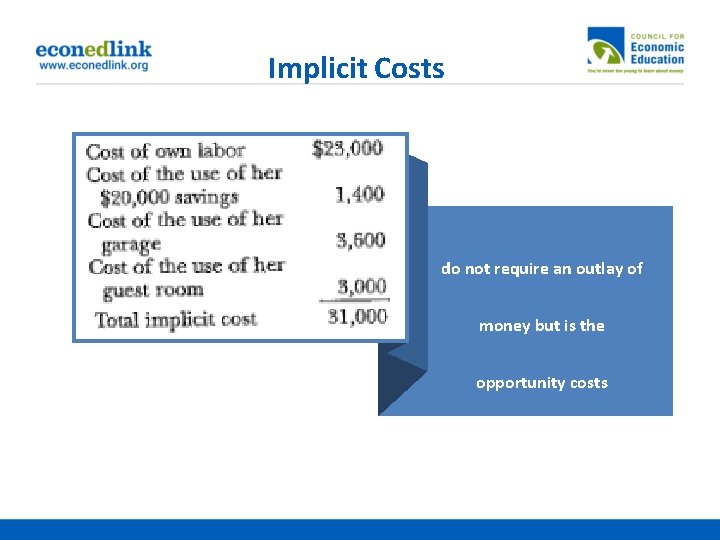
Implicit Costs do not require an outlay of money but is the opportunity costs
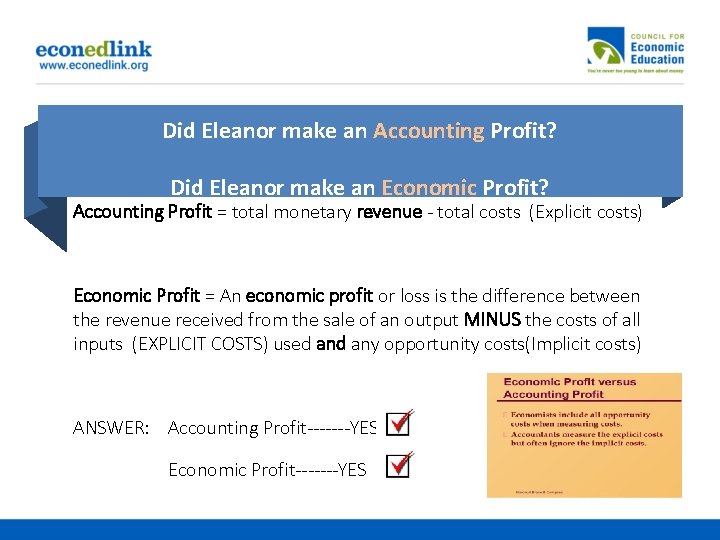
Did Eleanor make an Accounting Profit? Did Eleanor make an Economic Profit? Accounting Profit = total monetary revenue - total costs (Explicit costs) Economic Profit = An economic profit or loss is the difference between the revenue received from the sale of an output MINUS the costs of all inputs (EXPLICIT COSTS) used any opportunity costs(Implicit costs) ANSWER: Accounting Profit-------YES Economic Profit-------YES
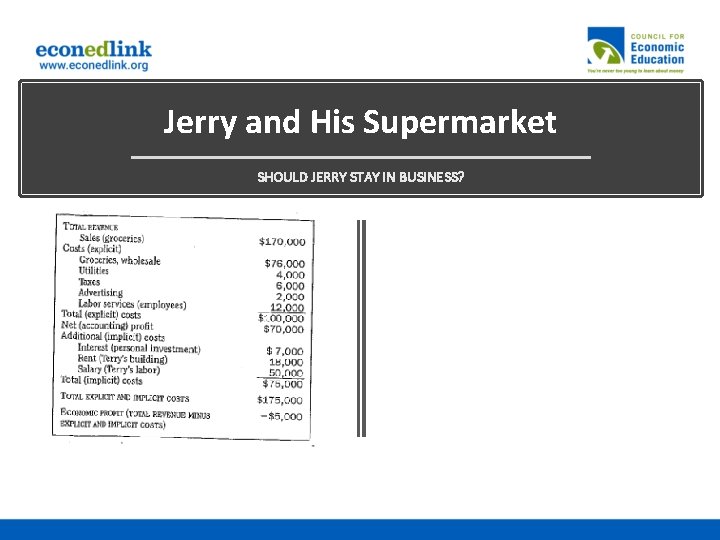
Jerry and His Supermarket SHOULD JERRY STAY IN BUSINESS?
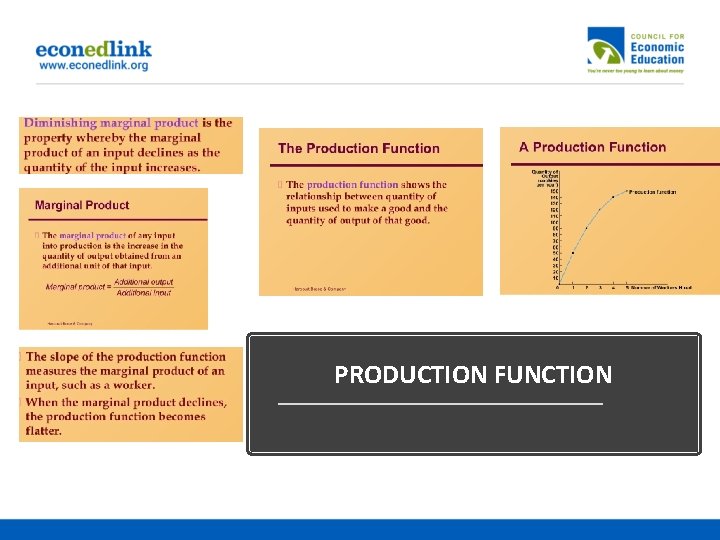
PRODUCTION FUNCTION
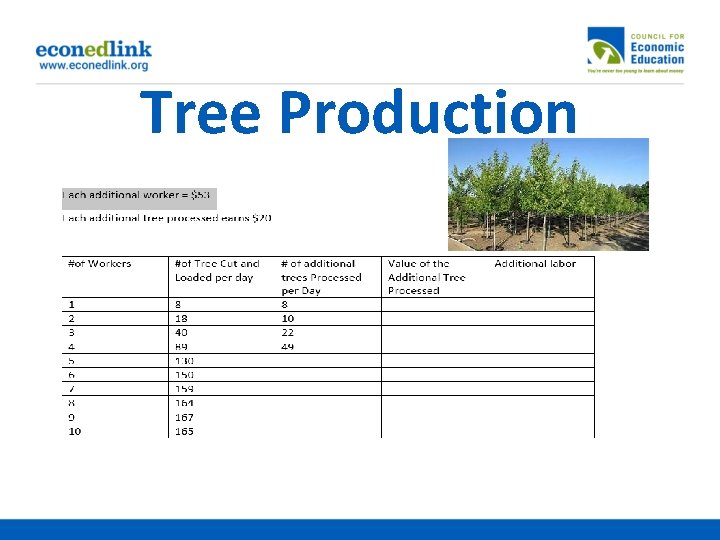
Tree Production
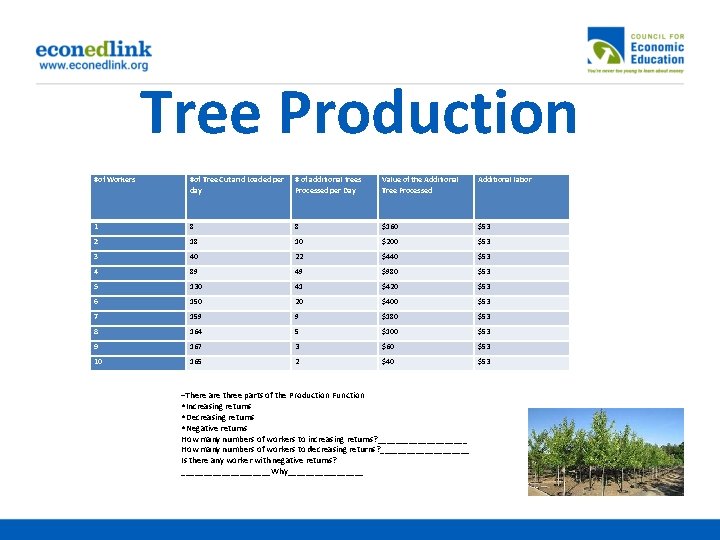
Tree Production #of Workers #of Tree Cut and Loaded per day # of additional trees Processed per Day Value of the Additional Tree Processed Additional labor 1 8 8 $160 $53 2 18 10 $200 $53 3 40 22 $440 $53 4 89 49 $980 $53 5 130 41 $420 $53 6 150 20 $400 $53 7 159 9 $180 $53 8 164 5 $100 $53 9 167 3 $60 $53 10 165 2 $40 $53 –There are three parts of the Production Function • Increasing returns • Decreasing returns • Negative returns How many numbers of workers to increasing returns? __________ How many numbers of workers to decreasing returns? __________ Is there any worker with negative returns? __________Why_________
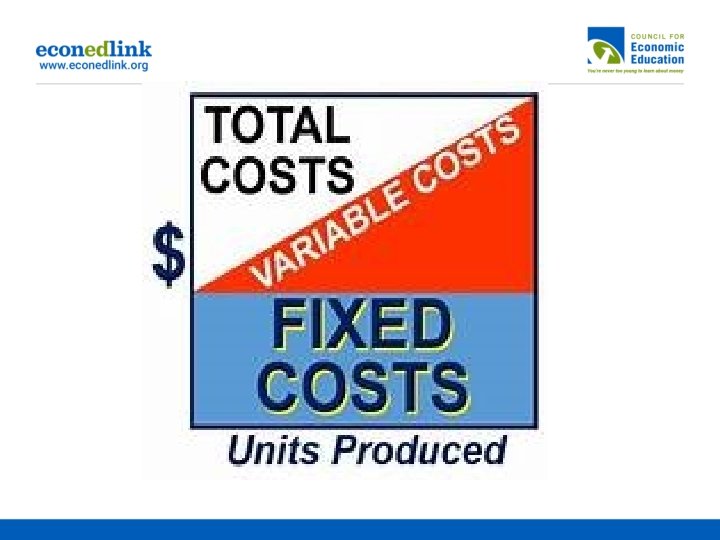
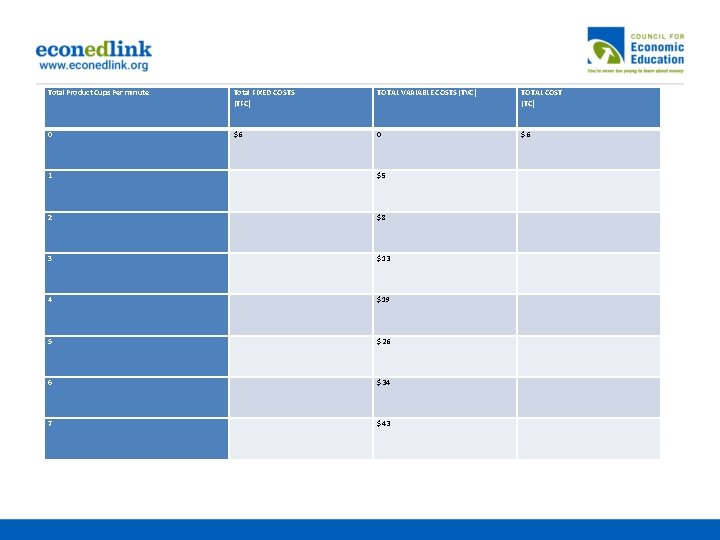
Total Product Cups Per minute Total FIXED COSTS (TFC) TOTAL VARIABLE COSTS (TVC) TOTAL COST (TC) 0 $6 0 $6 1 $5 2 $8 3 $13 4 $19 5 $26 6 $34 7 $43
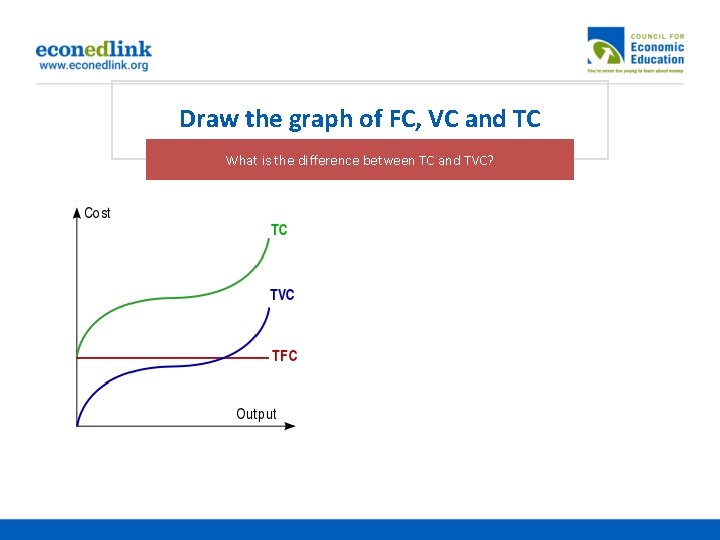
Draw the graph of FC, VC and TC What is the difference between TC and TVC?
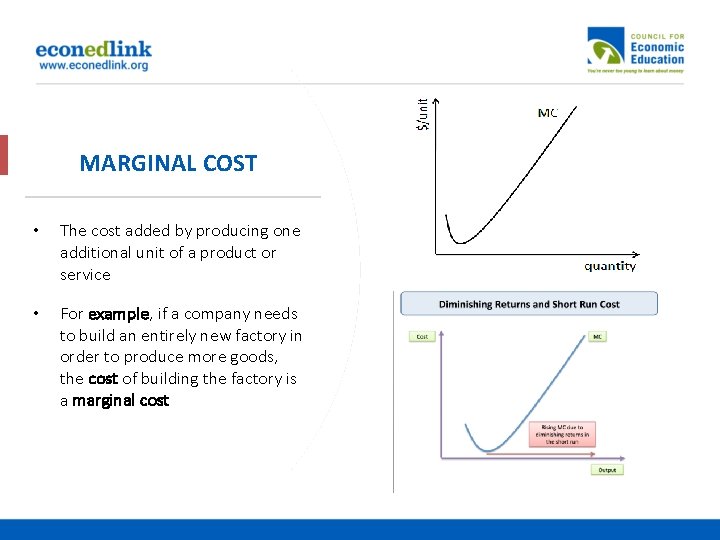
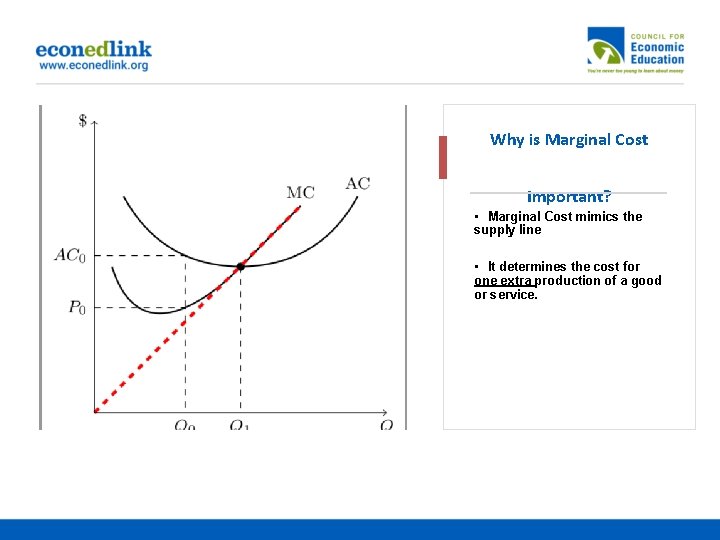
MARGINAL COST • The cost added by producing one additional unit of a product or service • For example, if a company needs to build an entirely new factory in order to produce more goods, the cost of building the factory is a marginal cost
Why is Marginal Cost Important? • Marginal Cost mimics the supply line • It determines the cost for one extra production of a good or service.
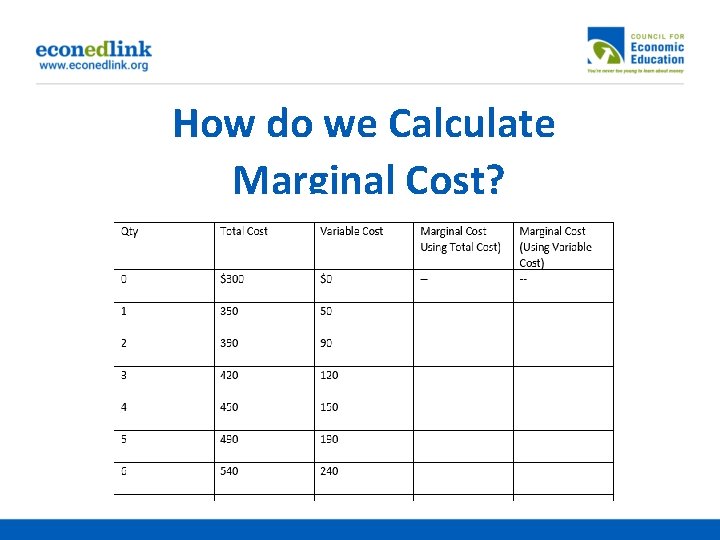
How do we Calculate Marginal Cost?
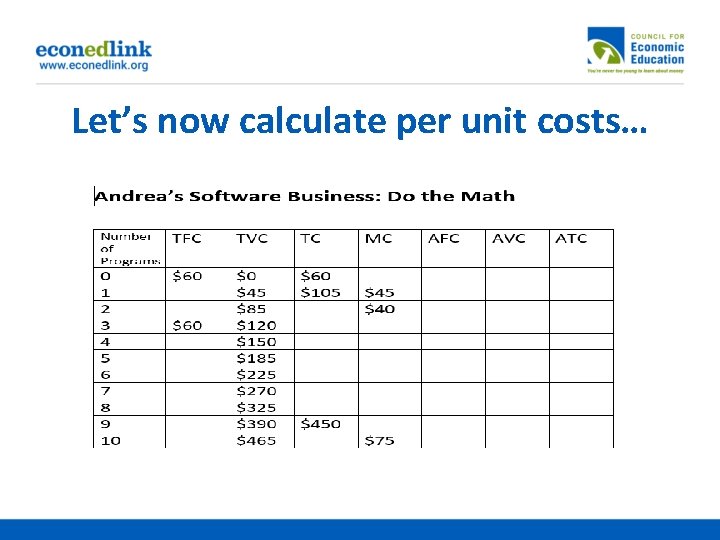
AVERAGE COSTS • Average total cost is also known as unit cost, since it is cost per unit of output produced
Let’s now calculate per unit costs…
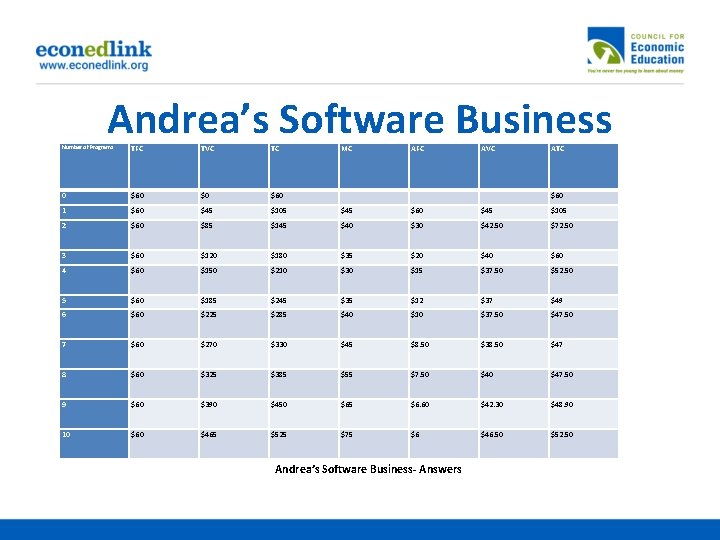
Andrea’s Software Business Number of Programs TFC TVC TC MC AFC AVC ATC 0 $60 $0 $60 1 $60 $45 $105 $45 $60 $45 $105 2 $60 $85 $145 $40 $30 $42. 50 $72. 50 3 $60 $120 $180 $35 $20 $40 $60 4 $60 $150 $210 $30 $15 $37. 50 $52. 50 5 $60 $185 $245 $35 $12 $37 $49 6 $60 $225 $285 $40 $10 $37. 50 $47. 50 7 $60 $270 $330 $45 $8. 50 $38. 50 $47 8 $60 $325 $385 $55 $7. 50 $47. 50 9 $60 $390 $450 $65 $6. 60 $42. 30 $48. 90 10 $60 $465 $525 $75 $6 $46. 50 $52. 50 Andrea’s Software Business- Answers
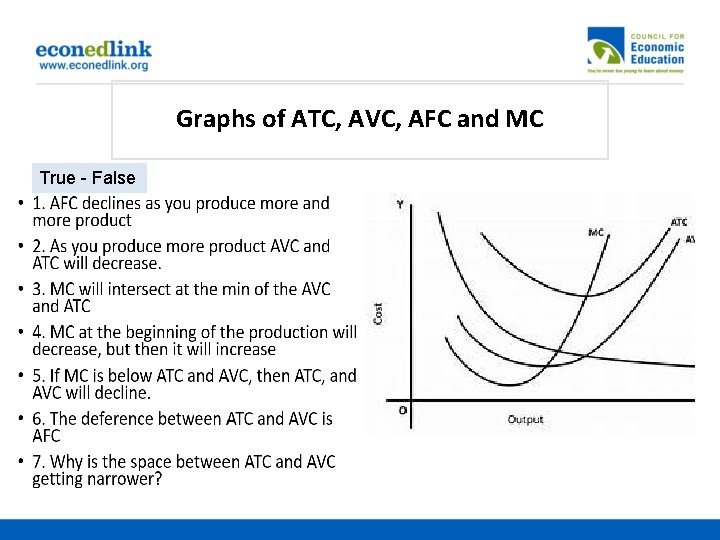
Graphs of ATC, AVC, AFC and MC True - False
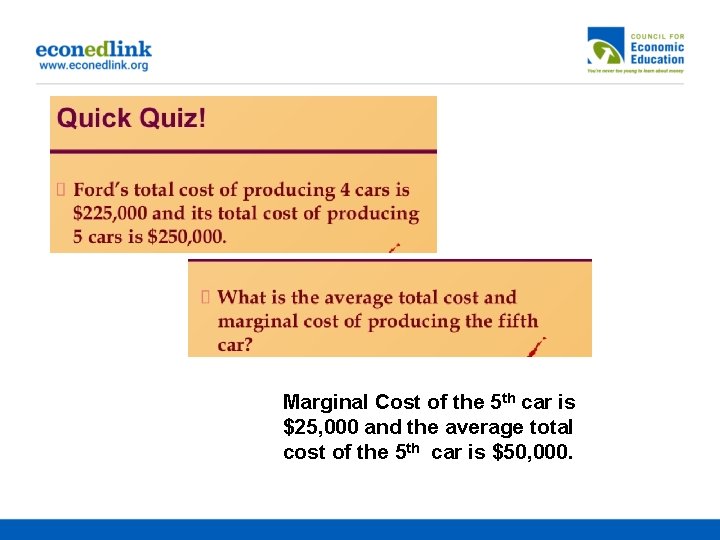
Marginal Cost of the 5 th car is $25, 000 and the average total cost of the 5 th car is $50, 000.
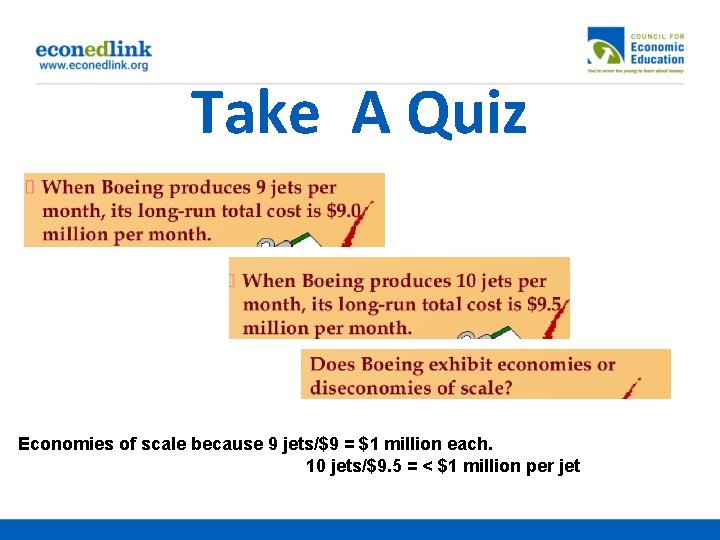
Take A Quiz Economies of scale because 9 jets/$9 = $1 million each. 10 jets/$9. 5 = < $1 million per jet
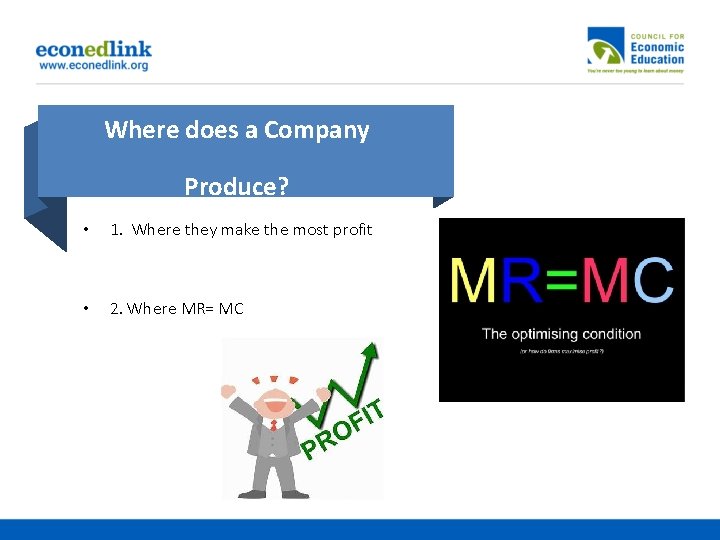
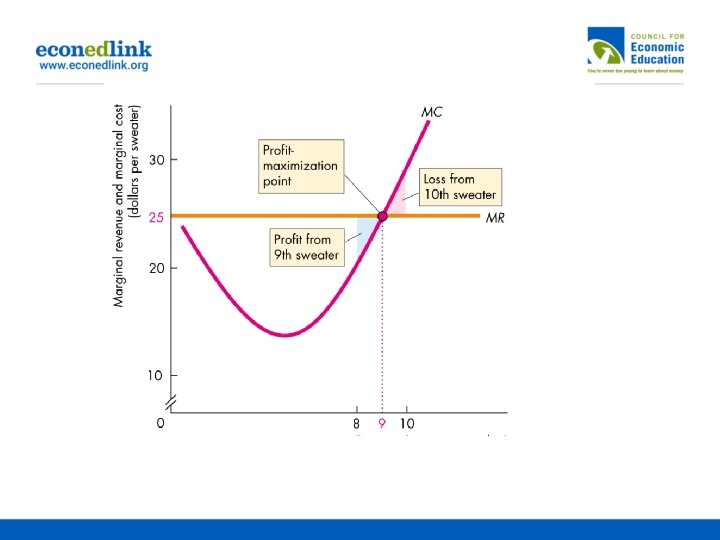
Where does a Company Produce? • 1. Where they make the most profit • 2. Where MR= MC
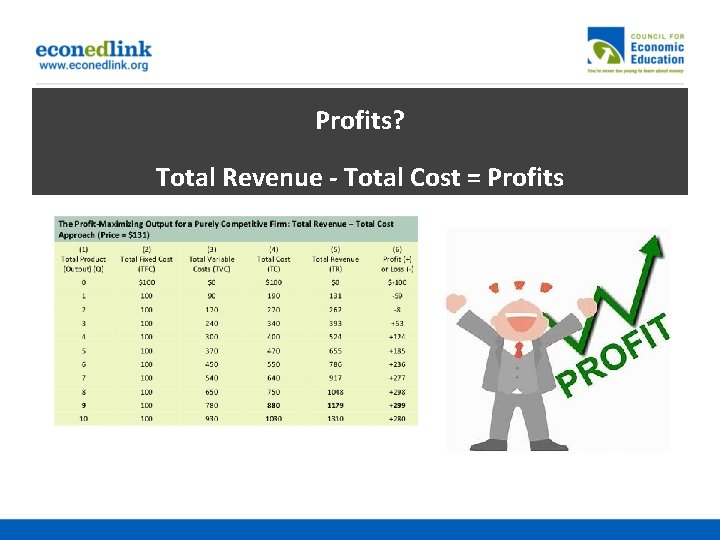
Profits? Total Revenue - Total Cost = Profits
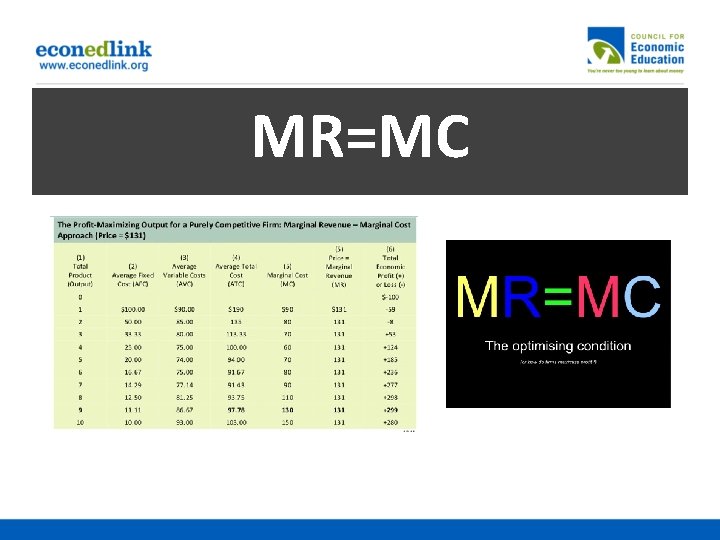
MR=MC
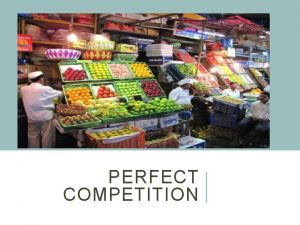
PERFECT COMPETITION
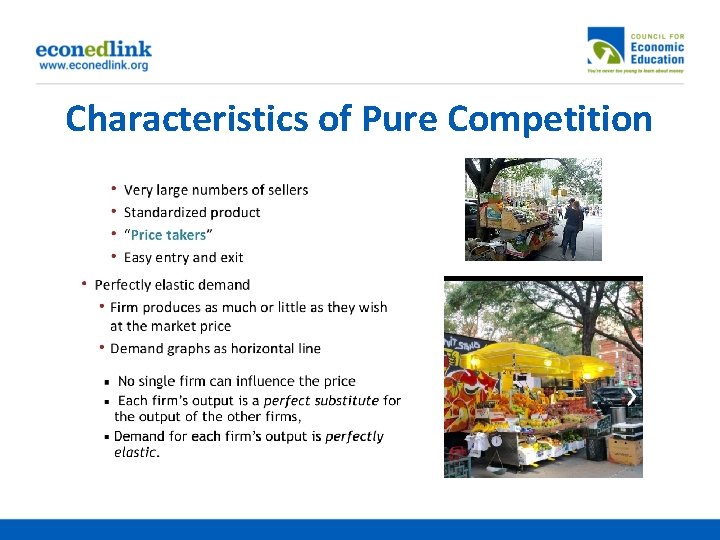
Characteristics of Pure Competition
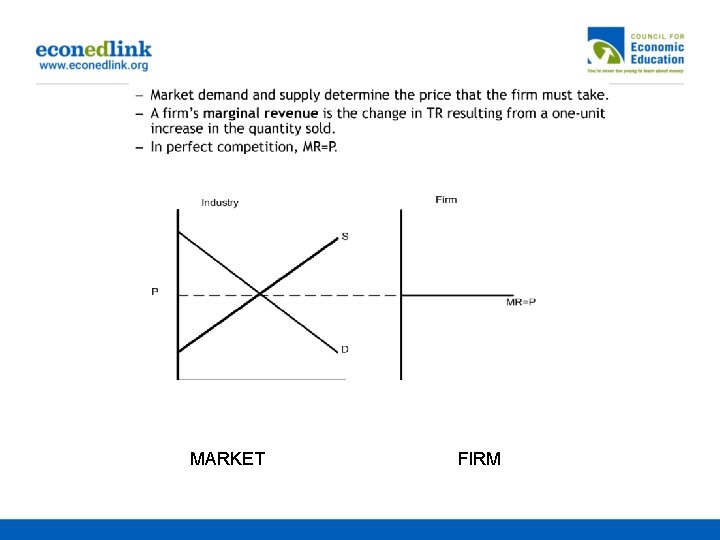
MARKET FIRM
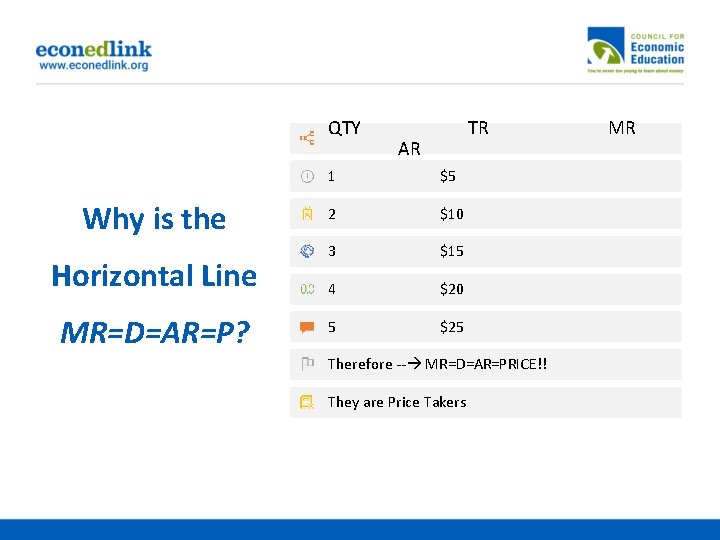
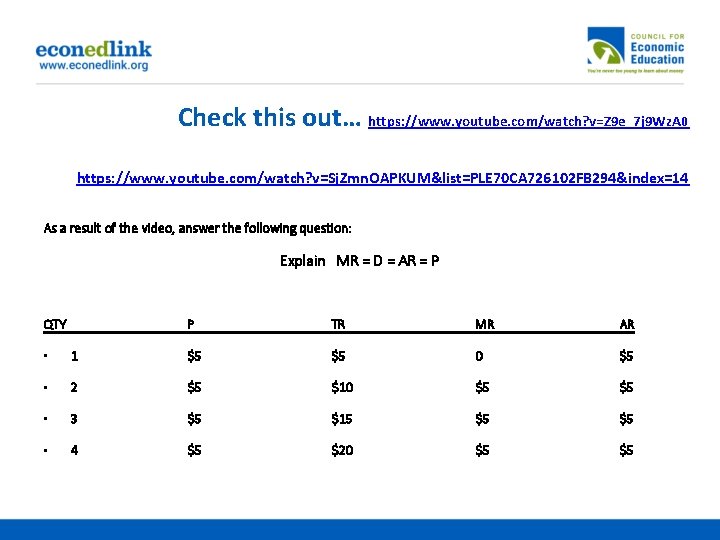
QTY Why is the Horizontal Line MR=D=AR=P? TR AR 1 $5 2 $10 3 $15 4 $20 5 $25 Therefore -- MR=D=AR=PRICE!! They are Price Takers MR
Check this out… https: //www. youtube. com/watch? v=Z 9 e_7 j 9 Wz. A 0 https: //www. youtube. com/watch? v=Sj. Zmn. OAPKUM&list=PLE 70 CA 726102 FB 294&index=14 As a result of the video, answer the following question: Explain MR = D = AR = P QTY P TR MR AR • 1 $5 $5 0 $5 • 2 $5 $10 $5 $5 • 3 $5 $15 $5 $5 • 4 $5 $20 $5 $5
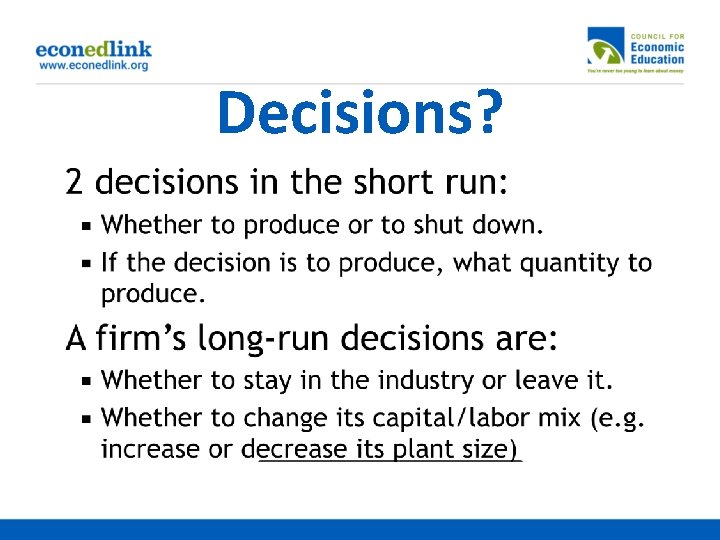
Decisions?
Forrest Gump and the Shrimp Boat Scene • https: //www. youtube. com/watch? v=Tjc. K-LGgt. LA
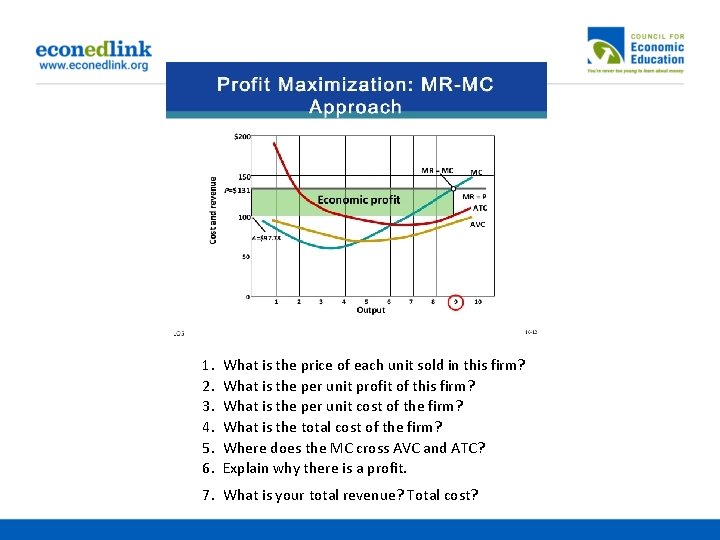
1. 2. 3. 4. 5. 6. What is the price of each unit sold in this firm? What is the per unit profit of this firm? What is the per unit cost of the firm? What is the total cost of the firm? Where does the MC cross AVC and ATC? Explain why there is a profit. 7. What is your total revenue? Total cost?
Pure Competition: Short Run Long Run (Profit)
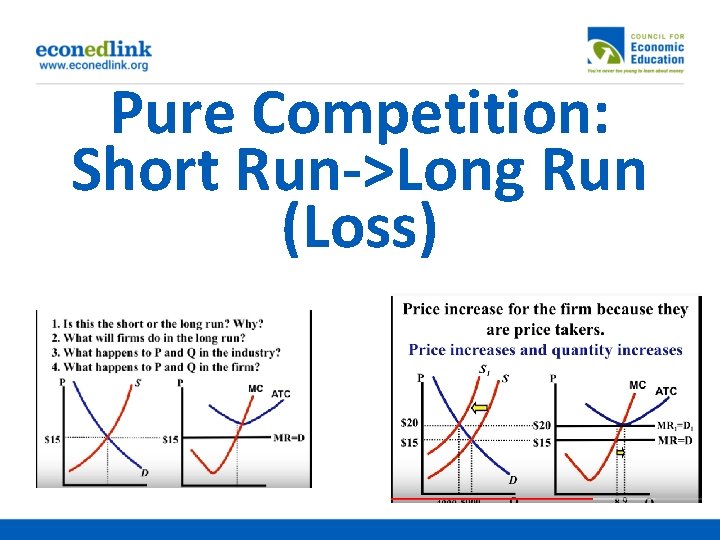
Pure Competition: Short Run->Long Run (Loss)
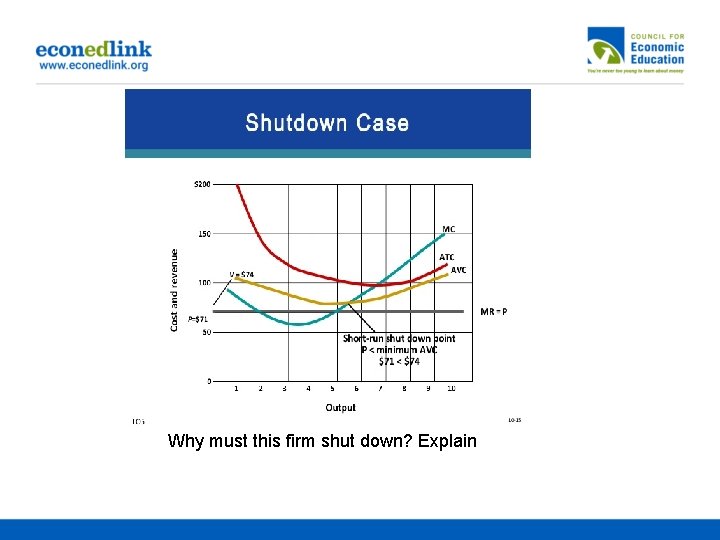
Why must this firm shut down? Explain
Review of Pure Competition
CEE Affiliates https: //www. councilforeconed. org/resources/local-affiliates/
Thank you for sharing the evening with me I hope that the information that I presented helps you in the classroom with your students when studying Cost of Production and Perfect Competition