Community Ecology I Competition I Intro to Community



- Slides: 36
Community Ecology I Competition I. Intro to Community Ecology Reading: Chap. 13 A. What is a community? B. Types of interactions C. Regulation of population dynamics II. Competition A. Terms and Concepts B. Competitive exclusion principle C. Factors that allow for coexistence D. Predicting Outcomes of Comp.
I. A. What is a community? Definition: Any assemblage of populations in an area or habitat, i. e. , all the different species interacting in a given location Encompasses many populations of different species.
Questions - How do biotic interactions affect the distribution of particular species? - What biotic interactions structure communities? - What factors cause changes in species richness across community types?
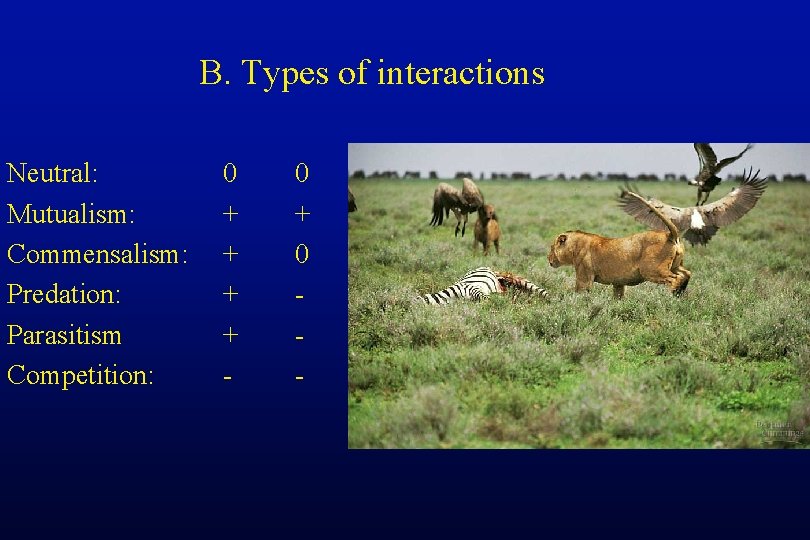
B. Types of interactions Neutral: Mutualism: Commensalism: Predation: Parasitism Competition: 0 + + - 0 + 0 -
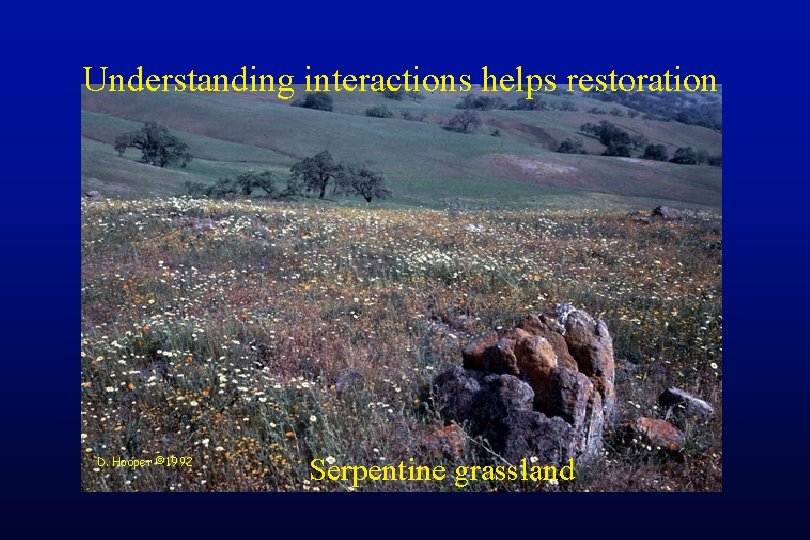
Understanding interactions helps restoration D. Hooper © 1992 Serpentine grassland
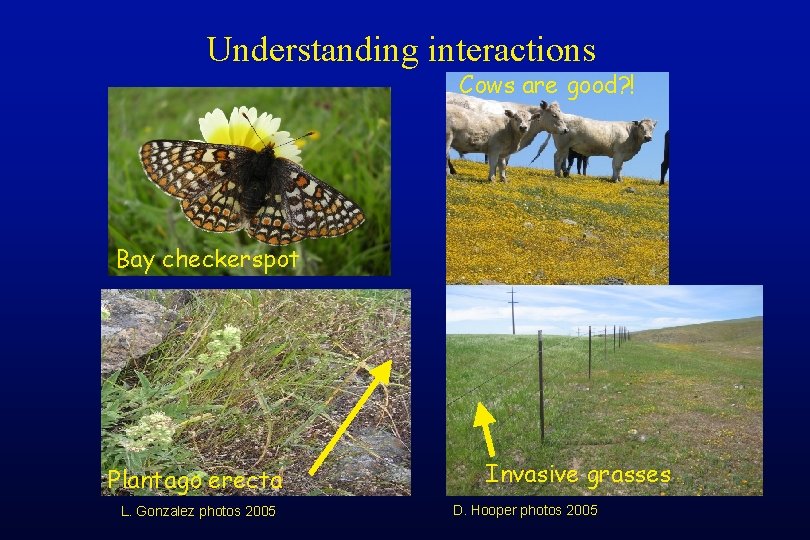
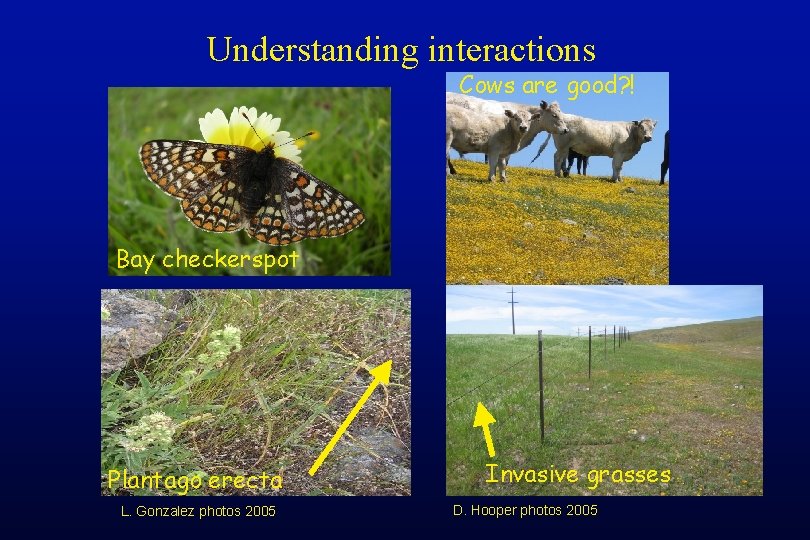
Understanding interactions Cows are good? ! Bay checkerspot Plantago erecta L. Gonzalez photos 2005 Invasive grasses D. Hooper photos 2005
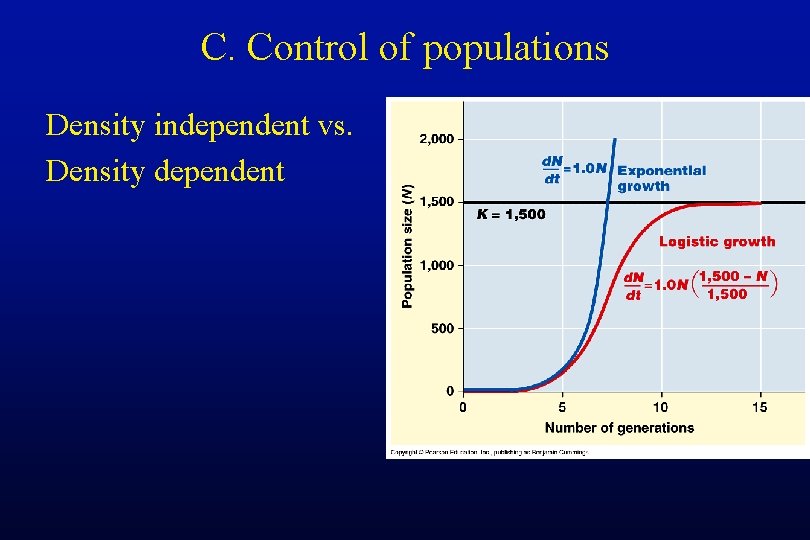
C. Control of populations Density independent vs. Density dependent
II. Competition (-/-) Multiple organisms or species trying to maximize their own use of a limited pool of resources.
II. Competition A. Terms B. Exploitative C. Interference
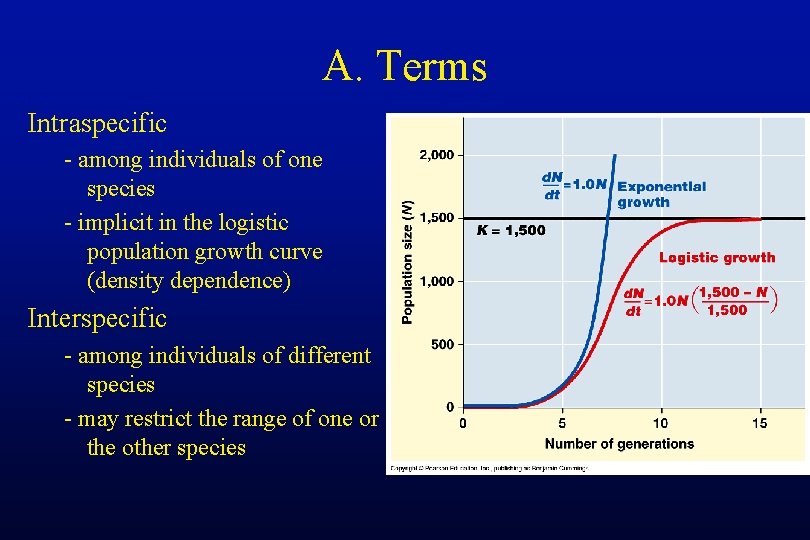
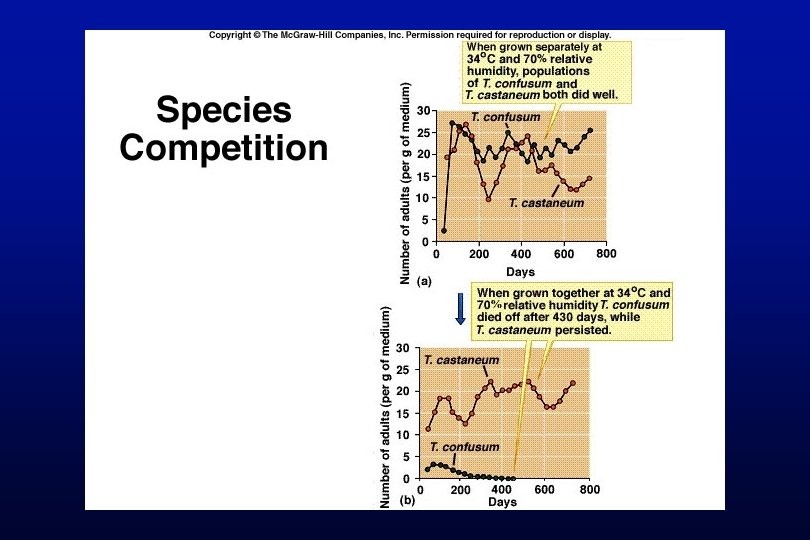
A. Terms Intraspecific - among individuals of one species - implicit in the logistic population growth curve (density dependence) Interspecific - among individuals of different species - may restrict the range of one or the other species
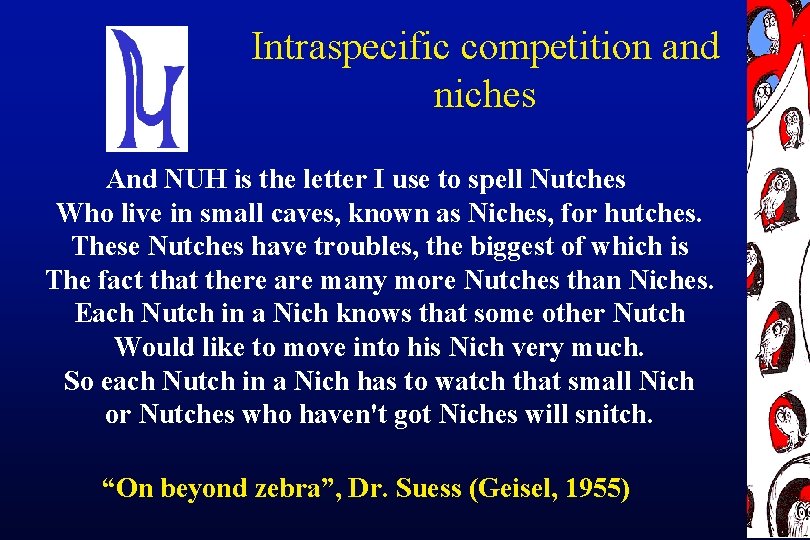
Intraspecific competition and niches And NUH is the letter I use to spell Nutches Who live in small caves, known as Niches, for hutches. These Nutches have troubles, the biggest of which is The fact that there are many more Nutches than Niches. Each Nutch in a Nich knows that some other Nutch Would like to move into his Nich very much. So each Nutch in a Nich has to watch that small Nich or Nutches who haven't got Niches will snitch. “On beyond zebra”, Dr. Suess (Geisel, 1955)
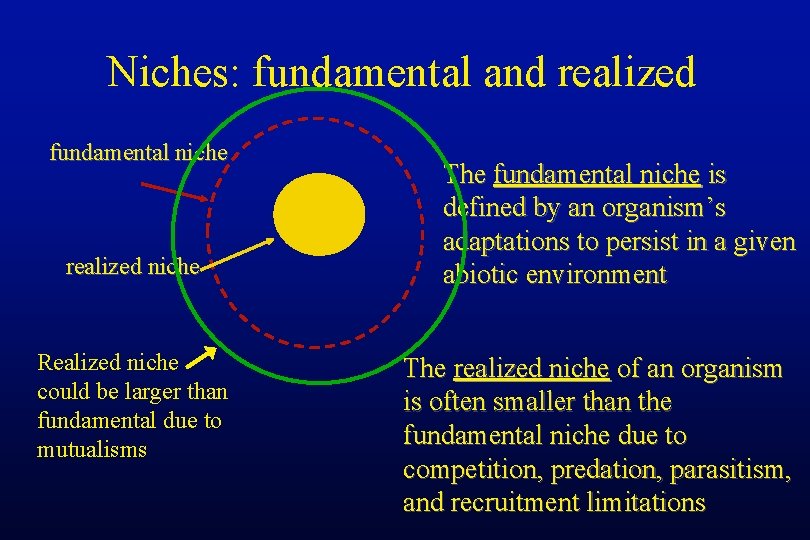
A. Terms Niche n-dimensional hypervolume Fundamental vs. Realized
Niches: fundamental and realized fundamental niche realized niche Realized niche could be larger than fundamental due to mutualisms The fundamental niche is defined by an organism’s adaptations to persist in a given abiotic environment The realized niche of an organism is often smaller than the fundamental niche due to competition, predation, parasitism, and recruitment limitations
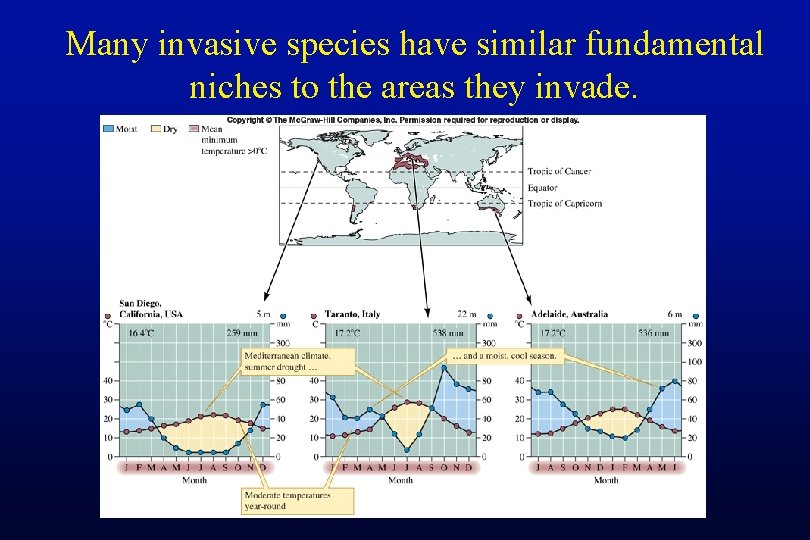
Many invasive species have similar fundamental niches to the areas they invade.
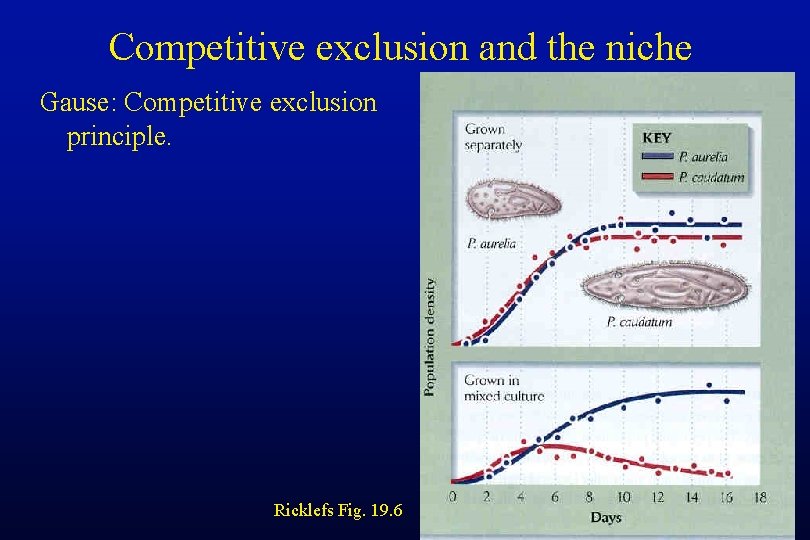
B. Competitive exclusion principle
Competitive exclusion and the niche Gause: Competitive exclusion principle. Ricklefs Fig. 19. 6
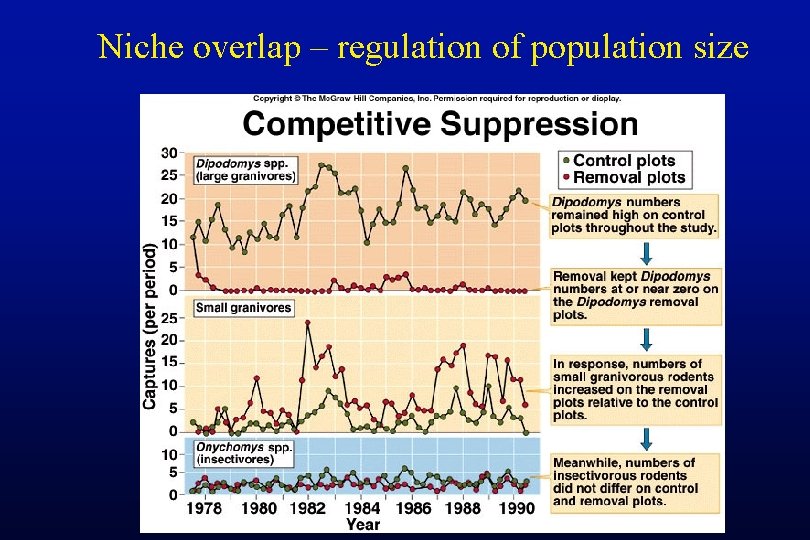
Niche overlap – regulation of population size
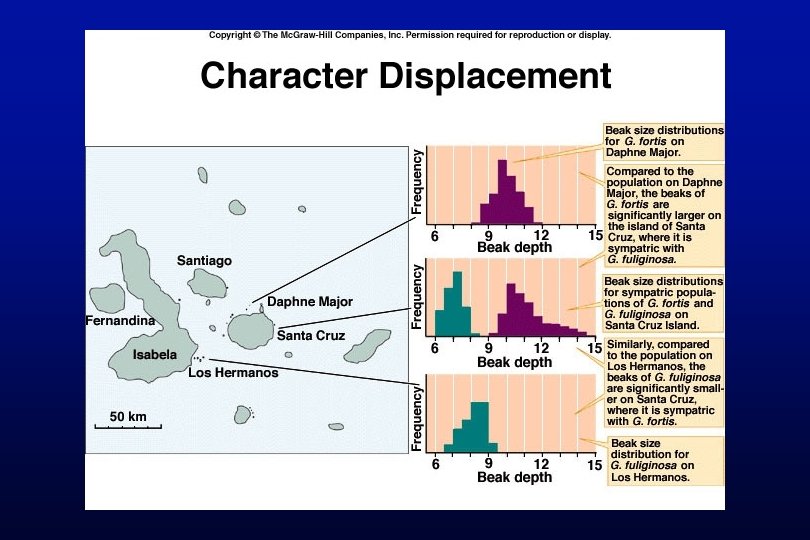
C. What allows coexistence? 1. Non-overlapping niches 2. 2. Variable environmental conditions 3. 3. Other species interactions
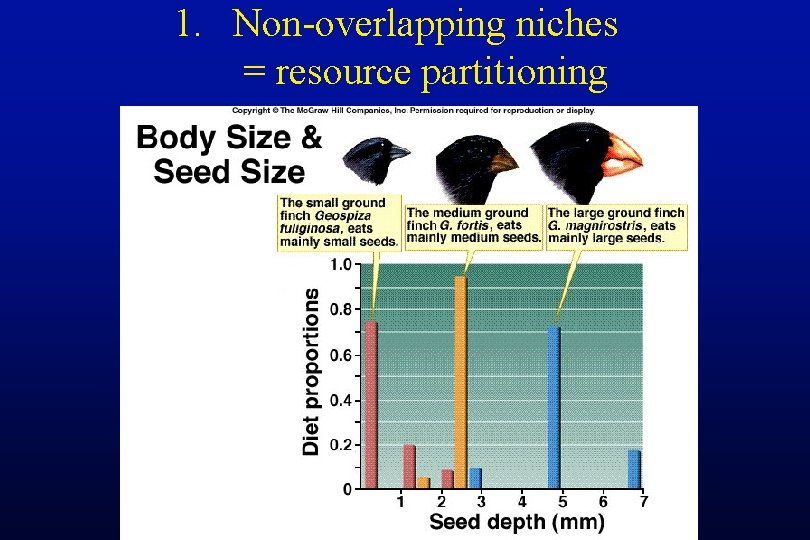
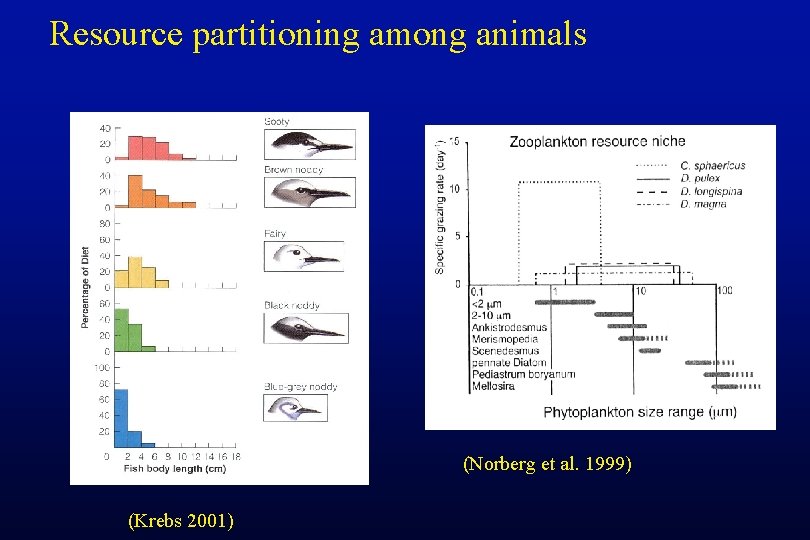
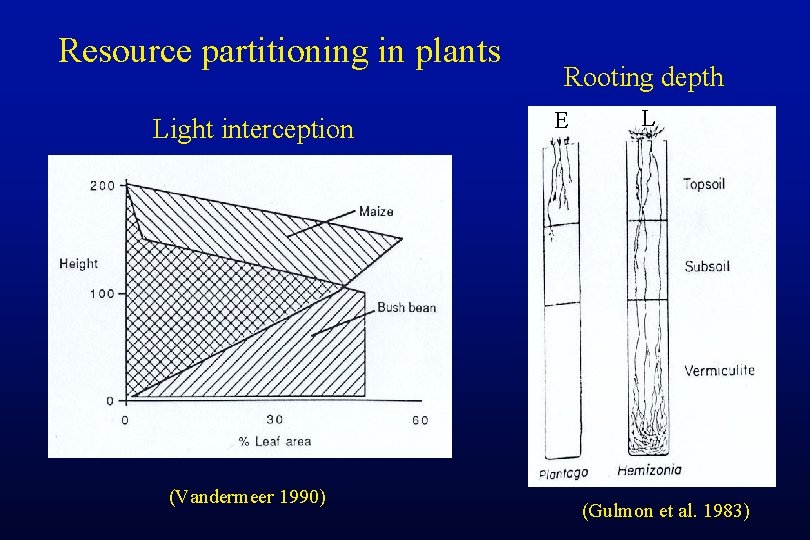
1. Non-overlapping niches = resource partitioning
Resource partitioning among animals (Norberg et al. 1999) (Krebs 2001)
Resource partitioning in plants Light interception (Vandermeer 1990) Rooting depth E L (Gulmon et al. 1983)
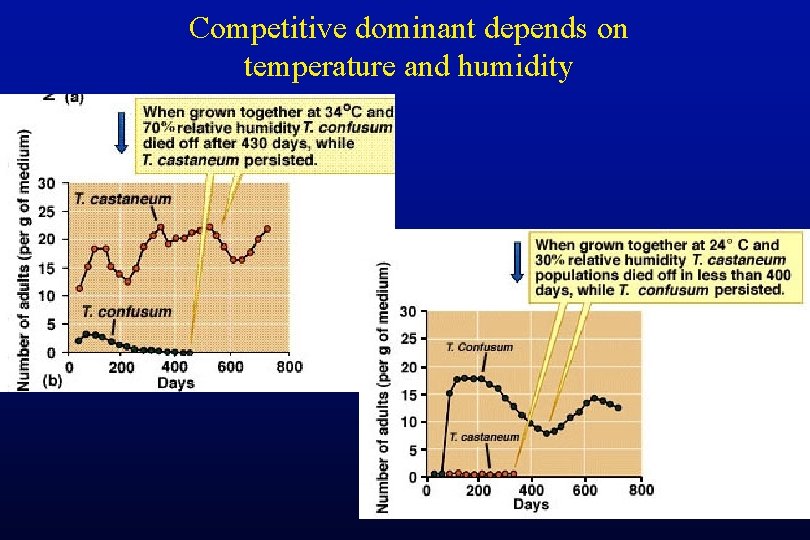
2. Variation in environmental conditions
Competitive dominant depends on temperature and humidity
Climatic variability and coexistence Goldfields Plantago D. Hooper photos 2005
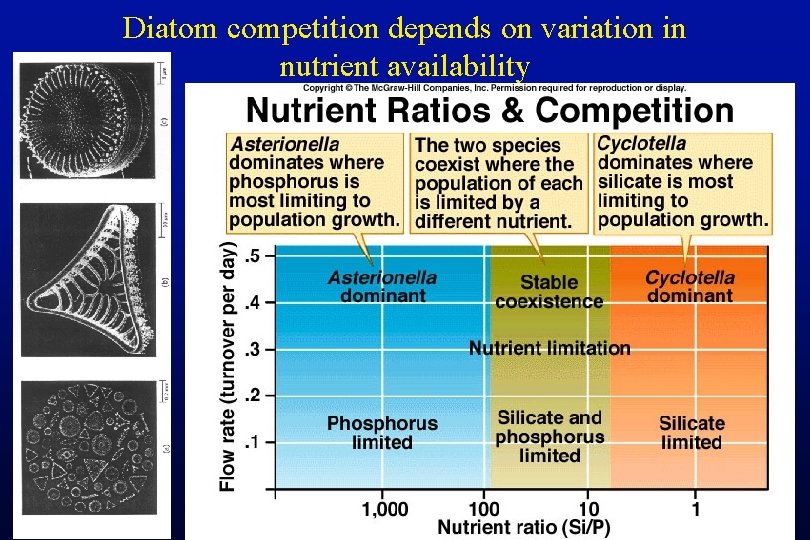
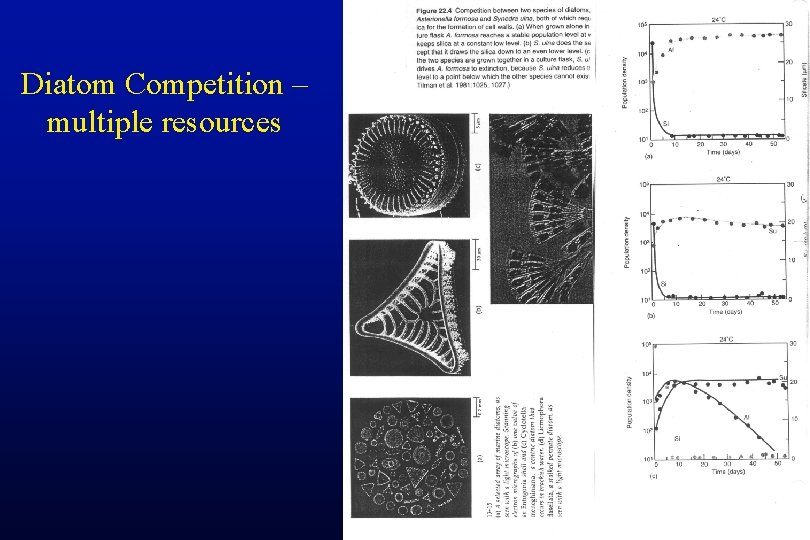
Diatom competition depends on variation in nutrient availability
3. Effects of other species interactions (see Ecobeaker barnacles) Predation can lead to coexistence if… • Selective predation 2. for the competitive dominant.
Understanding interactions Cows are good? ! Bay checkerspot Plantago erecta L. Gonzalez photos 2005 Invasive grasses D. Hooper photos 2005
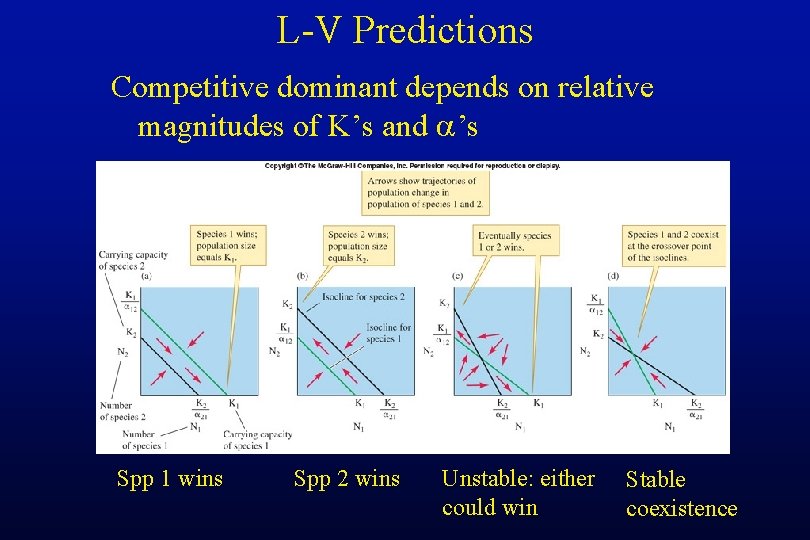
D. Predicting Outcomes of Competition Lotka-Volterra models • Models • Outcomes • Assumptions
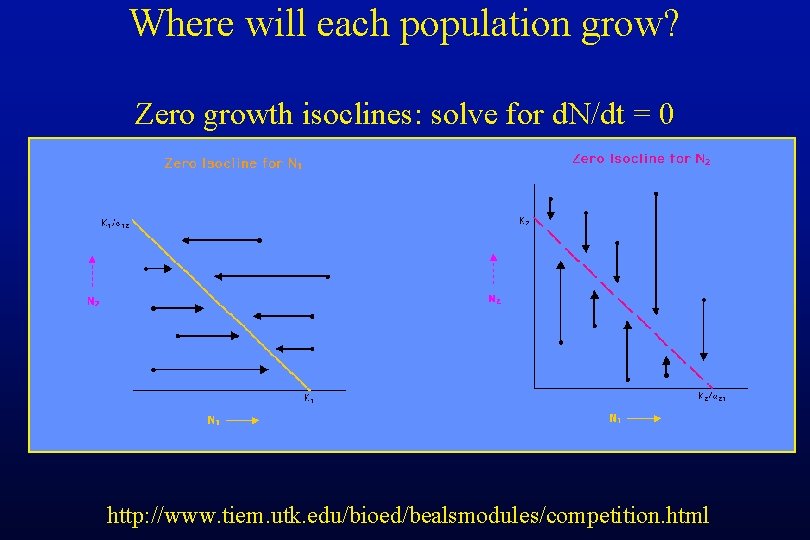
Where will each population grow? Zero growth isoclines: solve for d. N/dt = 0 http: //www. tiem. utk. edu/bioed/bealsmodules/competition. html
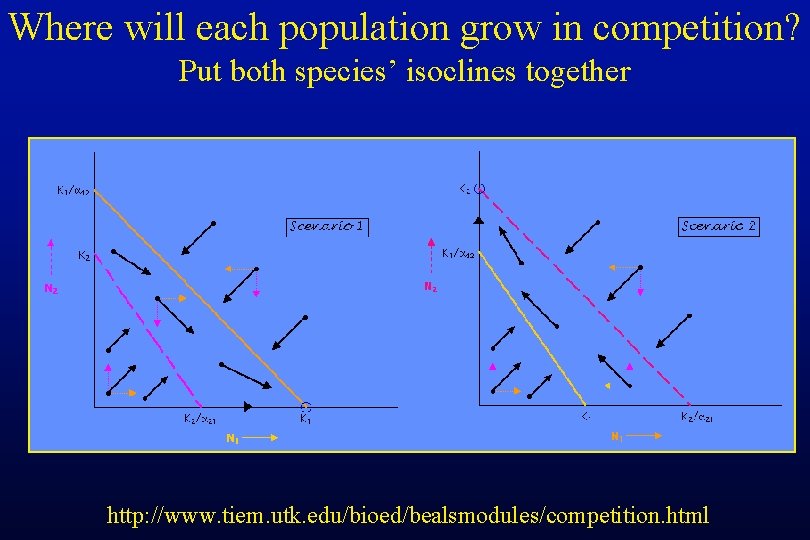
Where will each population grow in competition? Put both species’ isoclines together http: //www. tiem. utk. edu/bioed/bealsmodules/competition. html
L-V Predictions Competitive dominant depends on relative magnitudes of K’s and a’s Spp 1 wins Spp 2 wins Unstable: either could win Stable coexistence
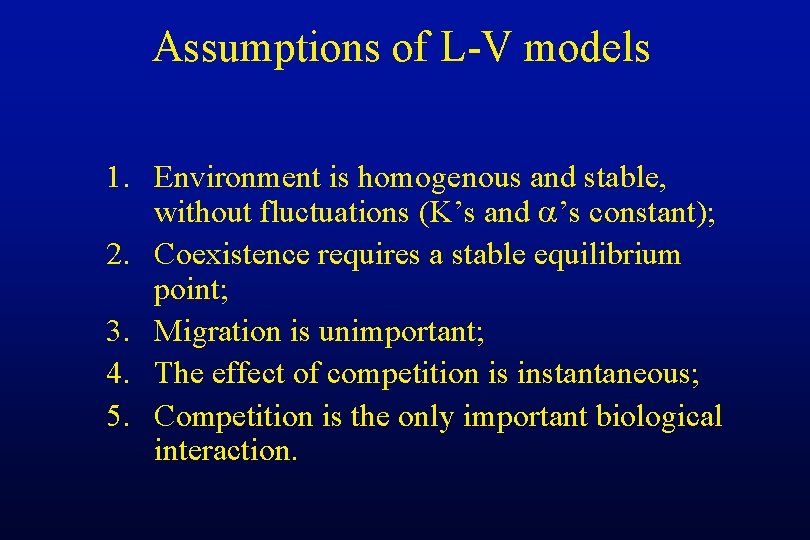
Assumptions of L-V models 1. Environment is homogenous and stable, without fluctuations (K’s and a’s constant); 2. Coexistence requires a stable equilibrium point; 3. Migration is unimportant; 4. The effect of competition is instantaneous; 5. Competition is the only important biological interaction.
End
Diatom Competition – multiple resources