Coaching The Art and Science Dont judge each
- Slides: 25
Coaching: The Art and Science “Don't judge each day by the harvest you reap but by the seeds that you plant. ” Robert Louis Stevenson
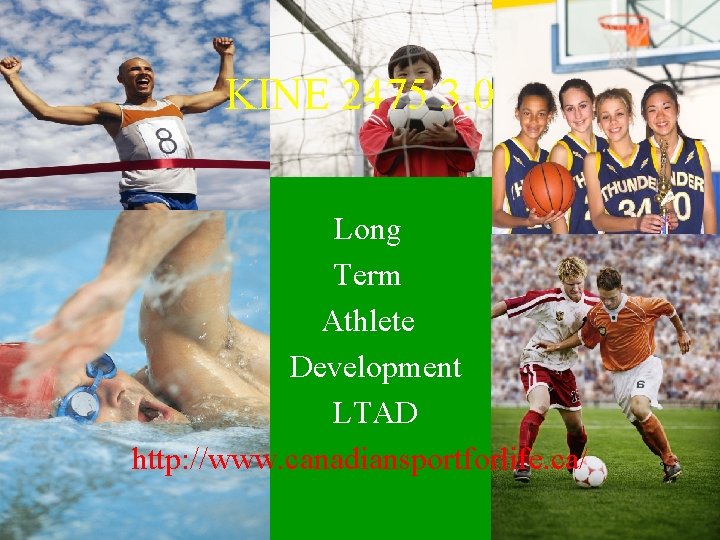
KINE 2475 3. 0 Long Term Athlete Development LTAD http: //www. canadiansportforlife. ca/
Key Factors Influencing LTAD Principles Research Based 1. 2. 3. 4. 5. 10 Year Rule FUNdamentals Specialization Developmental Age Trainability 1. Physical, Mental, Cognitive and Emotional Development 2. Periodization 3. Calendar Planning for Competition 4. System Alignment and Integration 5. Continuous Improvement
1. 10 Year Rule • Minimum 10 years and 10, 000 hours of training to reach elite levels – 3 hours training/competition daily for 10 years • U. S. Olympian Initial Sport Participation – Males age 12. 0 - Females age 11. 5 • 12 to 13 years talent development before making Olympic team • Olympic medallists 1. 3 to 3. 6 years younger going through first 5 stages of development than non medallists – basic motor skill development superior • CAUTION regarding early specialization
2. FUNdamentals • http: //www. youtube. com/watch? v=DBu. D 8 HMja-k • FUNdamental movements and skills should be introduced through fun and games • FUNdamental overall sports skills should be developed prior to specific sports skills • Physical literacy refers to competency in FUNdamental movement and sports skills • Physical literacy should be developed prior to onset of growth spurt
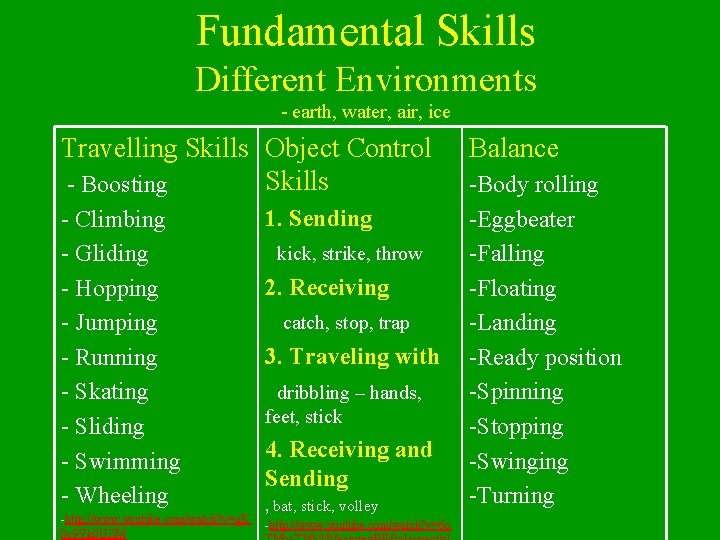
Fundamental Skills Different Environments - earth, water, air, ice Travelling Skills Object Control Skills - Boosting - Climbing - Gliding - Hopping - Jumping - Running - Skating - Sliding - Swimming - Wheeling 1. Sending -http: //www. youtube. com/watch? v=q. K 0 c 9 Vk 0 UZM -http: //www. youtube. com/watch? v=6 o kick, strike, throw 2. Receiving catch, stop, trap 3. Traveling with dribbling – hands, feet, stick 4. Receiving and Sending , bat, stick, volley Balance -Body rolling -Eggbeater -Falling -Floating -Landing -Ready position -Spinning -Stopping -Swinging -Turning
LTAD • http: //www. youtube. com/watch? v=6 o. TMos. Z 76 b 8&feature=BF&playn ext=1&list=QL&index=2 - fantasy football • http: //today. msnbc. msn. com/id/3041445/vp/40839182#40839182 – should baby go pro • http: //www. youtube. com/watch? v=mzzn 893 Rh. V 0 - basic motor skills • http: //www. youtube. com/watch? v=6 Ofg. IN 5 Lbf 4&playnext=1&list=P L 0 A 7618 EE 2 FD 97 FCA - physical literacy
FUNdamental Skills • Basic movements of 3 activities provide base for all other sports – Athletics • run, jump, throw – Gymnastics: ABC’s of athleticism • Agility, balance, co-ordination, speed – Swimming • Foundation for all water sports • Without basic movement skills, child will have difficulty in any sport • http: //www. youtube. com/watch? v=ubn. Z 3 Dao 9 O 8 - fundamental skills
3. Specialization • Classifications: Early or late specialization sports • Early: most artistic/acrobatic sports (females) – Complex skills learned before maturation, difficulty mastering after maturation • Physical literacy acquired prior to maturation, can select late specialization sports and have potential for international success • Specialize before age 10 – One sided sport specific preparation – Lack of ABC’s – physical literacy • Overuse injuries, early burnout, early retirement
4. Developmental Age • Glossary – pg. 58 reference manual • Developmental age – Degree of physical, mental, cognitive and emotional maturity • Chronological age – Number of years and days elapsed since birth • Identification of early, average and late maturers critical in relation to optimal trainablity and competition design
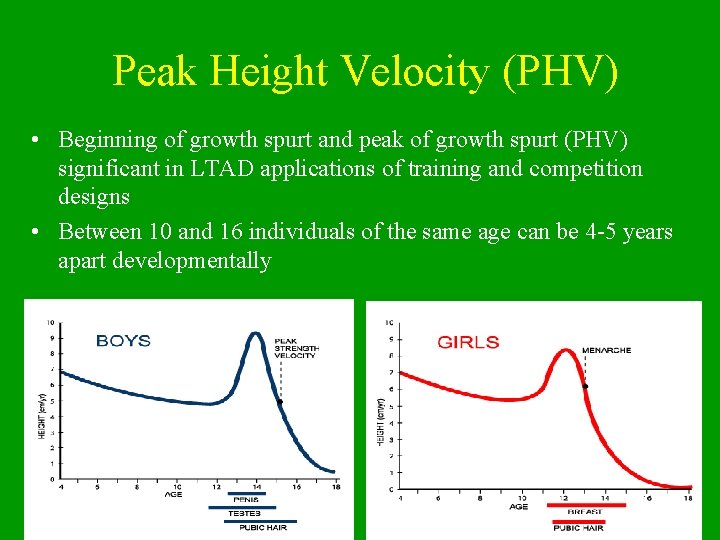
Peak Height Velocity (PHV) • Beginning of growth spurt and peak of growth spurt (PHV) significant in LTAD applications of training and competition designs • Between 10 and 16 individuals of the same age can be 4 -5 years apart developmentally
5. Trainability • Adaptation – Functional and/or physical changes in the body resulting from a training stimulus – Degree of adaptation a function of genetic endowment – General trends identified by exercise physiology research • Trainability – Responsiveness of developing individuals to training stimulus at different stages of growth and maturation
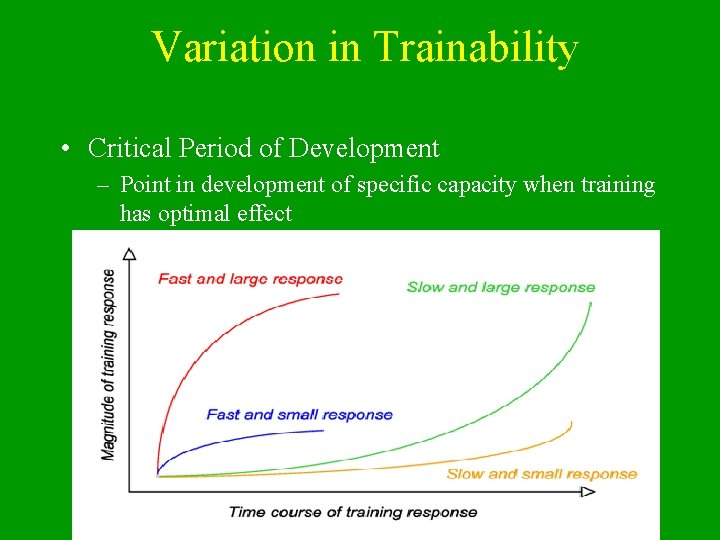
Variation in Trainability • Critical Period of Development – Point in development of specific capacity when training has optimal effect
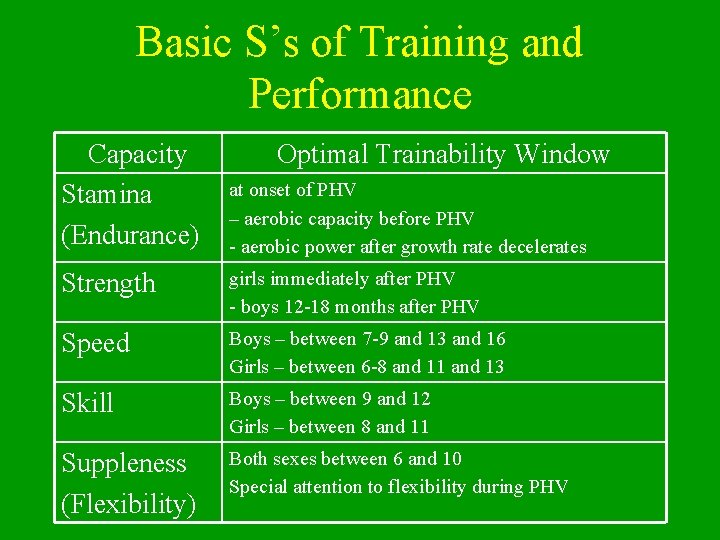
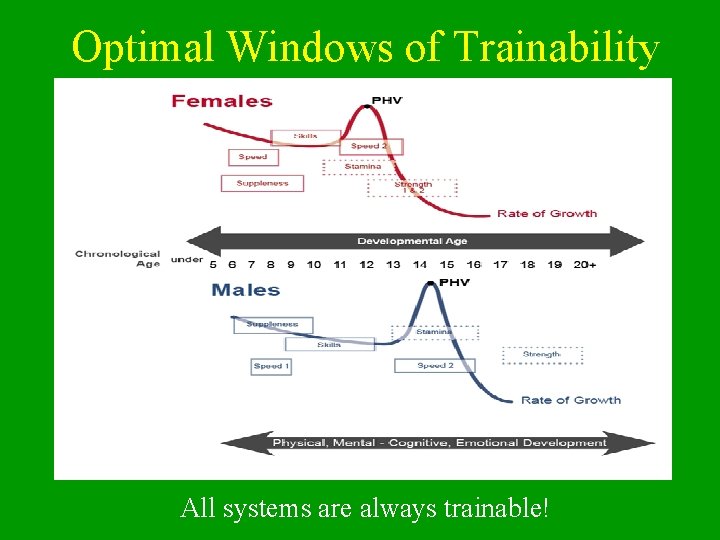
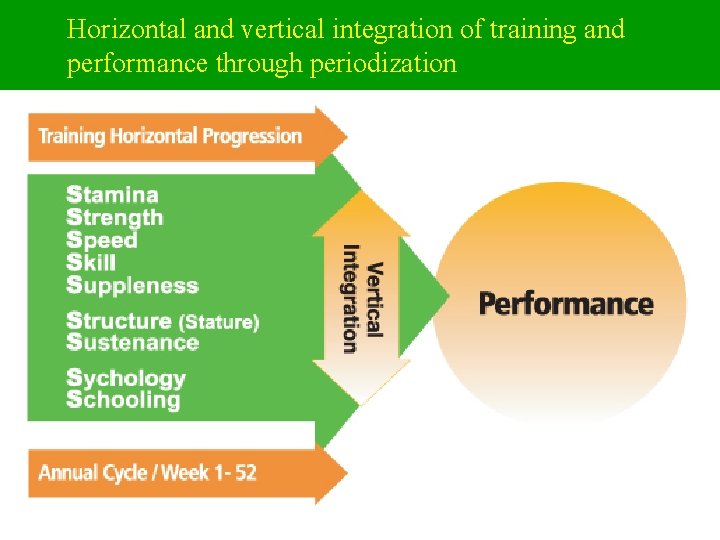
Basic S’s of Training and Performance Capacity Stamina (Endurance) Optimal Trainability Window at onset of PHV – aerobic capacity before PHV - aerobic power after growth rate decelerates Strength girls immediately after PHV - boys 12 -18 months after PHV Speed Boys – between 7 -9 and 13 and 16 Girls – between 6 -8 and 11 and 13 Skill Boys – between 9 and 12 Girls – between 8 and 11 Suppleness (Flexibility) Both sexes between 6 and 10 Special attention to flexibility during PHV
Optimal Windows of Trainability All systems are always trainable!
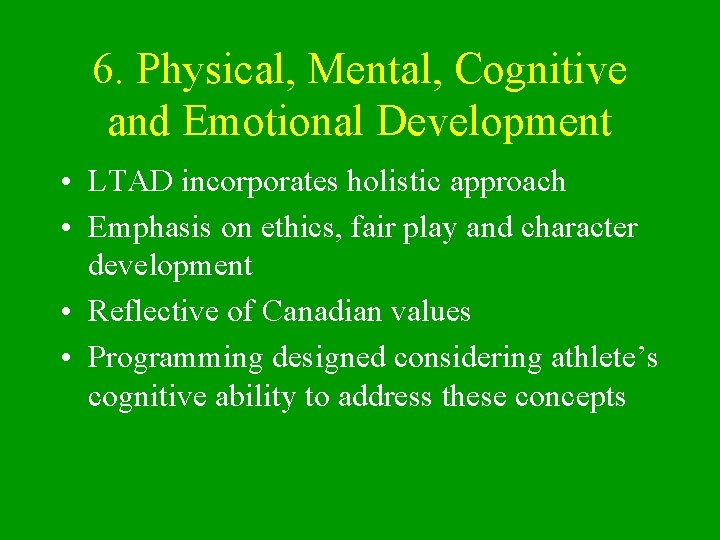
6. Physical, Mental, Cognitive and Emotional Development • LTAD incorporates holistic approach • Emphasis on ethics, fair play and character development • Reflective of Canadian values • Programming designed considering athlete’s cognitive ability to address these concepts
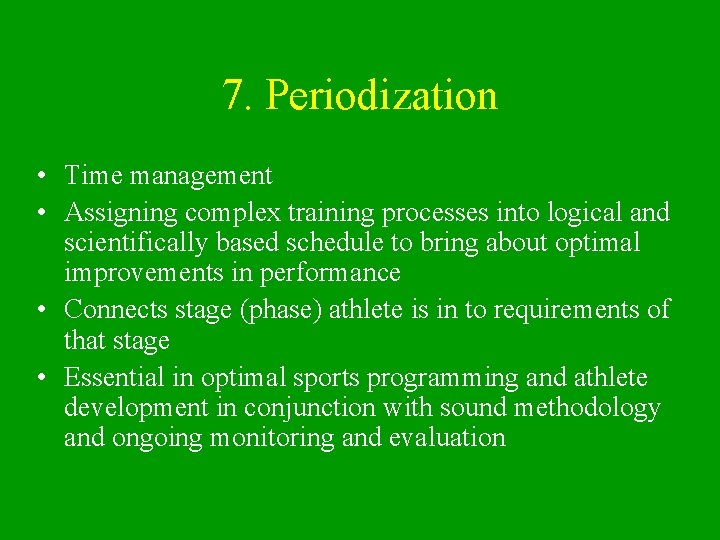
7. Periodization • Time management • Assigning complex training processes into logical and scientifically based schedule to bring about optimal improvements in performance • Connects stage (phase) athlete is in to requirements of that stage • Essential in optimal sports programming and athlete development in conjunction with sound methodology and ongoing monitoring and evaluation
Horizontal and vertical integration of training and performance through periodization
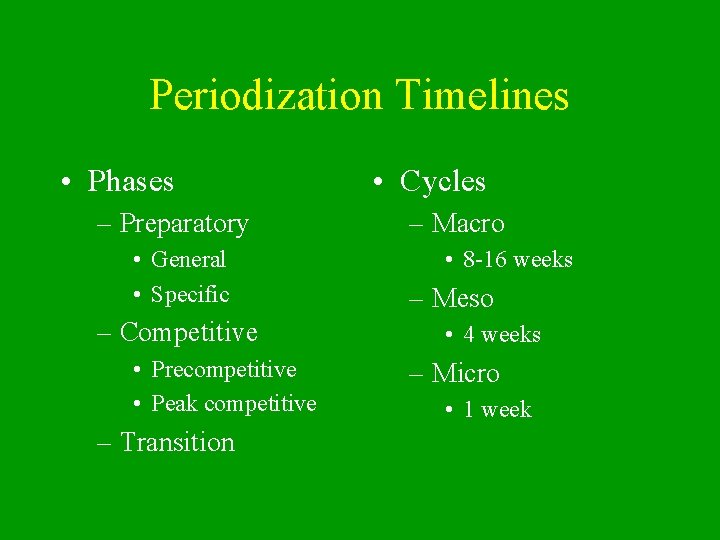
Periodization Timelines • Phases – Preparatory • General • Specific – Competitive • Precompetitive • Peak competitive – Transition • Cycles – Macro • 8 -16 weeks – Meso • 4 weeks – Micro • 1 week
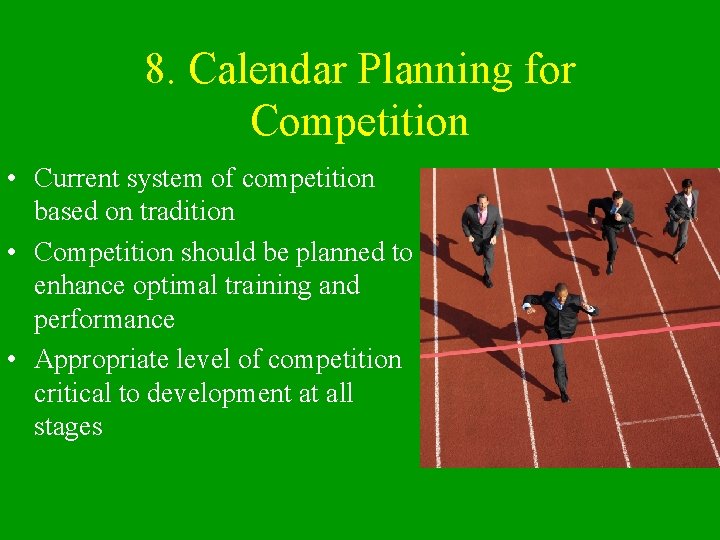
8. Calendar Planning for Competition • Current system of competition based on tradition • Competition should be planned to enhance optimal training and performance • Appropriate level of competition critical to development at all stages
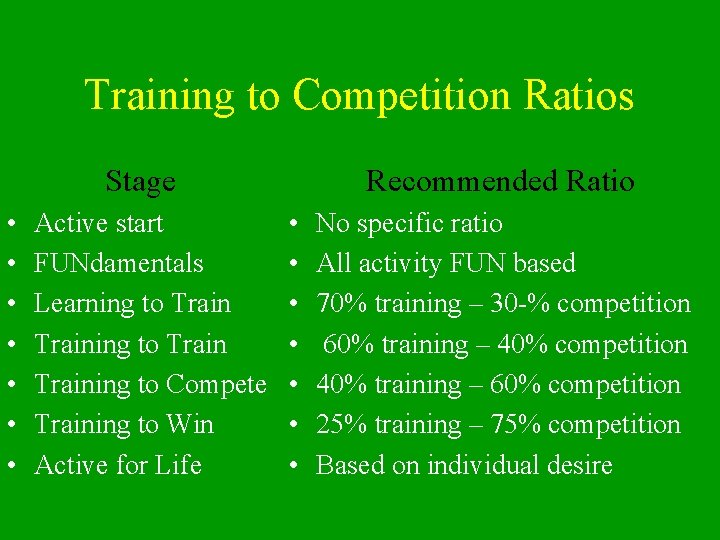
Training to Competition Ratios Stage • • Active start FUNdamentals Learning to Training to Compete Training to Win Active for Life Recommended Ratio • • No specific ratio All activity FUN based 70% training – 30 -% competition 60% training – 40% competition 40% training – 60% competition 25% training – 75% competition Based on individual desire
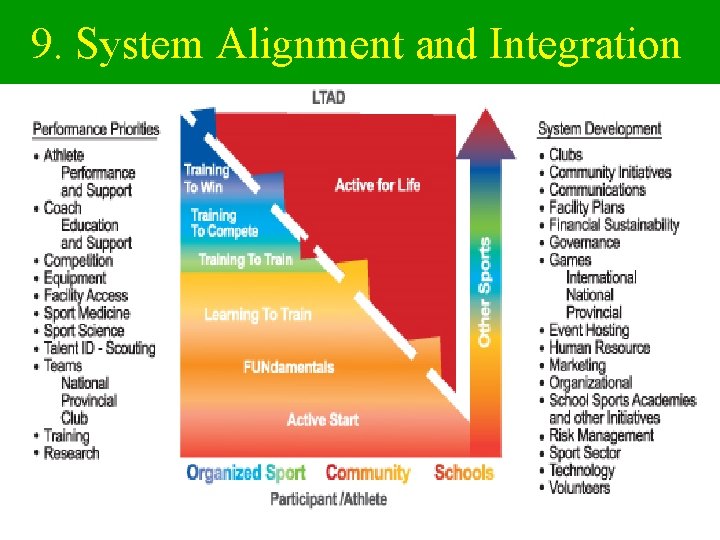
9. System Alignment and Integration
10. Continuous Improvement • Ongoing education • Scientific and sport specific innovations and observations • Continuous research in all aspects • Athlete centered, coach driven • Supported by administration, sport science and sponsors
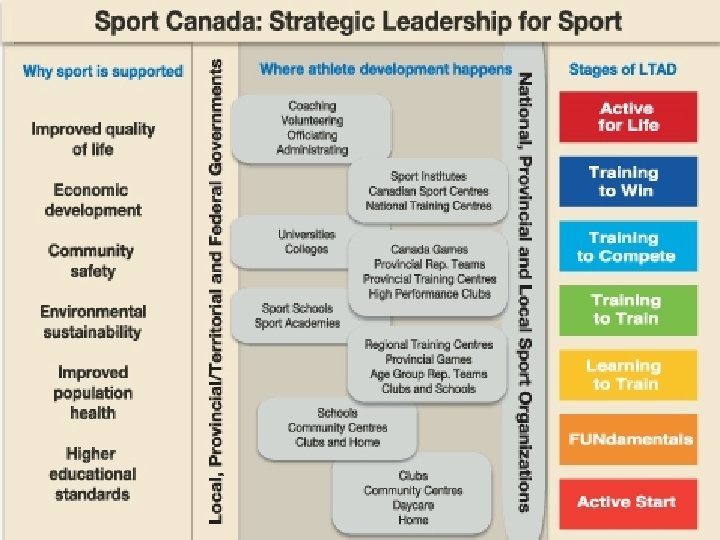
LTAD Summary • Philosophy - athlete centered • Establishes pathway - playground to podium and on to being active for life • Provides guidelines in planning optimal performance for all stages of athlete development • Provides aligned and integrated model for delivering results