Classification of Matter Matter Chemistry is the study




- Slides: 17
Classification of Matter?
Matter Chemistry is the study of matter and how it changes. What is matter? Matter space Mass Light, is anything that has mass and occupies is the amount of matter in an object sound, gravity and electricity examples of non-matter
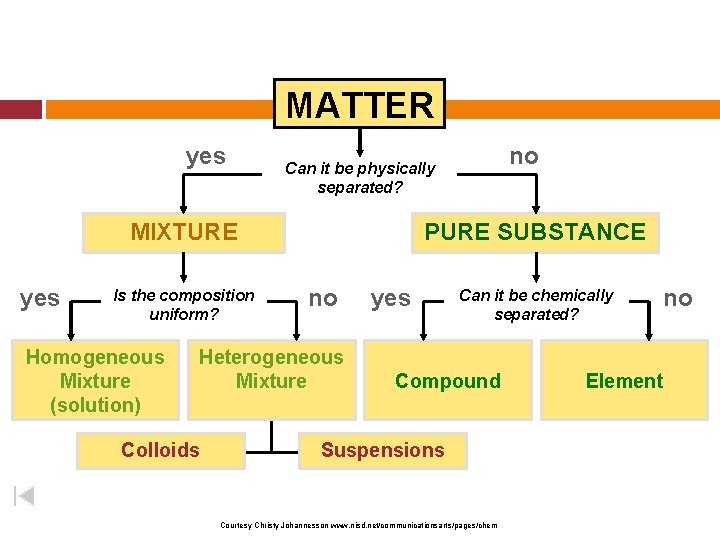
Classifying Matter Just like taxonomy in Biology, matter can be classified according to its properties. Different types of matter are classified in to different groups, Mixtures and Pure substances. They can then be classified even further into compounds and elements (pure substances) and heterogeneous mixtures and homogeneous mixtures (mixtures). Where matter is classified depends on whether it can be physically separated and/or chemically separated.
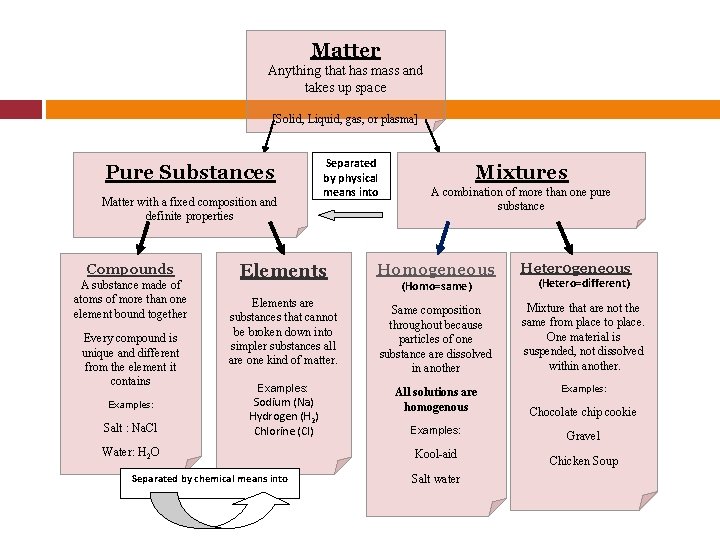
Matter Anything that has mass and takes up space [Solid, Liquid, gas, or plasma] Pure Substances Matter with a fixed composition and definite properties Compounds A substance made of atoms of more than one element bound together Every compound is unique and different from the element it contains Examples: Salt : Na. Cl Separated by physical means into Elements are substances that cannot be broken down into simpler substances all are one kind of matter. Examples: Sodium (Na) Hydrogen (H 2) Chlorine (Cl) Water: H 2 O Separated by chemical means into Mixtures A combination of more than one pure substance Homogeneous Heter 0 geneous (Homo=same) (Hetero=different) Same composition throughout because particles of one substance are dissolved in another Mixture that are not the same from place to place. One material is suspended, not dissolved within another. All solutions are homogenous Examples: Kool-aid Salt water Chocolate chip cookie Gravel Chicken Soup
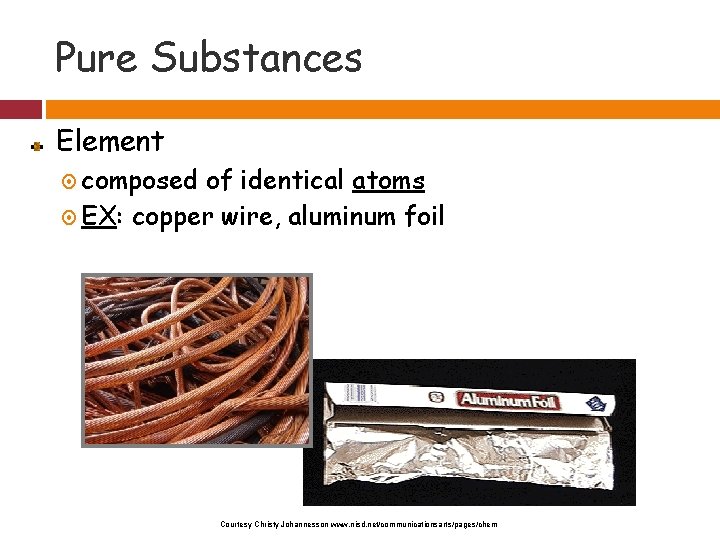
Pure Substances Element composed of identical atoms EX: copper wire, aluminum foil Courtesy Christy Johannesson www. nisd. net/communicationsarts/pages/chem
Pure Substances Compound composed of 2 or more elements in a fixed ratio properties differ from those of individual elements EX: table salt (Na. Cl) Courtesy Christy Johannesson www. nisd. net/communicationsarts/pages/chem
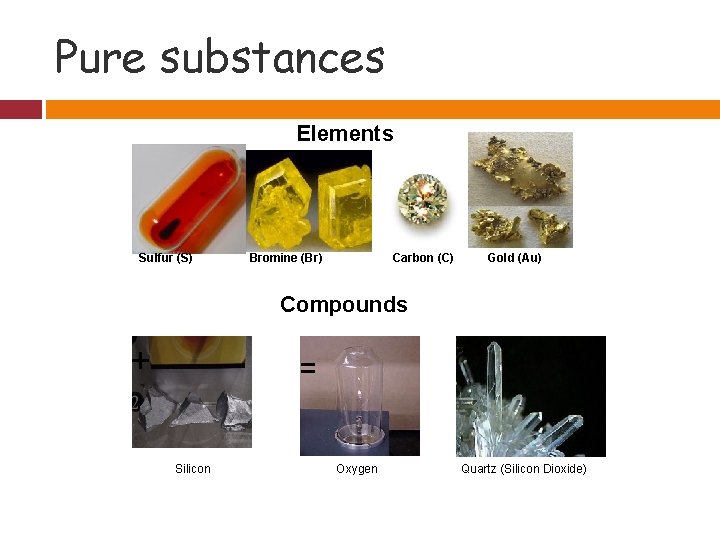
Pure substances Elements Sulfur (S) Bromine (Br) Carbon (C) Gold (Au) Compounds + = Silicon Oxygen Quartz (Silicon Dioxide)
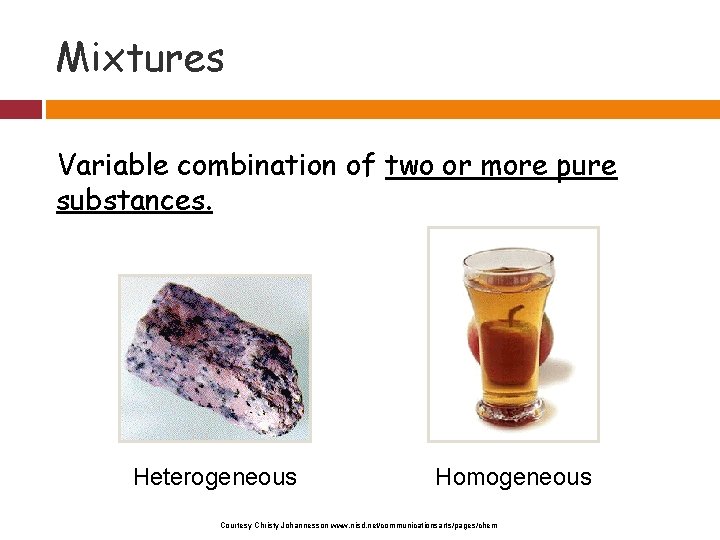
Mixtures Variable combination of two or more pure substances. Heterogeneous Homogeneous Courtesy Christy Johannesson www. nisd. net/communicationsarts/pages/chem
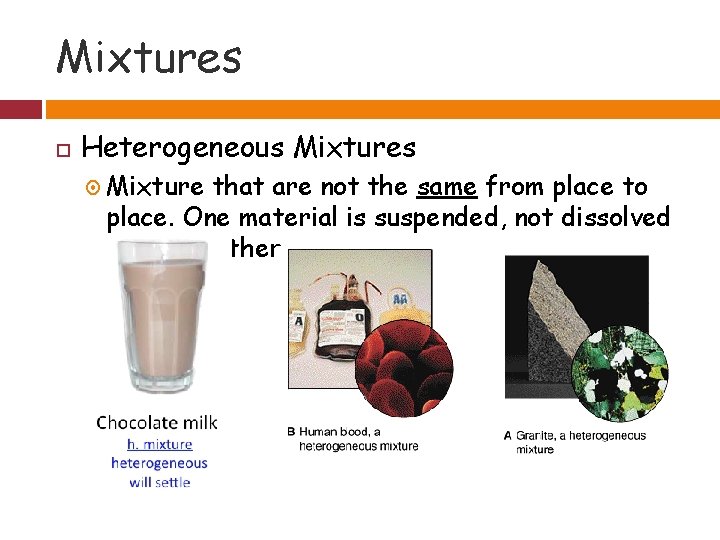
Mixtures Heterogeneous Mixtures Mixture that are not the same from place to place. One material is suspended, not dissolved within another.
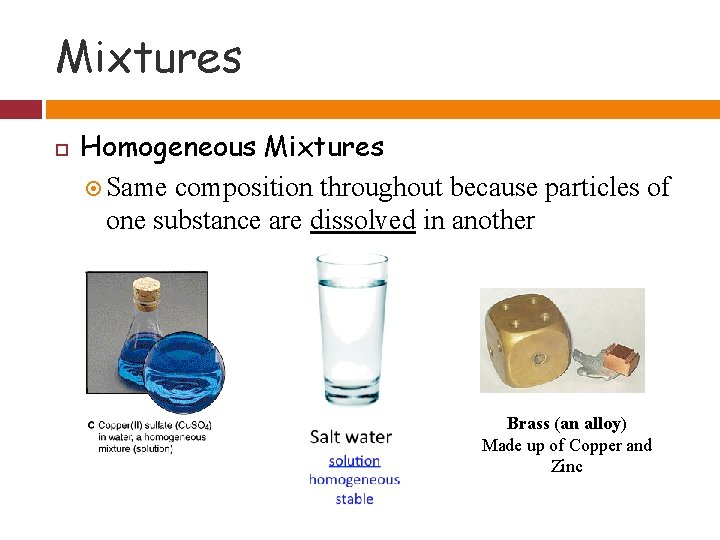
Mixtures Homogeneous Mixtures Same composition throughout because particles of one substance are dissolved in another Brass (an alloy) Made up of Copper and Zinc
Classification of Matter uniform properties? yes fixed composition? yes chemically seperated? http: //antoine. frostburg. edu/chem/senese/101/matter/slides/sld 003. htm no heterogeneous mixture no homogeneous mixture no element yes compound
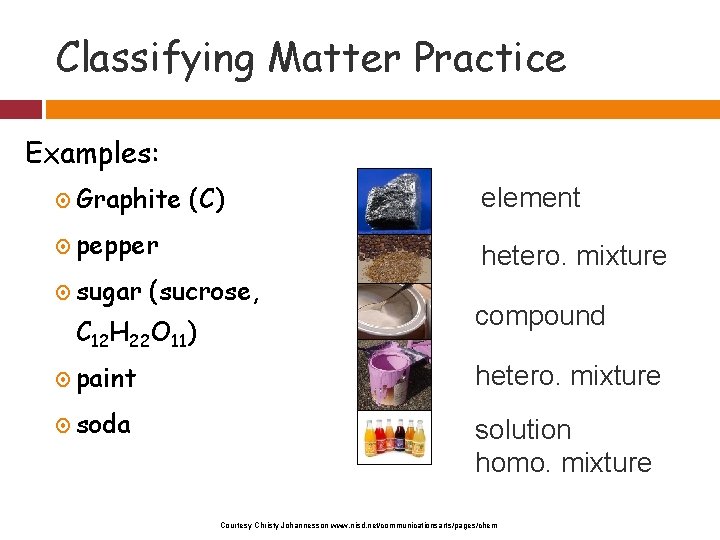
Classifying Matter Practice Examples: Graphite (C) pepper sugar paint soda hetero. mixture (sucrose, C 12 H 22 O 11) element compound hetero. mixture solution homo. mixture Courtesy Christy Johannesson www. nisd. net/communicationsarts/pages/chem
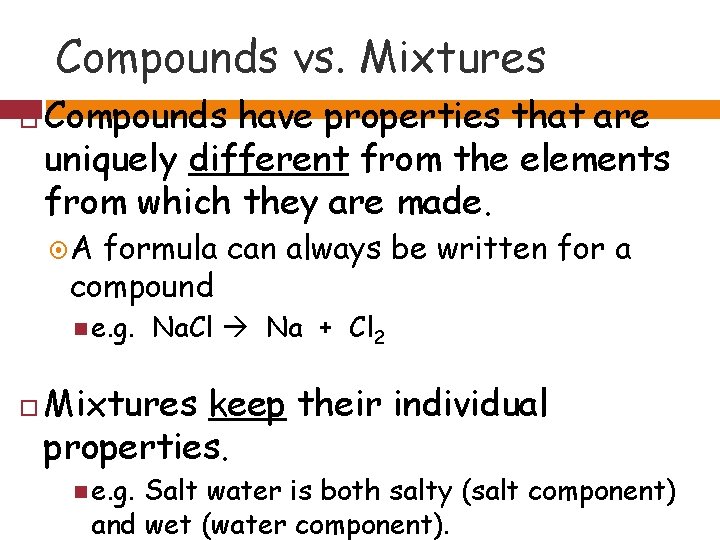
Compounds vs. Mixtures Compounds have properties that are uniquely different from the elements from which they are made. A formula can always be written for a compound e. g. Na. Cl Na + Cl 2 Mixtures keep their individual properties. e. g. Salt water is both salty (salt component) and wet (water component).
MATTER yes MIXTURE yes Is the composition uniform? Homogeneous Mixture (solution) PURE SUBSTANCE no Heterogeneous Mixture Colloids no Can it be physically separated? yes Can it be chemically separated? Compound Suspensions Courtesy Christy Johannesson www. nisd. net/communicationsarts/pages/chem no Element
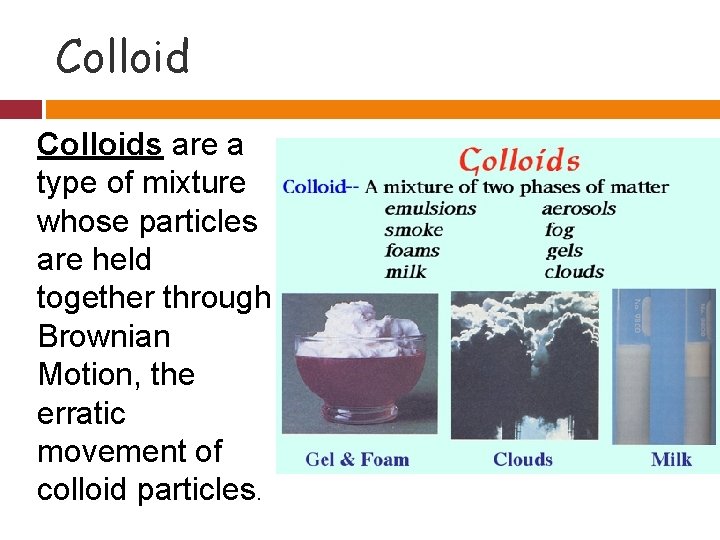
Colloids are a type of mixture whose particles are held together through Brownian Motion, the erratic movement of colloid particles.
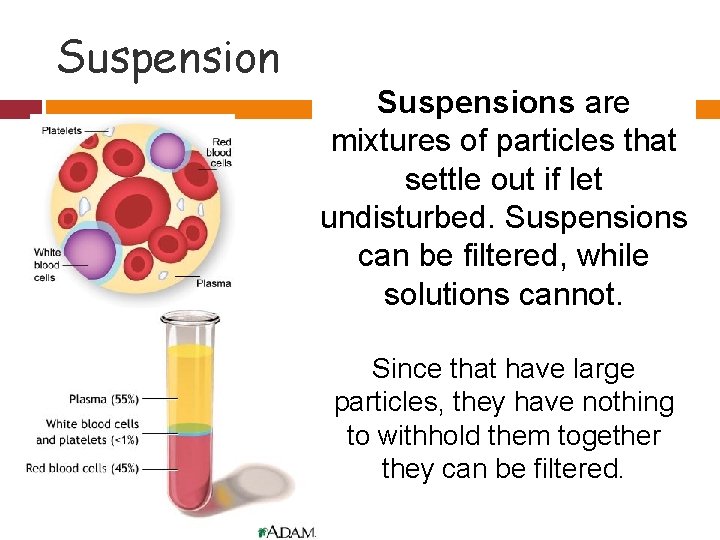
Suspensions are mixtures of particles that settle out if let undisturbed. Suspensions can be filtered, while solutions cannot. Since that have large particles, they have nothing to withhold them together they can be filtered.
Comparison