Classification of EOS Treatment David L Skaggs MD

- Slides: 23
Classification of EOS Treatment David L. Skaggs, MD Endowed Chair of Pediatric Spinal Disorders Children’s Hospital Los Angeles University of Southern California
Treatment 1. 2. 3. Non-Surgical Fusion Growth Friendly Implants
Non-Surgical Treatment Casting l Bracing l Stretching/exercise l Non-Evidence Based Treatment
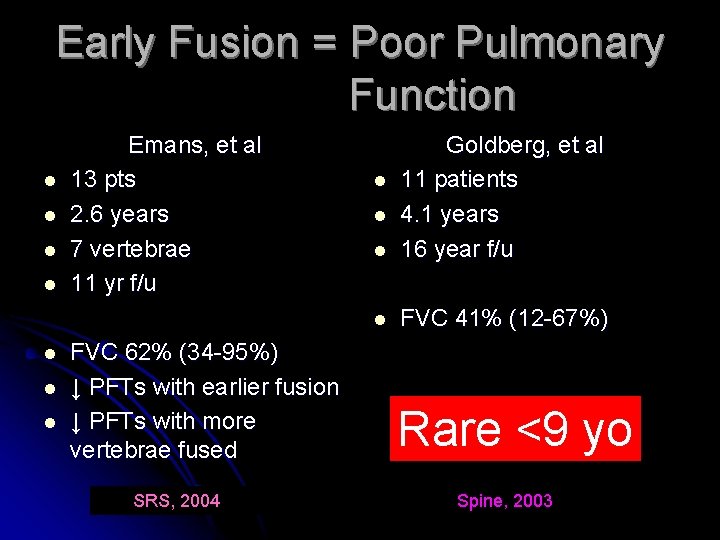
Early Fusion = Poor Pulmonary Function l l l l Emans, et al 13 pts 2. 6 years 7 vertebrae 11 yr f/u FVC 62% (34 -95%) ↓ PFTs with earlier fusion ↓ PFTs with more vertebrae fused SRS, 2004 l Goldberg, et al 11 patients 4. 1 years 16 year f/u l FVC 41% (12 -67%) l l Rare <9 yo Spine, 2003
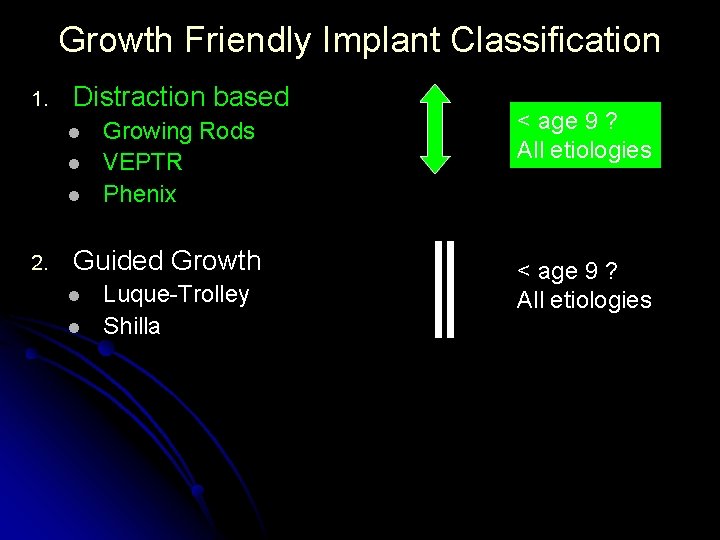
Growth Friendly Implant Classification 1. Distraction based l l l Growing Rods VEPTR Phenix < age 8 ? All etiologies < age 9? All etiologies
Growth Friendly Implant Classification 1. Distraction based l l l 2. Growing Rods VEPTR Phenix Guided Growth l l Luque-Trolley Shilla < age 8 ? All etiologies < age 9 ? All etiologies
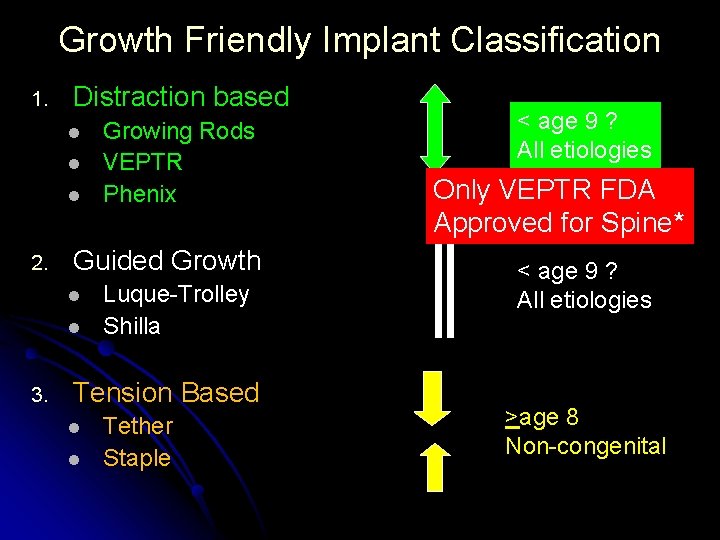
Growth Friendly Implant Classification 1. Distraction based l l l 2. Guided Growth l l 3. Growing Rods VEPTR Phenix Luque-Trolley Shilla Tension Based l l Tether Staple < age 8 ? All etiologies < age 9? All etiologies Only VEPTR FDA Approved for Spine* < age 9 ? All etiologies >age 8 Non-congenital
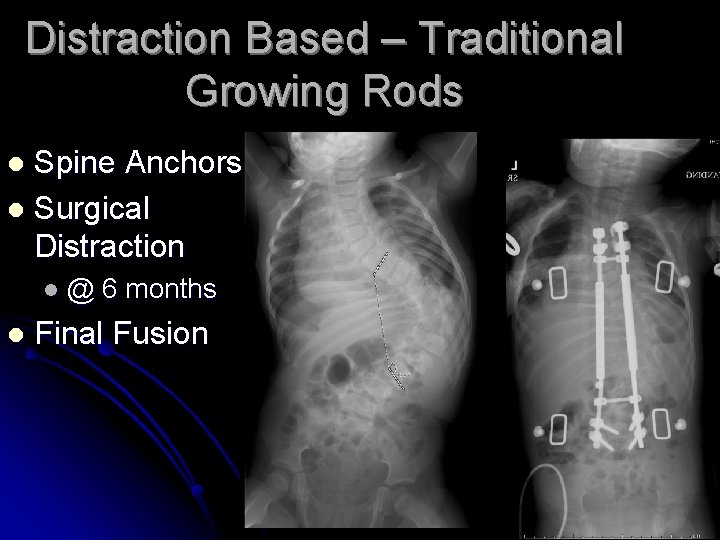
Distraction Based – Traditional Growing Rods Spine Anchors l Surgical Distraction l l@ l 6 months Final Fusion
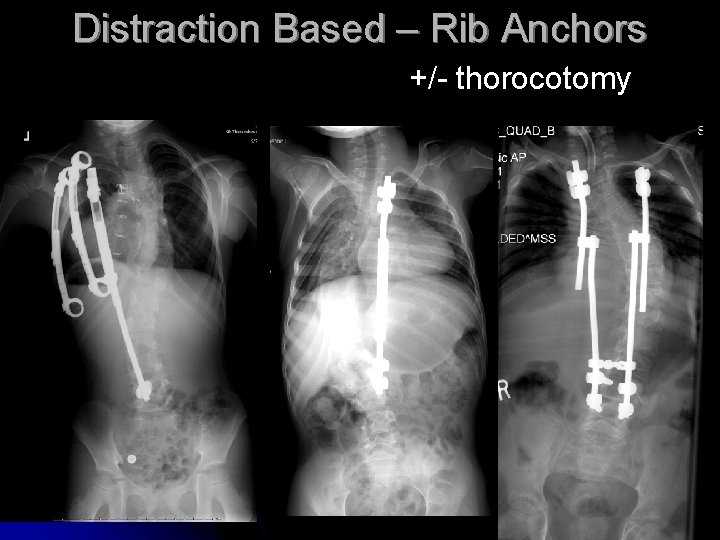
Distraction Based – Rib Anchors +/- thorocotomy
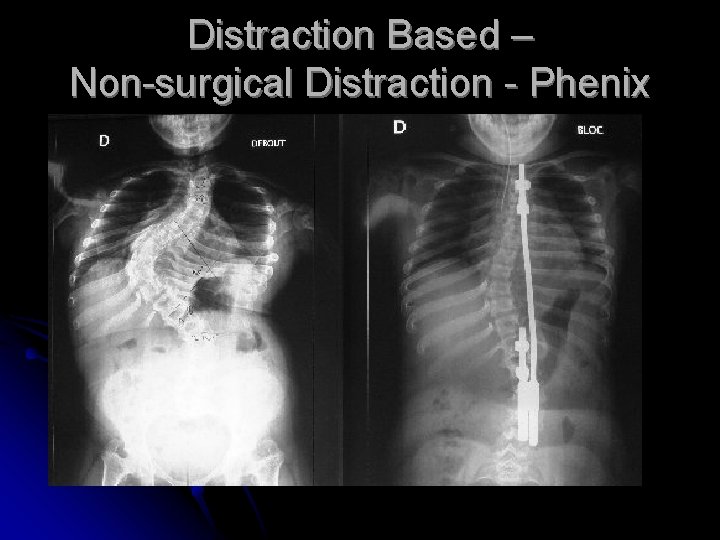
Distraction Based – Non-surgical Distraction - Phenix
Guided Growth Luque Trolley l Shilla l
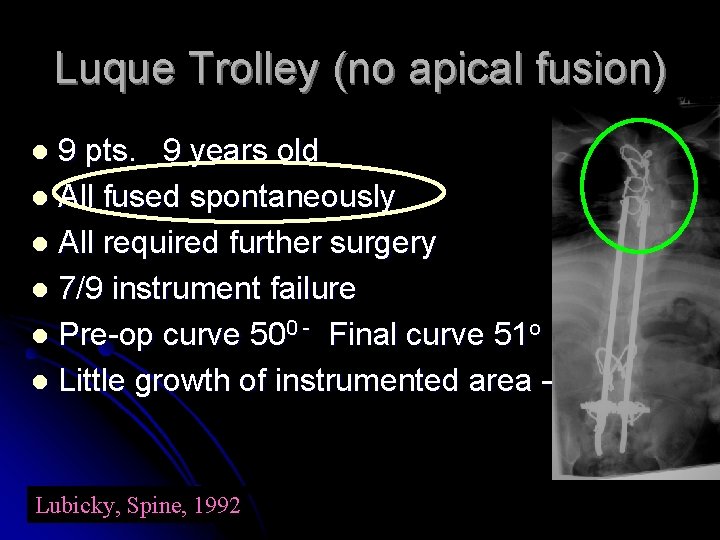
Luque Trolley (no apical fusion) 9 pts. 9 years old l All fused spontaneously l All required further surgery l 7/9 instrument failure l Pre-op curve 500 - Final curve 51 o l Little growth of instrumented area – vague l Lubicky, Spine, 1992
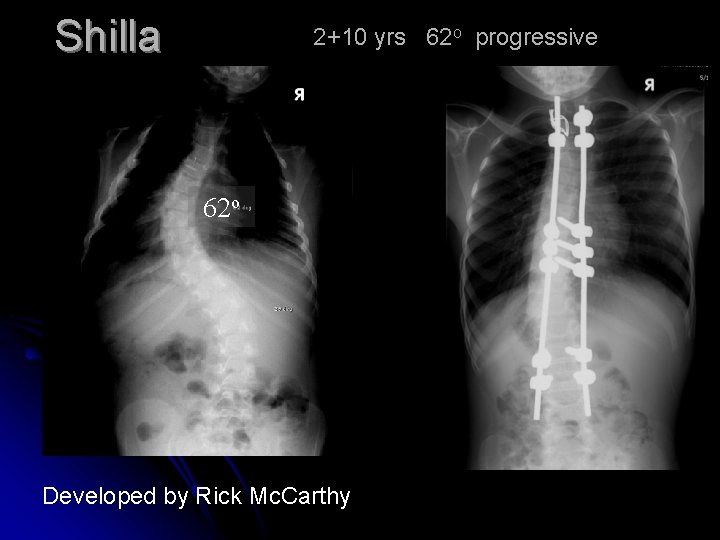
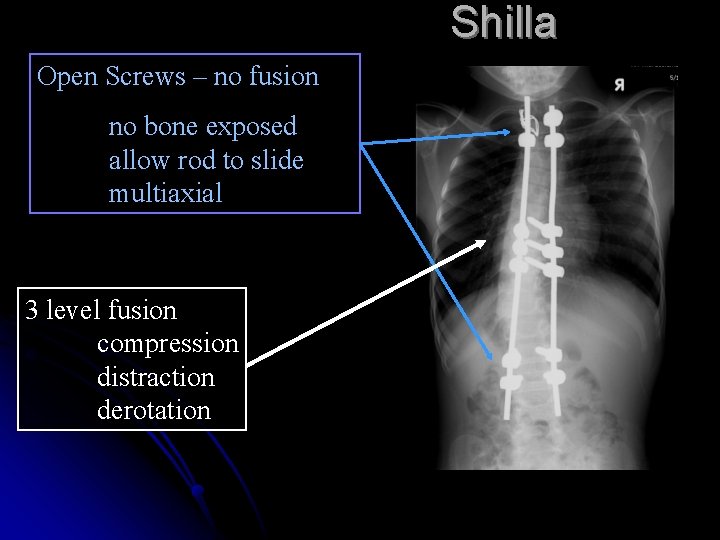
Shilla 2+10 yrs 62 o progressive 62 o Developed by Rick Mc. Carthy
Shilla Open Screws – no fusion no bone exposed allow rod to slide multiaxial 3 level fusion compression distraction derotation
Tension Based Treatment l. Staples l. Tethers l l Growth Restricting ? “Older” young kids
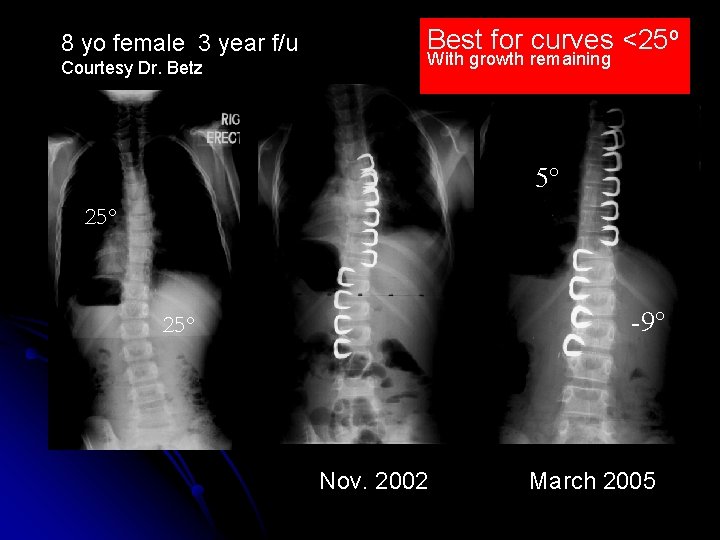
8 yo female 3 year f/u Courtesy Dr. Betz Best for curves <25 o With growth remaining 5° 25° -9° 25° Nov. 2002 March 2005
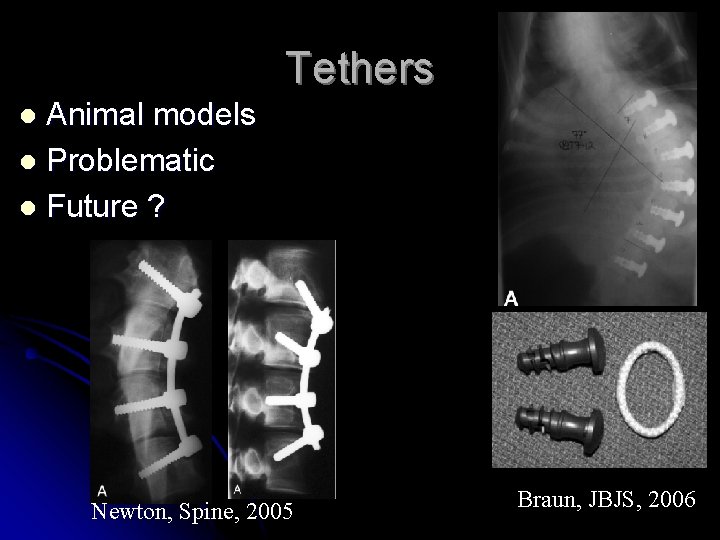
Tethers Animal models l Problematic l Future ? l Newton, Spine, 2005 Braun, JBJS, 2006
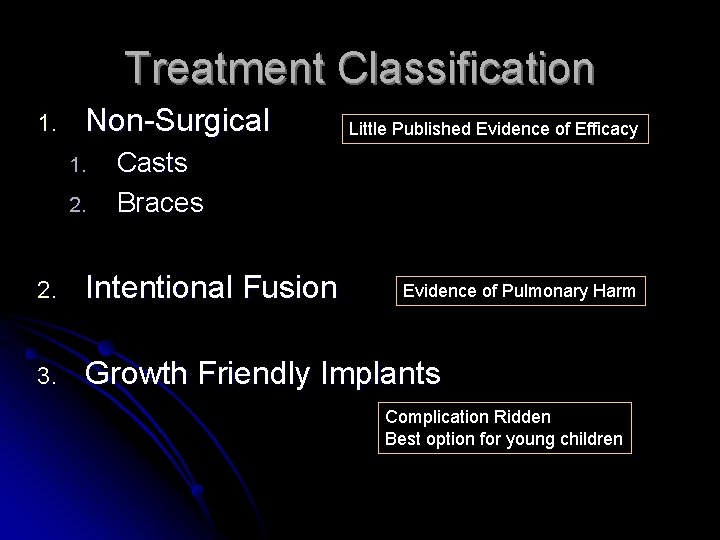
Treatment Classification 1. Non-Surgical 1. 2. Little Published Evidence of Efficacy Casts Braces 2. Intentional Fusion 3. Growth Friendly Implants Evidence of Pulmonary Harm Complication Ridden Best option for young children
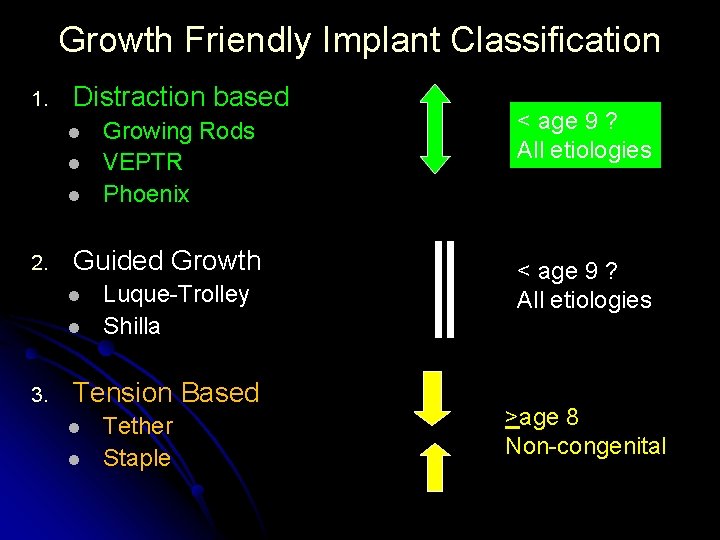
Growth Friendly Implant Classification 1. Distraction based l l l 2. Guided Growth l l 3. Growing Rods VEPTR Phoenix Luque-Trolley Shilla Tension Based l l Tether Staple < age 8 ? All etiologies < age 9 ? All etiologies >age 8 Non-congenital
Thank You
Thank You
Thank You