Chapter6 Work and Energy 6 1 Work Done
- Slides: 24
Chapter-6 Work and Energy
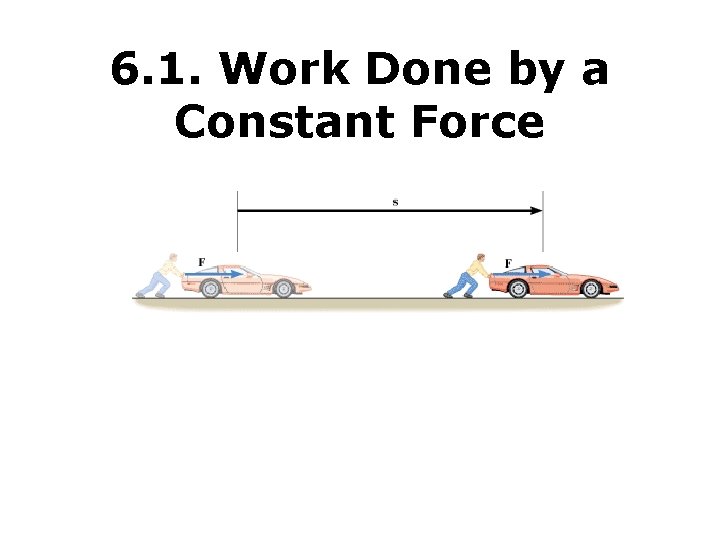
6. 1. Work Done by a Constant Force
6. 1. Work Done by a Constant Force
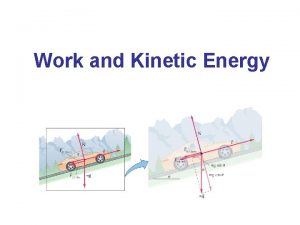
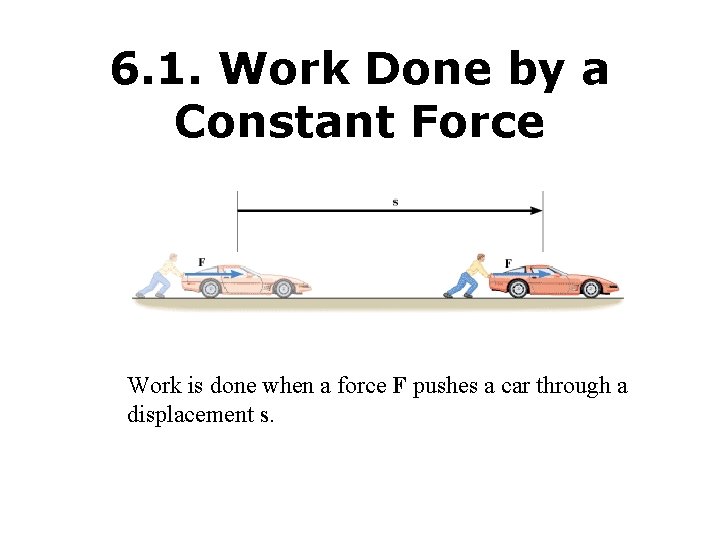
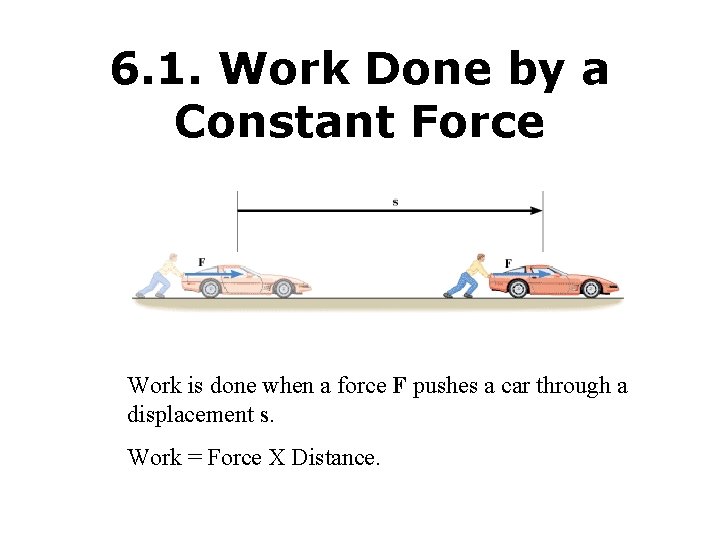
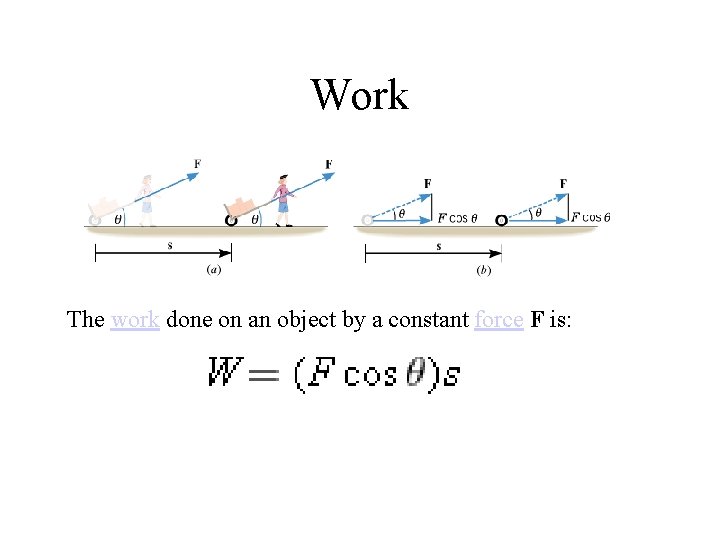
6. 1. Work Done by a Constant Force Work is done when a force F pushes a car through a displacement s.
6. 1. Work Done by a Constant Force Work is done when a force F pushes a car through a displacement s. Work = Force X Distance.
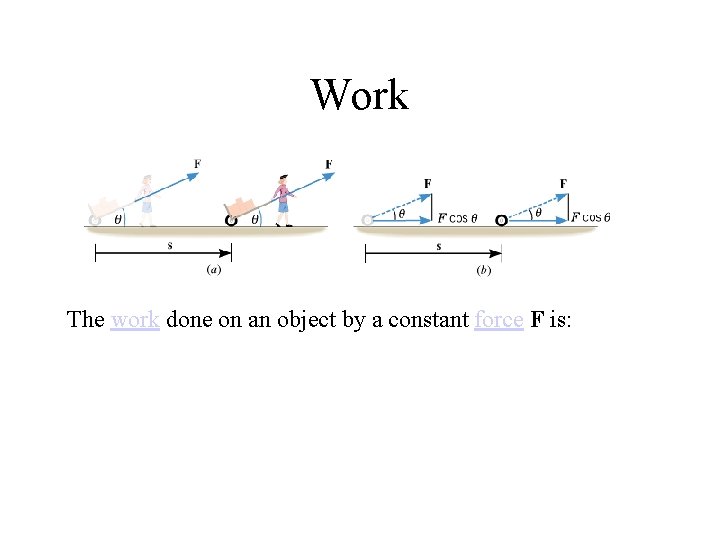
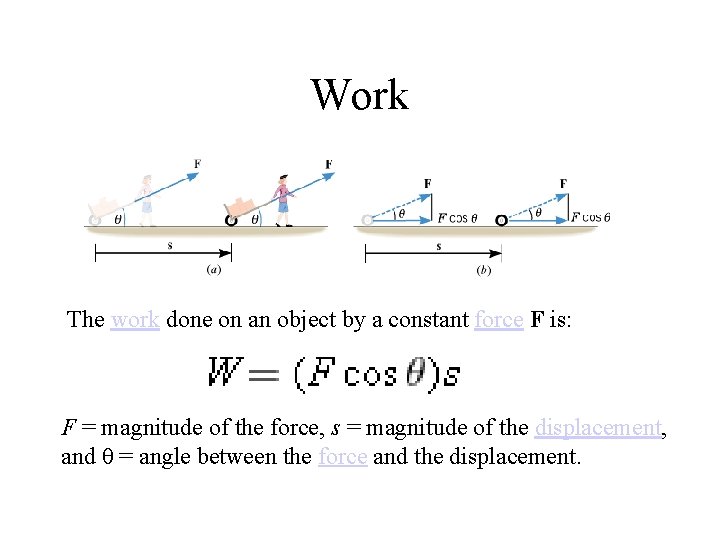
Work The work done on an object by a constant force F is:
Work The work done on an object by a constant force F is:
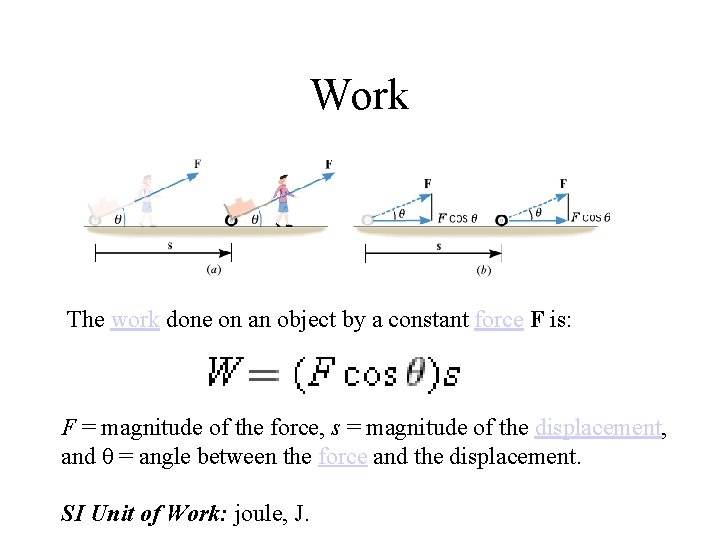
Work The work done on an object by a constant force F is: F = magnitude of the force, s = magnitude of the displacement, and θ = angle between the force and the displacement.
Work The work done on an object by a constant force F is: F = magnitude of the force, s = magnitude of the displacement, and θ = angle between the force and the displacement. SI Unit of Work: joule, J.
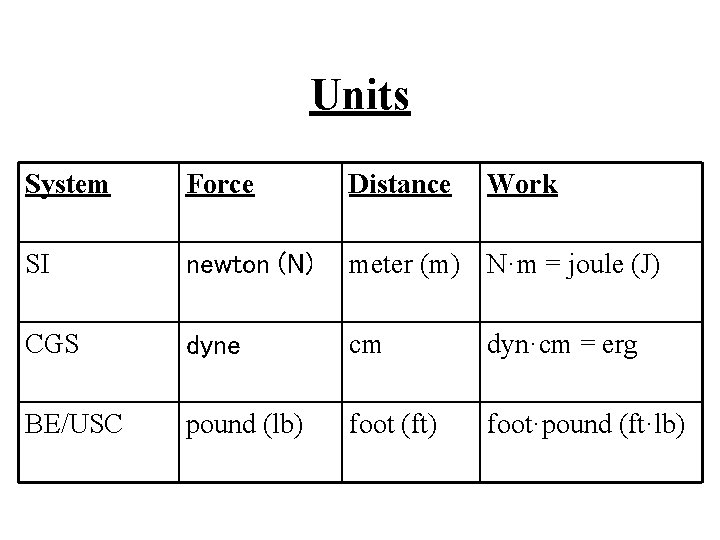
Units System Force Distance Work SI newton (N) meter (m) N·m = joule (J) CGS dyne cm dyn·cm = erg BE/USC pound (lb) foot (ft) foot·pound (ft·lb)
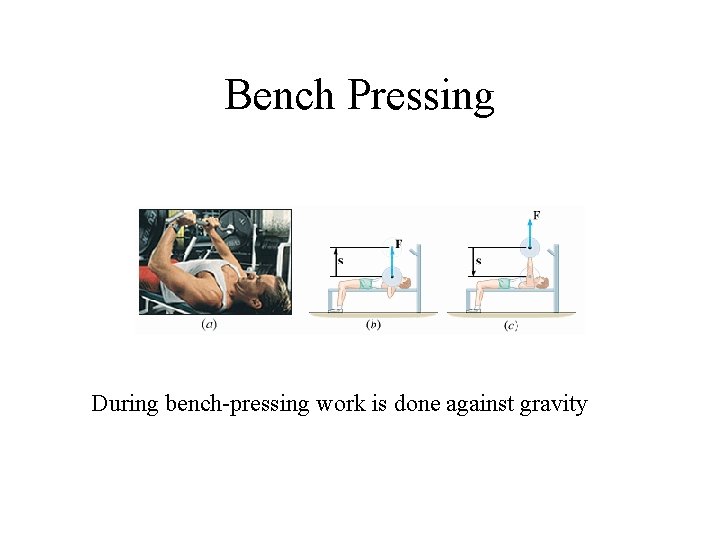
Bench Pressing During bench-pressing work is done against gravity
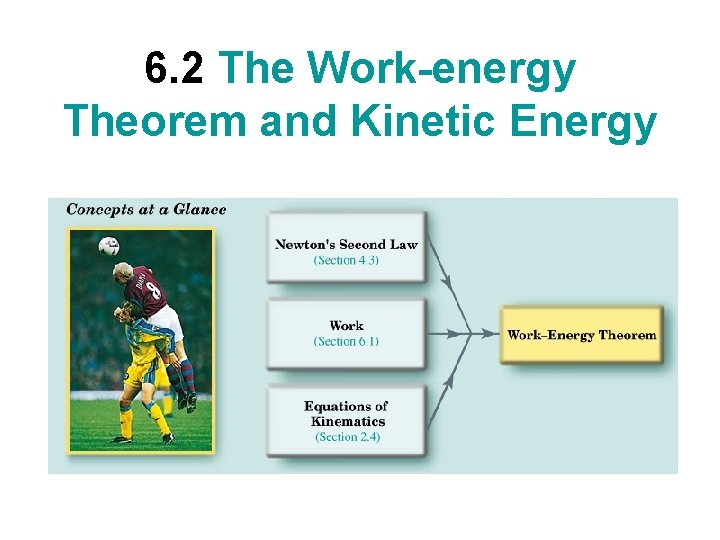
6. 2 The Work-energy Theorem and Kinetic Energy
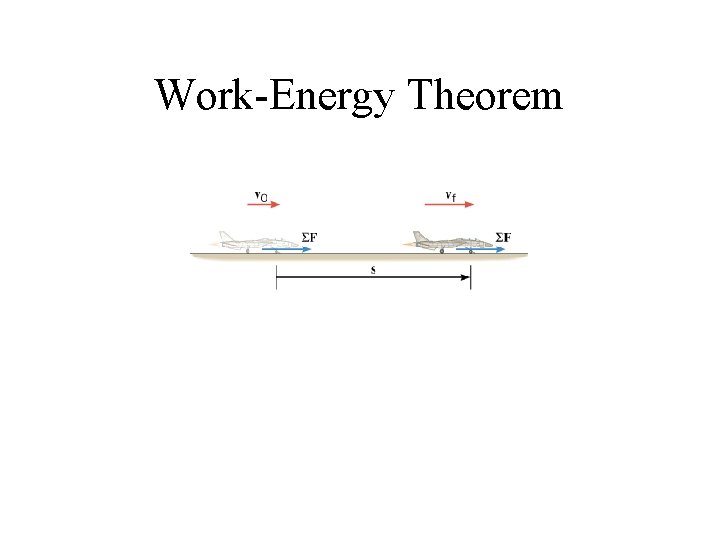
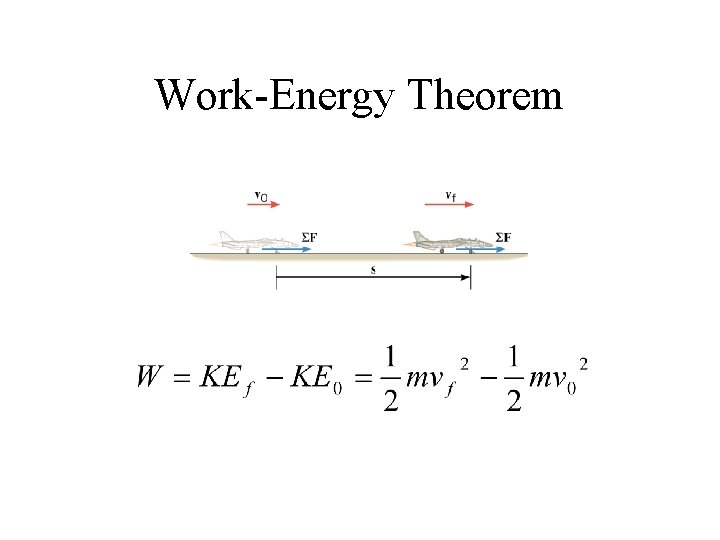
Work-Energy Theorem
Work-Energy Theorem
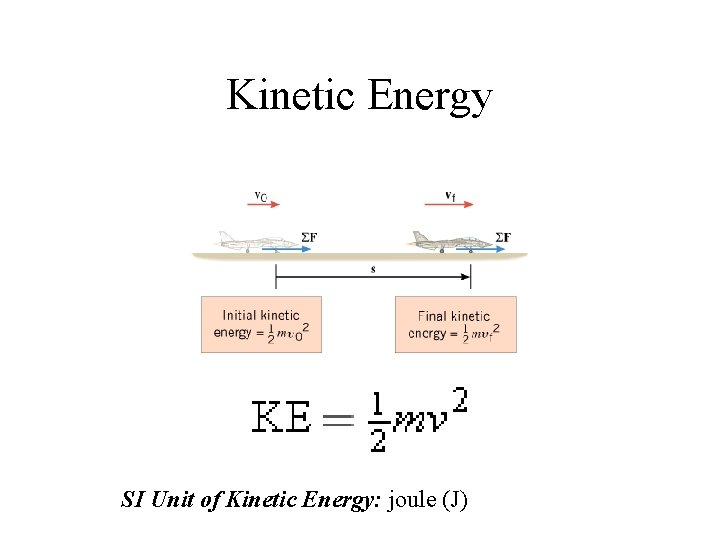
Kinetic Energy SI Unit of Kinetic Energy: joule (J)
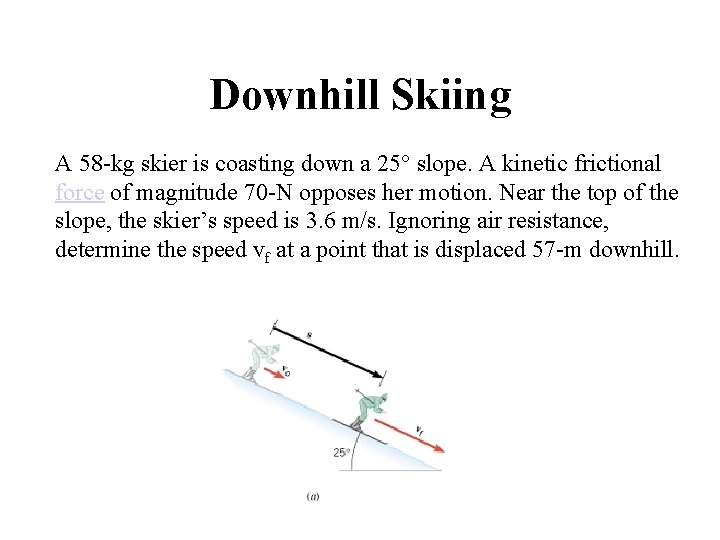
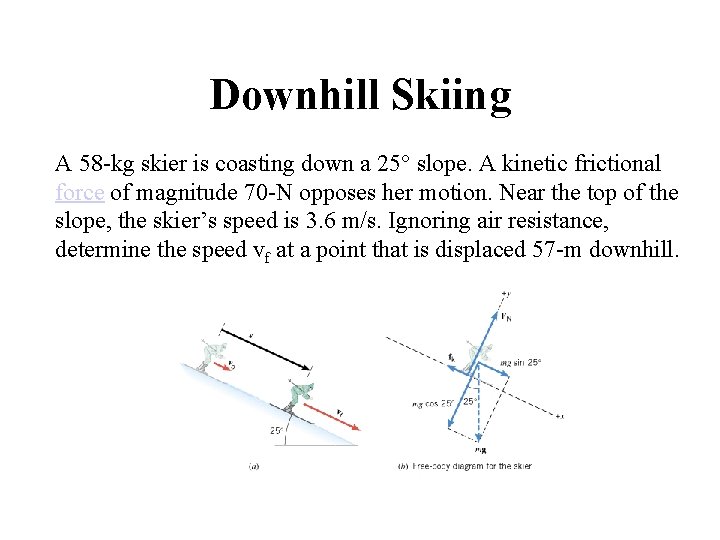
Downhill Skiing A 58 -kg skier is coasting down a 25° slope. A kinetic frictional force of magnitude 70 -N opposes her motion. Near the top of the slope, the skier’s speed is 3. 6 m/s. Ignoring air resistance, determine the speed vf at a point that is displaced 57 -m downhill.
Downhill Skiing A 58 -kg skier is coasting down a 25° slope. A kinetic frictional force of magnitude 70 -N opposes her motion. Near the top of the slope, the skier’s speed is 3. 6 m/s. Ignoring air resistance, determine the speed vf at a point that is displaced 57 -m downhill.
6. 3 Gravitational Potential Energy
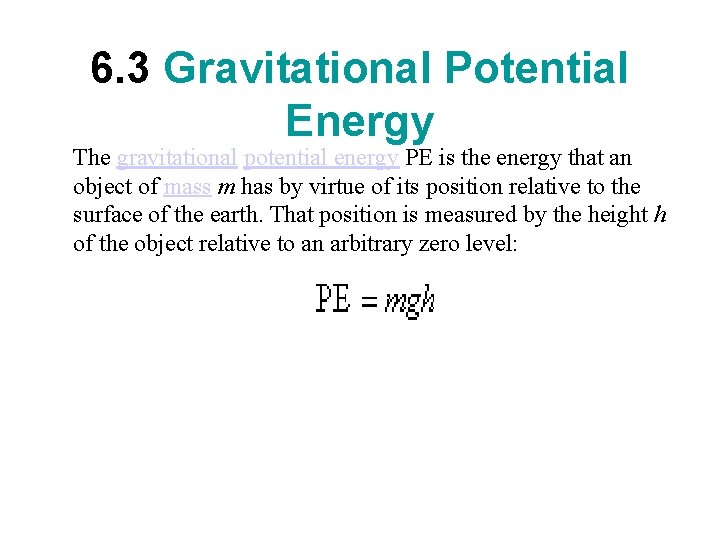
6. 3 Gravitational Potential Energy The gravitational potential energy PE is the energy that an object of mass m has by virtue of its position relative to the surface of the earth. That position is measured by the height h of the object relative to an arbitrary zero level:
6. 3 Gravitational Potential Energy The gravitational potential energy PE is the energy that an object of mass m has by virtue of its position relative to the surface of the earth. That position is measured by the height h of the object relative to an arbitrary zero level:
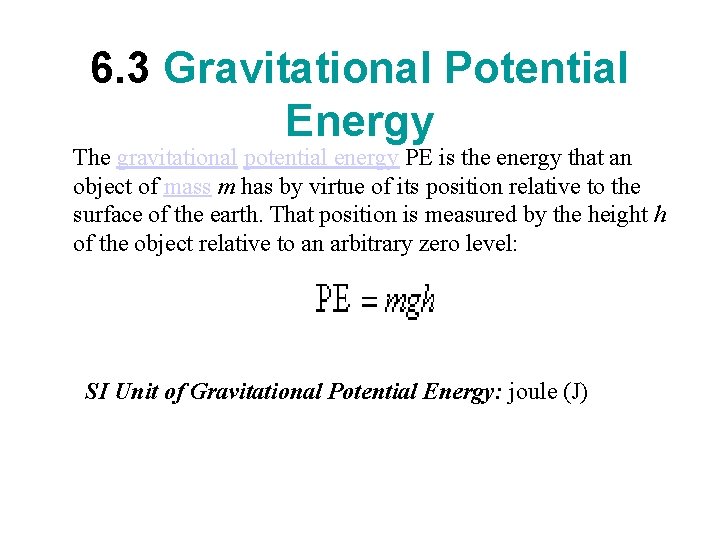
6. 3 Gravitational Potential Energy The gravitational potential energy PE is the energy that an object of mass m has by virtue of its position relative to the surface of the earth. That position is measured by the height h of the object relative to an arbitrary zero level: SI Unit of Gravitational Potential Energy: joule (J)
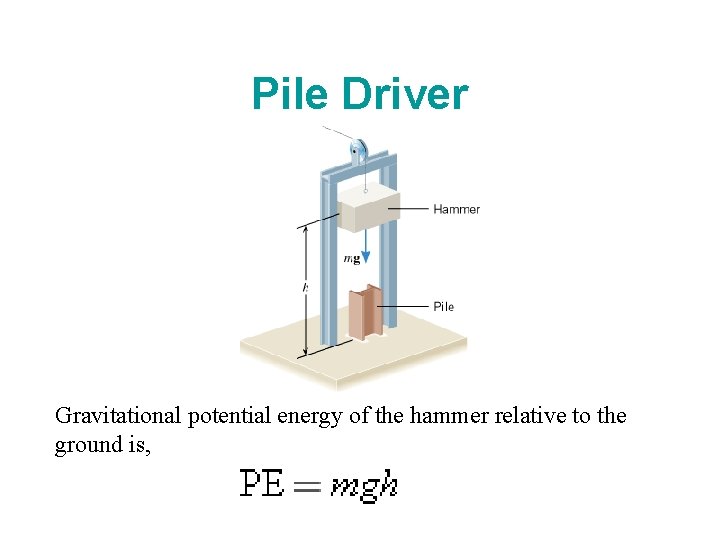
Pile Driver Gravitational potential energy of the hammer relative to the ground is,
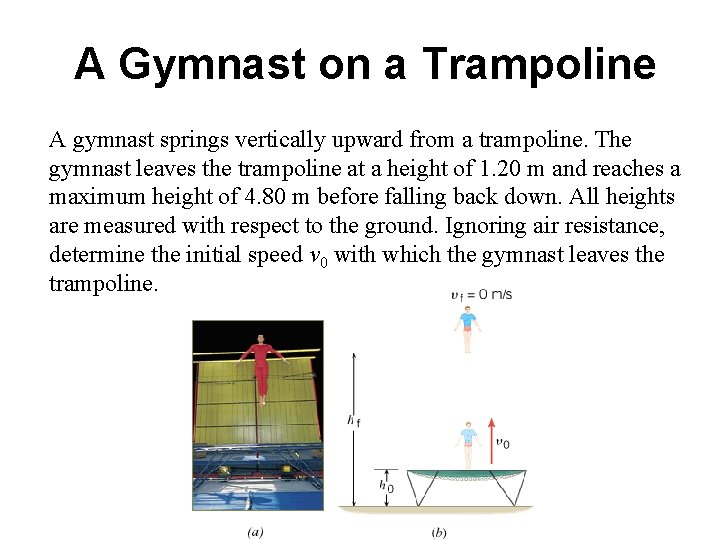
A Gymnast on a Trampoline A gymnast springs vertically upward from a trampoline. The gymnast leaves the trampoline at a height of 1. 20 m and reaches a maximum height of 4. 80 m before falling back down. All heights are measured with respect to the ground. Ignoring air resistance, determine the initial speed v 0 with which the gymnast leaves the trampoline.
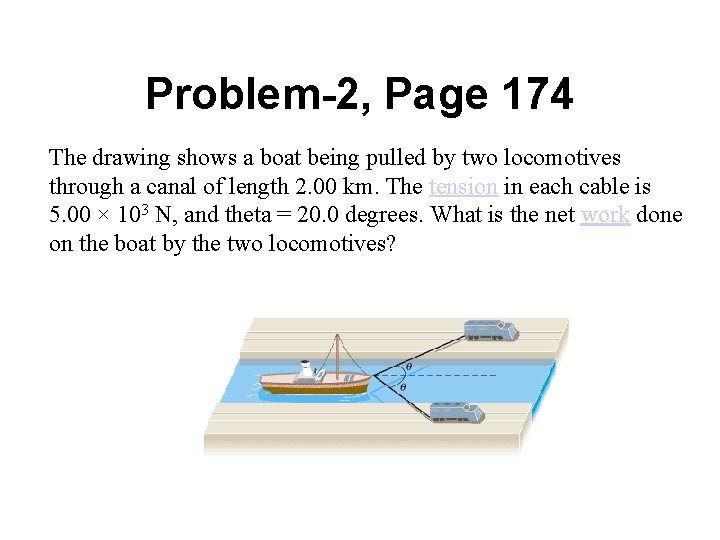
Problem-2, Page 174 The drawing shows a boat being pulled by two locomotives through a canal of length 2. 00 km. The tension in each cable is 5. 00 × 103 N, and theta = 20. 0 degrees. What is the net work done on the boat by the two locomotives?