Chapter 3 SOCIALIZATION FROM INFANCY TO OLD AGE



- Slides: 42
Chapter 3 SOCIALIZATION: FROM INFANCY TO OLD AGE
Socialization: From Infancy to Old Age Learning Objectives • LO 5. 1 Describe how social interaction is the foundation of personality. – Nature vs. nurture, isolated children. • LO 5. 2 Explain six major theories of socialization. • LO 5. 3 Analyze how the family, school, peer groups, and the mass media guide the socialization process. • LO 5. 4 Discuss how our society organizes human experience into distinctive stages of life. • LO 5. 5 Characterize the operation of total institutions.
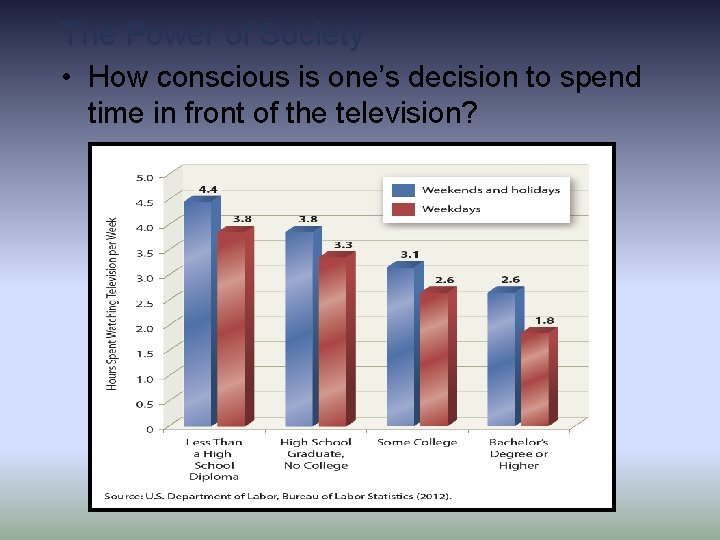
The Power of Society • How conscious is one’s decision to spend time in front of the television?
Social Experience is the Key to Our Humanity • Socialization – Lifeline social experience by which individuals develop human potential and learn patterns of their culture • Personality – fairly consistent patterns of thinking, feeling, and acting built through internalization LO 3. 1 Describe how social interaction is the foundation of personality.
Human Development: Nature vs. Nurture • Biological sciences: The role of nature – Elements of society have a naturalistic cause • Social sciences: The role of nurture – Most of who and what we are as a species is learned • Nature or nurture? – It is both, but from a sociological perspective, nurture matters more.
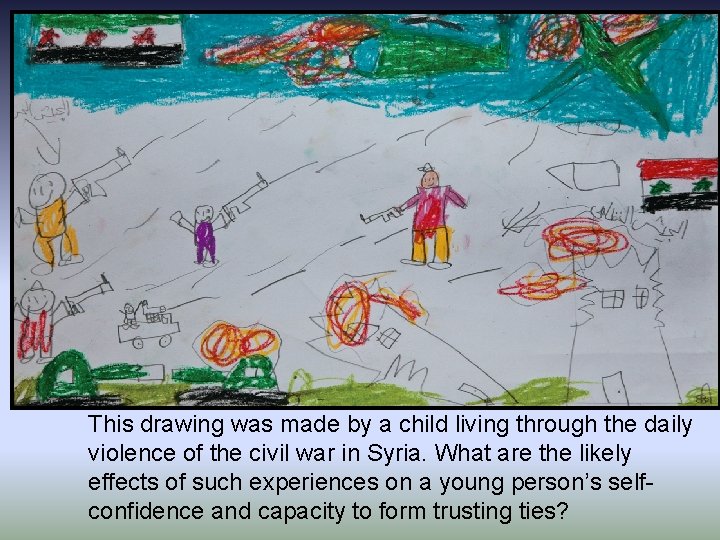
• The personalities we develop depend largely on the environment in • which we live. When a child’s world is shredded by violence, the damage • (including losing the ability to trust) can be profound and lasting. This drawing was made by a child living through the daily violence of the civil war in Syria. What are the likely effects of such experiences on a young person’s selfconfidence and capacity to form trusting ties?
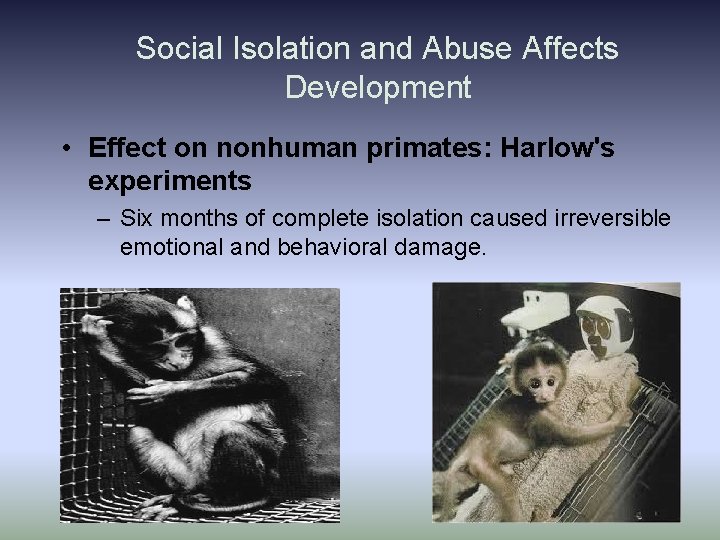
Social Isolation and Abuse Affects Development • Effect on nonhuman primates: Harlow's experiments – Six months of complete isolation caused irreversible emotional and behavioral damage.
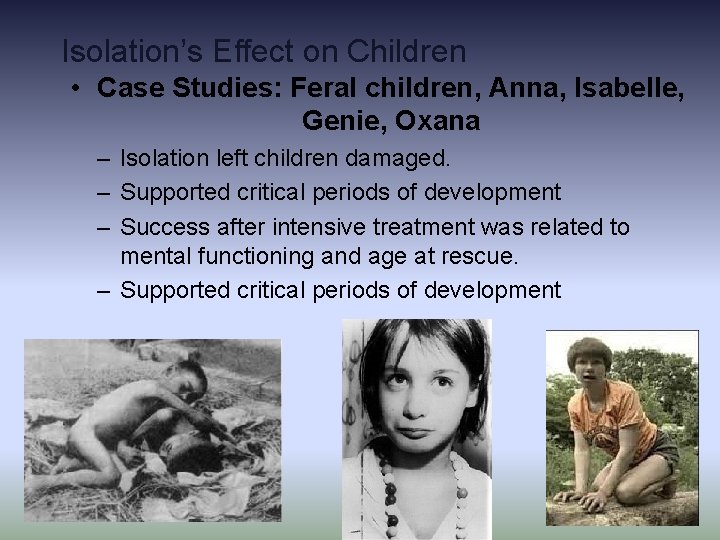
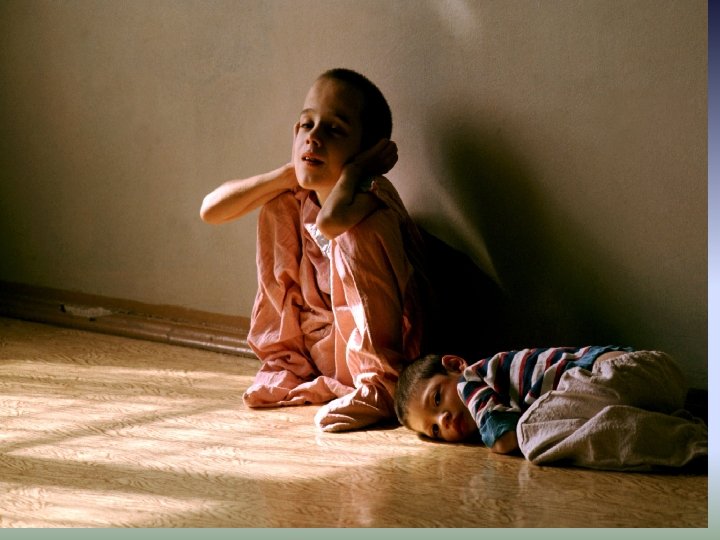
Isolation’s Effect on Children • Case Studies: Feral children, Anna, Isabelle, Genie, Oxana – Isolation left children damaged. – Supported critical periods of development – Success after intensive treatment was related to mental functioning and age at rescue. – Supported critical periods of development
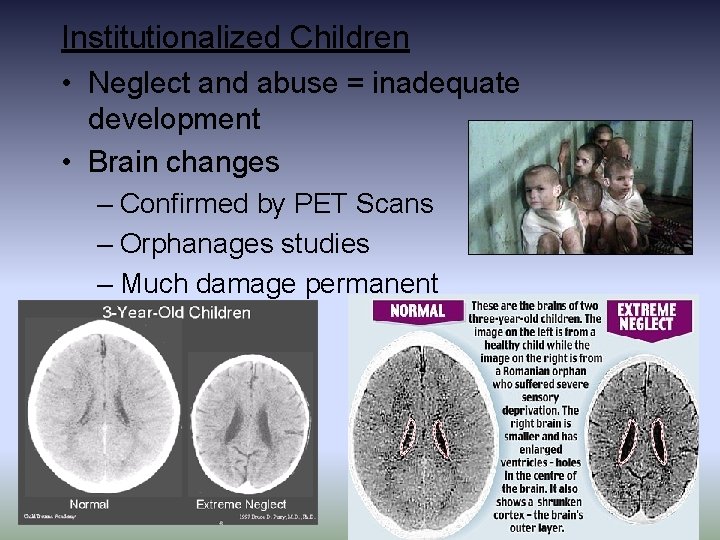
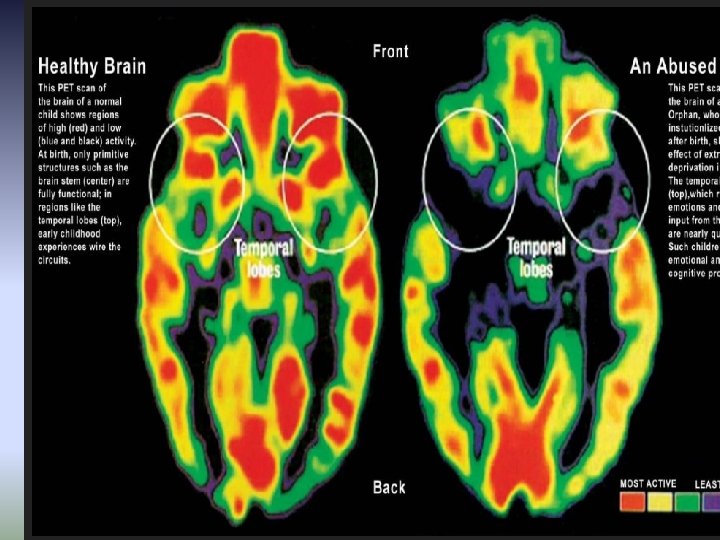
Institutionalized Children • Neglect and abuse = inadequate development • Brain changes – Confirmed by PET Scans – Orphanages studies – Much damage permanent
Understanding Socialization: Theories 1. 2. 3. 4. 5. Sigmund Freud Jean Piaget Eric H. Erickson George Herbert Mead Carol Gilligan LO 3. 2 Explain six major theories of socialization.
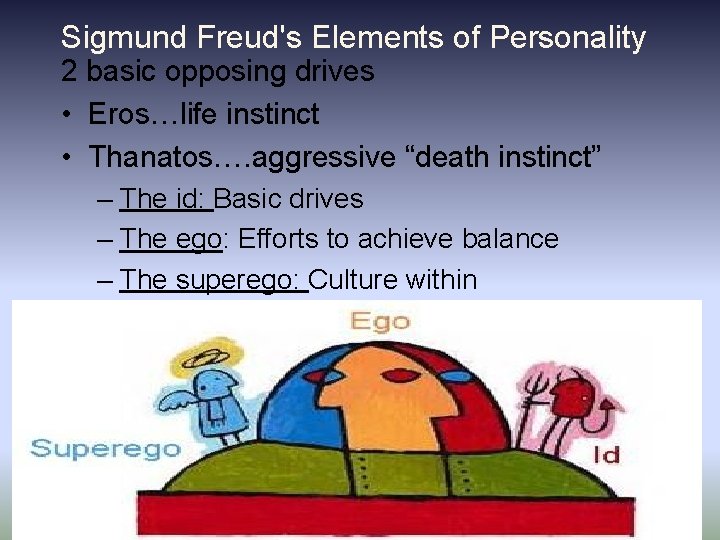
Sigmund Freud's Elements of Personality 2 basic opposing drives • Eros…life instinct • Thanatos…. aggressive “death instinct” – The id: Basic drives – The ego: Efforts to achieve balance – The superego: Culture within
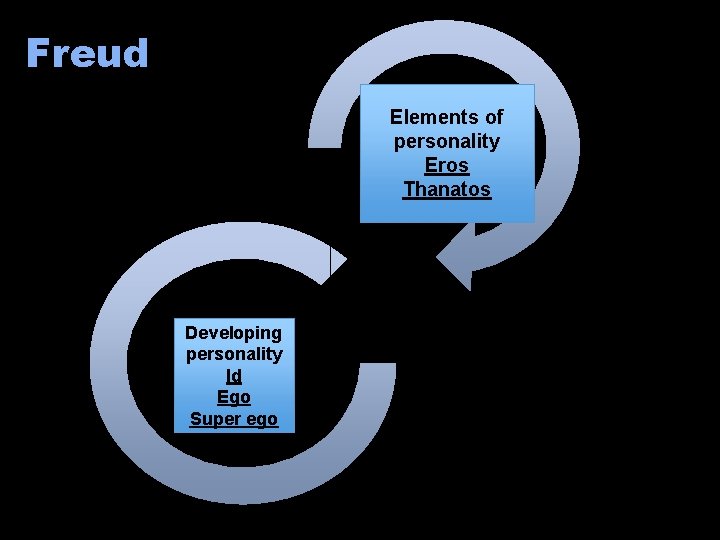
Freud Elements of personality Eros Thanatos Developing personality Id Ego Super ego
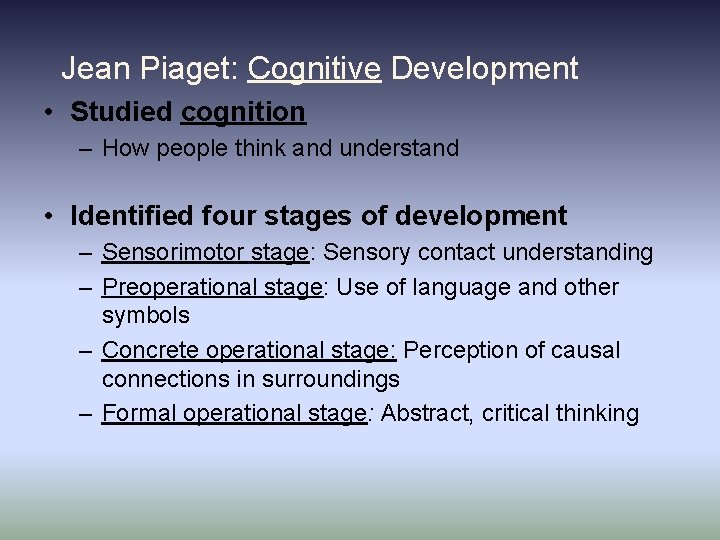
Jean Piaget: Cognitive Development • Studied cognition – How people think and understand • Identified four stages of development – Sensorimotor stage: Sensory contact understanding – Preoperational stage: Use of language and other symbols – Concrete operational stage: Perception of causal connections in surroundings – Formal operational stage: Abstract, critical thinking
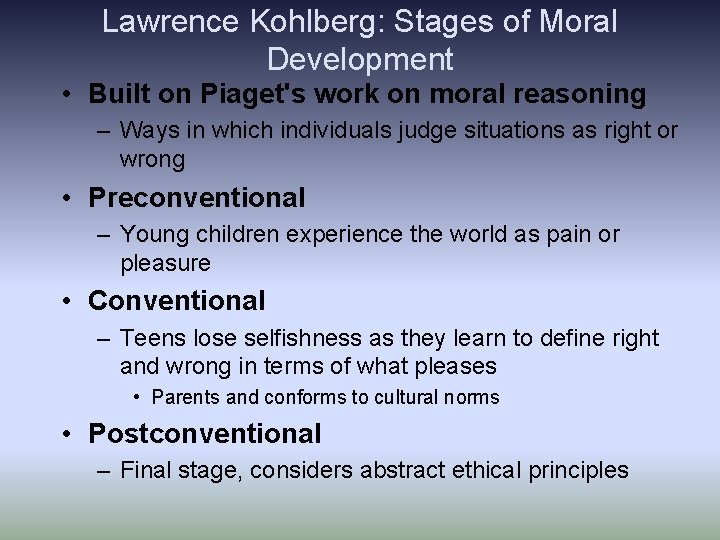
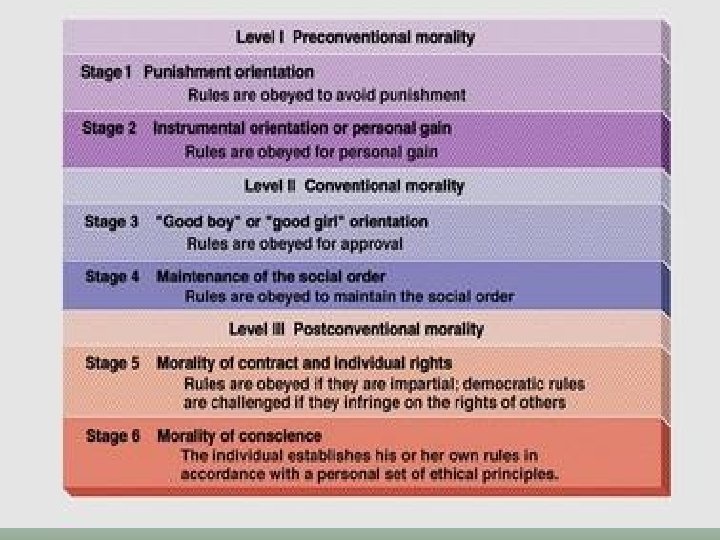
Lawrence Kohlberg: Stages of Moral Development • Built on Piaget's work on moral reasoning – Ways in which individuals judge situations as right or wrong • Preconventional – Young children experience the world as pain or pleasure • Conventional – Teens lose selfishness as they learn to define right and wrong in terms of what pleases • Parents and conforms to cultural norms • Postconventional – Final stage, considers abstract ethical principles
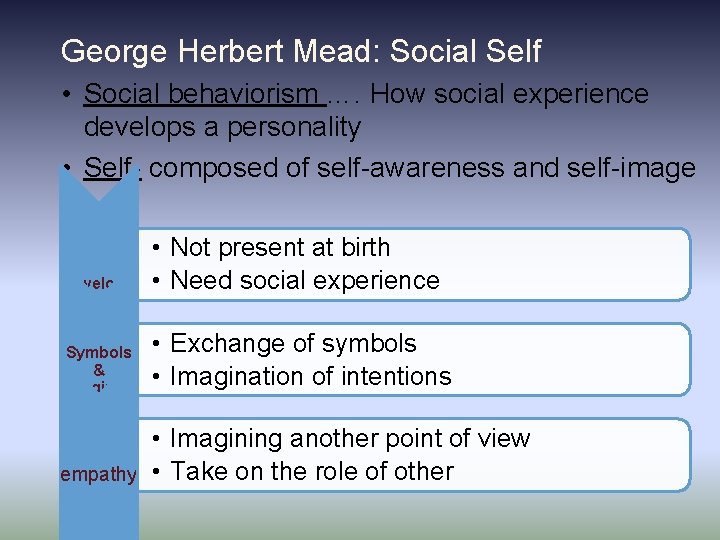
George Herbert Mead: Social Self • Social behaviorism …. How social experience develops a personality • Self- composed of self-awareness and self-image develops Symbols & imaginati on empathy • Not present at birth • Need social experience • Exchange of symbols • Imagination of intentions • Imagining another point of view • Take on the role of other
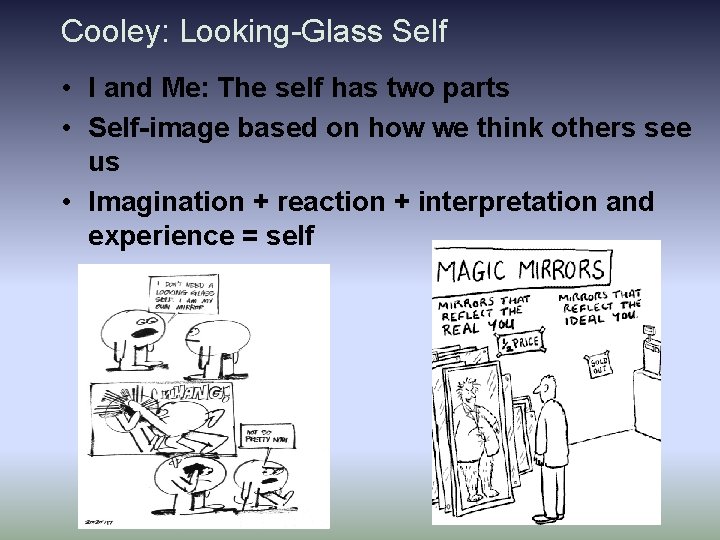
Cooley: Looking-Glass Self • I and Me: The self has two parts • Self-image based on how we think others see us • Imagination + reaction + interpretation and experience = self
Carol Gilligan: Gender and Moral Development The two sexes use different standards of rightness. – Boys develop a justice perspective. • Formal rules define right and wrong – Girls develop a care-and-responsibility perspective. • Personal relationships define reasoning
Gilligan The two sexes use different standards of rightness. • Boys develop a justice perspective. – Formal rules define right and wrong • Girls develop a careand-responsibility perspective. – Personal relationships define reasoning
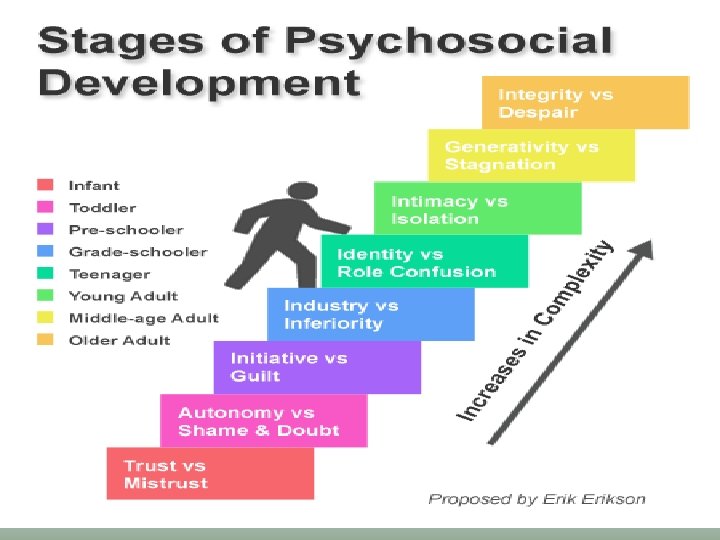
Eric H. Erickson: Stages 1– 4 Challenges occur throughout the life course. – Stage 1 – Infancy: trust – Stage 2 – Toddlerhood: autonomy – Stage 3 – Preschool: Initiative – Stage 4 – Preadolescence: Industriousness
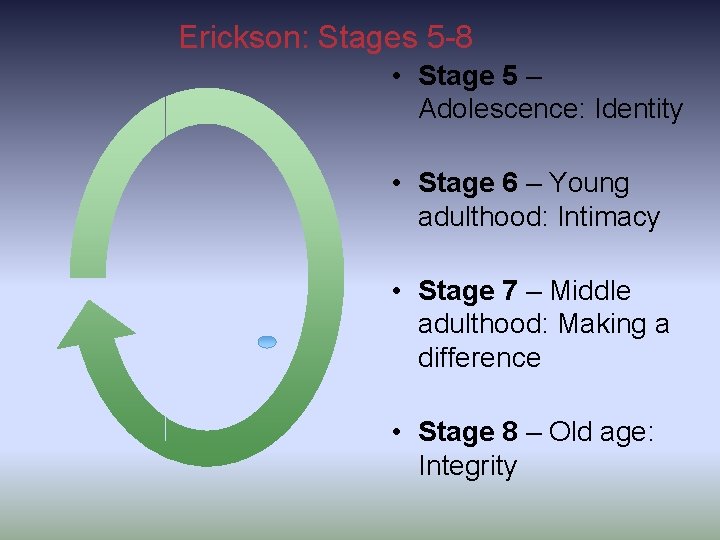
Erickson: Stages 5 -8 • Stage 5 – Adolescence: Identity • Stage 6 – Young adulthood: Intimacy • Stage 7 – Middle adulthood: Making a difference • Stage 8 – Old age: Integrity
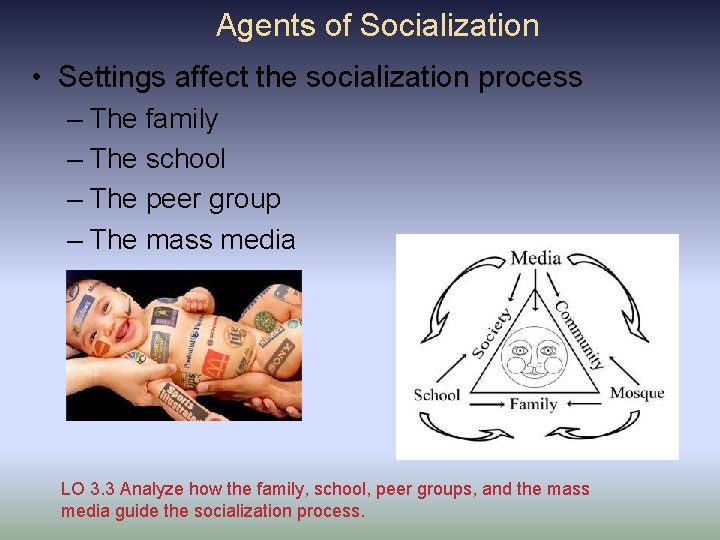
Agents of Socialization • Settings affect the socialization process – The family – The school – The peer group – The mass media LO 3. 3 Analyze how the family, school, peer groups, and the mass media guide the socialization process.
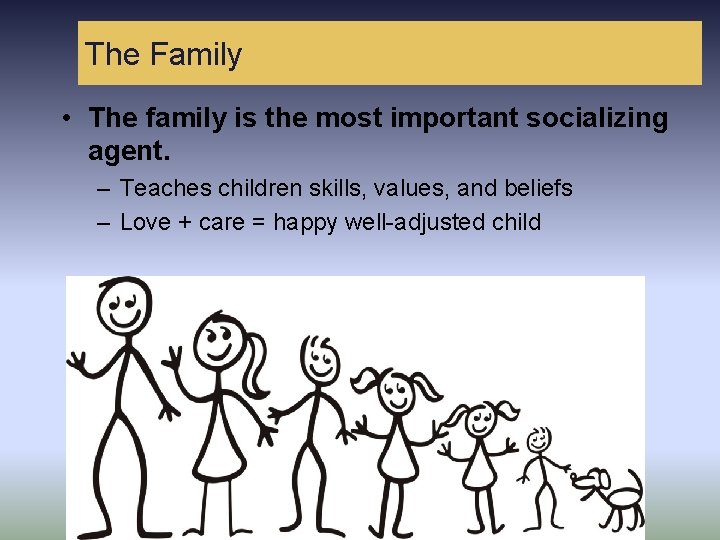
The Family • The family is the most important socializing agent. – Teaches children skills, values, and beliefs – Love + care = happy well-adjusted child
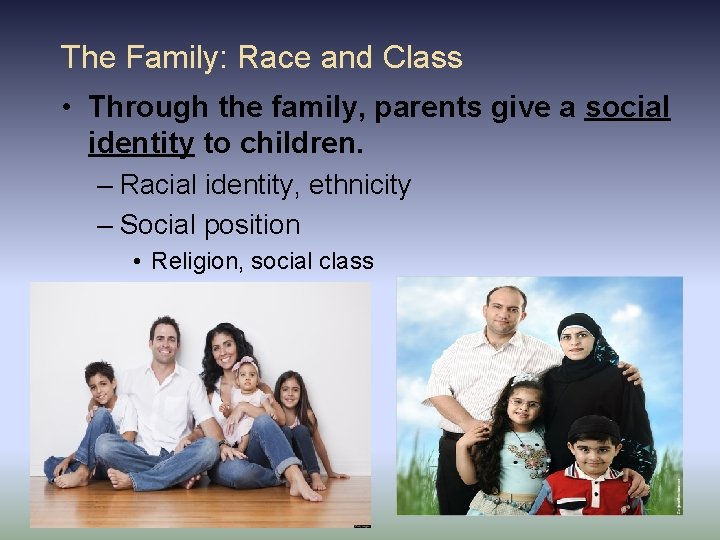
The Family: Race and Class • Through the family, parents give a social identity to children. – Racial identity, ethnicity – Social position • Religion, social class
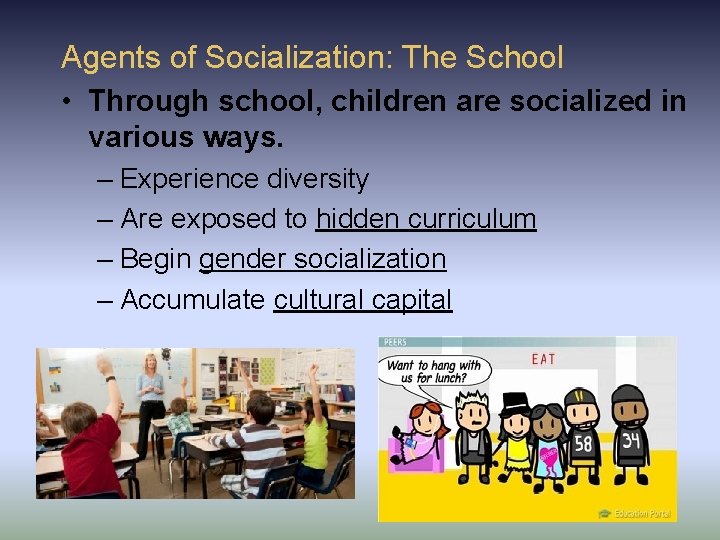
Agents of Socialization: The School • Through school, children are socialized in various ways. – Experience diversity – Are exposed to hidden curriculum – Begin gender socialization – Accumulate cultural capital
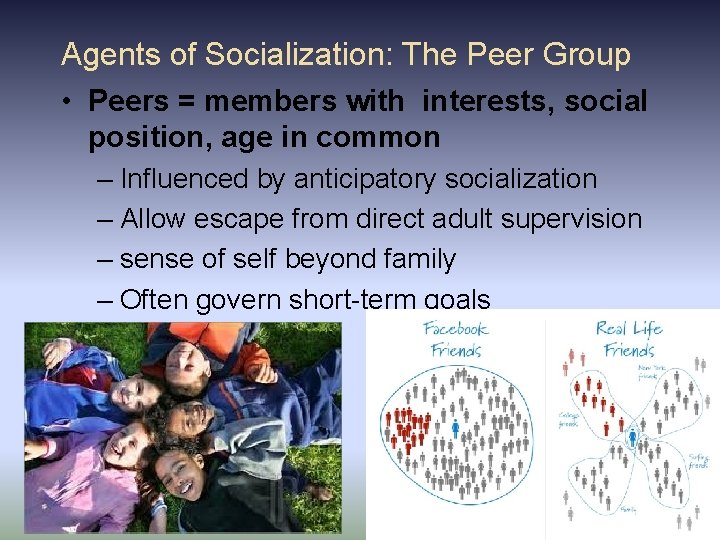
Agents of Socialization: The Peer Group • Peers = members with interests, social position, age in common – Influenced by anticipatory socialization – Allow escape from direct adult supervision – sense of self beyond family – Often govern short-term goals
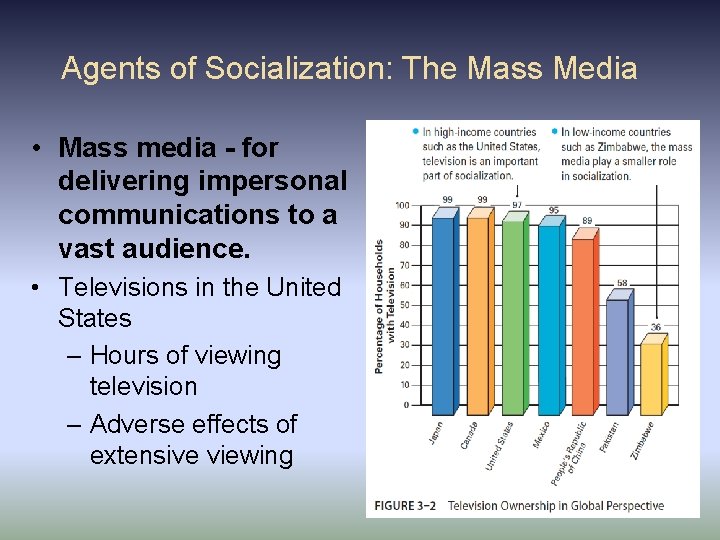
Agents of Socialization: The Mass Media • Mass media - for delivering impersonal communications to a vast audience. • Televisions in the United States – Hours of viewing television – Adverse effects of extensive viewing
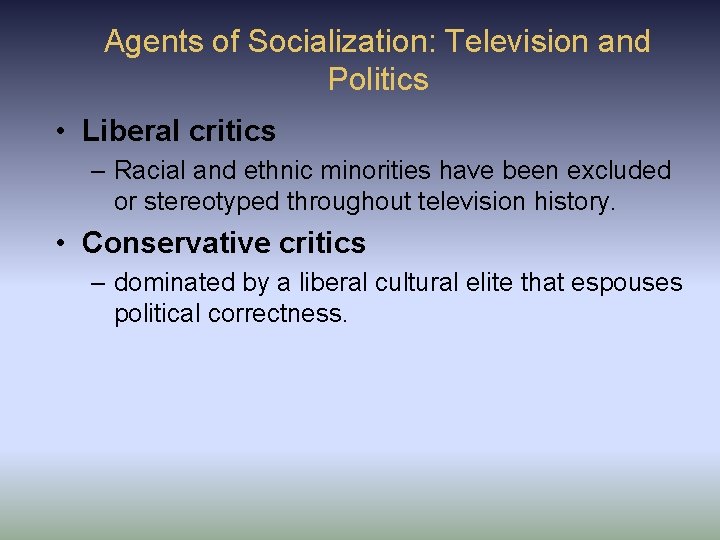
Agents of Socialization: Television and Politics • Liberal critics – Racial and ethnic minorities have been excluded or stereotyped throughout television history. • Conservative critics – dominated by a liberal cultural elite that espouses political correctness.
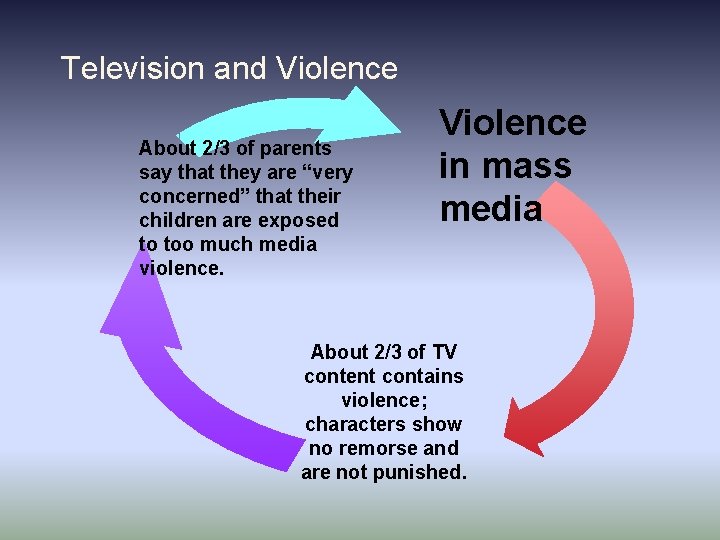
Television and Violence About 2/3 of parents say that they are “very concerned” that their children are exposed to too much media violence. Violence in mass media About 2/3 of TV content contains violence; characters show no remorse and are not punished.
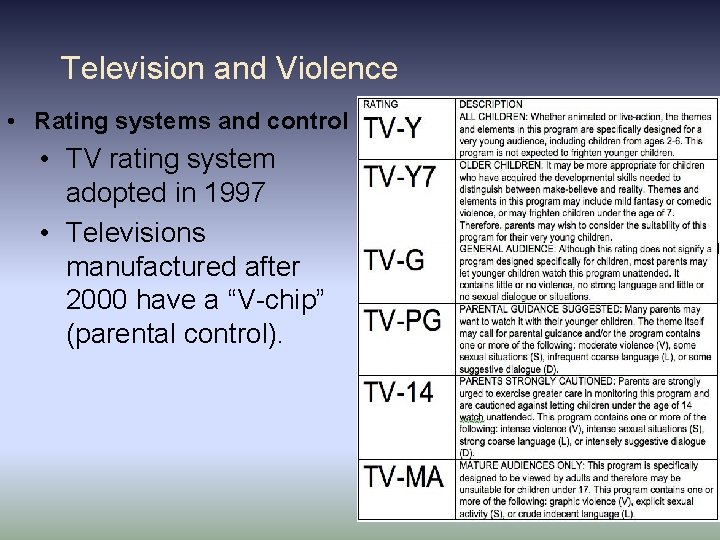
Television and Violence • Rating systems and control • TV rating system adopted in 1997 • Televisions manufactured after 2000 have a “V-chip” (parental control).
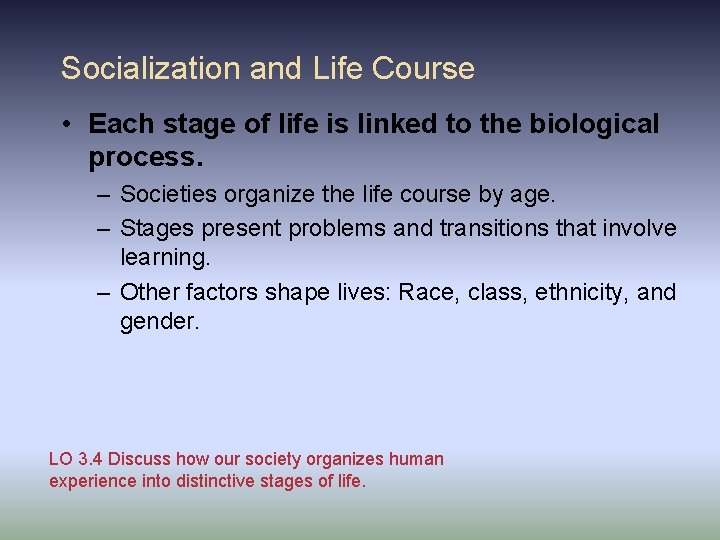
Socialization and Life Course • Each stage of life is linked to the biological process. – Societies organize the life course by age. – Stages present problems and transitions that involve learning. – Other factors shape lives: Race, class, ethnicity, and gender. LO 3. 4 Discuss how our society organizes human experience into distinctive stages of life.
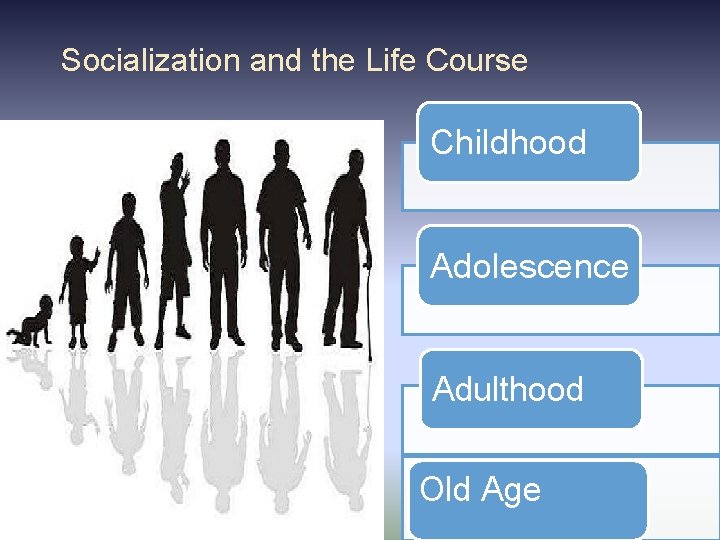
Socialization and the Life Course Childhood Adolescence Adulthood Old Age
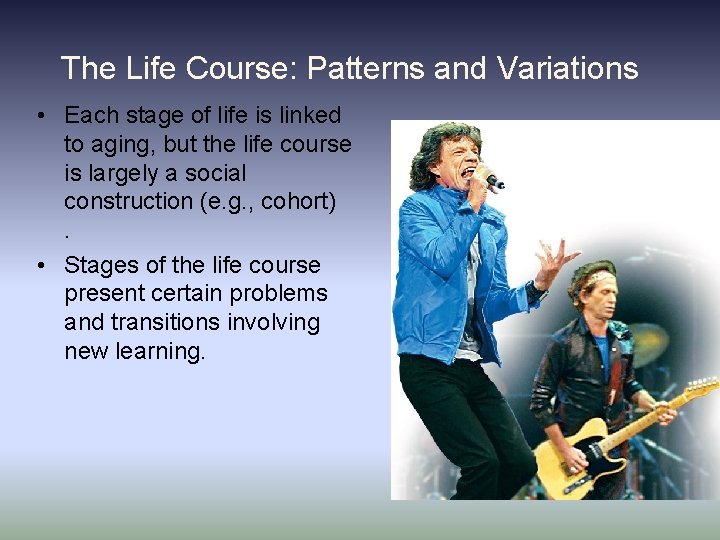
The Life Course: Patterns and Variations • Each stage of life is linked to aging, but the life course is largely a social construction (e. g. , cohort). • Stages of the life course present certain problems and transitions involving new learning.
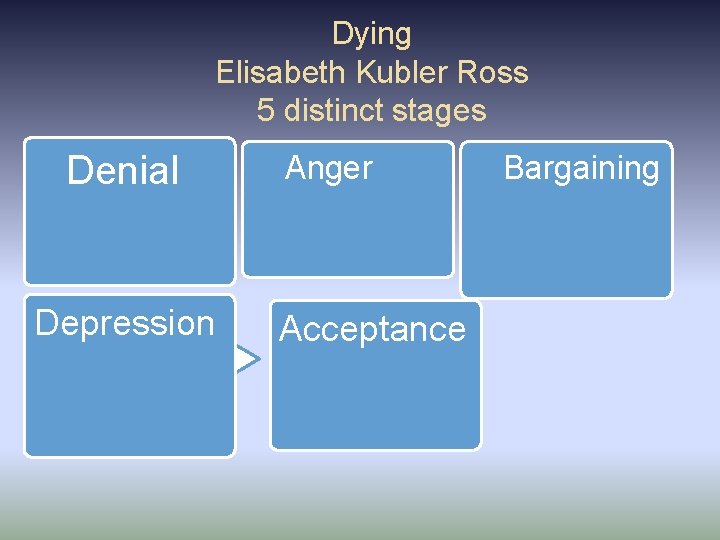
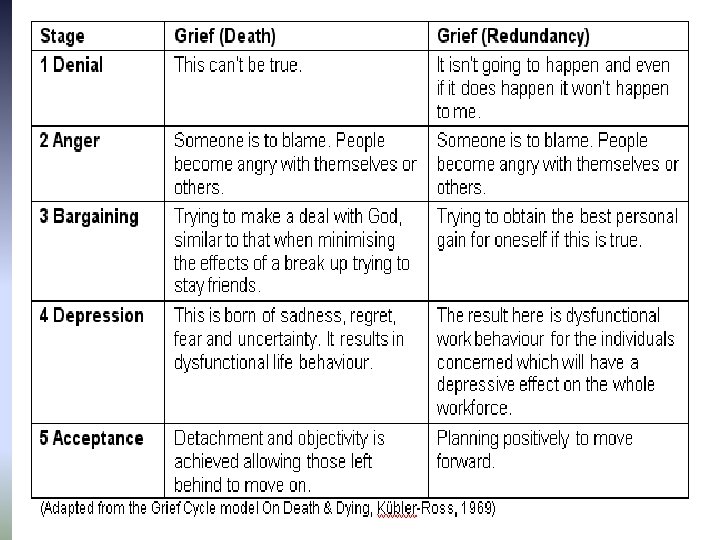
Dying Elisabeth Kubler Ross 5 distinct stages Denial Depression Anger Acceptance Bargaining
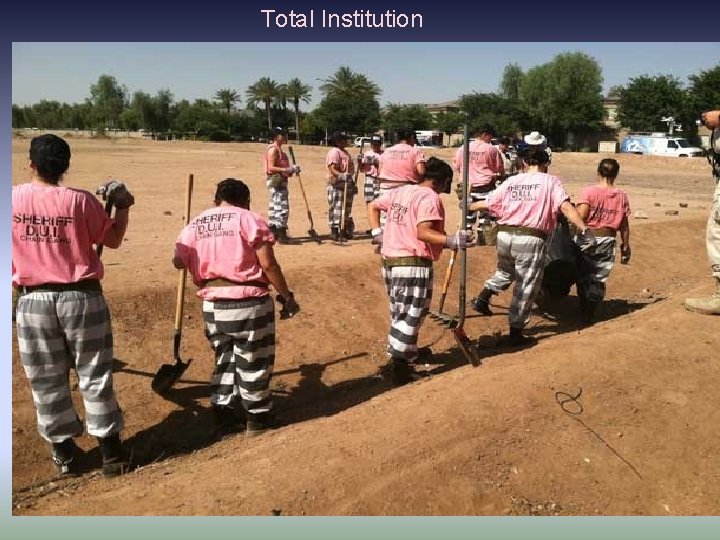
Total Institutions • A setting in which people are isolated from the rest of society and manipulated by an administrative staff • Erving Goffman – Staff supervises all daily life activities. • Environment is standardized. • Formal rules and daily schedules are established. – Staff breaks down identity. • Goffman: “Abasements, degradations, humiliations, and profanations of self” – Staff rebuilds personality using rewards and punishments. LO 3. 5 Characterize the operation of total institutions.
Total Institution
Are We Free Within Society? • Society shapes how we think, feel and act. • If this is so, then in what sense are we free? • “Never doubt that a small group of thoughtful, committed citizens can change The world, indeed, it is the only thing that ever has. ” --Margaret Mead