Chapter 29 Plant Diversity I The Colonization of

- Slides: 45
Chapter 29: Plant Diversity I The Colonization of Land
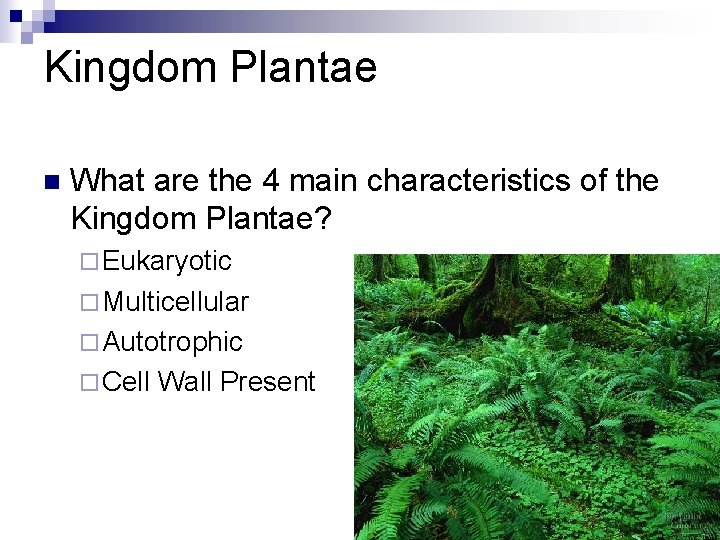
Kingdom Plantae n What are the 4 main characteristics of the Kingdom Plantae? ¨ Eukaryotic ¨ Multicellular ¨ Autotrophic ¨ Cell Wall Present
4 Additional Characteristics 1) Cuticle n 2) Stomata n 3) Secondary Products n 4) Starch Storage n
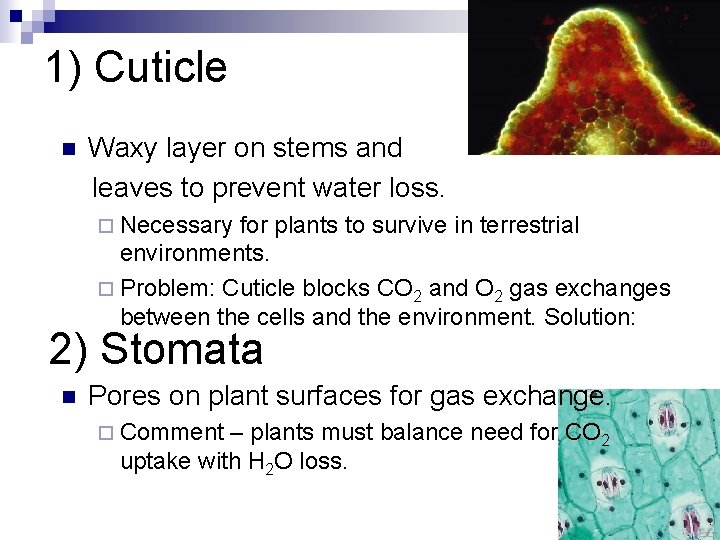
1) Cuticle n Waxy layer on stems and leaves to prevent water loss. ¨ Necessary for plants to survive in terrestrial environments. ¨ Problem: Cuticle blocks CO 2 and O 2 gas exchanges between the cells and the environment. Solution: 2) Stomata n Pores on plant surfaces for gas exchange. ¨ Comment – plants must balance need for CO 2 uptake with H 2 O loss.
n 3) Secondary Products ¨ Materials not produced by the primary metabolic pathways. n Examples: cuticle waxes ¨ Lignin (wood) ¨ Sporopollenin (pollen grains) ¨ n 4) Starch Storage ¨ Most n plants store extra food as starch. Ex: chloroplasts amyloplasts
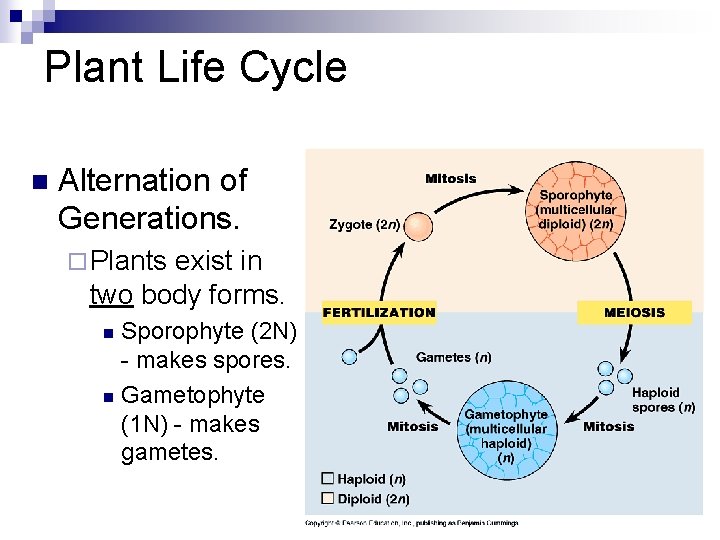
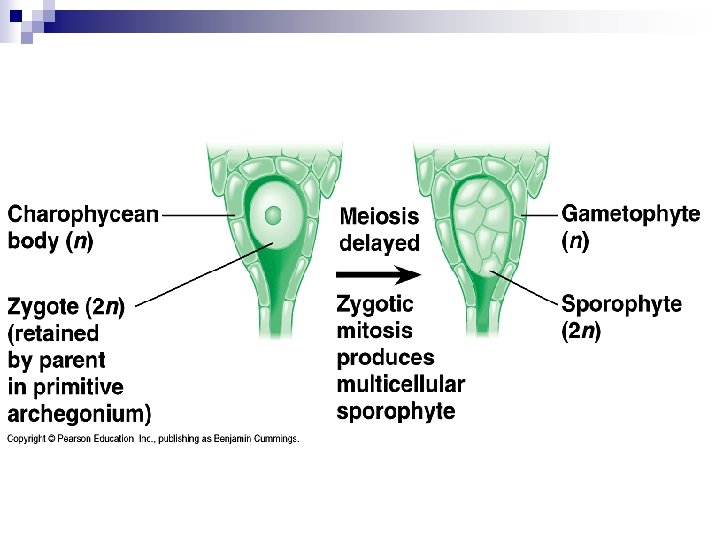
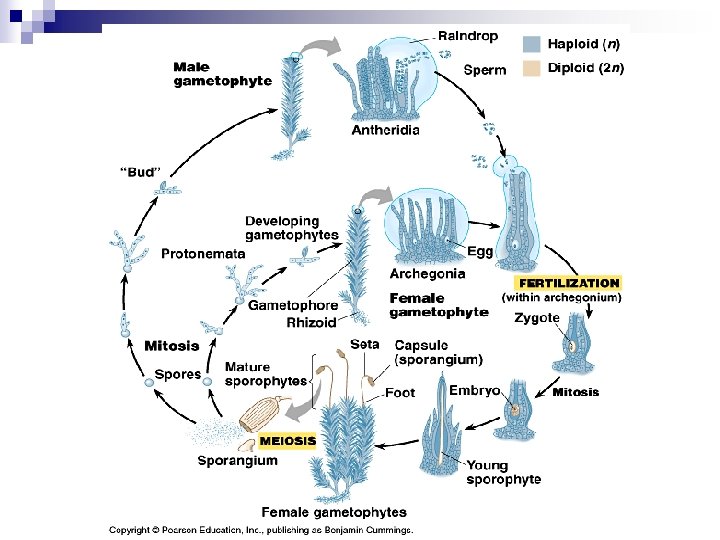
Plant Life Cycle n Alternation of Generations. ¨ Plants exist in two body forms. Sporophyte (2 N) - makes spores. n Gametophyte (1 N) - makes gametes. n
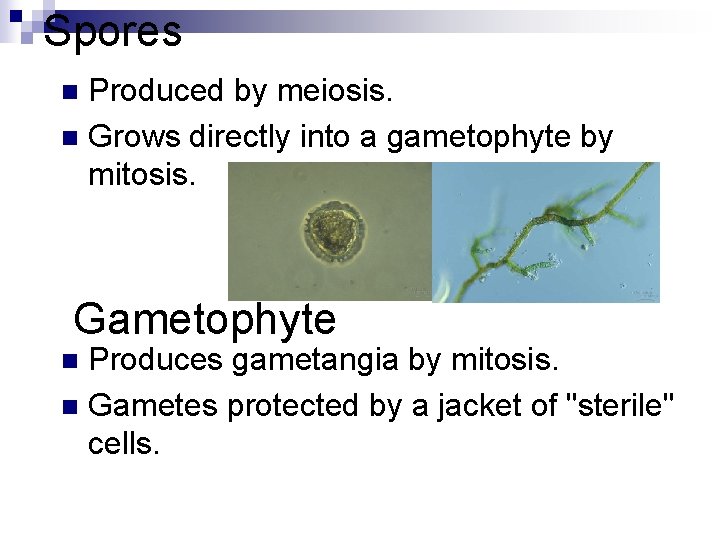
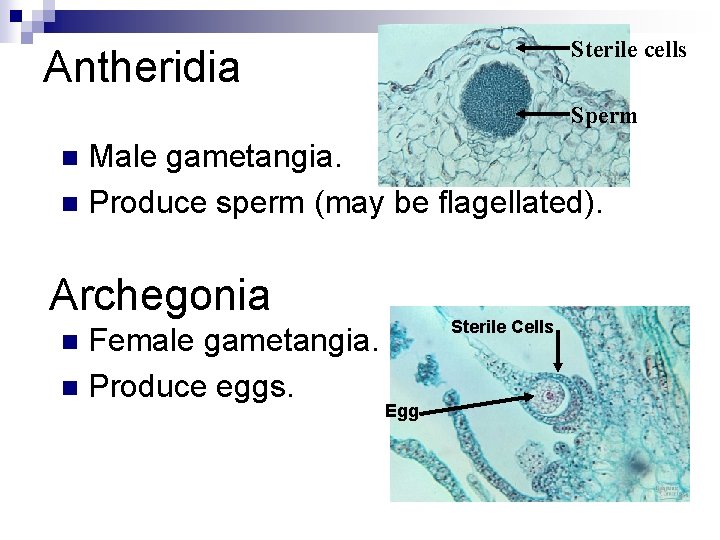
Spores Produced by meiosis. n Grows directly into a gametophyte by mitosis. n Gametophyte Produces gametangia by mitosis. n Gametes protected by a jacket of "sterile" cells. n
Sterile cells Antheridia Sperm Male gametangia. n Produce sperm (may be flagellated). n Archegonia Female gametangia. n Produce eggs. Sterile Cells n Egg
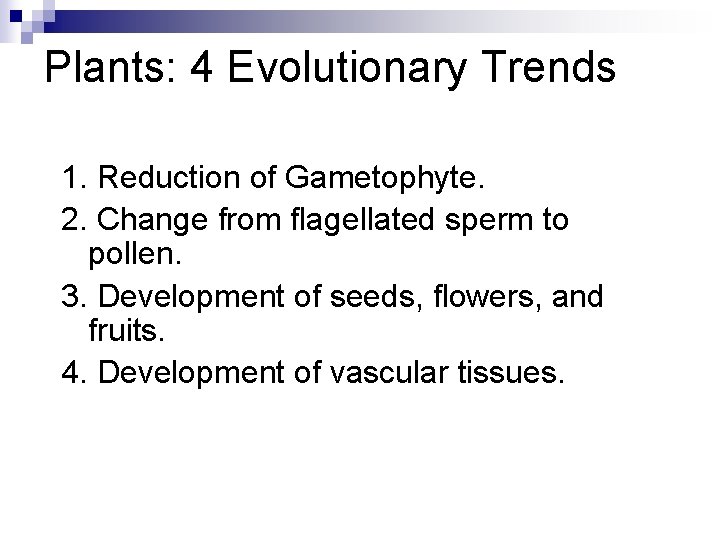
Plants: 4 Evolutionary Trends 1. Reduction of Gametophyte. 2. Change from flagellated sperm to pollen. 3. Development of seeds, flowers, and fruits. 4. Development of vascular tissues.
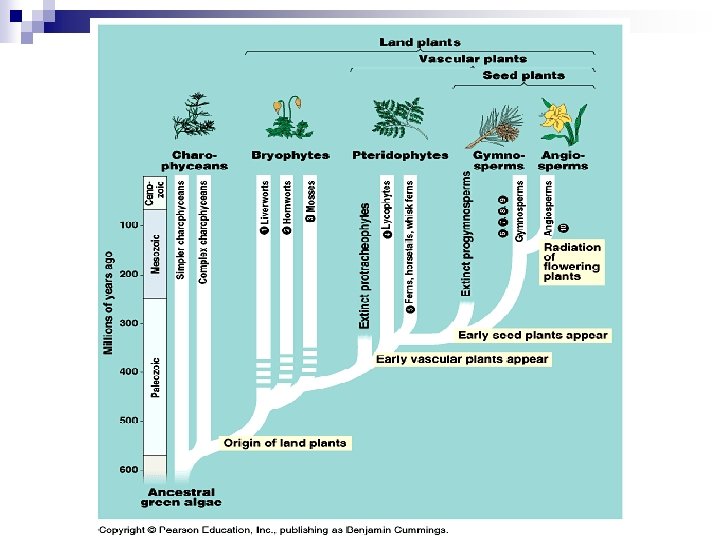
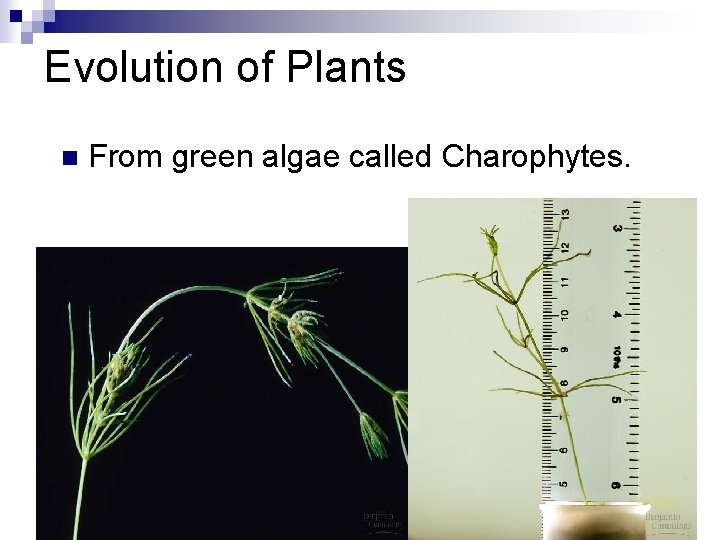
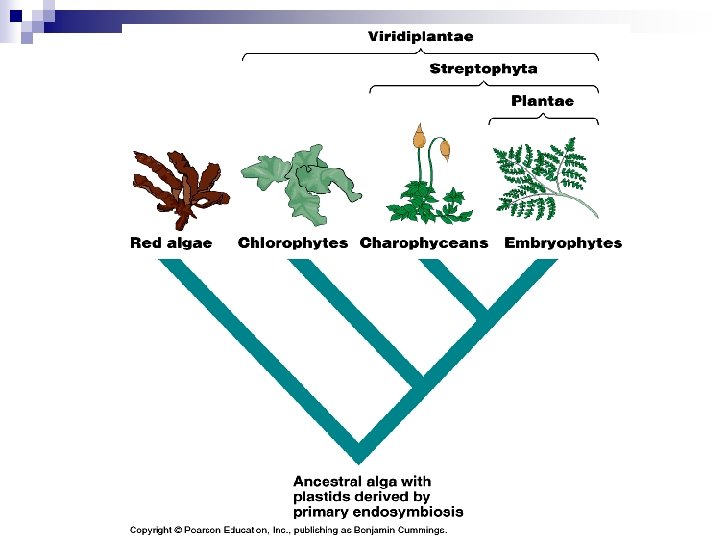
Evolution of Plants n From green algae called Charophytes.
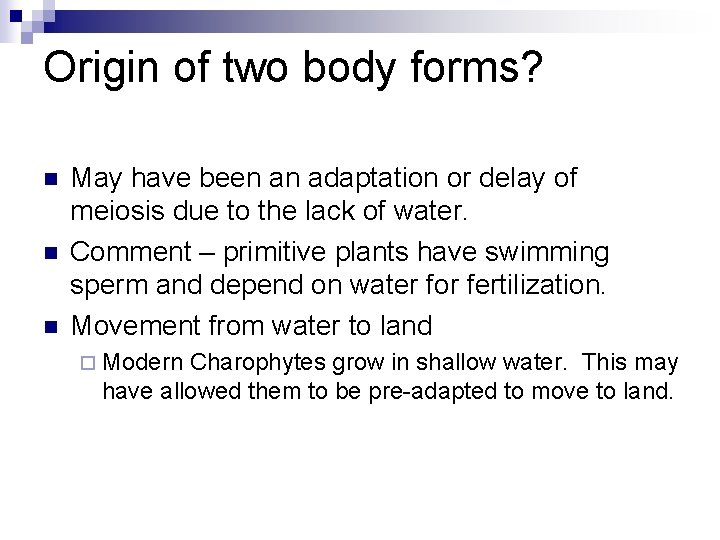
Origin of two body forms? n n n May have been an adaptation or delay of meiosis due to the lack of water. Comment – primitive plants have swimming sperm and depend on water for fertilization. Movement from water to land ¨ Modern Charophytes grow in shallow water. This may have allowed them to be pre-adapted to move to land.
Plant Taxonomy Class = Division n - phyta : suffix for the division name. n
Plant Emphasis 1. Examples 2. Characteristics 3. Life History 4. Importances
Divisions: Examples Bryophyta - Mosses n Hepatophyta - Liverworts n Anthocerophyta - Hornworts n ~17, 000 species n
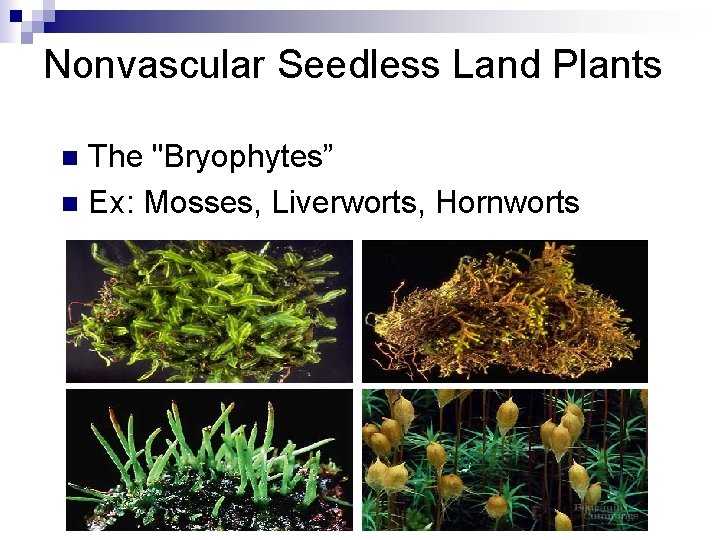
Nonvascular Seedless Land Plants The "Bryophytes” n Ex: Mosses, Liverworts, Hornworts n
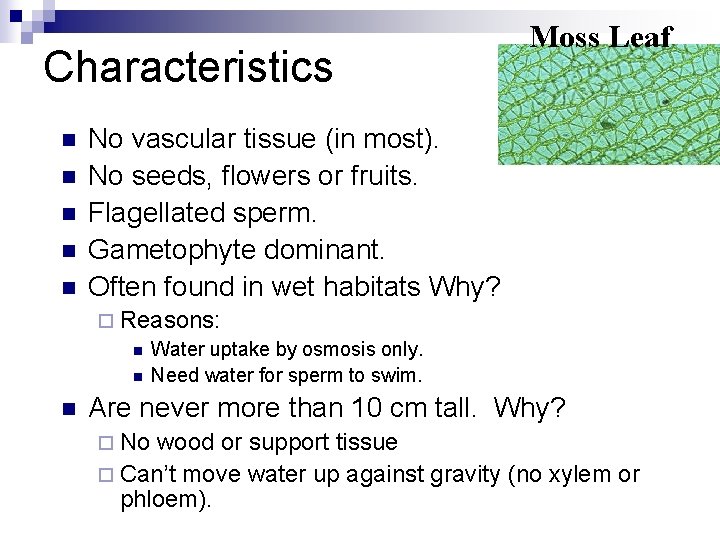
Characteristics n n n Moss Leaf No vascular tissue (in most). No seeds, flowers or fruits. Flagellated sperm. Gametophyte dominant. Often found in wet habitats Why? ¨ Reasons: n Water uptake by osmosis only. n Need water for sperm to swim. n Are never more than 10 cm tall. Why? ¨ No wood or support tissue ¨ Can’t move water up against gravity (no xylem or phloem).
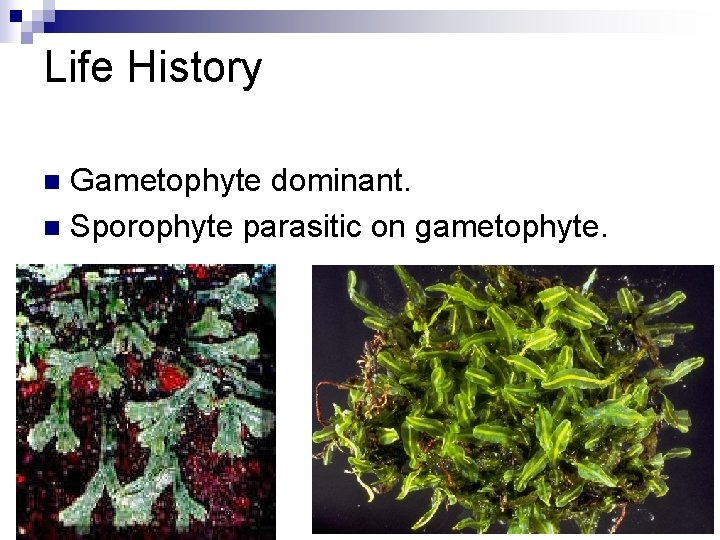
Life History Gametophyte dominant. n Sporophyte parasitic on gametophyte. n
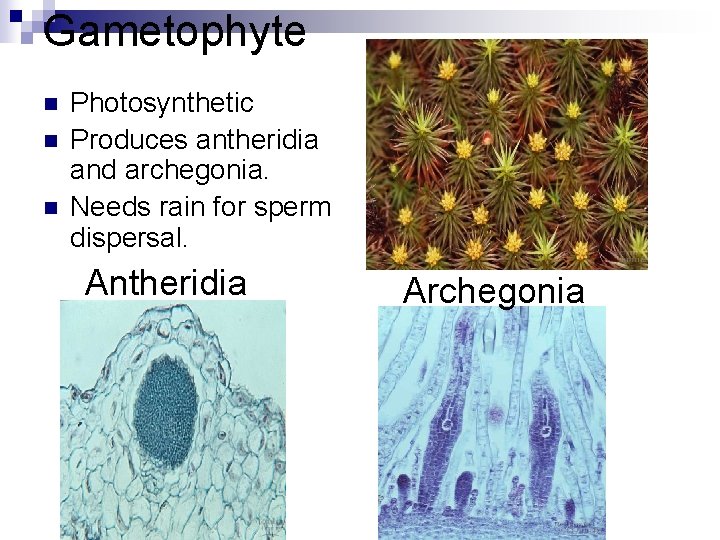
Gametophyte n n n Photosynthetic Produces antheridia and archegonia. Needs rain for sperm dispersal. Antheridia Archegonia
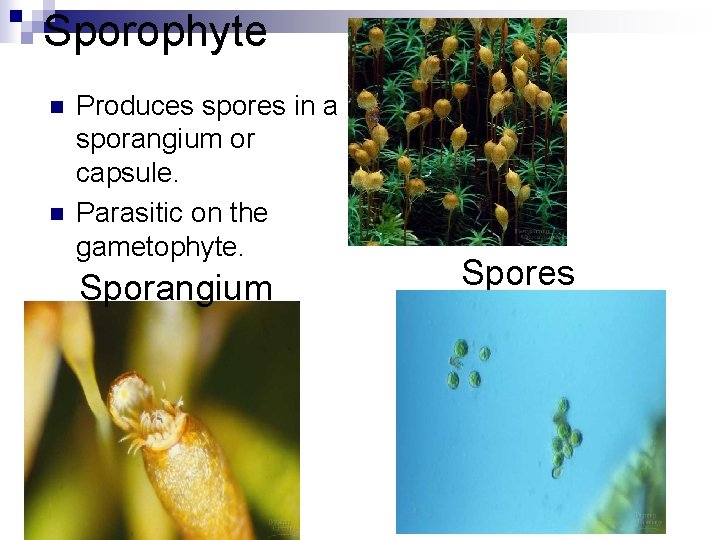
Sporophyte n n Produces spores in a sporangium or capsule. Parasitic on the gametophyte. Sporangium Spores
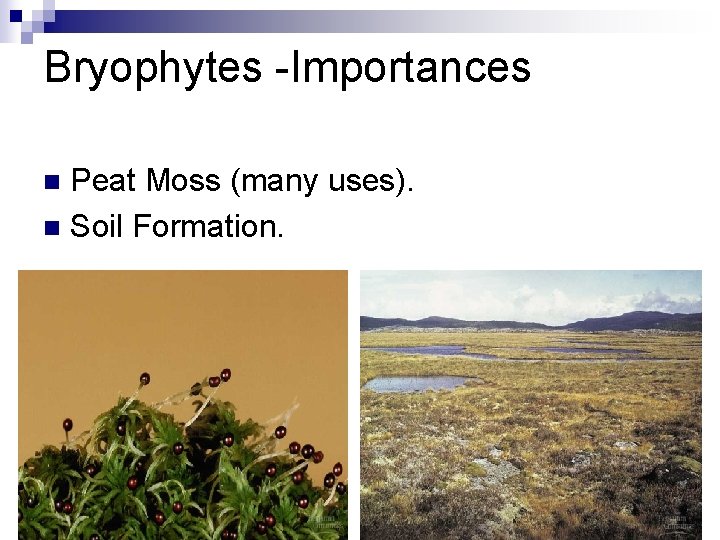
Bryophytes -Importances Peat Moss (many uses). n Soil Formation. n
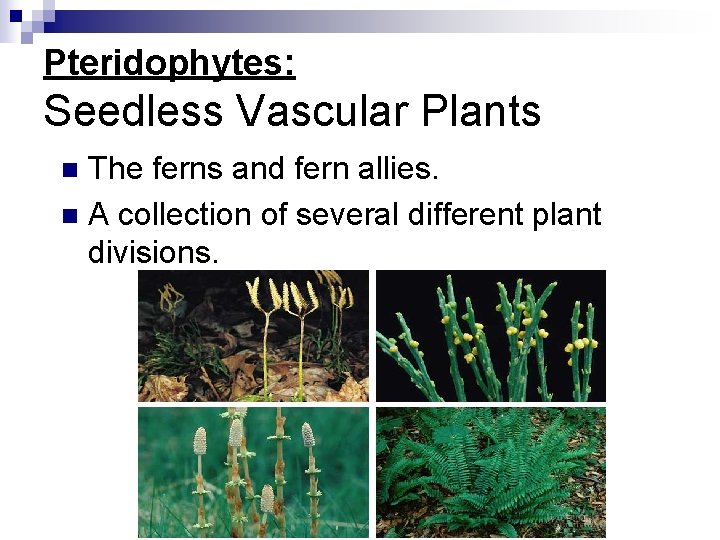
Pteridophytes: Seedless Vascular Plants n Examples Divisions: Psilophyta – Wisk ferns n Lycophyta - Club Mosses n Sphenophyta - Horsetails n Pterophyta - Ferns n ~13, 000 species, mostly ferns n
Pteridophytes: Seedless Vascular Plants The ferns and fern allies. n A collection of several different plant divisions. n
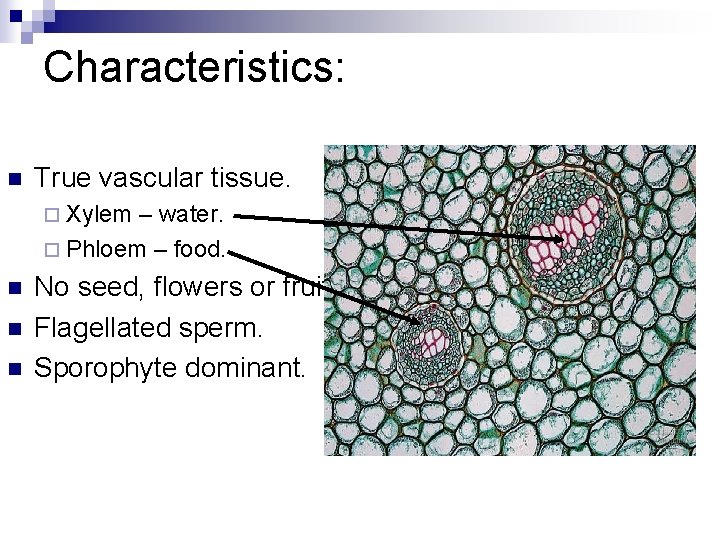
Characteristics: n True vascular tissue. ¨ Xylem – water. ¨ Phloem – food. n n n No seed, flowers or fruits. Flagellated sperm. Sporophyte dominant.
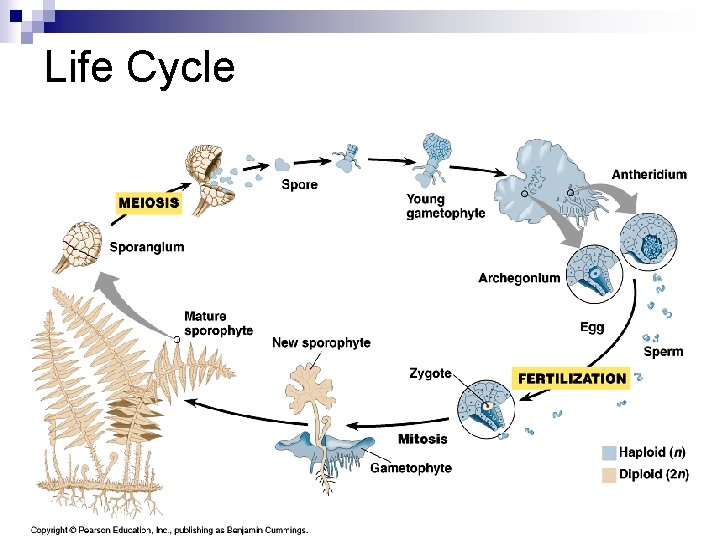
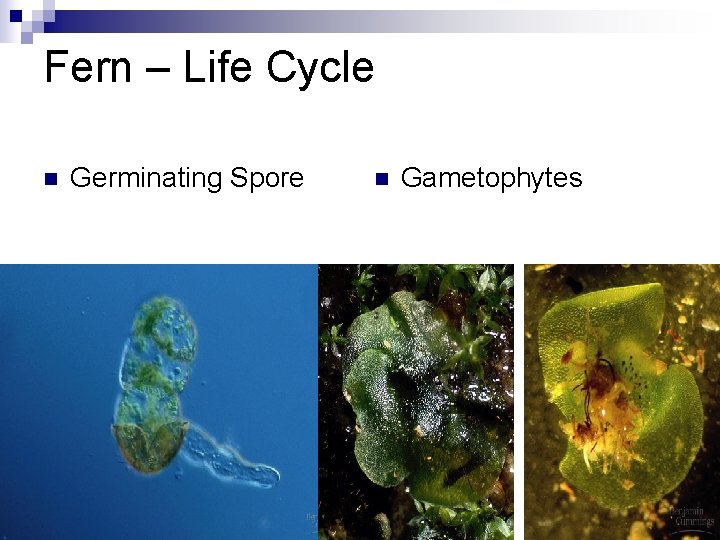
Life History: Sporophyte dominant. n Gametophyte reduced, but usually independent from the sporophyte. n
Life Cycle
Spore Types Homosporous - one kind of spore (most fern allies). n Hetrosporous - two kinds of spores. n ¨ Microspores males sperm ¨ Megaspores females eggs
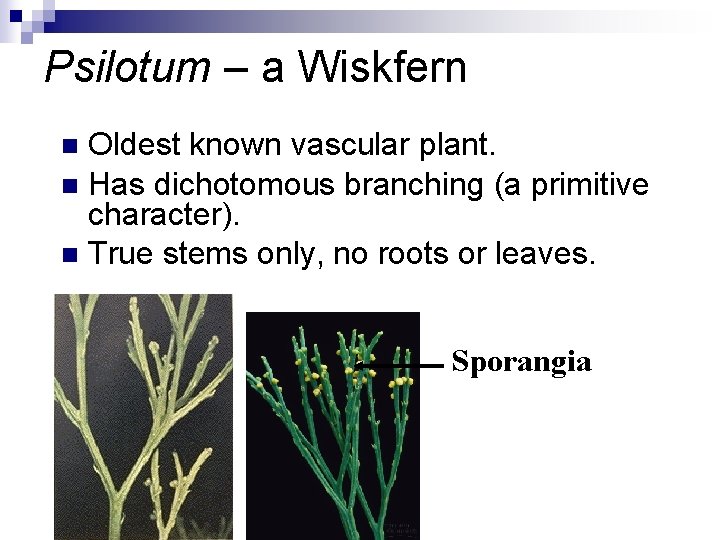
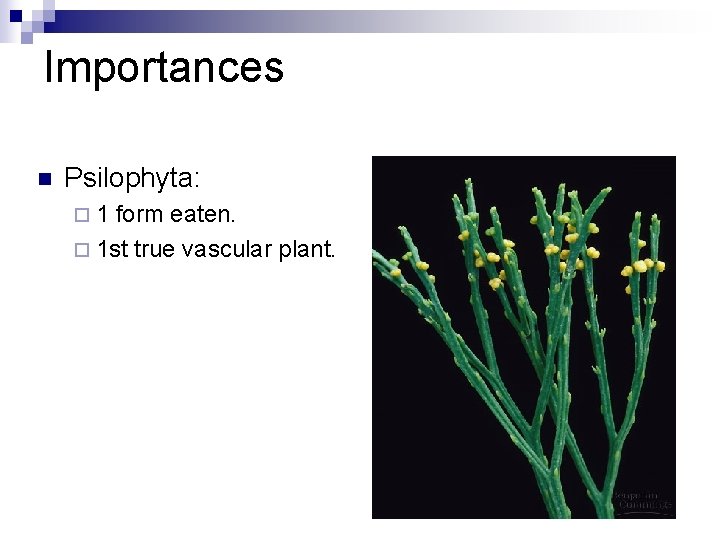
Psilotum – a Wiskfern Oldest known vascular plant. n Has dichotomous branching (a primitive character). n True stems only, no roots or leaves. n Sporangia
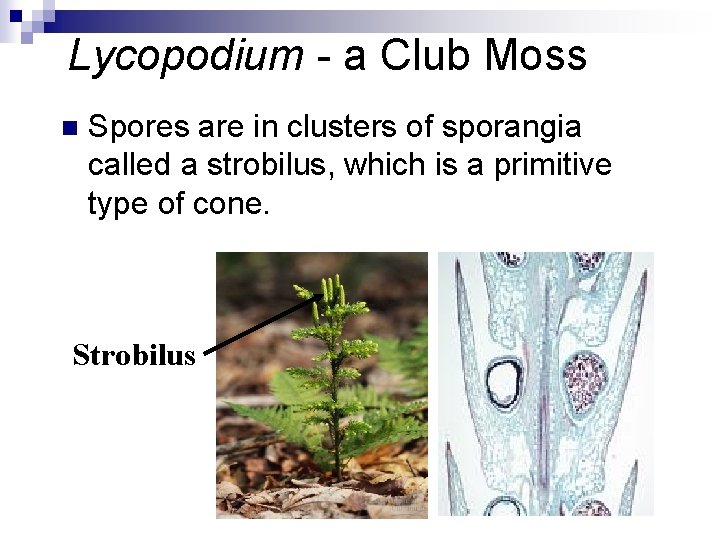
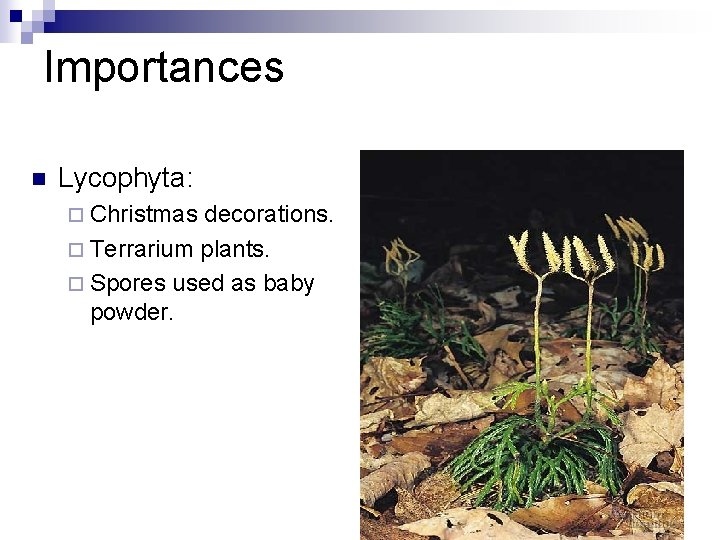
Lycopodium - a Club Moss n Spores are in clusters of sporangia called a strobilus, which is a primitive type of cone. Strobilus
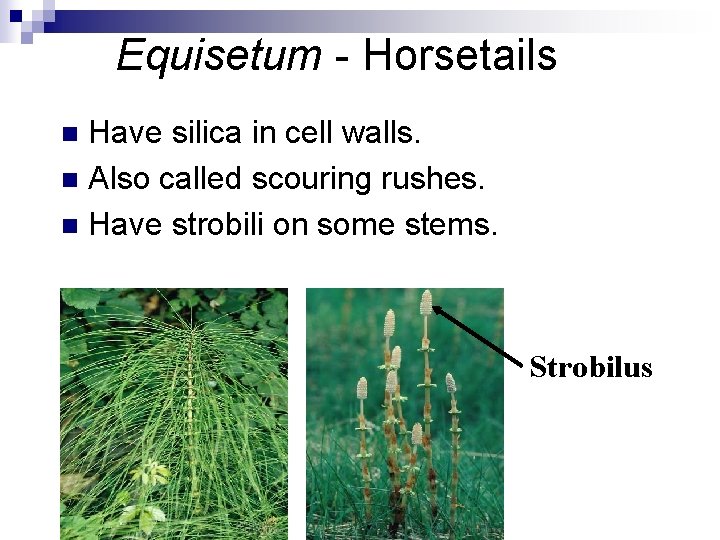
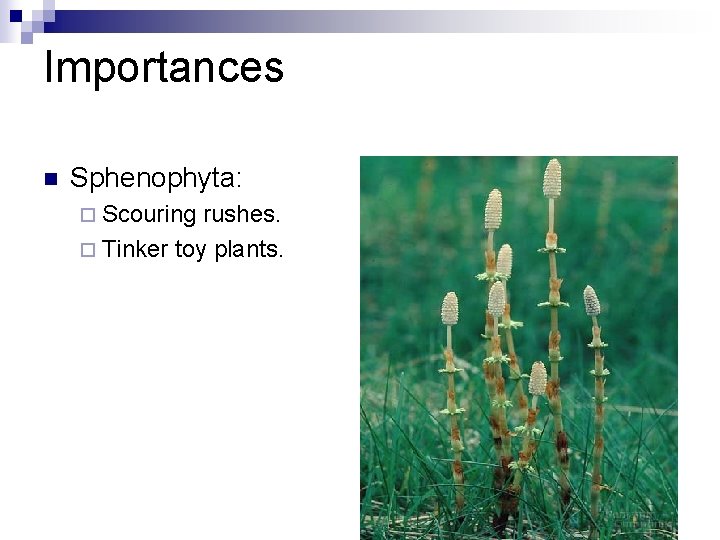
Equisetum - Horsetails Have silica in cell walls. n Also called scouring rushes. n Have strobili on some stems. n Strobilus
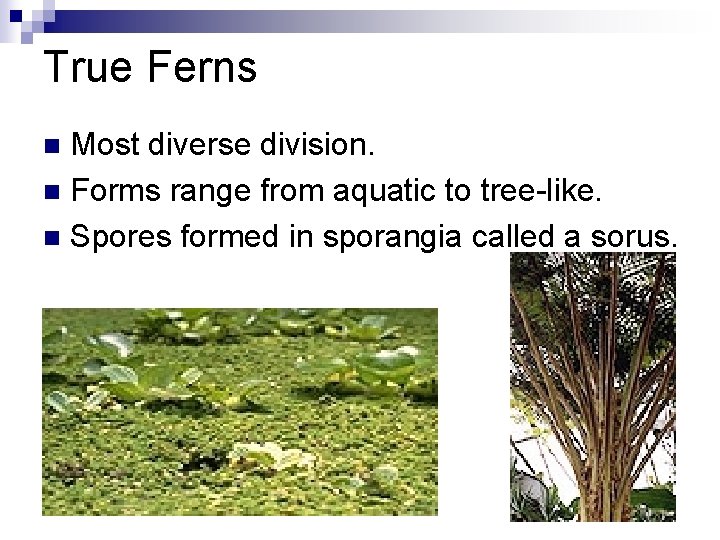
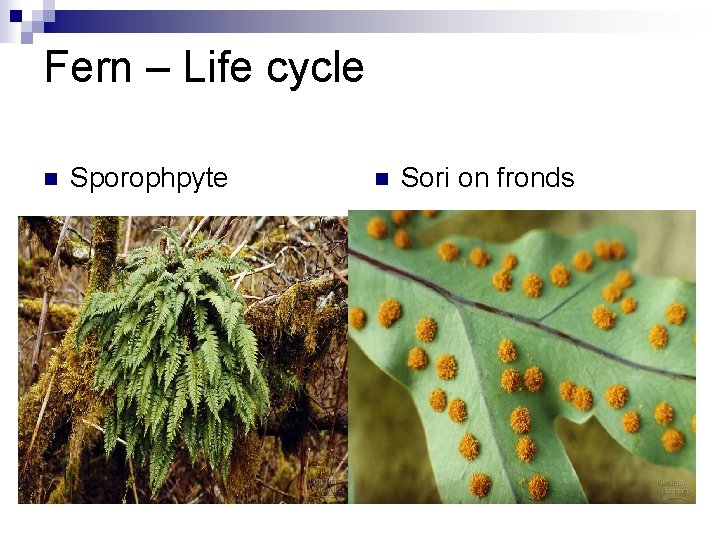
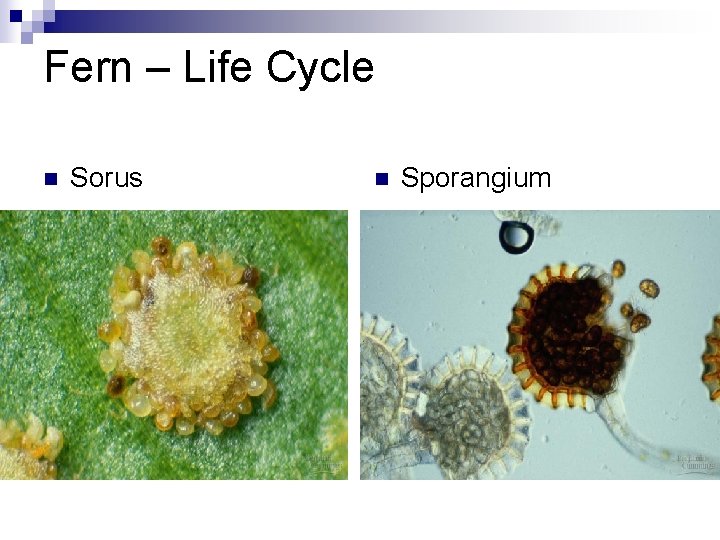
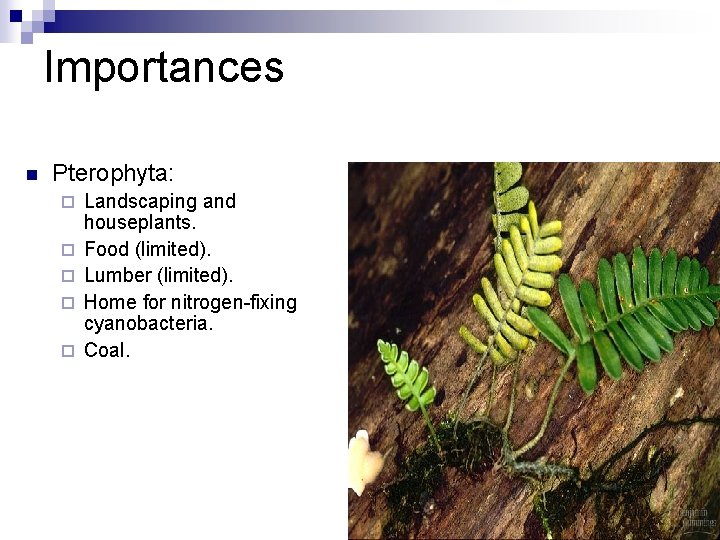
True Ferns Most diverse division. n Forms range from aquatic to tree-like. n Spores formed in sporangia called a sorus. n
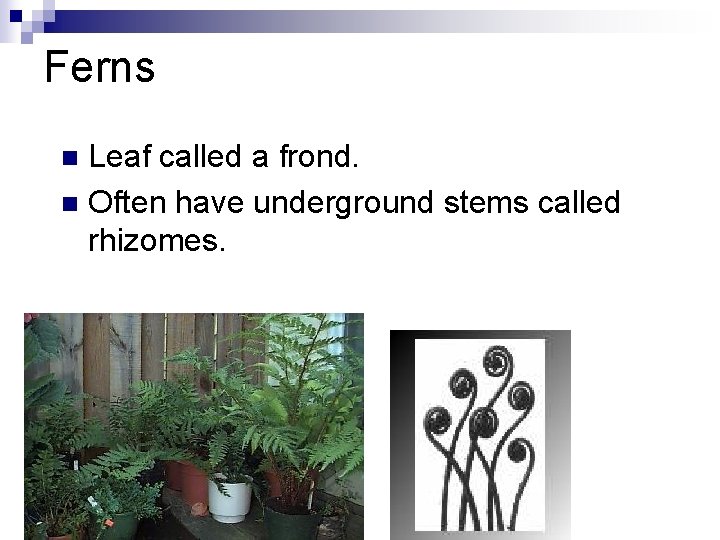
Ferns Leaf called a frond. n Often have underground stems called rhizomes. n
Fern – Life cycle n Sporophpyte n Sori on fronds
Fern – Life Cycle n Sorus n Sporangium
Fern – Life Cycle n Germinating Spore n Gametophytes
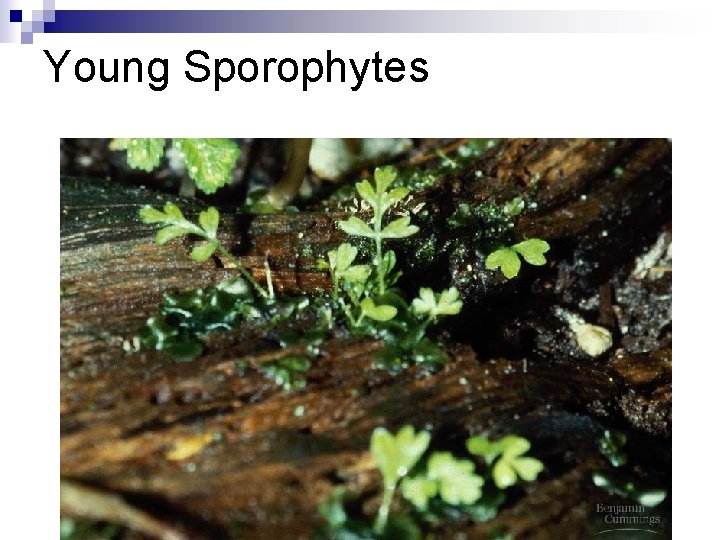
Young Sporophytes
Importances n Psilophyta: ¨ 1 form eaten. ¨ 1 st true vascular plant.
Importances n Lycophyta: ¨ Christmas decorations. ¨ Terrarium plants. ¨ Spores used as baby powder.
Importances n Sphenophyta: ¨ Scouring rushes. ¨ Tinker toy plants.
Importances n Pterophyta: ¨ ¨ ¨ Landscaping and houseplants. Food (limited). Lumber (limited). Home for nitrogen-fixing cyanobacteria. Coal.
Summary Know the general characteristics of plants. n Know the alternation of generations for plants. n What are the evolutionary trends in plants? n
Summary n For each plant division, know: ¨ Examples ¨ Characteristics ¨ Life History ¨ Importances