
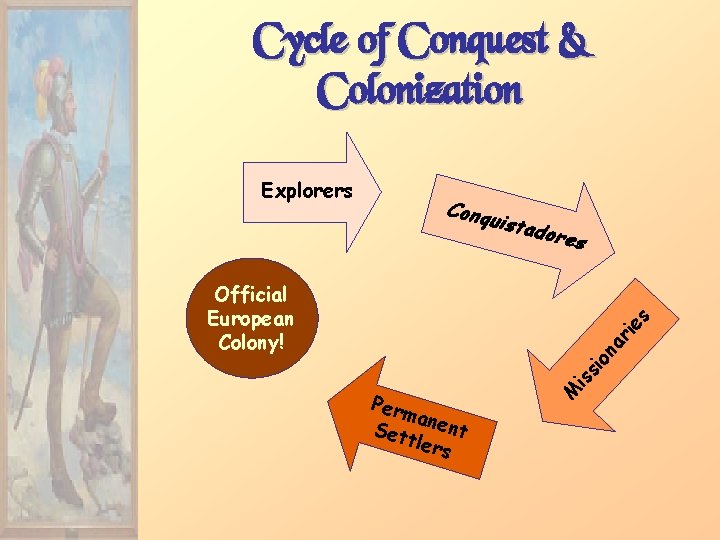
Cycle of Conquest Colonization Explorers Conqu istad ores
- Slides: 46
Cycle of Conquest & Colonization Explorers Conqu istad ores M Perm a Set nent tler s is si on ar ie s Official European Colony!
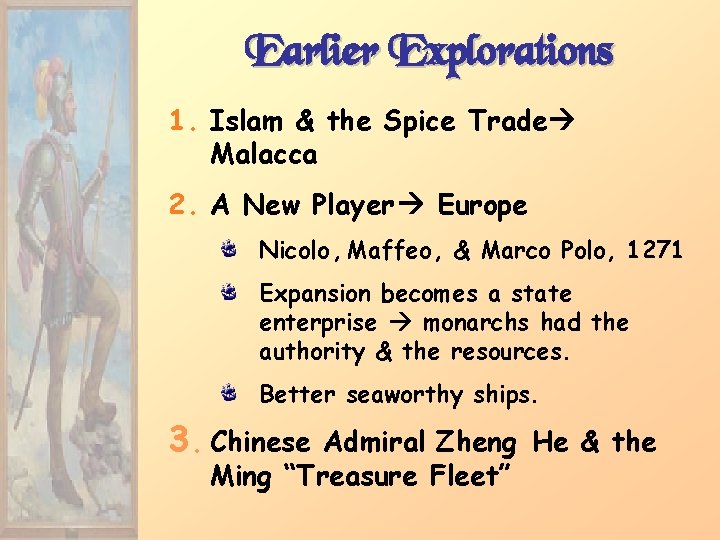
Earlier Explorations 1. Islam & the Spice Trade Malacca 2. A New Player Europe Nicolo , Maffeo, & Marco Polo, 1271 Expansion becomes a state enterprise monarchs had the authority & the resources. Better seaworthy ships. 3. Chinese Admiral Zheng He & the Ming “Treasure Fleet”
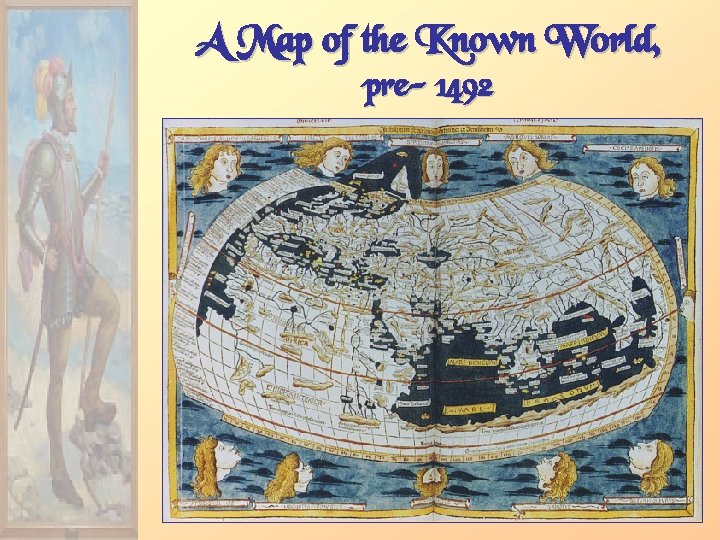
A Map of the Known World, pre- 1492
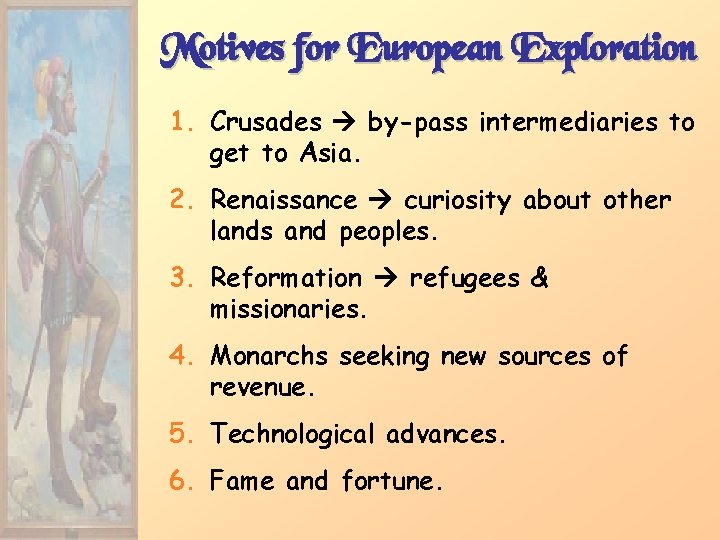
Motives for European Exploration 1. Crusades by-pass intermediaries to get to Asia. 2. Renaissance curiosity about other lands and peoples. 3. Reformation refugees & missionaries. 4. Monarchs seeking new sources of revenue. 5. Technological advances. 6. Fame and fortune.
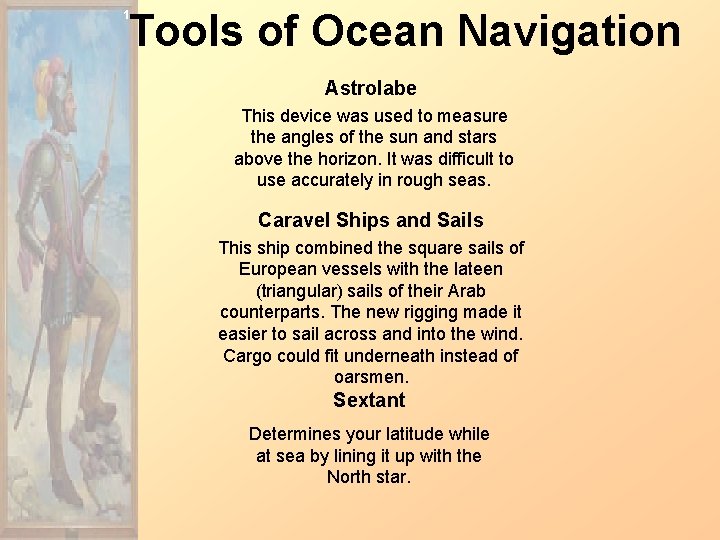
Tools of Ocean Navigation 1 Astrolabe This device was used to measure the angles of the sun and stars above the horizon. It was difficult to use accurately in rough seas. Caravel Ships and Sails This ship combined the square sails of European vessels with the lateen (triangular) sails of their Arab counterparts. The new rigging made it easier to sail across and into the wind. Cargo could fit underneath instead of oarsmen. Sextant Determines your latitude while at sea by lining it up with the North star.
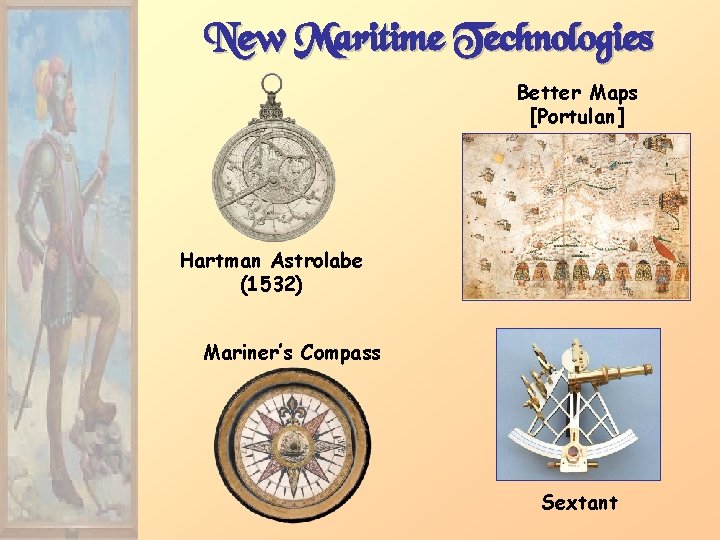
New Maritime Technologies Better Maps [Portulan ] Hartman Astrolabe (1532) Mariner’s Compass Sextant
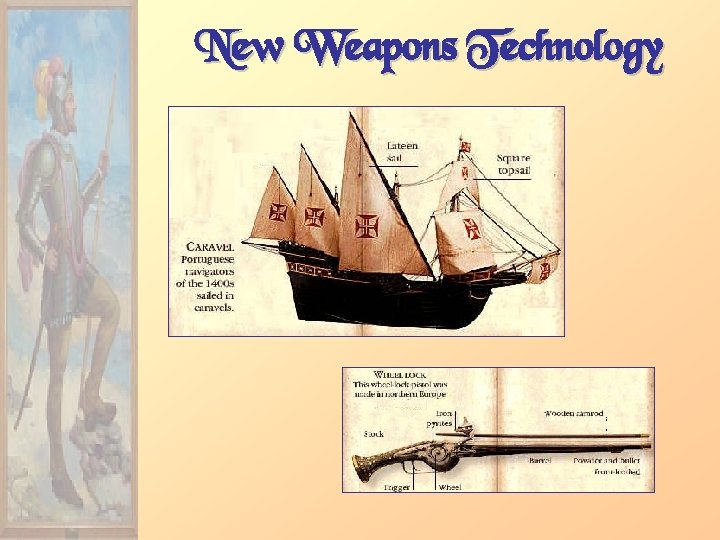
New Weapons Technology
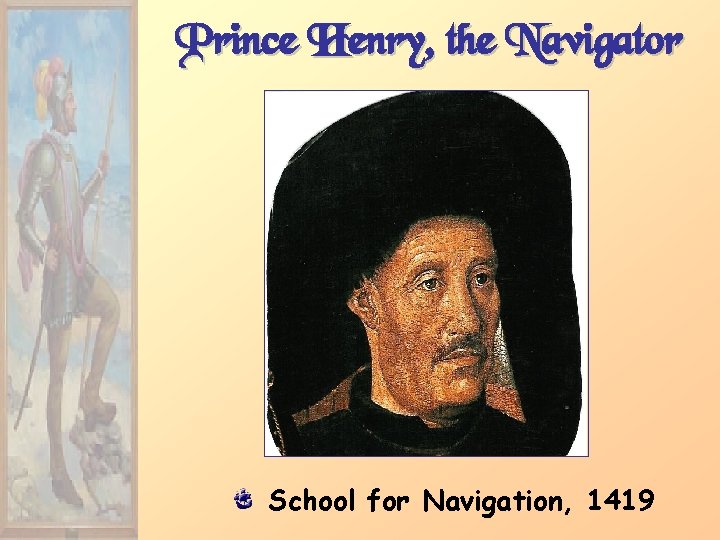
Prince Henry, the Navigator School for Navigation, 1419
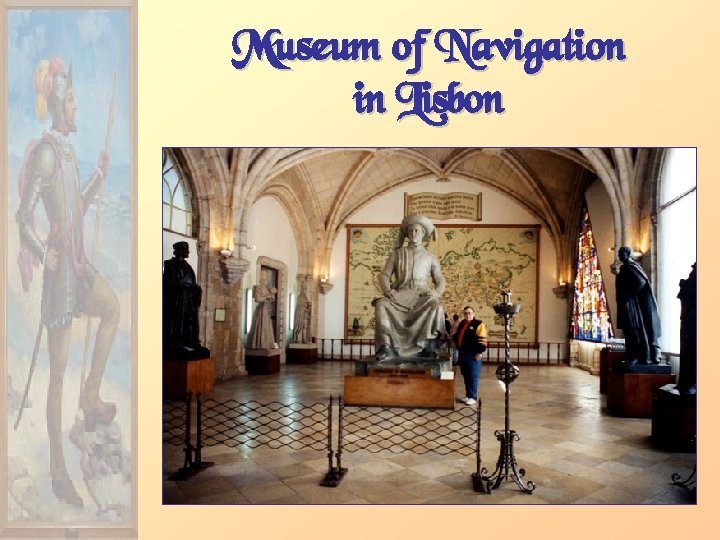
Museum of Navigation in Lisbon
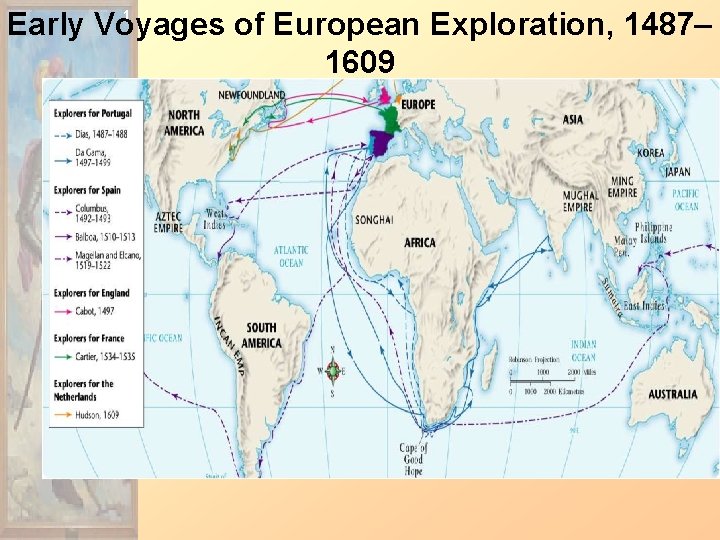
Portuguese Maritime Empire 1. Exploring the west coast of Africa under Prince Henry. 2. Bartolomeo Dias and crew go around Africa, 1487. 3. Vasco da Gama, reaches Calicutta, India 1498. 4. Admiral Alfonso de Albuquerque uses firepower to take Muslim trade posts at Calicut, Ormuz, Goa, and Malacca between 1509 -1516.
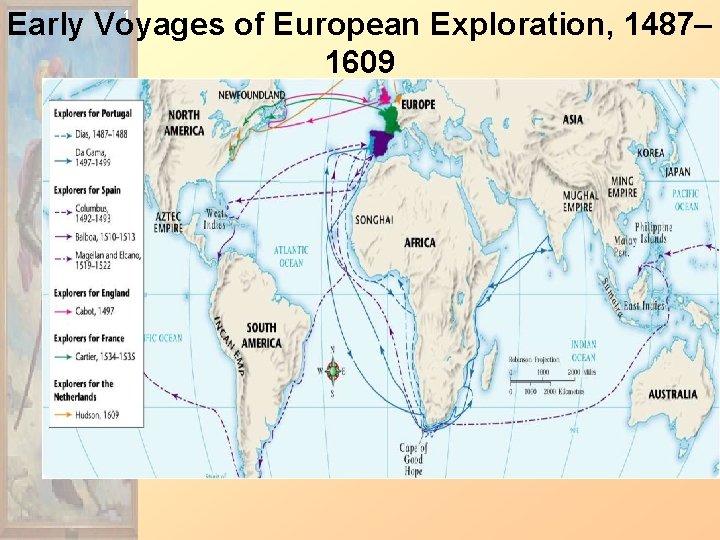
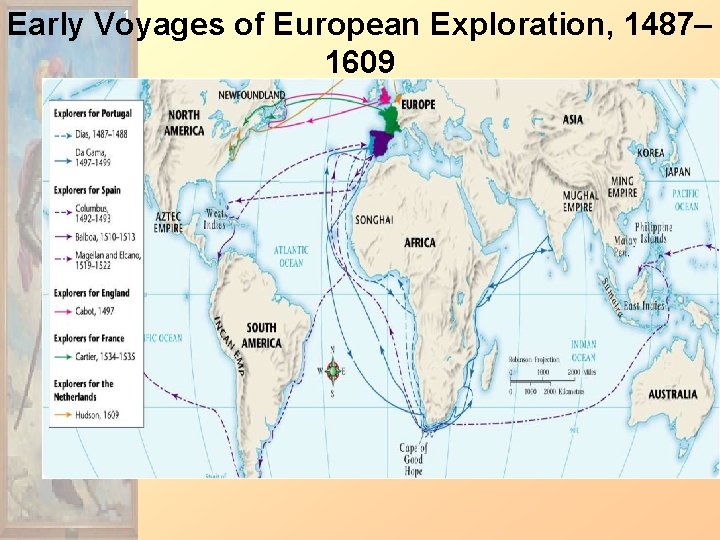
Early Voyages of European Exploration, 1487– 1609 1
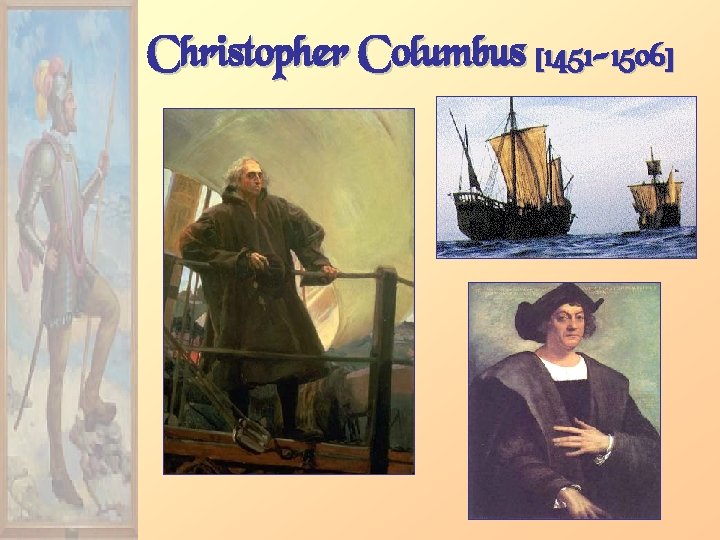
Christopher Columbus [1451 -1506]
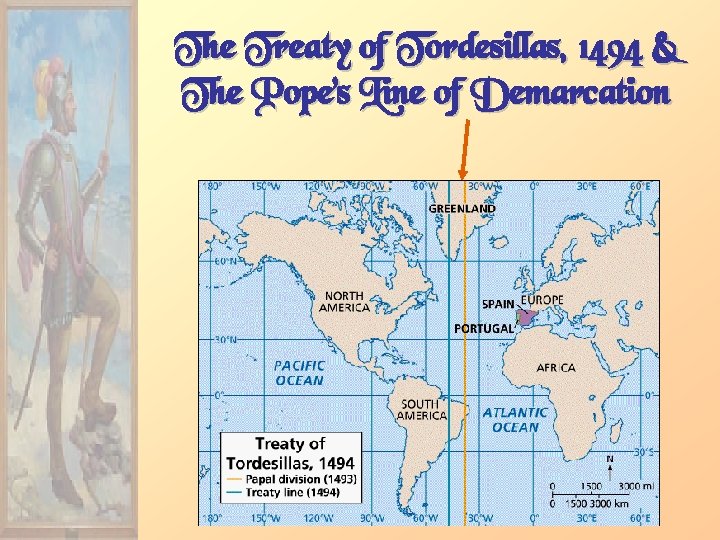
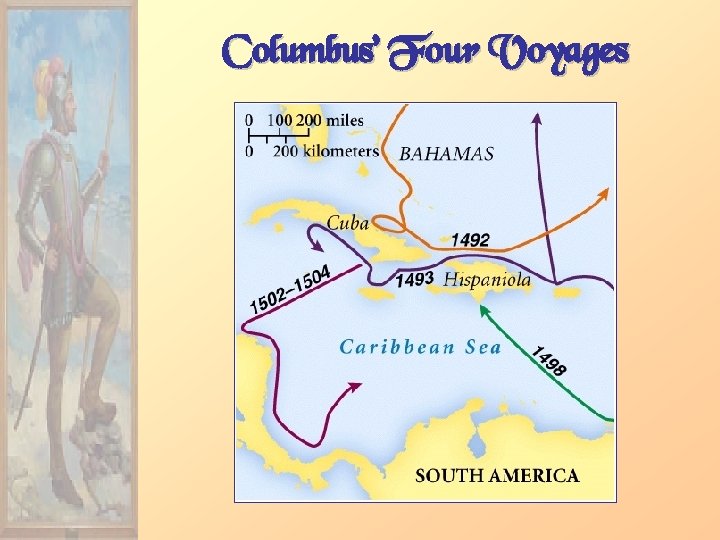
1 Columbus’ Voyages to the West Backed by Spain, Christopher Columbus tried to reach the Indies, in Southeast Asia, by sailing west across the Atlantic. Columbus believed that the land that he reached was the Indies. In fact, he had found a route to continents previously unknown to Europeans. These lands later became known as the West Indies. When Columbus returned, Spain and Portugal both rushed to claim the lands Columbus had explored. Pope Alexander VI set a Line of Demarcation, giving to Spain rights to any land west of the line and to Portugal, rights to any land east of the line.
The Treaty of Tordesillas, 1494 & The Pope’s Line of Demarcation
1 “First Encounters” In 1492, Christopher Columbus landed in the West Indies, in the Caribbean. He encountered the Taíno people, who were friendly and generous toward the Spanish conquistadors, or conquerors, followed in the wake of Columbus. They settled on Caribbean islands, seized gold from the Taínos, and forced them to convert to Christianity. Meanwhile, smallpox, measles and influenza carried by the Europeans wiped out village after native village. Native Americans had no immunity, or resistance, to such diseases.
Columbus’ Four Voyages
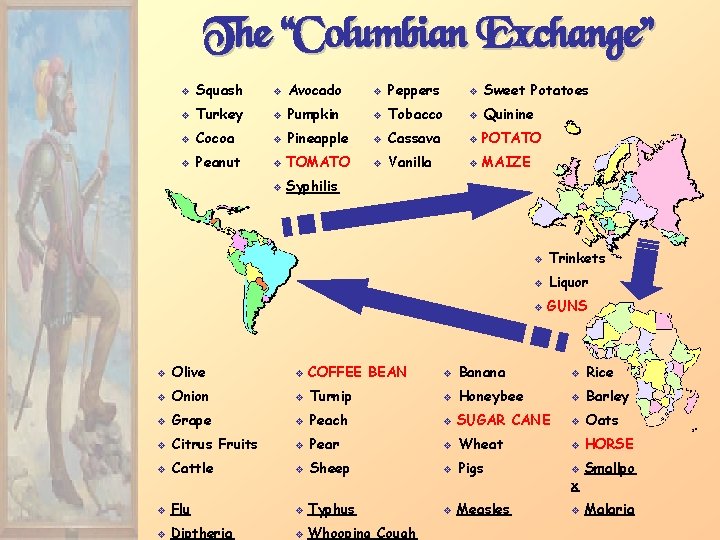
The “Columbian Exchange” v Squash v Avocado v Peppers v Sweet Potatoes v Turkey v Pumpkin v Tobacco v Quinine v Cocoa v Pineapple v Cassava v POTATO v Peanut v TOMATO v Vanilla v MAIZE v Syphilis v Trinkets v Liquor v GUNS v Olive v COFFEE BEAN v Banana v Rice v Onion v Turnip v Honeybee v Barley v Grape v Peach v SUGAR CANE v Oats v Citrus Fruits v Pear v Wheat v HORSE v Cattle v Sheep v Pigs v Smallpo v Flu v Typhus v Measles v Malaria v Diptheria v Whooping Cough x
Early Voyages of European Exploration, 1487– 1609 1
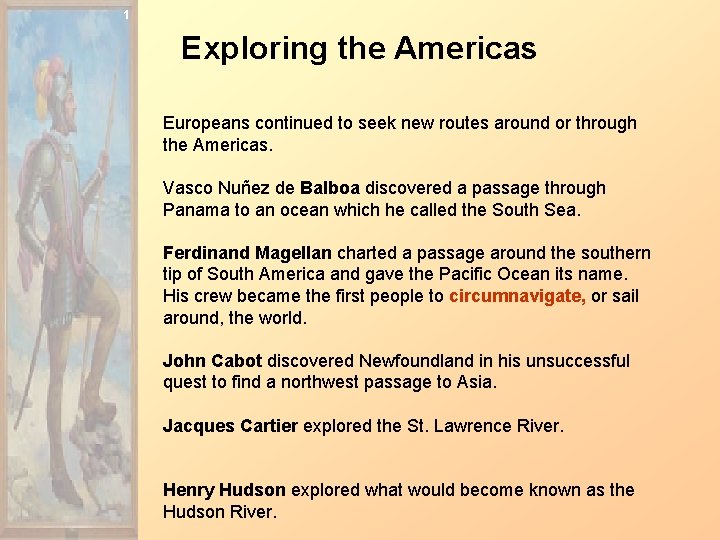
1 Exploring the Americas Europeans continued to seek new routes around or through the Americas. Vasco Nuñez de Balboa discovered a passage through Panama to an ocean which he called the South Sea. Ferdinand Magellan charted a passage around the southern tip of South America and gave the Pacific Ocean its name. His crew became the first people to circumnavigate, or sail around, the world. John Cabot discovered Newfoundland in his unsuccessful quest to find a northwest passage to Asia. Jacques Cartier explored the St. Lawrence River. Henry Hudson explored what would become known as the Hudson River.
Early Voyages of European Exploration, 1487– 1609 1
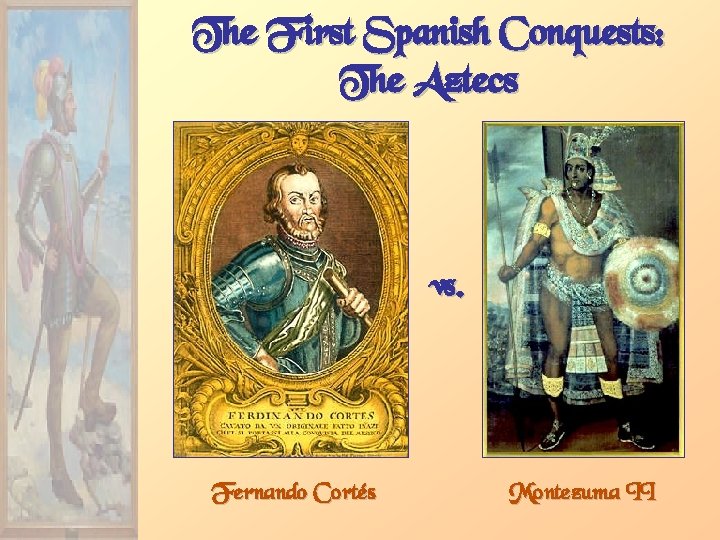
The First Spanish Conquests: The Aztecs vs. Fernando Cortés Montezuma II
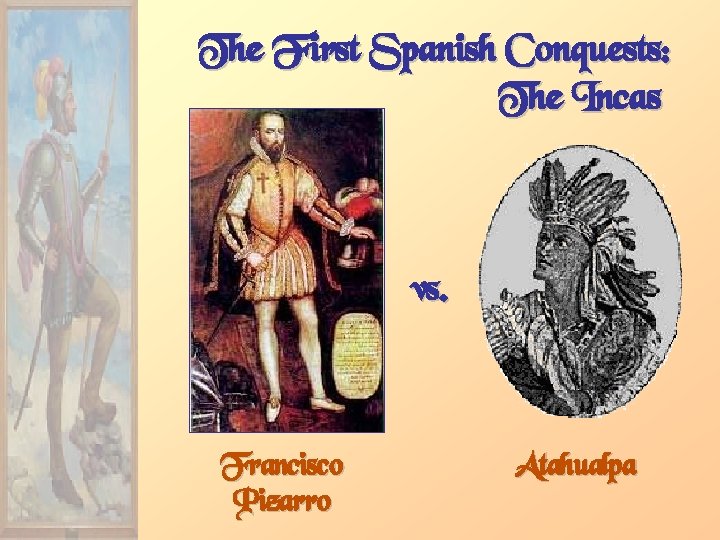
The First Spanish Conquests: The Incas vs. Francisco Pizarro Atahualpa
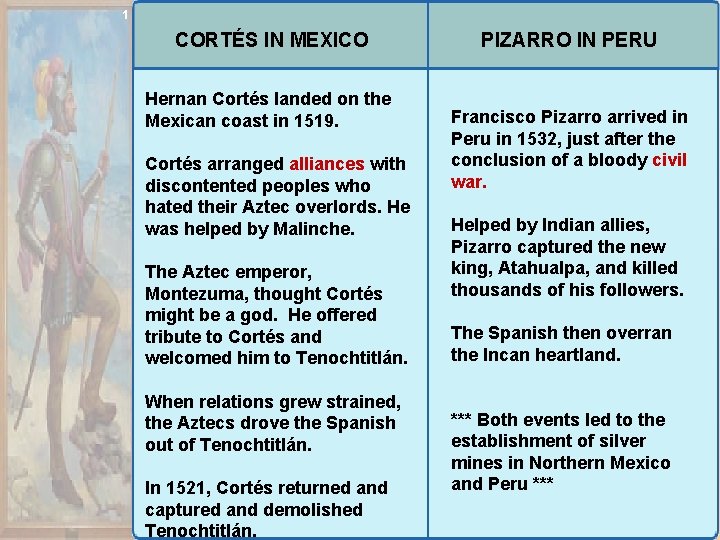
1 CORTÉS IN MEXICO Hernan Cortés landed on the Mexican coast in 1519. Cortés arranged alliances with discontented peoples who hated their Aztec overlords. He was helped by Malinche. The Aztec emperor, Montezuma, thought Cortés might be a god. He offered tribute to Cortés and welcomed him to Tenochtitlán. When relations grew strained, the Aztecs drove the Spanish out of Tenochtitlán. In 1521, Cortés returned and captured and demolished Tenochtitlán. PIZARRO IN PERU Francisco Pizarro arrived in Peru in 1532, just after the conclusion of a bloody civil war. Helped by Indian allies, Pizarro captured the new king, Atahualpa, and killed thousands of his followers. The Spanish then overran the Incan heartland. *** Both events led to the establishment of silver mines in Northern Mexico and Peru ***
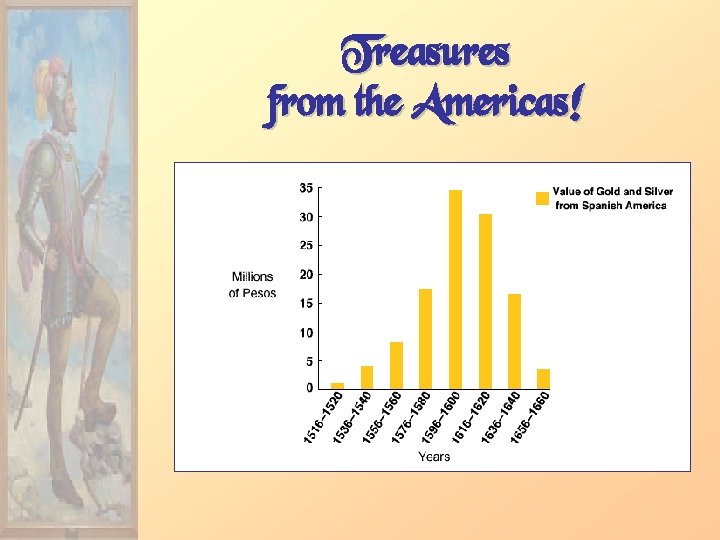
Treasures from the Americas!
1 Why Were the Spanish Victorious? The Spanish had superior military technology, such as muskets, cannons, and armor. They used horses, which frightened some Indians, who had never seen such animals. The Spanish were able to take advantage of division and discontent among the Indians. In fact, Indians provided the Spanish with much of their fighting power. Disease brought by the Europeans weakened the Aztecs and Incas. Many Indians believed that the disasters they suffered marked the end of the world.
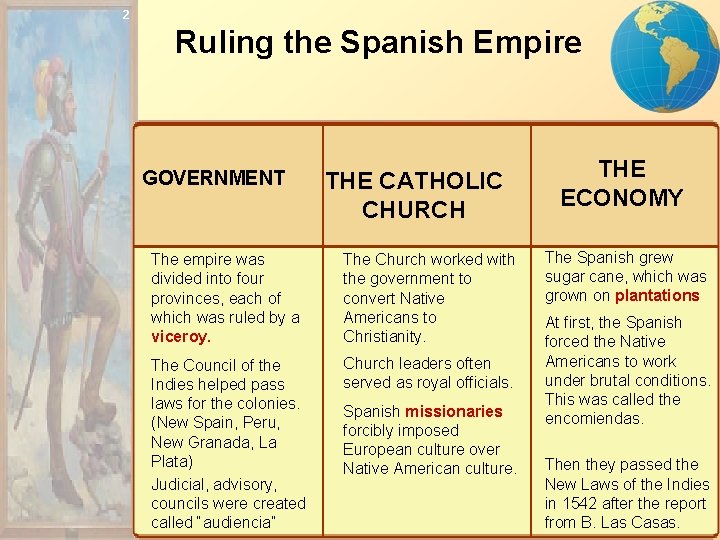
2 Ruling the Spanish Empire GOVERNMENT THE CATHOLIC CHURCH The empire was divided into four provinces, each of which was ruled by a viceroy. The Church worked with the government to convert Native Americans to Christianity. The Council of the Indies helped pass laws for the colonies. (New Spain, Peru, New Granada, La Plata) Judicial, advisory, councils were created called “audiencia” Church leaders often served as royal officials. Spanish missionaries forcibly imposed European culture over Native American culture. THE ECONOMY The Spanish grew sugar cane, which was grown on plantations At first, the Spanish forced the Native Americans to work under brutal conditions. This was called the encomiendas. Then they passed the New Laws of the Indies in 1542 after the report from B. Las Casas.
Spanish Conquest and Colonies • Between 1503 and 1650, 16 million kilograms of silver and 185, 000 kilograms of gold entered Seville, Spain • Bullion influx may have contributed to prices rising as Phillip II paid debts. • The Crown claimed 1/5 or the “quinto” • 1580, the union of the crowns of Portugal and Spain led to a similar set-up in Brazil. • English privateers upset Spanish/English relations. • Spain’s claim to Philippines was also important
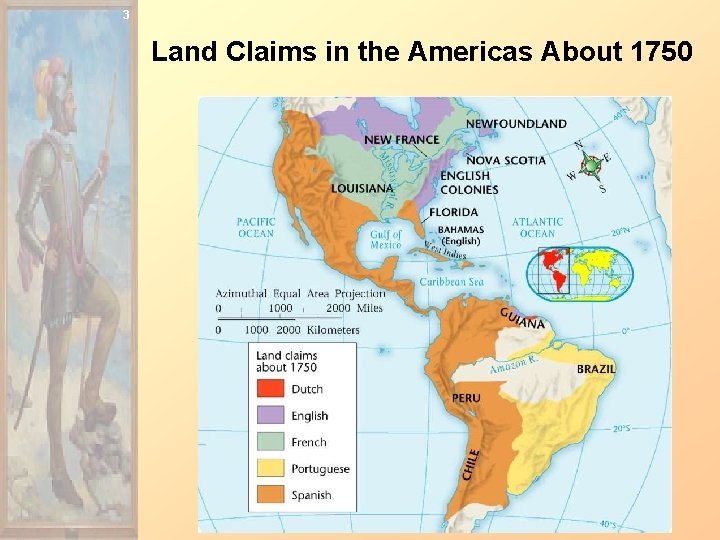
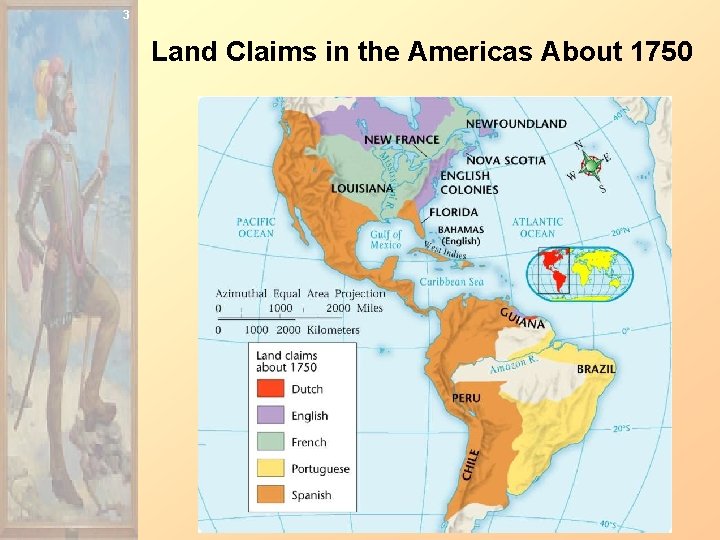
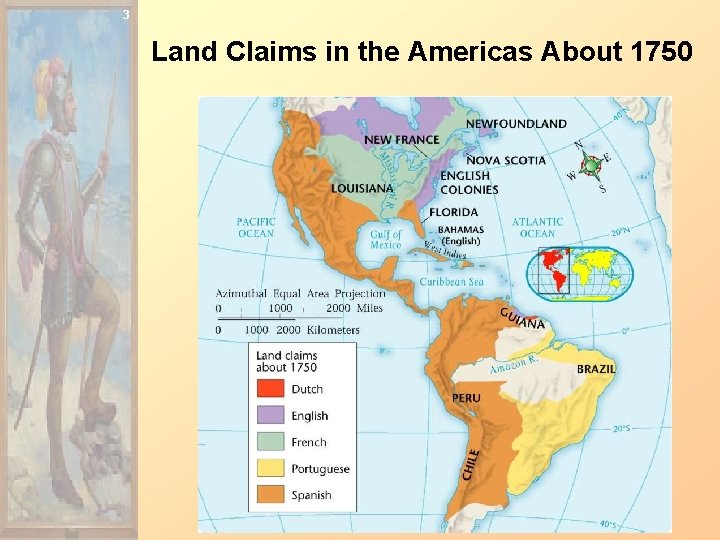
3 Land Claims in the Americas About 1750
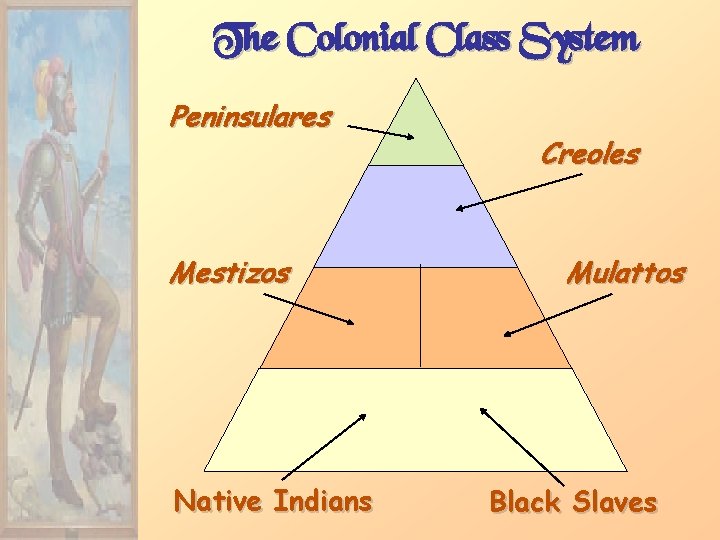
The Colonial Class System Peninsulares Mestizos Native Indians Creoles Mulattos Black Slaves
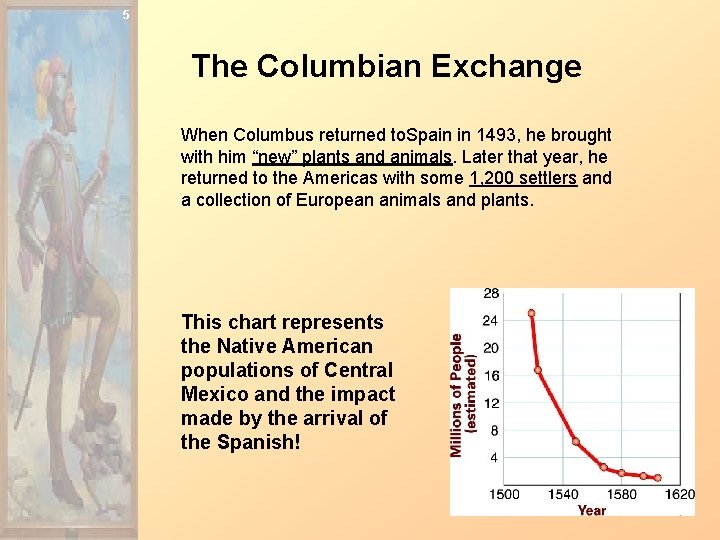
5 The Columbian Exchange When Columbus returned to. Spain in 1493, he brought with him “new” plants and animals. Later that year, he returned to the Americas with some 1, 200 settlers and a collection of European animals and plants. This chart represents the Native American populations of Central Mexico and the impact made by the arrival of the Spanish!
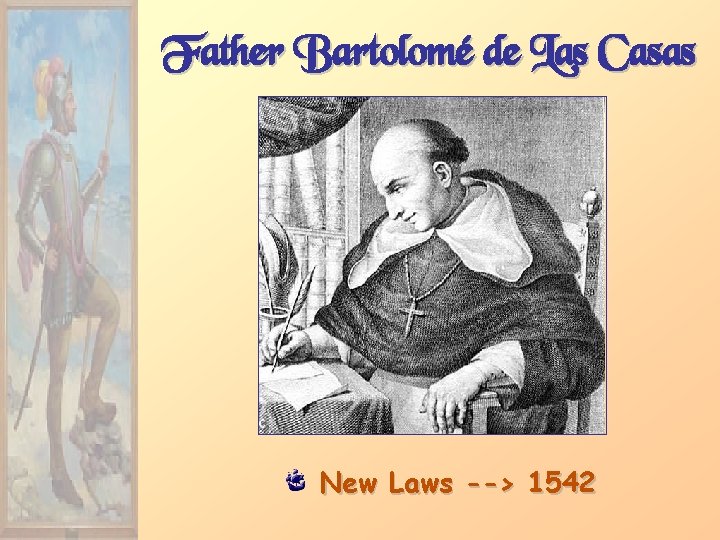
Father Bartolomé de Las Casas New Laws --> 1542
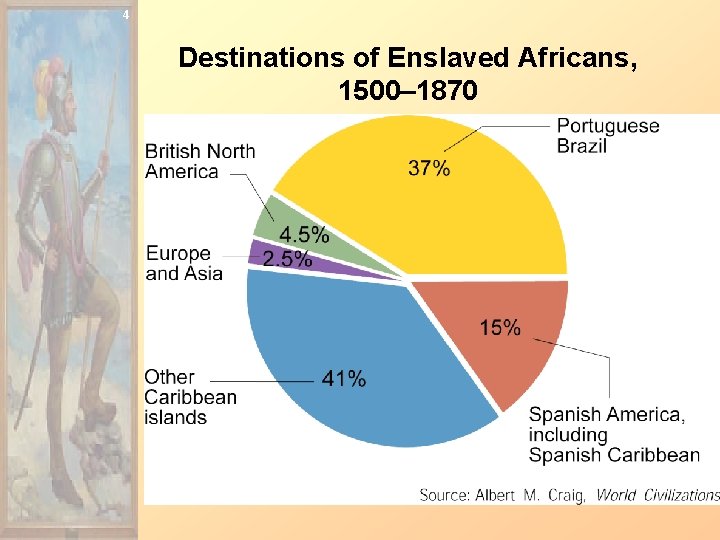
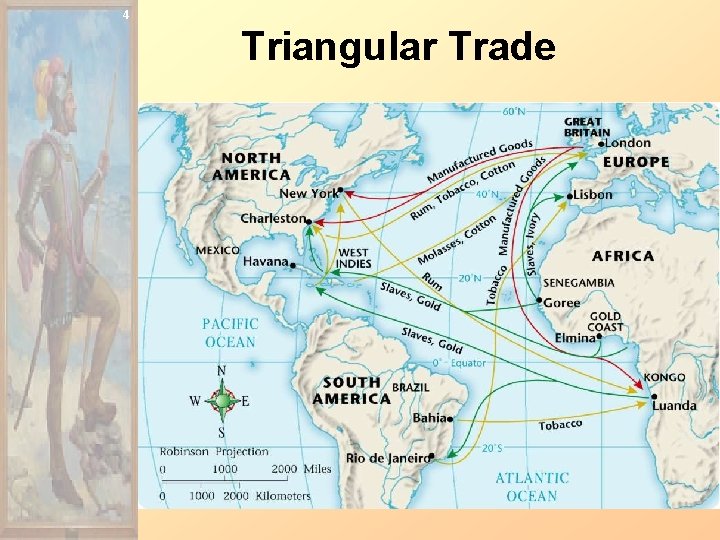
4 The Atlantic Slave Trade The Atlantic slave trade was started in the 1500 s to fill the need for labor in Spain’s American empire. Each year, traders shipped tens of thousands of enslaved Africans across the Atlantic to work on tobacco and sugar plantations in the Americas. Europeans relied on African rulers and traders to seize captives in the interior and bring them to coastal trade posts and fortresses. The slave trade intensified as the demand for slaves increased in the Americas and the demand for luxury goods increased in Africa.
The Slave Trade 1. Existed in Africa before the coming of the Europeans. 2. The Portuguese brought the first Africans replacing European slaves. 3. Spanish were not far behind beginning importation in 1502 but increasing with the advice of Bartolome De Las Casas. 4. 1621 Dutch West India Company participated. British Royal African Company began in late 1600 s. 5. Between 16 c & 19 c, about 10 million Africans shipped to the Americas.
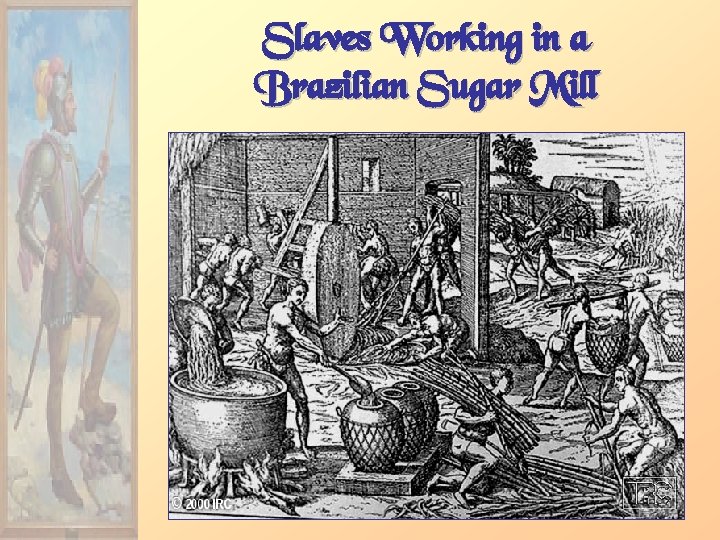
Slaves Working in a Brazilian Sugar Mill
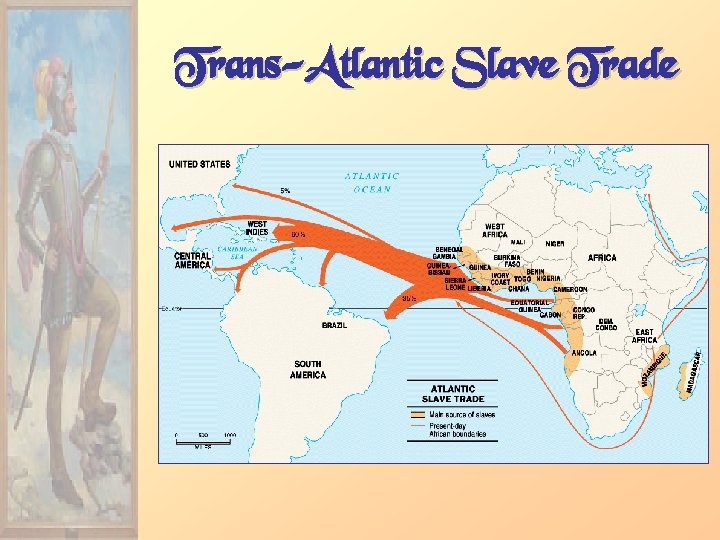
Trans-Atlantic Slave Trade
4 Destinations of Enslaved Africans, 1500– 1870
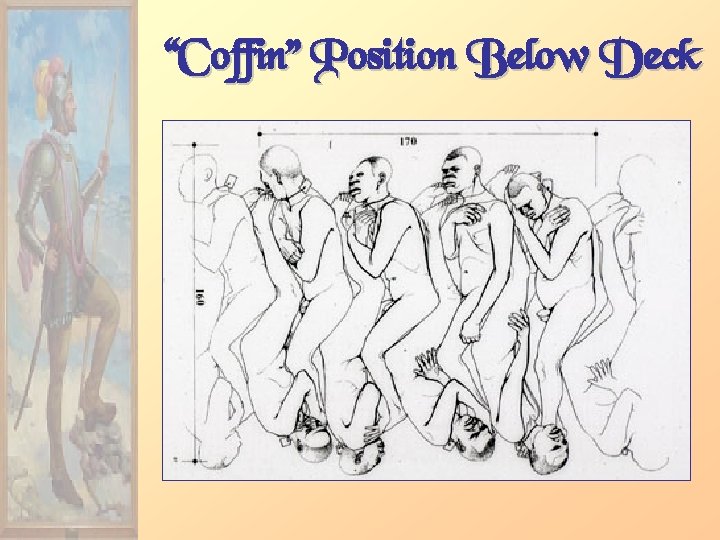
“Coffin” Position Below Deck
4 Triangular Trade
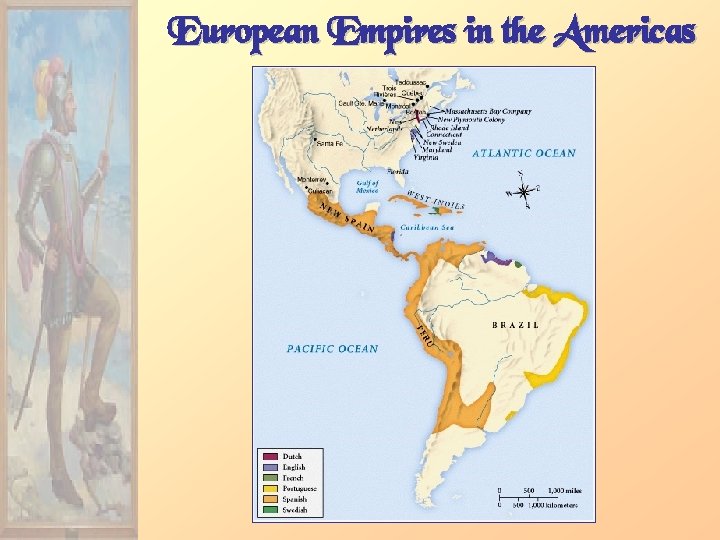
European Empires in the Americas
3 Land Claims in the Americas About 1750
5 A Commercial Revolution Prices began to rise in Europe, as part of the cycle of inflation. European inflation had several causes: As the population grew, the demand for goods and services rose. Because goods were scarce, sellers could raise their prices. The increased flow of gold and silver from the Americas led to more money in circulation. Expanded trade and the push for overseas empires spurred the growth of European capitalism, the investment of money to make a profit. Ex: Dutch East India Company and West India Company + Company was formed in 1602 and by 1641 had driven out the Portuguese and monopolized spice trade. They also established a key post at Cape Town, S. Africa and some trade with Japan.
5 Mercantilism European monarchs adopted a new economic policy, known as mercantilism, aimed at strengthening their national economies. According the mercantilism, a nation’s real wealth is measured in its gold and silver treasure. To build its supply of gold and silver, a nation must export more goods than it imports. Overseas empires and colonies existed for the benefit of the parent nation. Rulers needed to adopt policies to increase national wealth and government revenues. To achieve these goals, European governments: +passed strict laws regulating trade with their colonies. +exploited natural resources, built roads, and backed new industries. +sold monopolies to large producers in certain areas. +imposed tariffs, or taxes on imported goods.
New Colonial Rivals 1. Portugal lacked the numbers and wealth to dominate trade in the Indian Ocean. 2. Spain in Asia consolidated its holdings in the Philippines. 3. First English expedition to the Indies in 1591. British East India Co uses sepoys to defeat French in India in 1700 s. 1763 Treaty of Paris ends French power in North America 4. Dutch arrive in India in 1595. Dutch East India Co captured Malacca from Portuguese (1641)
3 Land Claims in the Americas About 1750
Impact of European Expansion 1. Native populations ravaged by disease. 2. Influx of gold, and especially silver, into Europe created an inflationary economic climate. 3. New products introduced across the continents [“Columbian Exchange”]. 4. Deepened colonial rivalries.