Chapter 26 Nutrition and Transport in Plants 2

- Slides: 32
Chapter 26 Nutrition and Transport in Plants
2 Outline Essential Inorganic Nutrients Soil Formation Soil Profiles Soil Erosion Water & Mineral Uptake Transport Mechanisms Water Organic Nutrients
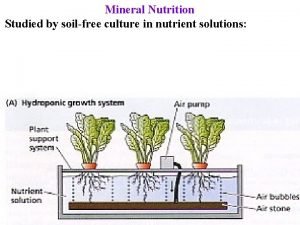
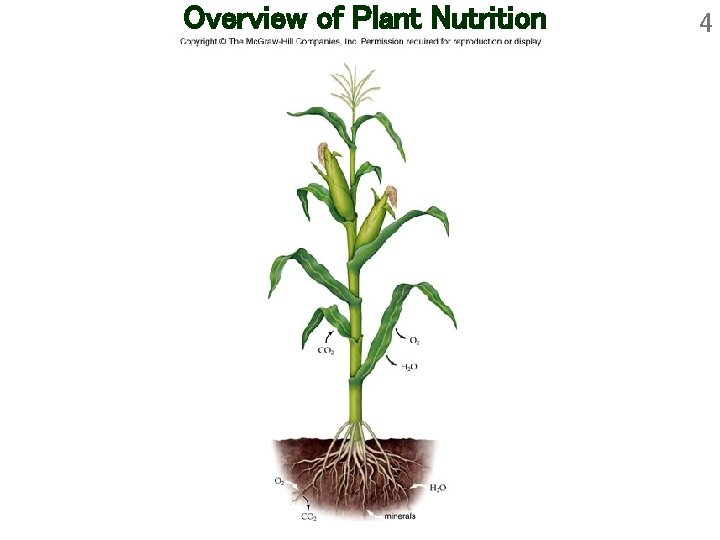
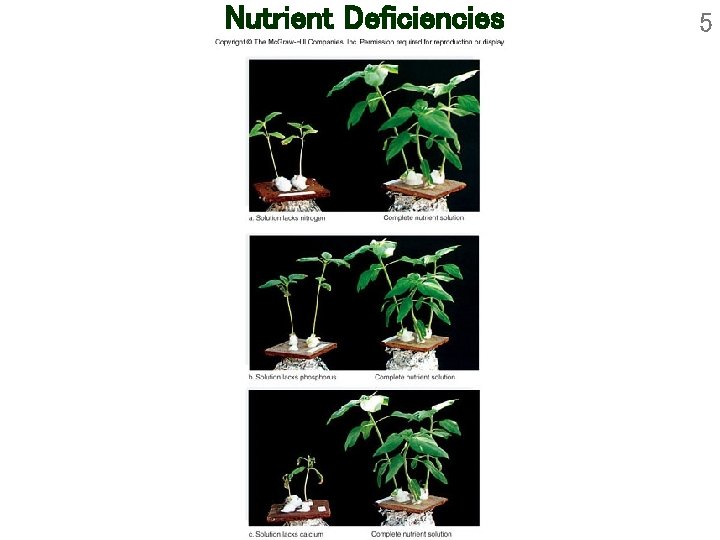
3 Plant Nutrition and Soil Essential Inorganic Nutrients About 95% of a plant’s dry weight is carbon, hydrogen, and oxygen Primary nutrients are carbon dioxide and water Essential nutrients have identifiable role, and a deficiency causes a plant to die Macronutrients Micronutrients
Overview of Plant Nutrition 4
Nutrient Deficiencies 5
6 Soil Formation Soil formation begins with weathering of rock Organisms also play an important role Lichens and Mosses Humus begins to accumulate Under ideal conditions, a centimeter of soil may develop within 15 years
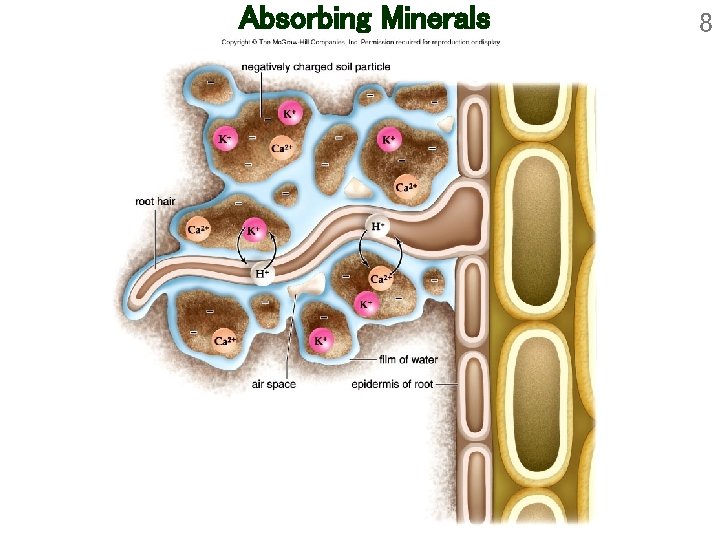
7 Nutritional Function of Soil is a mixture of: Soil particles Decaying organic material Living organisms Air, and Water Roots take up oxygen from air spaces Soil particles consist primarily of Sand Clay Silt
Absorbing Minerals 8
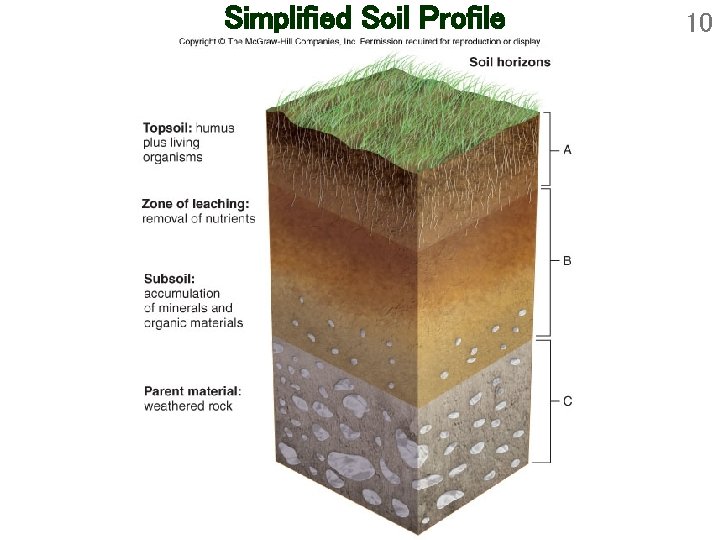
9 Soil Profiles Soil profile is a vertical section from ground surface to unaltered rock below Parallel layers - Horizons A (topsoil) - Litter and humus B (subsoil) - Inorganic nutrients C (weathered rock) Because parent material and climate differ, soil profile varies according to particular ecosystem
Simplified Soil Profile 10
11 Soil Erosion Soil erosion occurs when water or wind carry soil away to a new location Worldwide, removes about 25 billion tons of topsoil annually Deforestation Desertification Agricultural contaminants
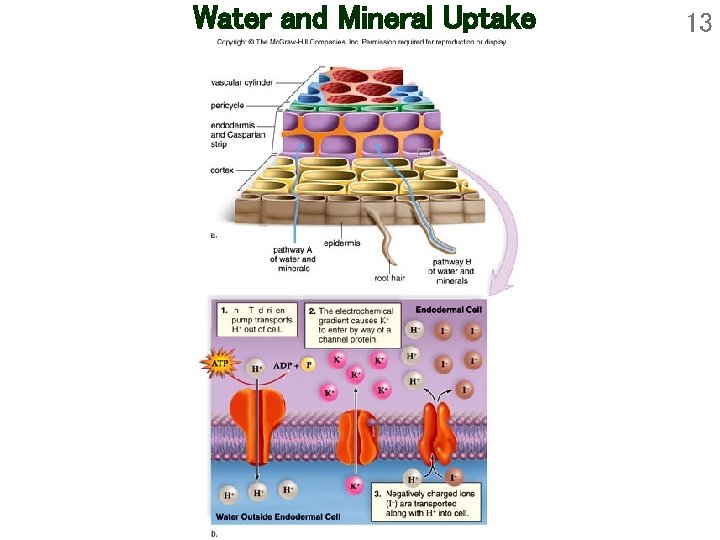
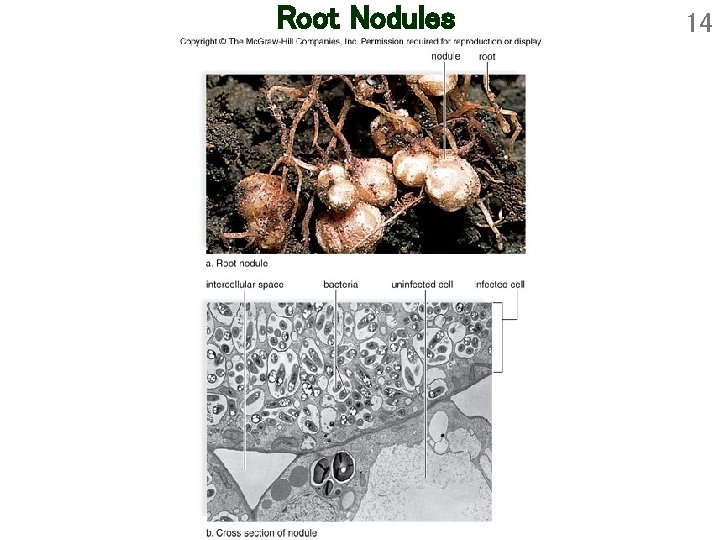
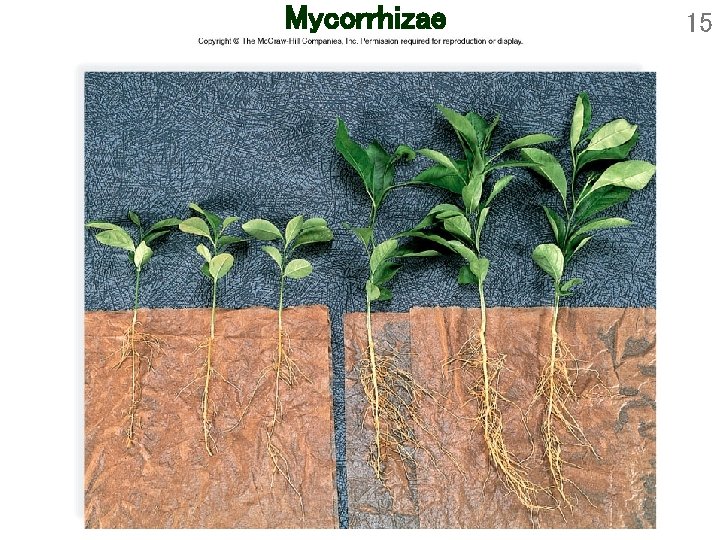
12 Adaptation of Roots for Mineral Uptake Important Symbiotic Relationships Rhizobium bacteria fix atmospheric nitrogen Live in root nodules Mycorrhizal association between fungi and plant roots Ectomycorrhizas Endomycorrhizas
Water and Mineral Uptake 13
Root Nodules 14
Mycorrhizae 15
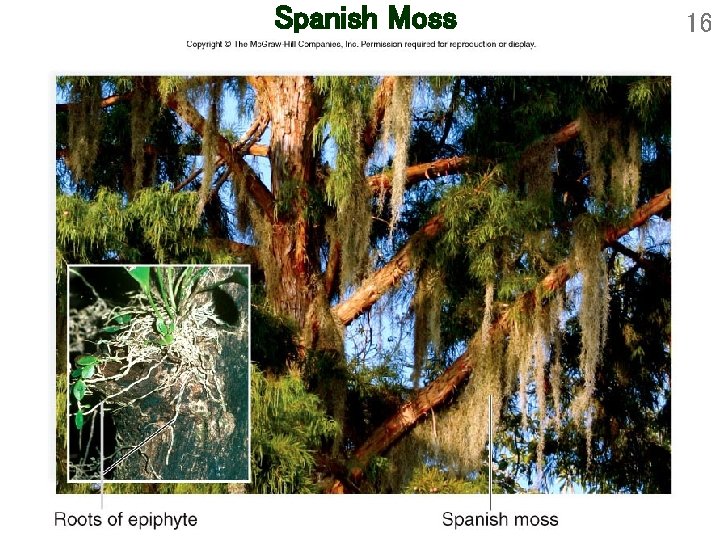
Spanish Moss 16
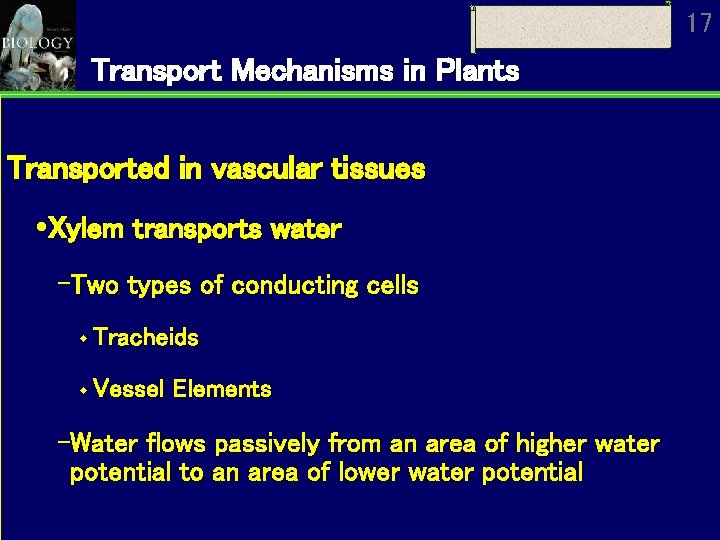
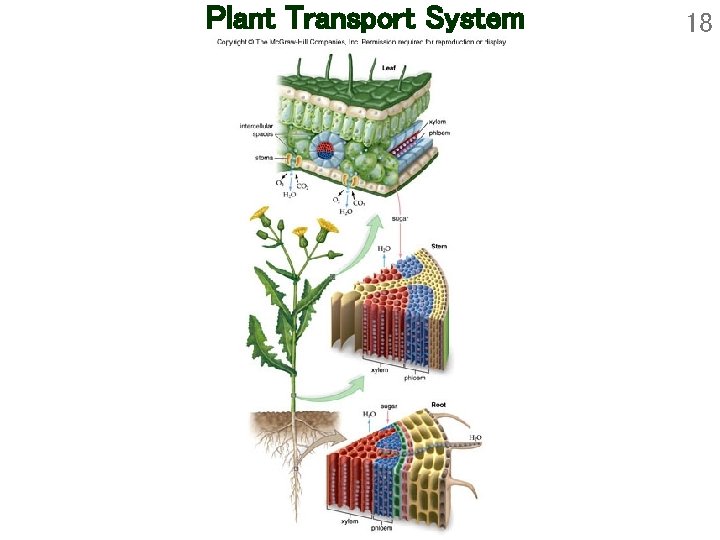
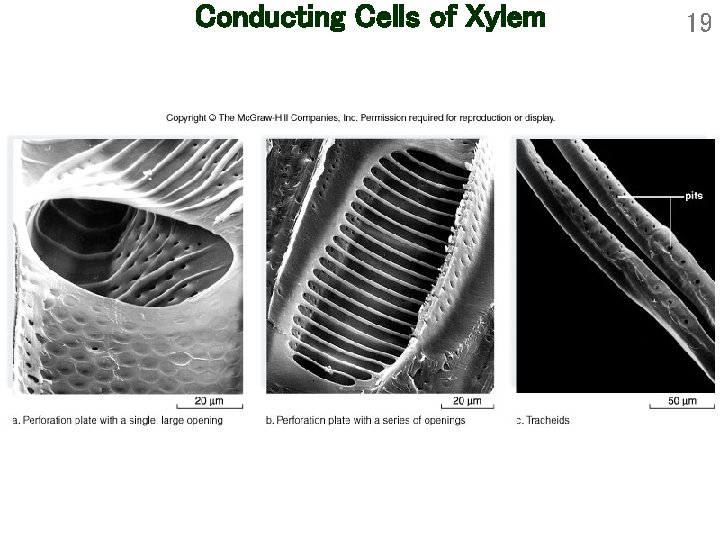
17 Transport Mechanisms in Plants Transported in vascular tissues Xylem transports water Two types of conducting cells w Tracheids w Vessel Elements Water flows passively from an area of higher water potential to an area of lower water potential
Plant Transport System 18
Conducting Cells of Xylem 19
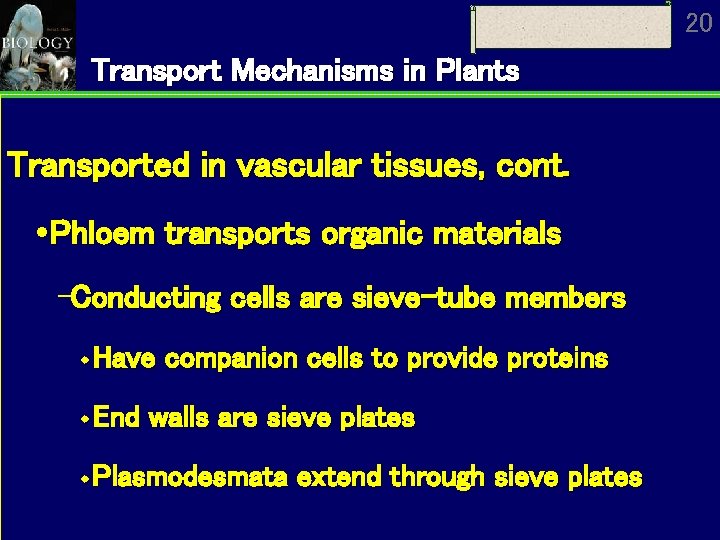
20 Transport Mechanisms in Plants Transported in vascular tissues, cont. Phloem transports organic materials Conducting cells are sieve-tube members w Have w End companion cells to provide proteins walls are sieve plates w Plasmodesmata extend through sieve plates
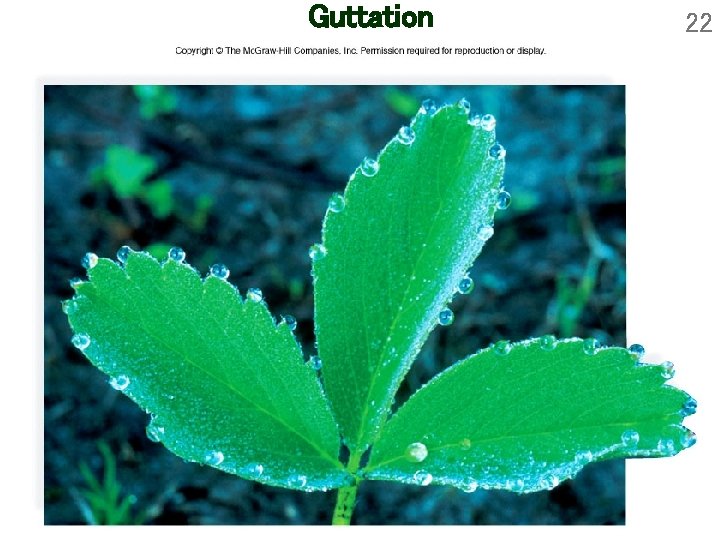
21 Water Transport Water entering roots creates a positive pressure (root pressure) Pushes xylem sap upward May be responsible for guttation Water forced out vein endings along edges of leaves
Guttation 22
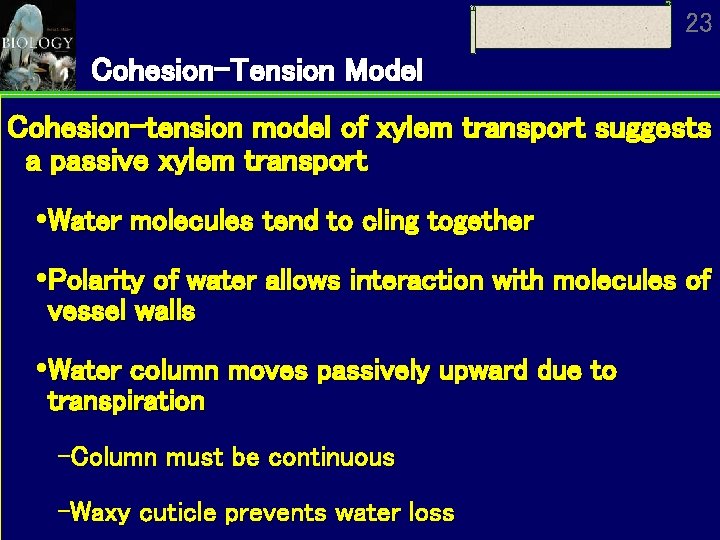
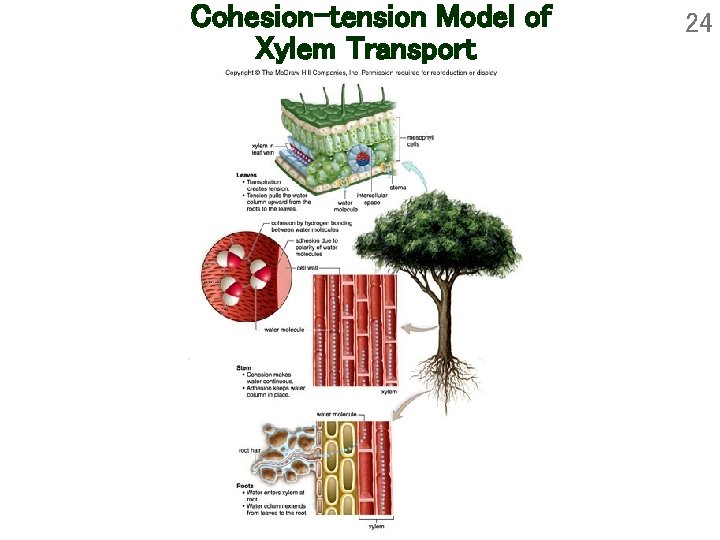
23 Cohesion-Tension Model Cohesion-tension model of xylem transport suggests a passive xylem transport Water molecules tend to cling together Polarity of water allows interaction with molecules of vessel walls Water column moves passively upward due to transpiration Column must be continuous Waxy cuticle prevents water loss
Cohesion-tension Model of Xylem Transport 24
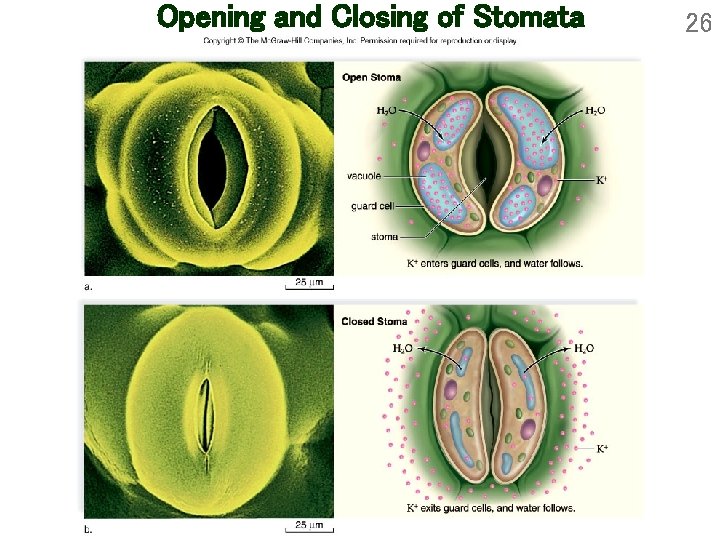
25 Opening and Closing of Stomata Each stoma in leaf epidermis is bordered by guard cells Increased turgor pressure in guard cells opens stoma Caused by active transport of K+ into guard cells
Opening and Closing of Stomata 26
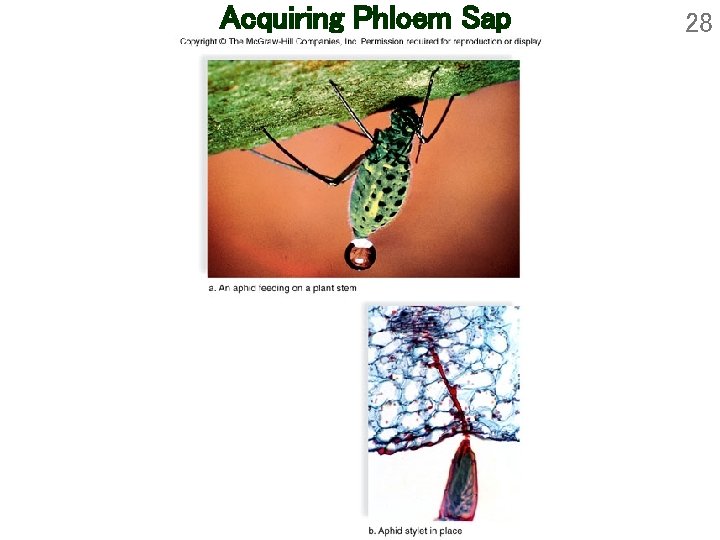
27 Organic Nutrient Transport Role of Phloem transports sugar Girdling of tree below the level of leaves causes bark to swell just above the cut Sugar accumulates in the swollen tissue
Acquiring Phloem Sap 28
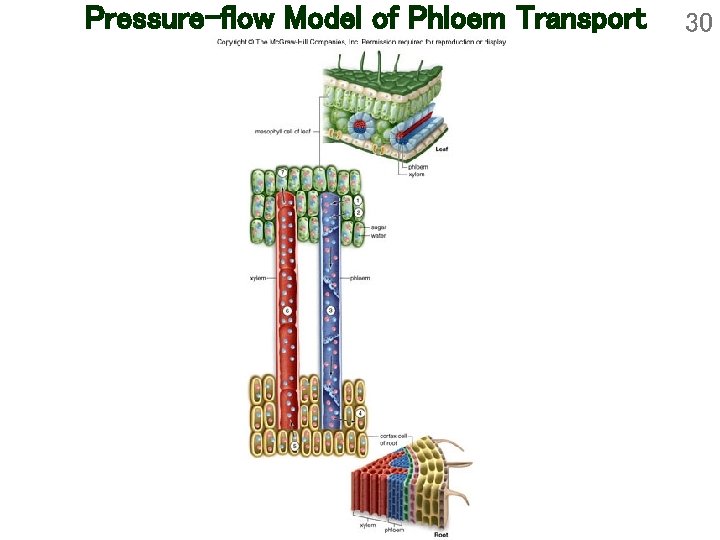
29 Pressure-Flow of Phloem Transport Positive pressure drives sap in sieve tubes Sucrose is actively transported into sieve tubes Water follows by osmosis Increase in volume creates flow that moves water and sucrose to a sink
Pressure-flow Model of Phloem Transport 30
31 Review Essential Inorganic Nutrients Soil Formation Soil Profiles Soil Erosion Water & Mineral Uptake Transport Mechanisms Water Organic Nutrients
Ending Slide Chapter 26 Nutrition and Transport in Plants