
Methods to study the mineral requirements of plants

- Slides: 63
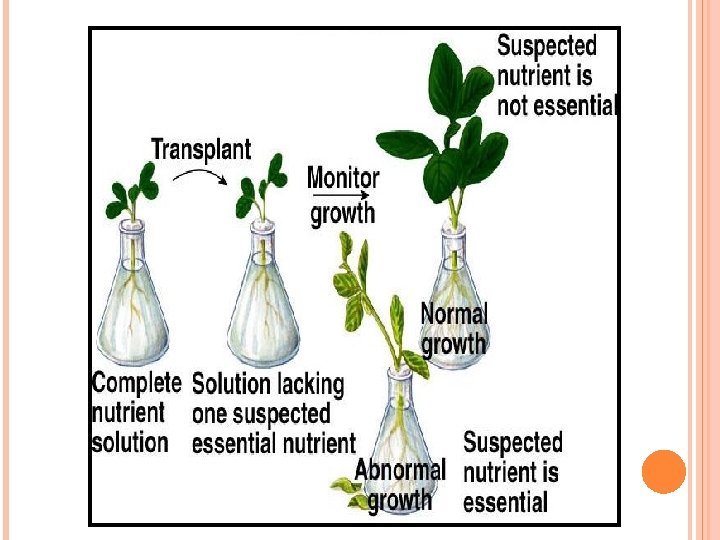
Methods to study the mineral requirements of plants: �Julius von Sachs, a prominent German botanist, demonstrated for the first time. �The plants could be grown to maturity in a defined nutrient solution in complete absence of soil. This technique of growing plants in a nutrient solution is known as hydroponics.
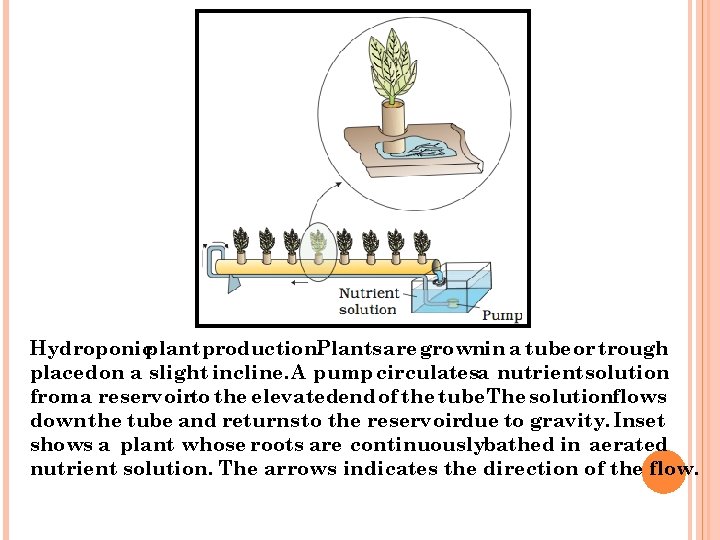
Hydroponicplant production. Plants are grownin a tube or trough placed on a slight incline. A pump circulatesa nutrient solution from a reservoirto the elevatedend of the tube The solutionflows down the tube and returns to the reservoirdue to gravity. Inset shows a plant whose roots are continuouslybathed in aerated nutrient solution. The arrows indicates the direction of the flow.
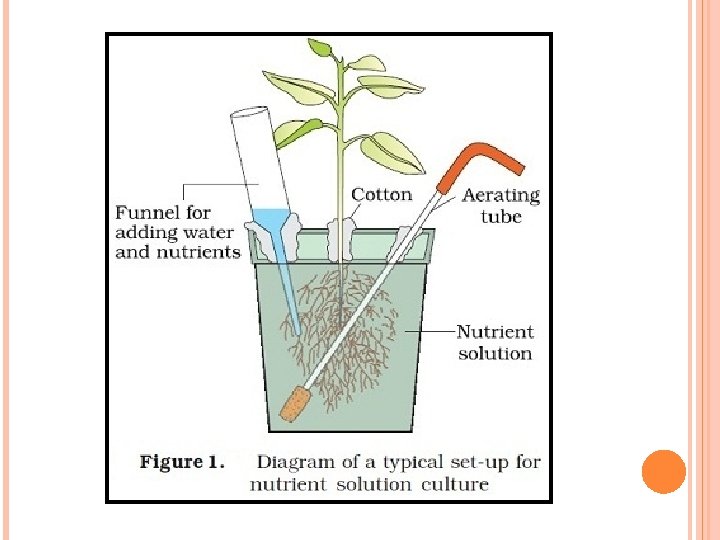
How hydroponics was done? �In this experiment roots of the plants were immersed in nutrient solutions. �In this case element was added/removed or given in various concentration and then a nutrient solution suitable for the plant growth was determined. �The nutrient solution must be adequately aerated to obtain the optimum growth. �Example of hydroponics plants are: Tomato, seed less cucumber and lettuce.
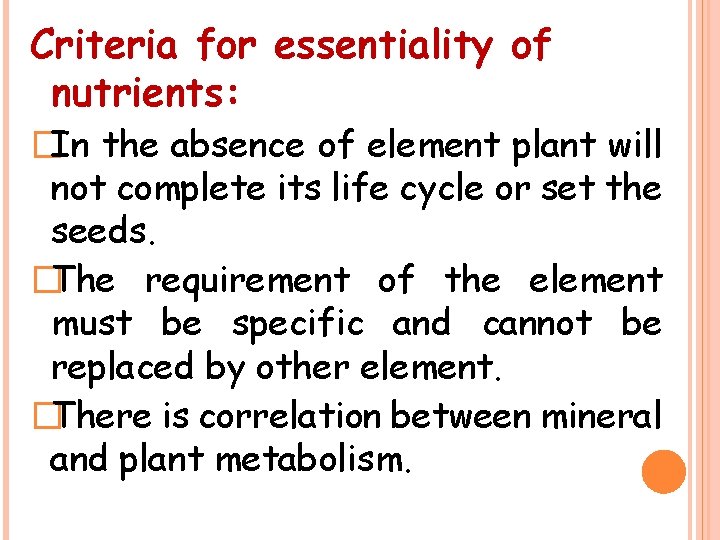
Criteria for essentiality of nutrients: �In the absence of element plant will not complete its life cycle or set the seeds. �The requirement of the element must be specific and cannot be replaced by other element. �There is correlation between mineral and plant metabolism.
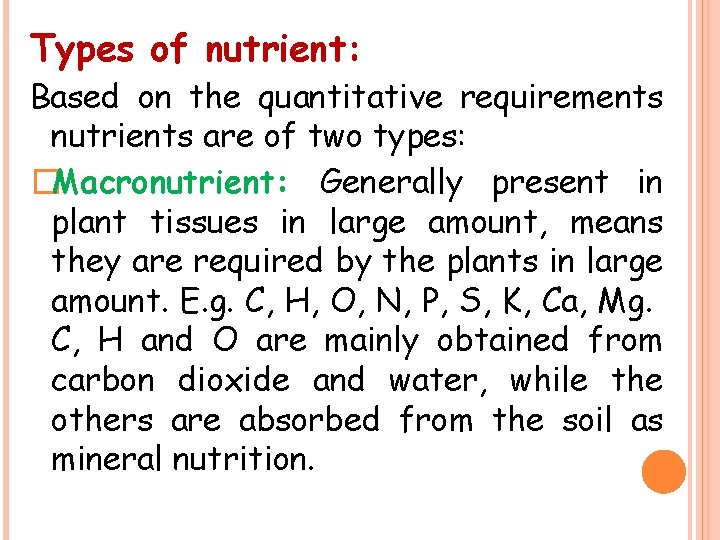
Types of nutrient: Based on the quantitative requirements nutrients are of two types: �Macronutrient: Generally present in plant tissues in large amount, means they are required by the plants in large amount. E. g. C, H, O, N, P, S, K, Ca, Mg. C, H and O are mainly obtained from carbon dioxide and water, while the others are absorbed from the soil as mineral nutrition.
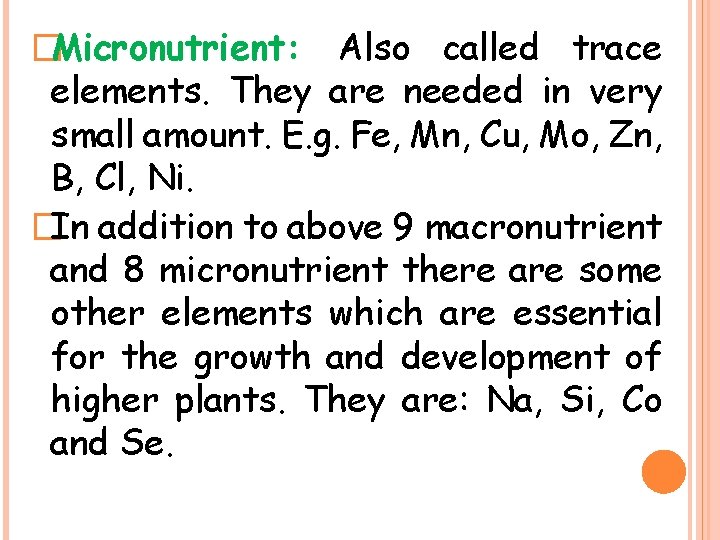
�Micronutrient: Also called trace elements. They are needed in very small amount. E. g. Fe, Mn, Cu, Mo, Zn, B, Cl, Ni. �In addition to above 9 macronutrient and 8 micronutrient there are some other elements which are essential for the growth and development of higher plants. They are: Na, Si, Co and Se.
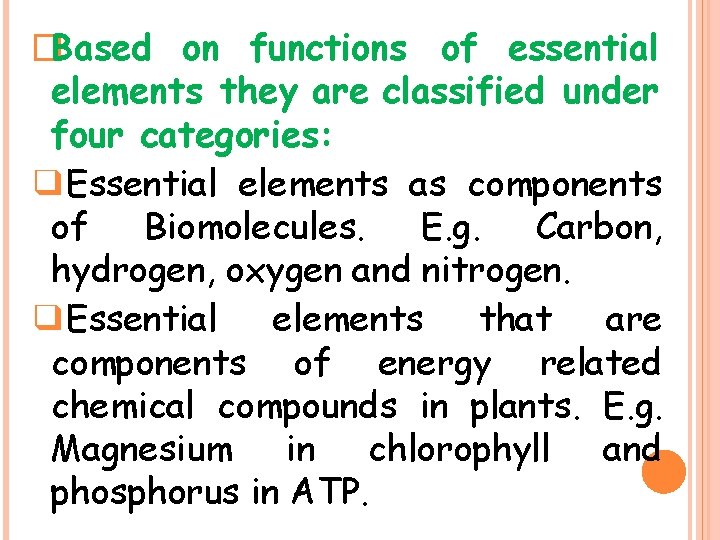
�Based on functions of essential elements they are classified under four categories: ❑Essential elements as components of Biomolecules. E. g. Carbon, hydrogen, oxygen and nitrogen. ❑Essential elements that are components of energy related chemical compounds in plants. E. g. Magnesium in chlorophyll and phosphorus in ATP.
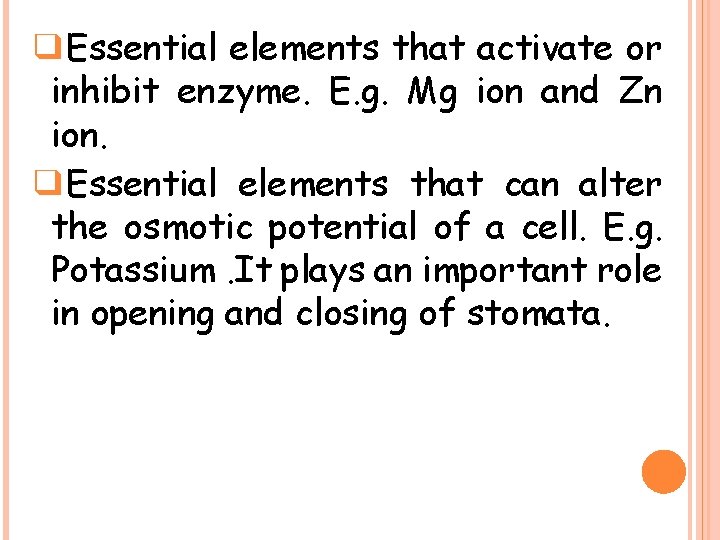
❑Essential elements that activate or inhibit enzyme. E. g. Mg ion and Zn ion. ❑Essential elements that can alter the osmotic potential of a cell. E. g. Potassium. It plays an important role in opening and closing of stomata.
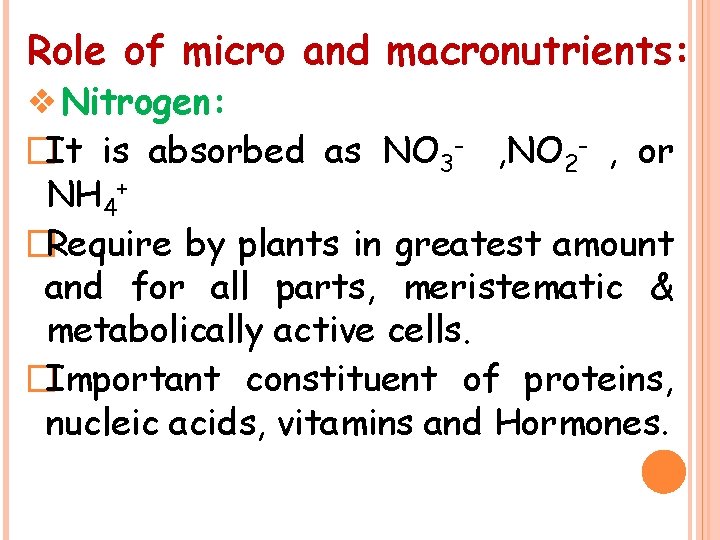
Role of micro and macronutrients: ❖Nitrogen: �It is absorbed as NO 3 - , NO 2 - , or NH 4+ �Require by plants in greatest amount and for all parts, meristematic & metabolically active cells. �Important constituent of proteins, nucleic acids, vitamins and Hormones.
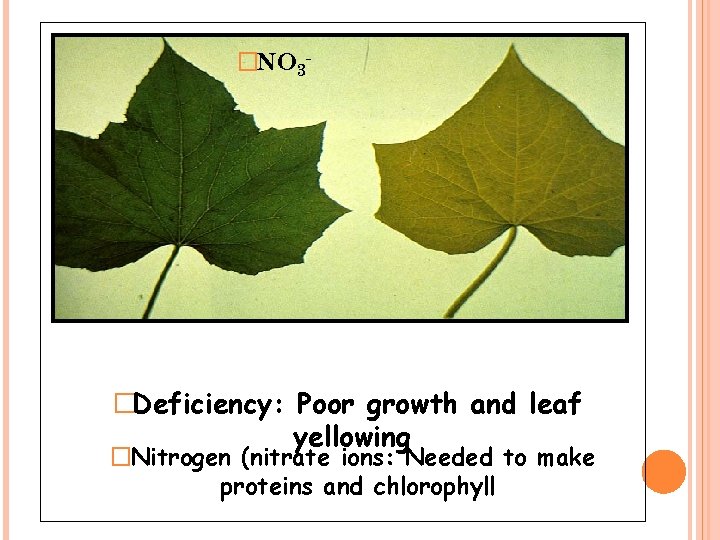
�NO 3 - �Deficiency: Poor growth and leaf yellowing �Nitrogen (nitrate ions: Needed to make proteins and chlorophyll
❖Phosphorous: �It is absorbed in the form of phosphate ions in the form H 2 PO 4 - , or HPO 42�Constituent of certain proteins, cell membrane, all nucleic acid, nucleotides. �Required for all phosphorylation reactions.
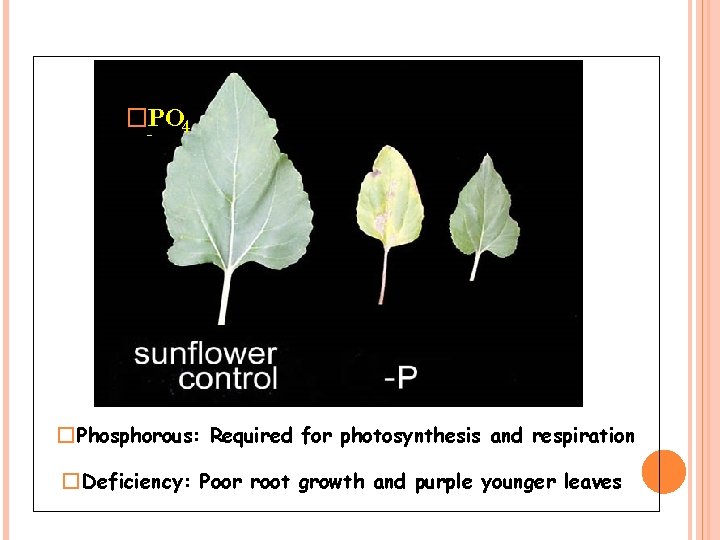
�PO 4 - � Phosphorous: Required for photosynthesis and respiration � Deficiency: Poor root growth and purple younger leaves
❖POTASSIUM: �It is absorbed as K+ ions. �Require for meristematic tissues, buds, leaves, and root tips. �Helps in Protein synthesis, Opening and closing of stomata. �Helps in activation of enzymes. �It maintains the turgidity of cells.
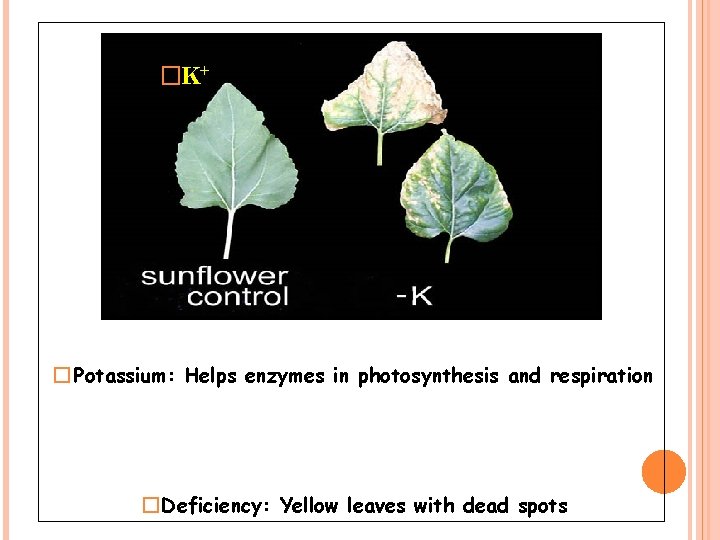
�K+ � Potassium: Helps enzymes in photosynthesis and respiration � Deficiency: Yellow leaves with dead spots
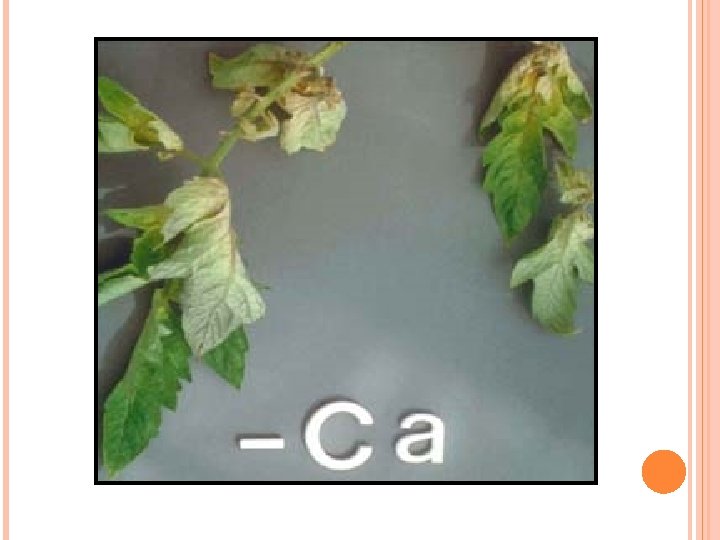
❖Calcium: o. Absorbed in the form of Ca 2+. o. Required by meristematic and differentiating tissues. o. During cell division it is used in synthesis of cell wall. o. Required for mitotic spindle formation. o. Activation of enzymes.
❖Magnesium: o. Absorbed in the form of Mg 2+. o. Activates enzymes of respiration and photosynthesis. o. Involved in synthesis of DNA and RNA. o. Helps to maintain ribosome structure.
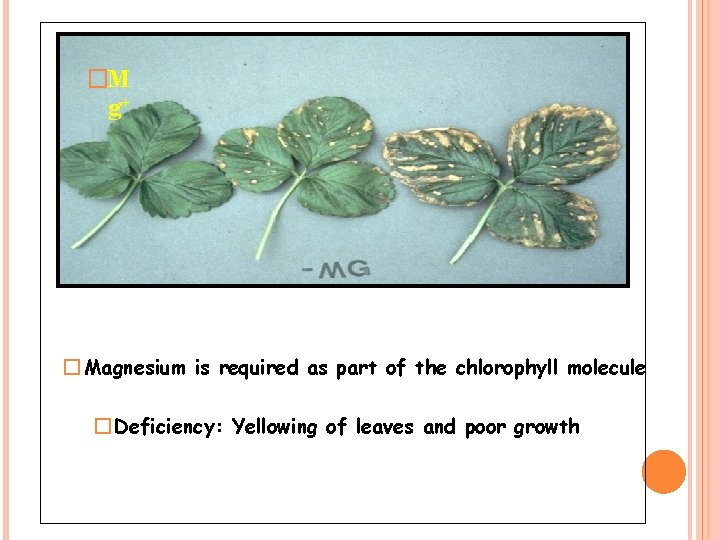
�M g+ � Magnesium is required as part of the chlorophyll molecule � Deficiency: Yellowing of leaves and poor growth
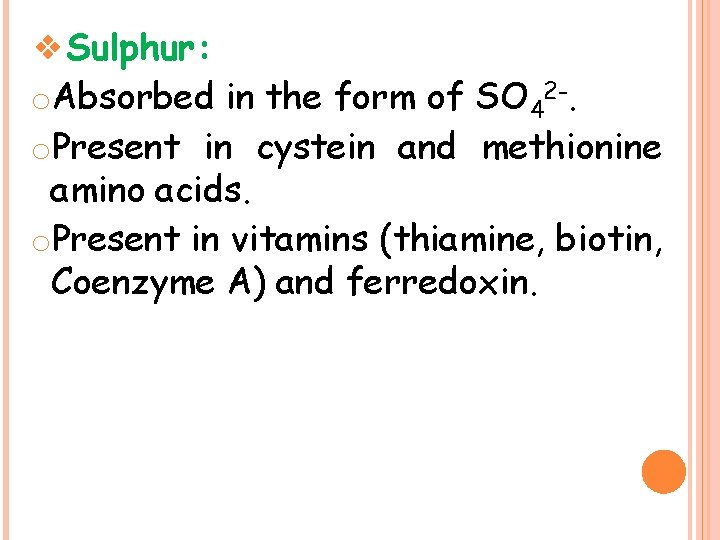
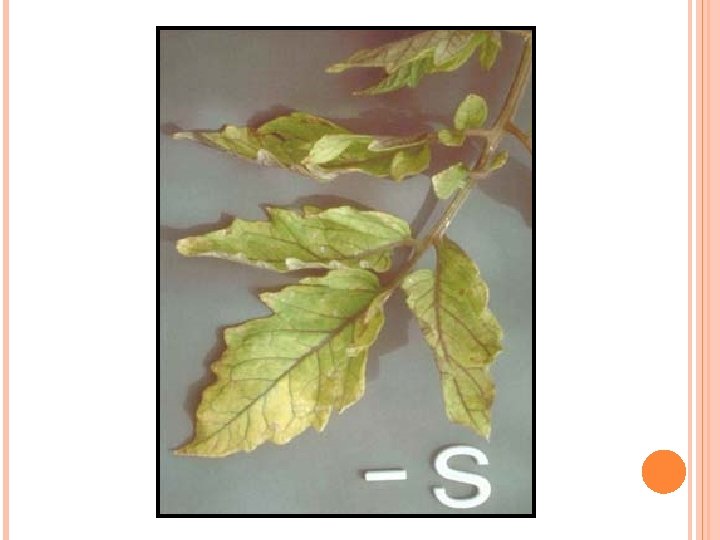
❖Sulphur: o. Absorbed in the form of SO 42 -. o. Present in cystein and methionine amino acids. o. Present in vitamins (thiamine, biotin, Coenzyme A) and ferredoxin.
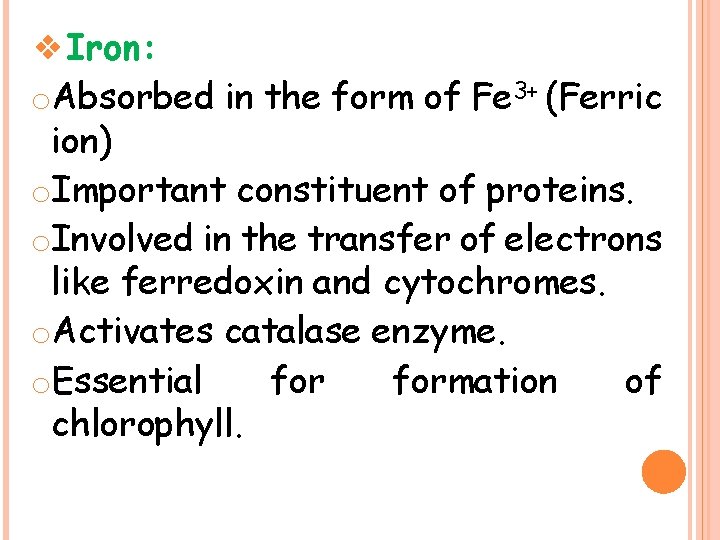
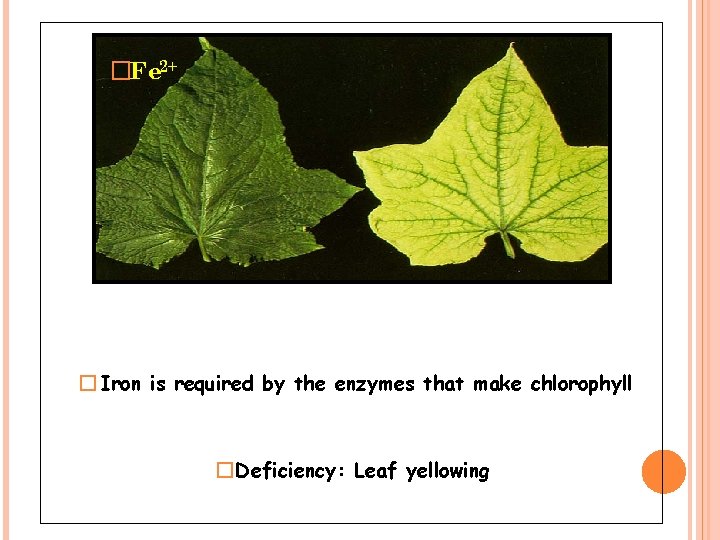
❖Iron: o. Absorbed in the form of Fe 3+ (Ferric ion) o. Important constituent of proteins. o. Involved in the transfer of electrons like ferredoxin and cytochromes. o. Activates catalase enzyme. o. Essential formation of chlorophyll.
�Fe 2+ � Iron is required by the enzymes that make chlorophyll � Deficiency: Leaf yellowing
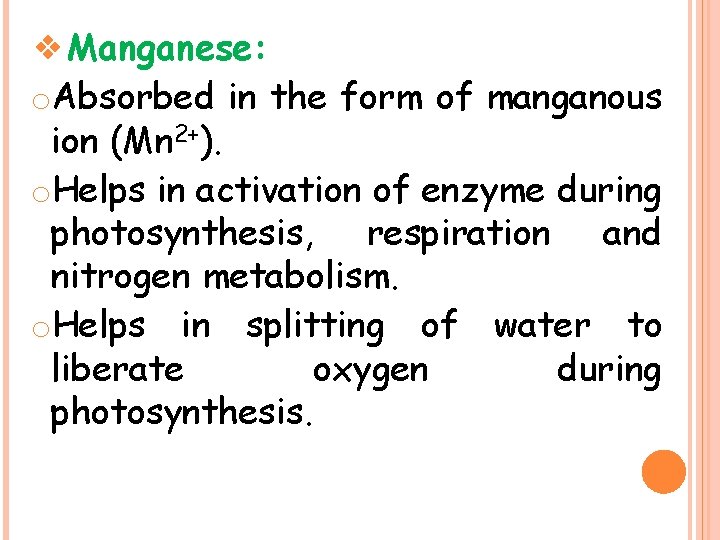
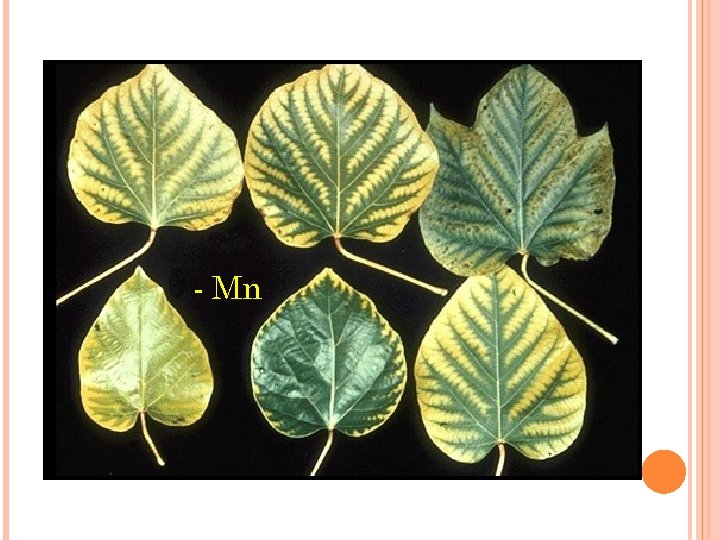
❖Manganese: o. Absorbed in the form of manganous ion (Mn 2+). o. Helps in activation of enzyme during photosynthesis, respiration and nitrogen metabolism. o. Helps in splitting of water to liberate oxygen during photosynthesis.
- Mn
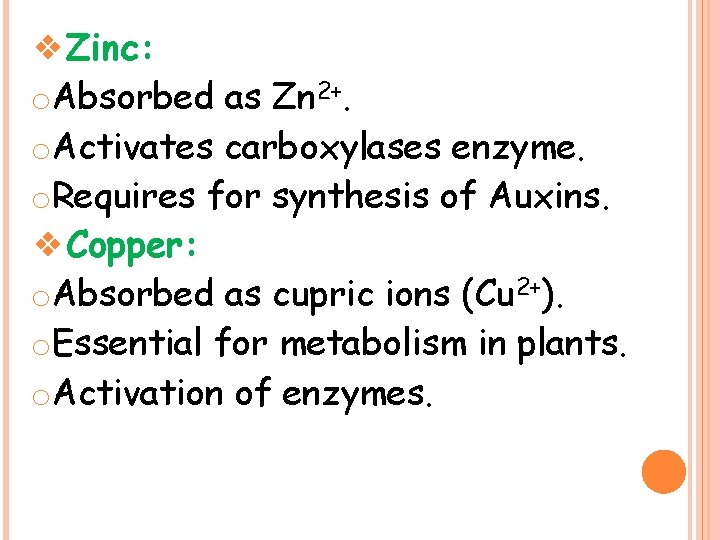
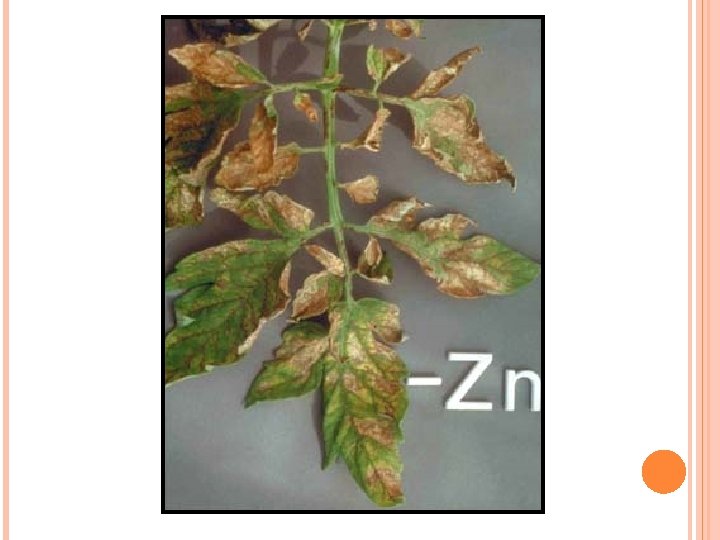
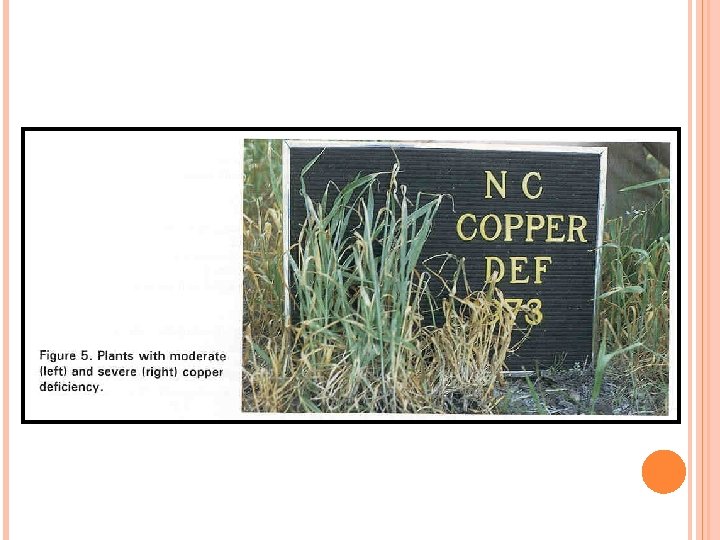
❖Zinc: o. Absorbed as Zn 2+. o. Activates carboxylases enzyme. o. Requires for synthesis of Auxins. ❖Copper: o. Absorbed as cupric ions (Cu 2+). o. Essential for metabolism in plants. o. Activation of enzymes.
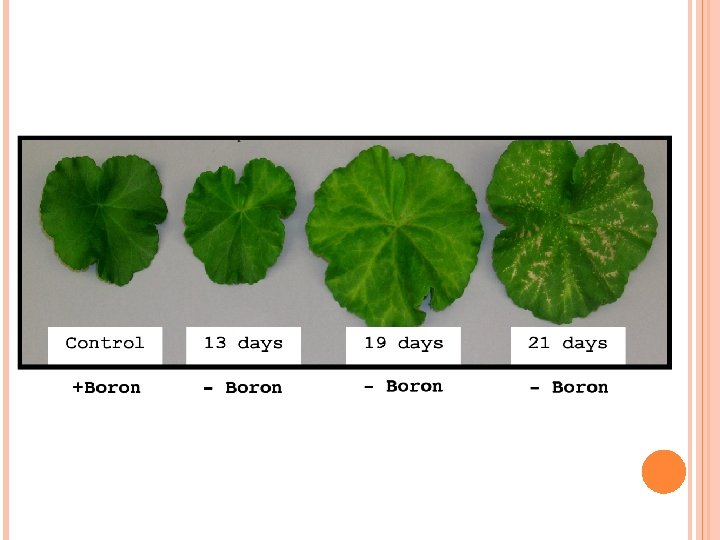
❖Boron: o. Absorbed as BO 33 - or B 4 O 72 -. o. Required for uptake and utilisation of Ca 2+ , membrane functioning, pollen germination, cell elongation, cell differentiation and carbohydrate translocation.
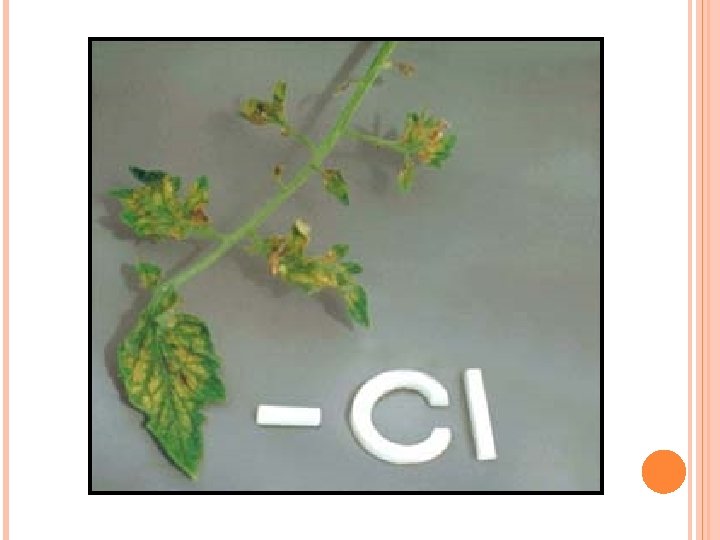
❖Molybdenum: o. Absorbed in the form of Molybdate ions (Mo. O 22+). o. Components of enzymes like nitrogenase and nitrate reductase (Participates in nitrogen metabolism) ❖Chlorine: o. Absorbed in the form of Cl-. o. Helps in maintaining anion- cation balance. o. Essential for water splitting reaction in photosynthesis.
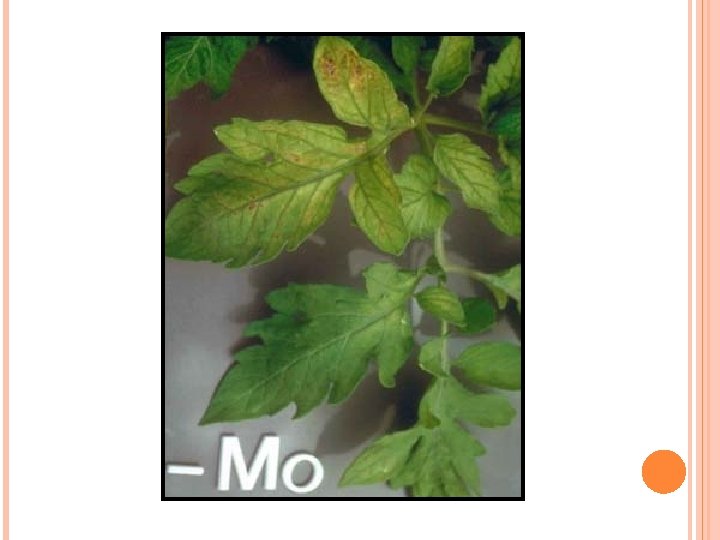
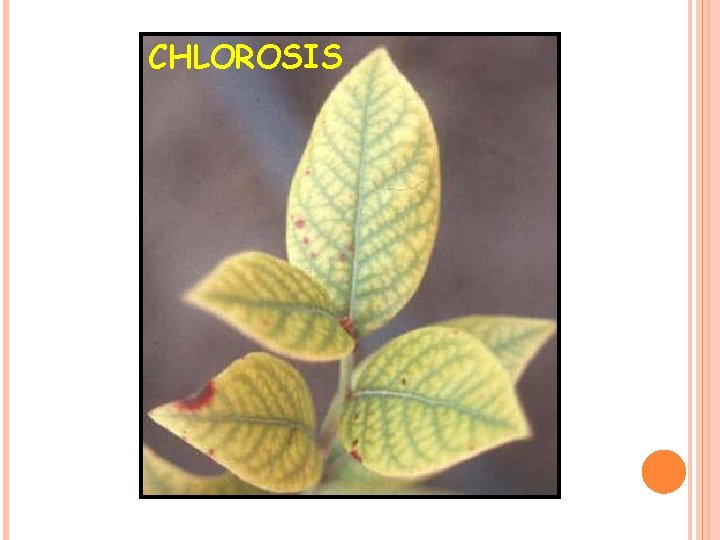
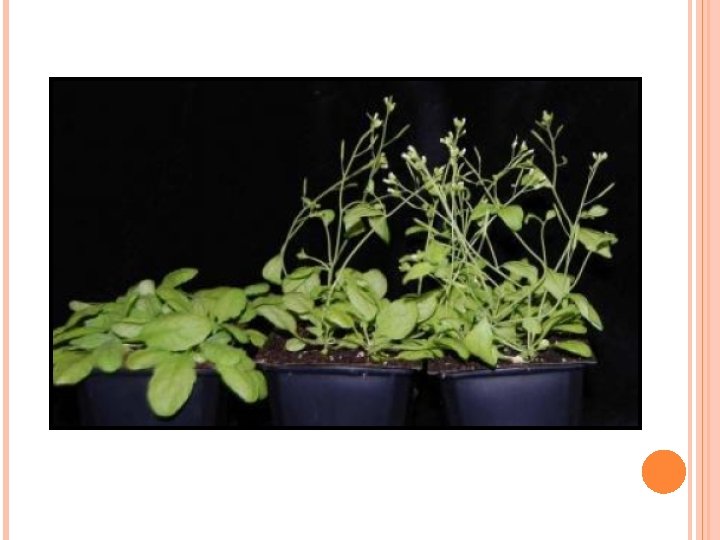
Deficiency symptoms of essential elements: ❑Chlorosis: � Loss of chlorophyll leading to yellowing of leaf. �The deficiency of elements: N, K, Mg, S, Fe, Mn, Zn and Mo.
CHLOROSIS
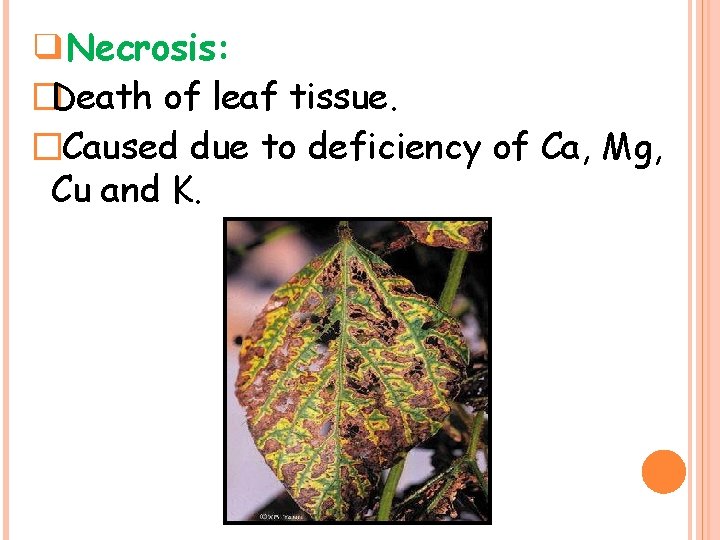
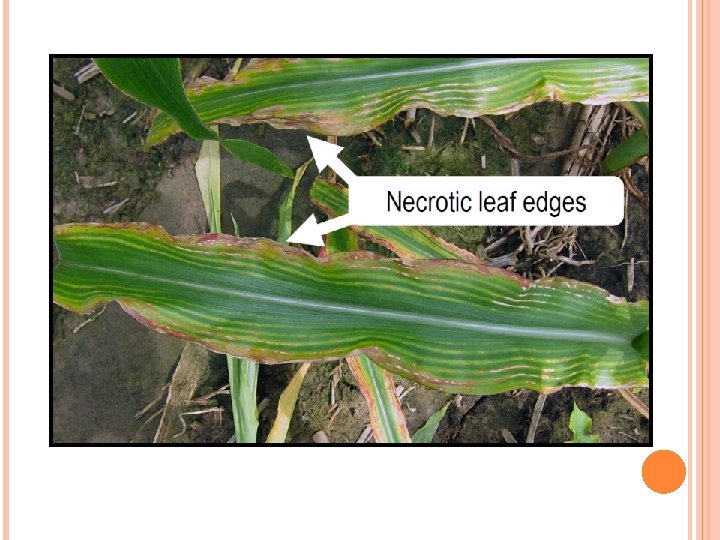
❑Necrosis: �Death of leaf tissue. �Caused due to deficiency of Ca, Mg, Cu and K.
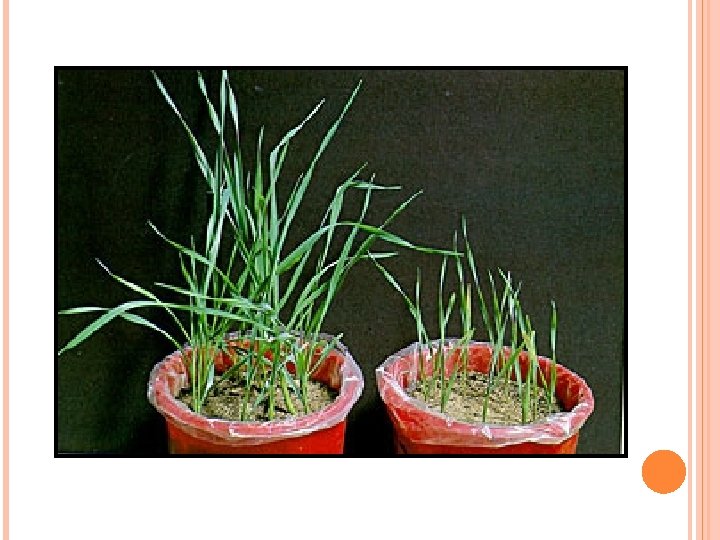
❑Stunted growth and premature fall of leaves and buds: �Deficiency of N, K, Mg, S, Fe, Mn, Zn and Mo ❑Inhibition of cell division: o. Deficiency of N, K, S, Mo. ❑Delay flowering: o. Deficiency of N, S, Mo.
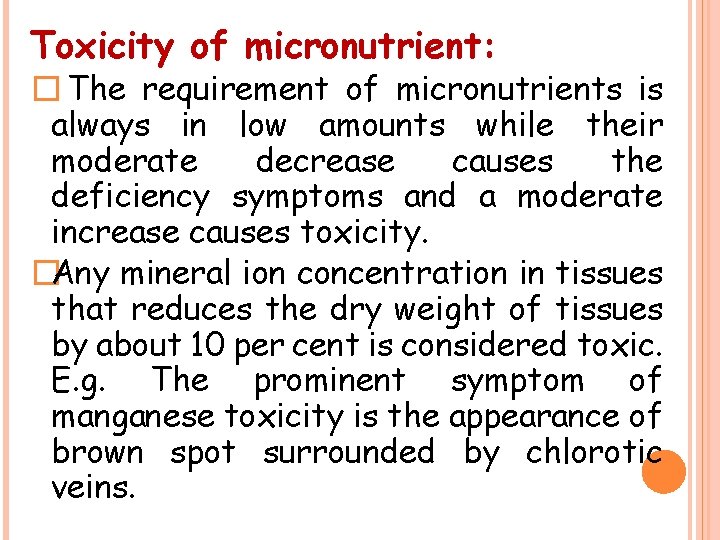
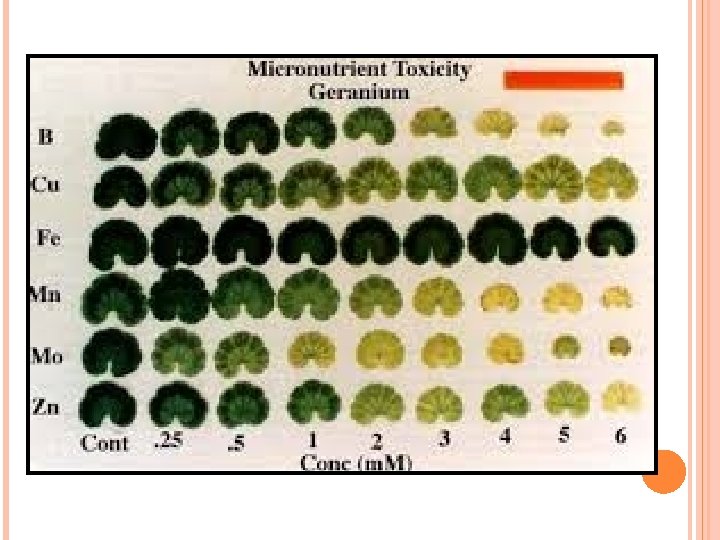
Toxicity of micronutrient: � The requirement of micronutrients is always in low amounts while their moderate decrease causes the deficiency symptoms and a moderate increase causes toxicity. �Any mineral ion concentration in tissues that reduces the dry weight of tissues by about 10 per cent is considered toxic. E. g. The prominent symptom of manganese toxicity is the appearance of brown spot surrounded by chlorotic veins.
Soil as reservoir of essential elements: Soil consists of a wide variety of substances. It not only supplies minerals but also harbours nitrogen fixing bacteria, other microbes, holds water, supplies air to the roots.
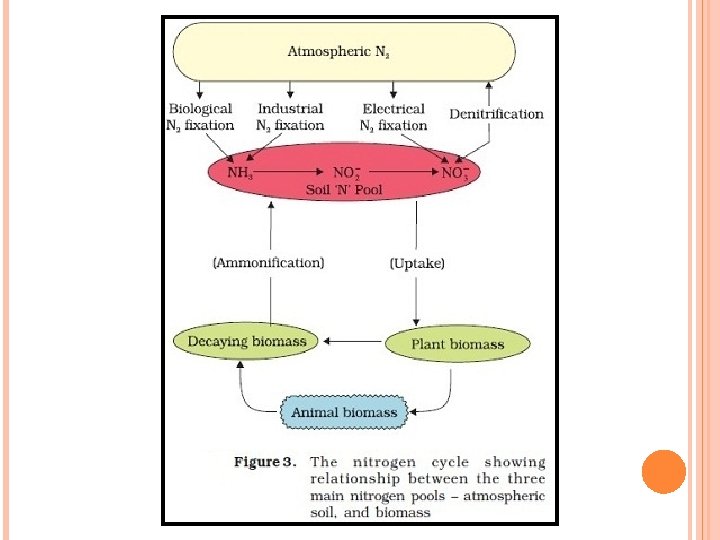
Metabolism of nitrogen: Nitrogen cycle: ❖The % of nitrogen is maximum in atmosphere but it cannot be used as such by majority of organisms. Thus, first it has to be converted into nitrates (NO 3) for the use of plants. ❖This can be done either by industrial nitrogen fixation (fertilizers), Biological nitrogen fixation by some nitrogen fixing bacteria (Azotobactor and Rhizobium) and Electrical nitrogen fixation ( lightning).
❖It convert atmospheric nitrogen into soluble form of nitrogen i. e. into nitrates. This process is called nitrogen fixation or nitrification. ❖Nitrates are absorbed by the plants to make proteins. ❖When animals consumes plant matter they break down the plant nitrogenous compound and use them to form new animal proteins and other cell components.
❖When animal excretes urea or uric acid or when animal or plant dies certain bacteria carry out ammonification. ❖They produce ammonium ion which again converted into nitrate by nitrification process with the help of Nitrosomonas, nitrobacter. ❖Finally nitrates back to nitrogen by denitrifying bacteria (Pseudomonas , Thiobacillus).
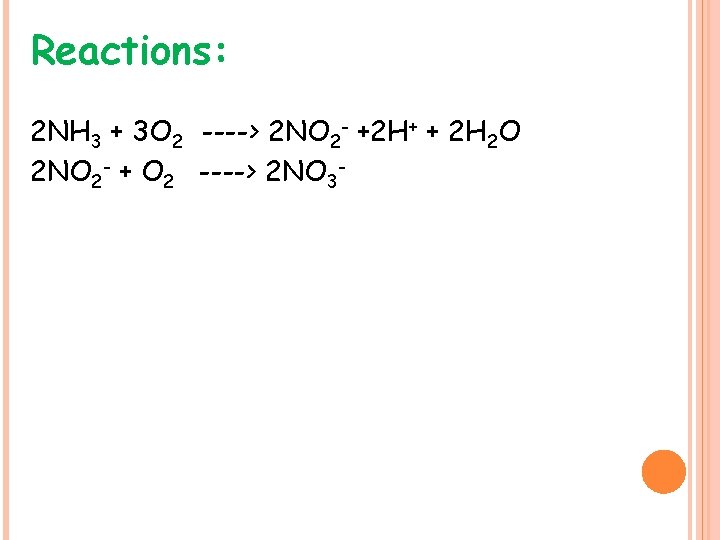
Reactions: 2 NH 3 + 3 O 2 ----> 2 NO 2 - +2 H+ + 2 H 2 O 2 NO 2 - + O 2 ----> 2 NO 3 -
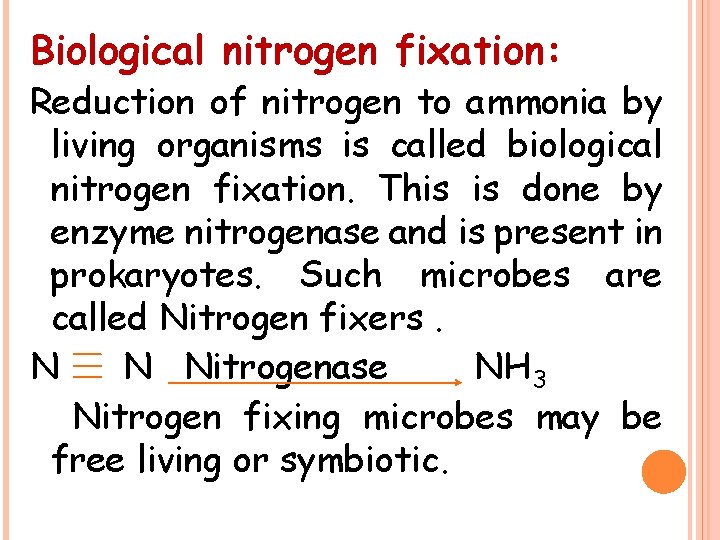
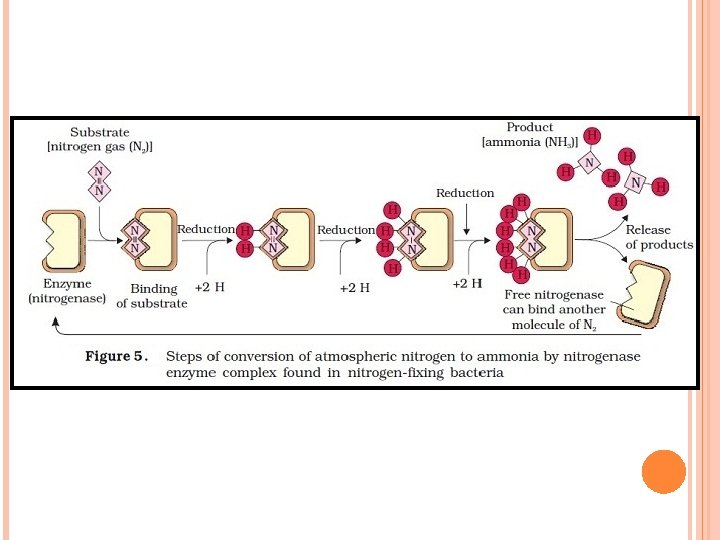
Biological nitrogen fixation: Reduction of nitrogen to ammonia by living organisms is called biological nitrogen fixation. This is done by enzyme nitrogenase and is present in prokaryotes. Such microbes are called Nitrogen fixers. N N Nitrogenase NH 3 Nitrogen fixing microbes may be free living or symbiotic.
�Free living : Azotobactor Beijernickia, Bacillus. �Anaerobic : Rhodospirillum. and
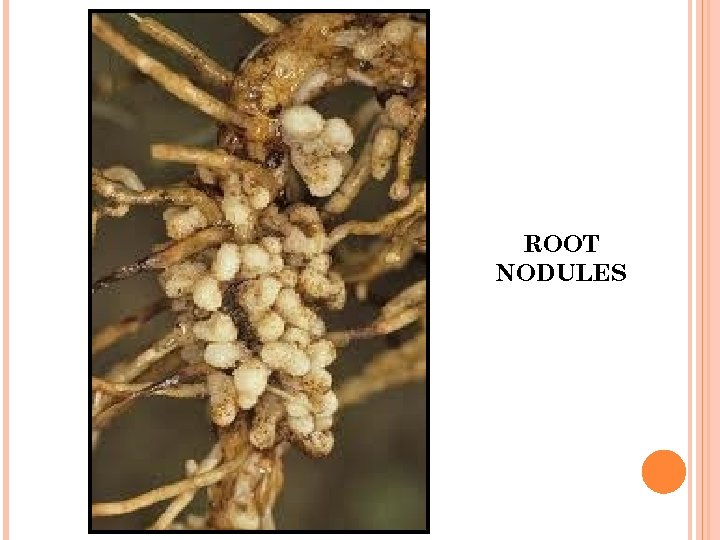
Symbiotic Biological nitrogen fixation: ❑Some bacteria like Rhizobium lives in relationship with the roots of several legumes (alfalfa, sweet clover, sweet pea, lentils, garden pea, broad bean, clover beans etc. ). The most common association on roots is as nodules (out growth on the roots).
❑Such bacteria fixes atmospheric nitrogen into soluble form of nitrogen which are utilized by the plants. ❑Frankia, also produces nitrogen fixing nodules on the roots of nonleguminous plants ( Alnus) that also fixes atmospheric nitrogen.
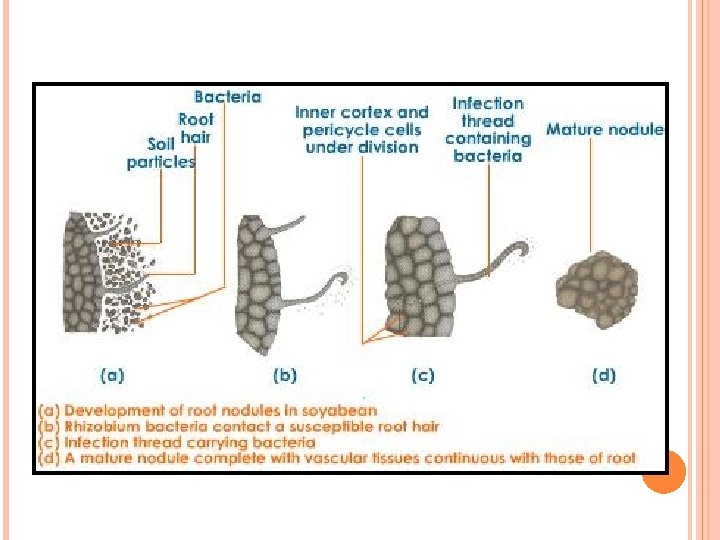
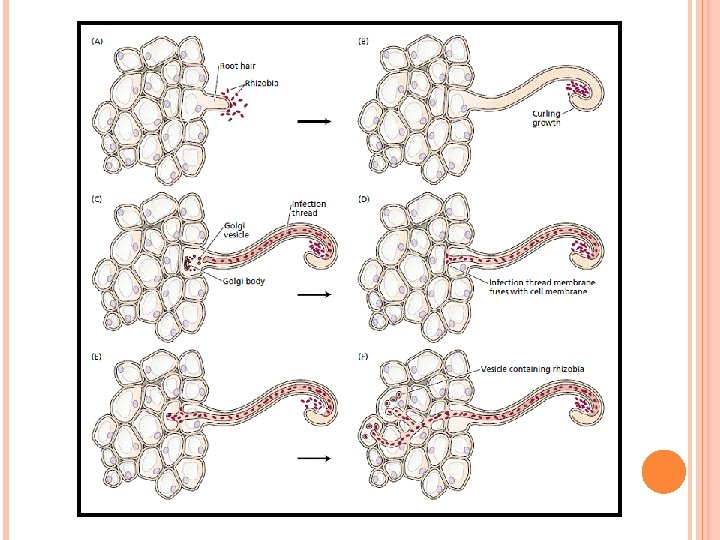
Nodule formation: �Rhizobium multiplies and get attached to epidermal and root hair cell. �The root hairs curl and the bacteria invade the root hair. �An infection thread is produced carrying the bacteria into the cortex of the root, where they initiate the nodule formation in the cortex of the root.
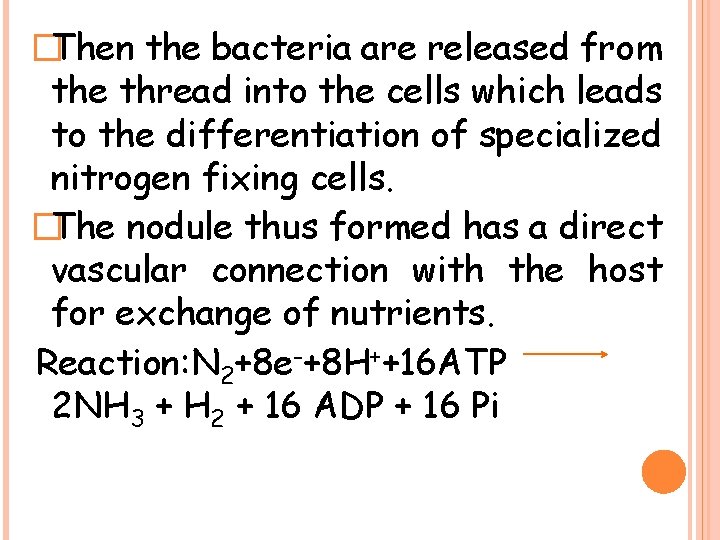
�Then the bacteria are released from the thread into the cells which leads to the differentiation of specialized nitrogen fixing cells. �The nodule thus formed has a direct vascular connection with the host for exchange of nutrients. Reaction: N 2+8 e-+8 H++16 ATP 2 NH 3 + H 2 + 16 ADP + 16 Pi
ROOT NODULES
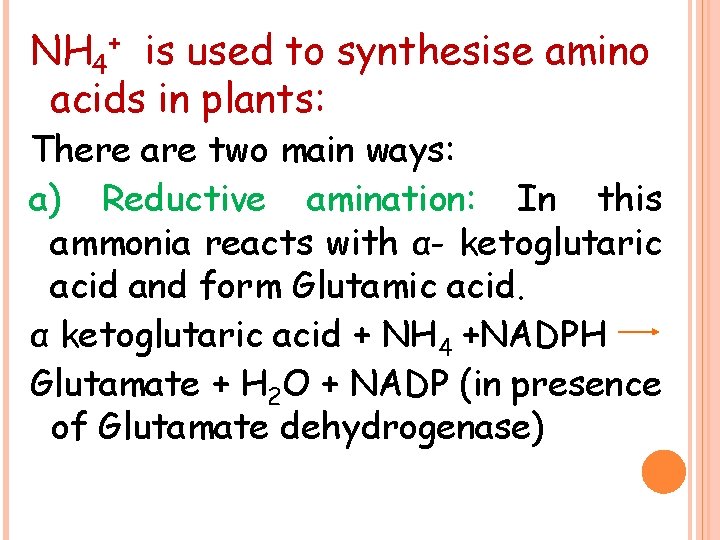
NH 4+ is used to synthesise amino acids in plants: There are two main ways: a) Reductive amination: In this ammonia reacts with α- ketoglutaric acid and form Glutamic acid. α ketoglutaric acid + NH 4 +NADPH Glutamate + H 2 O + NADP (in presence of Glutamate dehydrogenase)
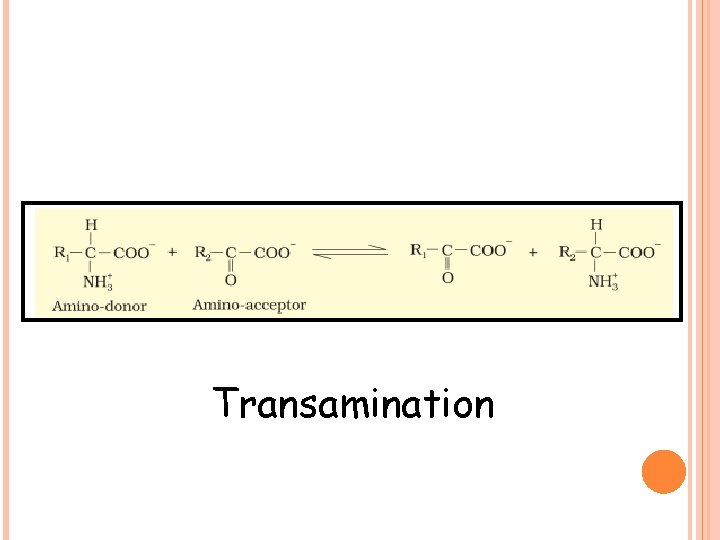
b) Transamination: In this case there is transfer of amino group from one amino acid to the keto group of a keto acid. Glutamic acid is the main amino acid from which the transfer of NH 2 , the amino group takes place and the other amino acids are formed through transamination. The enzyme transaminase catalyses all such reactions.
Transamination
THANKS