CAPE Technologies High Performance DioxinFuran Immunoassay Kit Application
- Slides: 39
CAPE Technologies High Performance Dioxin/Furan Immunoassay Kit Application Note AN-008 Rapid Extraction, Cleanup, and EIA Analysis of Soils at Low to Mid-pg/g Levels Illustrated Guide to Lab Setup, Sample Preparation, and EIA Protocol Revision March 31, 2005
This is a training presentation only. It is designed to illustrate the materials, supplies, and procedures involved in the modification of EPA Method 4025 described in CAPE Technologies Application Note AN-008. It does not provide comprehensive protocol information. For detailed information on equipment, supplies, and protocol, refer to the appropriate CAPE Technologies document: AN-008 for sample preparation protocol IN-DF 1 for immunoassay kit protocol EL-001 for equipment used for immunoassay EL-002 for equipment used for sample preparation The following pages contain references to specific sections of these 4 documents so you can connect the illustration to the detailed information from that document.
Facilities Required Performing this method using the CAPE Technologies DF 1 Immunoassay Kit requires a modest laboratory facility with capacity for 4 -8°C storage of EIA kits. This facility can be a small mobile or stationary field laboratory. Electrical refrigeration, a sink, and running water are helpful, but not absolutely required. A fume hood is required for the sample preparation work, which uses hexane, acetone, and toluene.
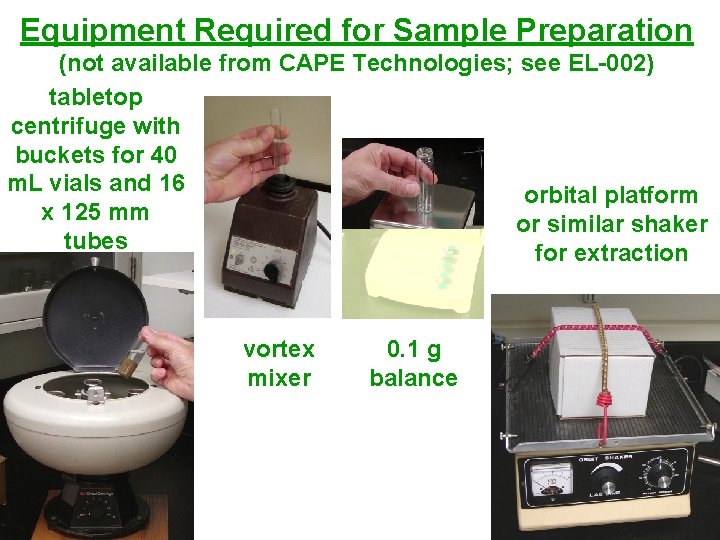
Equipment Required for Sample Preparation (not available from CAPE Technologies; see EL-002) tabletop centrifuge with buckets for 40 m. L vials and 16 orbital platform x 125 mm or similar shaker tubes for extraction vortex mixer 0. 1 g balance
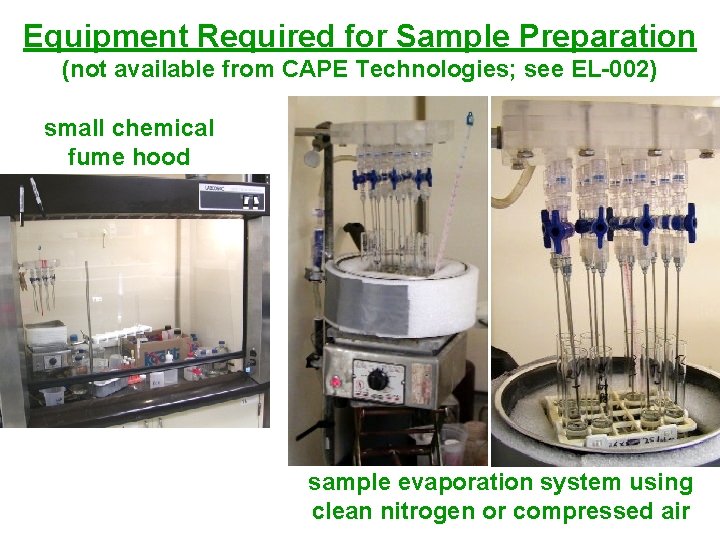
Equipment Required for Sample Preparation (not available from CAPE Technologies; see EL-002) small chemical fume hood sample evaporation system using clean nitrogen or compressed air
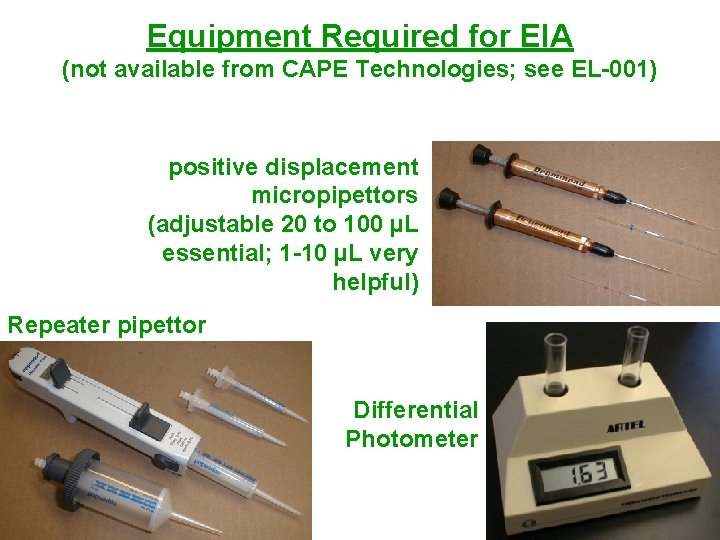
Equipment Required for EIA (not available from CAPE Technologies; see EL-001) positive displacement micropipettors (adjustable 20 to 100 µL essential; 1 -10 µL very helpful) Repeater pipettor Differential Photometer
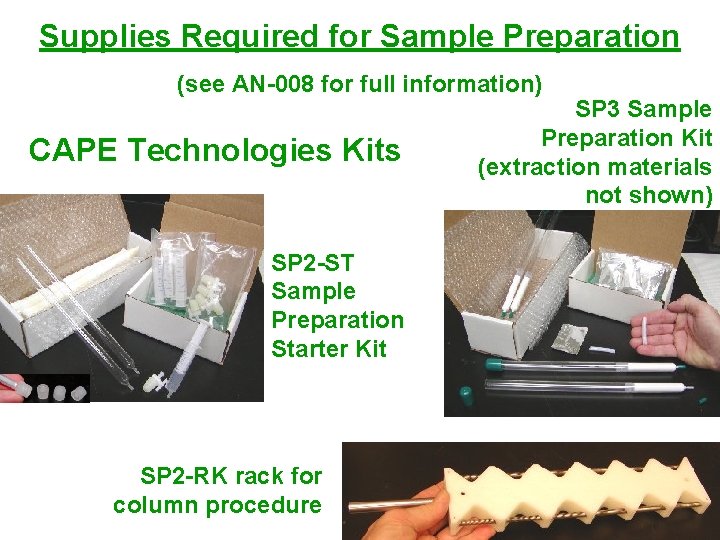
Supplies Required for Sample Preparation (see AN-008 for full information) CAPE Technologies Kits SP 2 -ST Sample Preparation Starter Kit SP 2 -RK rack for column procedure SP 3 Sample Preparation Kit (extraction materials not shown)
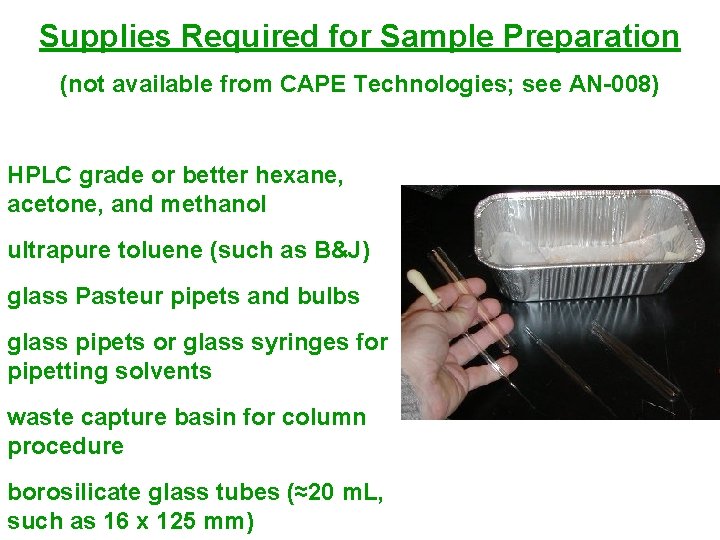
Supplies Required for Sample Preparation (not available from CAPE Technologies; see AN-008) HPLC grade or better hexane, acetone, and methanol ultrapure toluene (such as B&J) glass Pasteur pipets and bulbs glass pipets or glass syringes for pipetting solvents waste capture basin for column procedure borosilicate glass tubes (≈20 m. L, such as 16 x 125 mm)
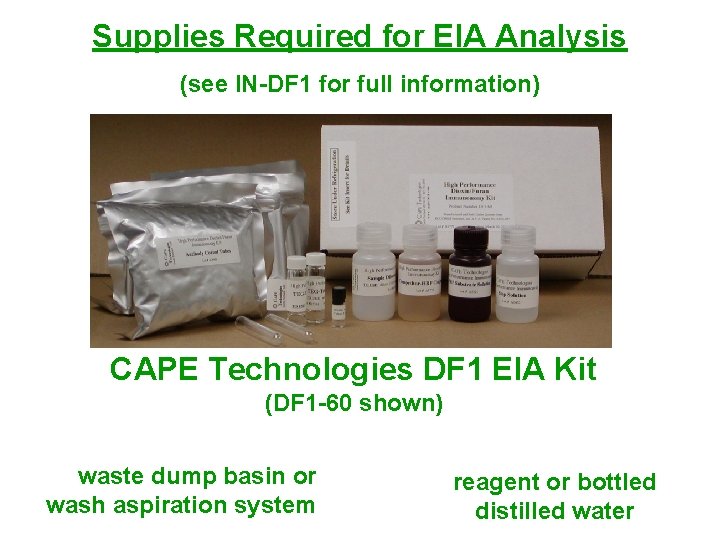
Supplies Required for EIA Analysis (see IN-DF 1 for full information) CAPE Technologies DF 1 EIA Kit (DF 1 -60 shown) waste dump basin or wash aspiration system reagent or bottled distilled water
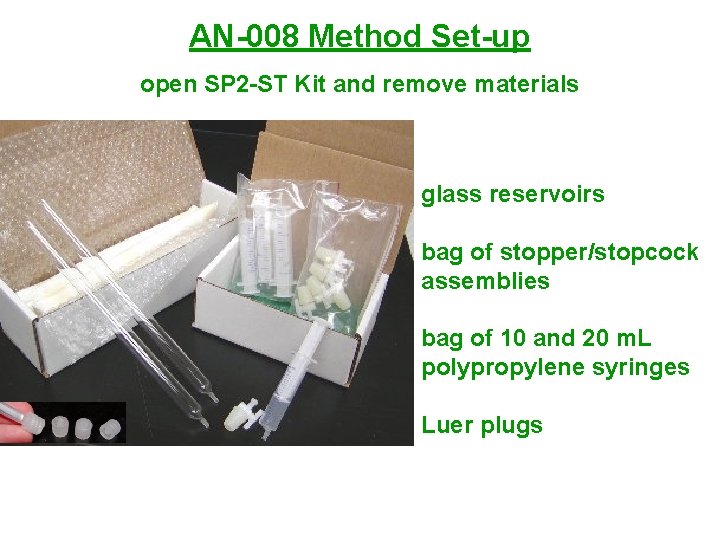
AN-008 Method Set-up open SP 2 -ST Kit and remove materials glass reservoirs bag of stopper/stopcock assemblies bag of 10 and 20 m. L polypropylene syringes Luer plugs
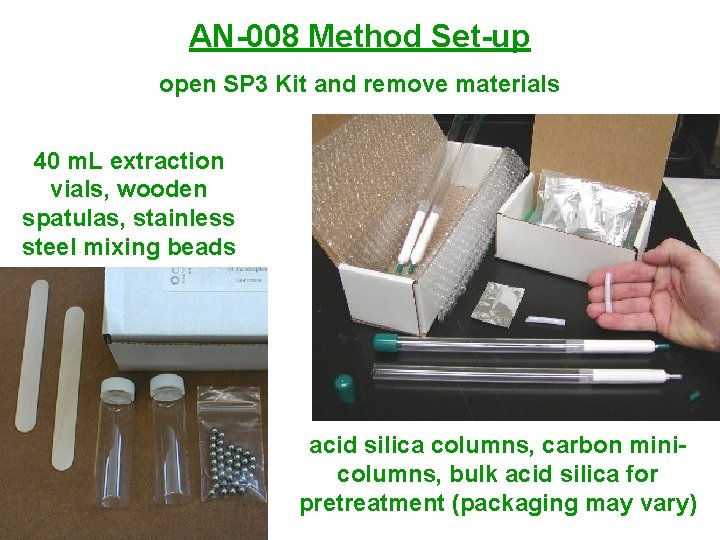
AN-008 Method Set-up open SP 3 Kit and remove materials 40 m. L extraction vials, wooden spatulas, stainless steel mixing beads acid silica columns, carbon minicolumns, bulk acid silica for pretreatment (packaging may vary)
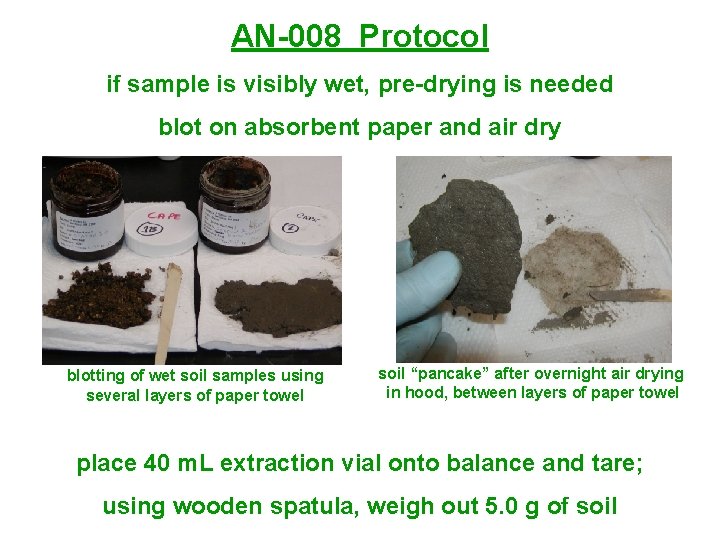
AN-008 Protocol if sample is visibly wet, pre-drying is needed blot on absorbent paper and air dry blotting of wet soil samples using several layers of paper towel soil “pancake” after overnight air drying in hood, between layers of paper towel place 40 m. L extraction vial onto balance and tare; using wooden spatula, weigh out 5. 0 g of soil
AN-008 Protocol weigh out 20 g of sodium sulfate and add to same 40 m. L vial optional: 5 g sand can also be added for better dispersal of samples (especially clays) add 3 mixing beads to extraction vial
AN-008 Protocol add 20 m. L of 1: 1 hexane: acetone to extraction vial cap vials tightly and lay on their sides in the SP 3 Kit box or other box with padding to hold them tightly in place shake at 350 rpm for 2 -4 hours if soils are high in clay, examine after 15 -30 min to be sure soil lumps are adequately dispersed and vials are not leaking
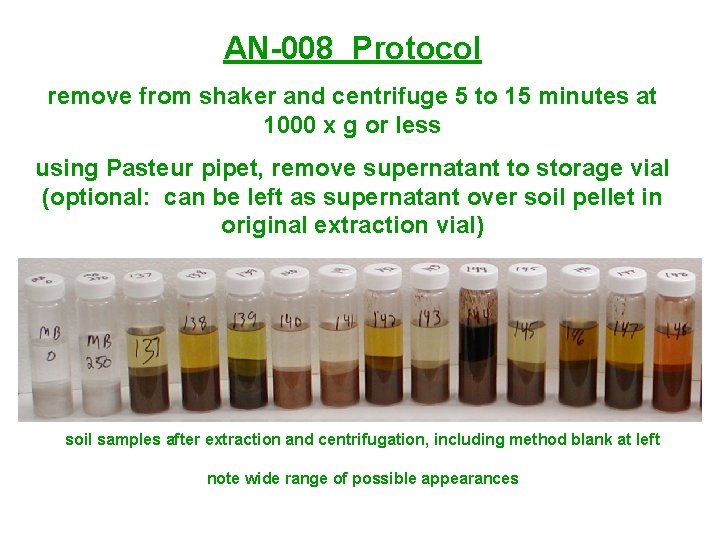
AN-008 Protocol remove from shaker and centrifuge 5 to 15 minutes at 1000 x g or less using Pasteur pipet, remove supernatant to storage vial (optional: can be left as supernatant over soil pellet in original extraction vial) soil samples after extraction and centrifugation, including method blank at left note wide range of possible appearances
AN-008 Protocol place chosen volume of extract (see AN-008 for guidance) into evaporation tube with approx. 0. 25 - 0. 5 m. L of tetradecane or other hydrocarbon keeper (exact volume is unimportant) evaporate hexane: acetone completely (caution: acetone interferes with the oxidative portion of the cleanup and can lead to false positive results if not completely removed) dilute residue in approx. 5 m. L hexane If highly colored, pre-treat with bulk acid silica
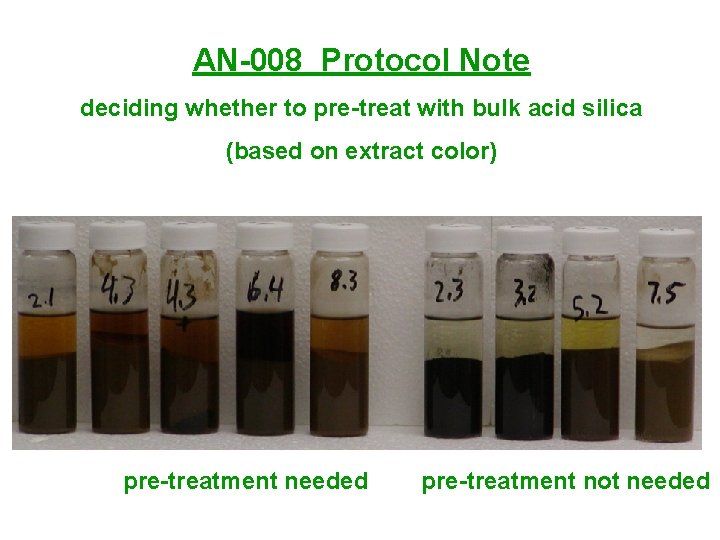
AN-008 Protocol Note deciding whether to pre-treat with bulk acid silica (based on extract color) pre-treatment needed pre-treatment not needed
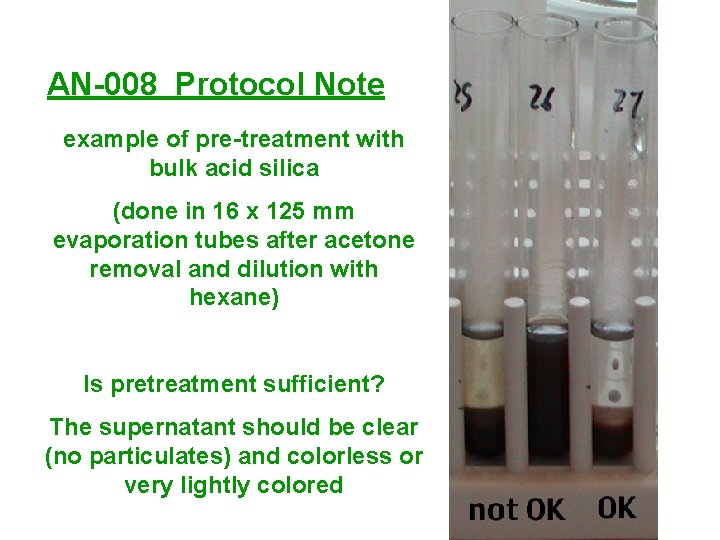
AN-008 Protocol Note example of pre-treatment with bulk acid silica (done in 16 x 125 mm evaporation tubes after acetone removal and dilution with hexane) Is pretreatment sufficient? The supernatant should be clear (no particulates) and colorless or very lightly colored
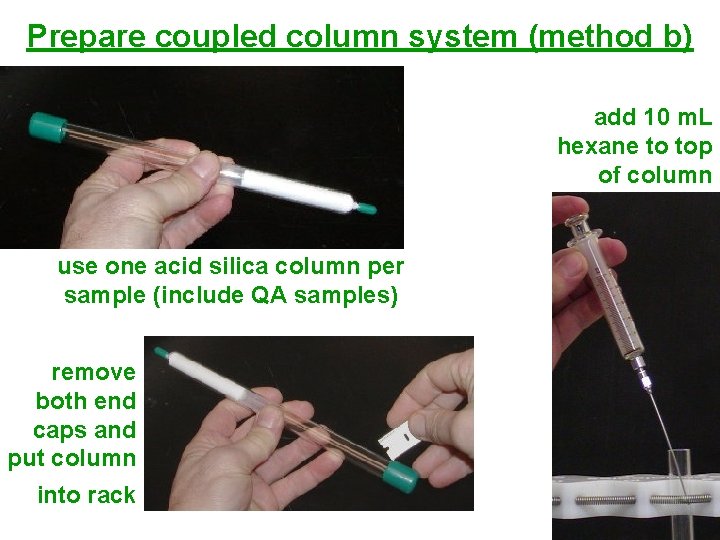
Prepare coupled column system (method b) add 10 m. L hexane to top of column use one acid silica column per sample (include QA samples) remove both end caps and put column into rack
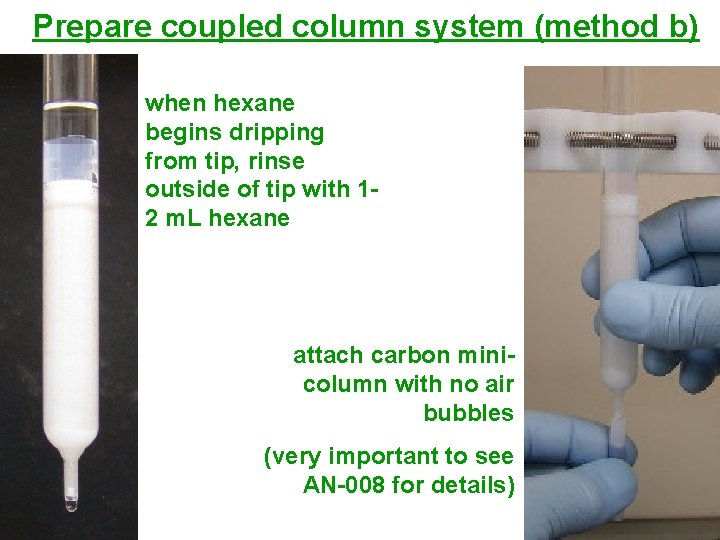
Prepare coupled column system (method b) when hexane begins dripping from tip, rinse outside of tip with 12 m. L hexane attach carbon minicolumn with no air bubbles (very important to see AN-008 for details)
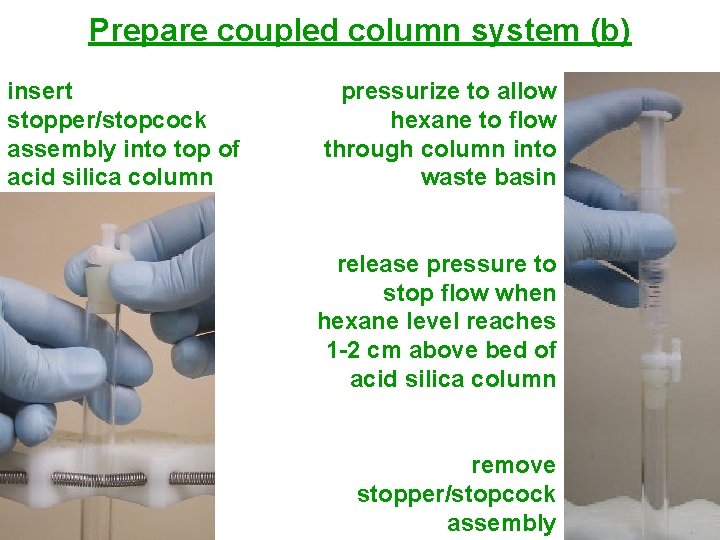
Prepare coupled column system (b) insert stopper/stopcock assembly into top of acid silica column pressurize to allow hexane to flow through column into waste basin release pressure to stop flow when hexane level reaches 1 -2 cm above bed of acid silica column remove stopper/stopcock assembly
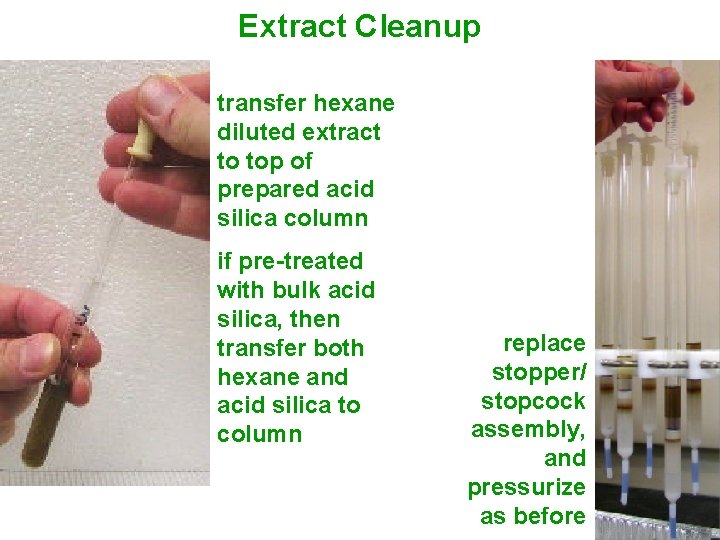
Extract Cleanup transfer hexane diluted extract to top of prepared acid silica column if pre-treated with bulk acid silica, then transfer both hexane and acid silica to column replace stopper/ stopcock assembly, and pressurize as before
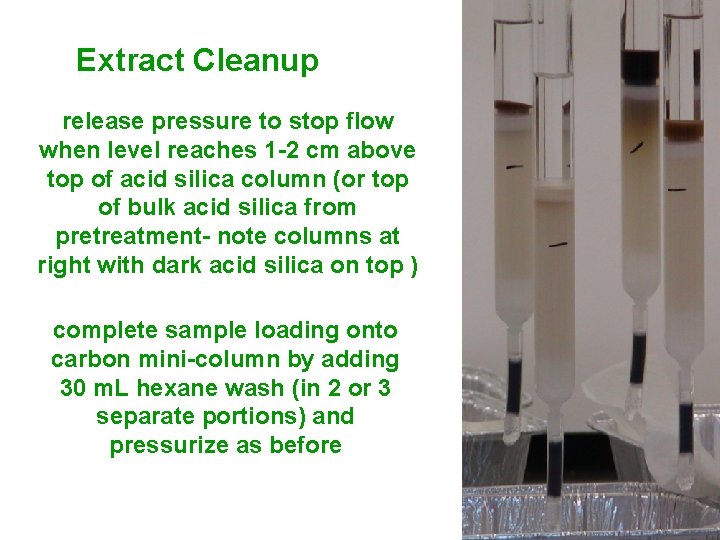
Extract Cleanup release pressure to stop flow when level reaches 1 -2 cm above top of acid silica column (or top of bulk acid silica from pretreatment- note columns at right with dark acid silica on top ) complete sample loading onto carbon mini-column by adding 30 m. L hexane wash (in 2 or 3 separate portions) and pressurize as before
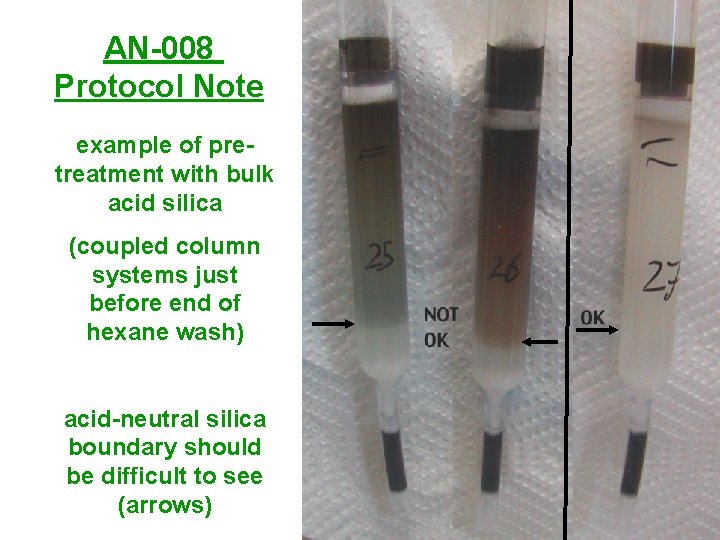
AN-008 Protocol Note example of pretreatment with bulk acid silica (coupled column systems just before end of hexane wash) acid-neutral silica boundary should be difficult to see (arrows)
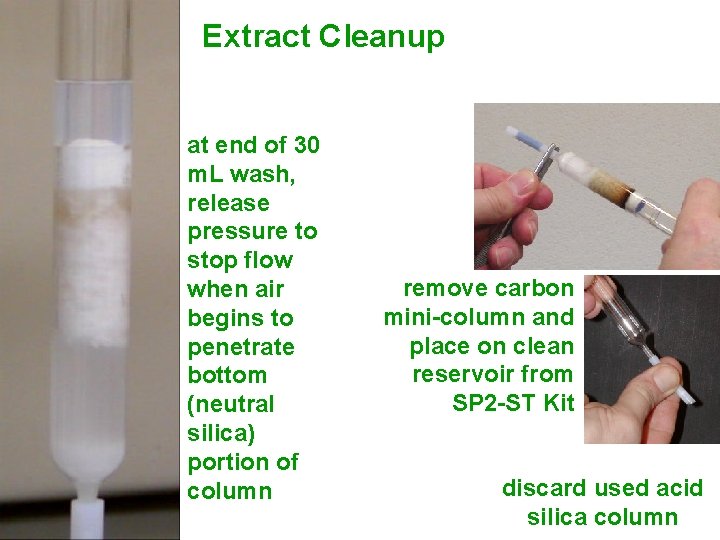
Extract Cleanup at end of 30 m. L wash, release pressure to stop flow when air begins to penetrate bottom (neutral silica) portion of column remove carbon mini-column and place on clean reservoir from SP 2 -ST Kit discard used acid silica column
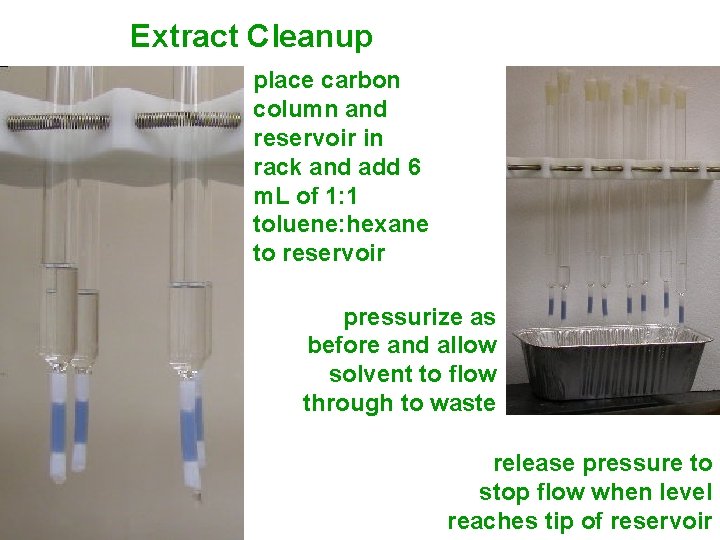
Extract Cleanup place carbon column and reservoir in rack and add 6 m. L of 1: 1 toluene: hexane to reservoir pressurize as before and allow solvent to flow through to waste release pressure to stop flow when level reaches tip of reservoir
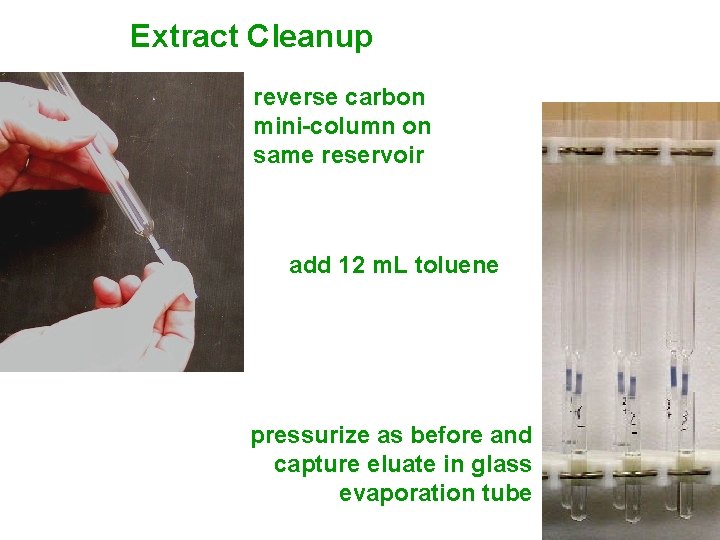
Extract Cleanup reverse carbon mini-column on same reservoir add 12 m. L toluene pressurize as before and capture eluate in glass evaporation tube
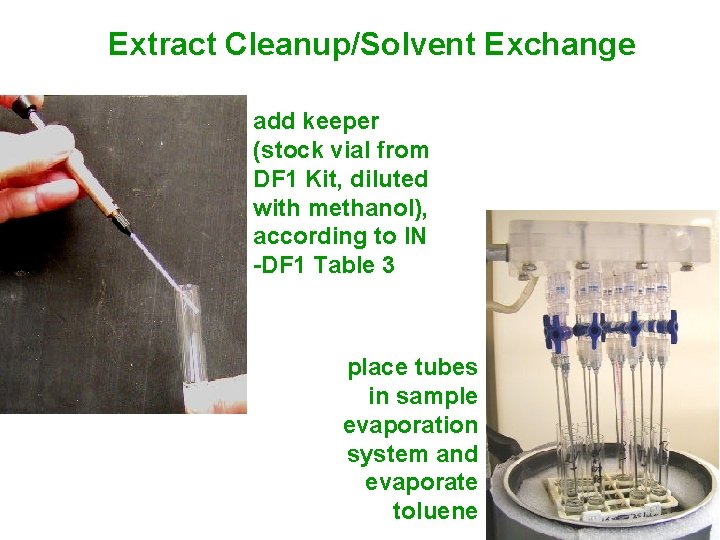
Extract Cleanup/Solvent Exchange add keeper (stock vial from DF 1 Kit, diluted with methanol), according to IN -DF 1 Table 3 place tubes in sample evaporation system and evaporate toluene
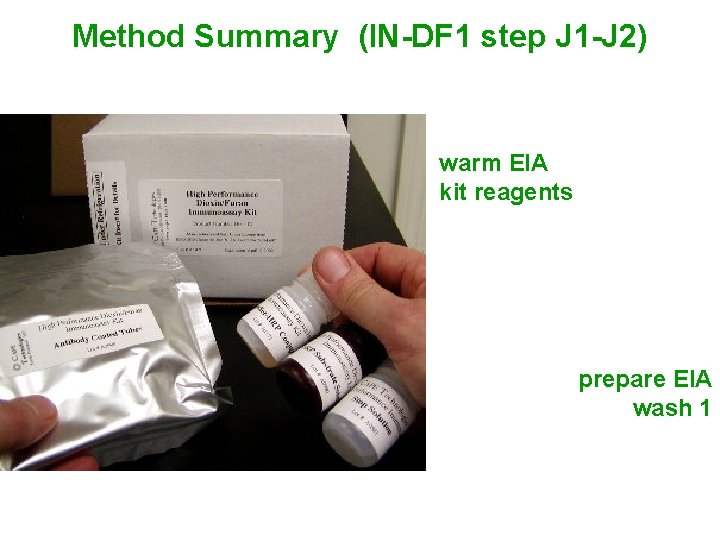
Method Summary (IN-DF 1 step J 1 -J 2) warm EIA kit reagents prepare EIA wash 1
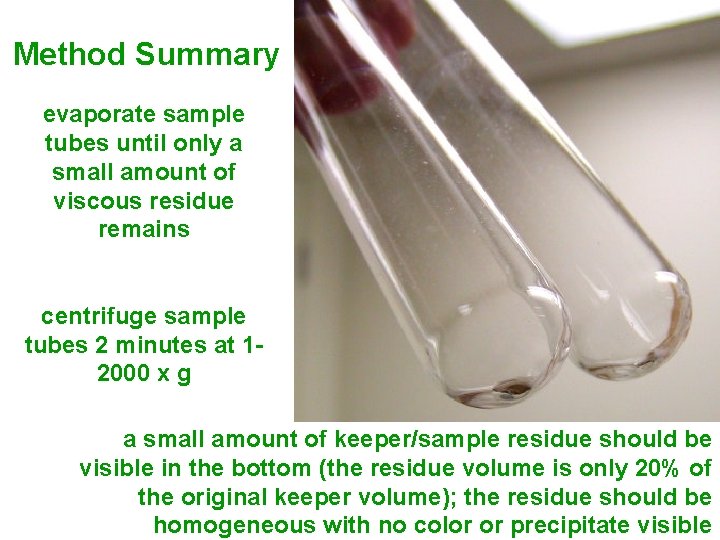
Method Summary evaporate sample tubes until only a small amount of viscous residue remains centrifuge sample tubes 2 minutes at 12000 x g a small amount of keeper/sample residue should be visible in the bottom (the residue volume is only 20% of the original keeper volume); the residue should be homogeneous with no color or precipitate visible
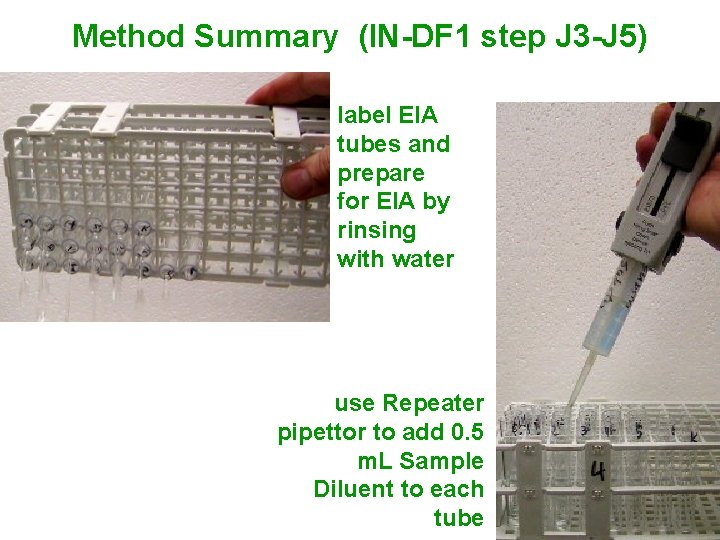
Method Summary (IN-DF 1 step J 3 -J 5) label EIA tubes and prepare for EIA by rinsing with water use Repeater pipettor to add 0. 5 m. L Sample Diluent to each tube
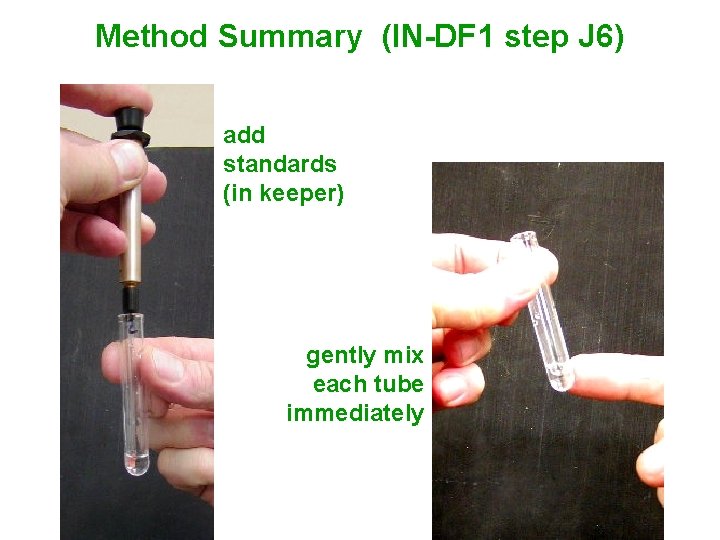
Method Summary (IN-DF 1 step J 6) add standards (in keeper) gently mix each tube immediately
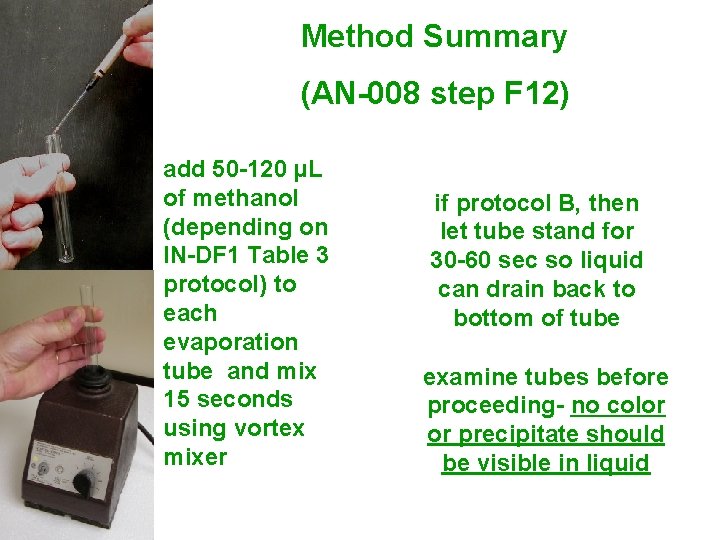
Method Summary (AN-008 step F 12) add 50 -120 µL of methanol (depending on IN-DF 1 Table 3 protocol) to each evaporation tube and mix 15 seconds using vortex mixer if protocol B, then let tube stand for 30 -60 sec so liquid can drain back to bottom of tube examine tubes before proceeding- no color or precipitate should be visible in liquid
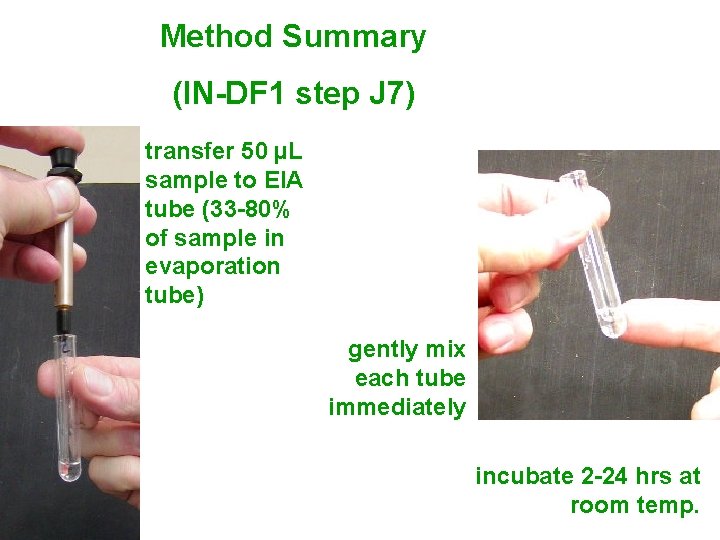
Method Summary (IN-DF 1 step J 7) transfer 50 µL sample to EIA tube (33 -80% of sample in evaporation tube) gently mix each tube immediately incubate 2 -24 hrs at room temp.
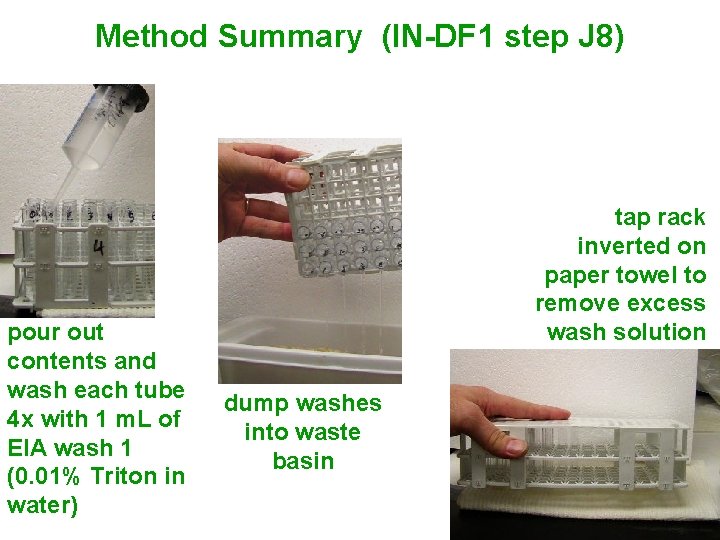
Method Summary (IN-DF 1 step J 8) pour out contents and wash each tube 4 x with 1 m. L of EIA wash 1 (0. 01% Triton in water) tap rack inverted on paper towel to remove excess wash solution dump washes into waste basin
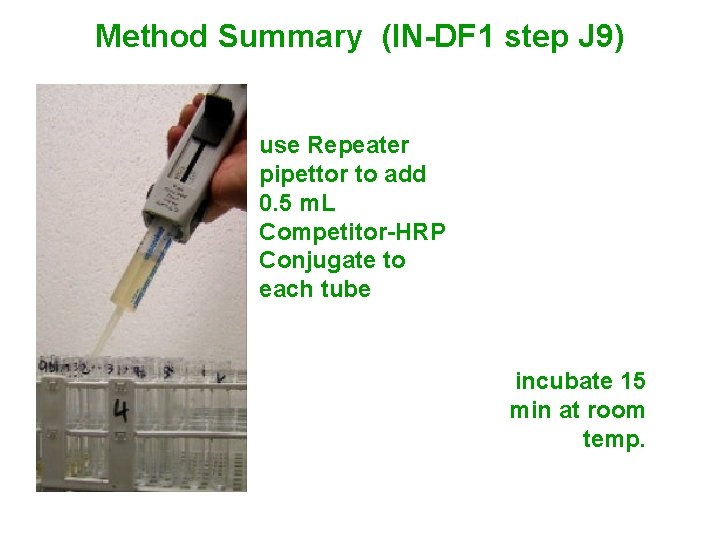
Method Summary (IN-DF 1 step J 9) use Repeater pipettor to add 0. 5 m. L Competitor-HRP Conjugate to each tube incubate 15 min at room temp.
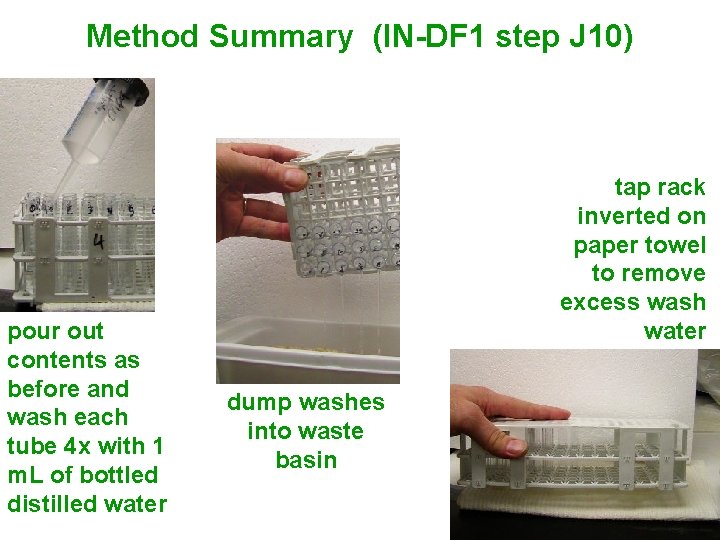
Method Summary (IN-DF 1 step J 10) pour out contents as before and wash each tube 4 x with 1 m. L of bottled distilled water tap rack inverted on paper towel to remove excess wash water dump washes into waste basin
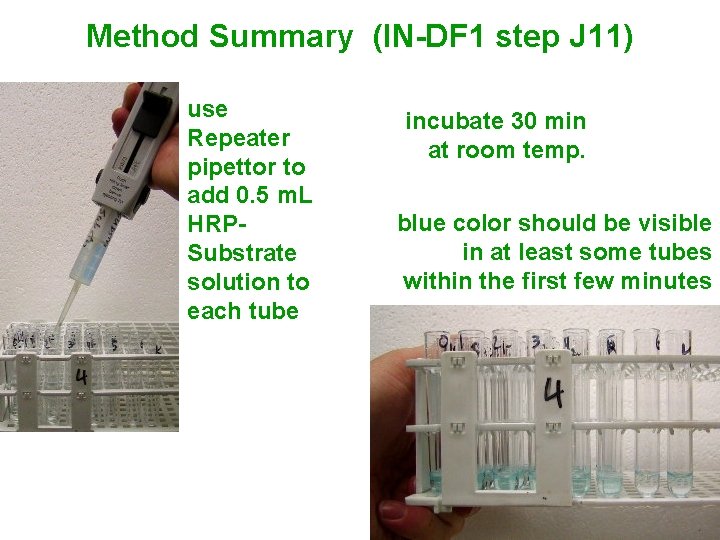
Method Summary (IN-DF 1 step J 11) use Repeater pipettor to add 0. 5 m. L HRPSubstrate solution to each tube incubate 30 min at room temp. blue color should be visible in at least some tubes within the first few minutes
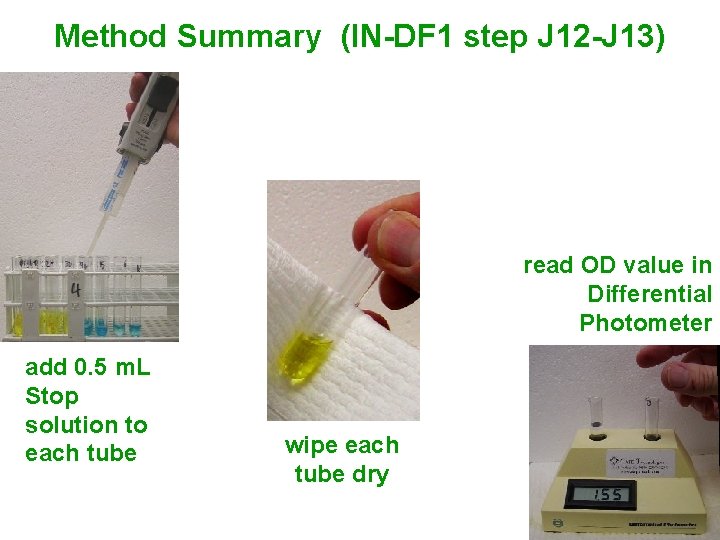
Method Summary (IN-DF 1 step J 12 -J 13) read OD value in Differential Photometer add 0. 5 m. L Stop solution to each tube wipe each tube dry