CAN WE TRUST OUR FOOD Professor Colin Dennis
- Slides: 48
CAN WE TRUST OUR FOOD ? Professor Colin Dennis Director-General, Campden BRI Chipping Campden, Gloucestershire, GL 55 6 LD, UK Tel: +44 (0)1386 842000 Fax: +44 (0)1386 842100 www. campden. co. uk www. bri-advantage. com M: lewispptGresham Lecture - 3 December 08
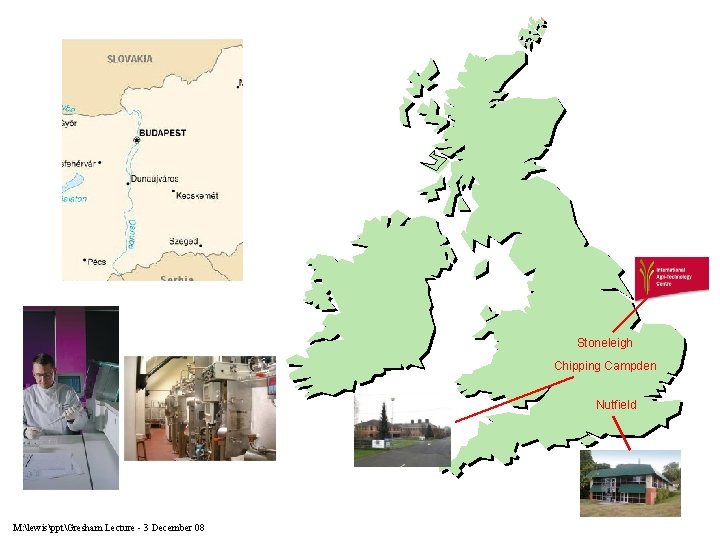
Stoneleigh Chipping Campden Nutfield M: lewispptGresham Lecture - 3 December 08
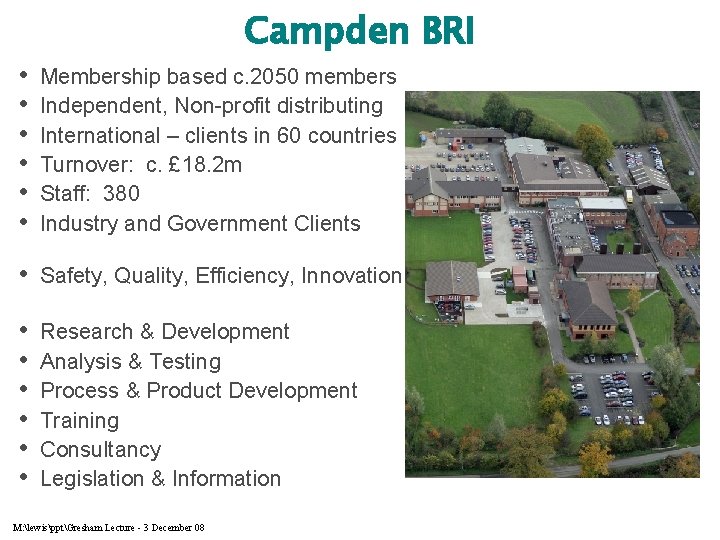
Campden BRI • • • Membership based c. 2050 members Independent, Non-profit distributing International – clients in 60 countries Turnover: c. £ 18. 2 m Staff: 380 Industry and Government Clients • Safety, Quality, Efficiency, Innovation • • • Research & Development Analysis & Testing Process & Product Development Training Consultancy Legislation & Information M: lewispptGresham Lecture - 3 December 08
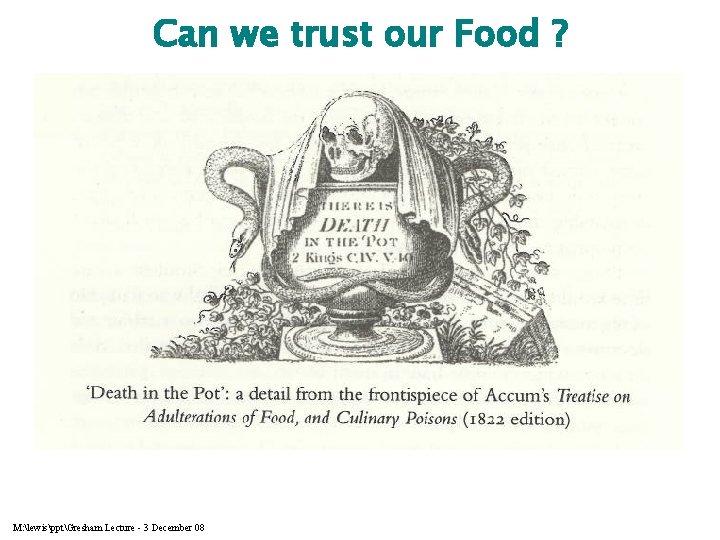
Can we trust our Food ? M: lewispptGresham Lecture - 3 December 08
M: lewispptGresham Lecture - 3 December 08
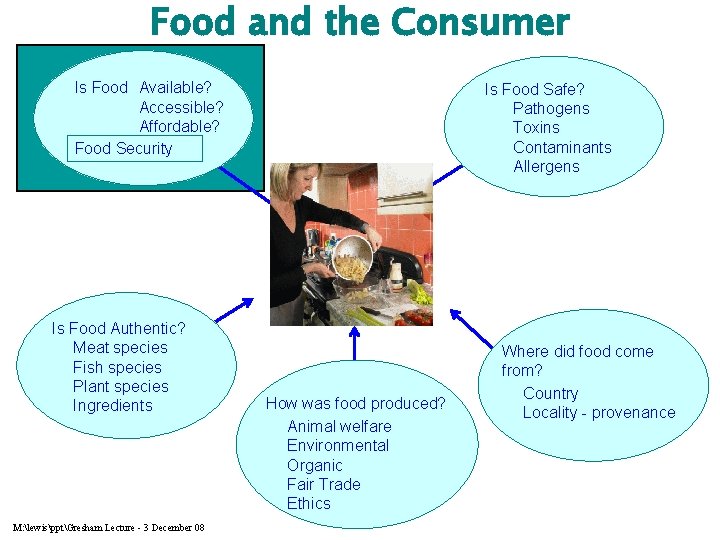
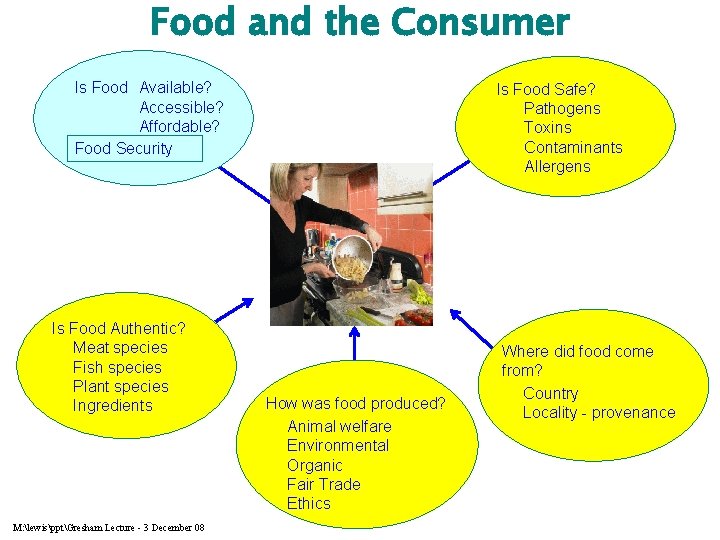
Food and the Consumer Is Food Available? Accessible? Affordable? Food Security Is Food Authentic? Meat species Fish species Plant species Ingredients M: lewispptGresham Lecture - 3 December 08 Is Food Safe? Pathogens Toxins Contaminants Allergens How was food produced? Animal welfare Environmental Organic Fair Trade Ethics Where did food come from? Country Locality - provenance
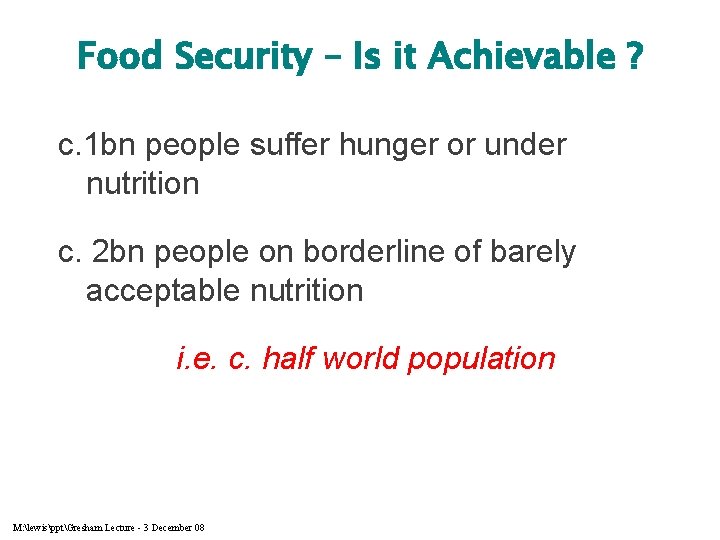
Food Security – Is it Achievable ? c. 1 bn people suffer hunger or under nutrition c. 2 bn people on borderline of barely acceptable nutrition i. e. c. half world population M: lewispptGresham Lecture - 3 December 08
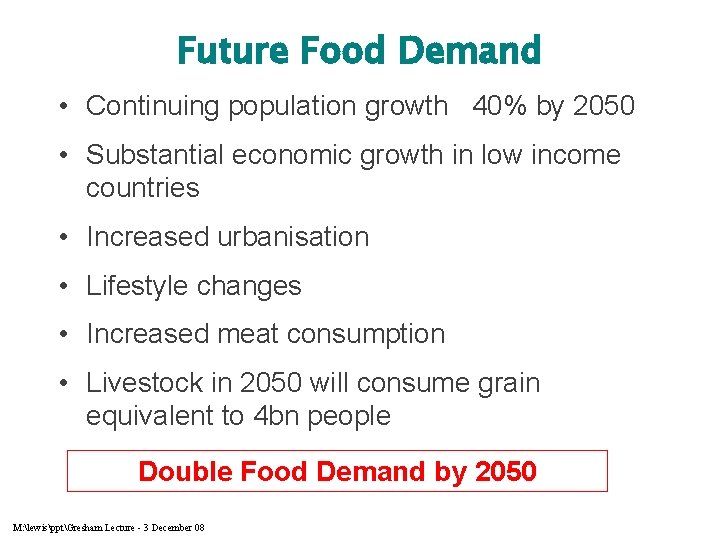
Future Food Demand • Continuing population growth 40% by 2050 • Substantial economic growth in low income countries • Increased urbanisation • Lifestyle changes • Increased meat consumption • Livestock in 2050 will consume grain equivalent to 4 bn people Double Food Demand by 2050 M: lewispptGresham Lecture - 3 December 08
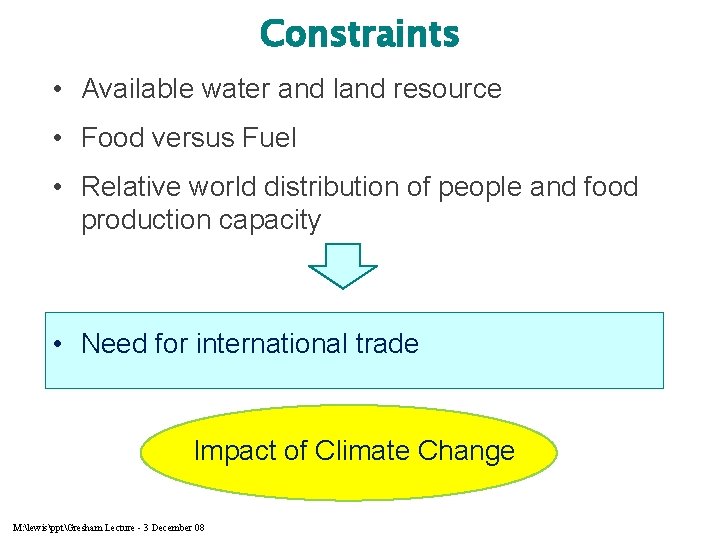
Constraints • Available water and land resource • Food versus Fuel • Relative world distribution of people and food production capacity • Need for international trade Impact of Climate Change M: lewispptGresham Lecture - 3 December 08
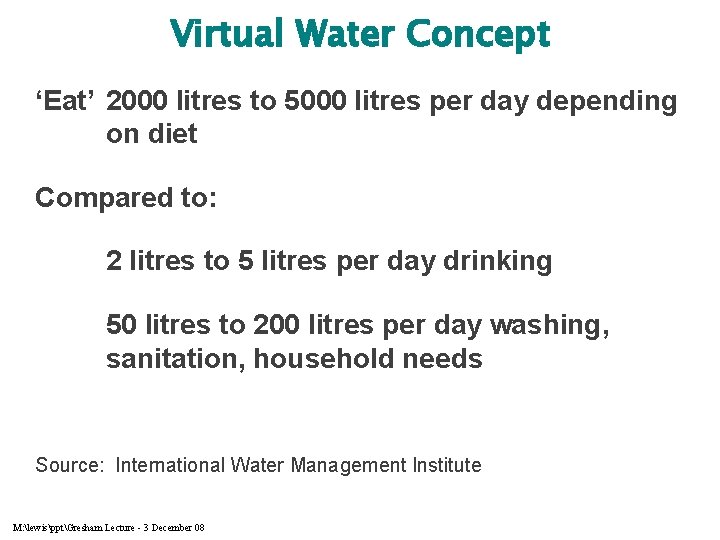
Virtual Water Concept ‘Eat’ 2000 litres to 5000 litres per day depending on diet Compared to: 2 litres to 5 litres per day drinking 50 litres to 200 litres per day washing, sanitation, household needs Source: International Water Management Institute M: lewispptGresham Lecture - 3 December 08
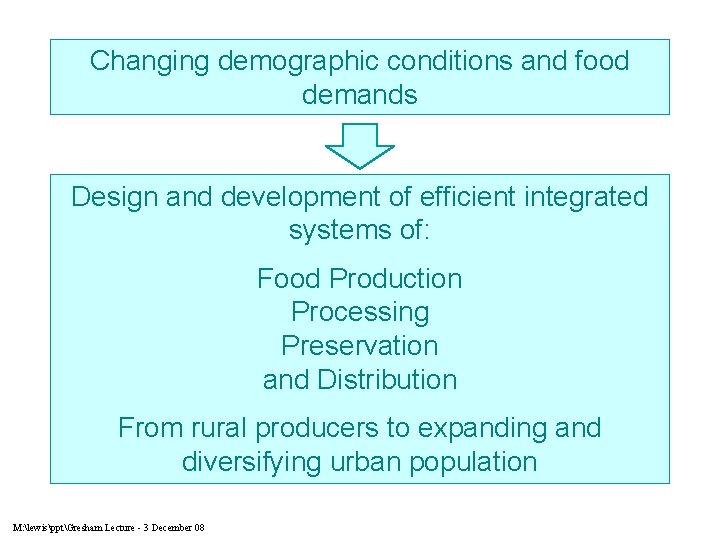
Changing demographic conditions and food demands Design and development of efficient integrated systems of: Food Production Processing Preservation and Distribution From rural producers to expanding and diversifying urban population M: lewispptGresham Lecture - 3 December 08
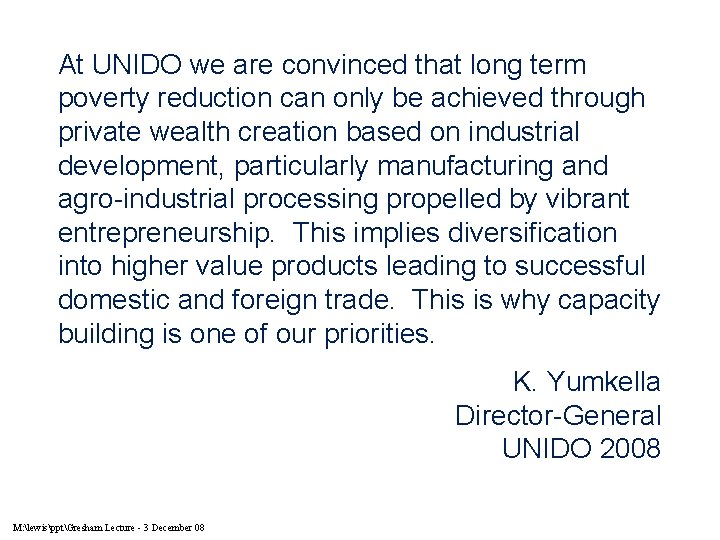
At UNIDO we are convinced that long term poverty reduction can only be achieved through private wealth creation based on industrial development, particularly manufacturing and agro-industrial processing propelled by vibrant entrepreneurship. This implies diversification into higher value products leading to successful domestic and foreign trade. This is why capacity building is one of our priorities. K. Yumkella Director-General UNIDO 2008 M: lewispptGresham Lecture - 3 December 08
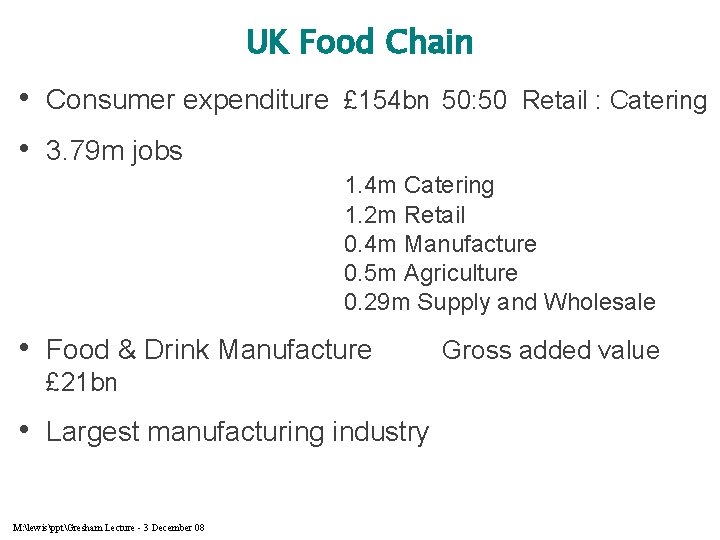
UK Food Chain • Consumer expenditure • 3. 79 m jobs £ 154 bn 50: 50 Retail : Catering 1. 4 m Catering 1. 2 m Retail 0. 4 m Manufacture 0. 5 m Agriculture 0. 29 m Supply and Wholesale • Food & Drink Manufacture £ 21 bn • Largest manufacturing industry M: lewispptGresham Lecture - 3 December 08 Gross added value
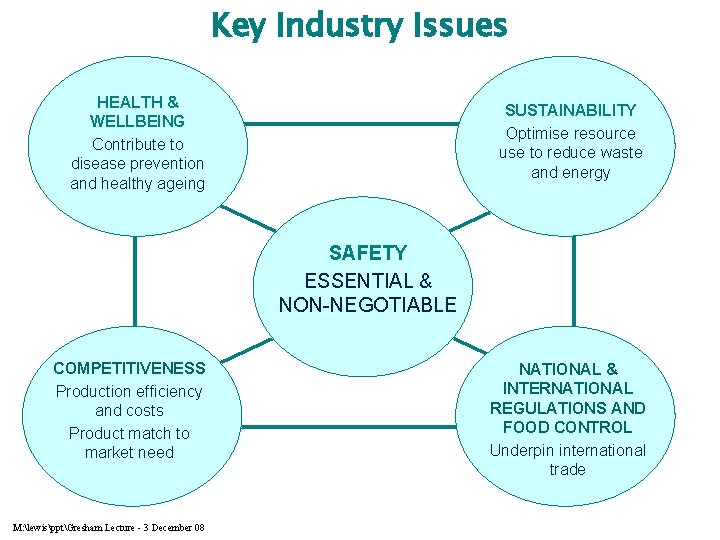
Key Industry Issues HEALTH & WELLBEING Contribute to disease prevention and healthy ageing SUSTAINABILITY Optimise resource use to reduce waste and energy SAFETY ESSENTIAL & NON-NEGOTIABLE COMPETITIVENESS Production efficiency and costs Product match to market need M: lewispptGresham Lecture - 3 December 08 NATIONAL & INTERNATIONAL REGULATIONS AND FOOD CONTROL Underpin international trade
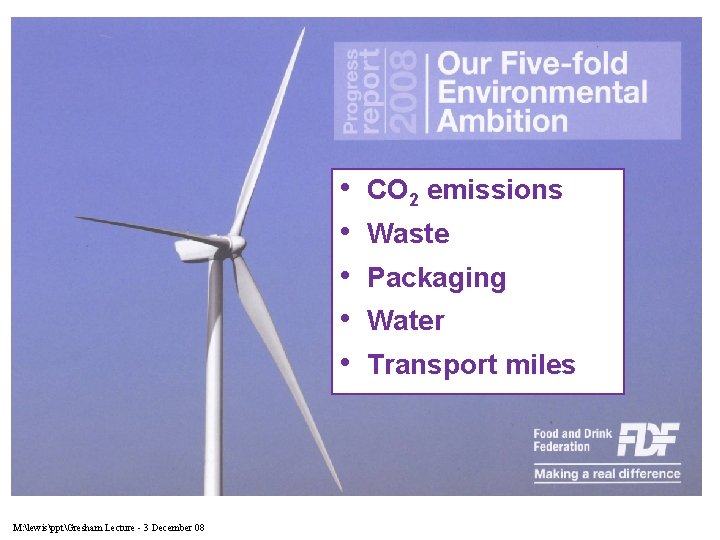
• • • M: lewispptGresham Lecture - 3 December 08 CO 2 emissions Waste Packaging Water Transport miles
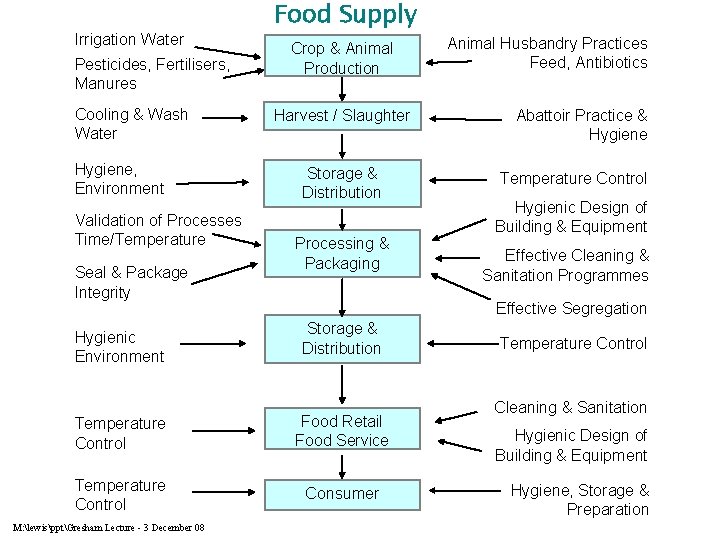
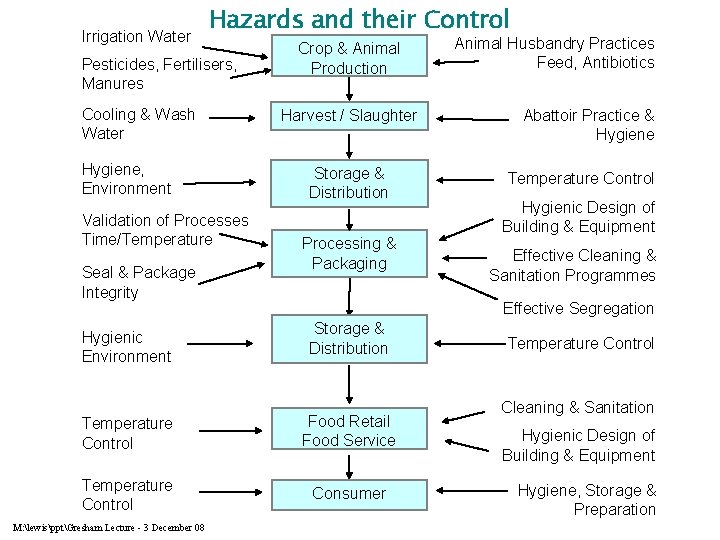
Irrigation Water Pesticides, Fertilisers, Manures Cooling & Wash Water Hygiene, Environment Validation of Processes Time/Temperature Seal & Package Integrity Hygienic Environment Food Supply Crop & Animal Production Harvest / Slaughter Storage & Distribution Processing & Packaging Abattoir Practice & Hygiene Temperature Control Hygienic Design of Building & Equipment Effective Cleaning & Sanitation Programmes Effective Segregation Storage & Distribution Temperature Control Food Retail Food Service Temperature Control Consumer M: lewispptGresham Lecture - 3 December 08 Animal Husbandry Practices Feed, Antibiotics Temperature Control Cleaning & Sanitation Hygienic Design of Building & Equipment Hygiene, Storage & Preparation
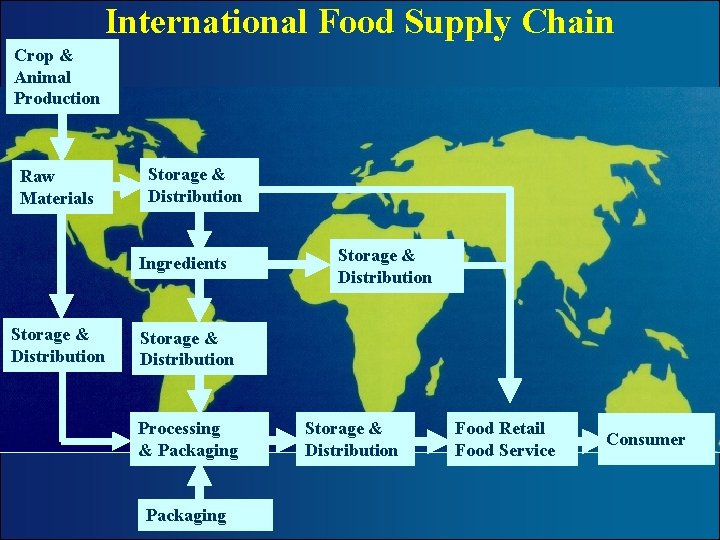
International Food Supply Chain Crop & Animal Production Raw Materials Storage & Distribution Ingredients Storage & Distribution Processing & Packaging M: lewispptGresham Lecture - 3 December 08 Storage & Distribution Food Retail Food Service Consumer
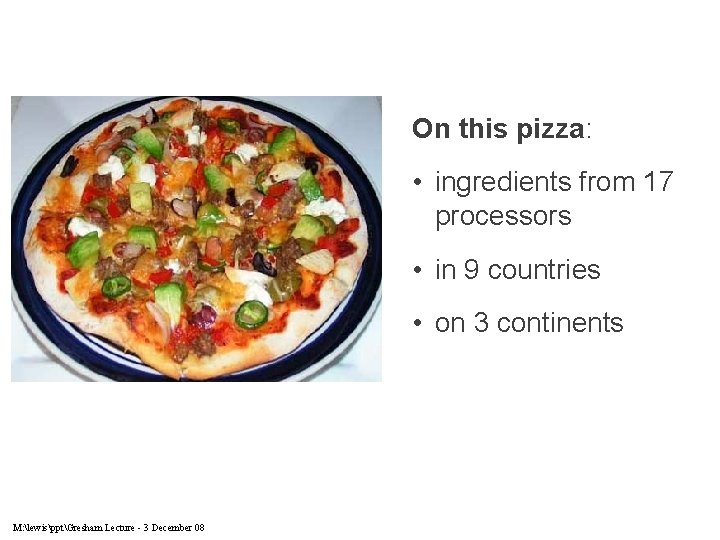
On this pizza: • ingredients from 17 processors • in 9 countries • on 3 continents M: lewispptGresham Lecture - 3 December 08
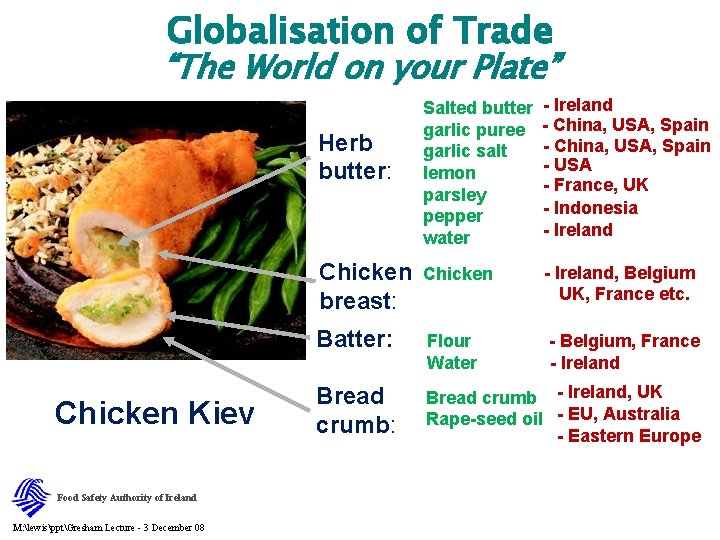
Globalisation of Trade “The World on your Plate” Salted butter garlic puree garlic salt lemon parsley pepper water - Ireland - China, USA, Spain - USA - France, UK - Indonesia - Ireland Chicken breast: Chicken - Ireland, Belgium UK, France etc. Batter: Flour Water - Belgium, France - Ireland Bread crumb: Bread crumb - Ireland, UK Rape-seed oil - EU, Australia - Eastern Europe Herb butter: Chicken Kiev Food Safety Authority of Ireland M: lewispptGresham Lecture - 3 December 08
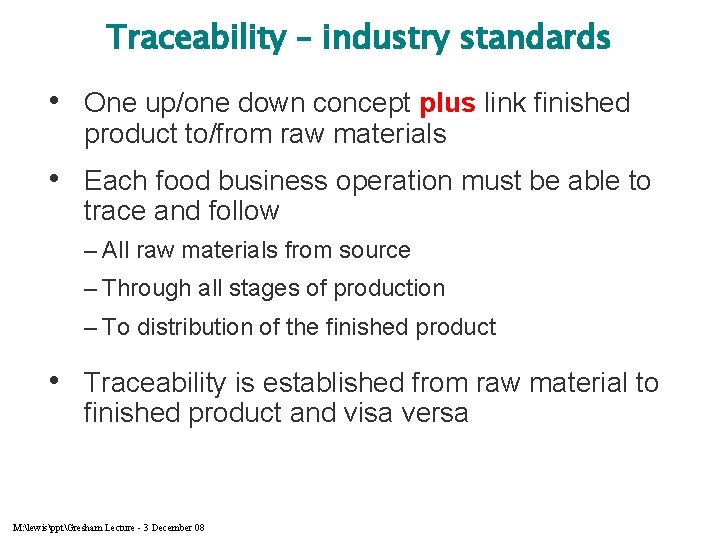
Traceability – industry standards • One up/one down concept plus link finished product to/from raw materials • Each food business operation must be able to trace and follow – All raw materials from source – Through all stages of production – To distribution of the finished product • Traceability is established from raw material to finished product and visa versa M: lewispptGresham Lecture - 3 December 08
Traceability Consumers • Have food safety protection by effective recall in emergency • Avoid certain ingredients • Choose food produced in certain ways M: lewispptGresham Lecture - 3 December 08
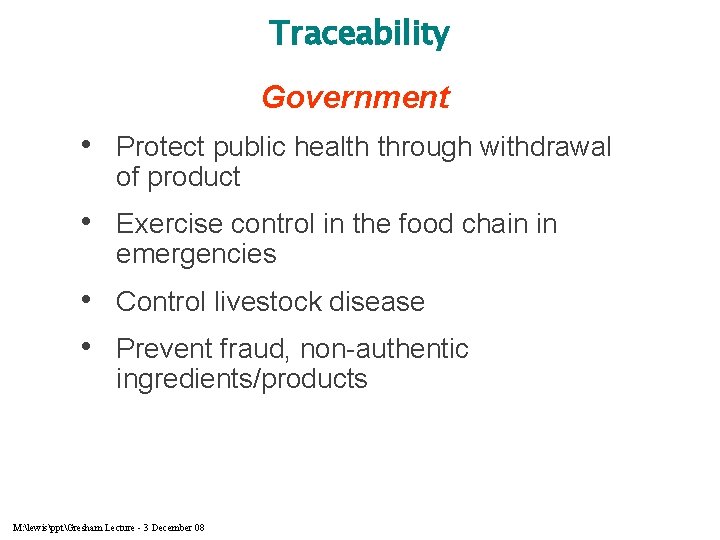
Traceability Government • Protect public health through withdrawal of product • Exercise control in the food chain in emergencies • Control livestock disease • Prevent fraud, non-authentic ingredients/products M: lewispptGresham Lecture - 3 December 08
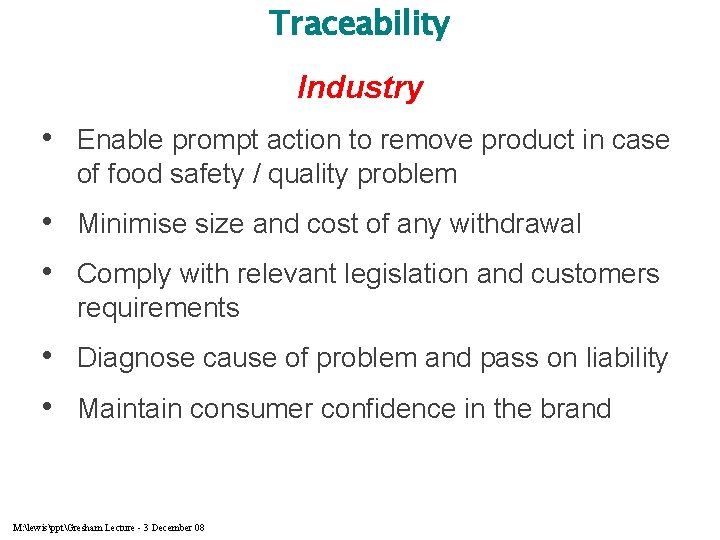
Traceability Industry • Enable prompt action to remove product in case of food safety / quality problem • Minimise size and cost of any withdrawal • Comply with relevant legislation and customers requirements • Diagnose cause of problem and pass on liability • Maintain consumer confidence in the brand M: lewispptGresham Lecture - 3 December 08
Food and the Consumer Is Food Available? Accessible? Affordable? Food Security Is Food Authentic? Meat species Fish species Plant species Ingredients M: lewispptGresham Lecture - 3 December 08 Is Food Safe? Pathogens Toxins Contaminants Allergens How was food produced? Animal welfare Environmental Organic Fair Trade Ethics Where did food come from? Country Locality - provenance
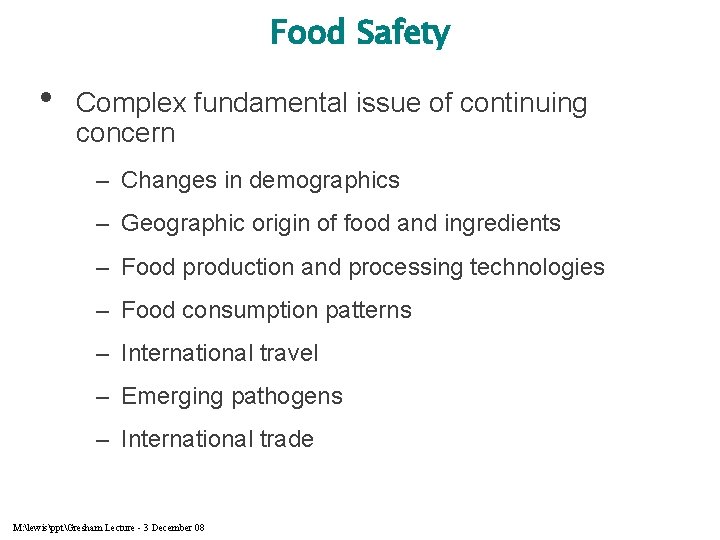
Food Safety • Complex fundamental issue of continuing concern – Changes in demographics – Geographic origin of food and ingredients – Food production and processing technologies – Food consumption patterns – International travel – Emerging pathogens – International trade M: lewispptGresham Lecture - 3 December 08
Food Safety • Increasingly international nature of agri-food chain – Food safety management systems adopted globally – Common operating principles accepted worldwide – Consideration of whole food supply chain from production to consumption ‘Stable to Table’ ‘Field to Plate’ ‘Farm to Fork’ M: lewispptGresham Lecture - 3 December 08
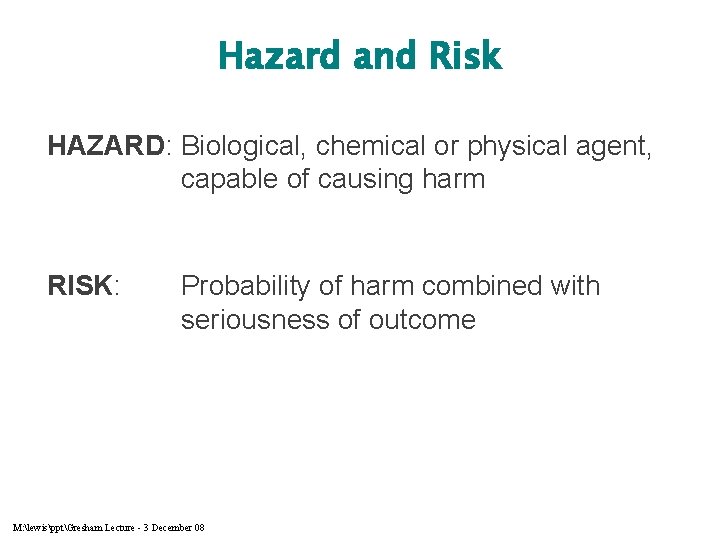
Hazard and Risk HAZARD: Biological, chemical or physical agent, capable of causing harm RISK: Probability of harm combined with seriousness of outcome M: lewispptGresham Lecture - 3 December 08
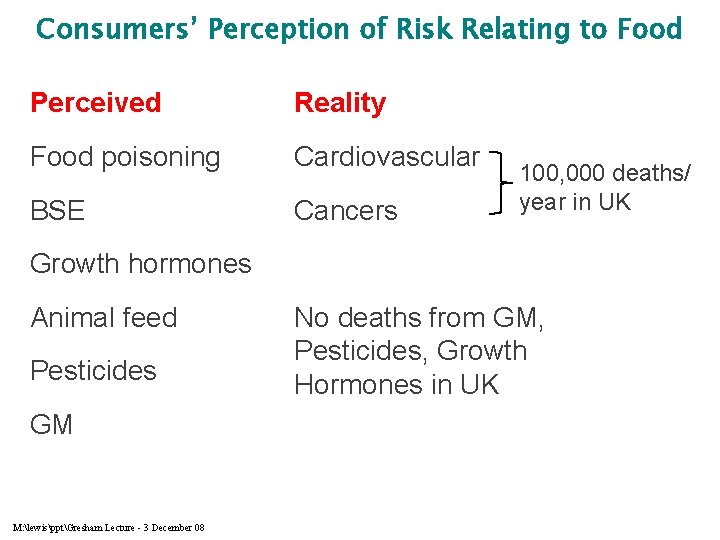
Consumers’ Perception of Risk Relating to Food Perceived Reality Food poisoning Cardiovascular BSE Cancers 100, 000 deaths/ year in UK Growth hormones Animal feed Pesticides GM M: lewispptGresham Lecture - 3 December 08 No deaths from GM, Pesticides, Growth Hormones in UK
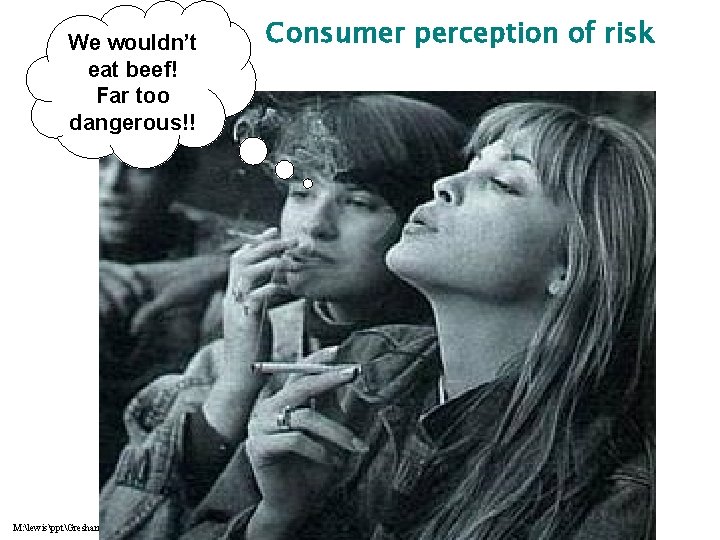
We wouldn’t eat beef! Far too dangerous!! M: lewispptGresham Lecture - 3 December 08 Consumer perception of risk
Irrigation Water Hazards and their Control Pesticides, Fertilisers, Manures Cooling & Wash Water Hygiene, Environment Validation of Processes Time/Temperature Seal & Package Integrity Hygienic Environment Crop & Animal Production Harvest / Slaughter Storage & Distribution Processing & Packaging Abattoir Practice & Hygiene Temperature Control Hygienic Design of Building & Equipment Effective Cleaning & Sanitation Programmes Effective Segregation Storage & Distribution Temperature Control Food Retail Food Service Temperature Control Consumer M: lewispptGresham Lecture - 3 December 08 Animal Husbandry Practices Feed, Antibiotics Temperature Control Cleaning & Sanitation Hygienic Design of Building & Equipment Hygiene, Storage & Preparation
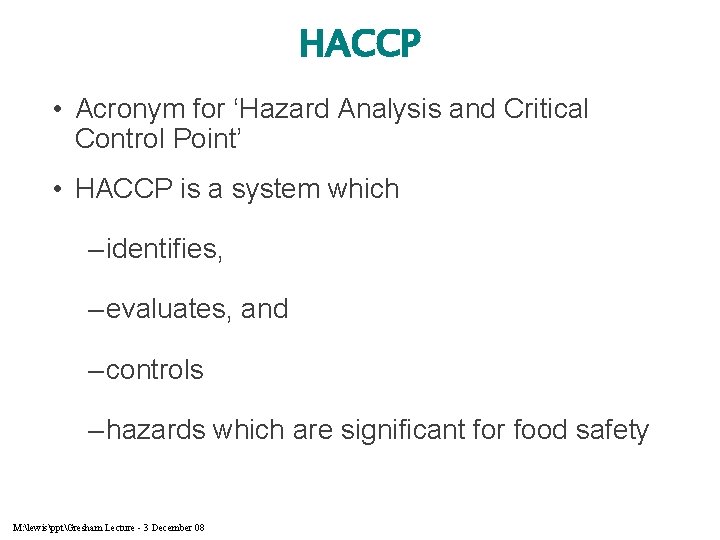
HACCP • Acronym for ‘Hazard Analysis and Critical Control Point’ • HACCP is a system which – identifies, – evaluates, and – controls – hazards which are significant for food safety M: lewispptGresham Lecture - 3 December 08
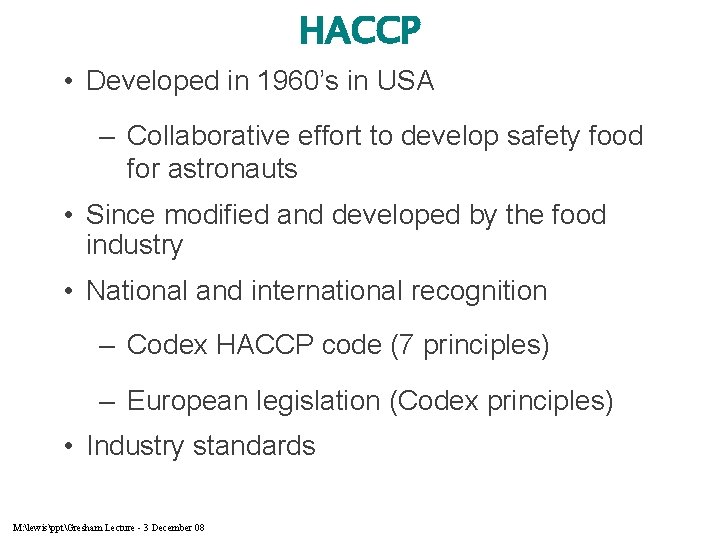
HACCP • Developed in 1960’s in USA – Collaborative effort to develop safety food for astronauts • Since modified and developed by the food industry • National and international recognition – Codex HACCP code (7 principles) – European legislation (Codex principles) • Industry standards M: lewispptGresham Lecture - 3 December 08
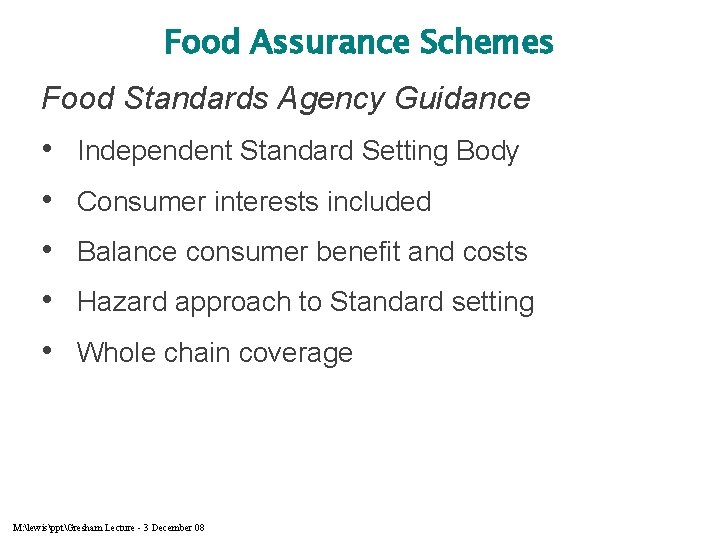
Food Assurance Schemes Food Standards Agency Guidance • • • Independent Standard Setting Body Consumer interests included Balance consumer benefit and costs Hazard approach to Standard setting Whole chain coverage M: lewispptGresham Lecture - 3 December 08
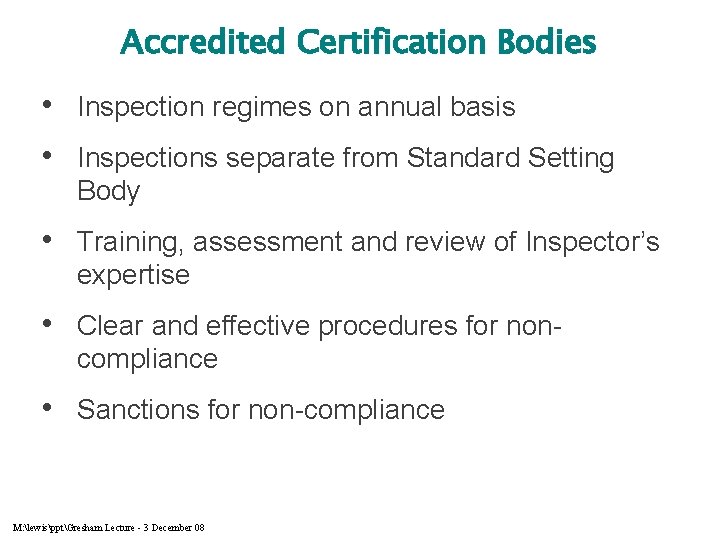
Accredited Certification Bodies • Inspection regimes on annual basis • Inspections separate from Standard Setting Body • Training, assessment and review of Inspector’s expertise • Clear and effective procedures for noncompliance • Sanctions for non-compliance M: lewispptGresham Lecture - 3 December 08
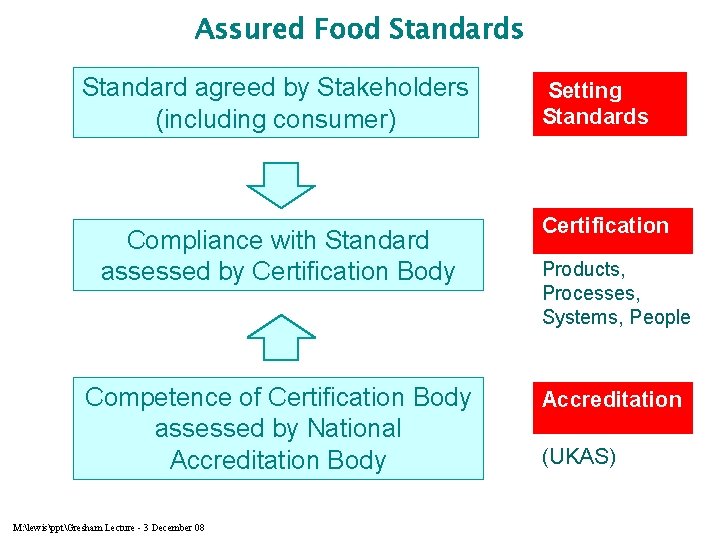
Assured Food Standards Standard agreed by Stakeholders (including consumer) Compliance with Standard assessed by Certification Body Competence of Certification Body assessed by National Accreditation Body M: lewispptGresham Lecture - 3 December 08 Setting Standards Certification Products, Processes, Systems, People Accreditation (UKAS)
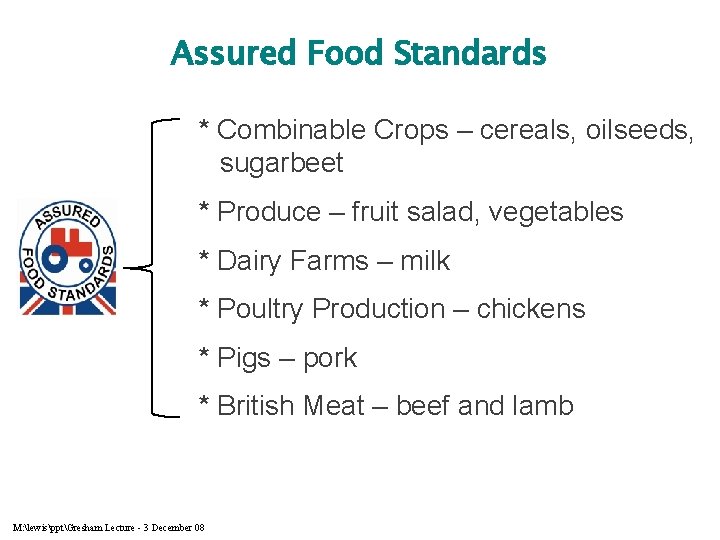
Assured Food Standards * Combinable Crops – cereals, oilseeds, sugarbeet * Produce – fruit salad, vegetables * Dairy Farms – milk * Poultry Production – chickens * Pigs – pork * British Meat – beef and lamb M: lewispptGresham Lecture - 3 December 08
Assured Food Standards Quality Meat Scotland Farm Assured Welsh Livestock Northern Irish beef and lamb Genesis QA – Quality Assurance M: lewispptGresham Lecture - 3 December 08
Lion Quality Egg Scheme Assured UK Malt M: lewispptGresham Lecture - 3 December 08 Agricultural Industries Confederation Feed Schemes Scottish Quality Farm Assured Combinable Crops
Freedom Food LEAF Marque Link Environment & Farming Soil Association Farm Assurance M: lewispptGresham Lecture - 3 December 08
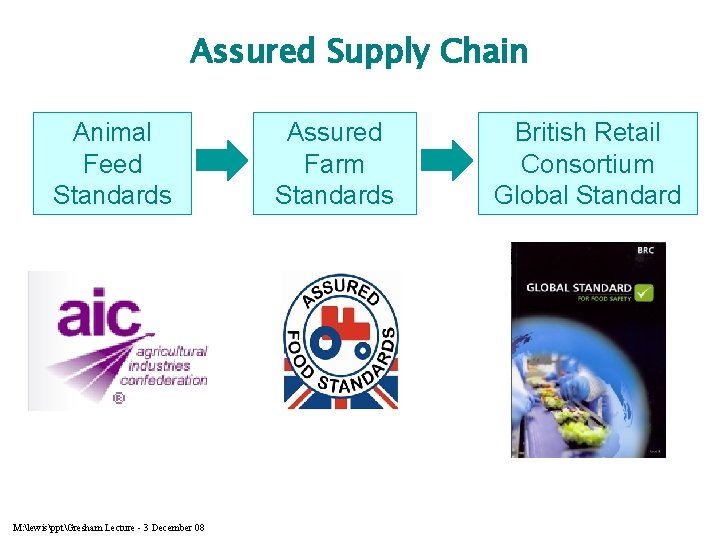
Assured Supply Chain Animal Feed Standards M: lewispptGresham Lecture - 3 December 08 Assured Farm Standards British Retail Consortium Global Standard
Review of Food Assurance Schemes Food Standards Agency - 2008 Assured Food Standards - Reviewed and tightened Standards across all schemes - All certification bodies have UKAS accreditation Schemes – established part of consumer retail awareness M: lewispptGresham Lecture - 3 December 08
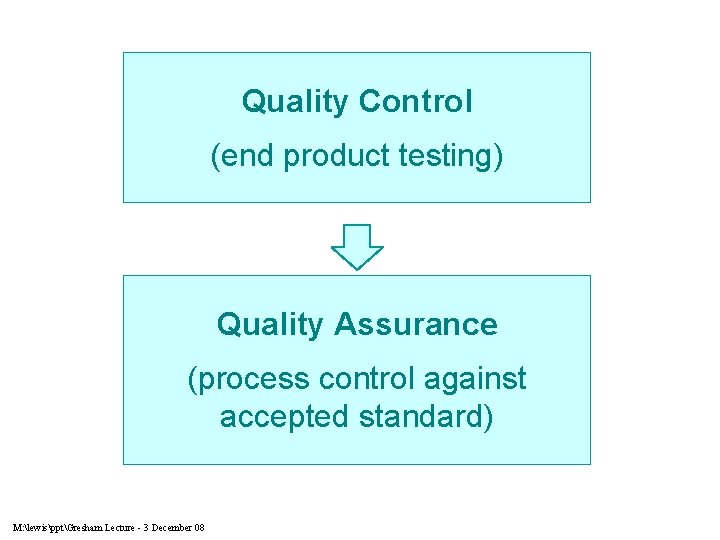
Quality Control (end product testing) Quality Assurance (process control against accepted standard) M: lewispptGresham Lecture - 3 December 08
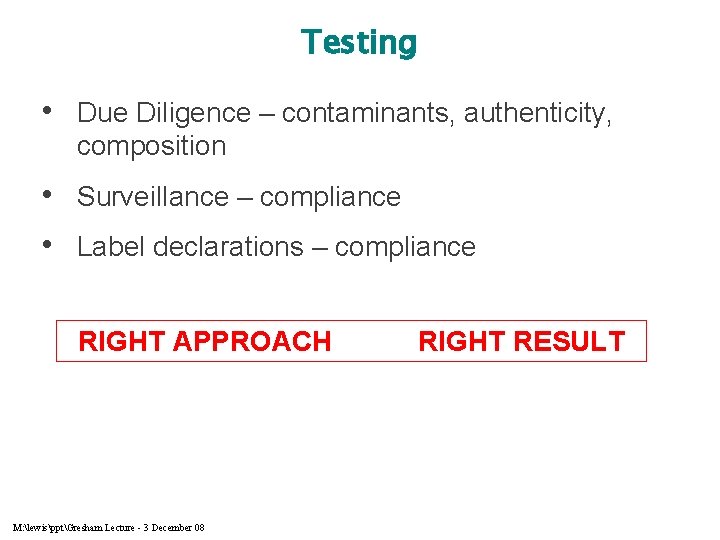
Testing • Due Diligence – contaminants, authenticity, composition • Surveillance – compliance • Label declarations – compliance RIGHT APPROACH M: lewispptGresham Lecture - 3 December 08 RIGHT RESULT
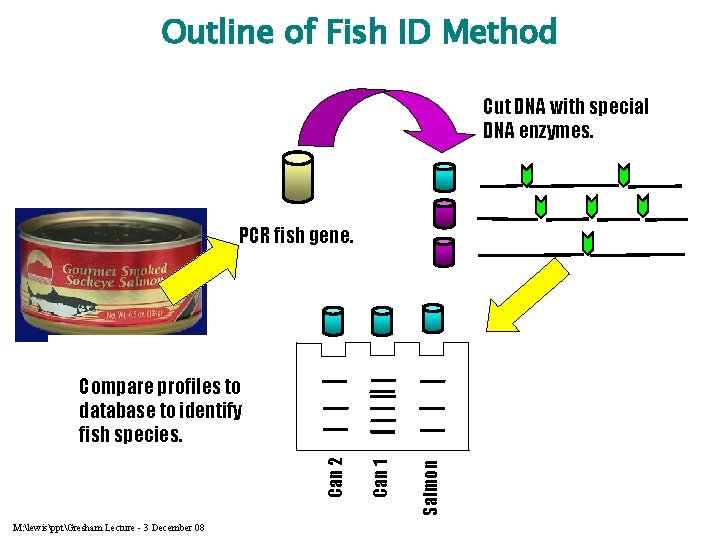
Outline of Fish ID Method Authentic Fish. Extract DNA. Cut DNA with special DNA enzymes. PCR fish gene. M: lewispptGresham Lecture - 3 December 08 Salmon Can 1 Make DNA fingerprints. Save in database. Can 2 Compare profiles to Canned salmon database to identify sample for analysis fish species.
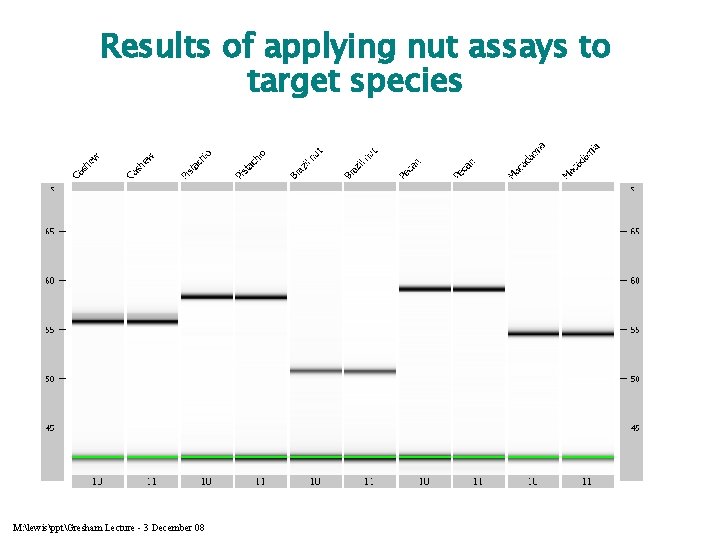
Results of applying nut assays to target species M: lewispptGresham Lecture - 3 December 08
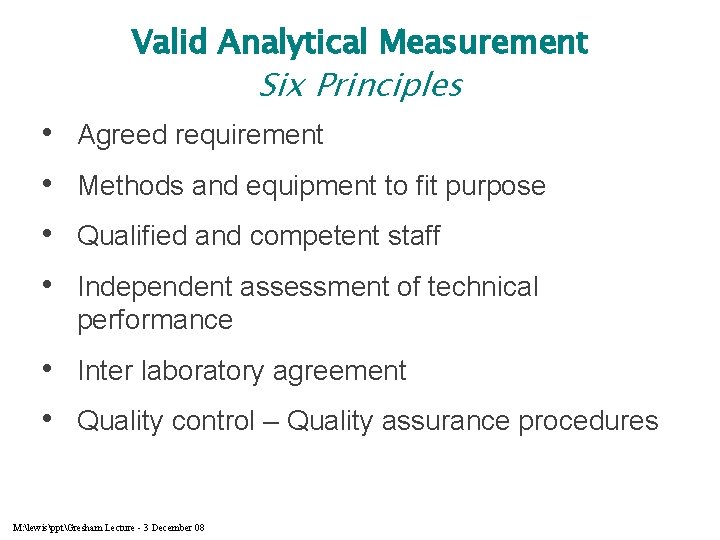
Valid Analytical Measurement Six Principles • • Agreed requirement Methods and equipment to fit purpose Qualified and competent staff Independent assessment of technical performance • Inter laboratory agreement • Quality control – Quality assurance procedures M: lewispptGresham Lecture - 3 December 08
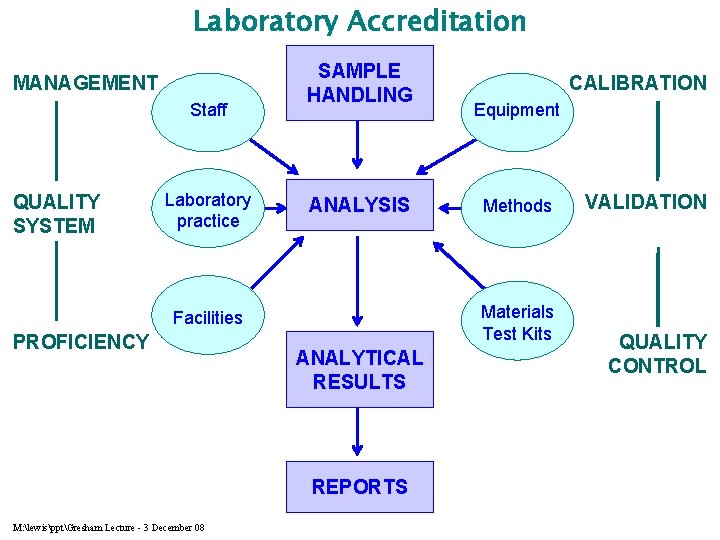
Laboratory Accreditation MANAGEMENT Staff QUALITY SYSTEM Laboratory practice SAMPLE HANDLING ANALYSIS ANALYTICAL RESULTS REPORTS M: lewispptGresham Lecture - 3 December 08 Equipment Methods Materials Test Kits Facilities PROFICIENCY CALIBRATION VALIDATION QUALITY CONTROL
no. 0407 no. 1079 Campden BRI ‘World Class Resource for the Agri-Food and Drink Chain’ www. campden. co. uk www. bri-advantage. com M: lewispptGresham Lecture - 3 December 08 no. 1207