
Interim Assessment Data Analysis Collin Felch Annick Draghi
- Slides: 15
Interim Assessment & Data Analysis Collin Felch Annick Draghi Joseph Espinosa December 10, 2014
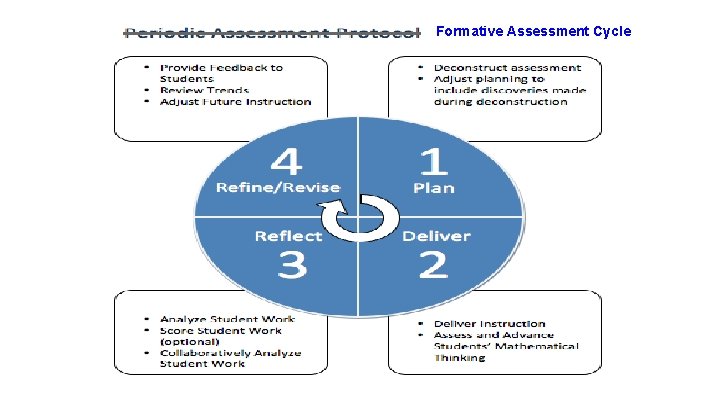
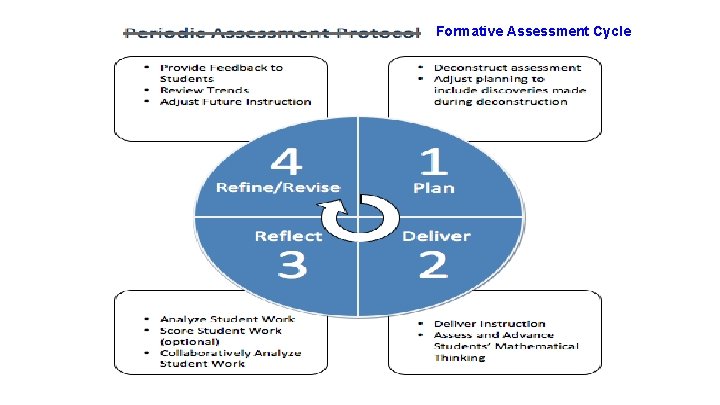
Formative Assessment Cycle
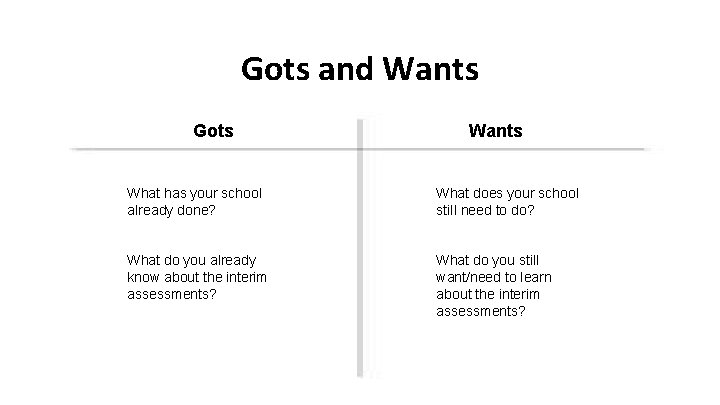
Gots and Wants Gots Wants What has your school already done? What does your school still need to do? What do you already know about the interim assessments? What do you still want/need to learn about the interim assessments?
Formative Assessment Cycle
Analyzing Student Work Protocol Video https: //www. teachingchannel. org/videos/protoc ol-for-evaluating-lessons-equip#
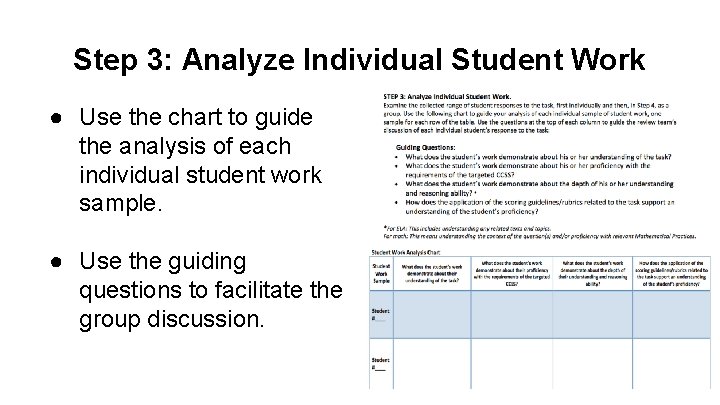
Step 3: Analyze Individual Student Work ● Use the chart to guide the analysis of each individual student work sample. ● Use the guiding questions to facilitate the group discussion.
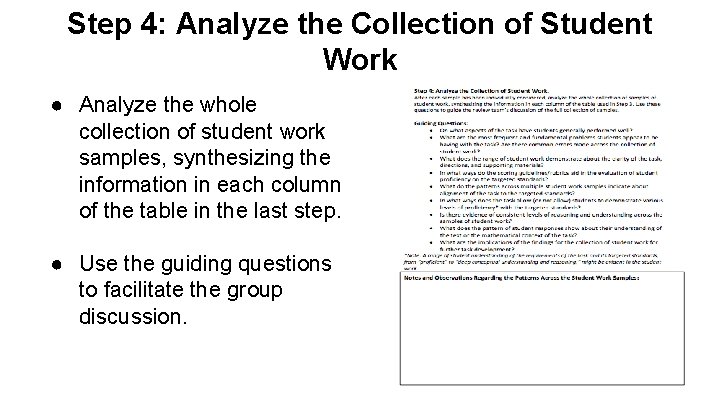
Step 4: Analyze the Collection of Student Work ● Analyze the whole collection of student work samples, synthesizing the information in each column of the table in the last step. ● Use the guiding questions to facilitate the group discussion.
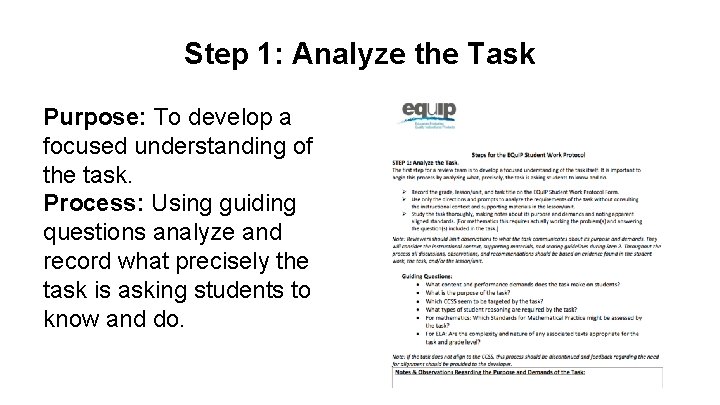
Step 1: Analyze the Task Purpose: To develop a focused understanding of the task. Process: Using guiding questions analyze and record what precisely the task is asking students to know and do.
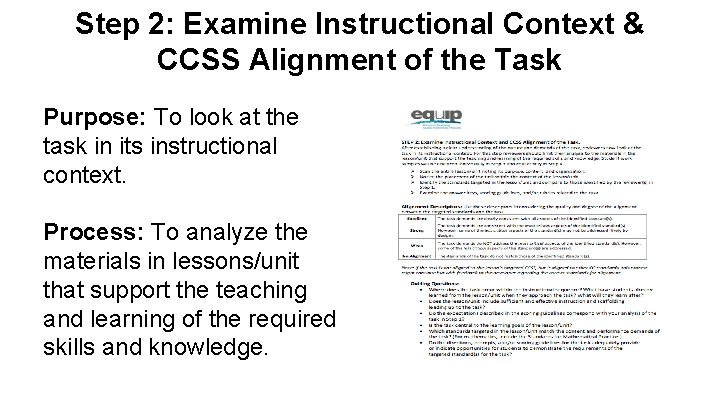
Step 2: Examine Instructional Context & CCSS Alignment of the Task Purpose: To look at the task in its instructional context. Process: To analyze the materials in lessons/unit that support the teaching and learning of the required skills and knowledge.
SBAC Interim Assessments ● Coming in January/February ● Computer-based (like the actual SBAC) ● Interim Comprehensive Assessments vs. Interim Assessment Blocks
Formative Assessment Cycle Support Using EQu. IP Student Work Protocol PD Support and Follow-Up Offerings 1) Analysis of Interim Assessment Task(s) with EQu. IP Student Work Protocol 2) Theory of Action for Instruction using a SMART Goal Template 3) Analysis of Individual & Classroom Level Student Work using EQu. IP Student Work Protocol
Contact Collin Felch- collin. felch@lausd. net Joseph Espinosa jae 0598@lausd. net