
Gout Treat to Target Colin Tench Consultant Rheumatologist
- Slides: 41
Gout - Treat to Target Colin Tench Consultant Rheumatologist Imperial College Healthcare
Objectives • Treatment • Acute gout • Chronic gout • Prophylactic treatment • Treat to target • New drugs • Pseudo gout • Joint Injections
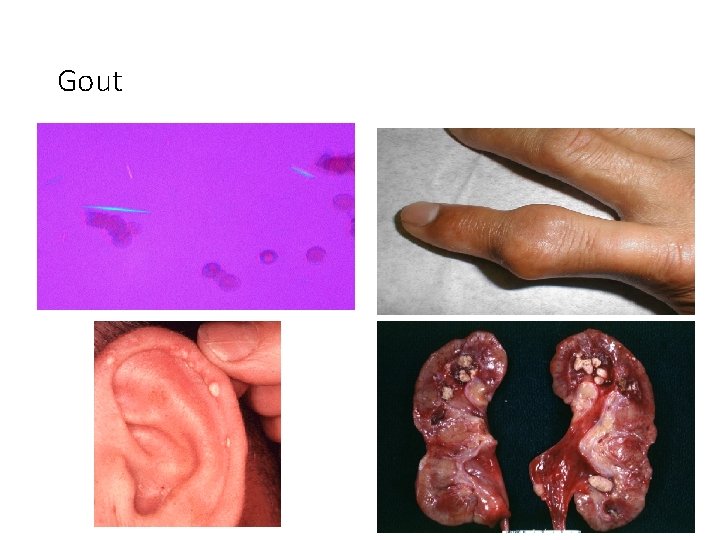
Gout
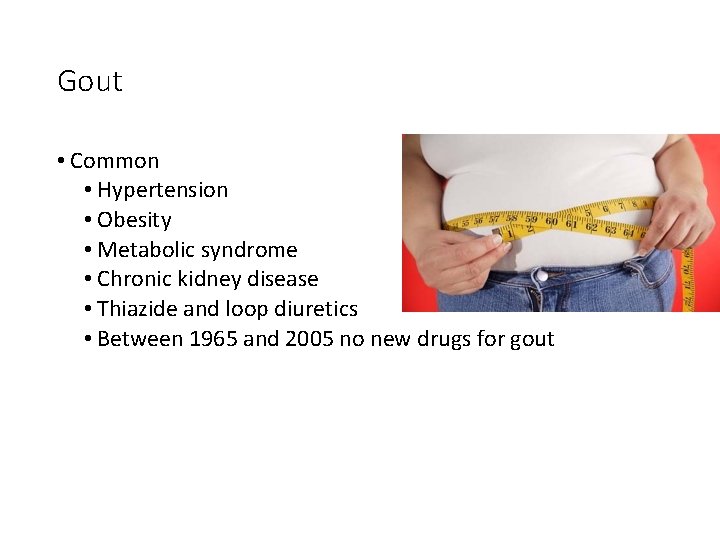
Gout • Common • Hypertension • Obesity • Metabolic syndrome • Chronic kidney disease • Thiazide and loop diuretics • Between 1965 and 2005 no new drugs for gout
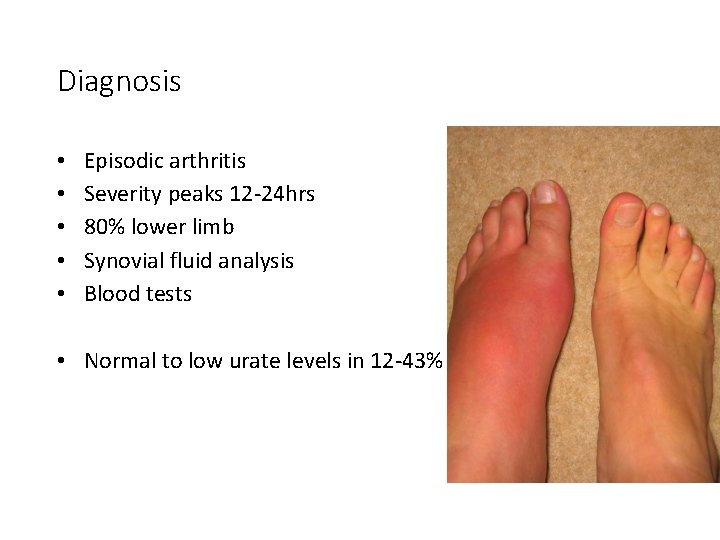
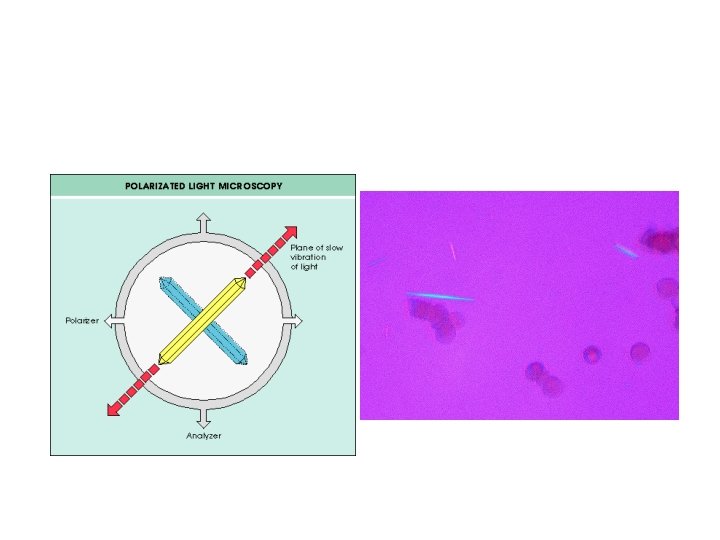
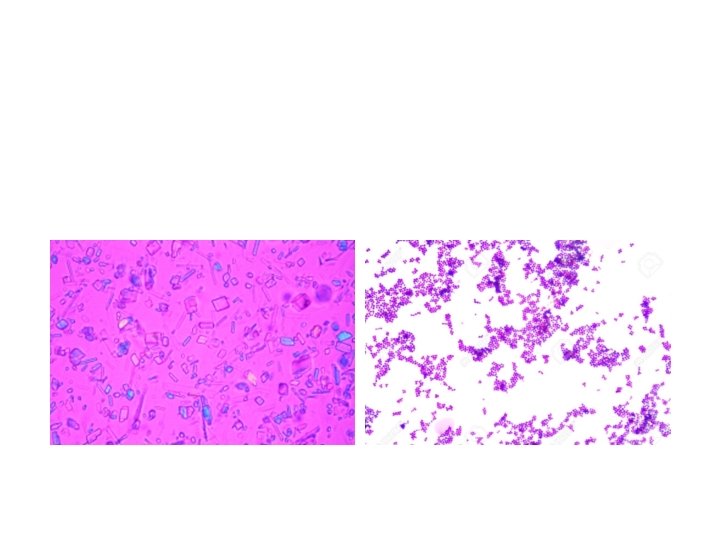
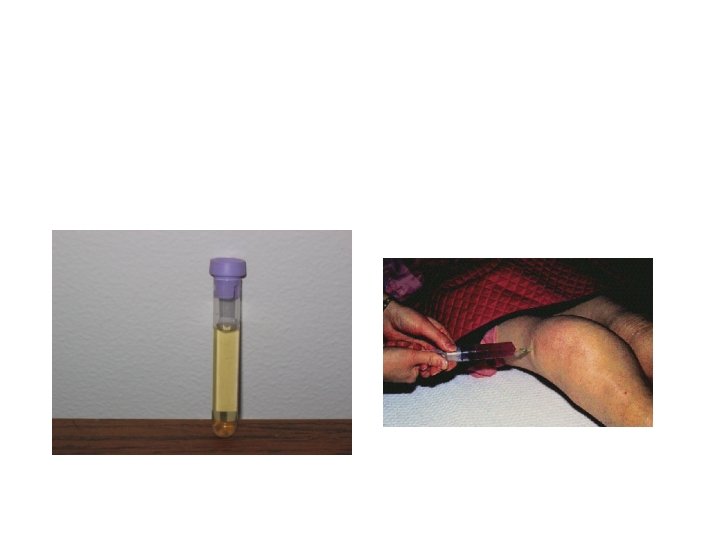
Diagnosis • • • Episodic arthritis Severity peaks 12 -24 hrs 80% lower limb Synovial fluid analysis Blood tests • Normal to low urate levels in 12 -43% acute flares
Guidelines • British Society for Rheumatology guideline for the management of gout. Rheumatology. Vol 56 Issue 7, 1 st July 2017, Pages e 1 -e 20 • Richette P, Doherty M, Pascual E et al 2016 Updated EULAR evidence-based recommendations for the management of gout Annals of the Rheumatic Diseases 2017; 76: 29 -42 • 2012 American College of Rheumatology Guidelines for Management of Gout. Part 1: Systematic Nonpharmacologic and Pharmacologic Therapeutic Approaches to Hyperuricemia. Arthritis Care & Research. Vol. 64, No. 10, October 2012, pp 1431– 1446 Part 2: Therapy and Antiinflammatory Prophylaxis of Acute Gouty Arthritis Care & Research Vol. 64, No. 10, October 2012, pp 1447– 1461
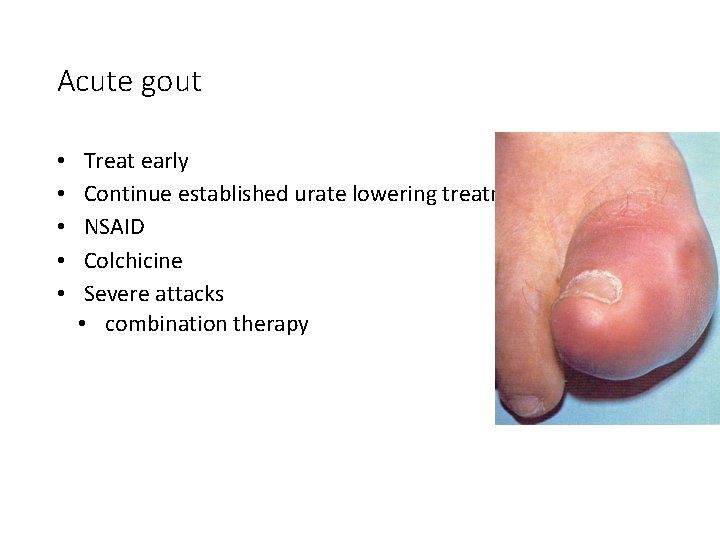
Acute gout • • • Treat early Continue established urate lowering treatment NSAID Colchicine Severe attacks • combination therapy
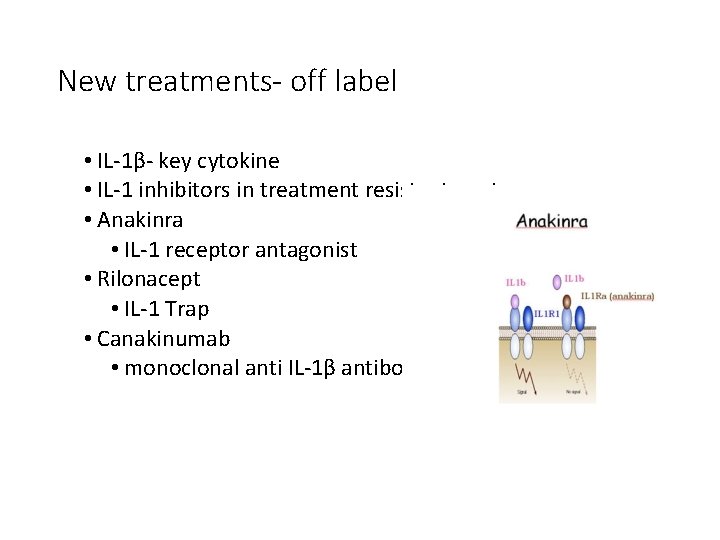
New treatments- off label • IL-1β- key cytokine • IL-1 inhibitors in treatment resistant gout • Anakinra • IL-1 receptor antagonist • Rilonacept • IL-1 Trap • Canakinumab • monoclonal anti IL-1β antibody
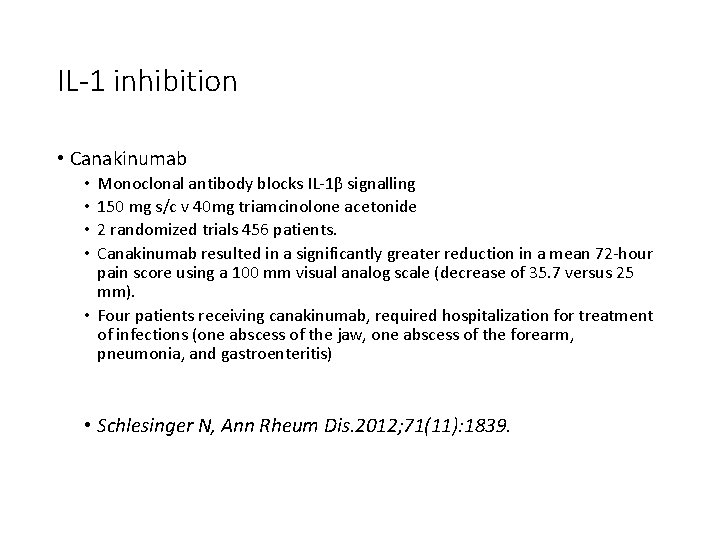
IL-1 inhibition • Canakinumab Monoclonal antibody blocks IL-1β signalling 150 mg s/c v 40 mg triamcinolone acetonide 2 randomized trials 456 patients. Canakinumab resulted in a significantly greater reduction in a mean 72 -hour pain score using a 100 mm visual analog scale (decrease of 35. 7 versus 25 mm). • Four patients receiving canakinumab, required hospitalization for treatment of infections (one abscess of the jaw, one abscess of the forearm, pneumonia, and gastroenteritis) • • • Schlesinger N, Ann Rheum Dis. 2012; 71(11): 1839.
Cost • Colchicine 36 p/tablet • Naproxen 6. 5 p/tablet • Anakinra £ 26/syringe • Canakinumab • £ 9927
Chronic gout • General health, diet and lifestyle measures • Avoid • Offal • Soft and energy drinks • Alcohol overuse • Limit • Purine rich meat and seafood • alcohol • Encourage • Vegetables • Low fat dairy products
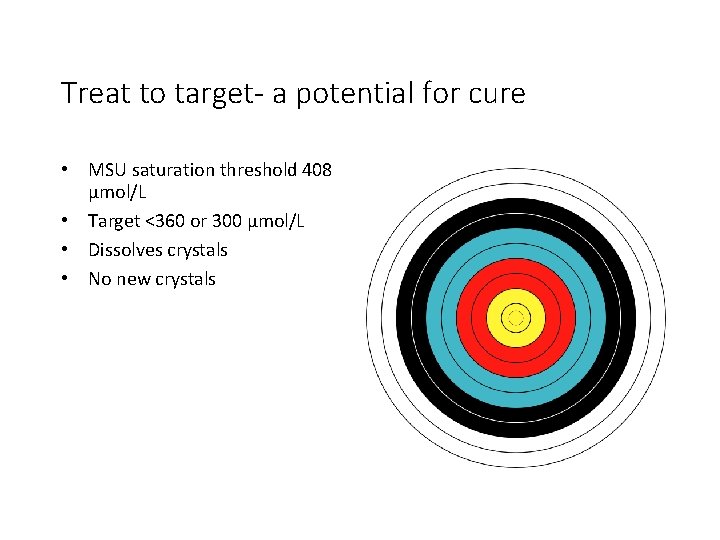
Treat to target- a potential for cure • MSU saturation threshold 408 μmol/L • Target <360 or 300 μmol/L • Dissolves crystals • No new crystals
Urate lowering therapy- 1 st line • • Allopurinol Starting dose 100 mg/day Up to 800 mg/day Acute gout prophylaxsis
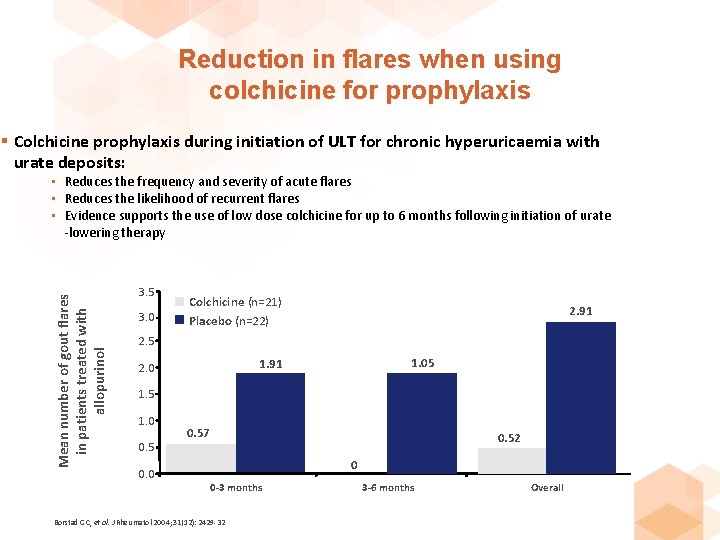
Reduction in flares when using colchicine for prophylaxis § Colchicine prophylaxis during initiation of ULT for chronic hyperuricaemia with urate deposits: Mean number of gout flares in patients treated with allopurinol • Reduces the frequency and severity of acute flares • Reduces the likelihood of recurrent flares • Evidence supports the use of low dose colchicine for up to 6 months following initiation of urate -lowering therapy 14 3. 5 3. 0 Colchicine (n=21) Placebo (n=22) 2. 91 2. 5 1. 05 1. 91 2. 0 1. 5 1. 0 0. 5 0. 0 0. 57 0. 52 0 0 -3 months Borstad GC, et al. J Rheumatol 2004; 31(12): 2429 -32. 3 -6 months Overall
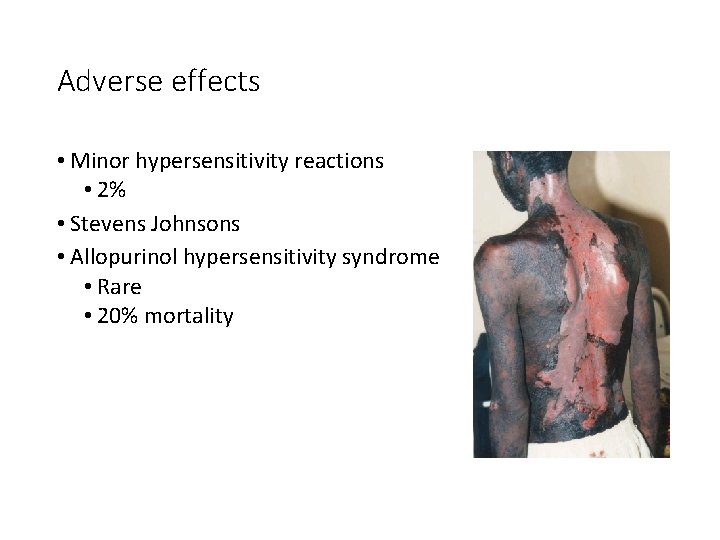
Adverse effects • Minor hypersensitivity reactions • 2% • Stevens Johnsons • Allopurinol hypersensitivity syndrome • Rare • 20% mortality
HLA-B*5801 • • Korean descent &CKD (allelle frequency 12%) Han Chinese or Thai (allelle frequency 6 -8%) Hazard ratios of several hundred Worth testing in high risk populations before starting allopurinol. Avoid if positive. • Hershfield MS, Clin Pharmacol Ther. 2013; 93(2): 153.
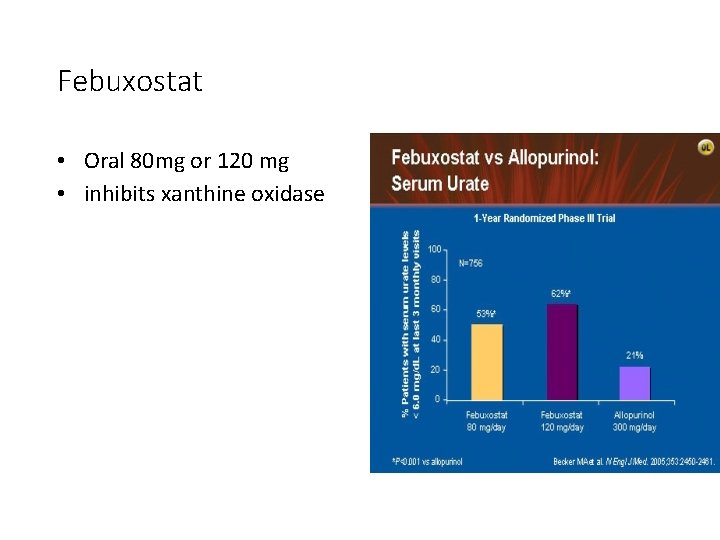
Febuxostat • Oral 80 mg or 120 mg • inhibits xanthine oxidase
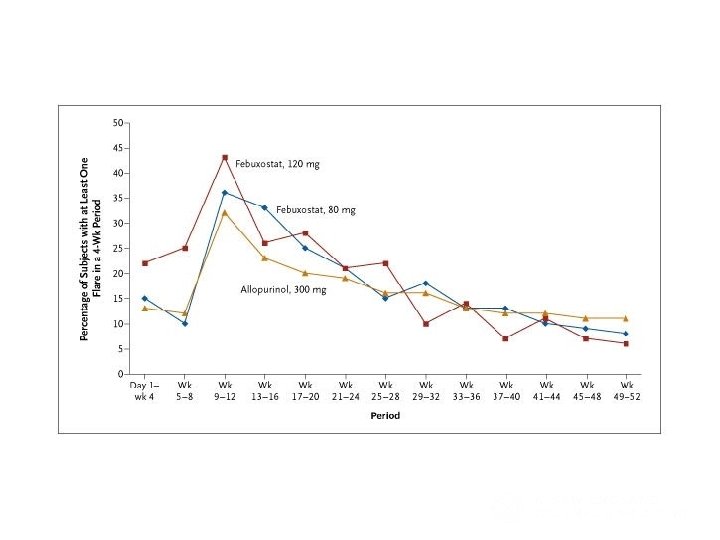
Subjects Requiring Treatment for Gout Flares. Becker MA et al. N Engl J Med 2005; 353: 2450 -2461.
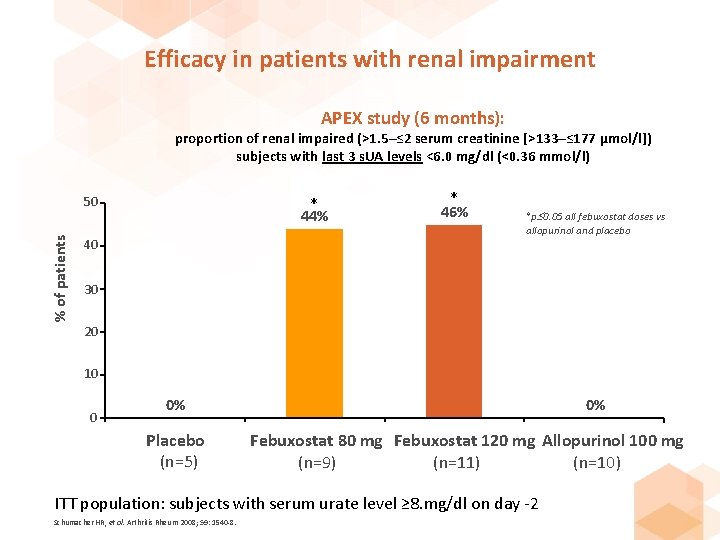
Efficacy in patients with renal impairment APEX study (6 months): proportion of renal impaired (>1. 5–≤ 2 serum creatinine [>133–≤ 177 μmol/l]) subjects with last 3 s. UA levels <6. 0 mg/dl (<0. 36 mmol/l) % of patients 50 * 44% 40 * 46% *p 0. 05 all febuxostat doses vs allopurinol and placebo 30 20 10 0 0% Placebo (n=5) 0% Febuxostat 80 mg Febuxostat 120 mg Allopurinol 100 mg (n=9) (n=11) (n=10) ITT population: subjects with serum urate level ≥ 8. mg/dl on day -2 19 Schumacher HR, et al. Arthritis Rheum 2008; 59: 1540 -8.
Febuxostat • NICE approved in patients • can't take allopurinol for medical reasons or • the side effects of allopurinol are so bad that the person either has to stop taking it or can't be given the most effective dose. • £ 318 year • Not recommended for people with IHD or CCF
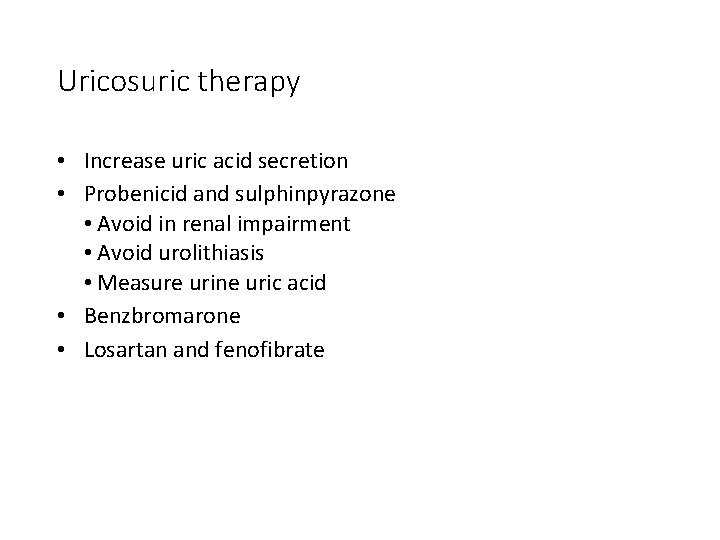
Uricosuric therapy • Increase uric acid secretion • Probenicid and sulphinpyrazone • Avoid in renal impairment • Avoid urolithiasis • Measure urine uric acid • Benzbromarone • Losartan and fenofibrate
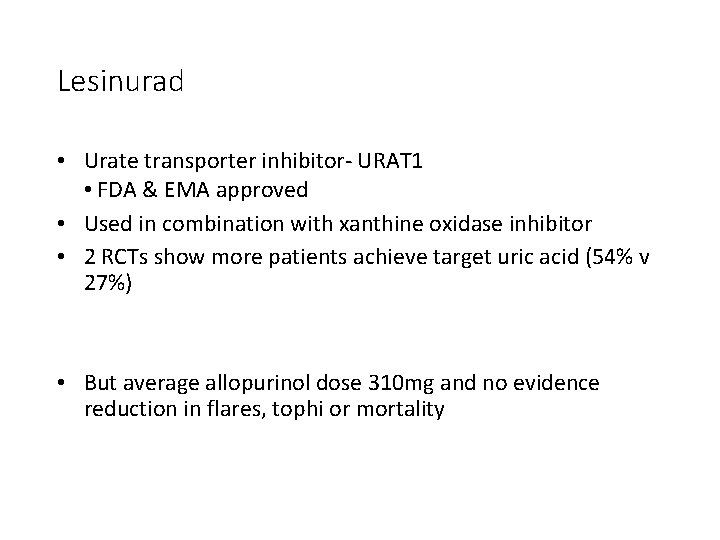
Lesinurad • Urate transporter inhibitor- URAT 1 • FDA & EMA approved • Used in combination with xanthine oxidase inhibitor • 2 RCTs show more patients achieve target uric acid (54% v 27%) • But average allopurinol dose 310 mg and no evidence reduction in flares, tophi or mortality
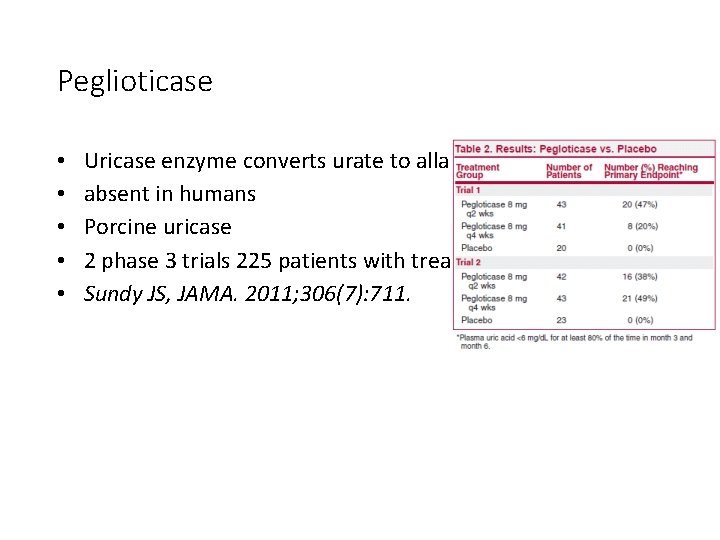
Peglioticase • • • Uricase enzyme converts urate to allantoin absent in humans Porcine uricase 2 phase 3 trials 225 patients with treatment resistant gout Sundy JS, JAMA. 2011; 306(7): 711.
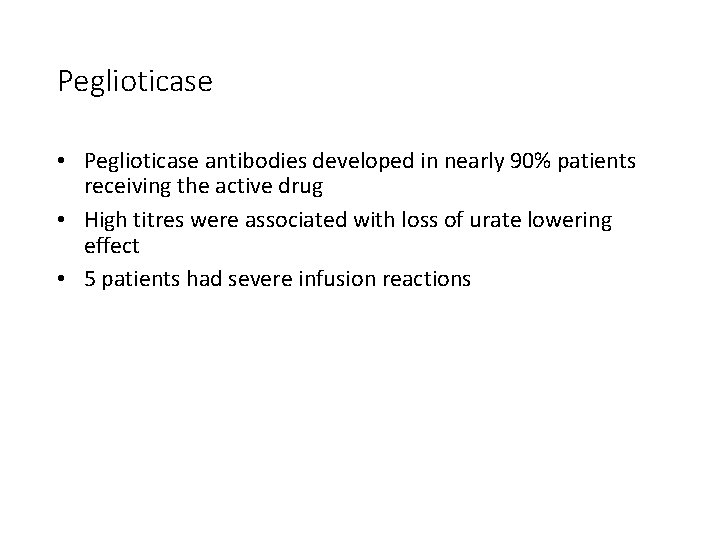
Peglioticase • Peglioticase antibodies developed in nearly 90% patients receiving the active drug • High titres were associated with loss of urate lowering effect • 5 patients had severe infusion reactions
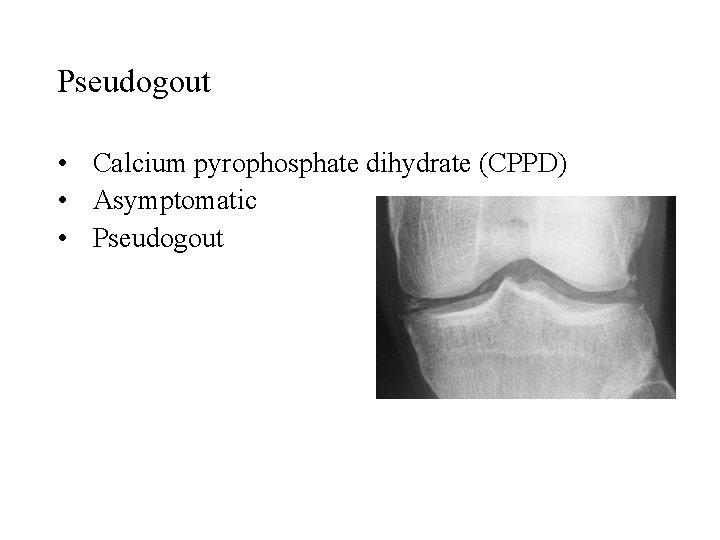
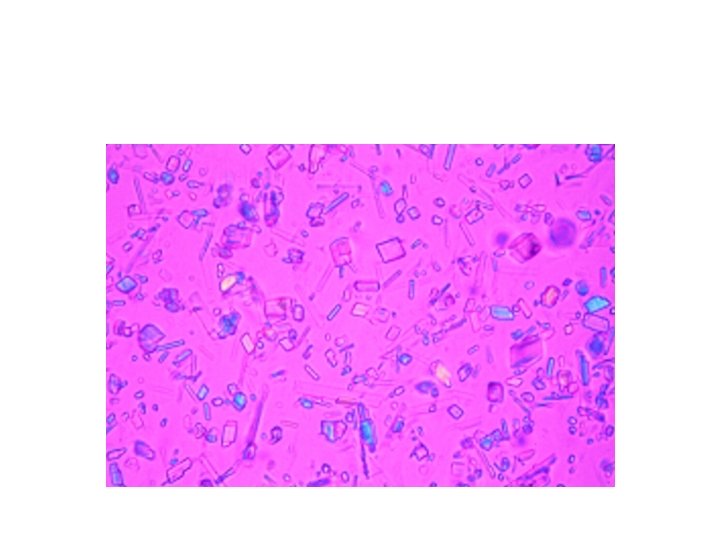
Pseudogout • Calcium pyrophosphate dihydrate (CPPD) • Asymptomatic • Pseudogout
Treatment • Acute • NSAID • Colchicine • Intra- articular steroid • Prednisolone • Prophylactic • Colchicine
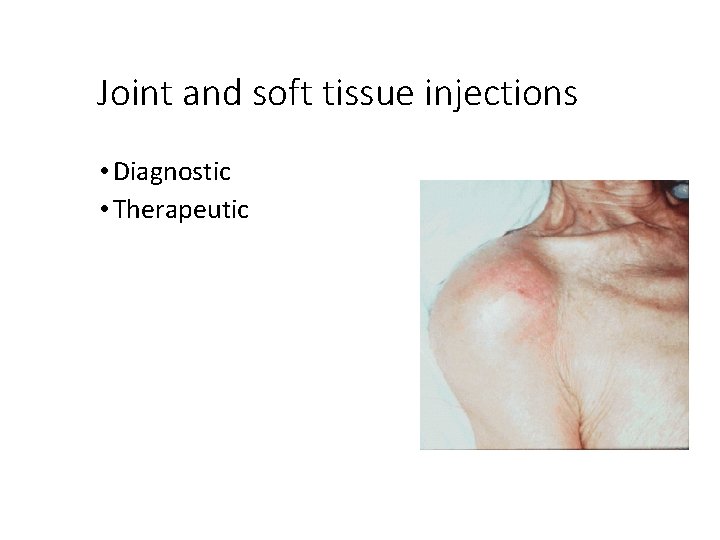
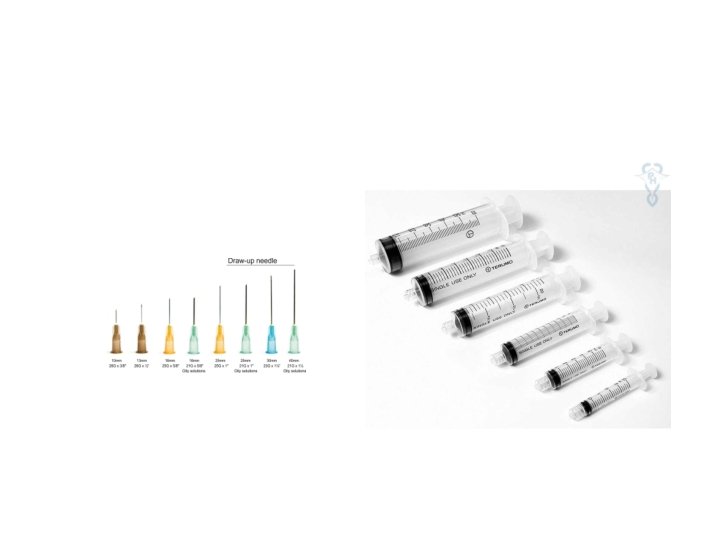
Joint and soft tissue injections • Diagnostic • Therapeutic
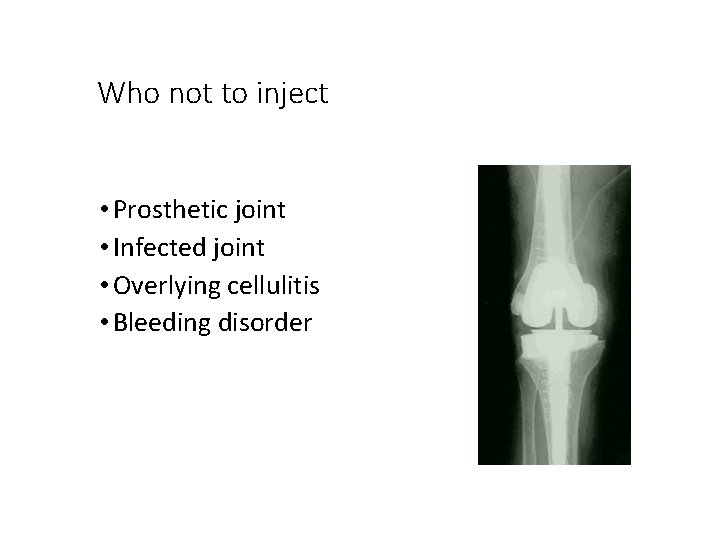
Who not to inject • Prosthetic joint • Infected joint • Overlying cellulitis • Bleeding disorder
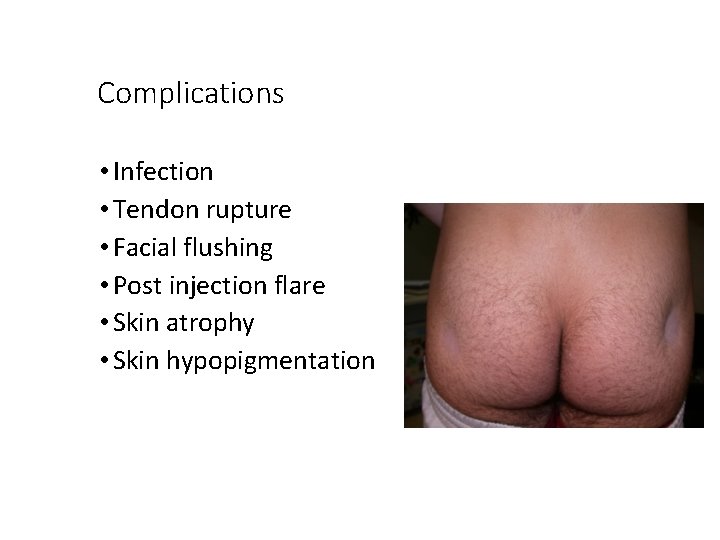
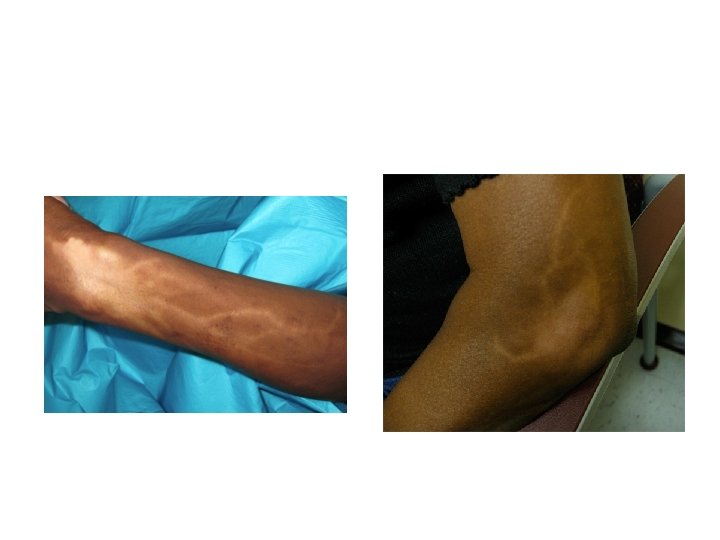
Complications • Infection • Tendon rupture • Facial flushing • Post injection flare • Skin atrophy • Skin hypopigmentation
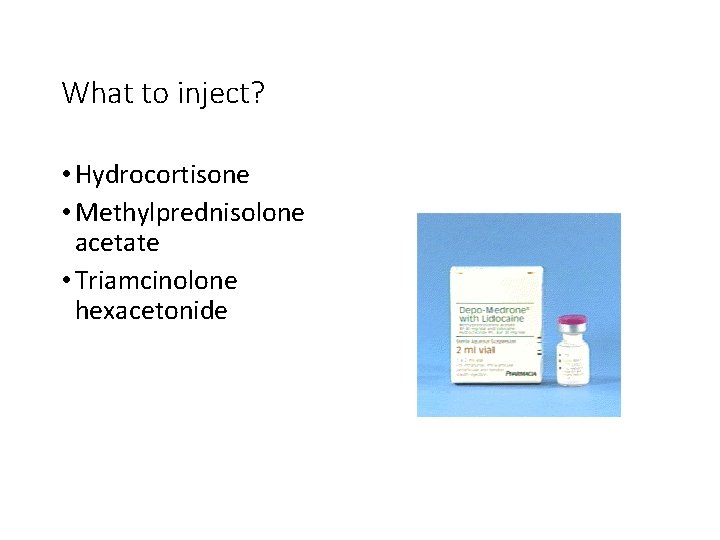
What to inject? • Hydrocortisone • Methylprednisolone acetate • Triamcinolone hexacetonide
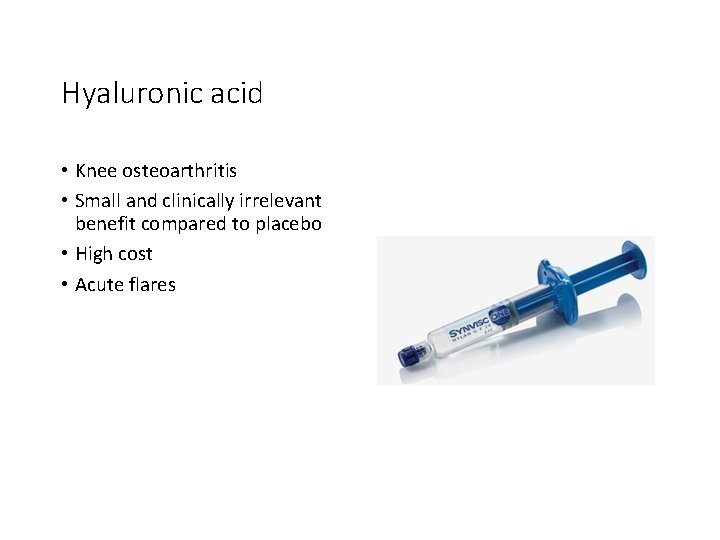
Hyaluronic acid • Knee osteoarthritis • Small and clinically irrelevant benefit compared to placebo • High cost • Acute flares
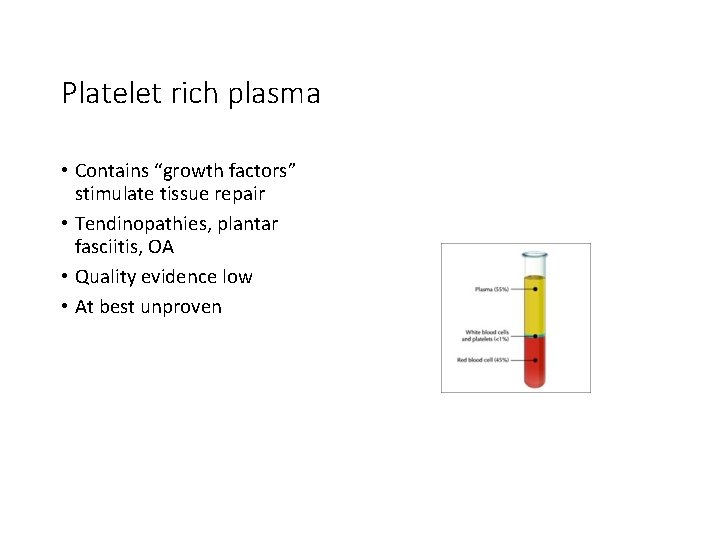
Platelet rich plasma • Contains “growth factors” stimulate tissue repair • Tendinopathies, plantar fasciitis, OA • Quality evidence low • At best unproven
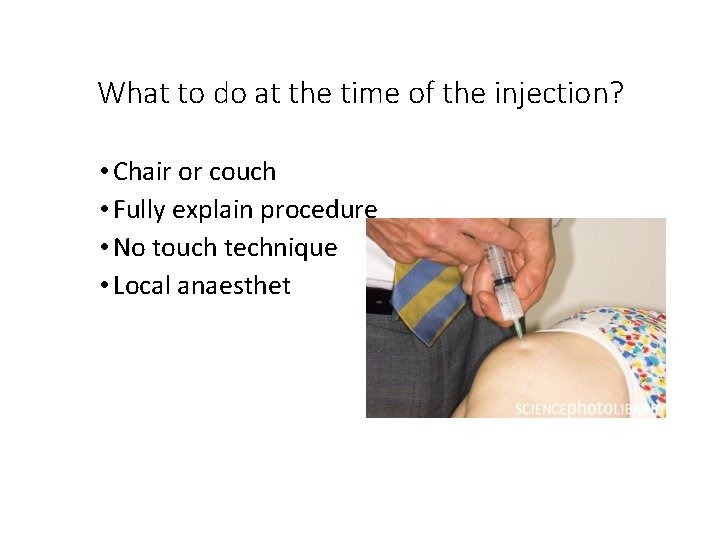
What to do at the time of the injection? • Chair or couch • Fully explain procedure • No touch technique • Local anaesthet
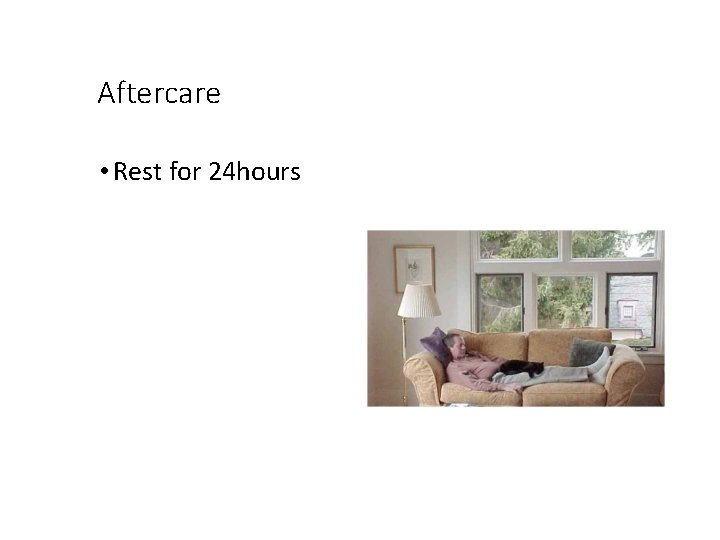
Aftercare • Rest for 24 hours
Summary • • • Conventional treatment for acute and chronic gout Treat to target New drugs Pseudo gout Joint injections