Animal Trait Ontology A Project for the Creation

- Slides: 19
Animal Trait Ontology A Project for the Creation of a Unified Trait Vocabulary for Farm Animals L. Hughes, J. Bao, Z. -L. Hu, V. Honavar, J. M. Reecy Iowa State University
Overview • Clientele • How we got started • Collaborative Ontology Building • Animal Trait Ontology
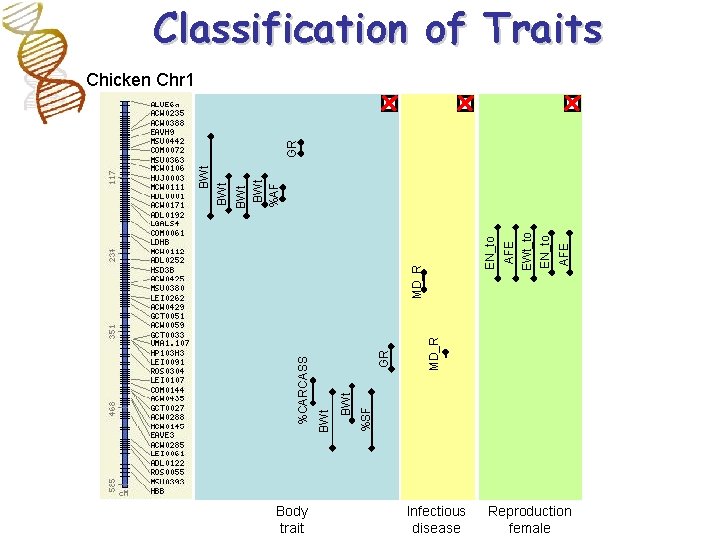
Classification of Traits Body trait AFE EWt_to EN_to AFE MD_R GR %SF BWt %CARCASS MD_R EN_to BWt %AF BWt GR Chicken Chr 1 Infectious disease Reproduction female
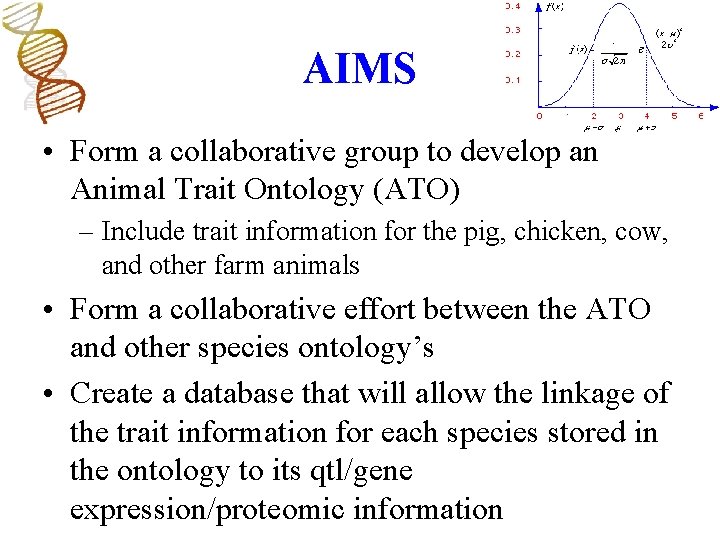
AIMS • Form a collaborative group to develop an Animal Trait Ontology (ATO) – Include trait information for the pig, chicken, cow, and other farm animals • Form a collaborative effort between the ATO and other species ontology’s • Create a database that will allow the linkage of the trait information for each species stored in the ontology to its qtl/gene expression/proteomic information
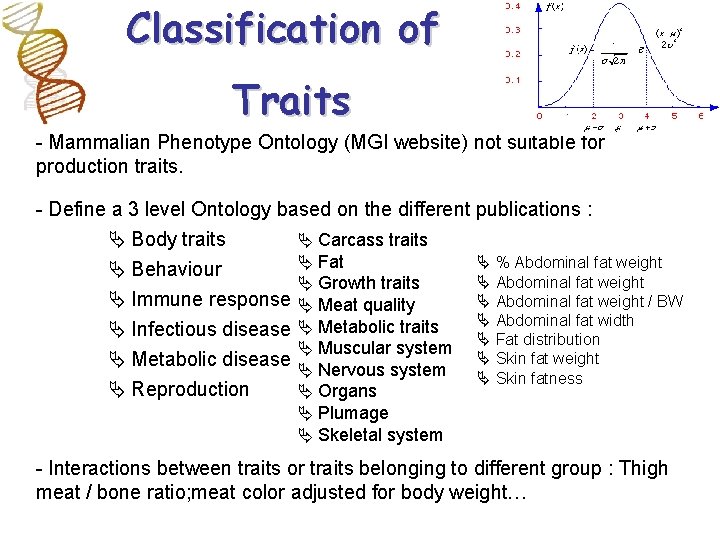
Classification of Traits - Mammalian Phenotype Ontology (MGI website) not suitable for production traits. - Define a 3 level Ontology based on the different publications : Body traits Carcass traits Fat % Abdominal fat weight Behaviour Abdominal fat weight Growth traits Immune response Meat quality Abdominal fat weight / BW Infectious disease Metabolic traits Muscular system Metabolic disease Nervous system Reproduction Organs Abdominal fat width Fat distribution Skin fat weight Skin fatness Plumage Skeletal system - Interactions between traits or traits belonging to different group : Thigh meat / bone ratio; meat color adjusted for body weight…
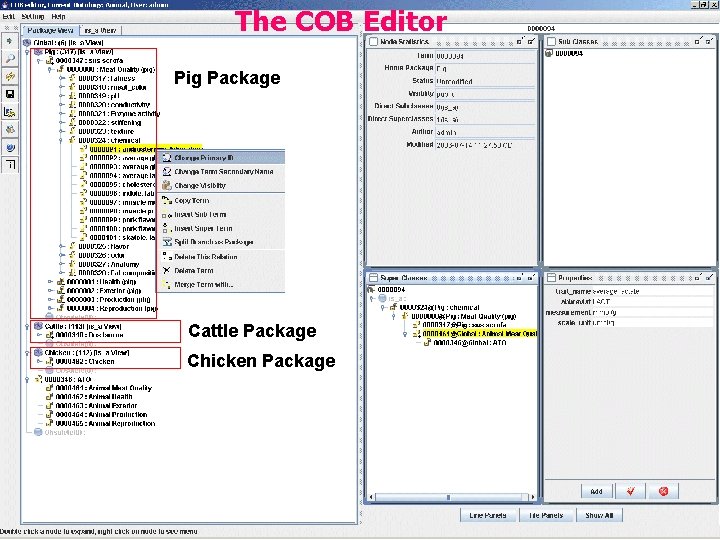
Collaborative Ontology Building (COB) Editor • Each package can be independently developed • Different curators can concurrently edit the ontology on different packages • Ontology can be only partially loaded • Module access privileges can be controlled by the package hierarchy • Unwanted interactions are minimized by limiting term and axiom visibility
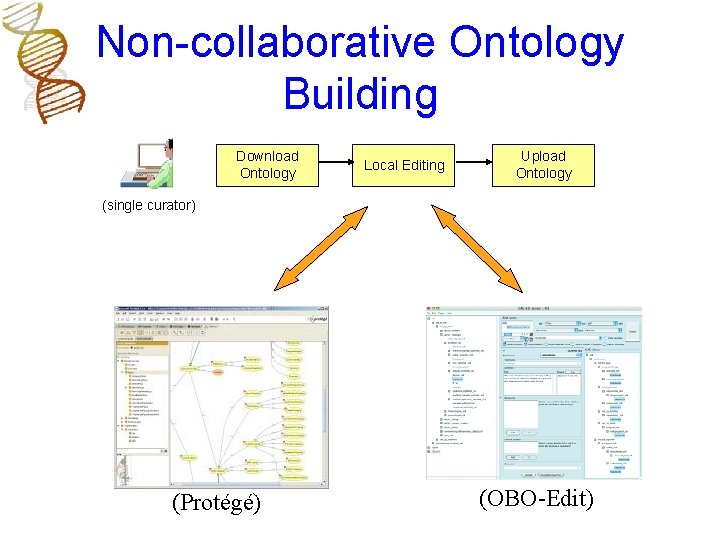
Non-collaborative Ontology Building Download Ontology Local Editing Upload Ontology (single curator) (Protégé) (OBO-Edit)
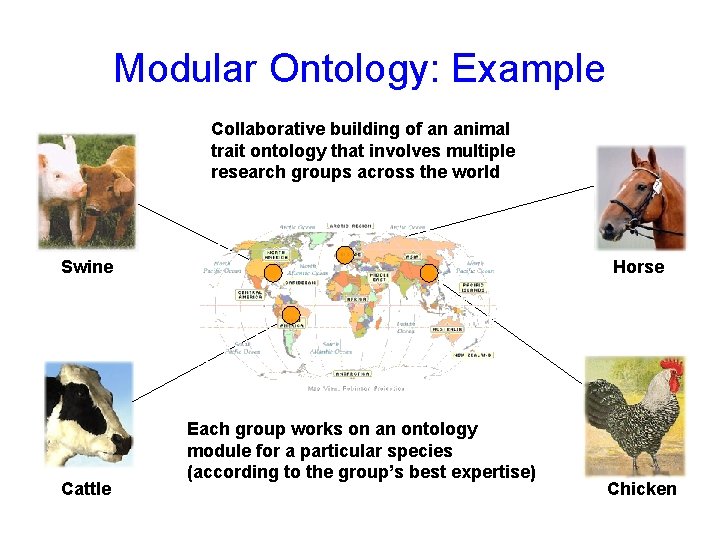
Modular Ontology: Example Collaborative building of an animal trait ontology that involves multiple research groups across the world Swine Cattle Horse Each group works on an ontology module for a particular species (according to the group’s best expertise) Chicken
Package Nesting Animal trait ontology General Pig Health • A nested package is a part of another package • Could be used to represent the organizational structure of an ontology – Arrange knowledge – Enforce hierarchical management of knowledge
The COB Editor Pig Package Cattle Package Chicken Package
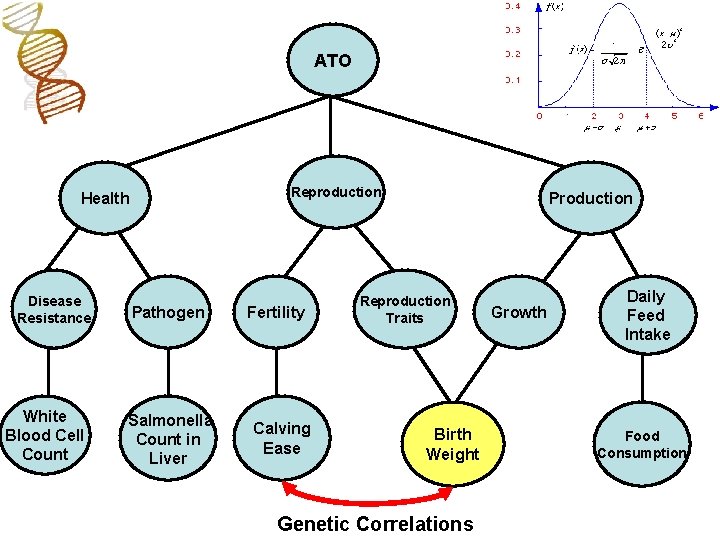
ATO Reproduction Health Disease Resistance White Blood Cell Count Pathogen Salmonella Count in Liver Fertility Calving Ease Production Reproduction Traits Birth Weight Genetic Correlations Growth Daily Feed Intake Food Consumption
Contributions • A unified vocabulary for farm animals phenotypic traits • COB Editor provides the necessary tool to collaboratively build well-structured, large-scale, biomedical ontologies • Higher order ontology terms that link species
Acknowledgements Sanger Institute • Sean Humphray • Carol Scott • Jane Rogers UIUC Dept. of Animal Sci. , ISU NCBI USDA-MARC • Stacey Meyers • Jonathan Beever • Svetlana Dracheva • Donna Maglott • Wonhee Jang • Max Rothschild • Eric Ryan Fritz • Gary Rohrer Funding Provided by USDA-CSREES