
Ontologybased search and knowledge sharing using domain ontologies
Ontology-based search and knowledge sharing using domain ontologies Sine Zambach, Ph. D student, Roskilde University GERPS ‘ 08
Outline 1. Why Domain Ontologies? 2. Ontology-based search 3. Domain analysis: Relations in ontologies 4. How does this gain value for the organisation? 2
Why Domain Ontologies? Knowledge sharing for common understanding in e. g. software development and translations ¡ Background for domain specific information retrieval ¡ 3

Example of a domain ontology 4
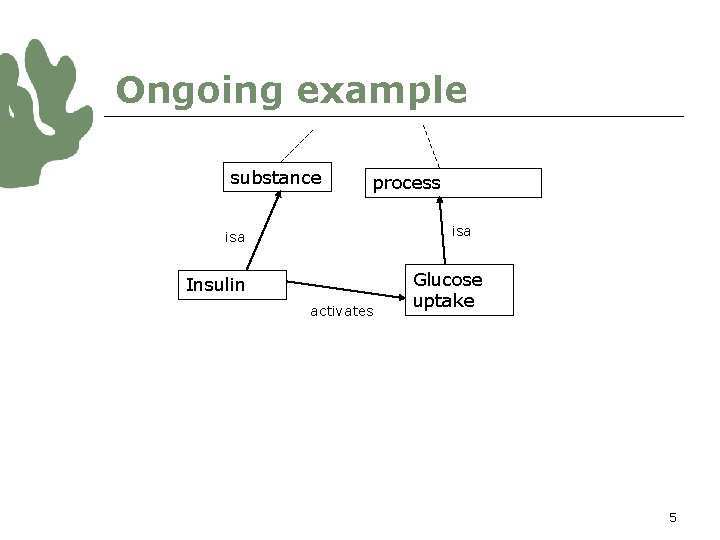
Ongoing example substance process isa Insulin activates Glucose uptake 5
Ontology-based search Ontology background for information retrieval: ¡ Broaden search wrt synonyms, ontological similarity, relations, etc. ¡ Can potentially be used by organisations to search through all kinds of texts ¡ 6
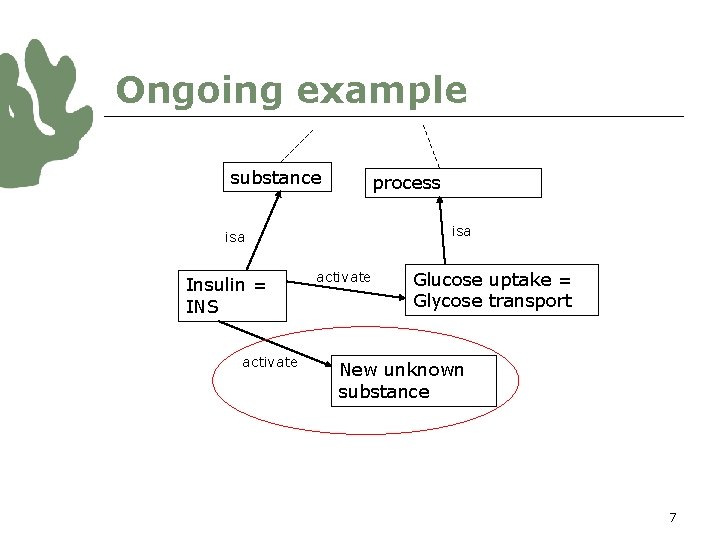
Ongoing example substance process isa Insulin = INS activate Glucose uptake = Glycose transport New unknown substance 7
Ontology based search in biomedical texts Siabo project ¡ Computer scientists computational linguists, domain experts, terminologists ¡ Develops ¡ l l Background ontology Text preprocessing tools Knowledge extraction tools Implementation on the texts 8
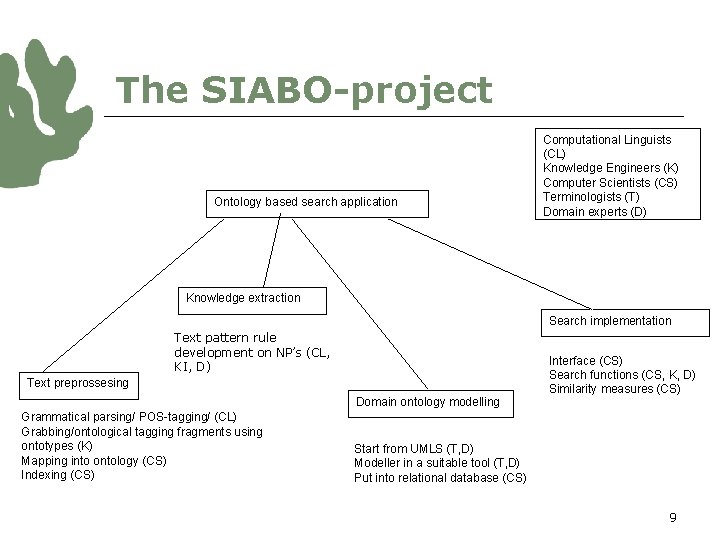
The SIABO-project Ontology based search application Computational Linguists (CL) Knowledge Engineers (K) Computer Scientists (CS) Terminologists (T) Domain experts (D) Knowledge extraction Search implementation Text pattern rule development on NP’s (CL, KI, D) Text preprossesing Domain ontology modelling Grammatical parsing/ POS-tagging/ (CL) Grabbing/ontological tagging fragments using ontotypes (K) Mapping into ontology (CS) Indexing (CS) Interface (CS) Search functions (CS, K, D) Similarity measures (CS) Start from UMLS (T, D) Modeller in a suitable tool (T, D) Put into relational database (CS) 9
Relations Semantic glue between concepts (the idea behind words) ¡ General and domain specific relations ¡ Represented by e. g. verbs and can be identified in various ways ¡ Parallel to concepts that are represented by terms ¡ 10
Relations as semantic ”glue” Insulin activates glucose uptake ¡ Pancreas activates organ (odd) ¡ Substance activates substance ¡ Substance activates process ¡ 11
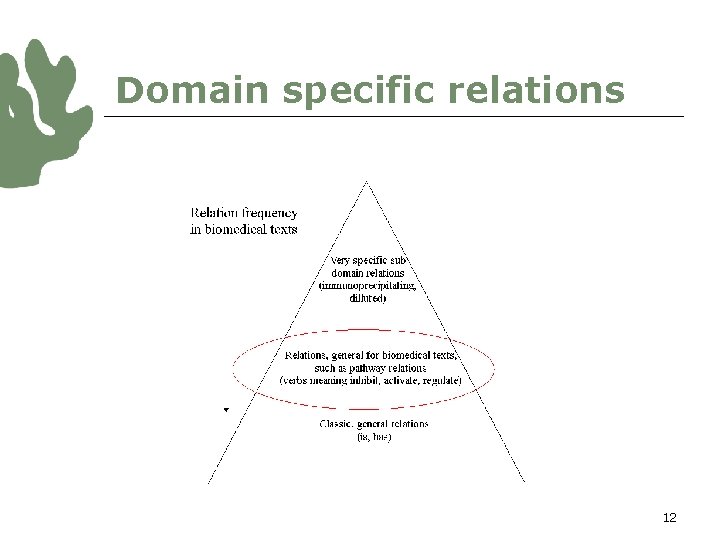
Domain specific relations 12
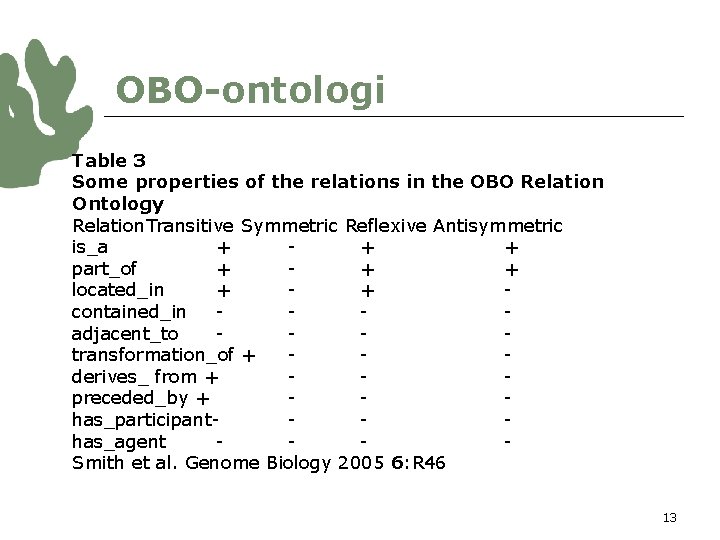
OBO-ontologi Table 3 Some properties of the relations in the OBO Relation Ontology Relation. Transitive Symmetric Reflexive Antisymmetric is_a + + + part_of + + + located_in + + contained_in adjacent_to transformation_of + derives_ from + preceded_by + has_participanthas_agent Smith et al. Genome Biology 2005 6: R 46 13
Domain specific relations Inhibition and activation ¡ Domain specific Bio-relations ¡ Has interesting properties through a path of relations of that types. ¡ The relation of ”activation” is transitive, where ”inhibition” is more complex and is dependent of the stimulation-relation ¡ 14
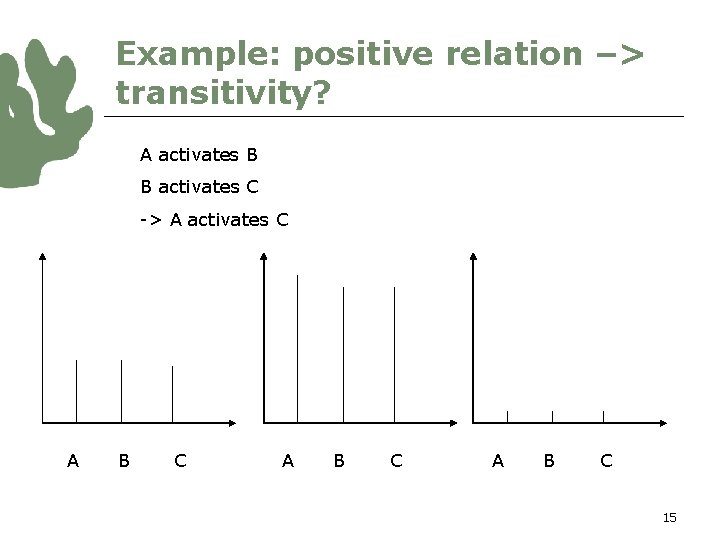
Example: positive relation –> transitivity? A activates B B activates C -> A activates C A B C 15
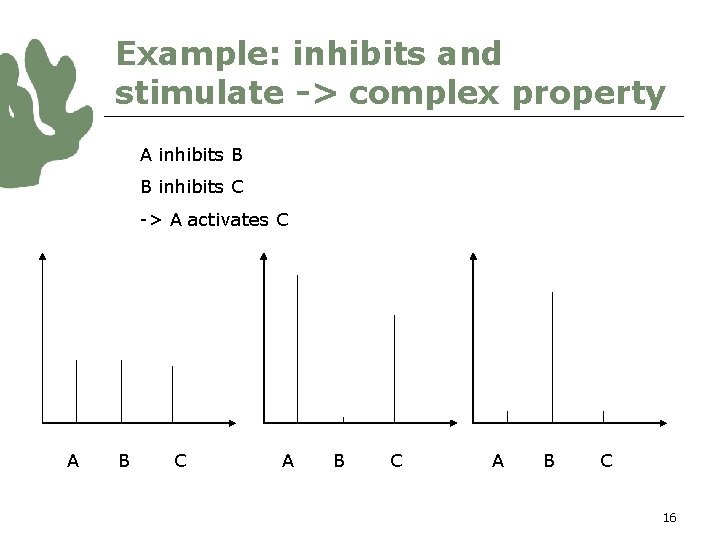
Example: inhibits and stimulate -> complex property A inhibits B B inhibits C -> A activates C A B C 16
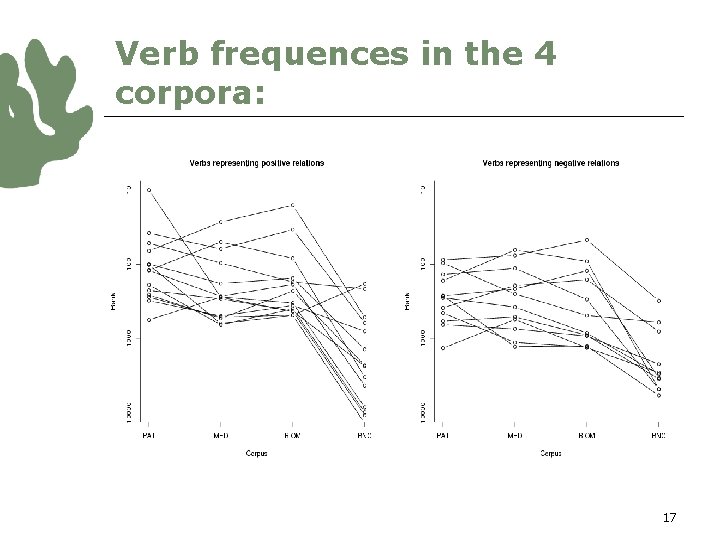
Verb frequences in the 4 corpora: 17

Background 18
Relations in an enterprise ontology Discovering of weird words = domain specific concepts and relations ¡ Similarity measure in information retrieval ¡ Information fishing of new concepts ¡ 19
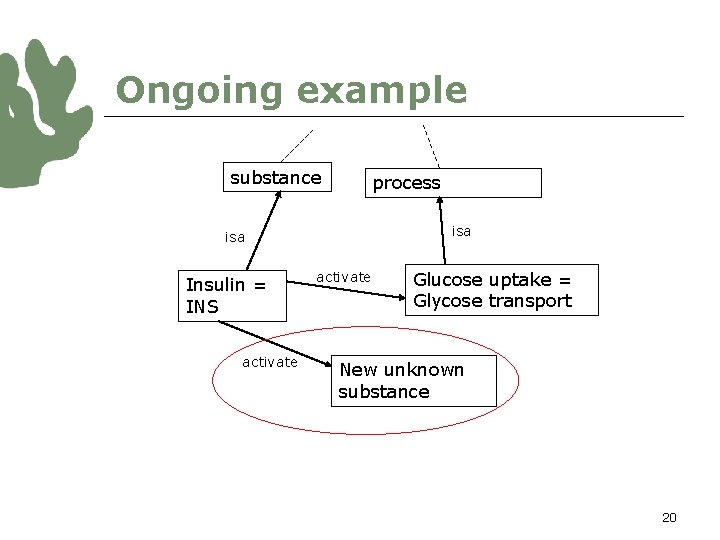
Ongoing example substance process isa Insulin = INS activate Glucose uptake = Glycose transport New unknown substance 20
- Slides: 20