Animal Nutrition II Ch 41 Guest lecturer Letitia

- Slides: 39
Animal Nutrition II (Ch. 41) Guest lecturer: Letitia Reichart (Letty)
Keywords • Roles of mouth, stomach, sm. &lg. Intestine in digestion • Pepsin, pepsinogen • Villi, microvilli • Cecum • Cellulose • Cellulase • Acid chyme • Enzymatic hydrolysis • Peristalsis
Mammalian Digestive System • Alimentary canal • Accessory glands – Salivary glands, pancreas, liver, gallbladder • Food moved by peristalsis
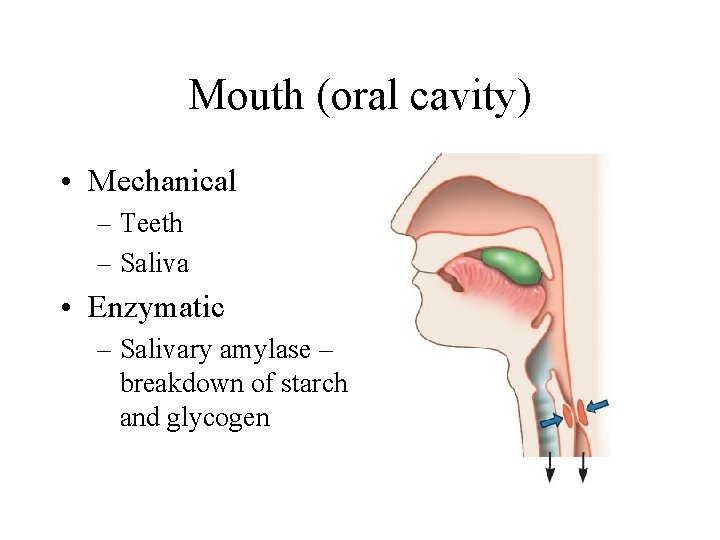
Mouth (oral cavity) • Mechanical – Teeth – Saliva • Enzymatic – Salivary amylase – breakdown of starch and glycogen
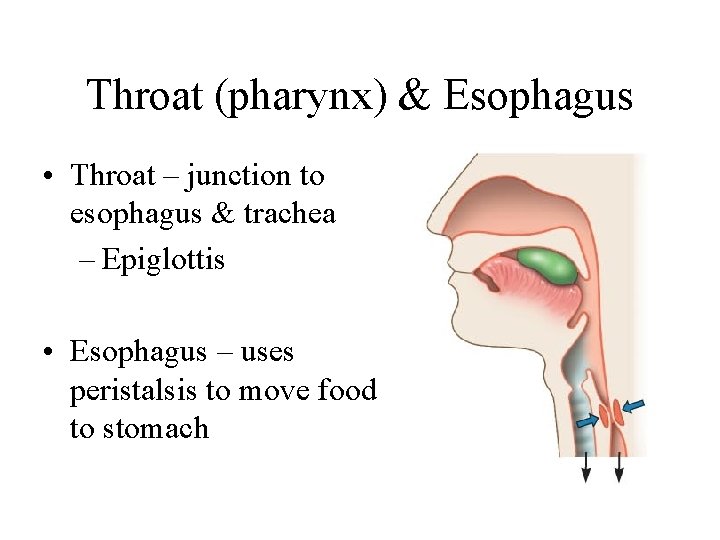
Throat (pharynx) & Esophagus • Throat – junction to esophagus & trachea – Epiglottis • Esophagus – uses peristalsis to move food to stomach
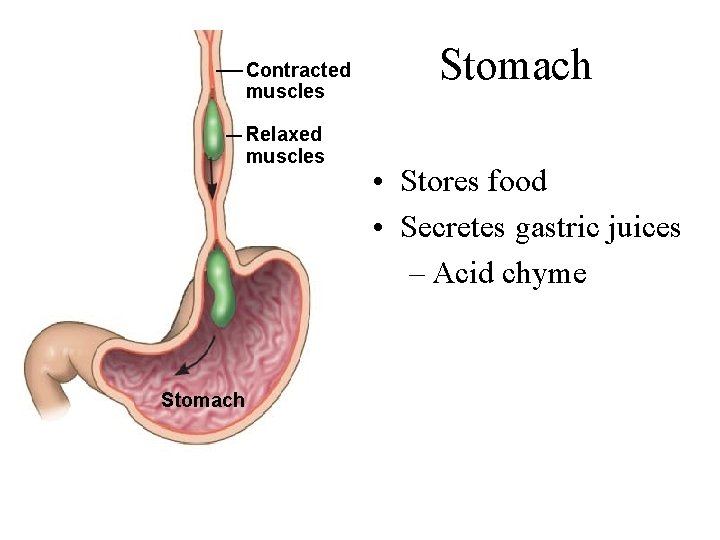
Contracted muscles Relaxed muscles Stomach • Stores food • Secretes gastric juices – Acid chyme
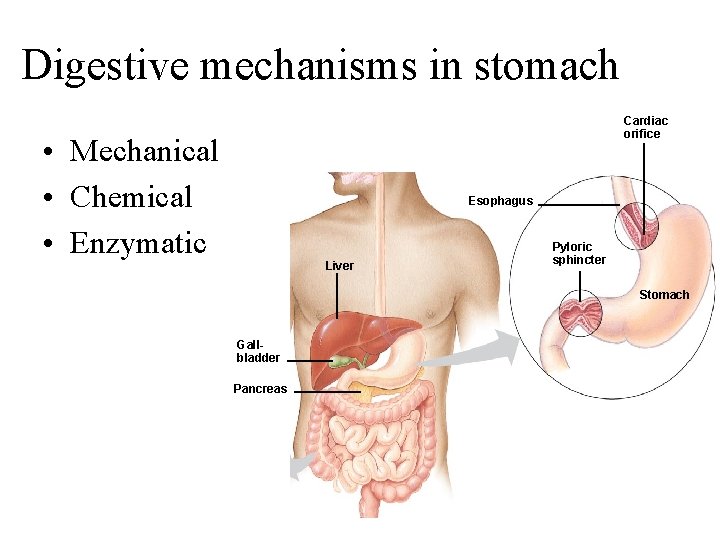
Digestive mechanisms in stomach Cardiac orifice • Mechanical • Chemical • Enzymatic Esophagus Liver Pyloric sphincter Stomach Gallbladder Pancreas
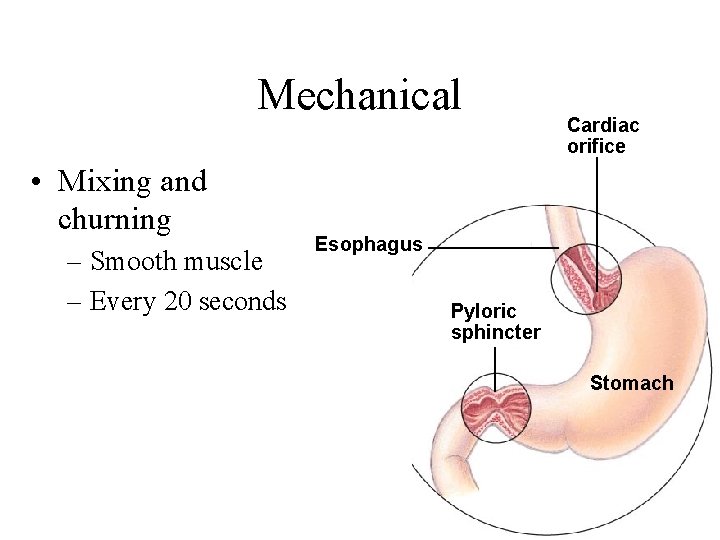
Mechanical • Mixing and churning – Smooth muscle – Every 20 seconds Cardiac orifice Esophagus Pyloric sphincter Stomach
Chemical • Hydrochloric acid (HCl) • p. H around 2 – Also breaks food down
Enzymatic • Pepsin – Breaks down proteins
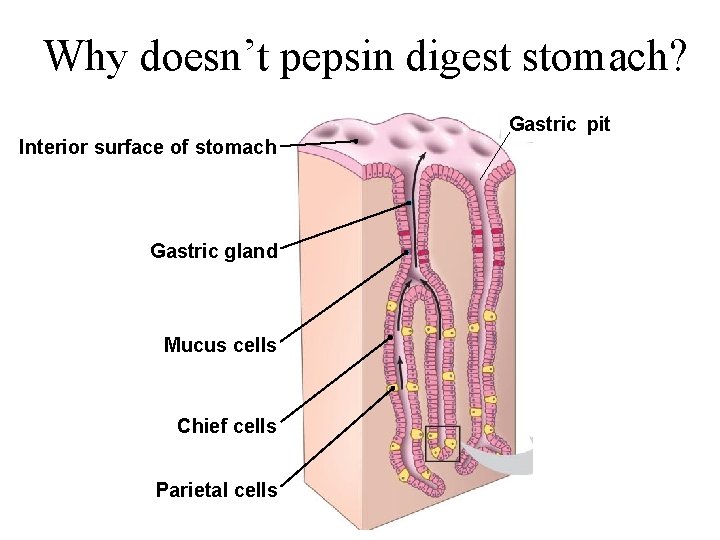
Why doesn’t pepsin digest stomach? Gastric pit Interior surface of stomach Gastric gland Mucus cells Chief cells Parietal cells
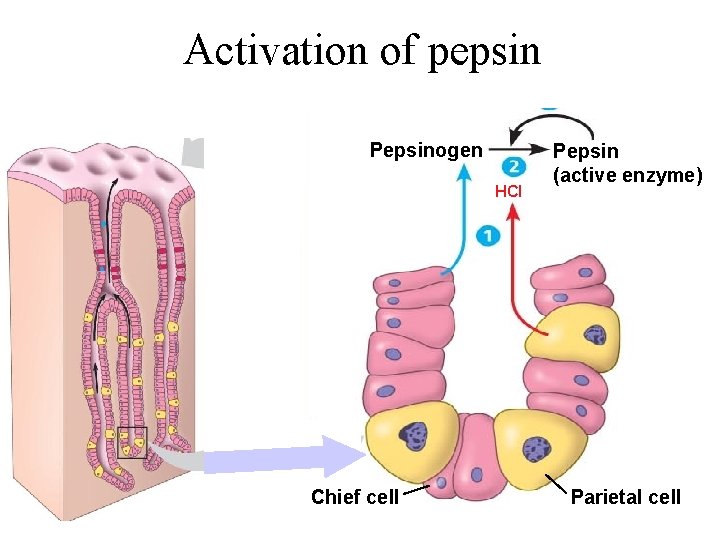
Activation of pepsin Pepsinogen HCl Chief cell Pepsin (active enzyme) Parietal cell
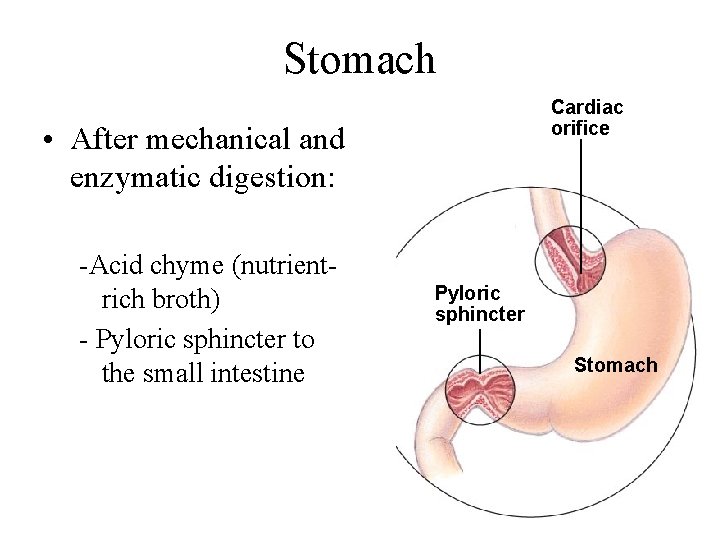
Stomach Cardiac orifice • After mechanical and enzymatic digestion: -Acid chyme (nutrientrich broth) - Pyloric sphincter to the small intestine Pyloric sphincter Stomach
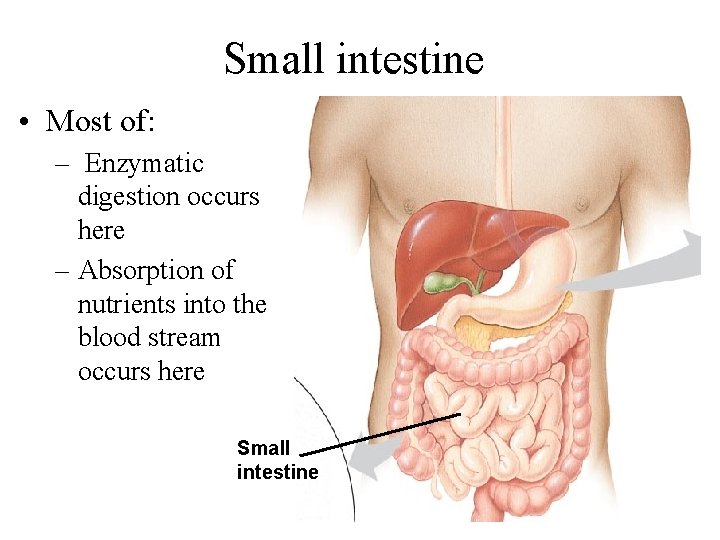
Small intestine • Most of: – Enzymatic digestion occurs here – Absorption of nutrients into the blood stream occurs here Small intestine
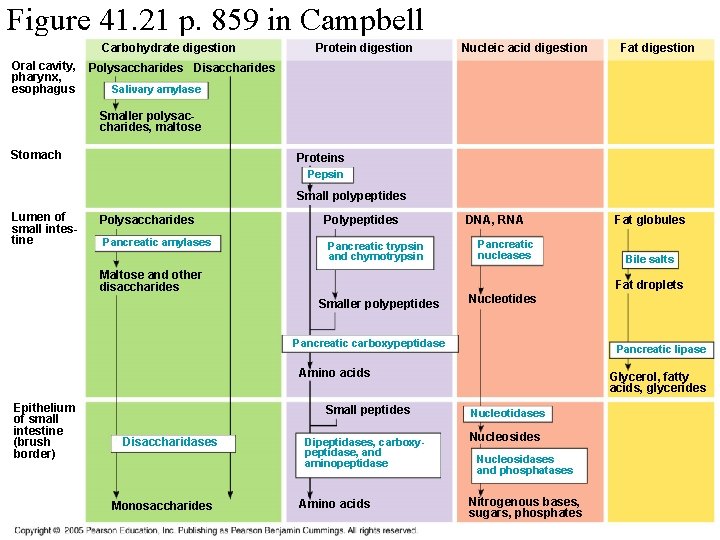
Figure 41. 21 p. 859 in Campbell Carbohydrate digestion Oral cavity, pharynx, esophagus Protein digestion Nucleic acid digestion Fat digestion Polysaccharides Disaccharides Salivary amylase Smaller polysaccharides, maltose Stomach Proteins Pepsin Small polypeptides Lumen of small intestine Polysaccharides Pancreatic amylases Polypeptides DNA, RNA Pancreatic trypsin and chymotrypsin Pancreatic nucleases Smaller polypeptides Nucleotides Maltose and other disaccharides Pancreatic lipase Amino acids Disaccharidases Monosaccharides Bile salts Fat droplets Pancreatic carboxypeptidase Epithelium of small intestine (brush border) Fat globules Glycerol, fatty acids, glycerides Small peptides Nucleotidases Dipeptidases, carboxypeptidase, and aminopeptidase Nucleosides Amino acids Nucleosidases and phosphatases Nitrogenous bases, sugars, phosphates
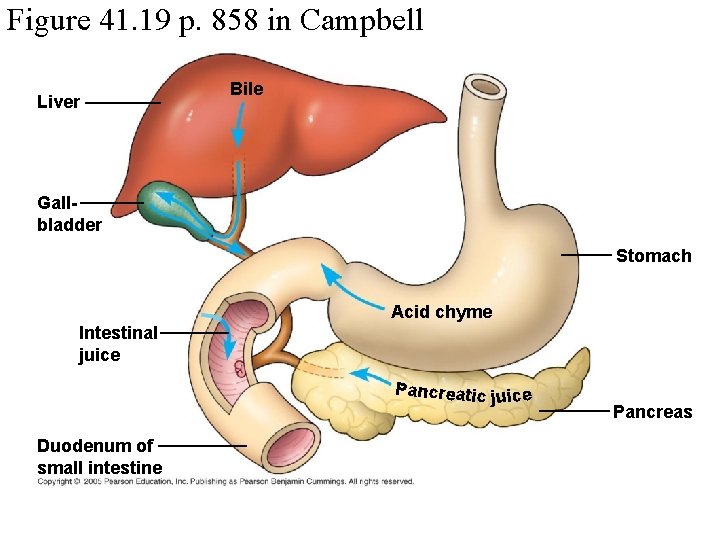
Figure 41. 19 p. 858 in Campbell Liver Bile Gallbladder Stomach Acid chyme Intestinal juice Pancreatic juice Duodenum of small intestine Pancreas
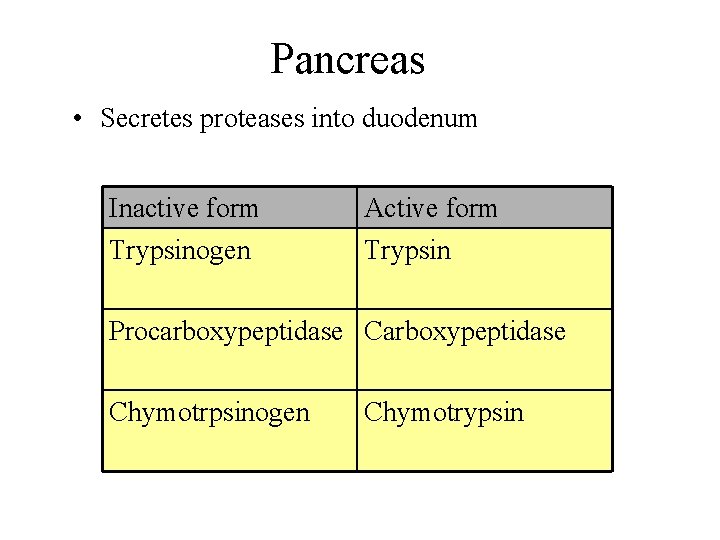
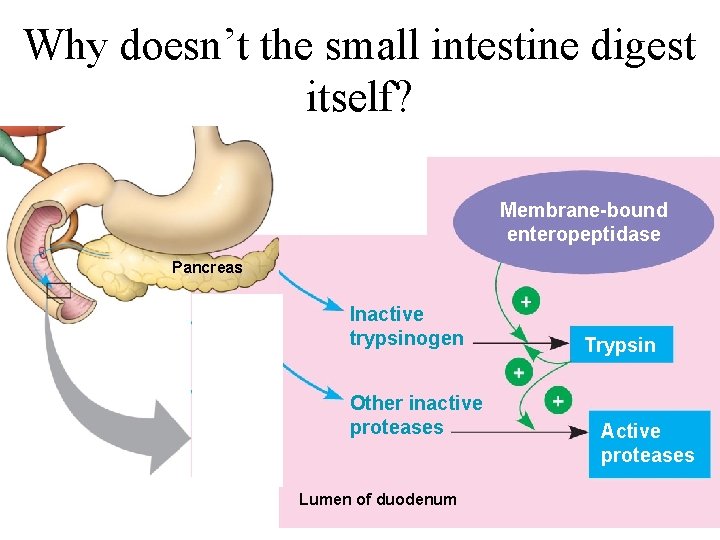
Pancreas • Secretes proteases into duodenum Inactive form Trypsinogen Active form Trypsin Procarboxypeptidase Chymotrpsinogen Chymotrypsin
Why doesn’t the small intestine digest itself? Membrane-bound enteropeptidase Pancreas Fig. 37. 13 Inactive trypsinogen Other inactive proteases Active proteases Lumen of duodenum Trypsin Active proteases
Liver • Produces bile that is stored in gallbladder • Bile contain bile salts • Bile salts aids digestion and absorption of fats
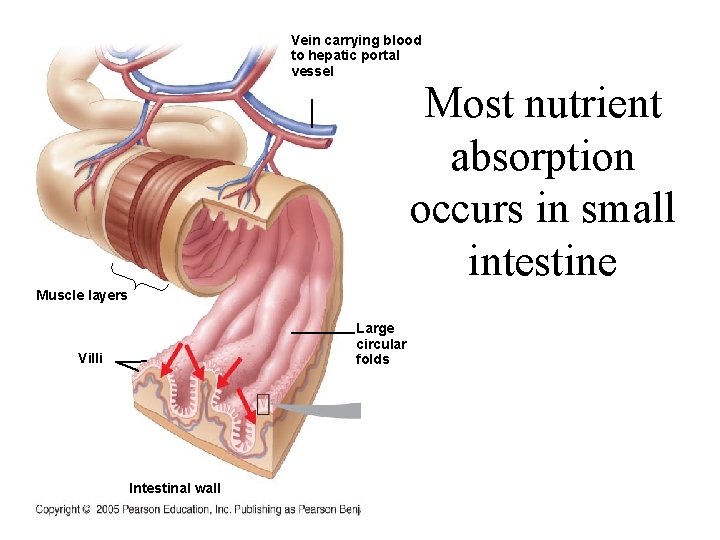
Vein carrying blood to hepatic portal vessel Most nutrient absorption occurs in small intestine Muscle layers Large circular folds Villi Intestinal wall
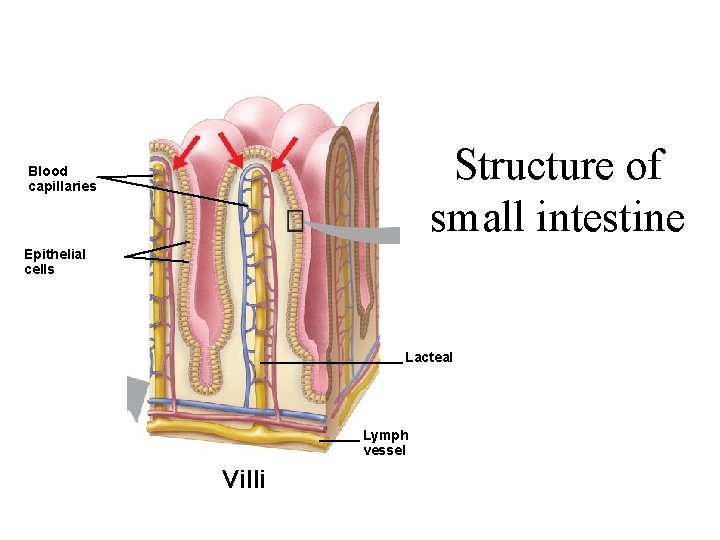
Structure of small intestine Blood capillaries Epithelial cells Lacteal Lymph vessel Villi
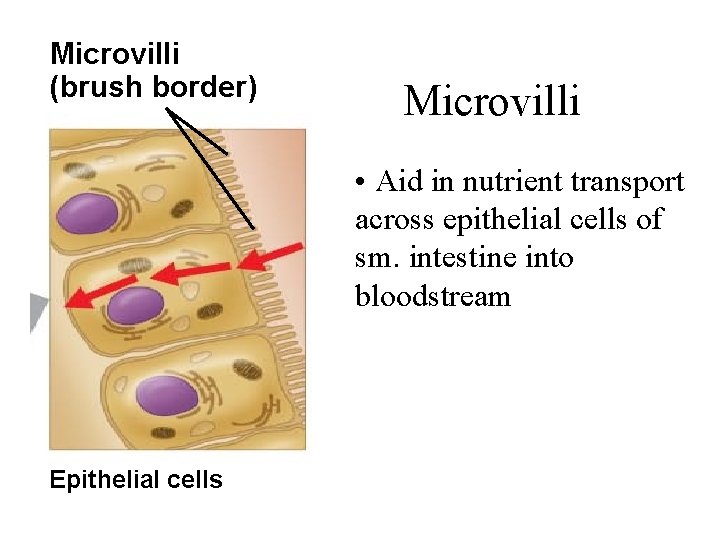
Microvilli (brush border) Microvilli • Aid in nutrient transport across epithelial cells of sm. intestine into bloodstream Epithelial cells
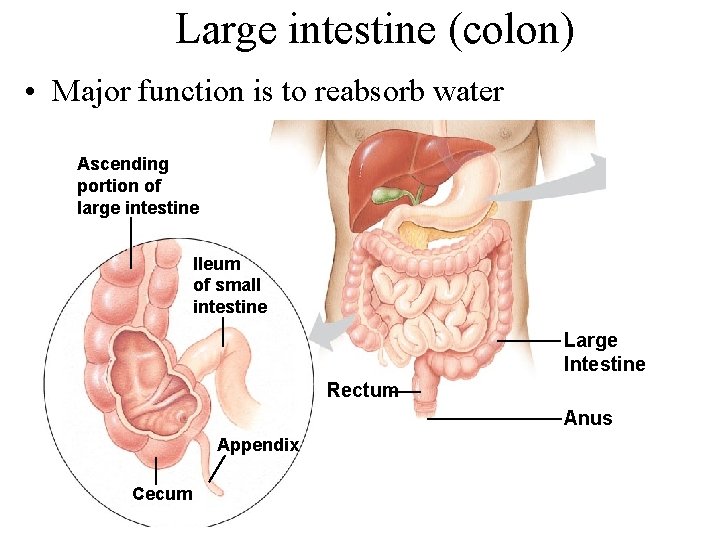
Large intestine (colon) • Major function is to reabsorb water Ascending portion of large intestine Ileum of small intestine Large Intestine Rectum Anus Appendix Cecum
Here a few review questions
What would happen if you had a defect in pepsin production?
What would happen if you had a defect in pepsin production? • A. carbohydrate would not be digested well • B. meat would not be digested at all • C. perhaps decreased absorption of protein
What would happen if you had a defect in salivary amylase production?
What would happen if you had a defect in salivary amylase production? • • A. You would die B. You would be unable to digest starch C. The p. H of the stomach would be affected D. None of the above
Which of the following would you least like to donate to science while you are still alive? • A. Cecum • B. Pancreas • C. Reproductive organs
What would happen if you had a defect in small intestine enteropeptidase?
What would happen if you had a defect in small intestine enteropeptidase? • A. Pancreatic enzymes would not be activated • B. Liver enzymes would increased • C. Your small intestine would become blocked • D. None of the above
Variations of vertebrate digestive system • Herbivorous mammals – Specialized fermentation chambers
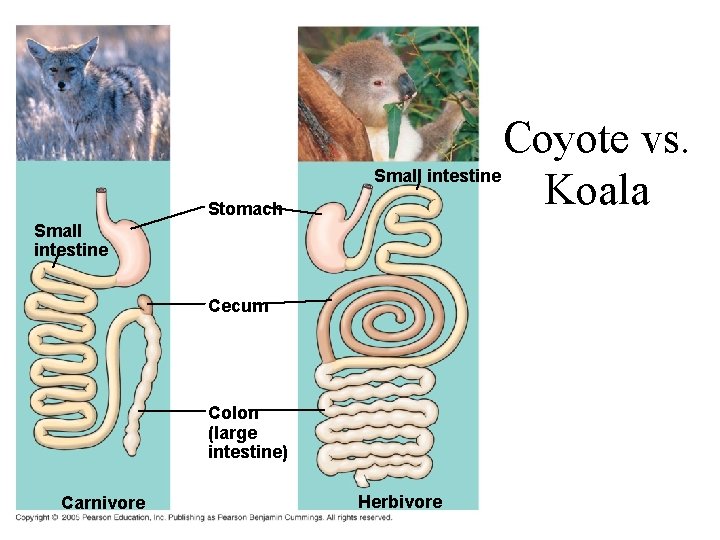
Stomach Coyote vs. Small intestine Koala Small intestine Cecum Colon (large intestine) Carnivore Herbivore
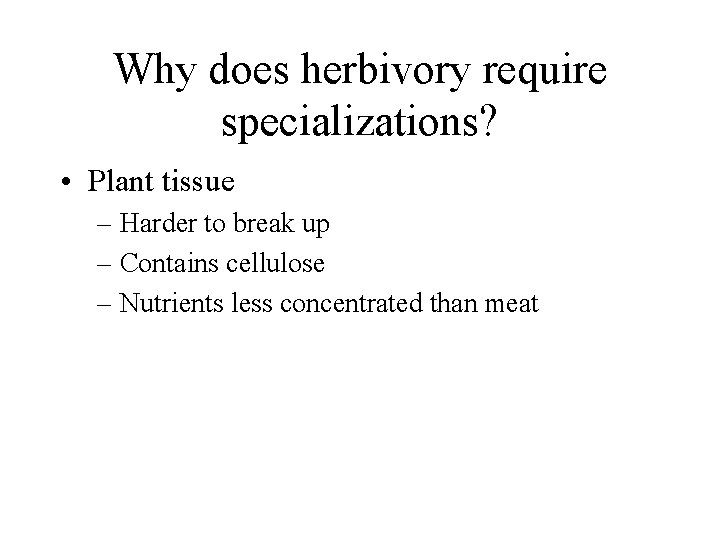
Why does herbivory require specializations? • Plant tissue – Harder to break up – Contains cellulose – Nutrients less concentrated than meat
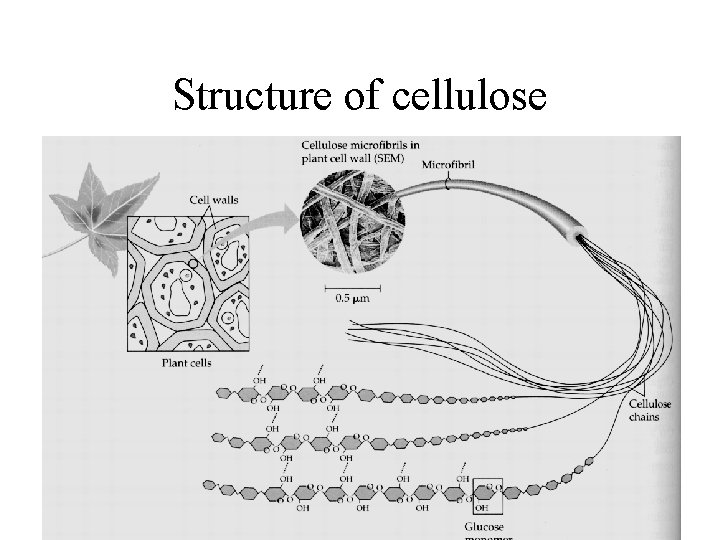
Structure of cellulose
Only bacteria and protozoa can break down cellulose Via the enzyme cellulase
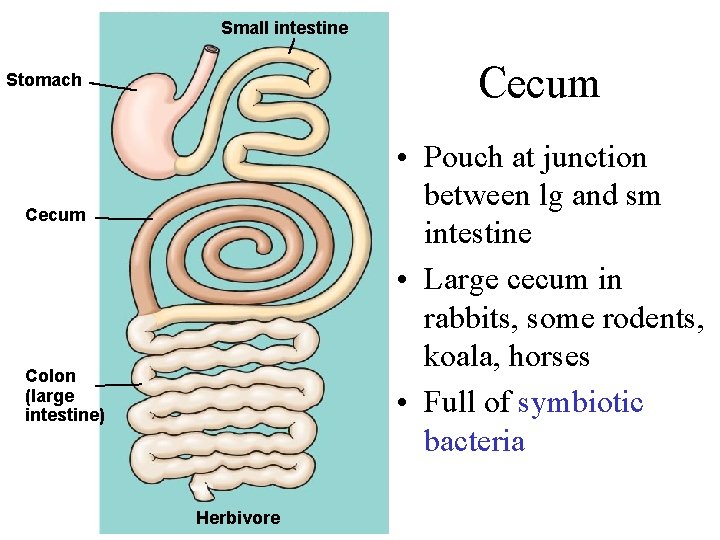
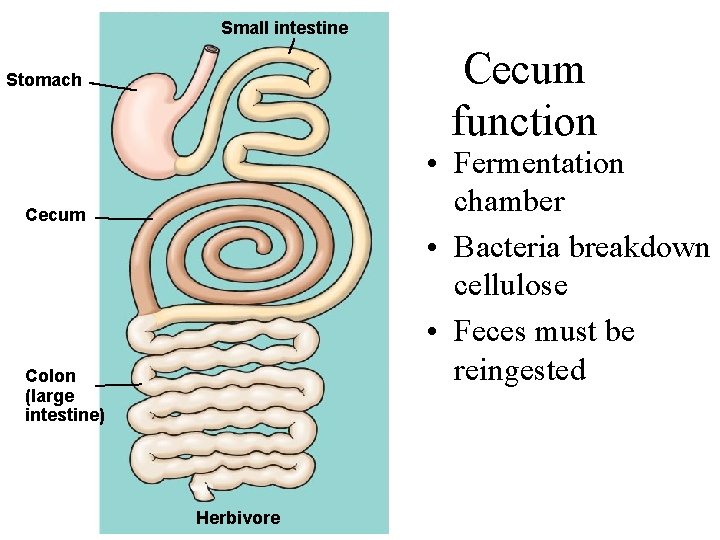
Small intestine Cecum Stomach • Pouch at junction between lg and sm intestine • Large cecum in rabbits, some rodents, koala, horses • Full of symbiotic bacteria Cecum Colon (large intestine) Herbivore
Symbiosis • “living together”
Small intestine Cecum function Stomach • Fermentation chamber • Bacteria breakdown cellulose • Feces must be reingested Cecum Colon (large intestine) Herbivore