
Chapter 41 Notes Animal Nutrition Nutritional Requirements The

- Slides: 30
Chapter 41 Notes Animal Nutrition
Nutritional Requirements The flow of energy into and out of an animal can be viewed as a “budget” - most of the energy taken in is used to produce ATP to power resting metabolism and temperature regulation - excess ATP can be used for biosynthesis
Nutritional Requirements In humans, the liver and muscle cells store energy in the form of glycogen. If glycogen stores are full, the excess is usually stored as fat. When fewer calories are taken in than used, fuel is taken out of storage deposits and oxidized.
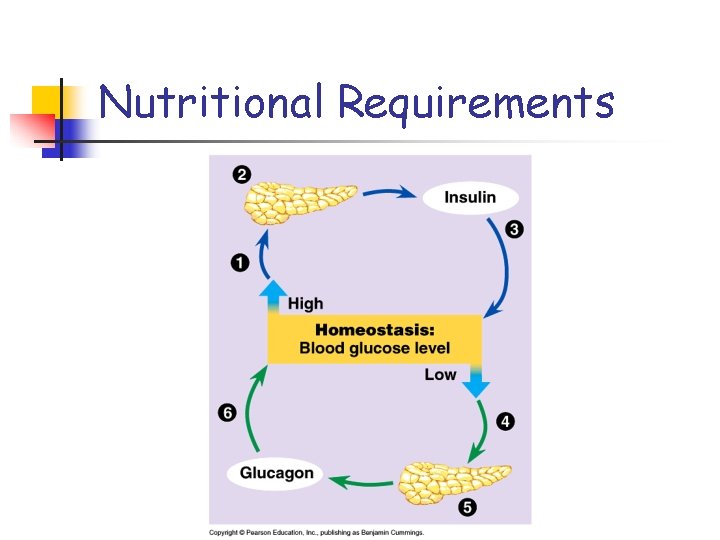
Nutritional Requirements
Nutritional Requirements Feedback mechanisms regulate fat storage and use - an increase in adipose tissue increases leptin levels in the blood - high levels of leptin cue the brain to depress appetite and to increase muscular activity and body-heat production
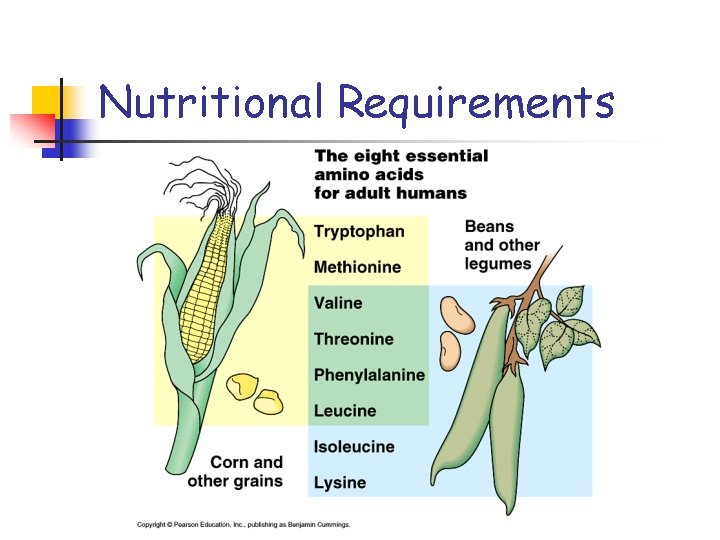
Nutritional Requirements In addition to providing fuel for ATP, a diet must also supply the raw materials needed for biosynthesis. - organic precursors (carbon skeletons) - essential amino acids - essential fatty acids - vitamins and minerals
Nutritional Requirements
Food Types and Feeding Mechanisms Even though animals are classified as herbivores, carnivores, or omnivores, they are opportunistic feeders in that they eat foods outside of their main dietary categories
Food Types and Feeding Mechanisms There are four main groups that animals can be separated into based on the way they feed Suspension-feeders: animals that sift food particles from water Substrate-feeders: animals that live on their food source, eating their way through food
Food Types and Feeding Mechanisms Fluid-feeders: animals the survive by sucking nutrient-rich fluids from a living host Bulk-feeders: animals that eat relatively large pieces of food
Overview of Food Processing The four main stages of food processing are ingestion, digestion, absorption, and elimination Ingestion: the act of eating Digestion: the process of breaking food down into molecules small enough for the body to absorb - enzymatic hydrolysis
Overview of Food Processing Absorption: the animal’s cells take up small molecules such as amino acids and simple sugars Elimination: undigested material passes out of the digestive compartment
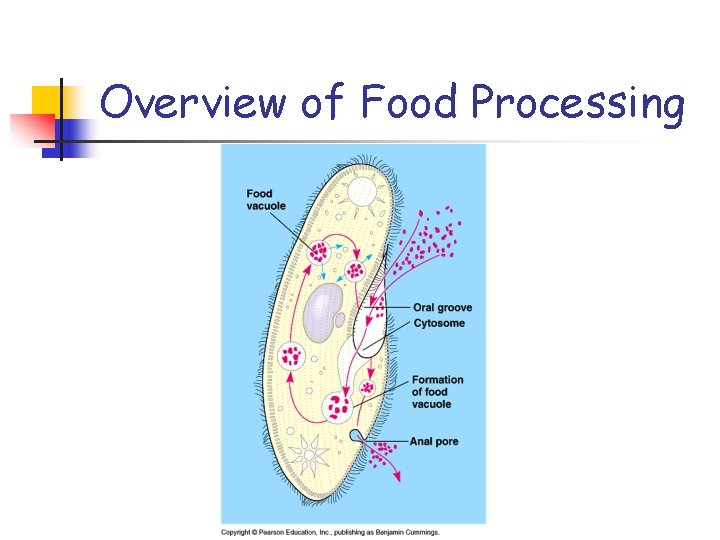
Overview of Food Processing Digestion occurs in specialized compartments to reduce the risk of selfdigestion Intracellular digestion: use of food vacuoles where hydrolytic enzymes break down food without digesting the cell’s cytoplasm
Overview of Food Processing
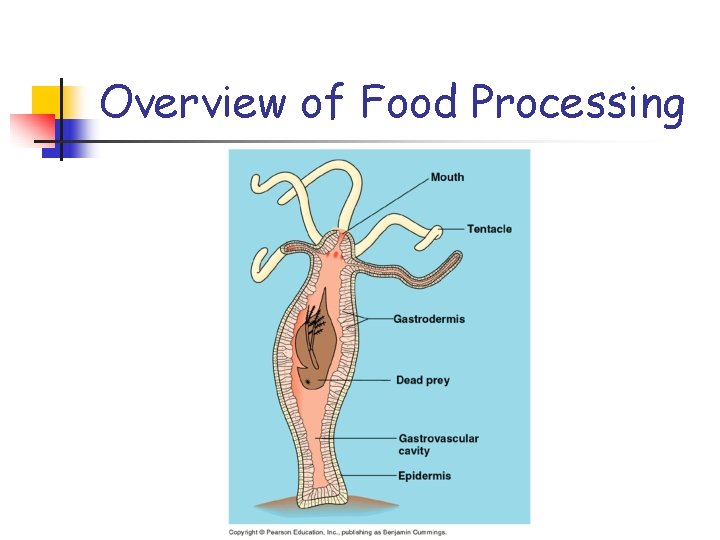
Overview of Food Processing Extracellular digestion: the breakdown of food outside cells Many animals with simple body plans have gastrovascular cavities - these function in both the digestion and distribution of nutrients throughout the body
Overview of Food Processing
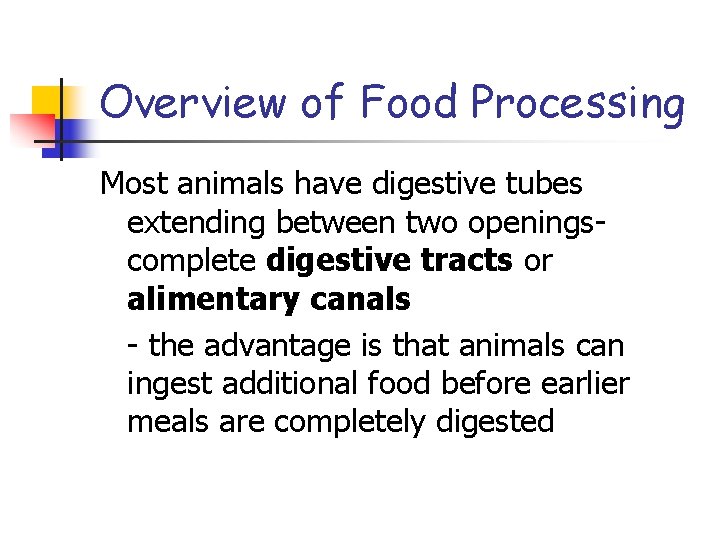
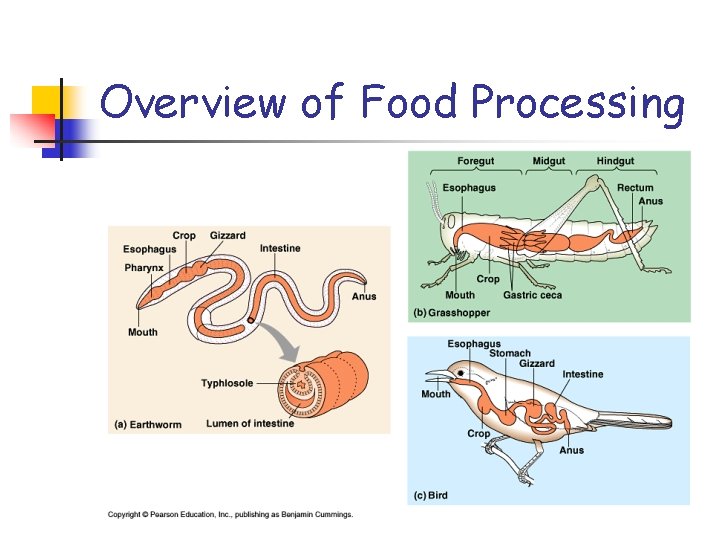
Overview of Food Processing Most animals have digestive tubes extending between two openingscomplete digestive tracts or alimentary canals - the advantage is that animals can ingest additional food before earlier meals are completely digested
Overview of Food Processing
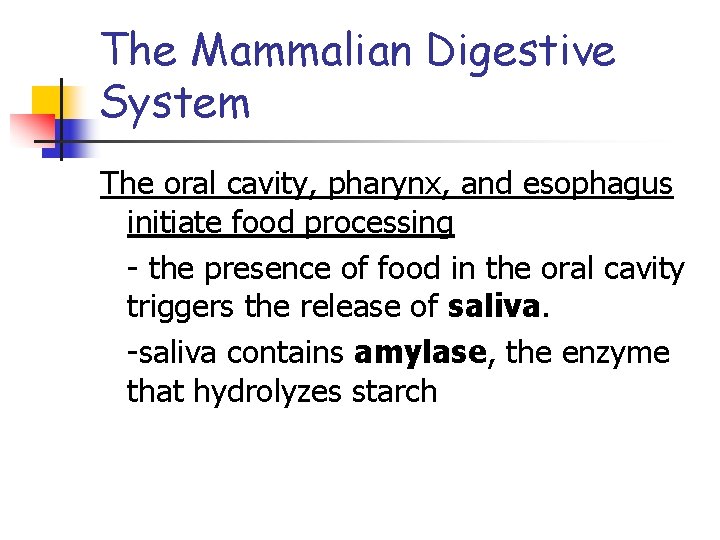
The Mammalian Digestive System The oral cavity, pharynx, and esophagus initiate food processing - the presence of food in the oral cavity triggers the release of saliva. -saliva contains amylase, the enzyme that hydrolyzes starch
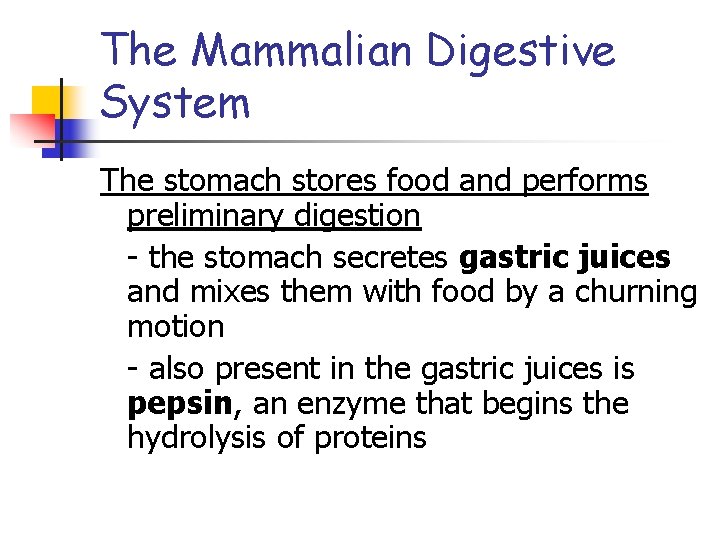
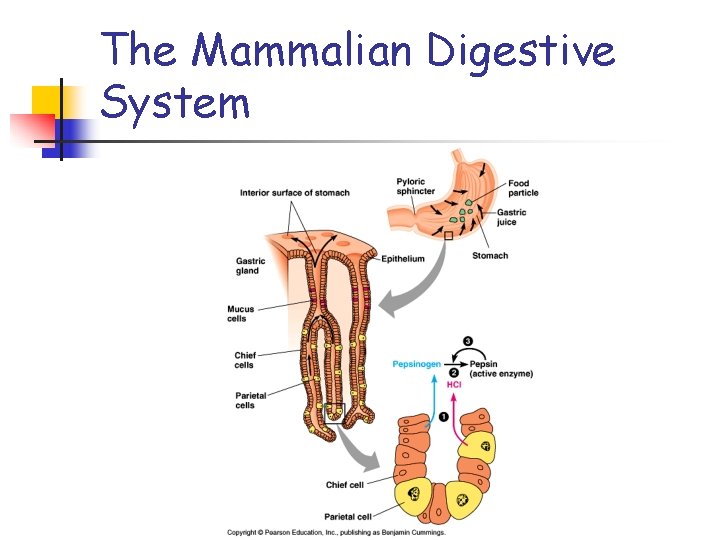
The Mammalian Digestive System The stomach stores food and performs preliminary digestion - the stomach secretes gastric juices and mixes them with food by a churning motion - also present in the gastric juices is pepsin, an enzyme that begins the hydrolysis of proteins
The Mammalian Digestive System
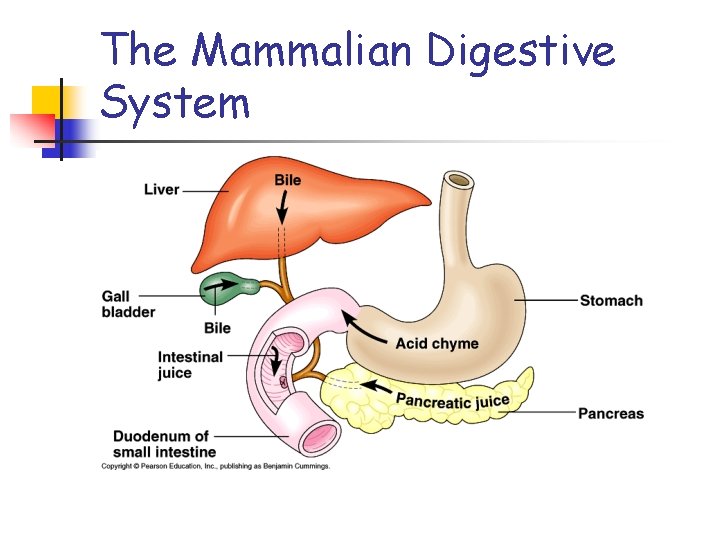
The Mammalian Digestive System The small intestine is the major organ of digestion and absorption - the first 25 cm of the small intestine is called the duodenum. Here chyme from the stomach is mixed with juices from the pancreas, liver, and gall bladder
The Mammalian Digestive System
The Mammalian Digestive System - the pancreas produces hydrolytic enzymes and an alkaline solution that acts as a buffer to neutralize the low p. H of the chyme from the stomach - the liver produces bile. Bile does not contain enzymes, but acts as detergents that aid in the digestion and absorption of fats
The Mammalian Digestive System Carbohydrate digestion: - begins with salivary amylase in the oral cavity - pancreatic amylase hydrolyzes starch, glycogen, and other polysaccharides into disaccharides
The Mammalian Digestive System Protein digestion: - enzymes in the duodenum break apart proteins into amino acids - trypsin and chymotrypsin break the peptide bonds
The Mammalian Digestive System Fat digestion: - hydrolysis of fat is a special problem because fat molecules are insoluble in water - bile salts work through emulsification so that lipase can break down fat molecules
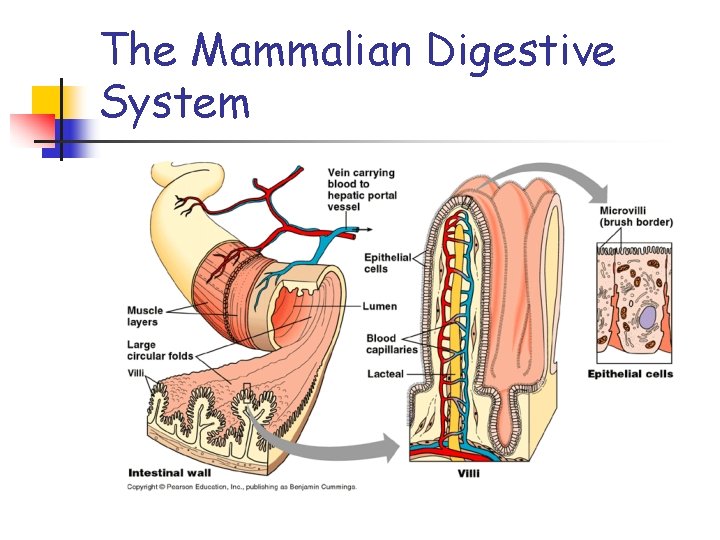
The Mammalian Digestive System Most absorption occurs in the small intestine - s. i. has a large surface area due to the folding of the lining into villi - each villus has many microscopic appendages called microvilli which increase the rate of absorption
The Mammalian Digestive System - in the core of each villus is a net of capillaries and a small vessel of the lymphatic system called the lacteal - nutrients are absorbed across the intestinal epithelium and then across the epithelium of the capillaries or lacteals - nutrients then flow into the bloodstream
The Mammalian Digestive System