An Introduction to NCs Water Quality Program and


- Slides: 46
An Introduction to NC’s Water Quality Program and *Nonpoint Source Pollution Division of Water Quality WQ Planning Branch NC Department of Environment and Natural Resources * Also known as Runoff Pollution
Overview of Presentation • • Growth issues in NC Affecting NPS Pollution Introduction to the DWQ’s WQ Program Primary Goals of the WQ Program Major Sources of Pollution (Point/NPS) Impacts of Pollution on Water Quality How do We Measure Water Quality? How is the WQ in North Carolina?
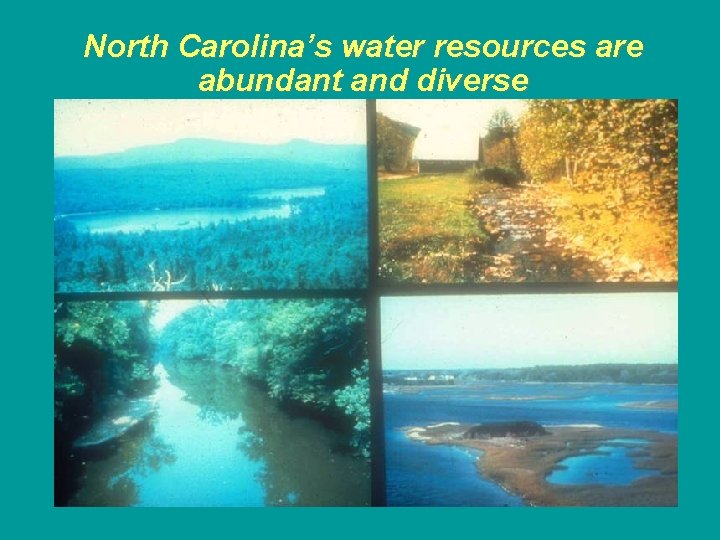
North Carolina’s water resources are abundant and diverse
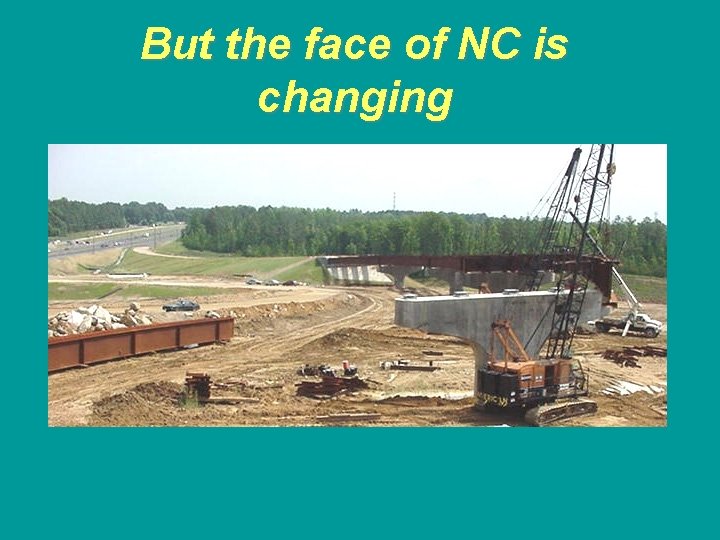
But the face of NC is changing
Population (Millions) NC Population Growth (16702000) 8 7 6 5 4 3 2 1 0 1670 1700 1750 1800 1850 1900 1950 2000 Year NC’s population has been doubling every 50 years for the past 200 years! What will be the impact of 8 million more people by 2050?
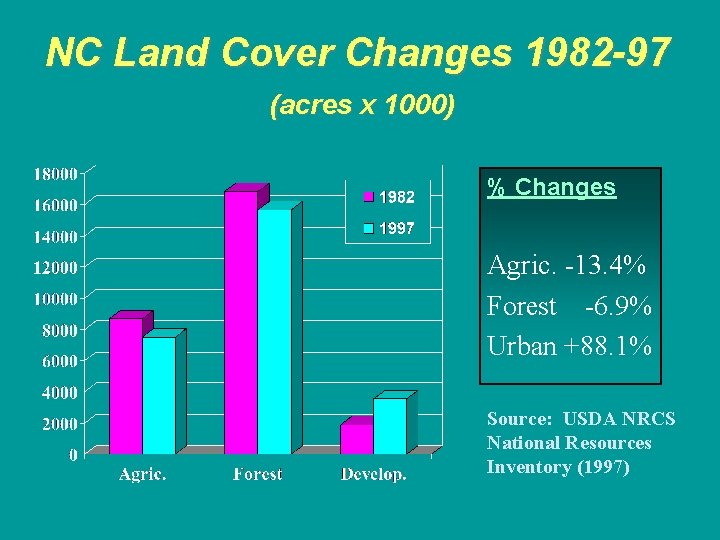
NC Land Cover Changes 1982 -97 (acres x 1000) % Changes Agric. -13. 4% Forest -6. 9% Urban +88. 1% Source: USDA NRCS National Resources Inventory (1997)
The NC Division of Water Quality plays an important role in protecting water quality DWQ is…
Known primarily as a regulatory agency, but… DWQ Permitting Programs • Discharge permits • Nondischarge permits • Wetlands permits • Riparian buffer protection • Others
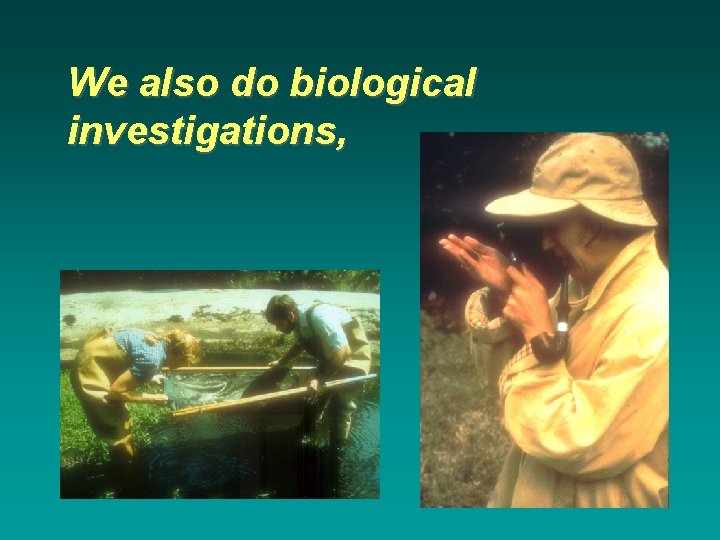
We also do biological investigations,
Predictive Computer Modeling,
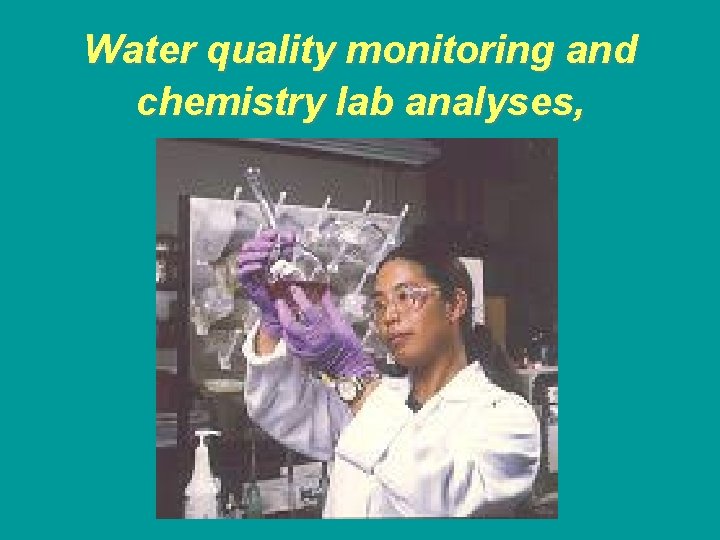
Water quality monitoring and chemistry lab analyses,
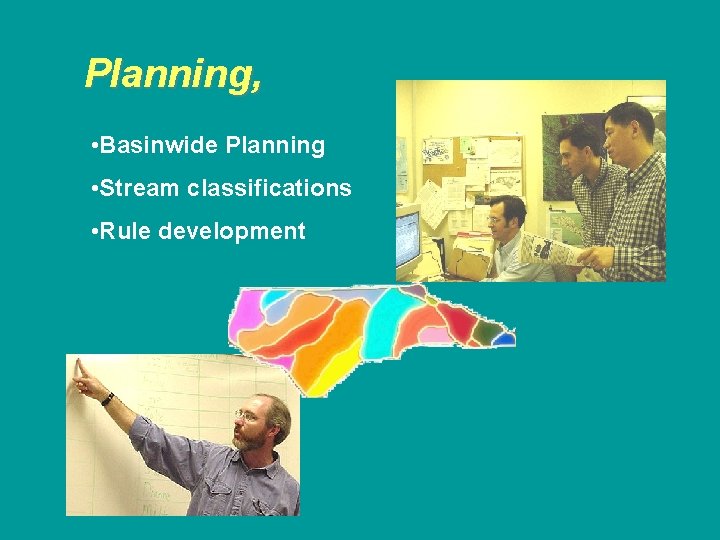
Planning, • Basinwide Planning • Stream classifications • Rule development
And enforcement of water quality laws
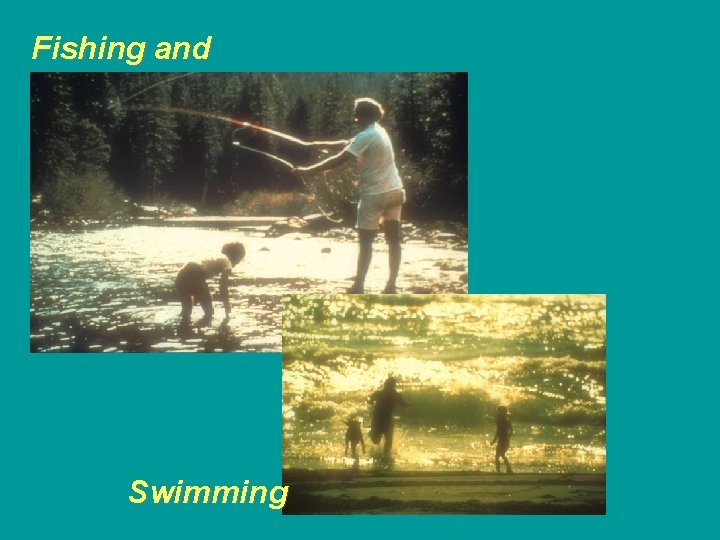
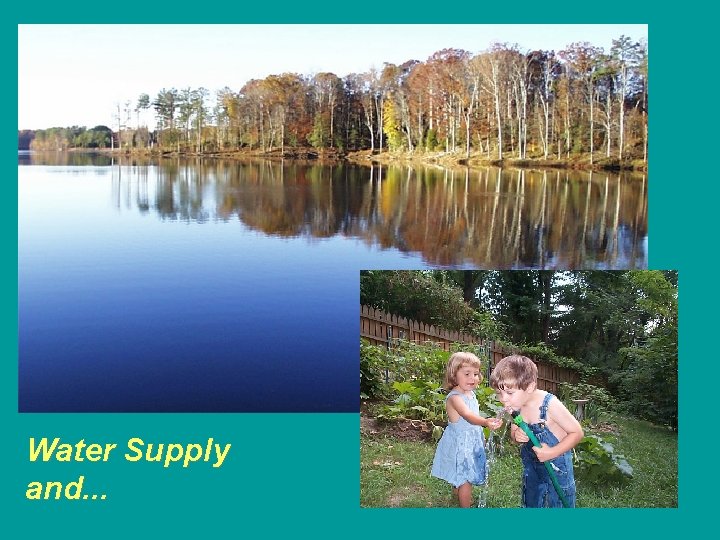
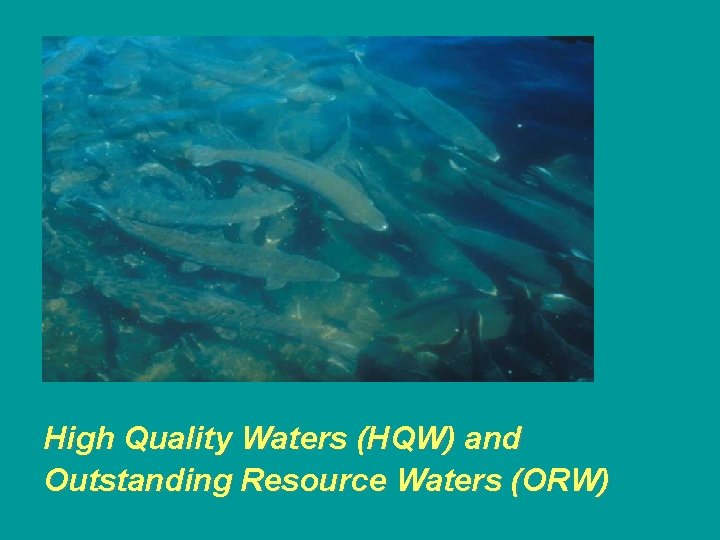
Primary Goal of NC’s Water Quality Program Protect and Restore uses of North Carolina’s surface waters. Uses include:
Fishing and Swimming
Water Supply and. . .
High Quality Waters (HQW) and Outstanding Resource Waters (ORW)
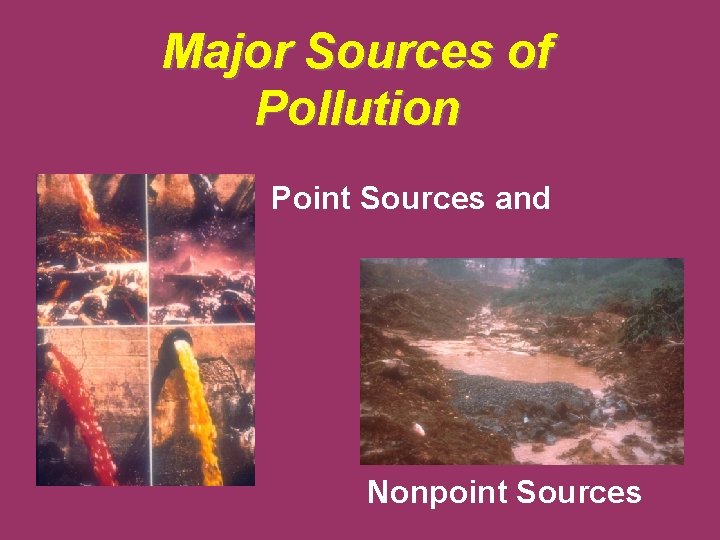
Major Sources of Pollution Point Sources and Nonpoint Sources
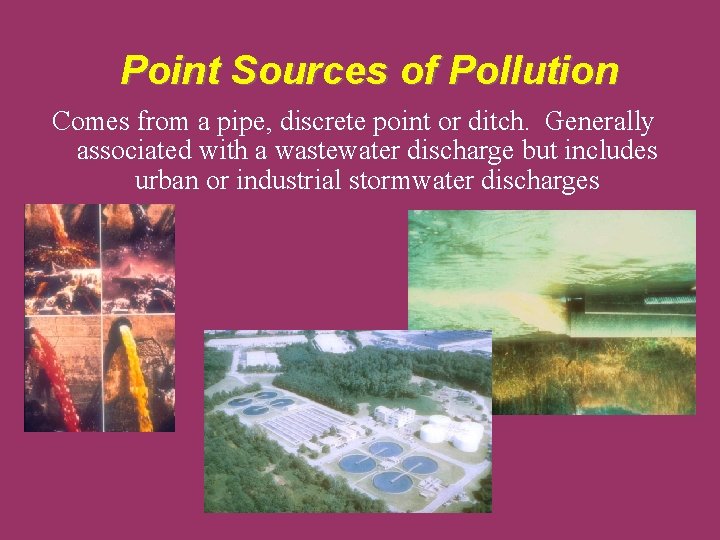
Point Sources of Pollution Comes from a pipe, discrete point or ditch. Generally associated with a wastewater discharge but includes urban or industrial stormwater discharges
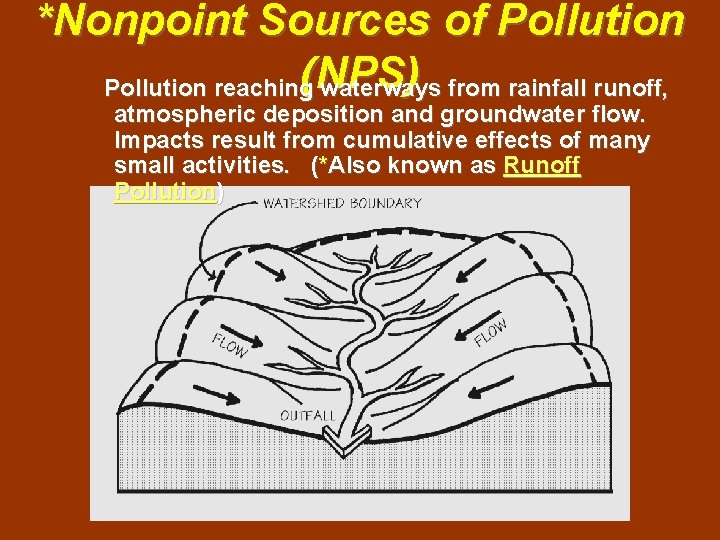
*Nonpoint Sources of Pollution (NPS) Pollution reaching waterways from rainfall runoff, atmospheric deposition and groundwater flow. Impacts result from cumulative effects of many small activities. (*Also known as Runoff Pollution)
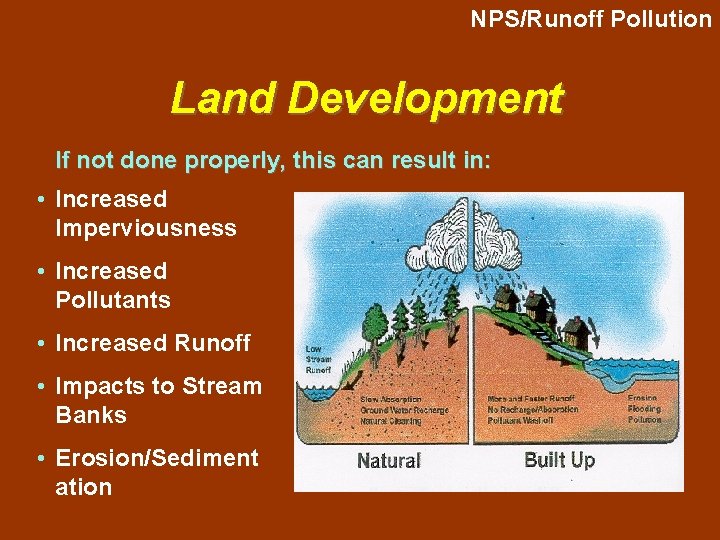
NPS/Runoff Pollution Land Development If not done properly, this can result in: • Increased Imperviousness • Increased Pollutants • Increased Runoff • Impacts to Stream Banks • Erosion/Sediment ation
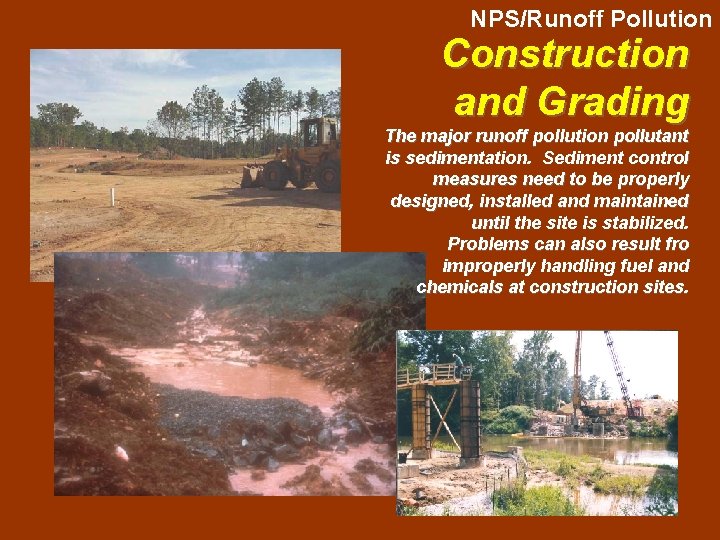
NPS/Runoff Pollution Construction and Grading The major runoff pollution pollutant is sedimentation. Sediment control measures need to be properly designed, installed and maintained until the site is stabilized. Problems can also result fro improperly handling fuel and chemicals at construction sites.
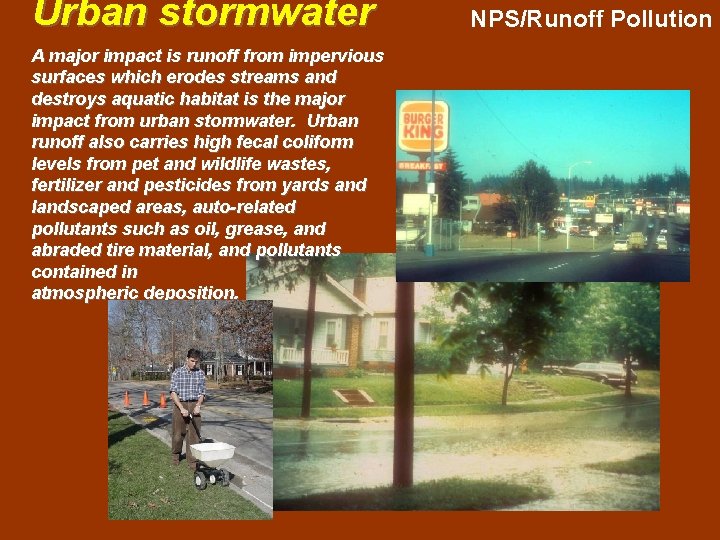
Urban stormwater A major impact is runoff from impervious surfaces which erodes streams and destroys aquatic habitat is the major impact from urban stormwater. Urban runoff also carries high fecal coliform levels from pet and wildlife wastes, fertilizer and pesticides from yards and landscaped areas, auto-related pollutants such as oil, grease, and abraded tire material, and pollutants contained in atmospheric deposition. NPS/Runoff Pollution
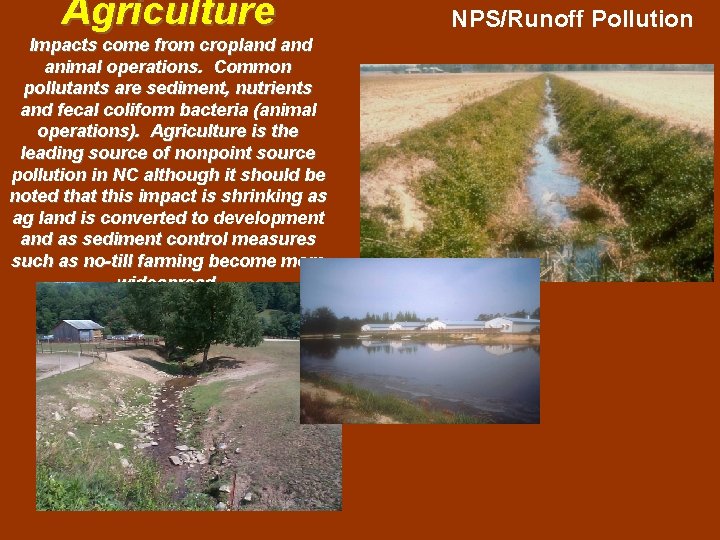
Agriculture Impacts come from cropland animal operations. Common pollutants are sediment, nutrients and fecal coliform bacteria (animal operations). Agriculture is the leading source of nonpoint source pollution in NC although it should be noted that this impact is shrinking as ag land is converted to development and as sediment control measures such as no-till farming become more widespread. NPS/Runoff Pollution
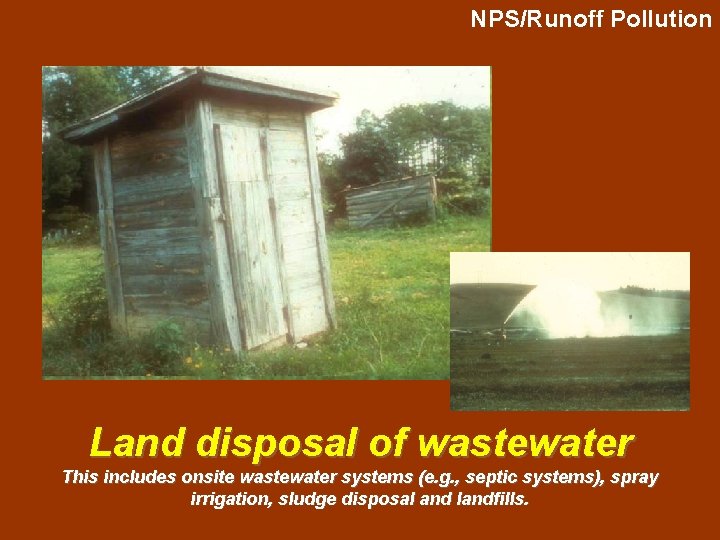
NPS/Runoff Pollution Land disposal of wastewater This includes onsite wastewater systems (e. g. , septic systems), spray irrigation, sludge disposal and landfills.
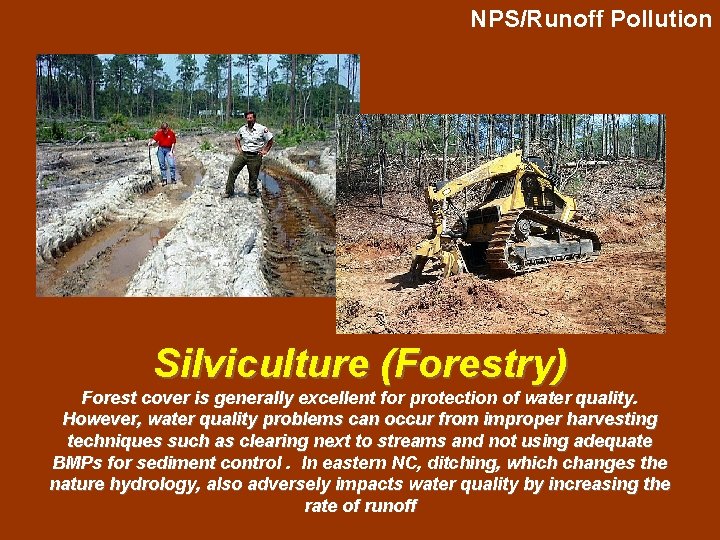
NPS/Runoff Pollution Silviculture (Forestry) Forest cover is generally excellent for protection of water quality. However, water quality problems can occur from improper harvesting techniques such as clearing next to streams and not using adequate BMPs for sediment control. In eastern NC, ditching, which changes the nature hydrology, also adversely impacts water quality by increasing the rate of runoff
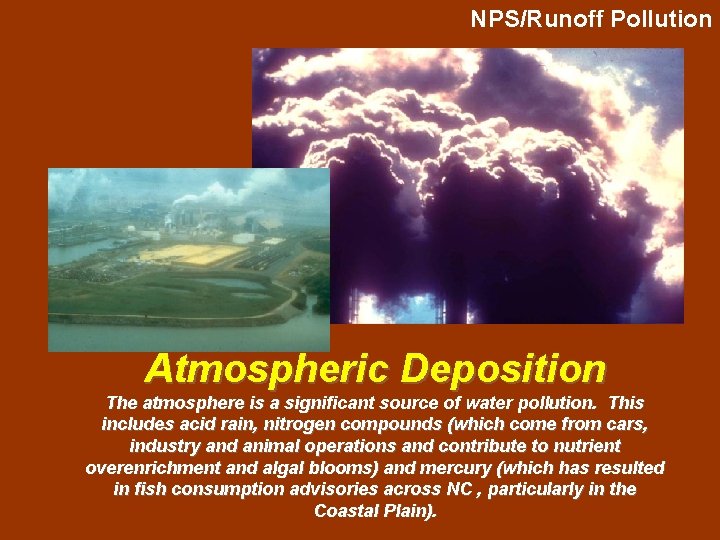
NPS/Runoff Pollution Atmospheric Deposition The atmosphere is a significant source of water pollution. This includes acid rain, nitrogen compounds (which come from cars, industry and animal operations and contribute to nutrient overenrichment and algal blooms) and mercury (which has resulted in fish consumption advisories across NC , particularly in the Coastal Plain).
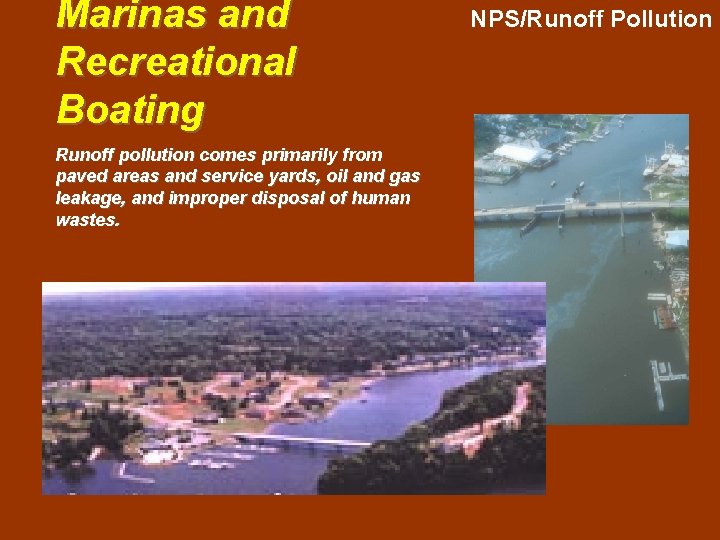
Marinas and Recreational Boating Runoff pollution comes primarily from paved areas and service yards, oil and gas leakage, and improper disposal of human wastes. NPS/Runoff Pollution
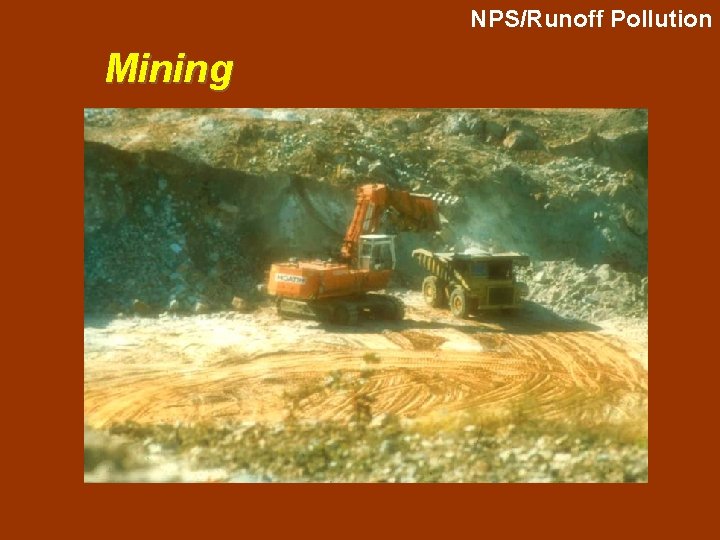
NPS/Runoff Pollution Mining
What are the Impacts of Nonpoint Source Pollution on Water Quality?
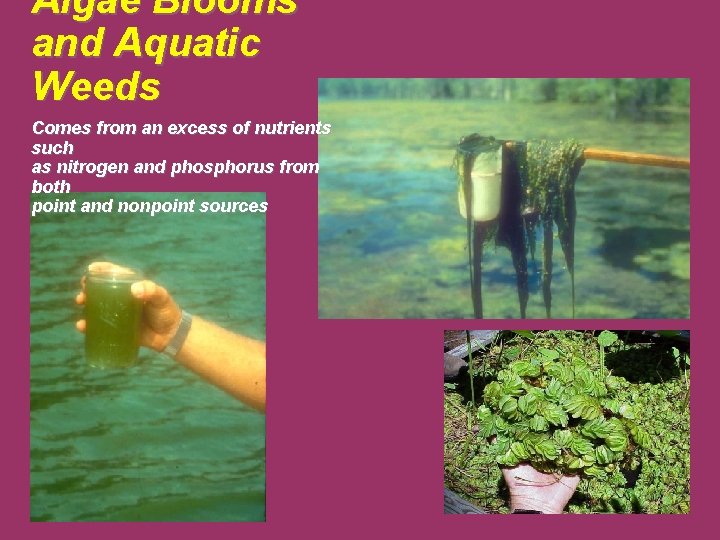
Algae Blooms and Aquatic Weeds Comes from an excess of nutrients such as nitrogen and phosphorus from both point and nonpoint sources
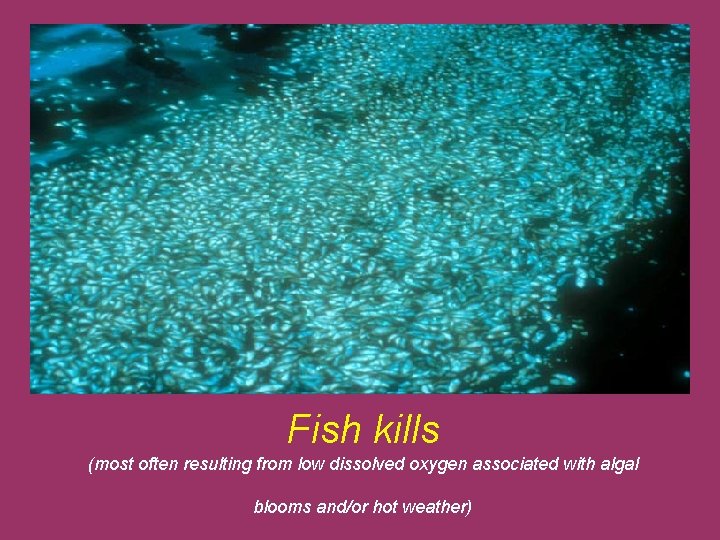
Fish kills (most often resulting from low dissolved oxygen associated with algal blooms and/or hot weather)
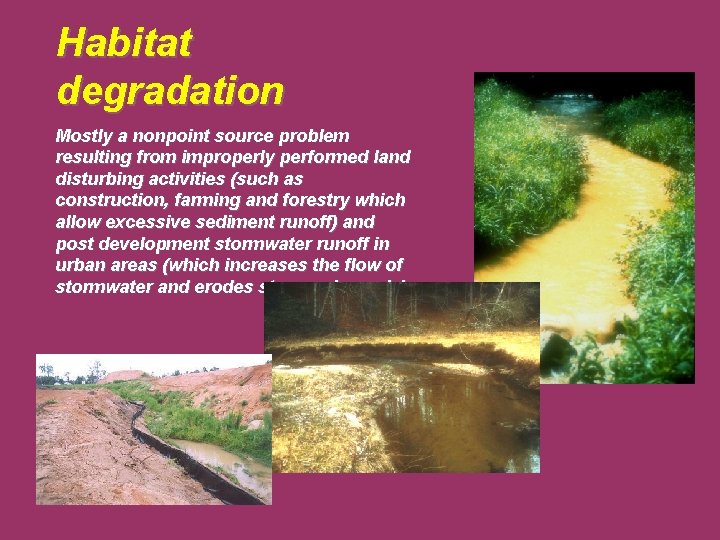
Habitat degradation Mostly a nonpoint source problem resulting from improperly performed land disturbing activities (such as construction, farming and forestry which allow excessive sediment runoff) and post development stormwater runoff in urban areas (which increases the flow of stormwater and erodes stream channels)
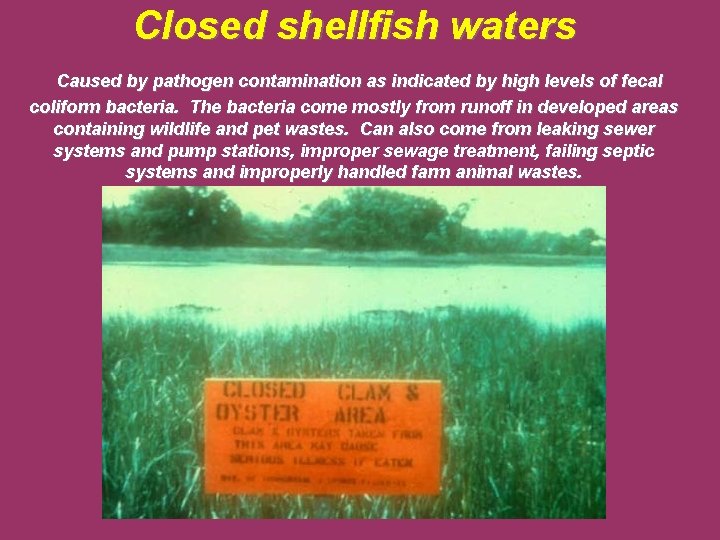
Closed shellfish waters Caused by pathogen contamination as indicated by high levels of fecal coliform bacteria. The bacteria come mostly from runoff in developed areas containing wildlife and pet wastes. Can also come from leaking sewer systems and pump stations, improper sewage treatment, failing septic systems and improperly handled farm animal wastes.
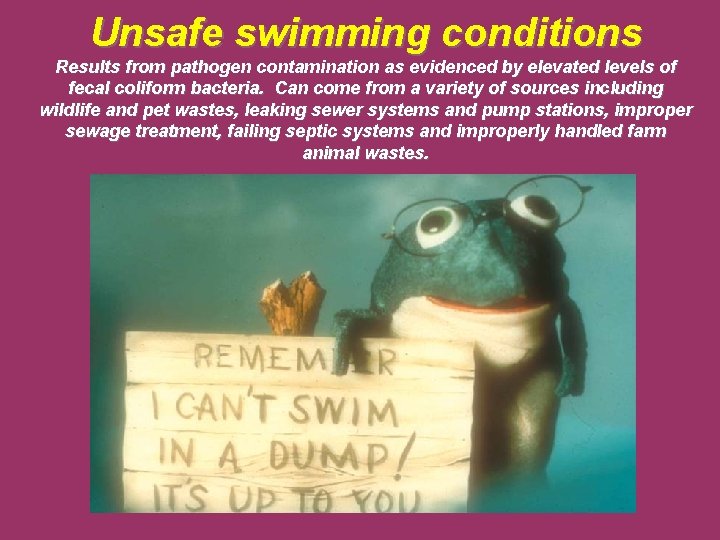
Unsafe swimming conditions Results from pathogen contamination as evidenced by elevated levels of fecal coliform bacteria. Can come from a variety of sources including wildlife and pet wastes, leaking sewer systems and pump stations, improper sewage treatment, failing septic systems and improperly handled farm animal wastes.
How Do We Measure Water Quality? Biological and chemical water quality testing is done by DWQ as shown in the following slides to determine whether waters are supporting the intended uses
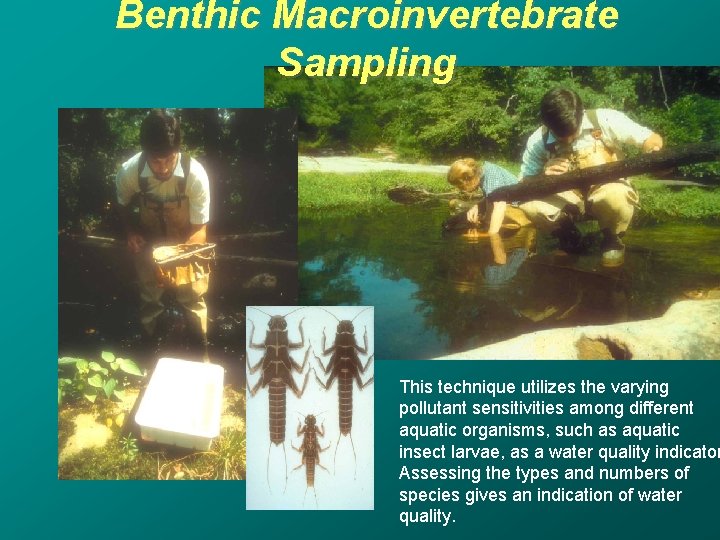
Benthic Macroinvertebrate Sampling This technique utilizes the varying pollutant sensitivities among different aquatic organisms, such as aquatic insect larvae, as a water quality indicator Assessing the types and numbers of species gives an indication of water quality.
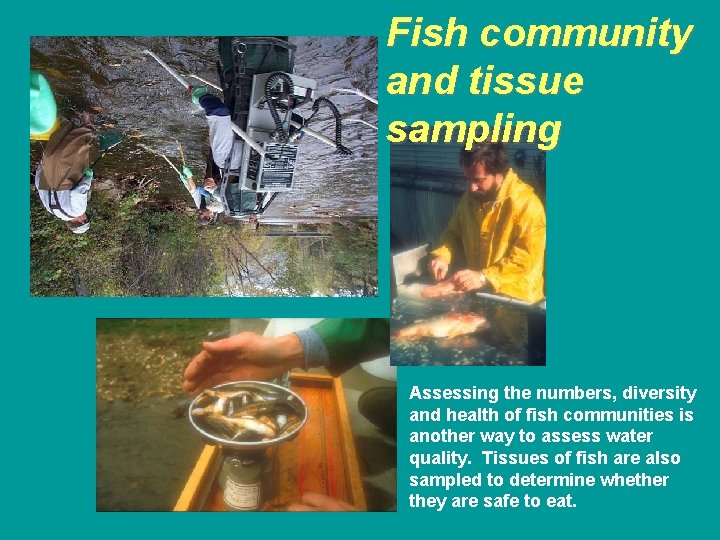
Fish community and tissue sampling Assessing the numbers, diversity and health of fish communities is another way to assess water quality. Tissues of fish are also sampled to determine whether they are safe to eat.
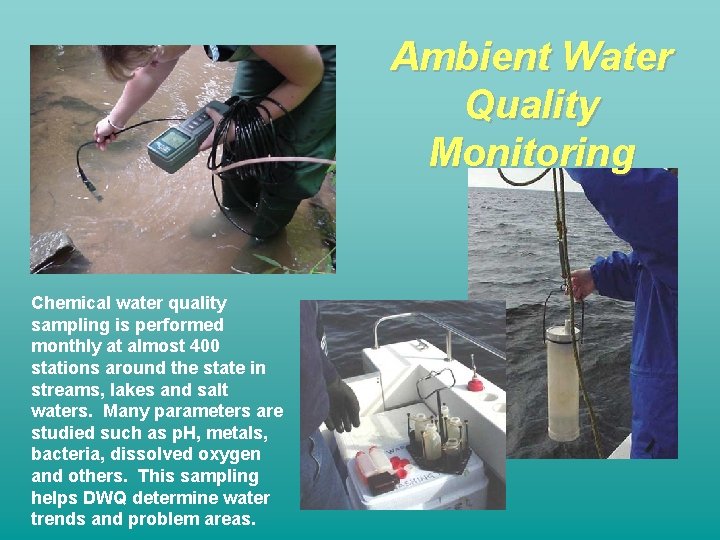
Ambient Water Quality Monitoring Chemical water quality sampling is performed monthly at almost 400 stations around the state in streams, lakes and salt waters. Many parameters are studied such as p. H, metals, bacteria, dissolved oxygen and others. This sampling helps DWQ determine water trends and problem areas.
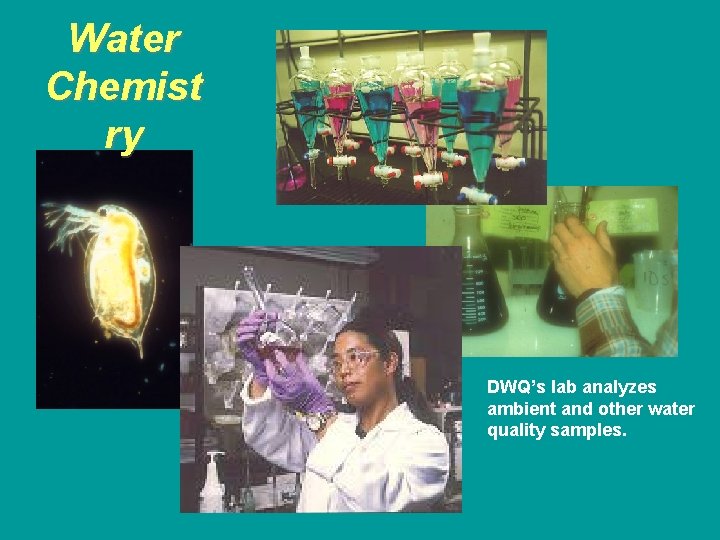
Water Chemist ry DWQ’s lab analyzes ambient and other water quality samples.
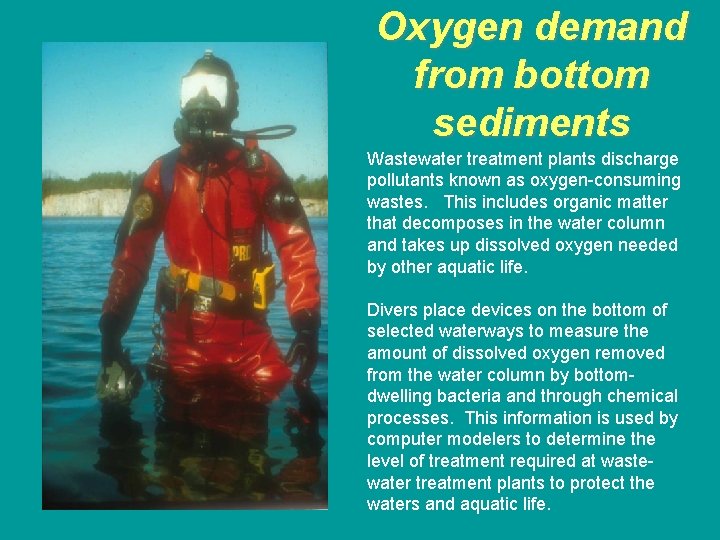
Oxygen demand from bottom sediments Wastewater treatment plants discharge pollutants known as oxygen-consuming wastes. This includes organic matter that decomposes in the water column and takes up dissolved oxygen needed by other aquatic life. Divers place devices on the bottom of selected waterways to measure the amount of dissolved oxygen removed from the water column by bottomdwelling bacteria and through chemical processes. This information is used by computer modelers to determine the level of treatment required at wastewater treatment plants to protect the waters and aquatic life.
How is the water quality in North Carolina?
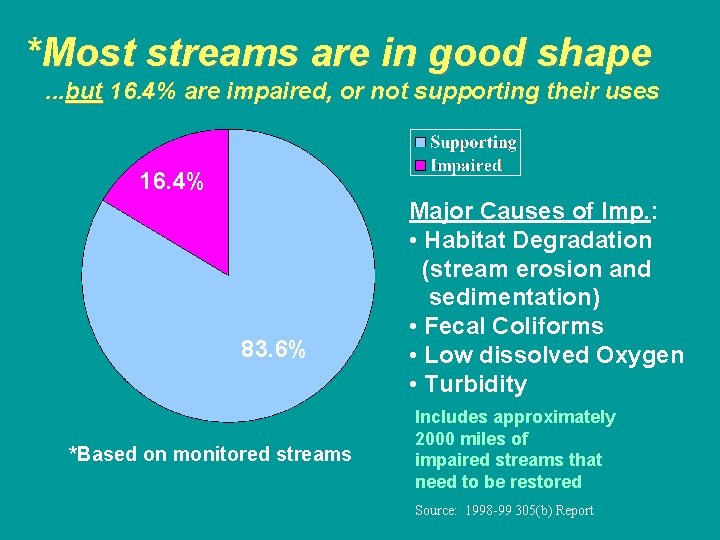
*Most streams are in good shape. . . but 16. 4% are impaired, or not supporting their uses 16. 4% 83. 6% *Based on monitored streams Major Causes of Imp. : • Habitat Degradation (stream erosion and sedimentation) • Fecal Coliforms • Low dissolved Oxygen • Turbidity Includes approximately 2000 miles of impaired streams that need to be restored Source: 1998 -99 305(b) Report
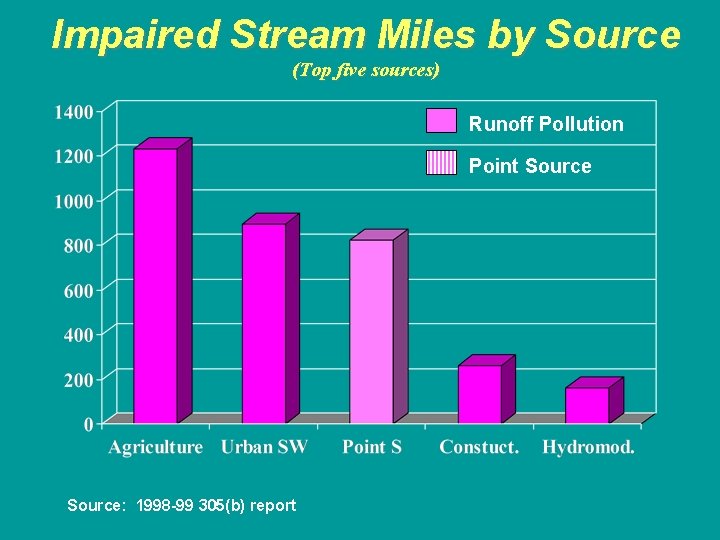
Impaired Stream Miles by Source (Top five sources) Runoff Pollution Point Source: 1998 -99 305(b) report
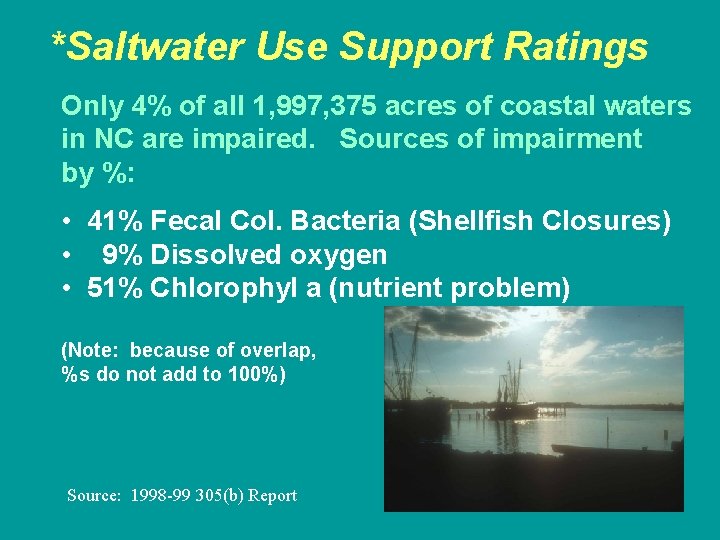
*Saltwater Use Support Ratings Only 4% of all 1, 997, 375 acres of coastal waters in NC are impaired. Sources of impairment by %: • 41% Fecal Col. Bacteria (Shellfish Closures) • 9% Dissolved oxygen • 51% Chlorophyl a (nutrient problem) (Note: because of overlap, %s do not add to 100%) Source: 1998 -99 305(b) Report
For further information contact: Alan Clark NC Division of Water Quality 1617 Mail Service Center Raleigh, NC 27699 -1617 919 -733 -5083 x 570 alan. clark@ncmail. net