An Introduction to Multiple Systems Estimation for Estimating





- Slides: 21
An Introduction to Multiple Systems Estimation for Estimating a Count of Adverse Events Jana Asher Carnegie Mellon University October 16, 2002
Outline • • • Background Overview of capture-recapture Capture-recapture model assumptions Multiple systems estimation • log-linear models • Rasch models Example • Ethnic Albanian deaths in Kosovo, – June 1999 March
Background Used for estimating a population count. • The size of a wildlife population. • The number of WWW pages. • The number of people in the USA. • The number of human rights violations (civilian deaths) in Guatemala and Kosovo. • Capture-recapture = dual systems estimation. • Multiple capture-recapture = multiple systems estimation. •
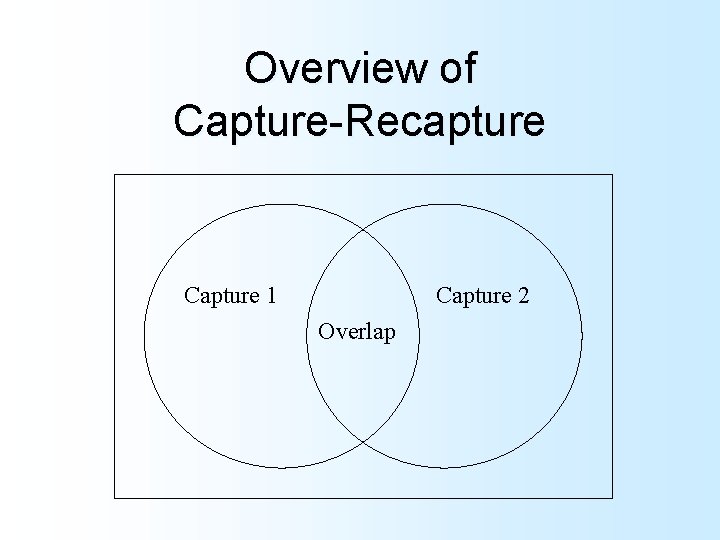
Overview of Capture-Recapture Capture 1 Capture 2 Overlap
Overview of Capture-Recapture
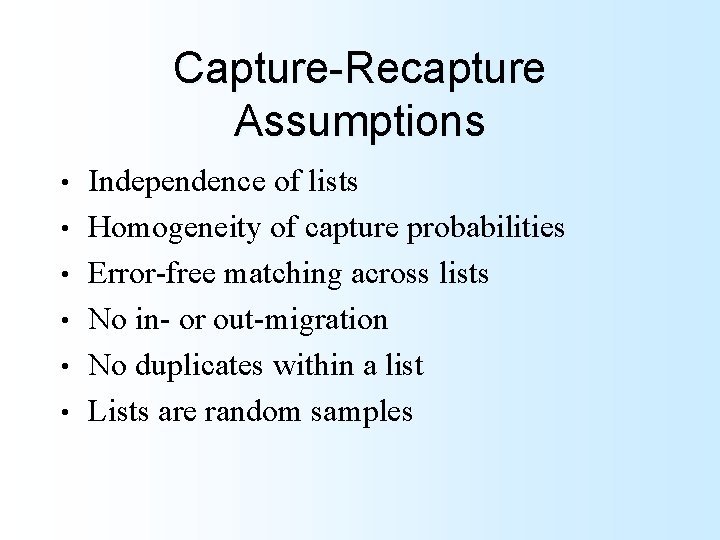
Capture-Recapture Assumptions • • • Independence of lists Homogeneity of capture probabilities Error-free matching across lists No in- or out-migration No duplicates within a list Lists are random samples
Multiple Systems Estimation for Three Lists • Three lists allow for modeling of dependency and/or heterogeneity.
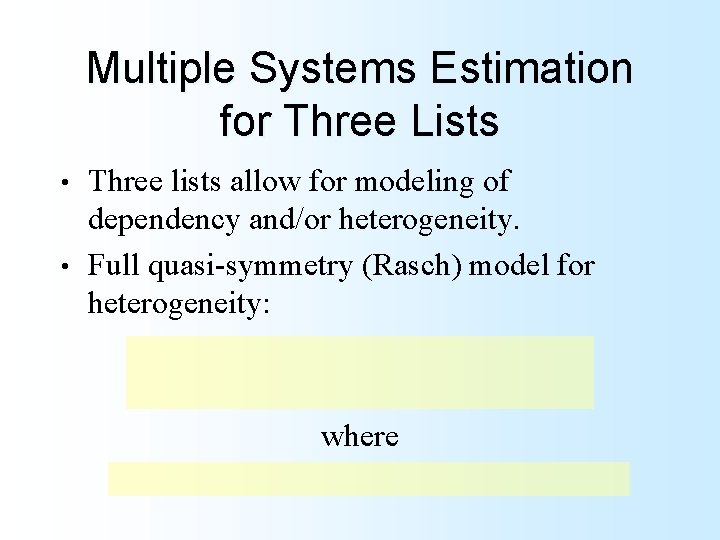
Multiple Systems Estimation for Three Lists Three lists allow for modeling of dependency and/or heterogeneity. • Model for dependency: • where
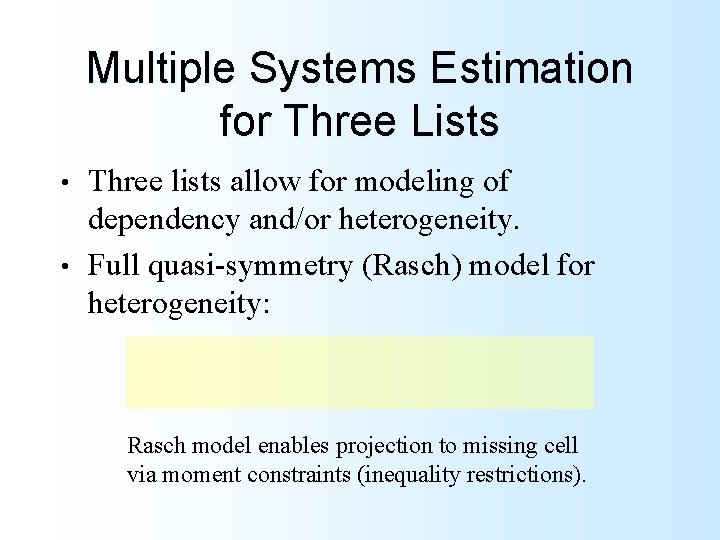
Multiple Systems Estimation for Three Lists Three lists allow for modeling of dependency and/or heterogeneity. • Full quasi-symmetry (Rasch) model for heterogeneity: • where
Multiple Systems Estimation for Three Lists Three lists allow for modeling of dependency and/or heterogeneity. • Full quasi-symmetry (Rasch) model for heterogeneity: • Rasch model enables projection to missing cell via moment constraints (inequality restrictions).
Multiple Systems Estimation for More than Three Lists Same modeling techniques, more parameters. • More high-quality lists available means less assumptions are required. •
Example: Kosovo Analysis required for the trial of former Yugoslav President Slobodan Milosevic for war crimes allegedly committed in Kosovo. • Question of interest: Did a systematic campaign by Yugoslav forces lead to Kosovar Albanian deaths and expel Kosovar Albanians from their homes? •
Example: Kosovo Migration data from two sources; analyzed using standard demographic techniques. • Ethnic Albanian death data from four sources; estimates of number of deaths derived via multiple systems estimation. •
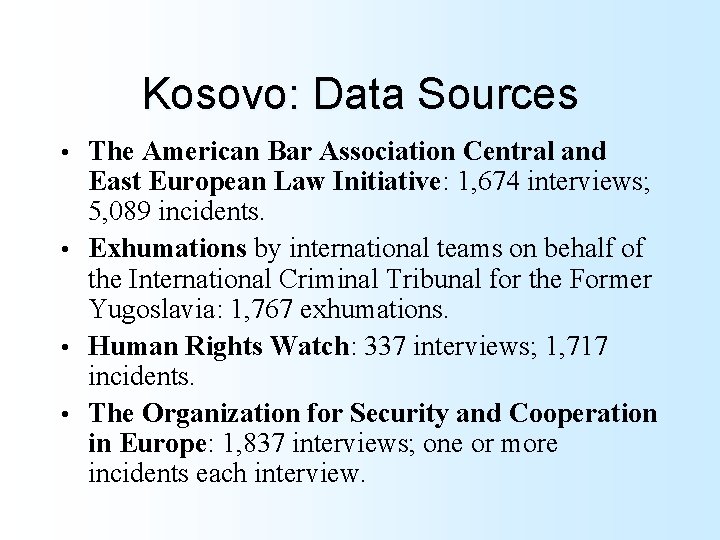
Kosovo: Data Sources The American Bar Association Central and East European Law Initiative: 1, 674 interviews; 5, 089 incidents. • Exhumations by international teams on behalf of the International Criminal Tribunal for the Former Yugoslavia: 1, 767 exhumations. • Human Rights Watch: 337 interviews; 1, 717 incidents. • The Organization for Security and Cooperation in Europe: 1, 837 interviews; one or more incidents each interview. •
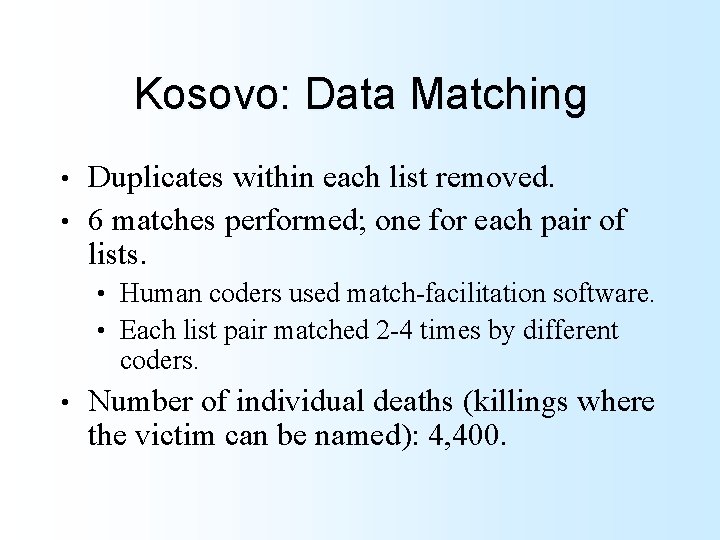
Kosovo: Data Matching Duplicates within each list removed. • 6 matches performed; one for each pair of lists. • • Human coders used match-facilitation software. • Each list pair matched 2 -4 times by different coders. • Number of individual deaths (killings where the victim can be named): 4, 400.
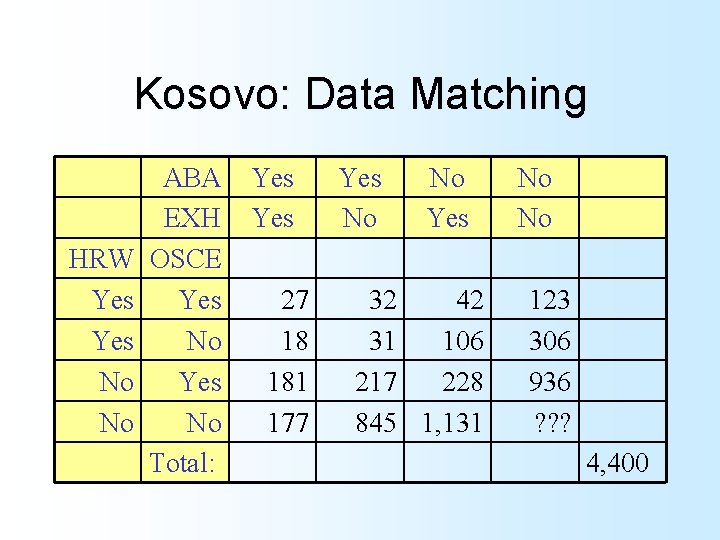
Kosovo: Data Matching HRW Yes No No ABA EXH OSCE Yes No Total: Yes 27 18 181 177 Yes No No Yes 32 42 31 106 217 228 845 1, 131 No No 123 306 936 ? ? ? 4, 400
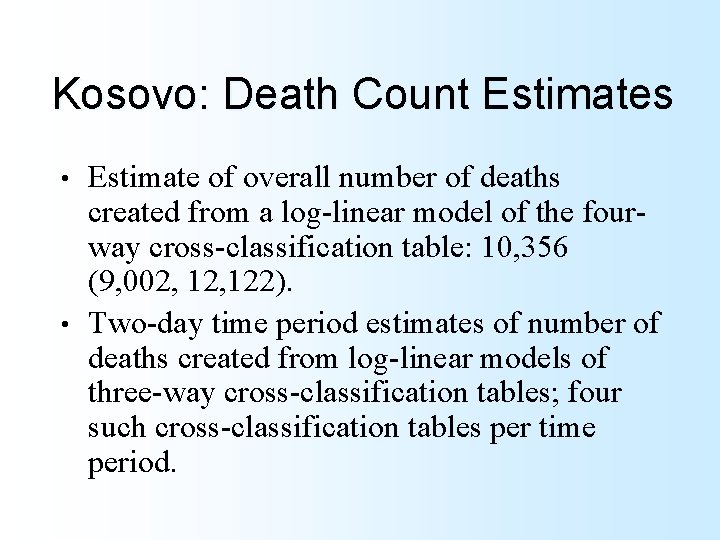
Kosovo: Death Count Estimates Estimate of overall number of deaths created from a log-linear model of the fourway cross-classification table: 10, 356 (9, 002, 122). • Two-day time period estimates of number of deaths created from log-linear models of three-way cross-classification tables; four such cross-classification tables per time period. •
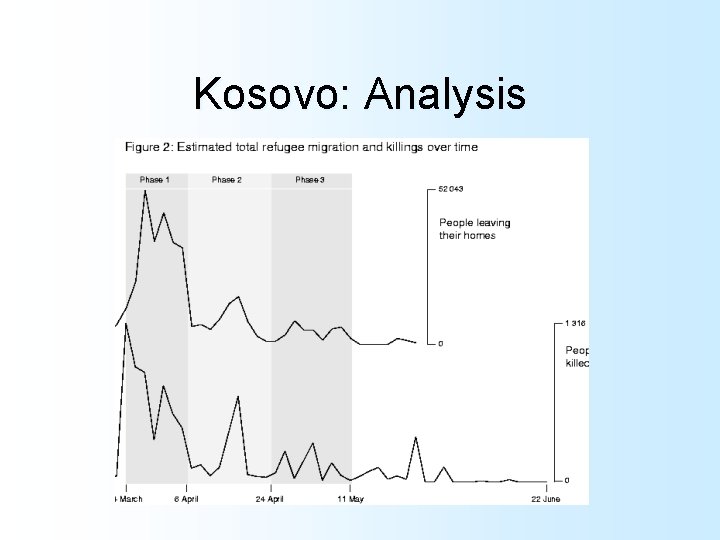
Kosovo: Analysis
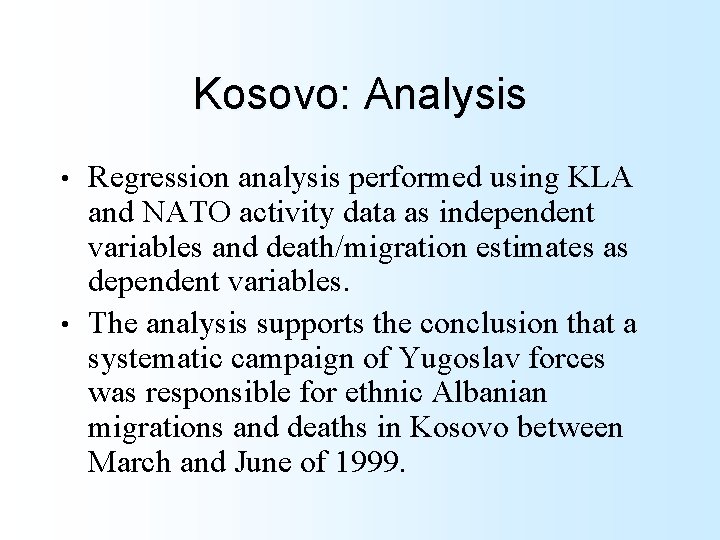
Kosovo: Analysis Regression analysis performed using KLA and NATO activity data as independent variables and death/migration estimates as dependent variables. • The analysis supports the conclusion that a systematic campaign of Yugoslav forces was responsible for ethnic Albanian migrations and deaths in Kosovo between March and June of 1999. •
Overall Conclusions Where several high-quality pre-existing incomplete lists of adverse events exist, multiple systems estimation is a viable technique for estimating a total count of adverse events. • Relatively sophisticated technical expertise is required to use this estimation technique well. •
Further Reading • Ball, P. , Betts, W. , Scheuren, F. , Dudukovich, J. , and Asher, J. (2002). Killings and Refugee Flow in Kosovo March - June 1999: A Report to the International Criminal Tribunal for the Former Yugoslavia. American Association for the Advancement of Science, Washington, DC. • Contains a good reference list. • Available on my website: http: //www. stat. cmu. edu/ ~asher/PAPERS 2002/polkilkos_020109. pdf