Airspace FAAH8083 25 A Chapter 14 Centennial Aviation
- Slides: 17
Airspace FAA-H-8083 -25 A Chapter 14 Centennial Aviation Academy
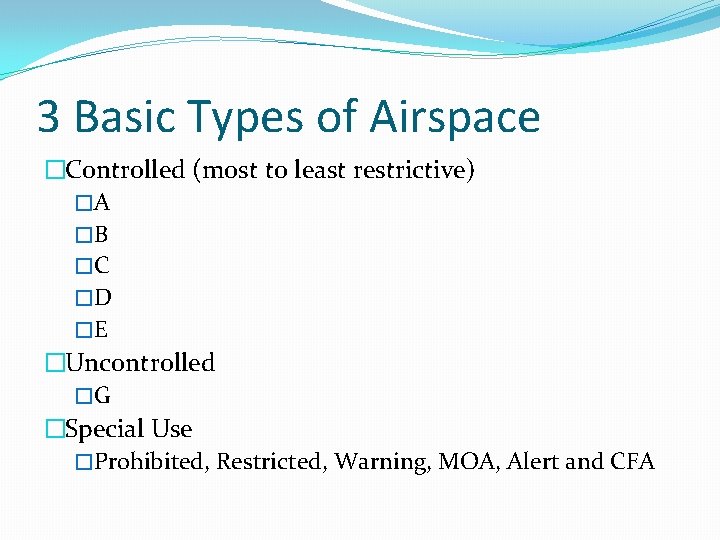
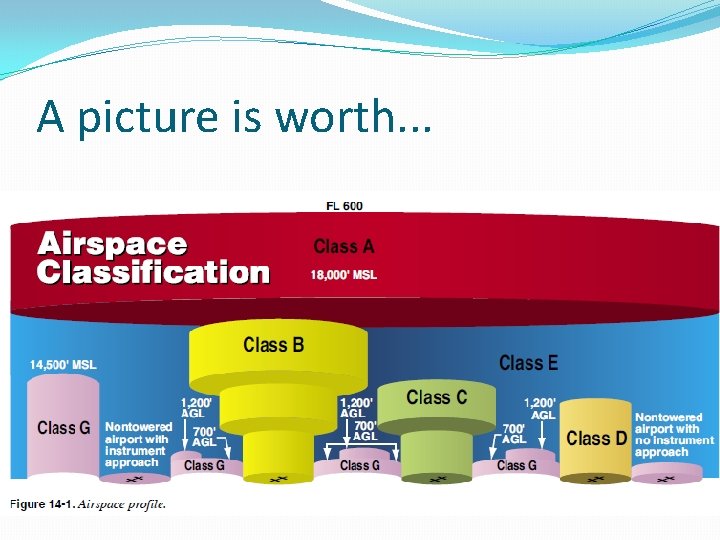
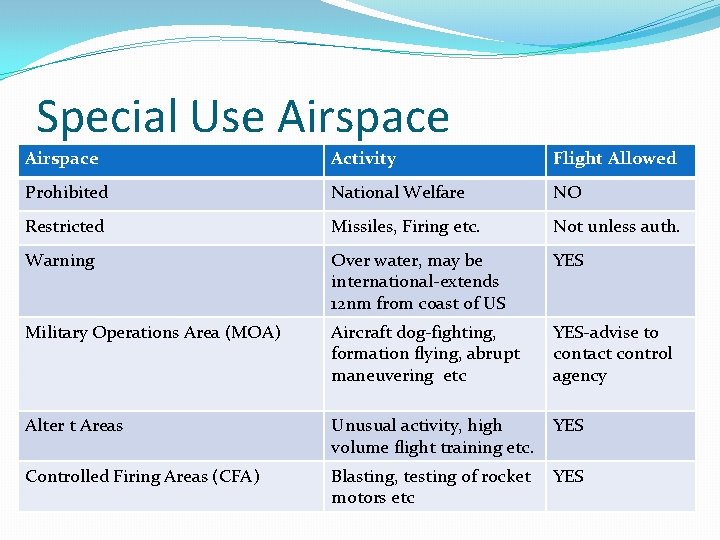
3 Basic Types of Airspace �Controlled (most to least restrictive) �A �B �C �D �E �Uncontrolled �G �Special Use �Prohibited, Restricted, Warning, MOA, Alert and CFA
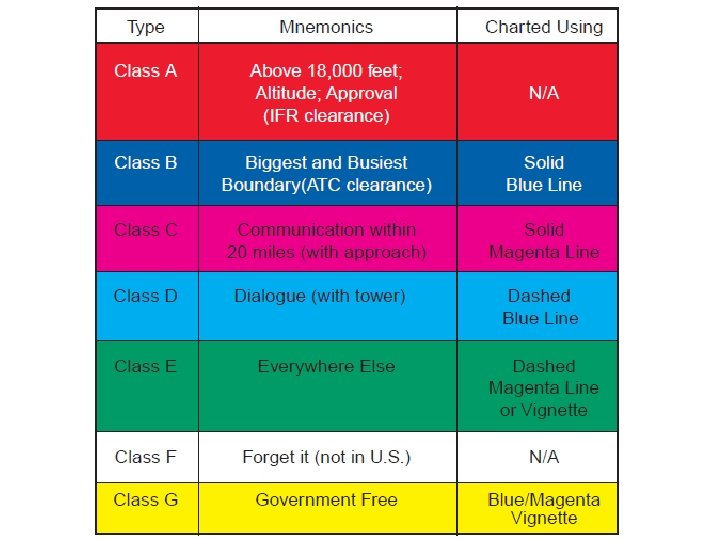
A picture is worth. . .
Lets look at Controlled Airspace �Basically its airspace in which ATC services are provided �Controlled airspace is designed around IFR traffic. . . But not to worry, VFR wasn’t an afterthought
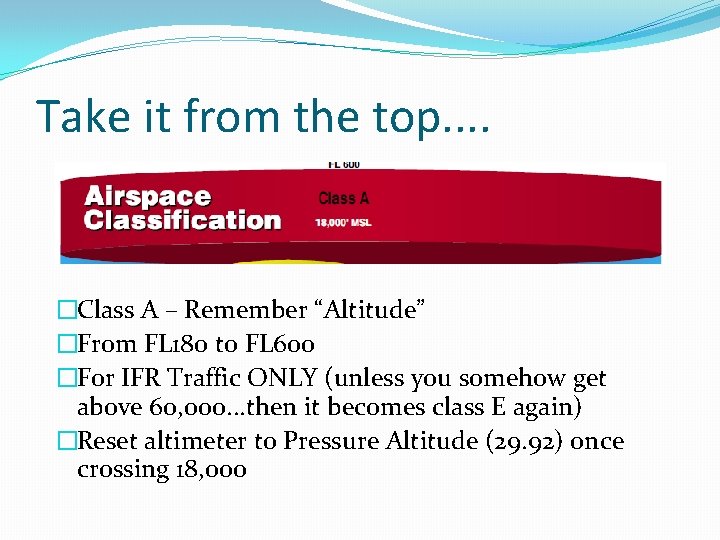
Take it from the top. . �Class A – Remember “Altitude” �From FL 180 to FL 600 �For IFR Traffic ONLY (unless you somehow get above 60, 000. . . then it becomes class E again) �Reset altimeter to Pressure Altitude (29. 92) once crossing 18, 000
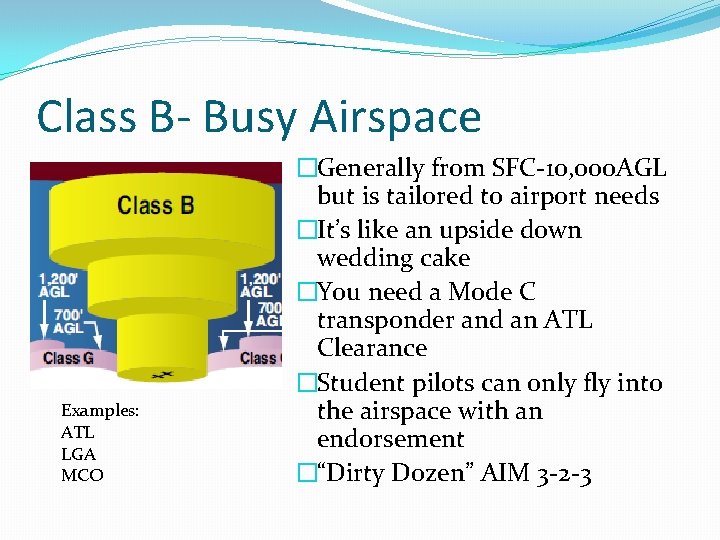
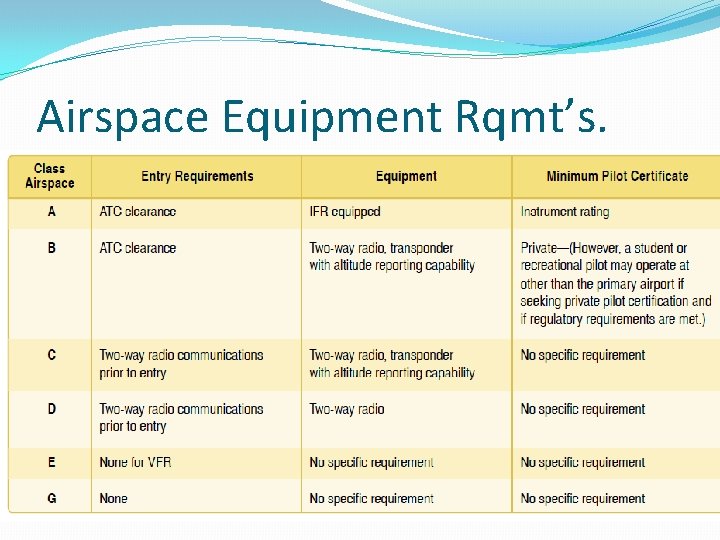
Class B- Busy Airspace Examples: ATL LGA MCO �Generally from SFC-10, 000 AGL but is tailored to airport needs �It’s like an upside down wedding cake �You need a Mode C transponder and an ATL Clearance �Student pilots can only fly into the airspace with an endorsement �“Dirty Dozen” AIM 3 -2 -3
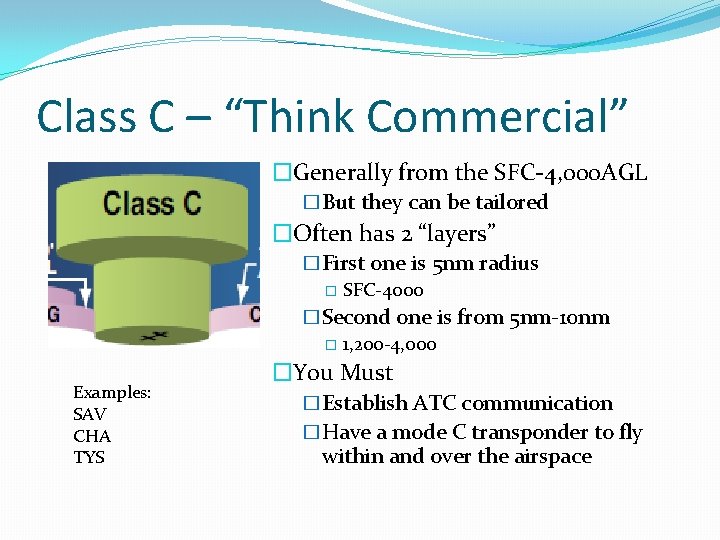
Class C – “Think Commercial” �Generally from the SFC-4, 000 AGL �But they can be tailored �Often has 2 “layers” �First one is 5 nm radius � SFC-4000 �Second one is from 5 nm-10 nm � 1, 200 -4, 000 Examples: SAV CHA TYS �You Must �Establish ATC communication �Have a mode C transponder to fly within and over the airspace
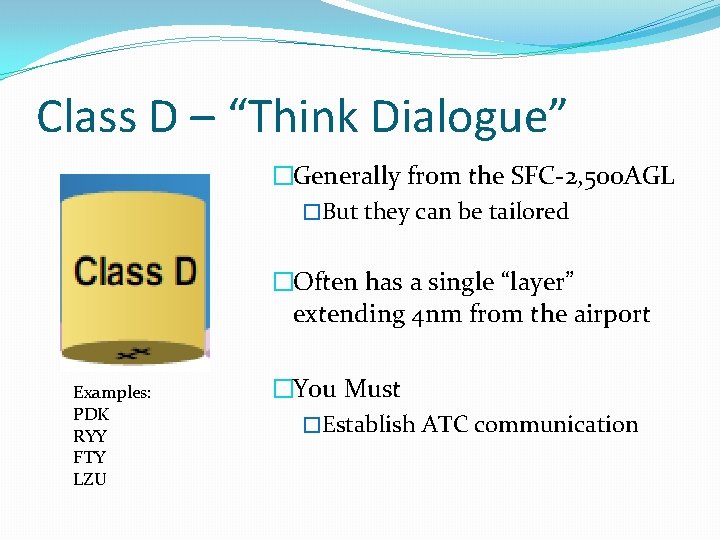
Class D – “Think Dialogue” �Generally from the SFC-2, 500 AGL �But they can be tailored �Often has a single “layer” extending 4 nm from the airport Examples: PDK RYY FTY LZU �You Must �Establish ATC communication
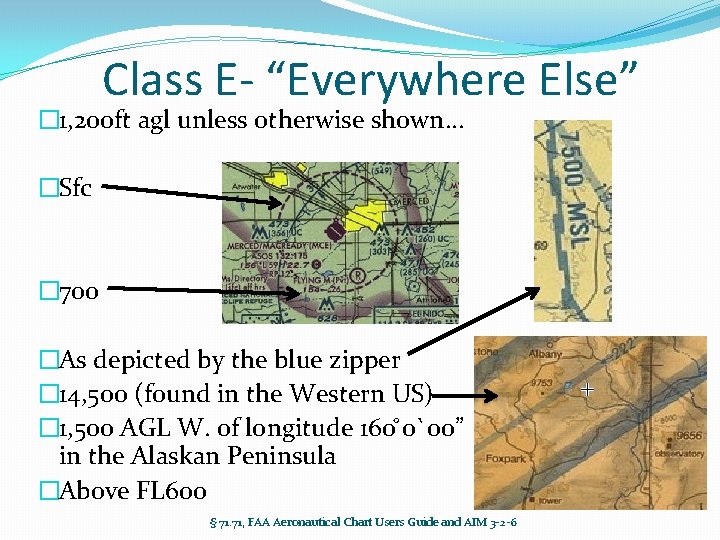
Class E- “Everywhere Else” � 1, 200 ft agl unless otherwise shown. . . �Sfc � 700 �As depicted by the blue zipper � 14, 500 (found in the Western US) � 1, 500 AGL W. of longitude 160 0`00” in the Alaskan Peninsula �Above FL 600 § 71. 71, FAA Aeronautical Chart Users Guide and AIM 3 -2 -6
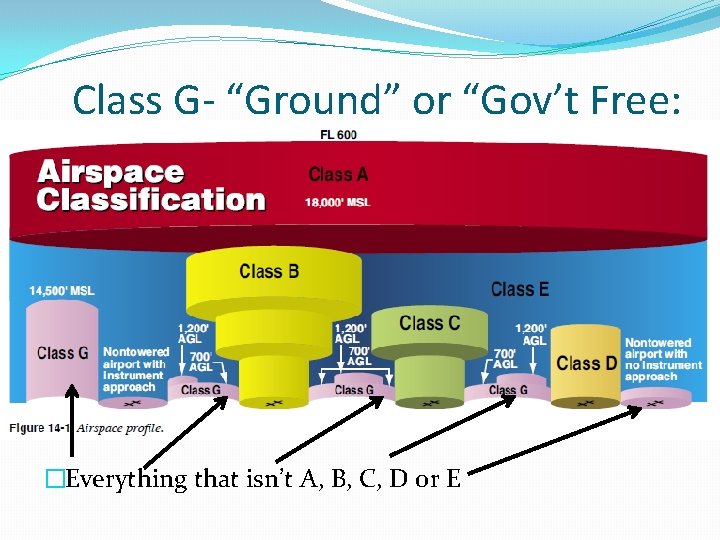
Class G- “Ground” or “Gov’t Free: �Everything that isn’t A, B, C, D or E
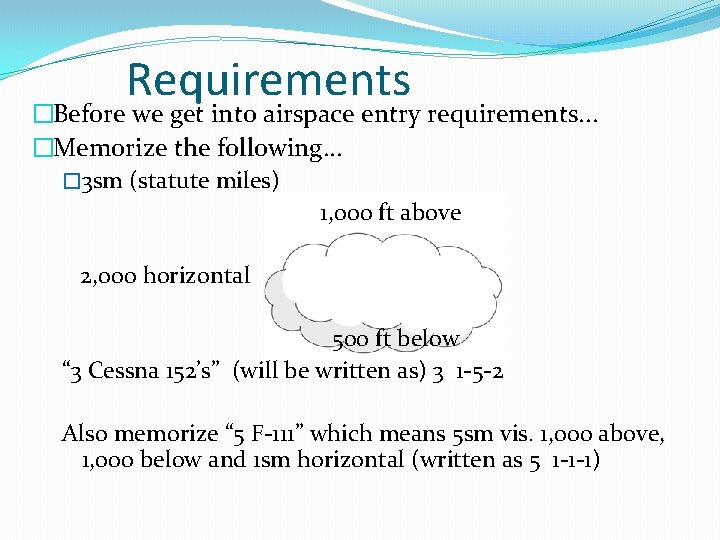
Requirements �Before we get into airspace entry requirements. . . �Memorize the following. . . � 3 sm (statute miles) 1, 000 ft above 2, 000 horizontal 500 ft below “ 3 Cessna 152’s” (will be written as) 3 1 -5 -2 Also memorize “ 5 F-111” which means 5 sm vis. 1, 000 above, 1, 000 below and 1 sm horizontal (written as 5 1 -1 -1)
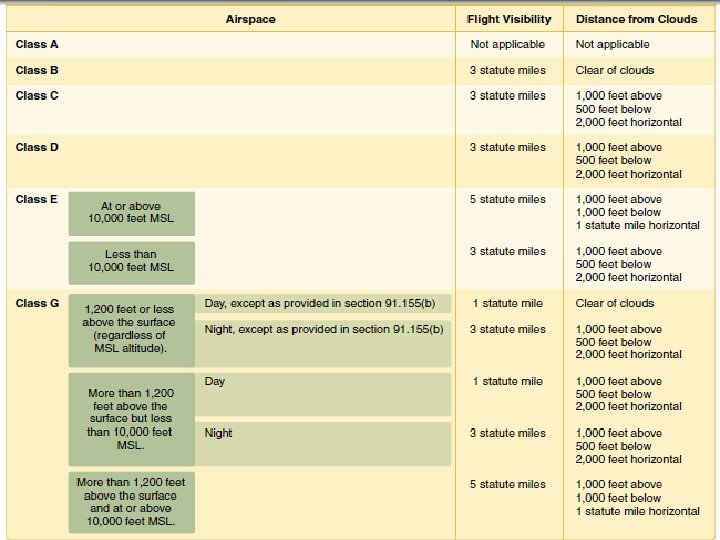
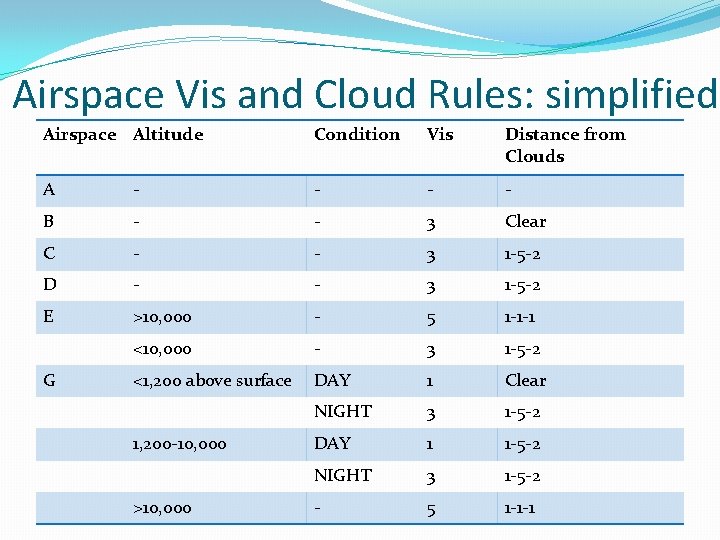
Airspace Vis and Cloud Rules: simplified Airspace Altitude Condition Vis Distance from Clouds A - - B - - 3 Clear C - - 3 1 -5 -2 D - - 3 1 -5 -2 E >10, 000 - 5 1 -1 -1 <10, 000 - 3 1 -5 -2 <1, 200 above surface DAY 1 Clear NIGHT 3 1 -5 -2 DAY 1 1 -5 -2 NIGHT 3 1 -5 -2 - 5 1 -1 -1 G 1, 200 -10, 000 >10, 000
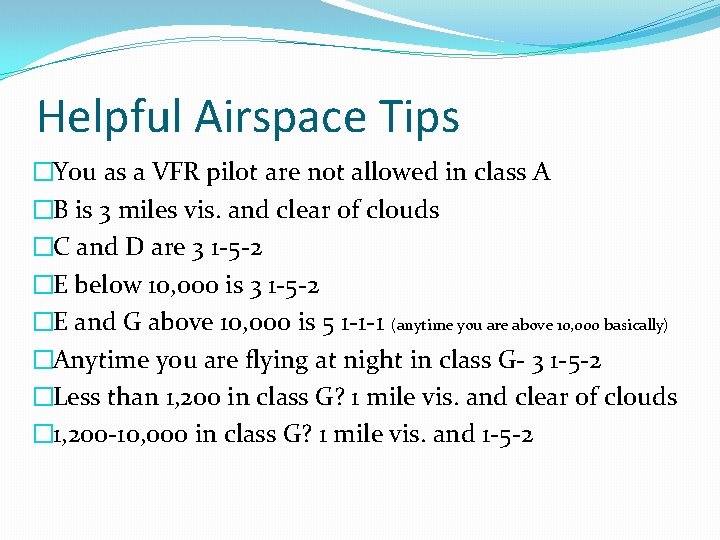
Helpful Airspace Tips �You as a VFR pilot are not allowed in class A �B is 3 miles vis. and clear of clouds �C and D are 3 1 -5 -2 �E below 10, 000 is 3 1 -5 -2 �E and G above 10, 000 is 5 1 -1 -1 (anytime you are above 10, 000 basically) �Anytime you are flying at night in class G- 3 1 -5 -2 �Less than 1, 200 in class G? 1 mile vis. and clear of clouds � 1, 200 -10, 000 in class G? 1 mile vis. and 1 -5 -2
Airspace Equipment Rqmt’s.
Special Use Airspace Activity Flight Allowed Prohibited National Welfare NO Restricted Missiles, Firing etc. Not unless auth. Warning Over water, may be international-extends 12 nm from coast of US YES Military Operations Area (MOA) Aircraft dog-fighting, formation flying, abrupt maneuvering etc YES-advise to contact control agency Alter t Areas Unusual activity, high volume flight training etc. YES �http: //www. aopa. org/airports/airspace Controlled Firing Areas (CFA) Blasting, testing of rocket motors etc YES