Advocacy Centre on Council of Europe Standards Antonina

- Slides: 26
Advocacy Centre on Council of Europe Standards Antonina Vykhrest, Co-Founding Director Gyumri, Armenia Friday, December 2, 2017 THE COUNCIL OF EUROPE Advocacy Opportunities for Civil Society
An overview of the Council of Europe I. How well do you know the Council of Europe? II. The structure and institutions of the Council of Europe III. The action of the Co. E and the role of civil society
I. How well do you know the Council of Europe? _____________________________
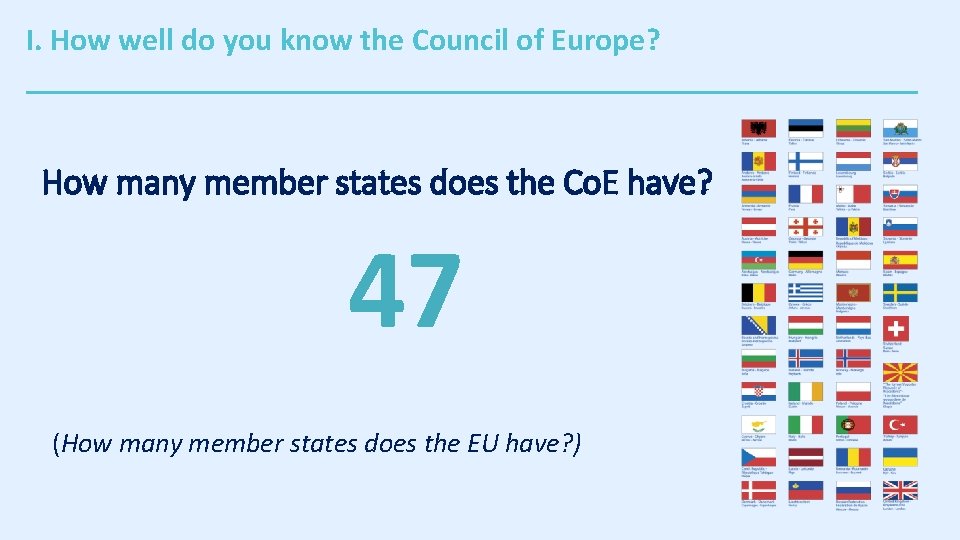
I. How well do you know the Council of Europe? ____________________________ How many member states does the Co. E have? 47 (How many member states does the EU have? )
I. How well do you know the Council of Europe? ____________________________ Can you name the countries with observer status at the Co. E? 1. 2. 3. 4. 5. The Holy See The United States Canada Japan Mexico
I. How well do you know the Council of Europe? ____________________________ What are three core values of the Council of Europe 1. Human Rights 2. Democracy 3. Rule of Law
I. How well do you know the Council of Europe? ____________________________ When was the Co. E founded? 5 May 1949 5 May has since become Europe Day!
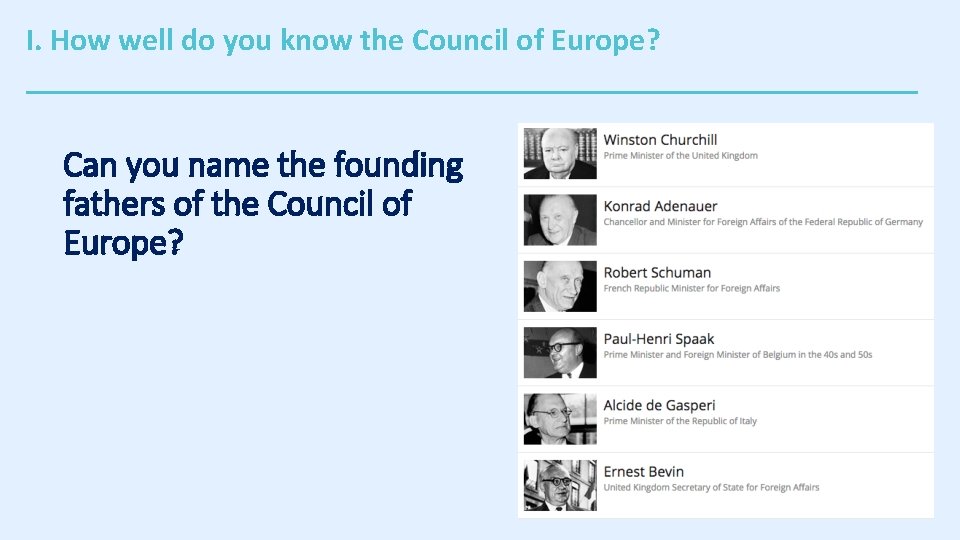
I. How well do you know the Council of Europe? ____________________________ Can you name the founding fathers of the Council of Europe?
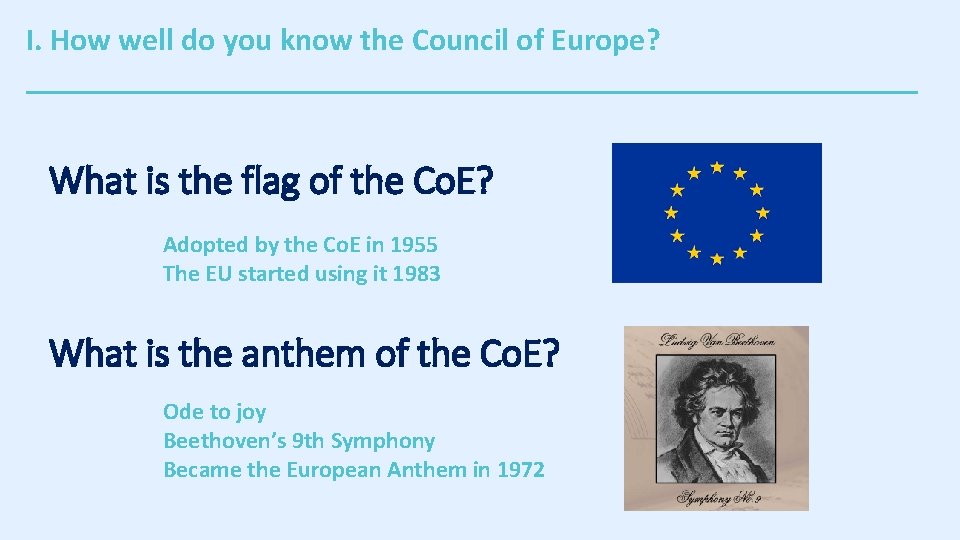
I. How well do you know the Council of Europe? ____________________________ What is the flag of the Co. E? Adopted by the Co. E in 1955 The EU started using it 1983 What is the anthem of the Co. E? Ode to joy Beethoven’s 9 th Symphony Became the European Anthem in 1972
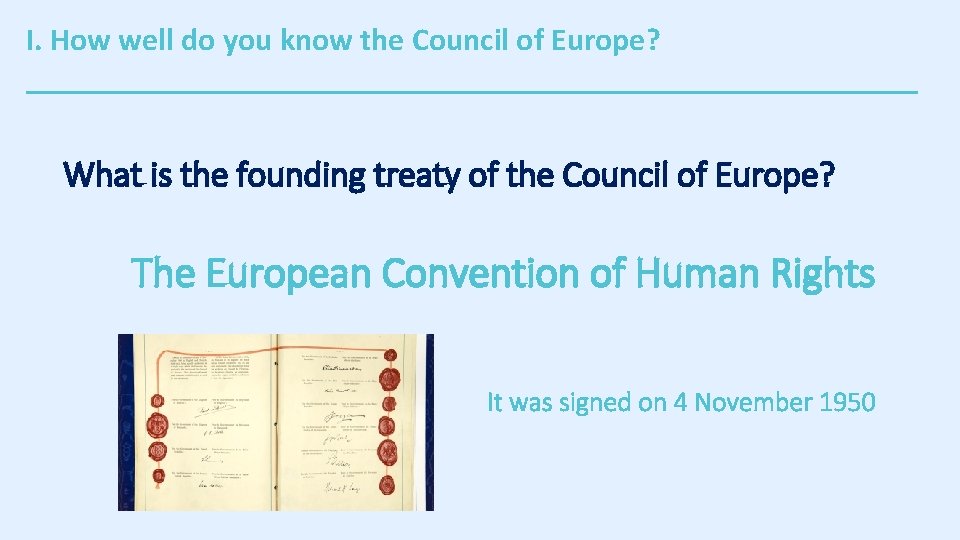
I. How well do you know the Council of Europe? ____________________________ What is the founding treaty of the Council of Europe? The European Convention of Human Rights It was signed on 4 November 1950
I. How well do you know the Council of Europe? ____________________________ How many treaties has the Co. E adopted? A. 10+ ? B. 50+ ? C. 100+ ? More than 210! Can you name a few?
II. The structure and institutions of the Council of Europe _________________________
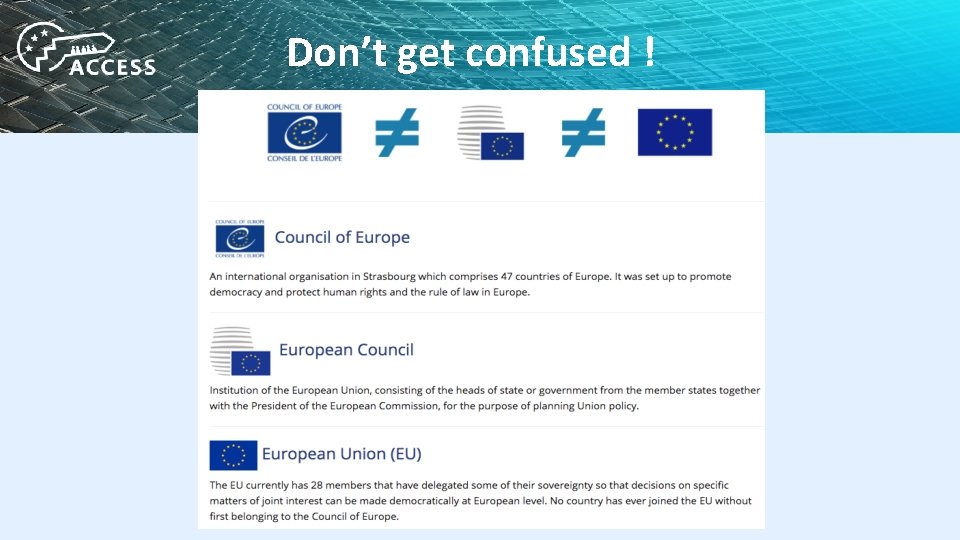
Don’t get confused !
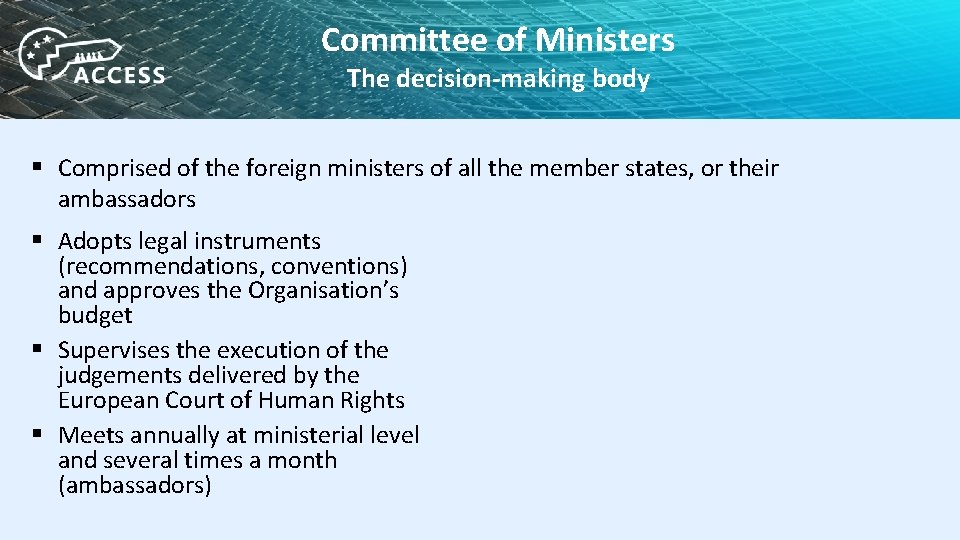
Committee of Ministers The decision-making body § Comprised of the foreign ministers of all the member states, or their ambassadors § Adopts legal instruments (recommendations, conventions) and approves the Organisation’s budget § Supervises the execution of the judgements delivered by the European Court of Human Rights § Meets annually at ministerial level and several times a month (ambassadors)
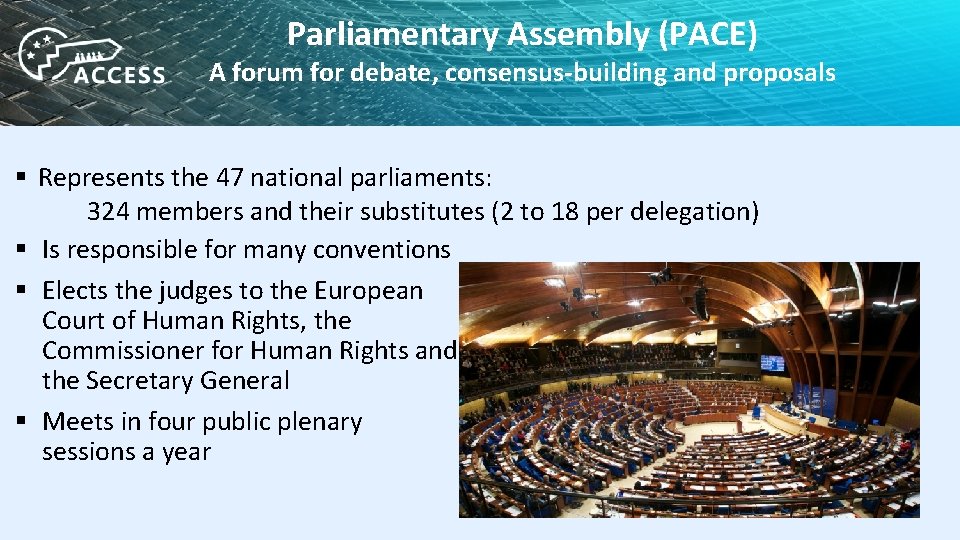
Parliamentary Assembly (PACE) A forum for debate, consensus-building and proposals § Represents the 47 national parliaments: 324 members and their substitutes (2 to 18 per delegation) § Is responsible for many conventions § Elects the judges to the European Court of Human Rights, the Commissioner for Human Rights and the Secretary General § Meets in four public plenary sessions a year
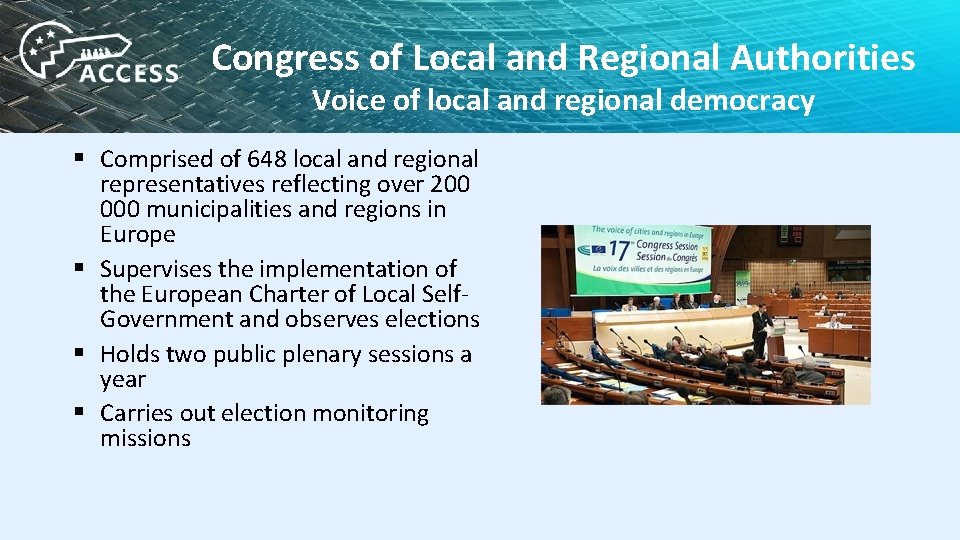
Congress of Local and Regional Authorities Voice of local and regional democracy § Comprised of 648 local and regional representatives reflecting over 200 000 municipalities and regions in Europe § Supervises the implementation of the European Charter of Local Self. Government and observes elections § Holds two public plenary sessions a year § Carries out election monitoring missions
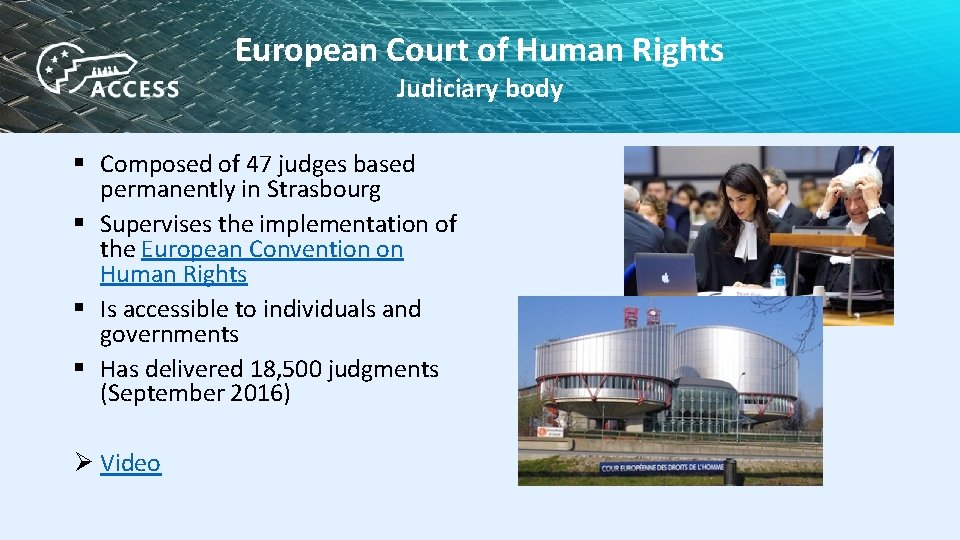
European Court of Human Rights Judiciary body § Composed of 47 judges based permanently in Strasbourg § Supervises the implementation of the European Convention on Human Rights § Is accessible to individuals and governments § Has delivered 18, 500 judgments (September 2016) Ø Video
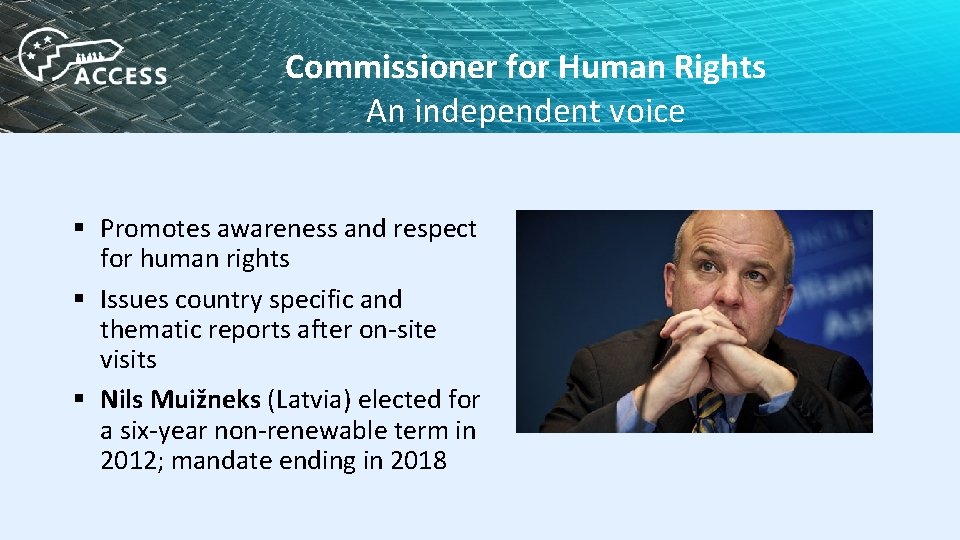
Commissioner for Human Rights An independent voice § Promotes awareness and respect for human rights § Issues country specific and thematic reports after on-site visits § Nils Muižneks (Latvia) elected for a six-year non-renewable term in 2012; mandate ending in 2018
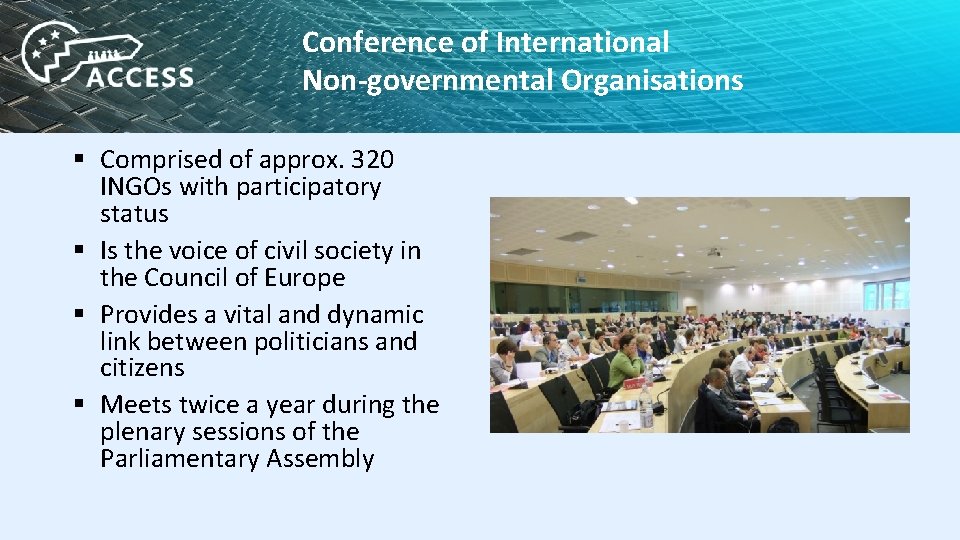
Conference of International Non-governmental Organisations § Comprised of approx. 320 INGOs with participatory status § Is the voice of civil society in the Council of Europe § Provides a vital and dynamic link between politicians and citizens § Meets twice a year during the plenary sessions of the Parliamentary Assembly
European Youth Centres in Strasbourg and Budapest § Runs training activities for 5, 000 youth association leaders and support projects of 15, 000 young people thanks to the European Youth Foundation § Organises “youth peace camps” gathering young people coming from conflictstricken regions § Launches campaigns such as the “No Hate Speech Movement” § Decides on priorities and programmes through a unique “co-management” system including youth organisations and government representatives Ø Video
Major Achievements üAbolition of death penalty üCybercrime üPrevention of torture üHuman trafficking üSocial protection (European Social Charter) üSexual exploitation of children üProtection of national minorities üViolence against women and domestic violence
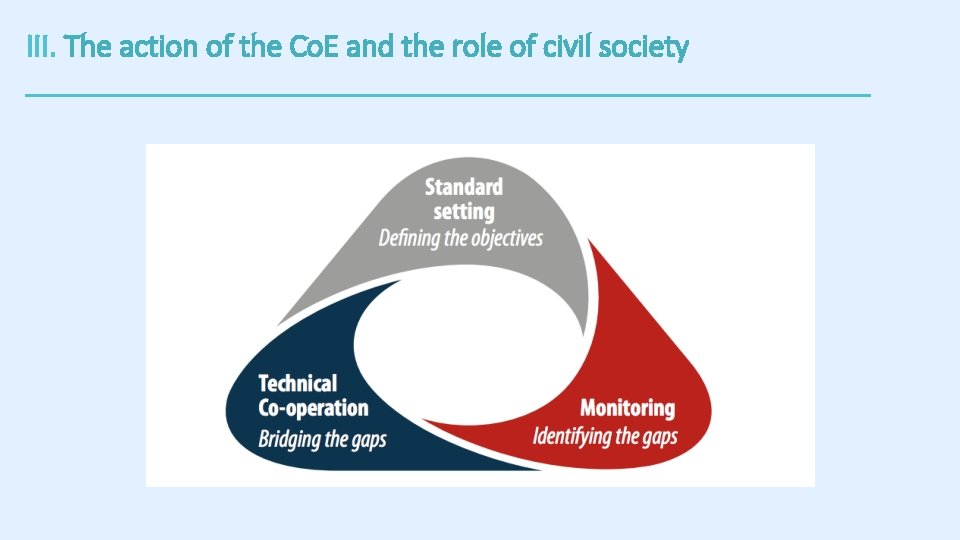
III. The action of the Co. E and the role of civil society ______________________
III. The action of the Co. E and the role of civil society ___________________________
Zooming in to the monitoring mechanisms ü European Committee of Social Rights (ECSR) ü Committee for the Prevention of Torture (CPT) ü GREVIO ü GRETA ü European Commission against Racism and Intolerance (ECRI)
Advocacy Centre on Council of Europe Standards Antonina Vykhrest, Co-Founding Director Gyumri, Armenia Friday, December 2, 2017 Thank you for your attention! Advocacy Centre on Council of Europe Standards (ACCESS) Strasbourg, France More information: www. accessrights. org CONTACT: info@accessrights. org a. vykhrest@accessrights. org