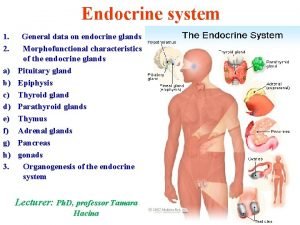
Addisons Disease MS II Adrenal Glands Adrenal Medulla
- Slides: 21
Addison’s Disease MS II
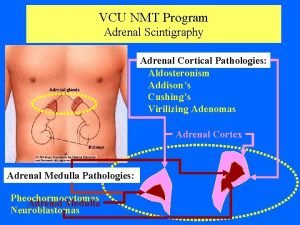
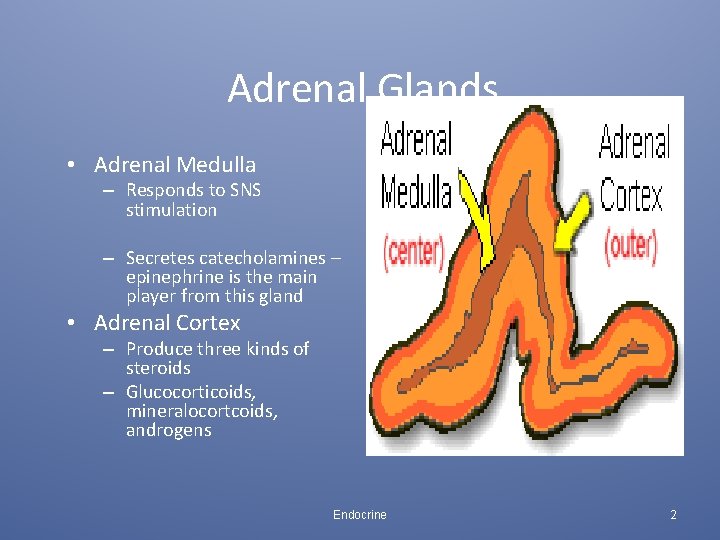
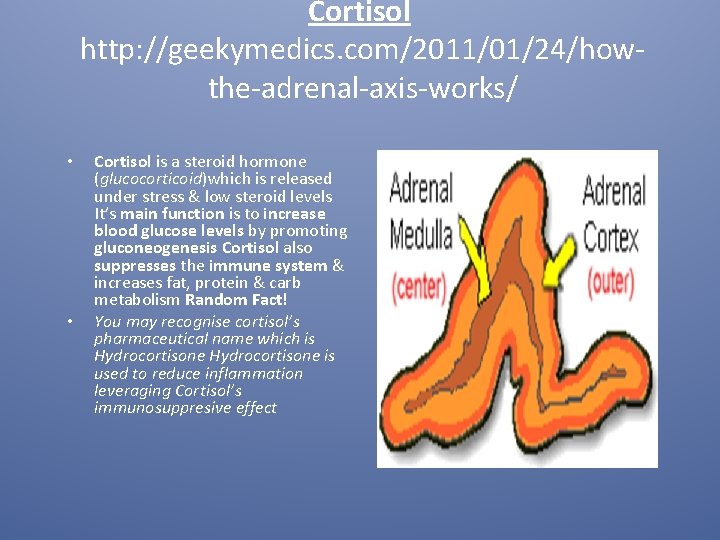
Adrenal Glands • Adrenal Medulla – Responds to SNS stimulation – Secretes catecholamines – epinephrine is the main player from this gland • Adrenal Cortex – Produce three kinds of steroids – Glucocorticoids, mineralocortcoids, androgens Endocrine 2
Adrenal Gland • Primary adrenal disorders • Clinical assessment – History – Physical examination Copyright © 2014, 2010 by Mosby, an imprint of Elsevier Inc. 3
Adrenal Gland (Cont. ) • Clinical assessment (Cont. ) – Addison disease – Critical illness–related corticosteroid insufficiency – Adrenal medulla • Pheochromocytoma Copyright © 2014, 2010 by Mosby, an imprint of Elsevier Inc. 4
Adrenal Gland (Cont. ) • Laboratory studies – Adrenal insufficiency and critical illness • Diagnostic procedures Copyright © 2014, 2010 by Mosby, an imprint of Elsevier Inc. 5
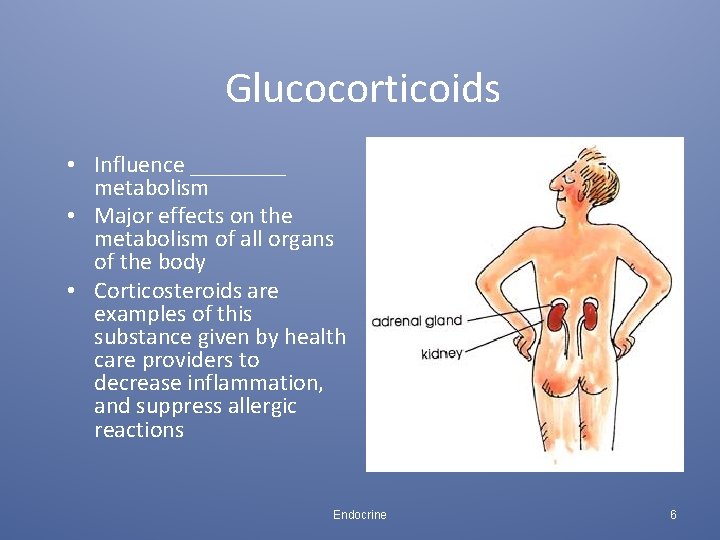
Glucocorticoids • Influence ____ metabolism • Major effects on the metabolism of all organs of the body • Corticosteroids are examples of this substance given by health care providers to decrease inflammation, and suppress allergic reactions Endocrine 6
Cortisol http: //geekymedics. com/2011/01/24/howthe-adrenal-axis-works/ • • Cortisol is a steroid hormone (glucocorticoid)which is released under stress & low steroid levels It’s main function is to increase blood glucose levels by promoting gluconeogenesis Cortisol also suppresses the immune system & increases fat, protein & carb metabolism Random Fact! You may recognise cortisol’s pharmaceutical name which is Hydrocortisone is used to reduce inflammation leveraging Cortisol’s immunosuppresive effect
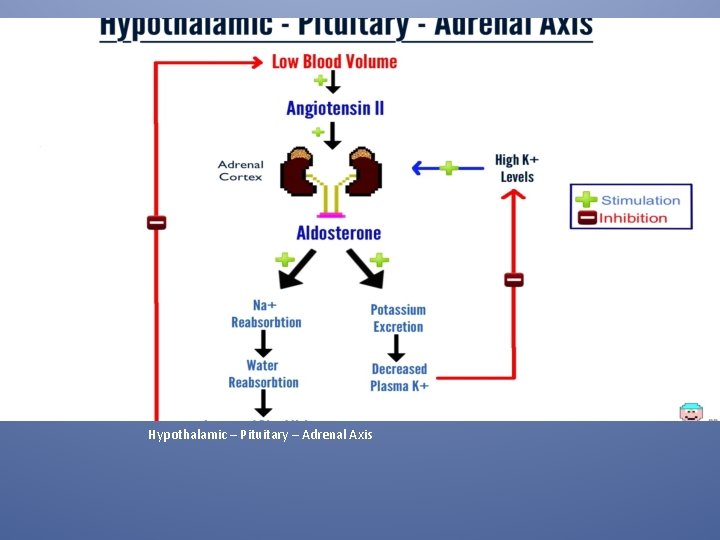
Mineralocorticoids-Aldosterone • http: //geekymedics. com/2011/01/24/how-theadrenal-axis-works/ • Aldosterone is also a steroid hormone (mineralocorticoid) It’s main function is to increase blood volume It causes reabsorption of sodium and water as well as causing excretion of potassium. Random Fact! • Drugs that interfere with the secretion or action of Aldosterone are in used as antihypertensives An example is Spironolactone which blocks Aldosterone receptors Endocrine 8
Hypothalamic – Pituitary – Adrenal Axis
Pheochromocytoma • Tumor of the adrenal medulla • Hereditary, high incidence of occurrence in family members • Symptoms: – Headache, diaphoresis, and palpitations – Hyperglycemia – Hypertensive emergencies Endocrine 10
Diagnostic findings • 24 hour urine – will show elevated levels of catecholamines • Clonidine suppression test-will not stop catecholamine levels from being excreted Endocrine 11
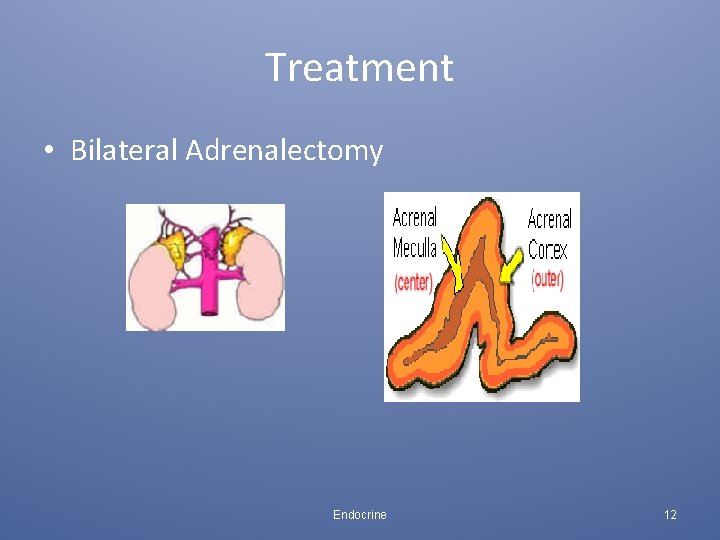
Treatment • Bilateral Adrenalectomy Endocrine 12
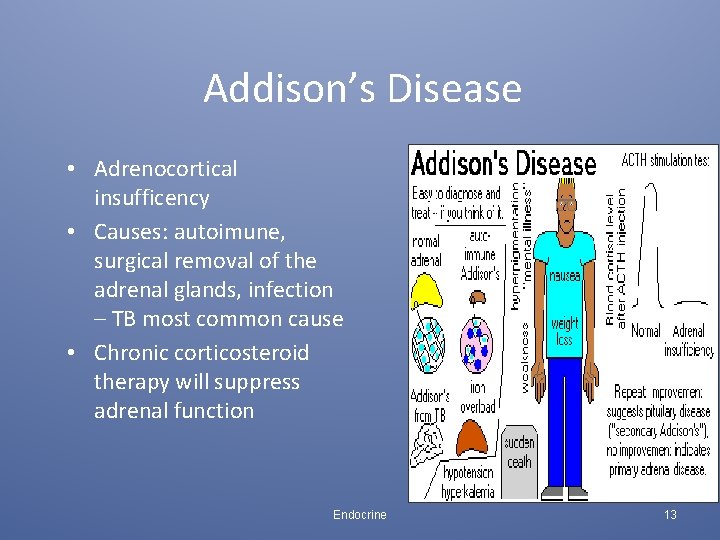
Addison’s Disease • Adrenocortical insufficency • Causes: autoimune, surgical removal of the adrenal glands, infection – TB most common cause • Chronic corticosteroid therapy will suppress adrenal function Endocrine 13
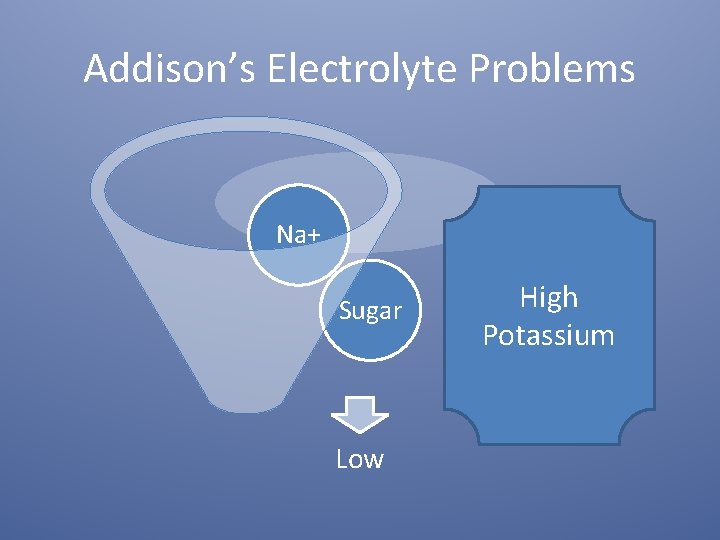
Addison’s Electrolyte Problems Na+ Sugar Low High Potassium
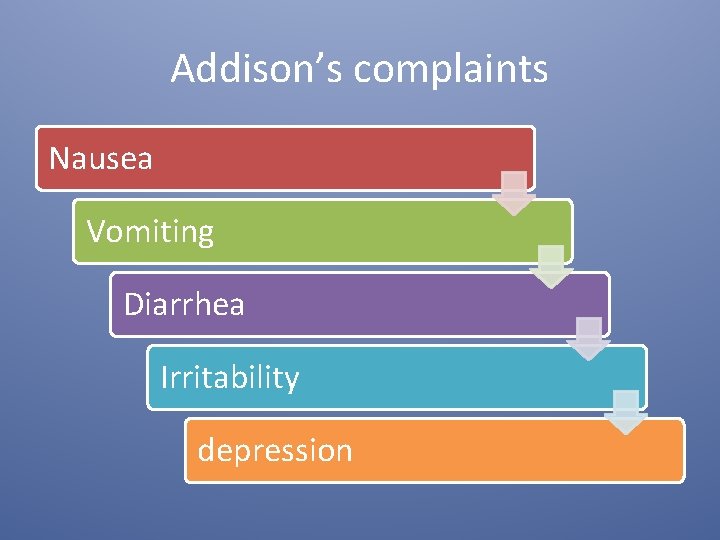
Addison’s complaints Nausea Vomiting Diarrhea Irritability depression
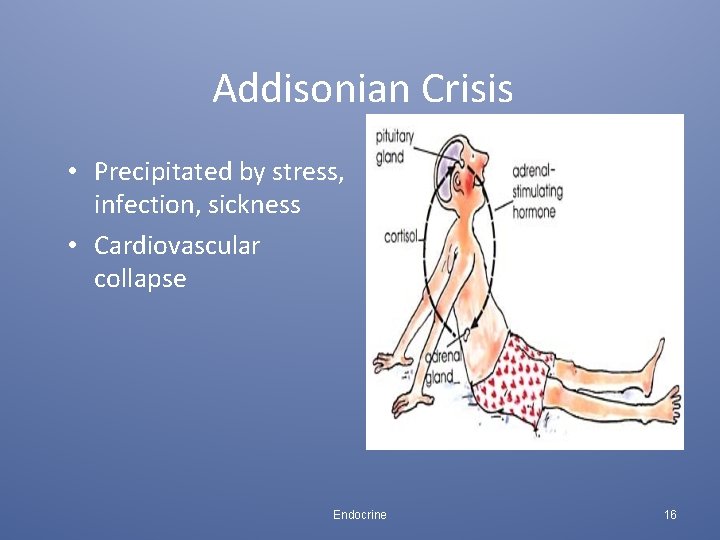
Addisonian Crisis • Precipitated by stress, infection, sickness • Cardiovascular collapse Endocrine 16
Addisonian Crisis/Potential complication • • • Manifested by: Blood pressure – Pulse Respiratory rate Skin color Patient feeling Endocrine 17
Managment Restore circulation Fluid Give corticosteroids Solu-Cortef D 5 NS fluids Vasopressor amines Treat underlying cause Lifelong replacement is needed if the adrenal gland does not regain function Supplement with added salt during times of stress Endocrine 18
Care of the patient with Addison’s Disease • ADL’s • Assessment • Dietary needs • Patient is total care during the initial crisis • Assess turgor, mucous membranes, orthostatic blood pressures will signify need for more fluids • Six small feeding, carbo’s, high protein • Need to deal with stress Endocrine 19
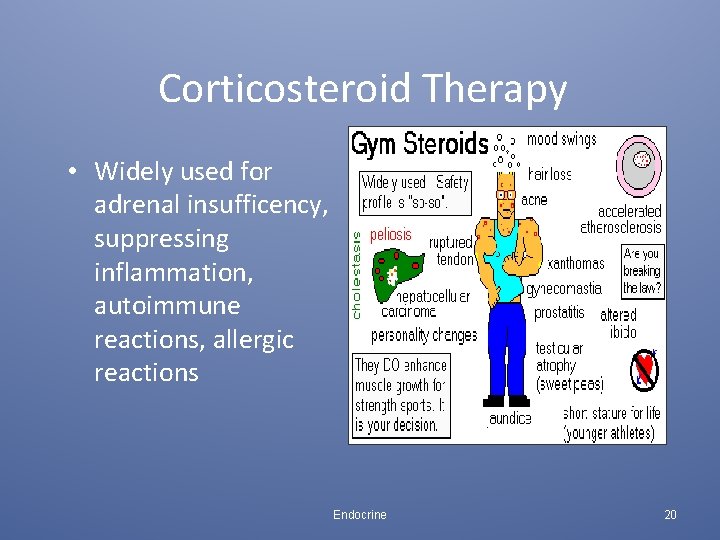
Corticosteroid Therapy • Widely used for adrenal insufficency, suppressing inflammation, autoimmune reactions, allergic reactions Endocrine 20
Things to remember • Corticosteroids are always tapered off • Acute withdrawal will precipitate an addisonian crisis related to adrenal insufficency Endocrine 21