A pedagogical application of ConsciousCompetence model Dr Yang
- Slides: 23
A pedagogical application of Conscious-Competence model Dr. Yang and Dr. Michael Okereke University of Greenwich
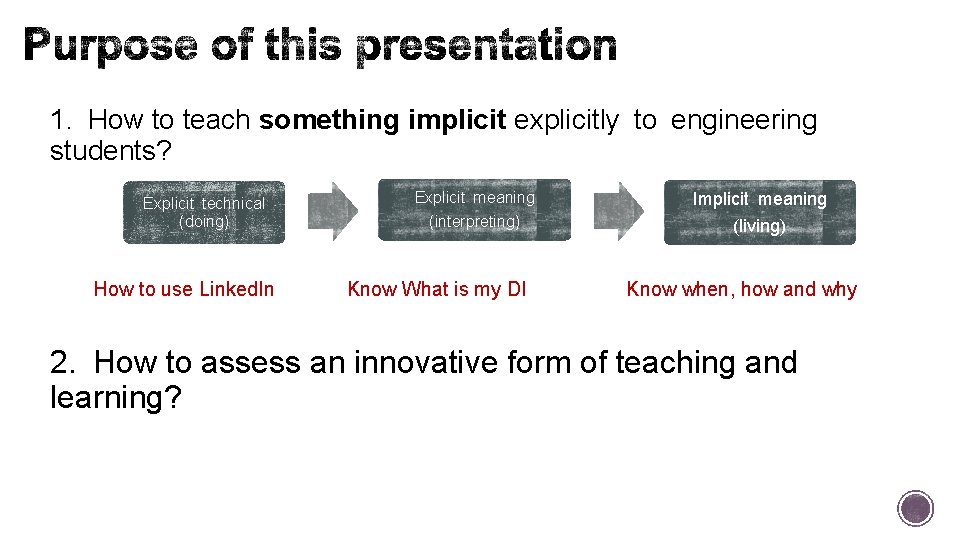
1. How to teach something implicit explicitly to engineering students? Explicit technical (doing) How to use Linked. In Explicit meaning Implicit meaning (interpreting) (living) Know What is my DI Know when, how and why 2. How to assess an innovative form of teaching and learning?
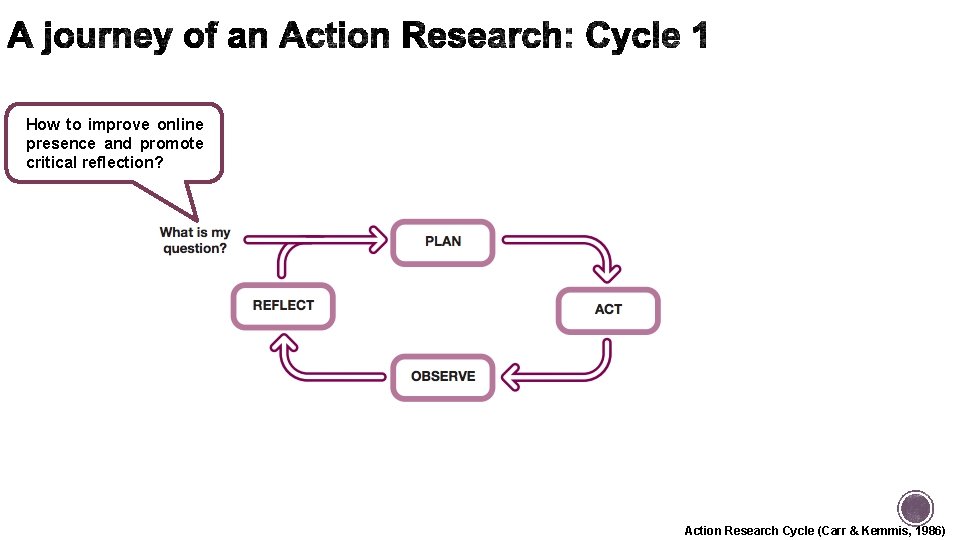
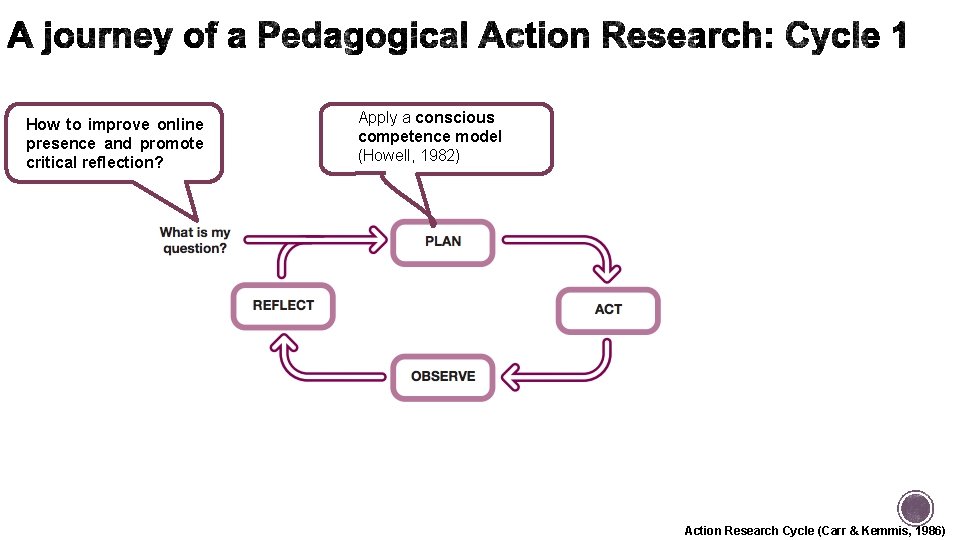
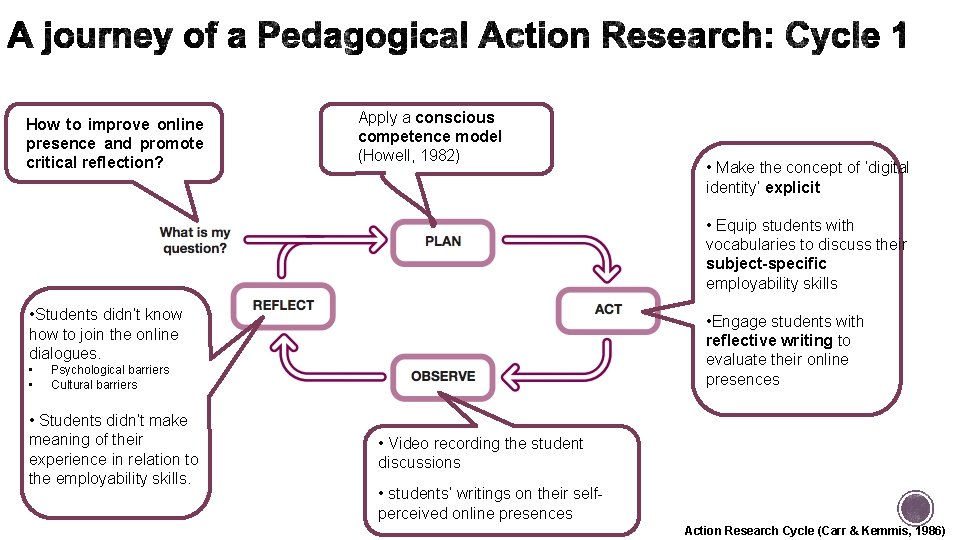
How to improve online presence and promote critical reflection? Action Research Cycle (Carr & Kemmis, 1986)
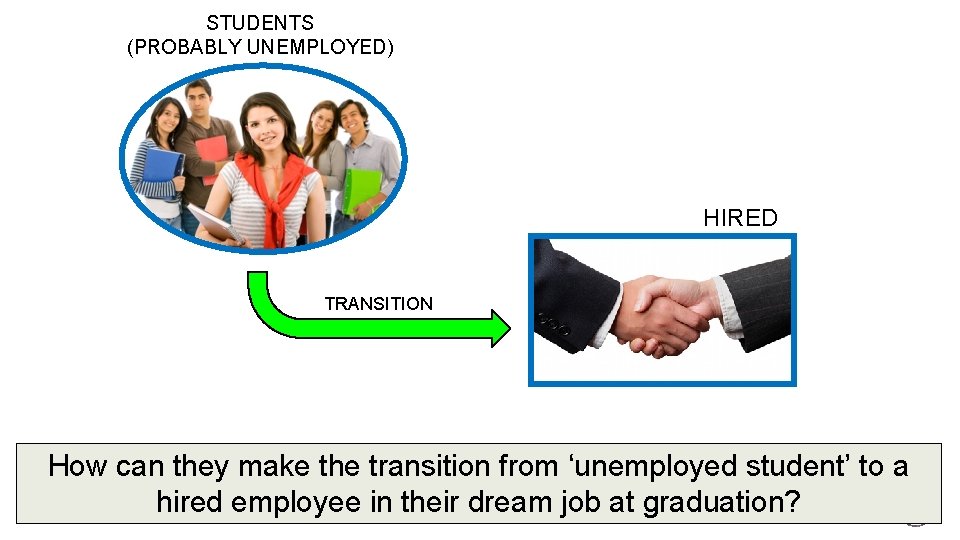
STUDENTS (PROBABLY UNEMPLOYED) HIRED TRANSITION How can they make the transition from ‘unemployed student’ to a hired employee in their dream job at graduation?
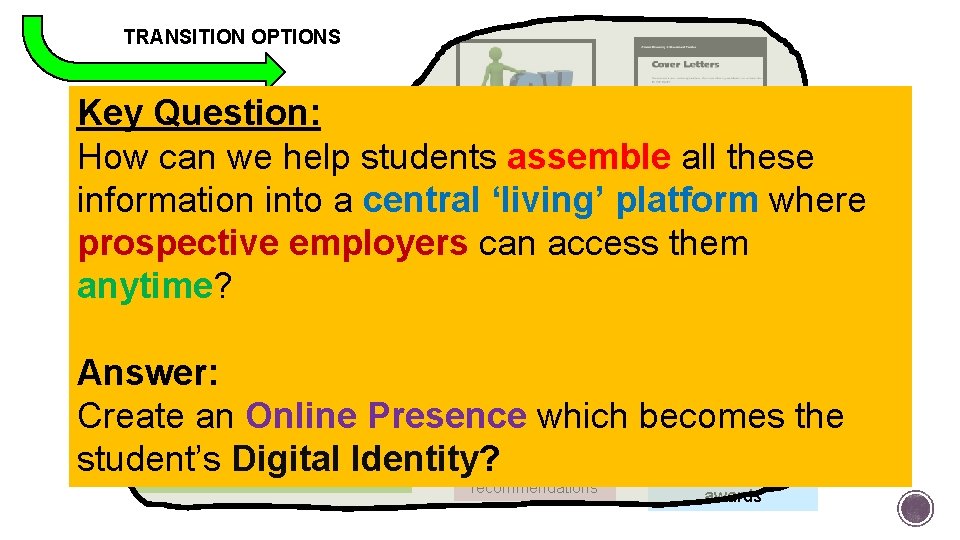
TRANSITION OPTIONS Well-written Key Question: cover letters Great CV How can we help students assemble all these information into a central ‘living’ platform where prospective employers can access Honours them degree certificate List of completed anytime? projects Answer: Create an Online Presence which becomes the student’s Digital Identity? Great Amass some good Extra curricular activities recommendations awards
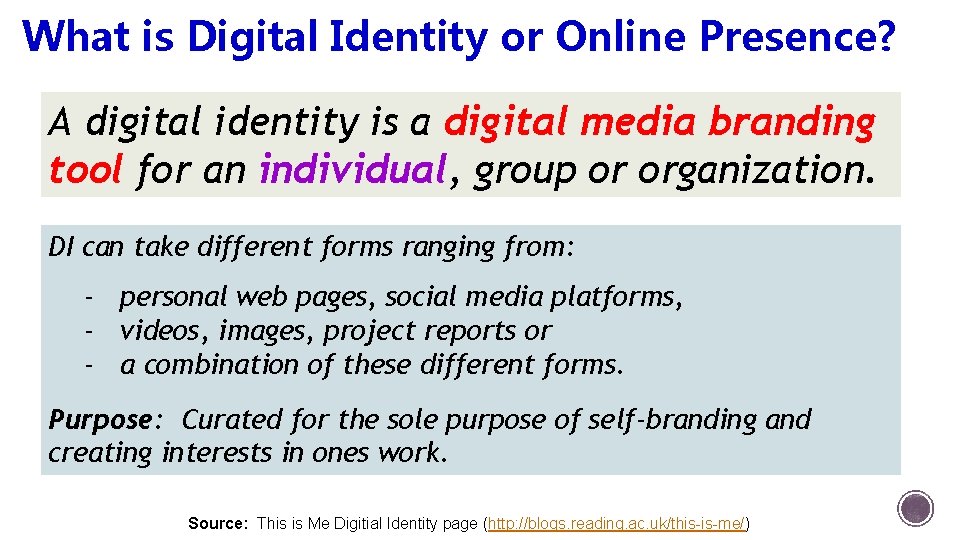
What is Digital Identity or Online Presence? A digital identity is a digital media branding tool for an individual, group or organization. DI can take different forms ranging from: - personal web pages, social media platforms, - videos, images, project reports or - a combination of these different forms. Purpose: Curated for the sole purpose of self-branding and creating interests in ones work. Source: This is Me Digitial Identity page (http: //blogs. reading. ac. uk/this-is-me/)
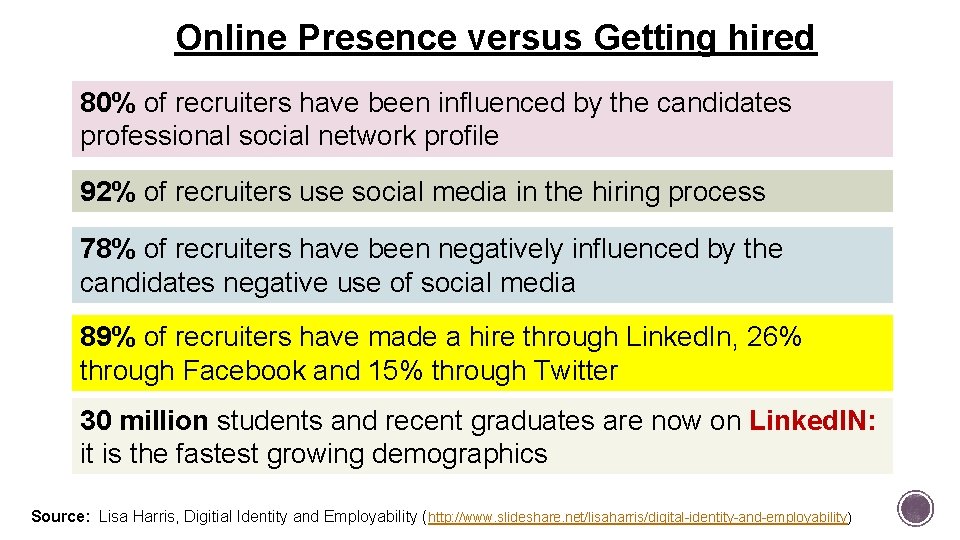
Online Presence versus Getting hired 80% of recruiters have been influenced by the candidates professional social network profile 92% of recruiters use social media in the hiring process 78% of recruiters have been negatively influenced by the candidates negative use of social media 89% of recruiters have made a hire through Linked. In, 26% through Facebook and 15% through Twitter 30 million students and recent graduates are now on Linked. IN: it is the fastest growing demographics Source: Lisa Harris, Digitial Identity and Employability (http: //www. slideshare. net/lisaharris/digital-identity-and-employability)
Embed this requirement in the curriculum by using different assessment points.
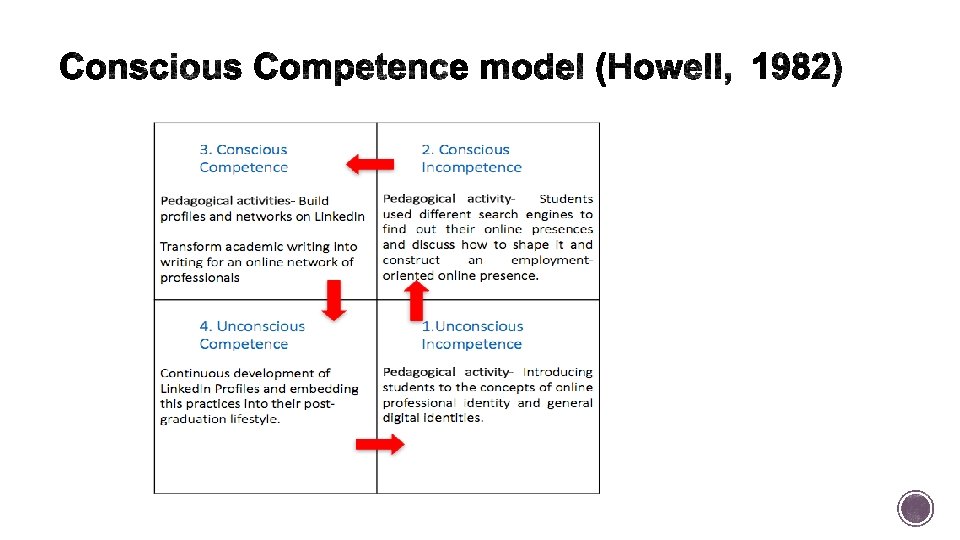
How to improve online presence and promote critical reflection? Apply a conscious competence model (Howell, 1982) Action Research Cycle (Carr & Kemmis, 1986)
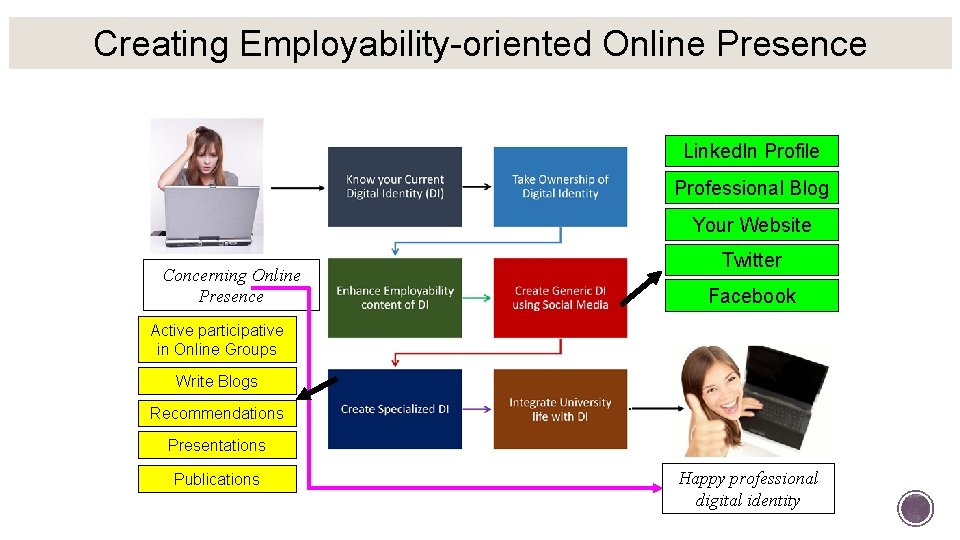
Creating Employability-oriented Online Presence Linked. In Profile Professional Blog Your Website Concerning Online Presence Twitter Facebook Active participative in Online Groups Write Blogs Recommendations Presentations Publications Happy professional digital identity
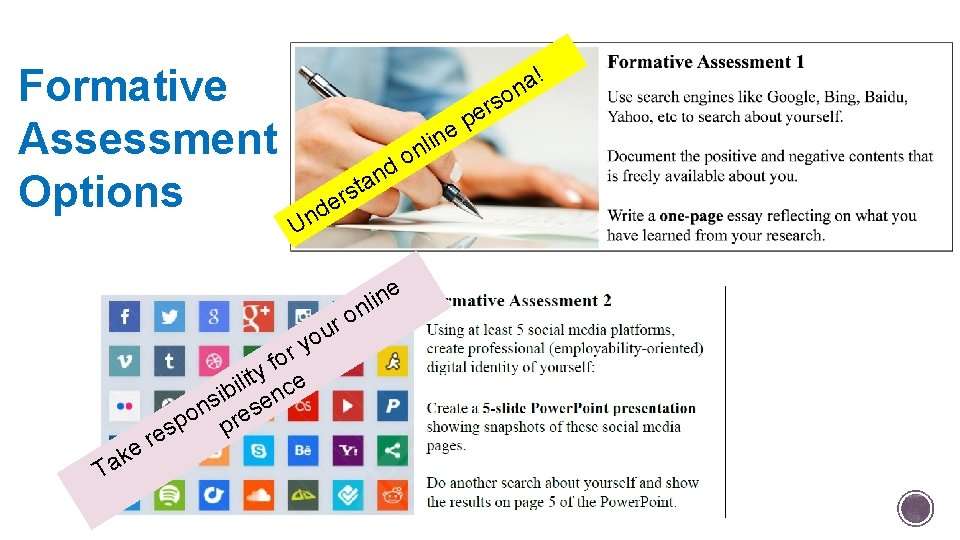
Formative Assessment Options o s r e l n a t rs U y r o f y it ce l i ib en s on res p p s Ta k n o d e d n r ou e r e p e in e o n nli ! a n
How to improve online presence and promote critical reflection? Apply a conscious competence model (Howell, 1982) • Make the concept of ‘digital identity’ explicit • Equip students with vocabularies to discuss their subject-specific employability skills • Students didn’t know • Engage students with reflective writing to evaluate their online presences how to join the online dialogues. • • Psychological barriers Cultural barriers • Students didn’t make meaning of their experience in relation to the employability skills. • Video recording the student • discussions • students’ writings on their selfperceived online presences Action Research Cycle (Carr & Kemmis, 1986)
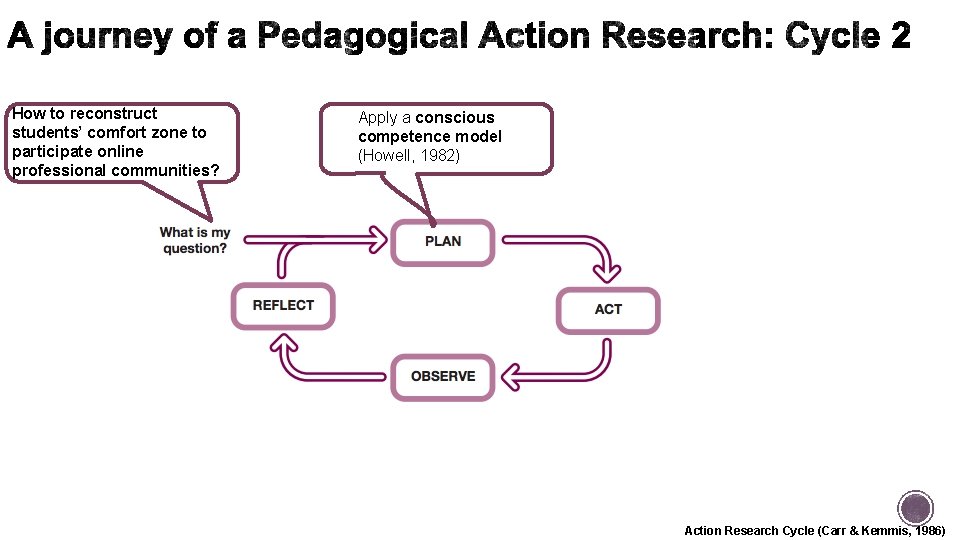
How to reconstruct students’ comfort zone to participate online professional communities? Apply a conscious competence model (Howell, 1982) Action Research Cycle (Carr & Kemmis, 1986)
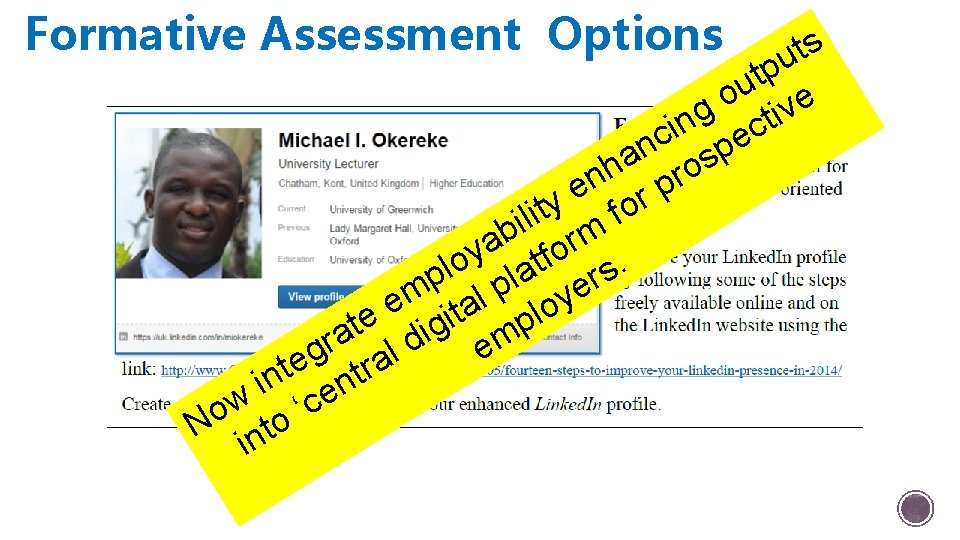
Formative Assessment Options s t u p t u o e v g cti n i c pe n a os h r n p e r y it fo l i b rm a o y f t. o l s a l p r p e m al y e o t l i e p t g i a m r d e l g ra e t in ent w ‘c o N nto i
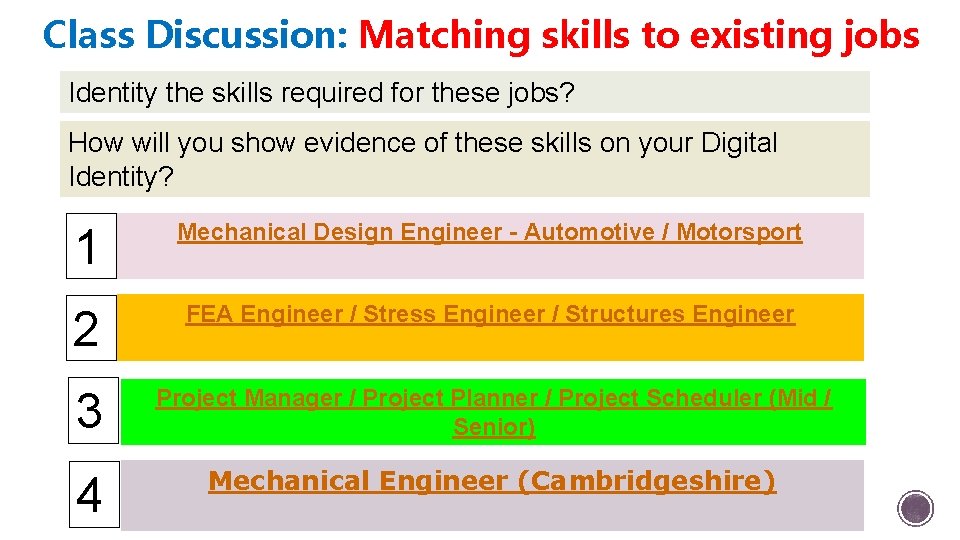
Class Discussion: Matching skills to existing jobs Identity the skills required for these jobs? How will you show evidence of these skills on your Digital Identity? 1 Mechanical Design Engineer - Automotive / Motorsport 2 FEA Engineer / Stress Engineer / Structures Engineer 3 Project Manager / Project Planner / Project Scheduler (Mid / Senior) 4 Mechanical Engineer (Cambridgeshire)
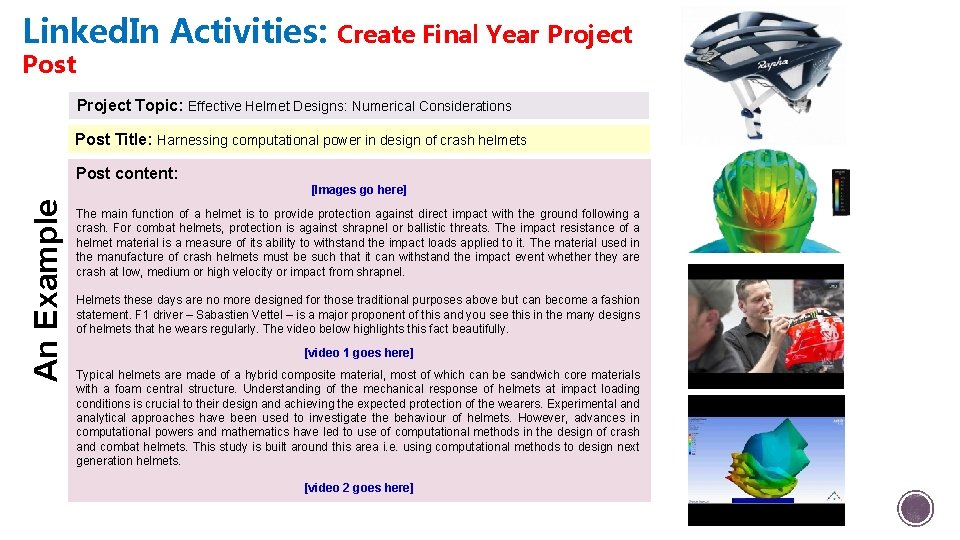
Linked. In Activities: Post Create Final Year Project Topic: Effective Helmet Designs: Numerical Considerations Post Title: Harnessing computational power in design of crash helmets Post content: An Example [Images go here] The main function of a helmet is to provide protection against direct impact with the ground following a crash. For combat helmets, protection is against shrapnel or ballistic threats. The impact resistance of a helmet material is a measure of its ability to withstand the impact loads applied to it. The material used in the manufacture of crash helmets must be such that it can withstand the impact event whether they are crash at low, medium or high velocity or impact from shrapnel. Helmets these days are no more designed for those traditional purposes above but can become a fashion statement. F 1 driver – Sabastien Vettel – is a major proponent of this and you see this in the many designs of helmets that he wears regularly. The video below highlights this fact beautifully. [video 1 goes here] Typical helmets are made of a hybrid composite material, most of which can be sandwich core materials with a foam central structure. Understanding of the mechanical response of helmets at impact loading conditions is crucial to their design and achieving the expected protection of the wearers. Experimental and analytical approaches have been used to investigate the behaviour of helmets. However, advances in computational powers and mathematics have led to use of computational methods in the design of crash and combat helmets. This study is built around this area i. e. using computational methods to design next generation helmets. [video 2 goes here]
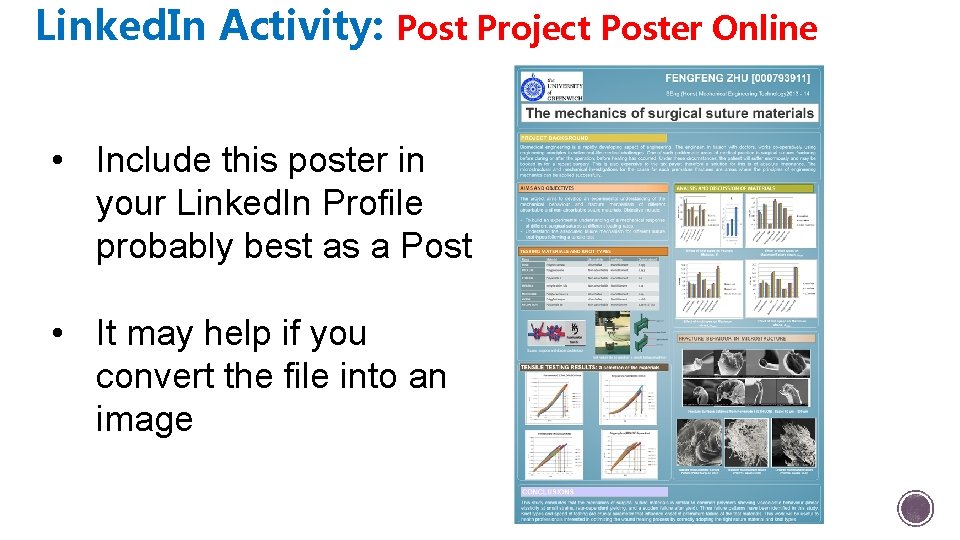
Linked. In Activity: Post Project Poster Online • Include this poster in your Linked. In Profile probably best as a Post • It may help if you convert the file into an image
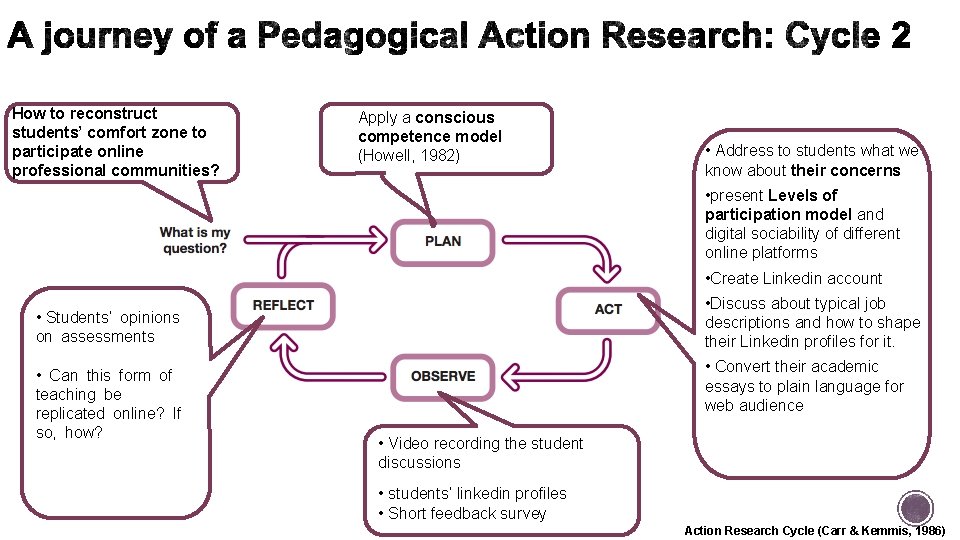
How to reconstruct students’ comfort zone to participate online professional communities? Apply a conscious competence model (Howell, 1982) • Address to students what we know about their concerns • present Levels of participation model and digital sociability of different online platforms • Create Linkedin account • Discuss about typical job descriptions and how to shape their Linkedin profiles for it. • Students’ opinions on assessments • Can this form of teaching be replicated online? If so, how? • Convert their academic essays to plain language for web audience • Video recording the student • discussions • students’ linkedin profiles • Short feedback survey Action Research Cycle (Carr & Kemmis, 1986)
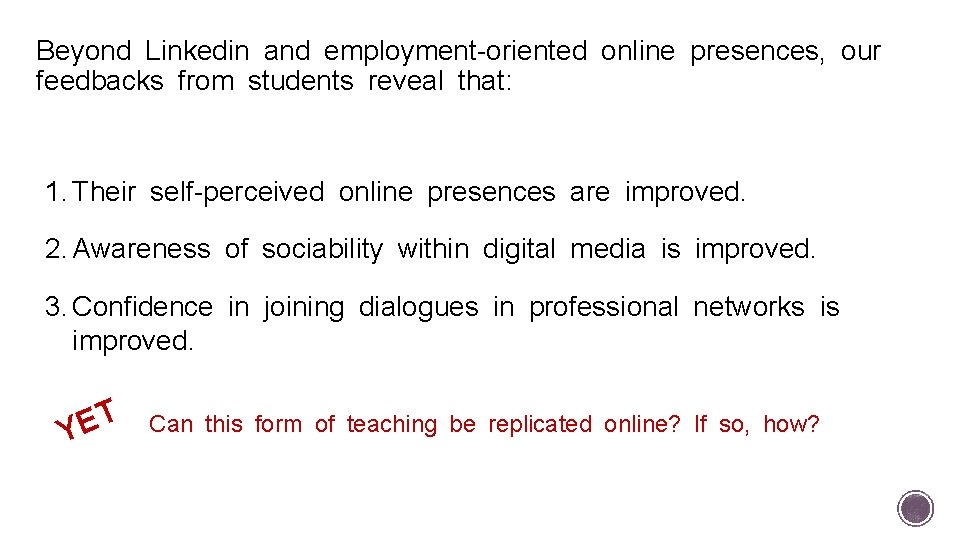
Beyond Linkedin and employment-oriented online presences, our feedbacks from students reveal that: 1. Their self-perceived online presences are improved. 2. Awareness of sociability within digital media is improved. 3. Confidence in joining dialogues in professional networks is improved. T E Y Can this form of teaching be replicated online? If so, how?
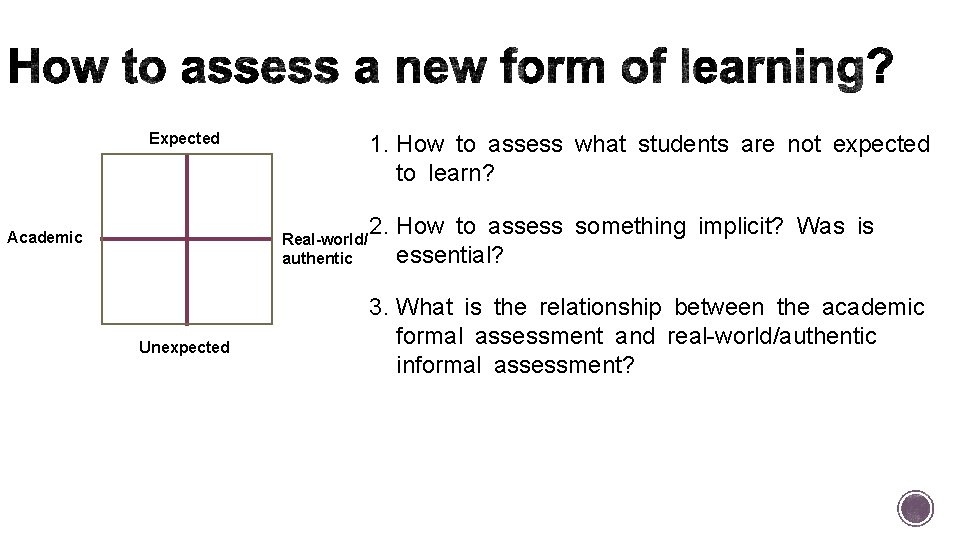
Expected Academic 1. How to assess what students are not expected to learn? Real-world/ authentic Unexpected 2. How to assess something implicit? Was is essential? 3. What is the relationship between the academic formal assessment and real-world/authentic informal assessment?
Questions ? y. yang@gre. ac. uk For further info about the Digital Identity Coursework Email: m. i. okereke@gre. ac. uk