
17 4 SOUND AND HEARING Sound Waves Longitudinal

- Slides: 45
17. 4 SOUND AND HEARING
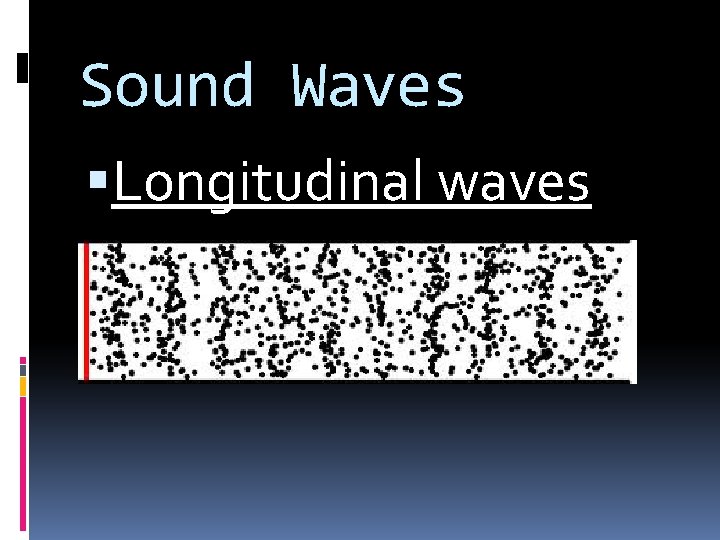
Sound Waves Longitudinal waves
Properties of Sound Waves Speed Intensity & loudness Frequency & Pitch
Speed 0 20 C At the speed of sound is 342 m/s
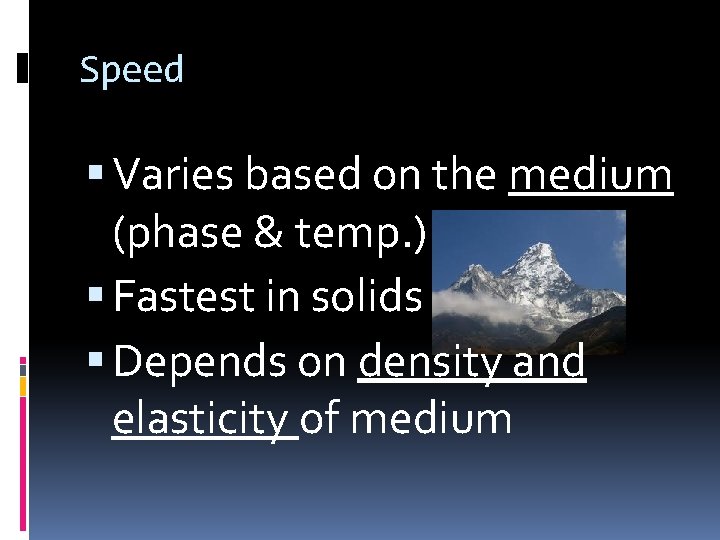
Speed Varies based on the medium (phase & temp. ) Fastest in solids Depends on density and elasticity of medium
Intensity and loudness Intensity = rate wave’s energy flows through area
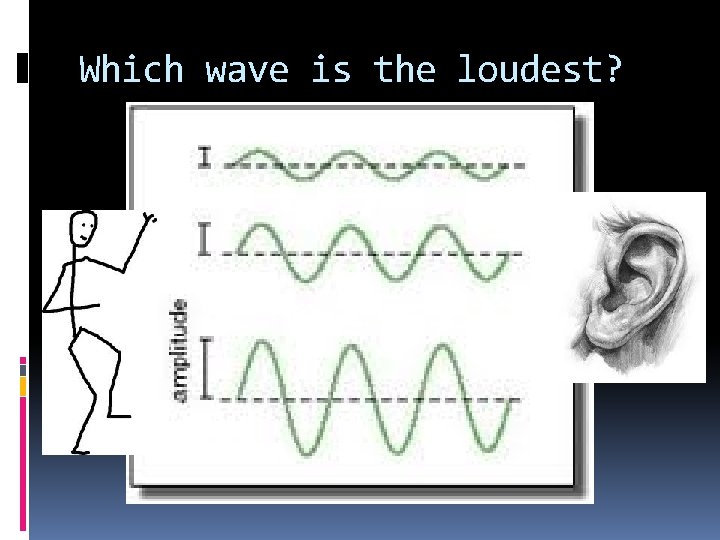
Intensity and loudness Depends on amplitude and distance from source
Which wave is the loudest?
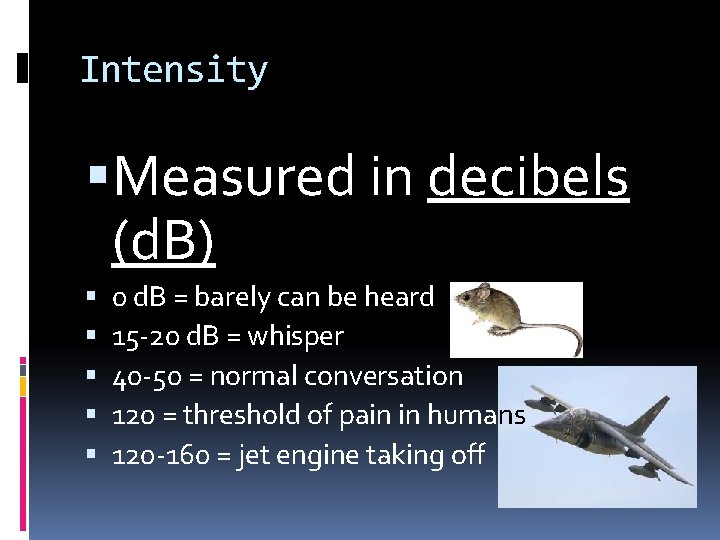
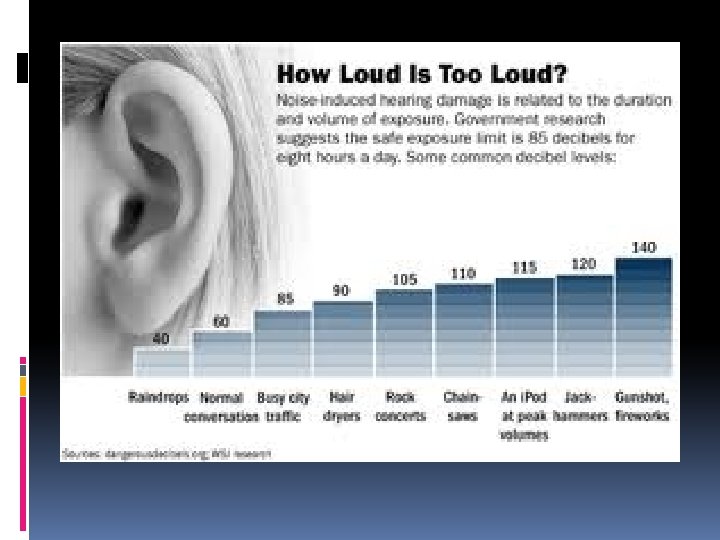
Intensity Measured in decibels (d. B) 0 d. B = barely can be heard 15 -20 d. B = whisper 40 -50 = normal conversation 120 = threshold of pain in humans 120 -160 = jet engine taking off
Loudness Physical response to intensity Varies based on physical factors
Loudness As intensity increases, loudness increases.
Frequency & Pitch is frequency as you perceive it. Remember: long wavelength = low frequency
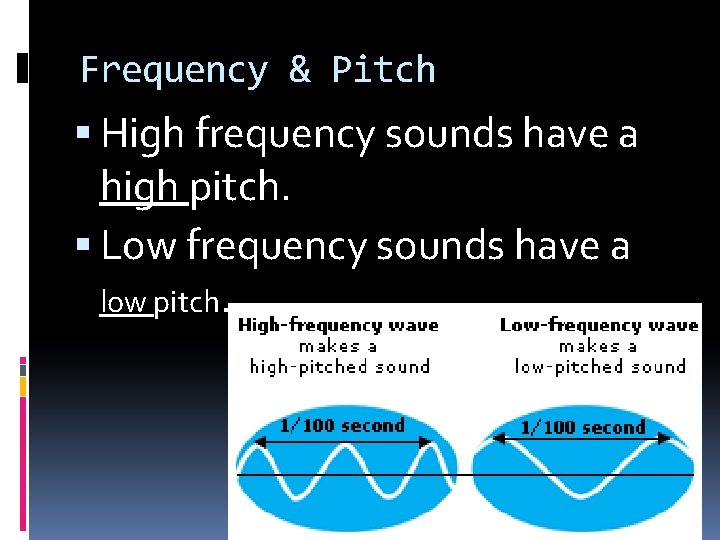
Frequency & Pitch High frequency sounds have a high pitch. Low frequency sounds have a low pitch.
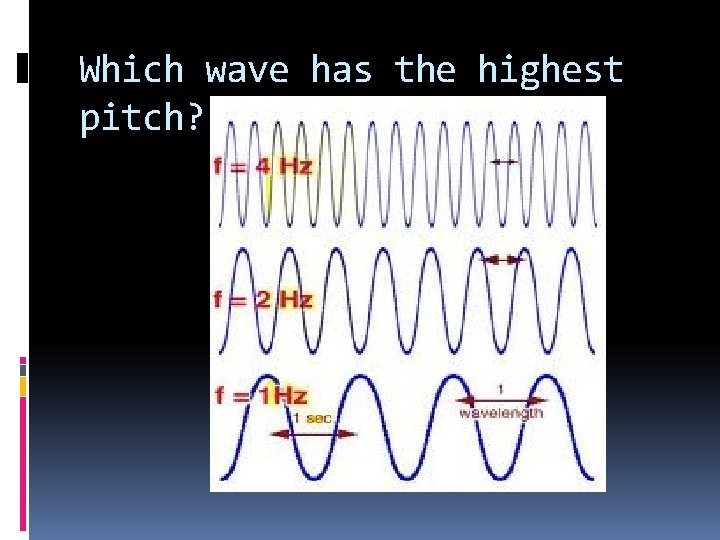
Which wave has the highest pitch?
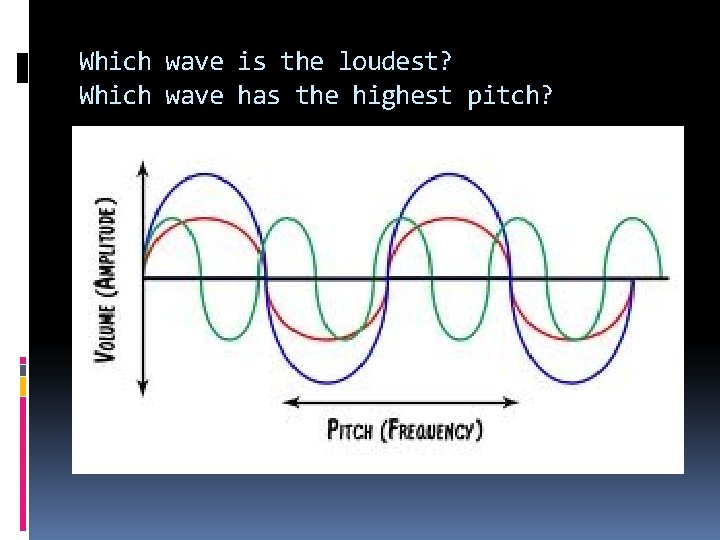
Which wave is the loudest? Which wave has the highest pitch?
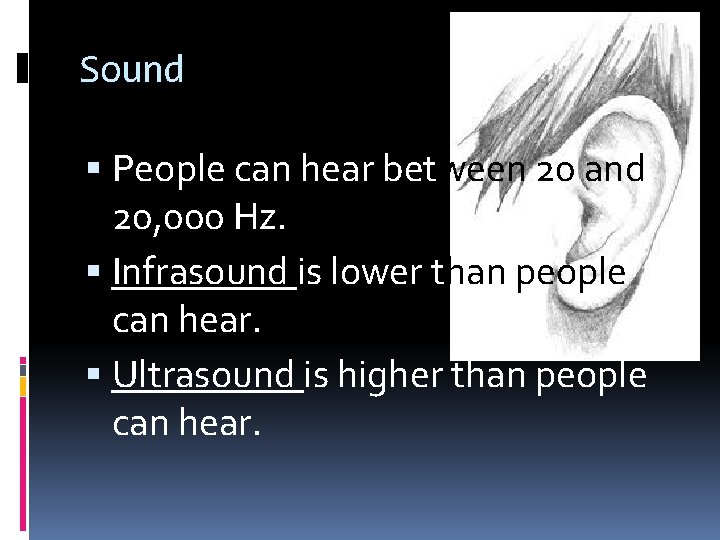
Sound People can hear between 20 and 20, 000 Hz. Infrasound is lower than people can hear. Ultrasound is higher than people can hear.
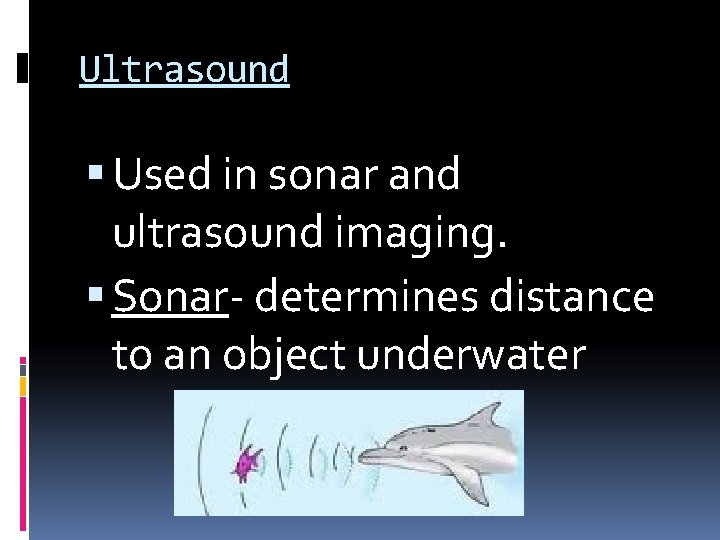
Ultrasound Used in sonar and ultrasound imaging. Sonar- determines distance to an object underwater
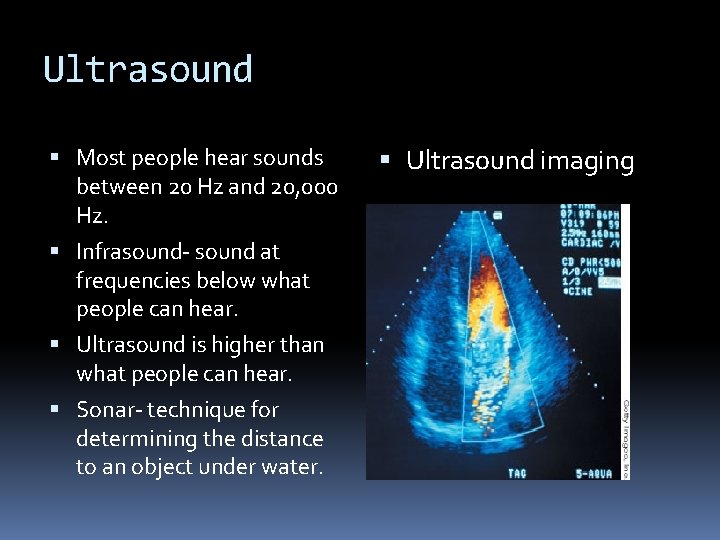
Ultrasound Most people hear sounds between 20 Hz and 20, 000 Hz. Infrasound- sound at frequencies below what people can hear. Ultrasound is higher than what people can hear. Sonar- technique for determining the distance to an object under water. Ultrasound imaging
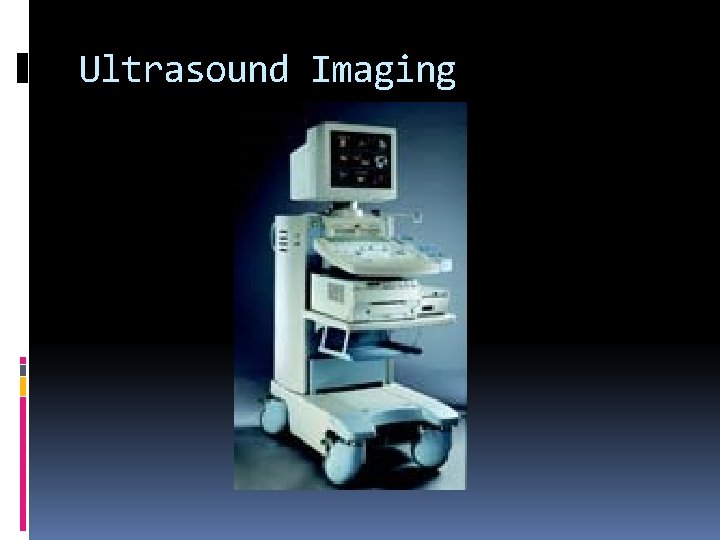
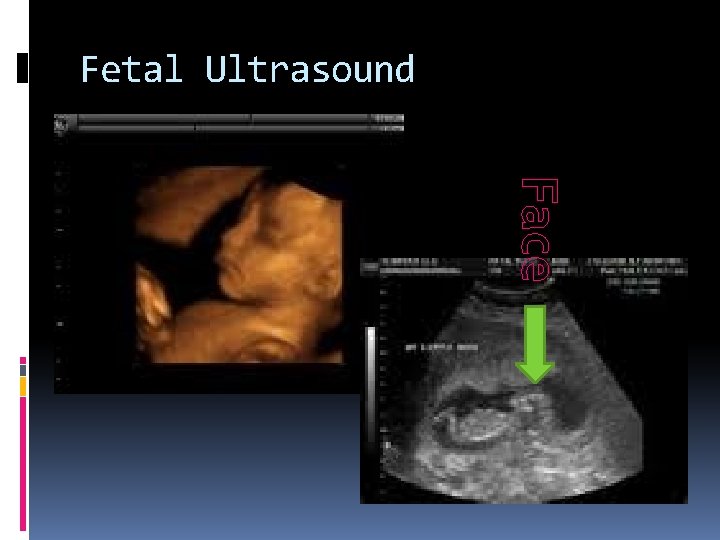
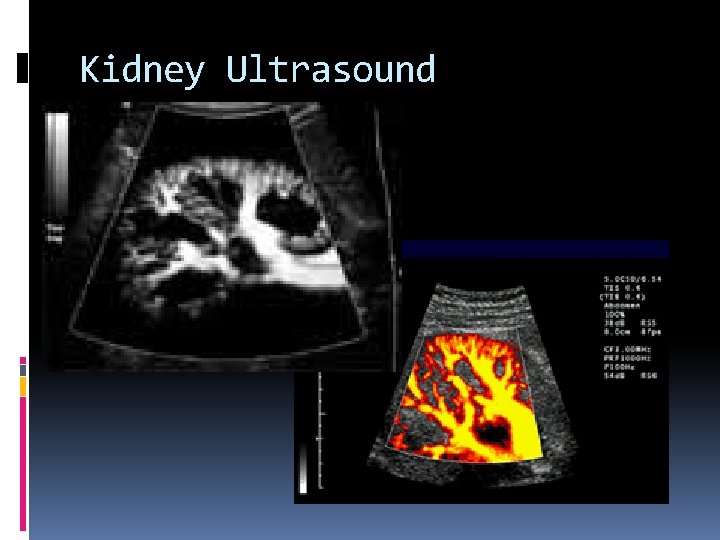
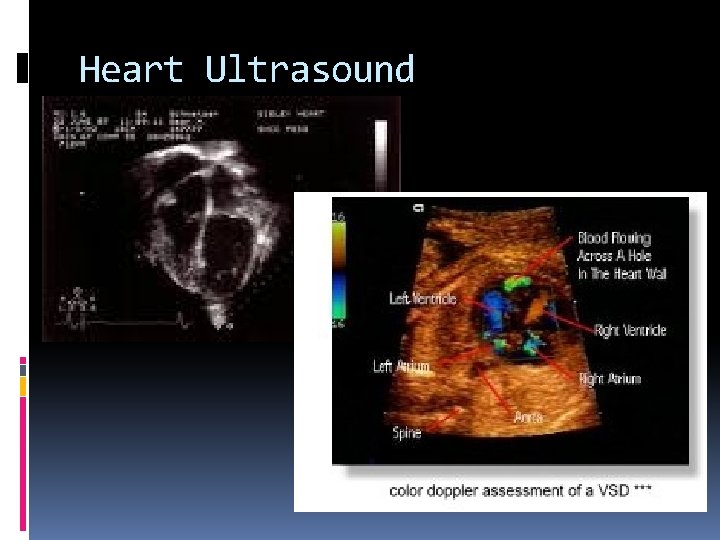
Ultrasound Imaging Ultrasound pulses are sent into a patient Each pulse is short (1/8000 second) Pulses are too short for the reflection to interfere with the next pulse Reflected pulses make a detailed map of structures/organs inside the body
Ultrasound Imaging
Fetal Ultrasound Face
Kidney Ultrasound
Heart Ultrasound
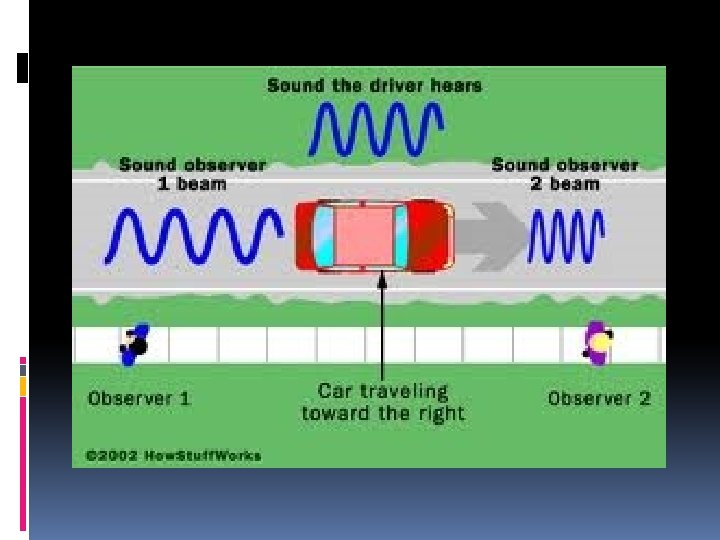
Doppler Effect Change in frequency caused by motion of the source, listener, or both.
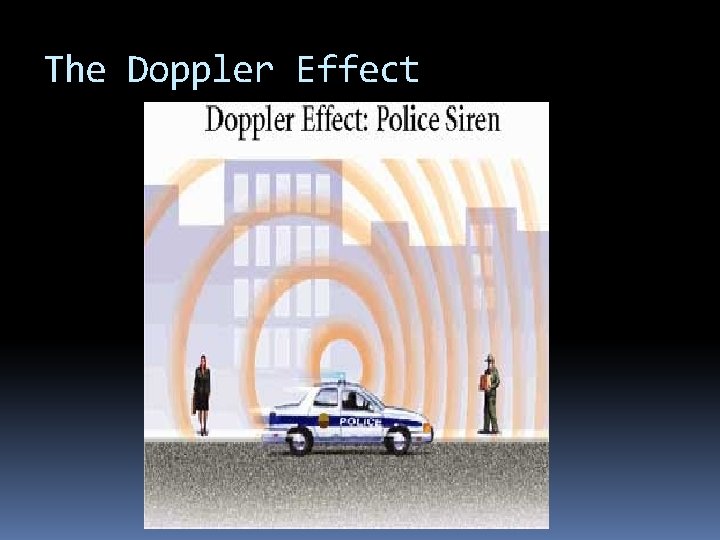
The Doppler Effect
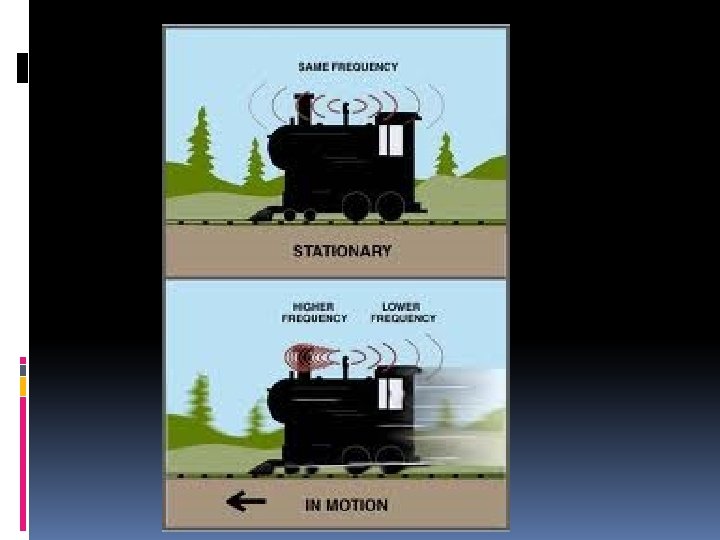
Doppler Effect Higher frequency when approaching Lower frequency when moving away
The Ear 3 parts: Outer Middle Inner
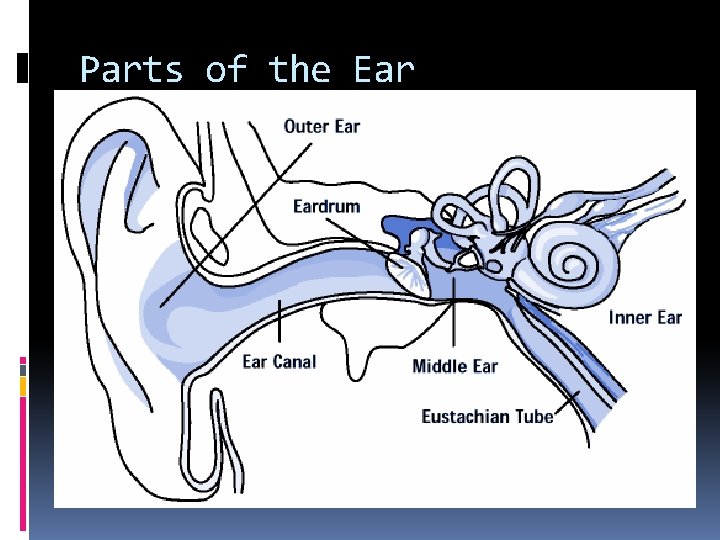
Parts of the Ear
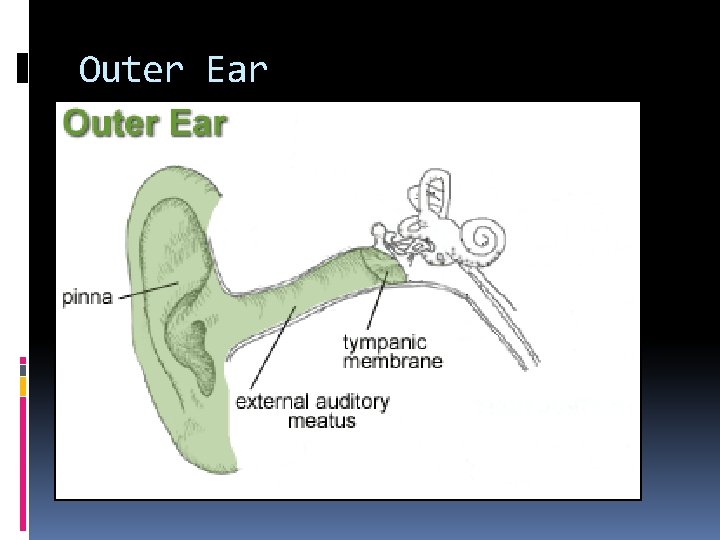
Outer Ear Gathers and focuses sound into middle ear About 2. 5 cm long
Outer Ear
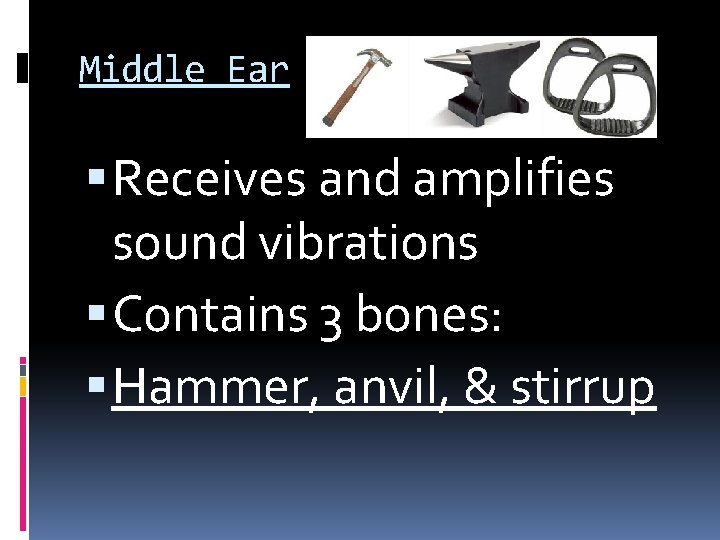
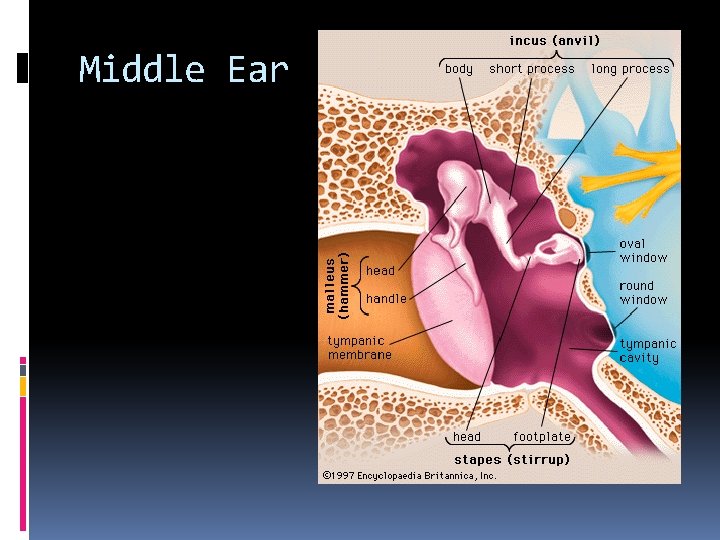
Middle Ear Receives and amplifies sound vibrations Contains 3 bones: Hammer, anvil, & stirrup
Middle Ear
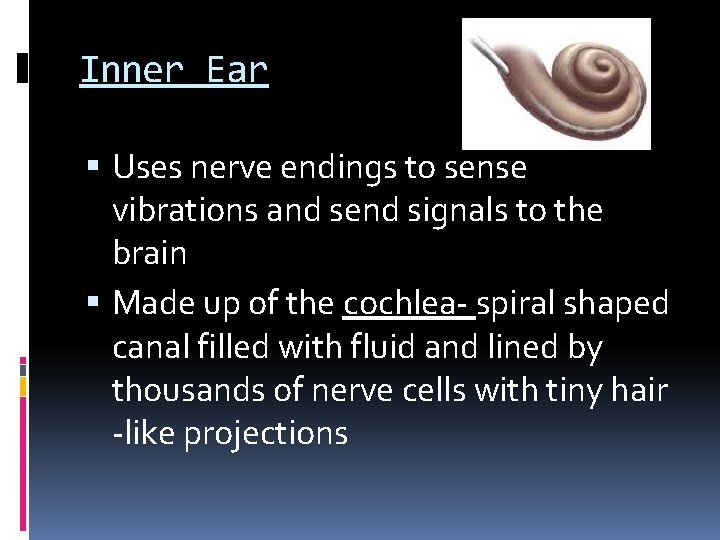
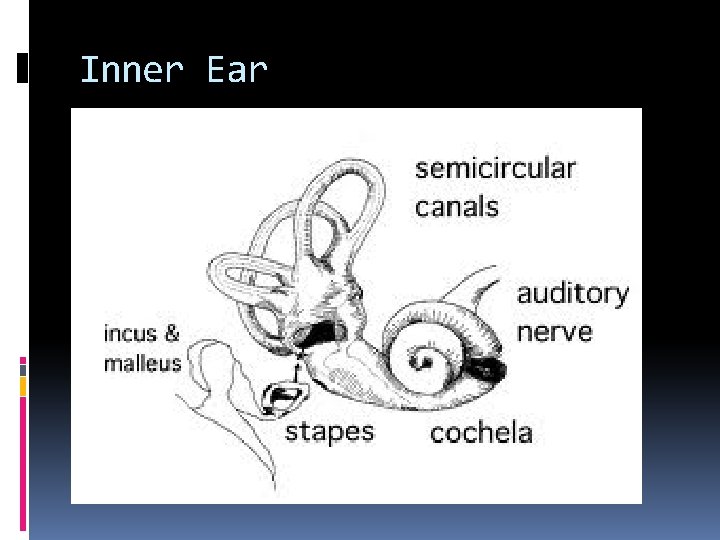
Inner Ear Uses nerve endings to sense vibrations and send signals to the brain Made up of the cochlea- spiral shaped canal filled with fluid and lined by thousands of nerve cells with tiny hair -like projections
Inner Ear
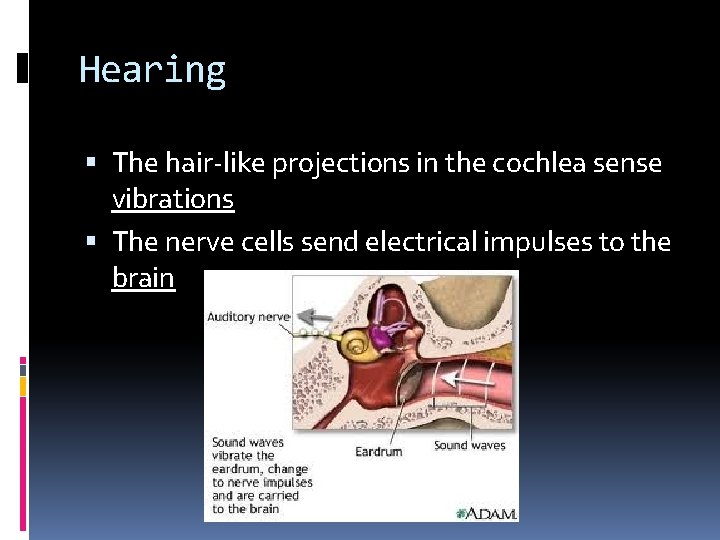
Hearing Sound is funneled by the outer ear It hits the eardrum The eardrum vibrates at the same frequency as the sound waves hitting it. The vibration is transferred to the hammer The hammer hits the anvil The anvil moves the stirrup back and forth Vibrations then enter the cochlea
Hearing The hair-like projections in the cochlea sense vibrations The nerve cells send electrical impulses to the brain
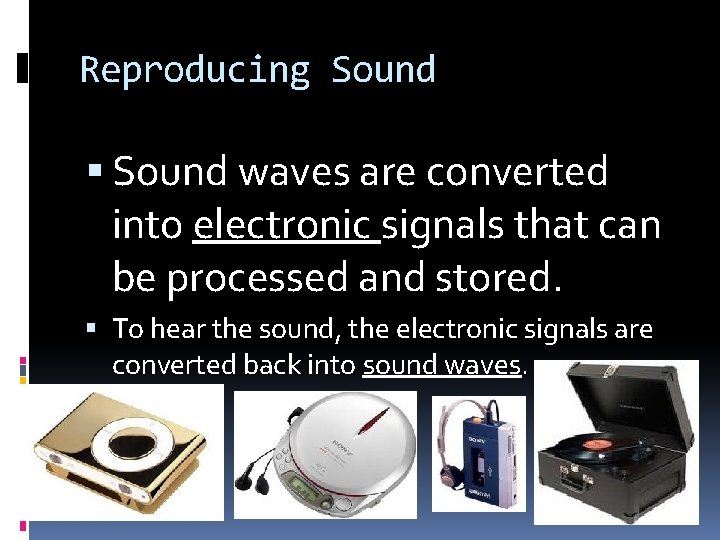
Reproducing Sound waves are converted into electronic signals that can be processed and stored. To hear the sound, the electronic signals are converted back into sound waves.
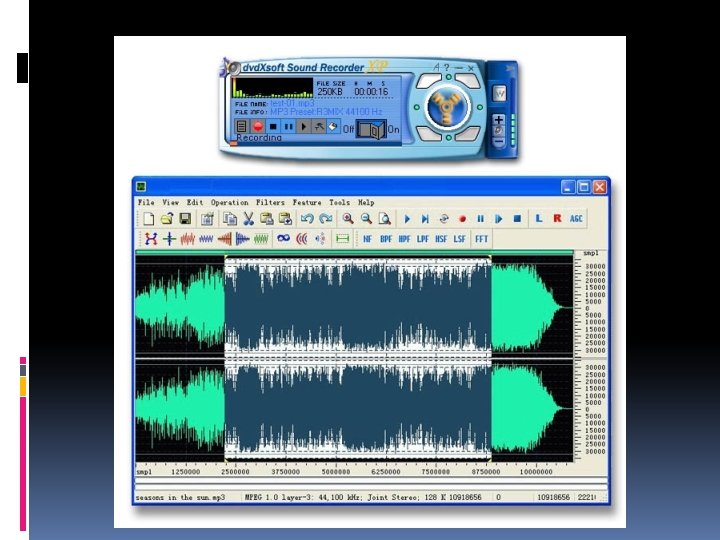
Recreating Sound Electronic signals vibrate a magnet that is attached to a membrane. The membrane sends sound waves through the air. The reverse process is used to record sound.
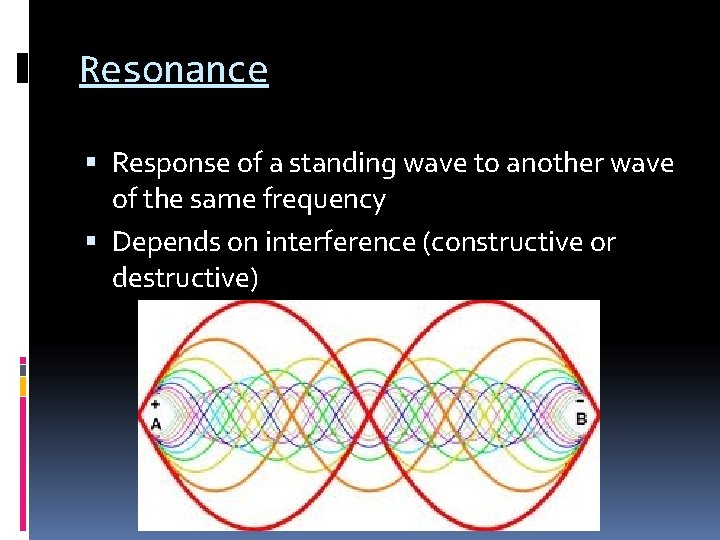
Resonance Response of a standing wave to another wave of the same frequency Depends on interference (constructive or destructive)