14 Chapter Foundations of Control Pearson Education Limited
- Slides: 29
14 Chapter Foundations of Control © Pearson Education Limited 2015 14 -1
Learning Outcomes • Explain the nature and importance of control. • Describe three steps in the control process. • Discuss the types of controls organizations and managers use. • Discuss contemporary issues in control. © Pearson Education Limited 2015 14 -2
14. 1 Explain the nature and importance of control. © Pearson Education Limited 2015 14 -3
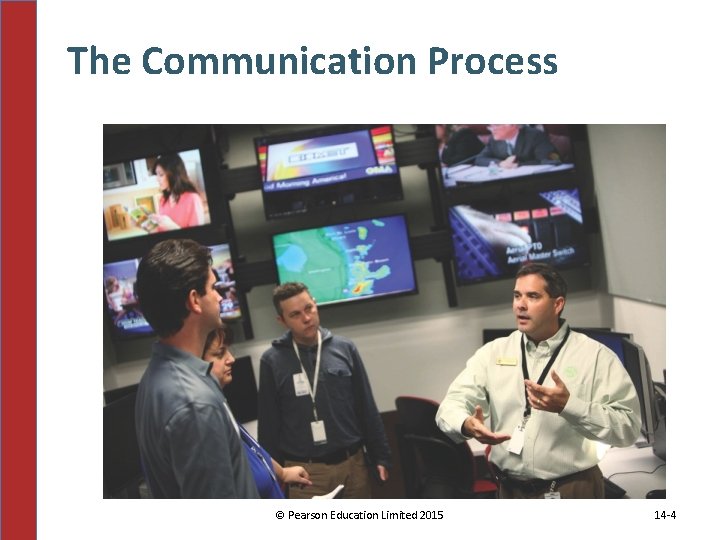
The Communication Process © Pearson Education Limited 2015 14 -4
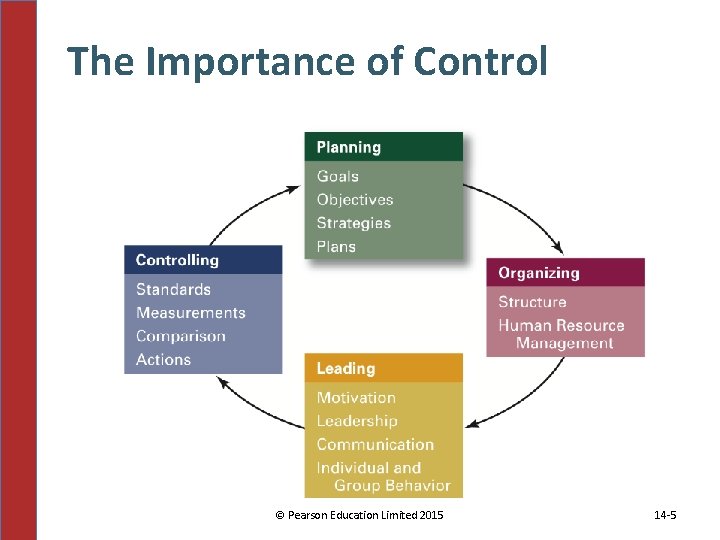
The Importance of Control © Pearson Education Limited 2015 14 -5
14. 2 Describe three steps in the control process. © Pearson Education Limited 2015 14 -6
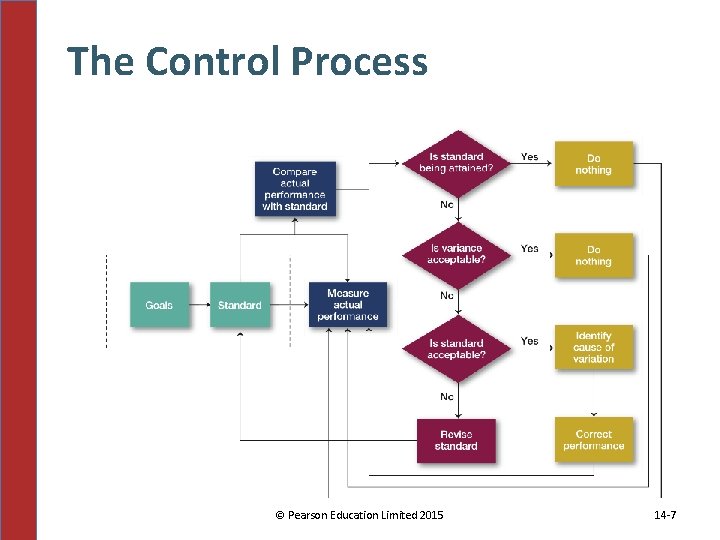
The Control Process © Pearson Education Limited 2015 14 -7
Measuring Performance Sources of information: • Personal observation • Statistical reports • Oral reports • Written reports © Pearson Education Limited 2015 14 -8
Criteria for Measurement What managers measure is probably more important to the control process than how they measure. © Pearson Education Limited 2015 14 -9
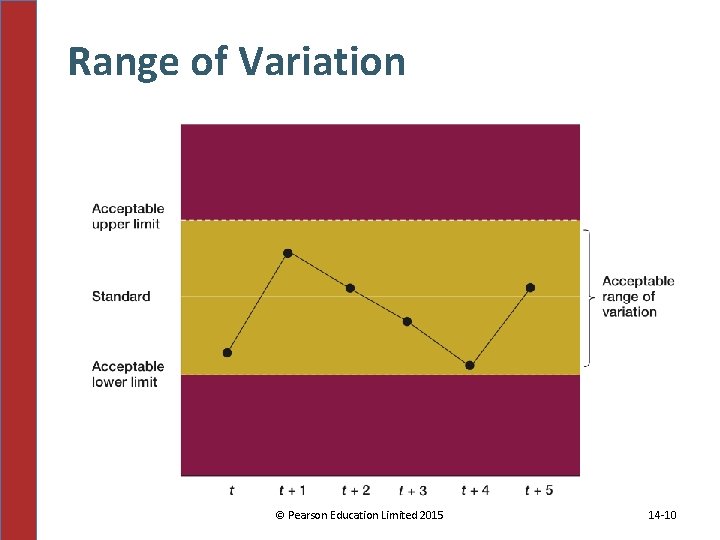
Range of Variation © Pearson Education Limited 2015 14 -10
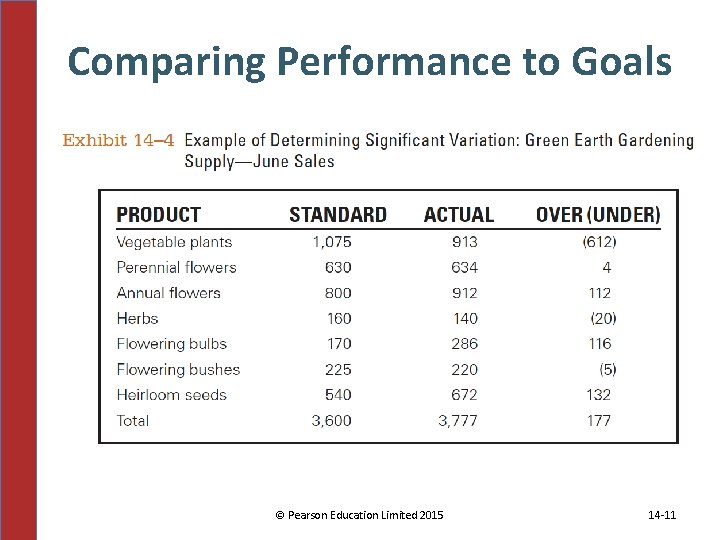
Comparing Performance to Goals © Pearson Education Limited 2015 14 -11
Correcting Performance • Immediate corrective action • Basic correction action © Pearson Education Limited 2015 14 -12
Revising Standards If performance consistently exceeds the goal, then the goal may need to be raised. © Pearson Education Limited 2015 14 -13
14. 3 Discuss the types of controls organizations and managers use. © Pearson Education Limited 2015 14 -14
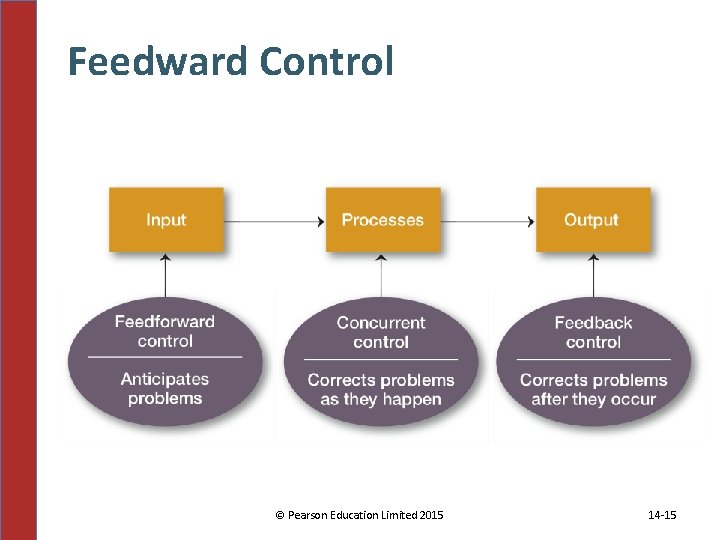
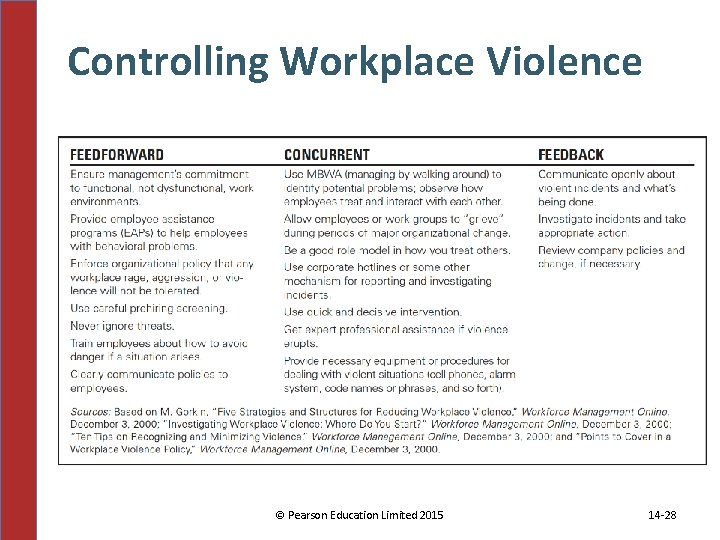
Feedward Control © Pearson Education Limited 2015 14 -15
Concurrent Control that takes place while a work activity is in progress. © Pearson Education Limited 2015 14 -16
Feedback Control that takes place after a work activity is done. © Pearson Education Limited 2015 14 -17
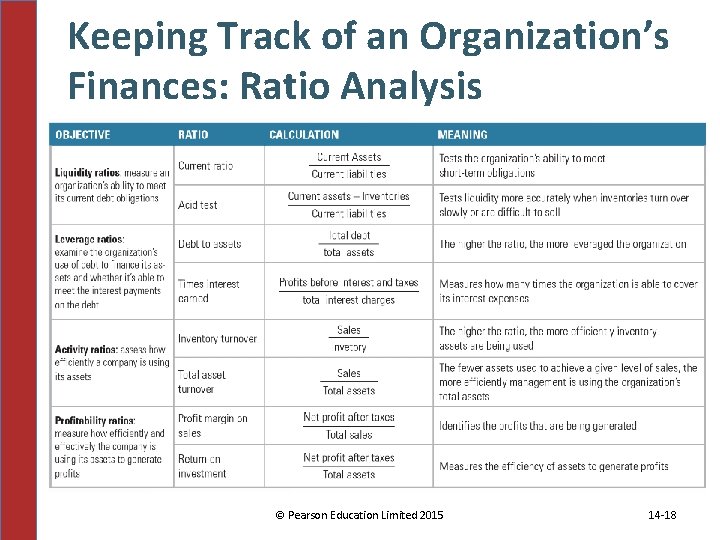
Keeping Track of an Organization’s Finances: Ratio Analysis © Pearson Education Limited 2015 14 -18
Keeping Track of an Organization’s Finances: Budget Analysis Budgets are used for both planning and controlling. © Pearson Education Limited 2015 14 -19
Keeping Track of an Organization's Information Management information system (MIS): A system used to provide management with needed information on a regular basis. © Pearson Education Limited 2015 14 -20
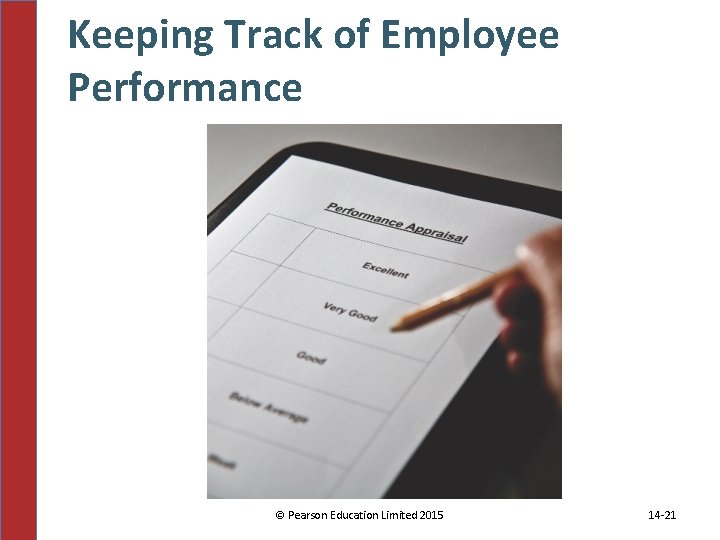
Keeping Track of Employee Performance © Pearson Education Limited 2015 14 -21
Keeping Track with a Balanced Scorecard Approach • • Financial Customer Internal Processes People/innovation/growth assets © Pearson Education Limited 2015 14 -22
14. 4 Discuss contemporary issues in control. © Pearson Education Limited 2015 14 -23
Contemporary Issues 1. Cross-cultural differences 2. Workplace concerns © Pearson Education Limited 2015 14 -24
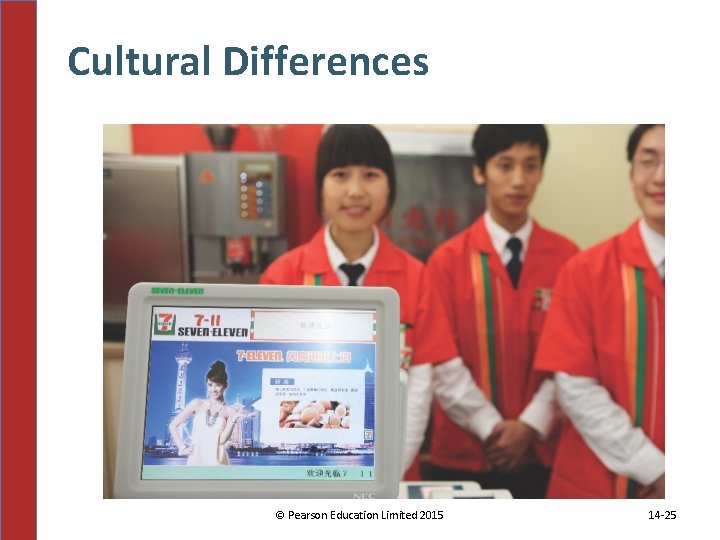
Cultural Differences © Pearson Education Limited 2015 14 -25
Controlling Technology Usage Is my work computer really mine? Do I have a right to privacy at work? © Pearson Education Limited 2015 14 -26
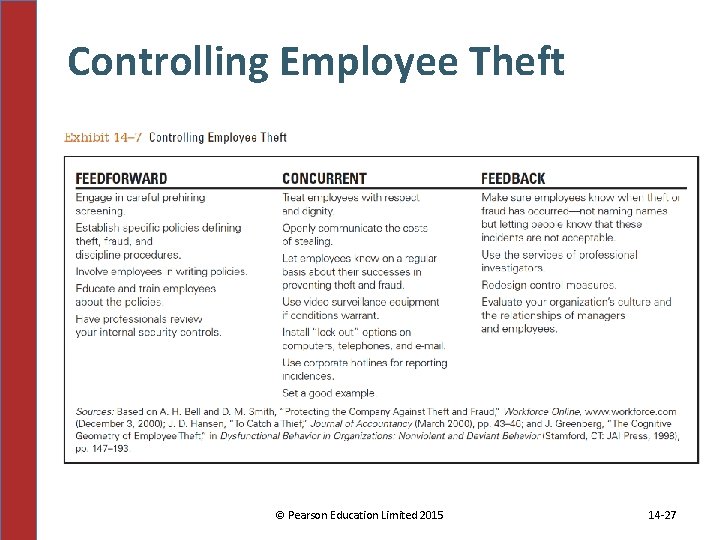
Controlling Employee Theft © Pearson Education Limited 2015 14 -27
Controlling Workplace Violence © Pearson Education Limited 2015 14 -28
© Pearson Education Limited 2015 14 -29