1 Chapter Managers and Management Pearson Education Limited

- Slides: 31
1 Chapter Managers and Management © Pearson Education Limited 2015 1 -1
Learning Outcomes • • • Tell who managers are and where they work. Define management. Describe what managers do. Explain why it’s important to study management. Describe the factors that are reshaping and redefining management. © Pearson Education Limited 2015 1 -2
1. 1 Tell who managers are and where they work. © Pearson Education Limited 2015 1 -3
Who Are Managers? Where Do They Work? Organization A deliberate arrangement of people brought together to accomplish a specific purpose Common Characteristics of Organizations • Goals • People • Structure © Pearson Education Limited 2015 1 -4
© Pearson Education Limited 2015 1 -5
How Are Managers Different from Nonmanagerial Employees? Nonmanagerial Employees • Work directly on tasks • Not responsible for overseeing others’ work Managers • Direct and oversee the activities of others • May have work duties not related to overseeing others © Pearson Education Limited 2015 1 -6
© Pearson Education Limited 2015 1 -7
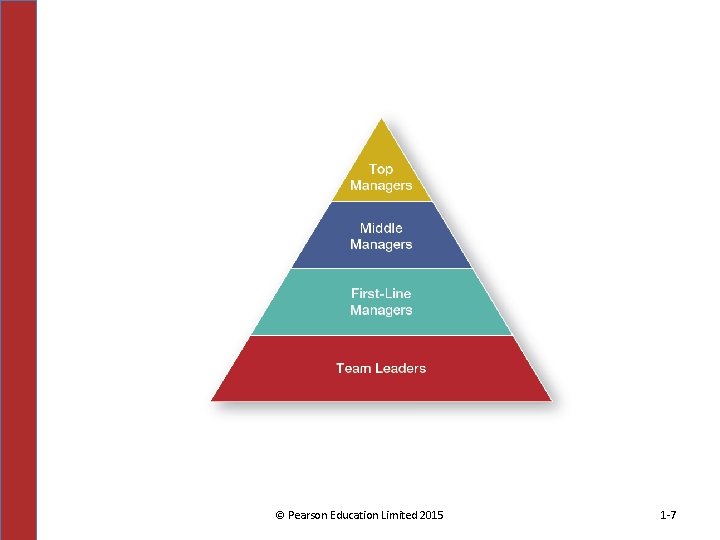
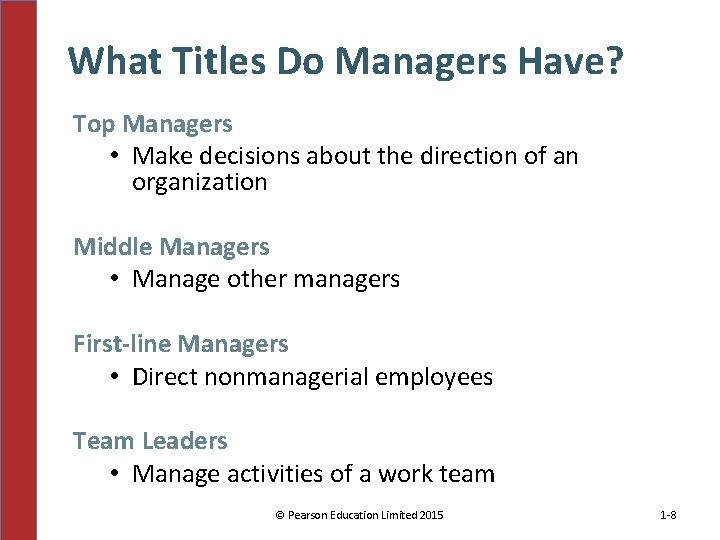
What Titles Do Managers Have? Top Managers • Make decisions about the direction of an organization Middle Managers • Manage other managers First-line Managers • Direct nonmanagerial employees Team Leaders • Manage activities of a work team © Pearson Education Limited 2015 1 -8
1. 2 Define management. © Pearson Education Limited 2015 1 -9
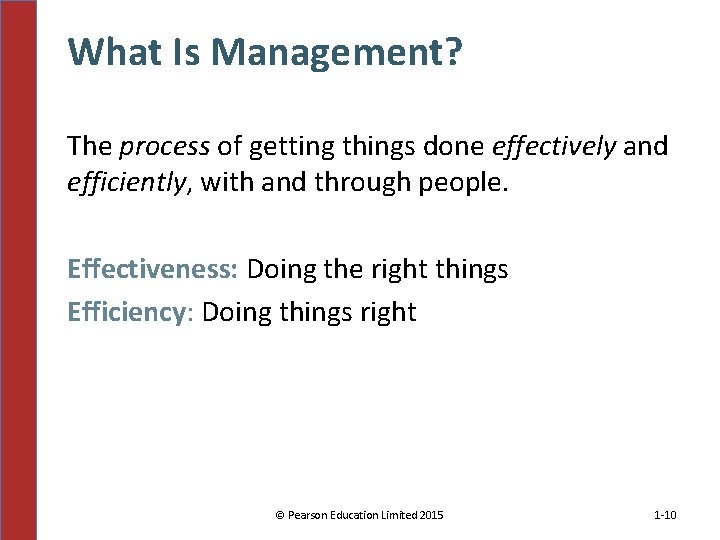
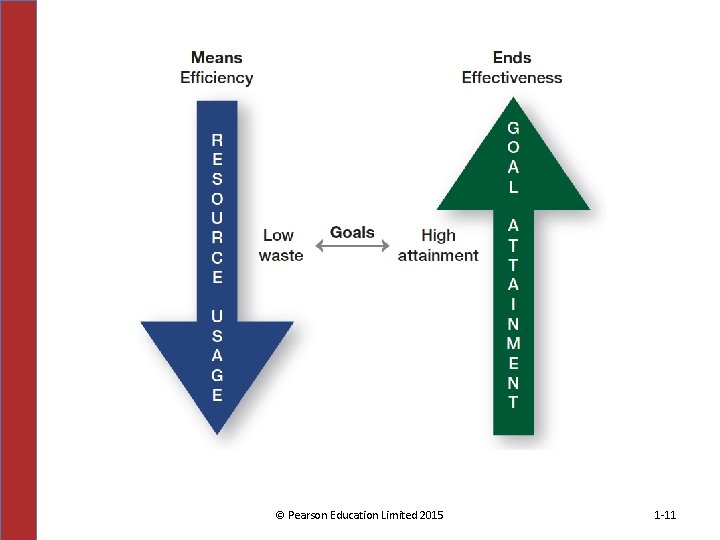
What Is Management? The process of getting things done effectively and efficiently, with and through people. Effectiveness: Doing the right things Efficiency: Doing things right © Pearson Education Limited 2015 1 -10
© Pearson Education Limited 2015 1 -11
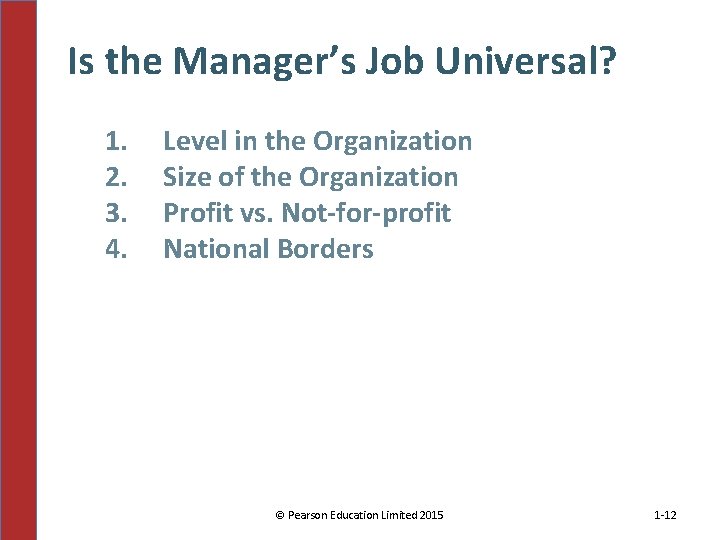
Is the Manager’s Job Universal? 1. 2. 3. 4. Level in the Organization Size of the Organization Profit vs. Not-for-profit National Borders © Pearson Education Limited 2015 1 -12
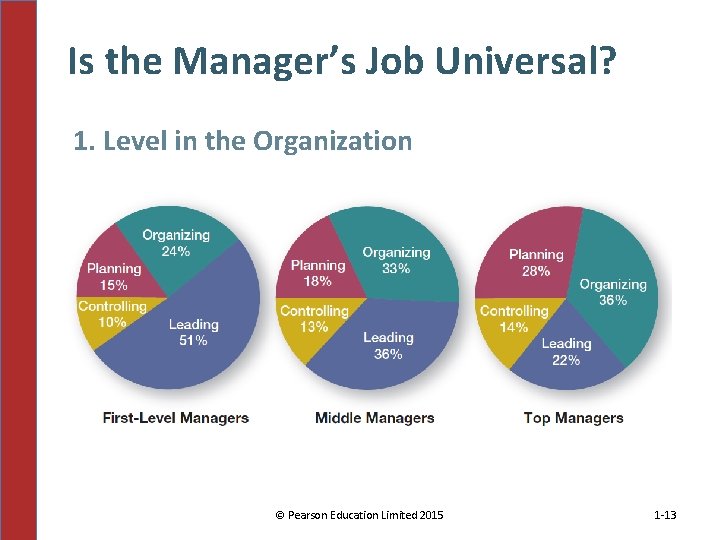
Is the Manager’s Job Universal? 1. Level in the Organization © Pearson Education Limited 2015 1 -13
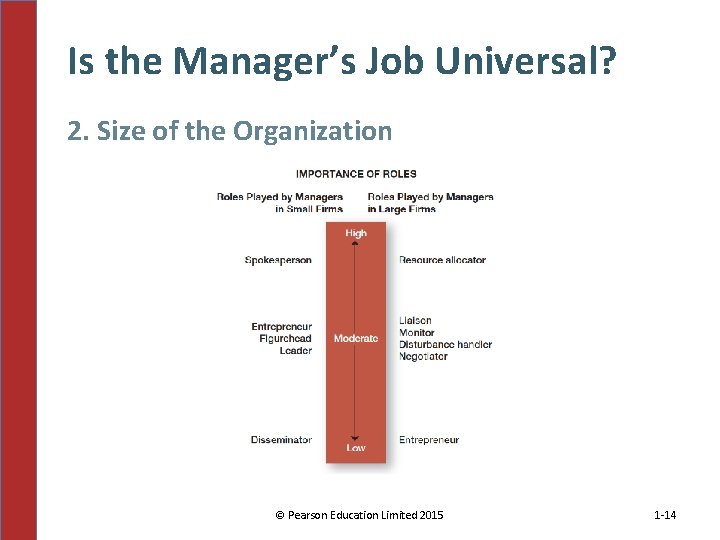
Is the Manager’s Job Universal? 2. Size of the Organization © Pearson Education Limited 2015 1 -14
1. 3 Describe what managers do. © Pearson Education Limited 2015 1 -16
What Do Managers Do? 3. Ways to Look at What Managers Do 1. Four Functions Approach 2. Management Roles Approach 3. Skills and Competencies © Pearson Education Limited 2015 1 -17
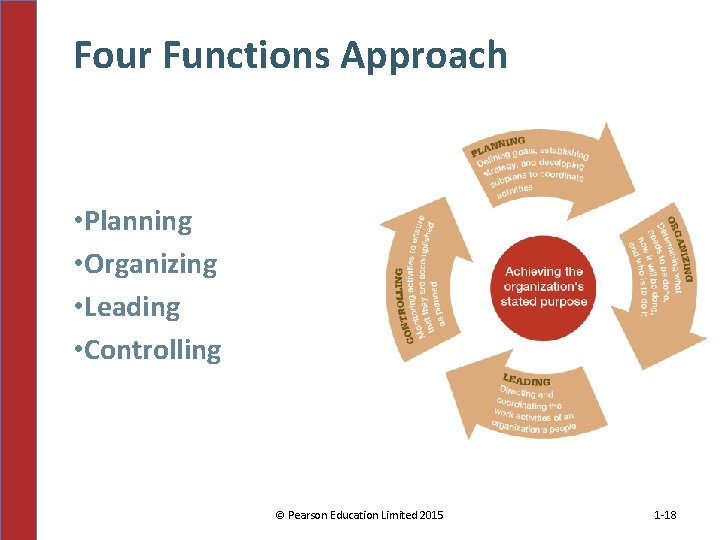
Four Functions Approach • Planning • Organizing • Leading • Controlling © Pearson Education Limited 2015 1 -18
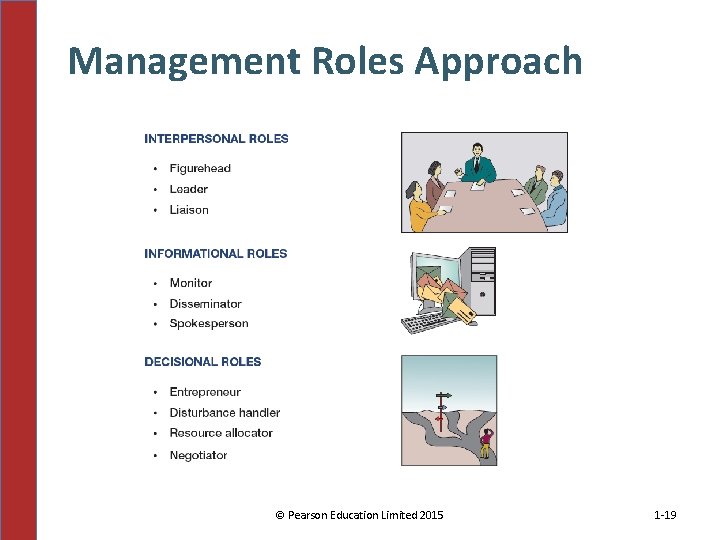
Management Roles Approach © Pearson Education Limited 2015 1 -19
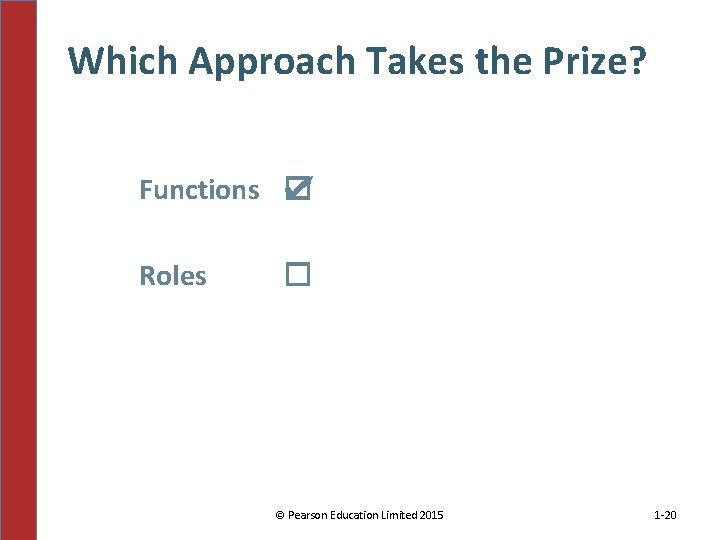
Which Approach Takes the Prize? Functions ☑ Roles ☐ © Pearson Education Limited 2015 1 -20
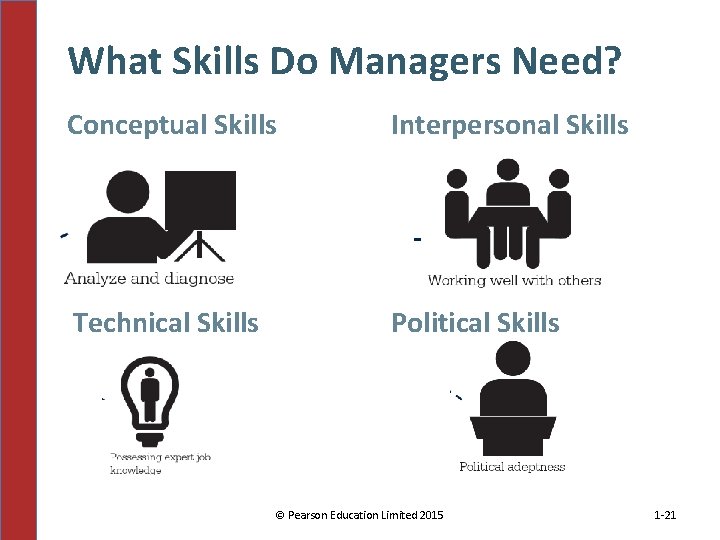
What Skills Do Managers Need? Conceptual Skills Interpersonal Skills Technical Skills Political Skills © Pearson Education Limited 2015 1 -21
1. 4 Explain why it’s important to study management. © Pearson Education Limited 2015 1 -22
Why Study Management? We all have a vested interest in improving how organizations are managed. © Pearson Education Limited 2015 1 -23
Why Study Management? (cont. ) Most people will either manage or be managed © Pearson Education Limited 2015 1 -24
1. 5 Describe the factors that are reshaping and redefining management. © Pearson Education Limited 2015 1 -25
Welcome to the New World of Management! Changing Workplaces + Changing Workforce © Pearson Education Limited 2015 1 -26
Why Are Customers Important? Consistent, high-quality customer service is essential to survival © Pearson Education Limited 2015 1 -27
Why Is Innovation Important? “Nothing is more risky than not innovating. ” © Pearson Education Limited 2015 1 -28
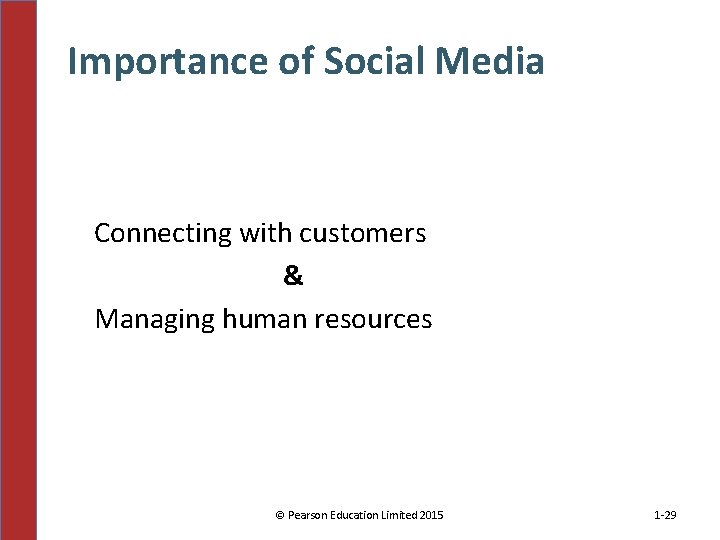
Importance of Social Media Connecting with customers & Managing human resources © Pearson Education Limited 2015 1 -29
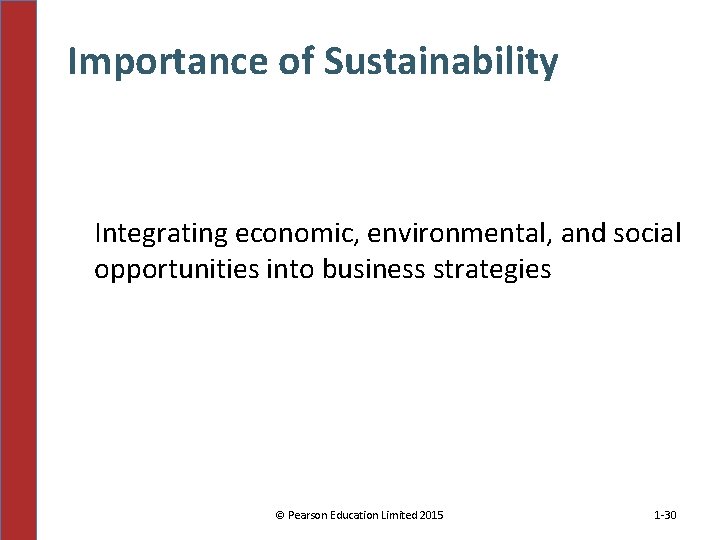
Importance of Sustainability Integrating economic, environmental, and social opportunities into business strategies © Pearson Education Limited 2015 1 -30
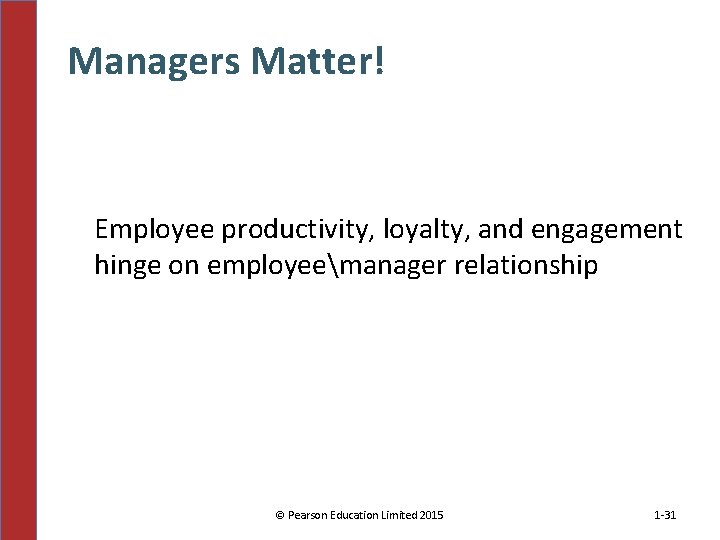
Managers Matter! Employee productivity, loyalty, and engagement hinge on employeemanager relationship © Pearson Education Limited 2015 1 -31
© Pearson Education Limited 2015 1 -32