1 SEPSIS PATHOPHYSIOLOGY CURRENT MANAGEMENT GUIDELINES Sarah Leyland



- Slides: 21
1 SEPSIS: PATHOPHYSIOLOGY & CURRENT MANAGEMENT GUIDELINES Sarah Leyland Practice Educator General ICU
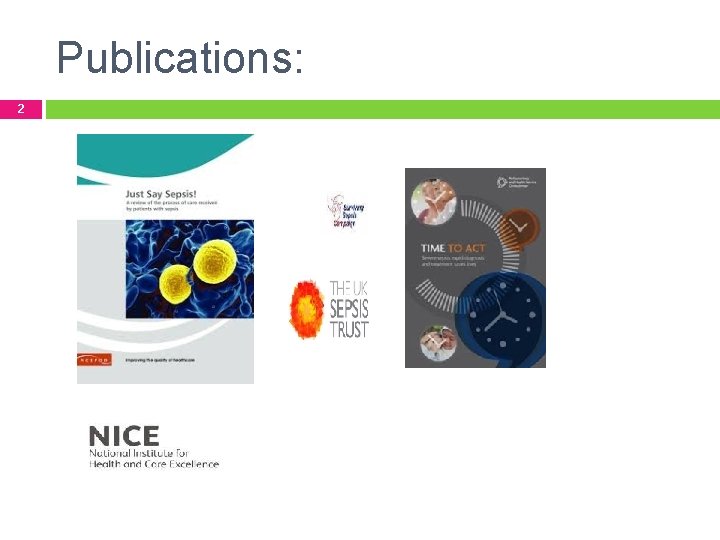
Publications: 2
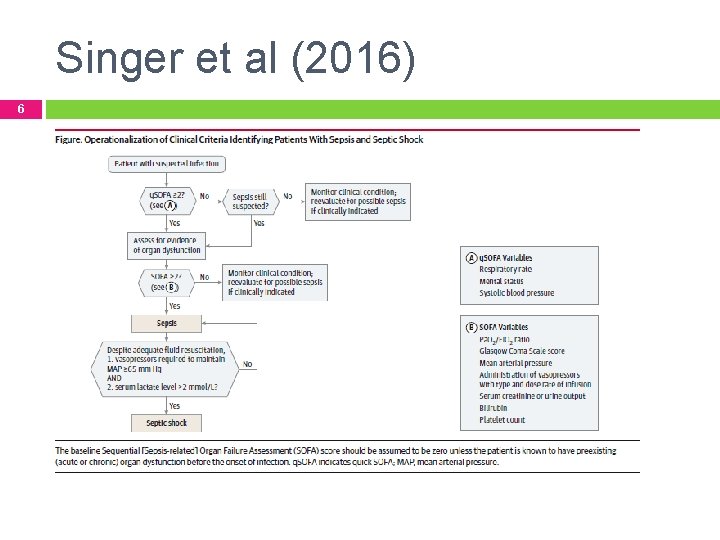
Definitions – Changed in 2016 3 Seymour et al (2016) Singer et al (2016) Sepsis – “life threatening organ dysfunction caused by disregulated host response to infection” (Singer et al 2016) Organ dysfunction = change in SOFA score (Seymour et al 2016) Septic Shock = subset of sepsis in which profound
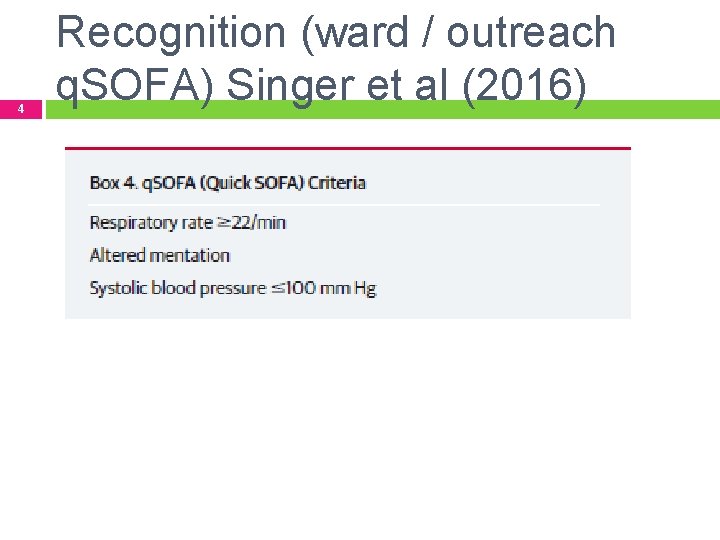
4 Recognition (ward / outreach q. SOFA) Singer et al (2016)
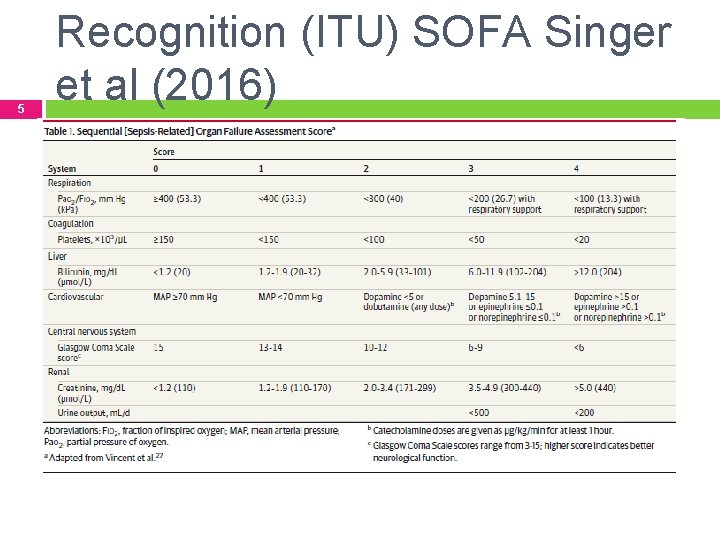
5 Recognition (ITU) SOFA Singer et al (2016)
Singer et al (2016) 6
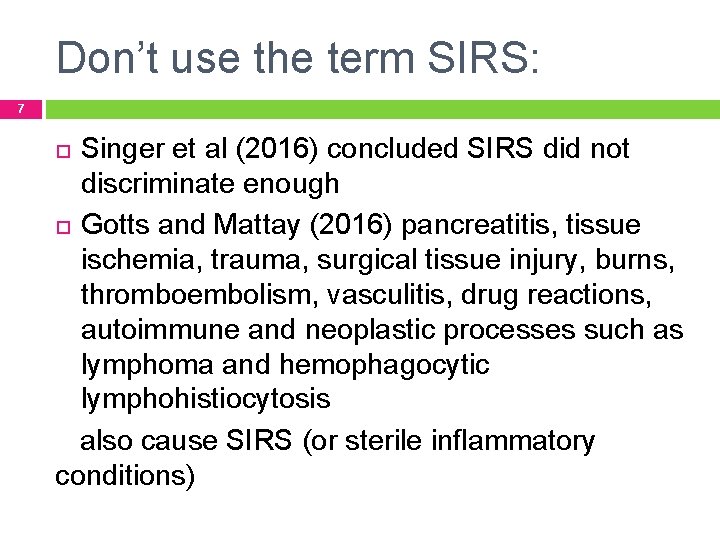
Don’t use the term SIRS: 7 Singer et al (2016) concluded SIRS did not discriminate enough Gotts and Mattay (2016) pancreatitis, tissue ischemia, trauma, surgical tissue injury, burns, thromboembolism, vasculitis, drug reactions, autoimmune and neoplastic processes such as lymphoma and hemophagocytic lymphohistiocytosis also cause SIRS (or sterile inflammatory conditions)
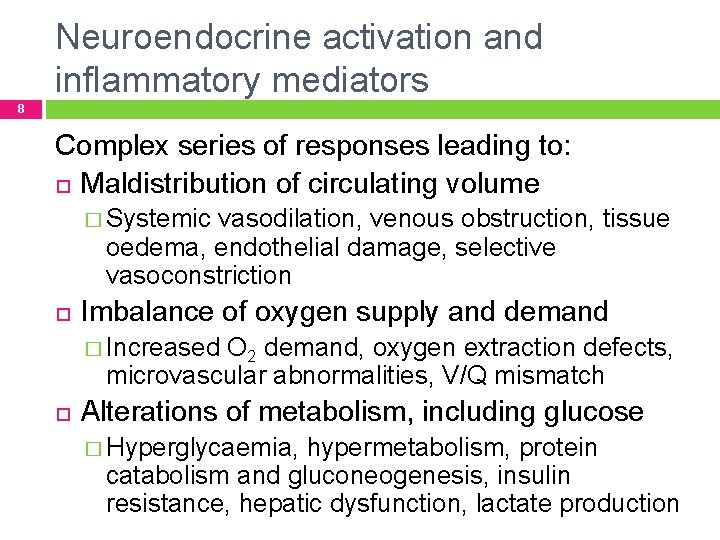
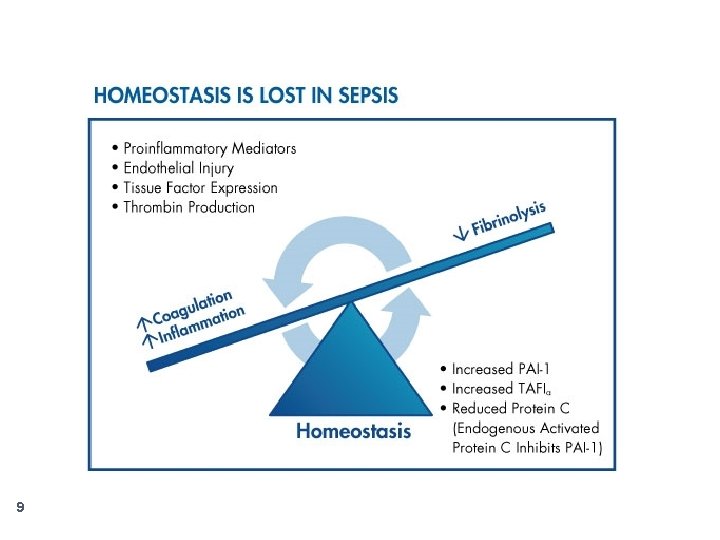
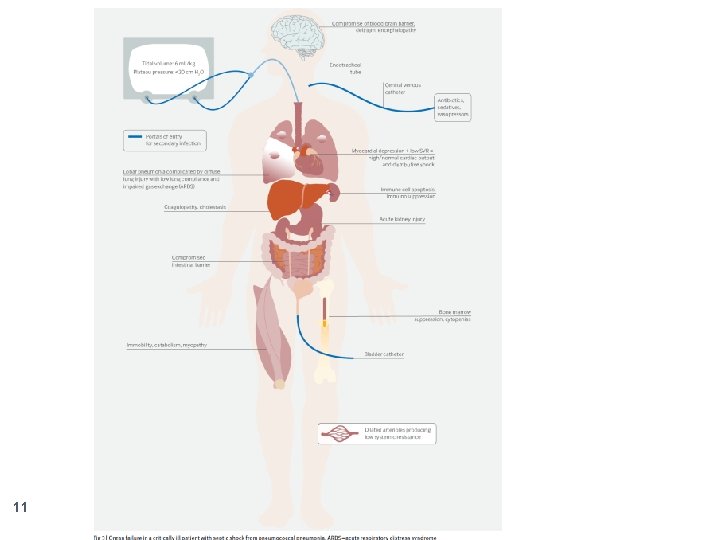
Neuroendocrine activation and inflammatory mediators 8 Complex series of responses leading to: Maldistribution of circulating volume � Systemic vasodilation, venous obstruction, tissue oedema, endothelial damage, selective vasoconstriction Imbalance of oxygen supply and demand � Increased O 2 demand, oxygen extraction defects, microvascular abnormalities, V/Q mismatch Alterations of metabolism, including glucose � Hyperglycaemia, hypermetabolism, protein catabolism and gluconeogenesis, insulin resistance, hepatic dysfunction, lactate production
9
10 What changes will you see in your patient?
11
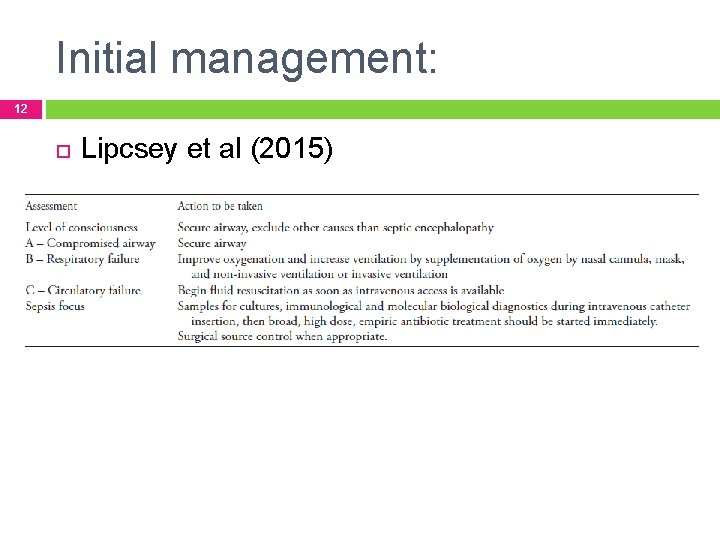
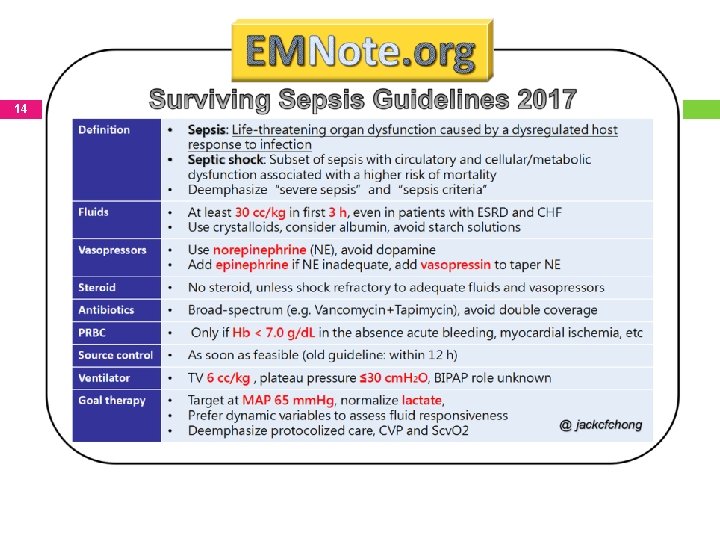
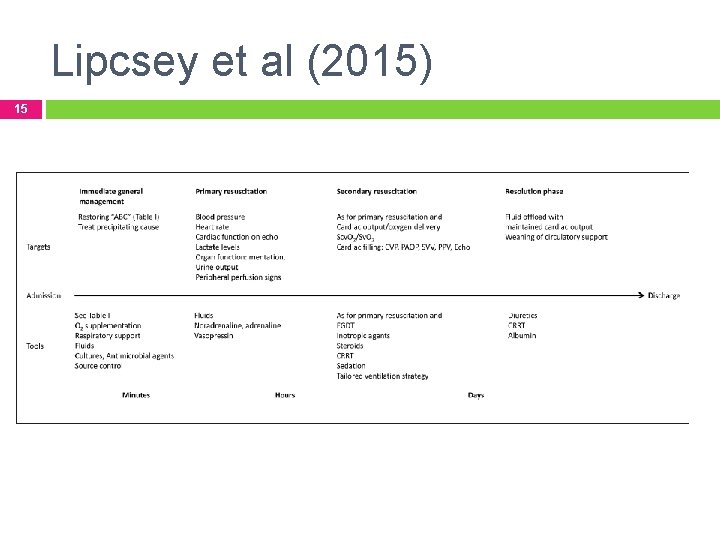
Initial management: 12 Lipcsey et al (2015)
‘Survive Sepsis’ 13 UK initiative – education programme The Sepsis Six � High flow oxygen � Take blood cultures � Give IV antibiotics � Start IV fluid resuscitation � Check lactate � Monitor hourly urine output All to be completed within 1 hour of suspected sepsis diagnosis
14
Lipcsey et al (2015) 15
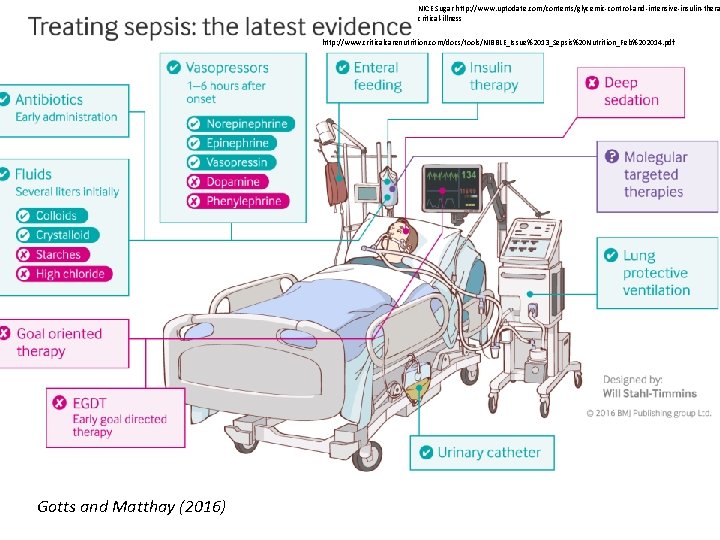
NICE Sugar http: //www. uptodate. com/contents/glycemic-control-and-intensive-insulin-thera critical-illness http: //www. criticalcarenutrition. com/docs/tools/NIBBLE_Issue%2013_Sepsis%20 Nutrition_Feb%202014. pdf Gotts and Matthay (2016)
In hospital: 17 Don’t assume type of shock… result maybe delay in treatment Secondary infection – central lines, urethral catheters, peripheral access, VAP Blood cultures – ***ONLY via line if very important source of access*** i. e Hickman line / Tesio / PICC Long terms effect life changing illness CVS effect up to 5 years later Vancomycin - please be careful! There are
References 18 Aitken, L et al (2011) Nursing considerations to complement the Surviving Sepsis Campaign Critical Care Medicine 39, 1800 -1818 Brunkhorst F M et al (2008) Intensive Insulin Therapy and Pentastarch Resuscitation in Severe Sepsis (VISEP) New England Journal of Medicine 358 125 -139 Daniels, R (2011) Surviving the first hours in sepsis: getting the basics right (an intensivist’s perspective) Journal of Antimicrobial Chemotherapy 66 Suppl 2, ii 11 - ii 23 Dellinger, P et al (2013) Surviving Sepsis Campaign: International Guidelines for Management of Severe Sepsis and Septic Shock: 2012 Critical Care Medicine 41(2), 580 -637 Faculty of Intensive Care Medicine / Intensive Care Society (2015) Guidelines for the provision of intensive care services. London. Gotts JE, Matthay MA (2016) Sepsis: Pathophysiology and Clinical management
19 Levy, M et al (2010) The Surviving Sepsis Campaign: results of an international guideline-based performance improvement program targeting severe sepsis Intensive Care Medicine 36, 222– 231 Kleinpell, R, Aitken, L & Schorr, C (2013) Implications of the New International Sepsis Guidelines for Nursing Care American Journal of Critical Care 22, 212 -222 Lipcsey M , Castegren M, Bellomo R (2015) Haemodynamic management of septic shock. Minerva Anestesiologica. 1262 -1272 NICE –SUGAR study investigators. (2009)Intensive versus conventional glucose control in critically ill patients. New England Journal of Medicine. 360 1283 -1297 Rivers E, Nguyen B, Havstad S et al (2001) Early Goal Directed Therapy in the treatment of severe sepsis and septic shock. New England Journal of Medicine. 345 p. 1368 -1377 Robson, W & Daniels, R (2008) The Sepsis Six: helping patients to survive sepsis British Journal of Nursing 17, 13 -21
20 Seymour et al (2016)Assessment of clinical criteria for sepsis For the Third International Consensus Definitions for Sepsis and Septic Shock (Sepsis -3). JAMA 315 (8) p. 762 -774 Singer et al (2016) The third International Consensus Definitions for sepsis and Septic Shock (Sepsis -3) JAMA 315(8) p. 801 -810 Van Den Berghe G et al (2001) Intensive Insulin therapy in critically ill patients. New England Journal of Medicine. 345 1359 -1367. www. survivingsepsis. org www. ncepod. org. uk
21 ANY QUESTIONS?