Writing at University UCD Access Lifelong Learning Learning


- Slides: 38
Writing at University UCD Access & Lifelong Learning
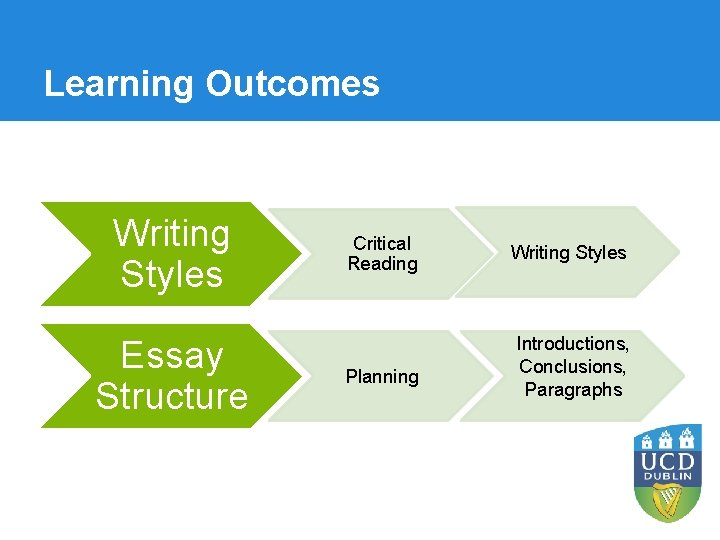
Learning Outcomes Writing Styles Essay Structure Critical Reading Planning Writing Styles Introductions, Conclusions, Paragraphs
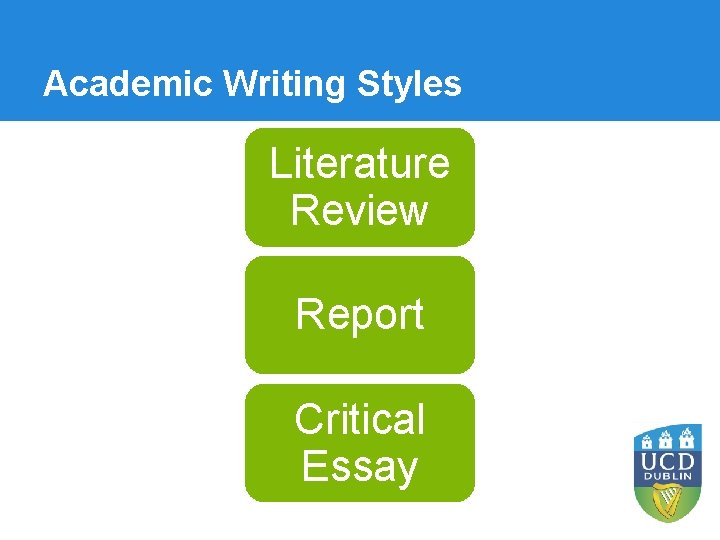
Academic Writing Styles Literature Review Report Critical Essay
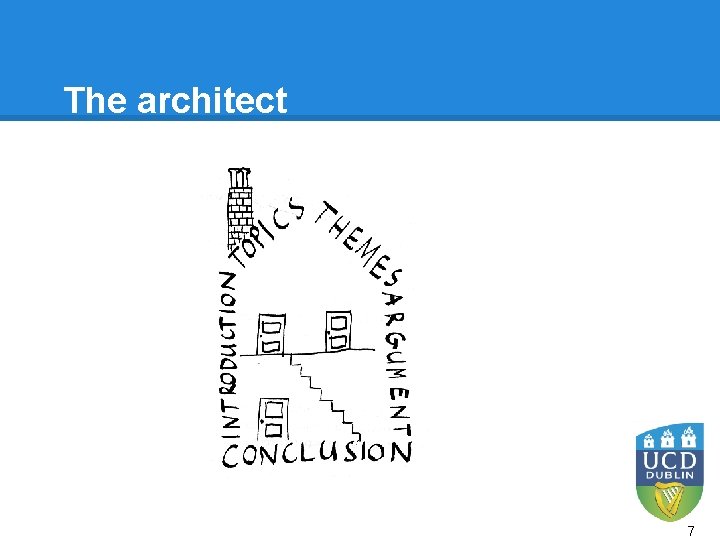
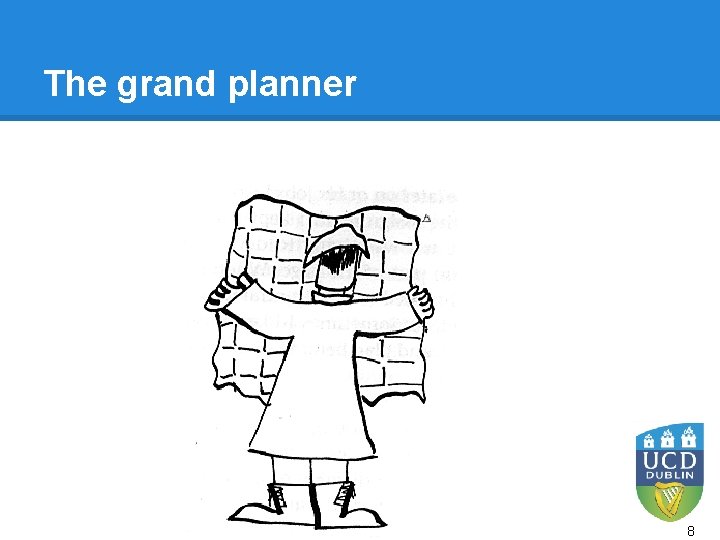
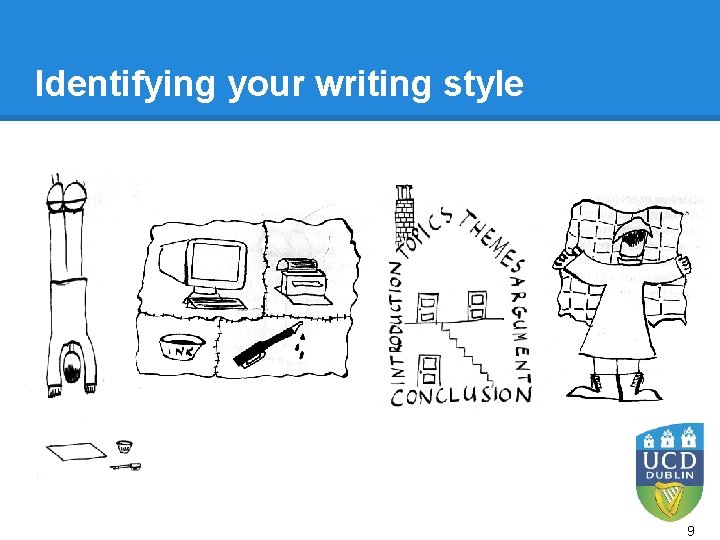
What type of writer are you?
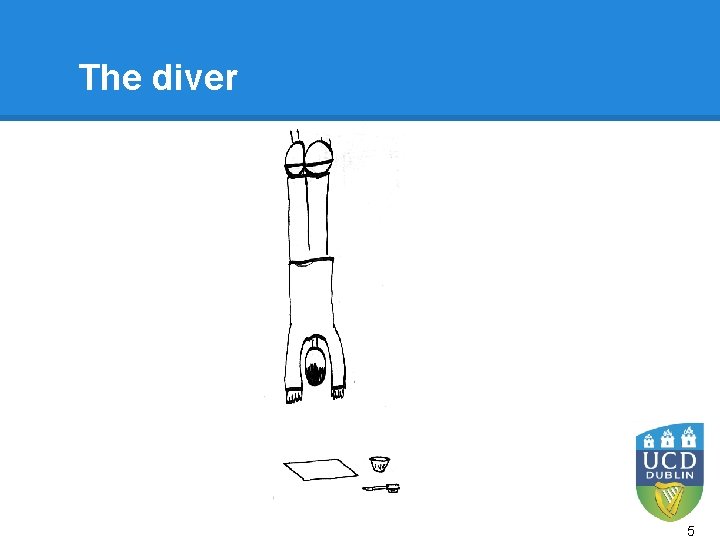
The diver 5
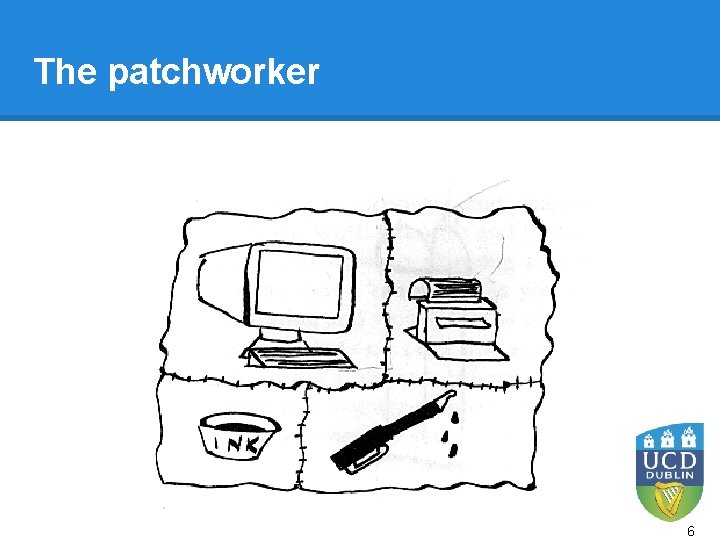
The patchworker 6
The architect 7
The grand planner 8
Identifying your writing style 9
Previous writing experiences …
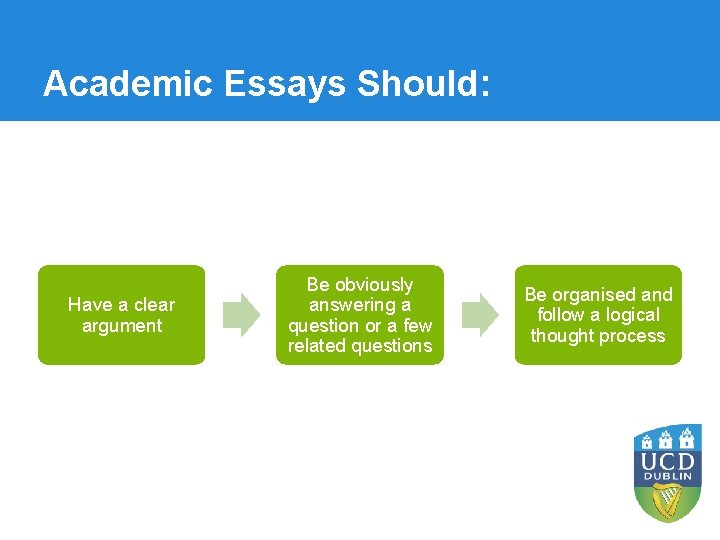
Academic Essays Should: Have a clear argument Be obviously answering a question or a few related questions Be organised and follow a logical thought process
Think About - Audience Aims Topic Focus
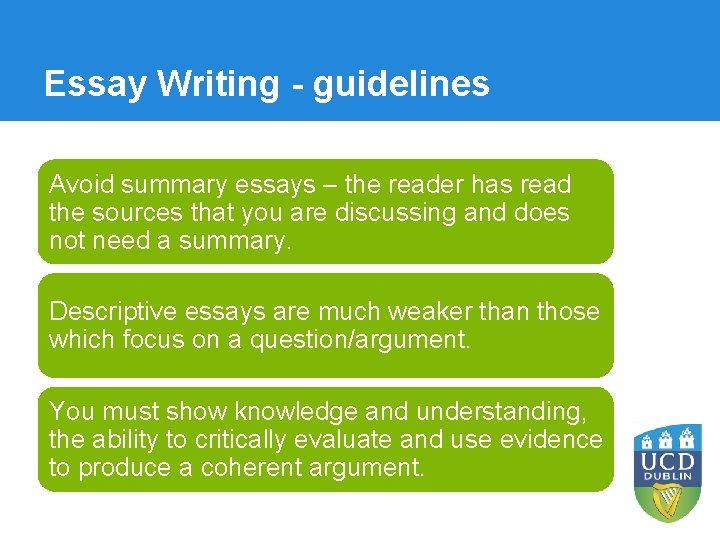
Essay Writing - guidelines Avoid summary essays – the reader has read the sources that you are discussing and does not need a summary. Descriptive essays are much weaker than those which focus on a question/argument. You must show knowledge and understanding, the ability to critically evaluate and use evidence to produce a coherent argument.
Starting the assignment Requirements • Length • Referencing • Deadline? Understand the question • Breakdown • Verbs
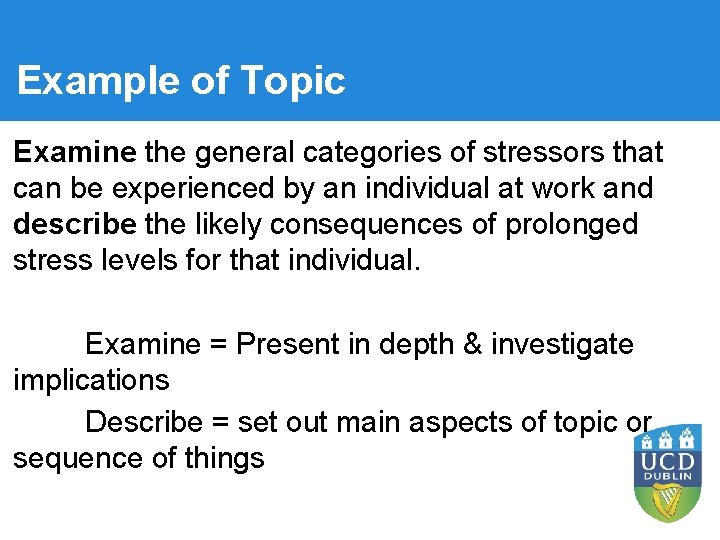
Example of Topic Examine the general categories of stressors that can be experienced by an individual at work and describe the likely consequences of prolonged stress levels for that individual. Examine = Present in depth & investigate implications Describe = set out main aspects of topic or sequence of things
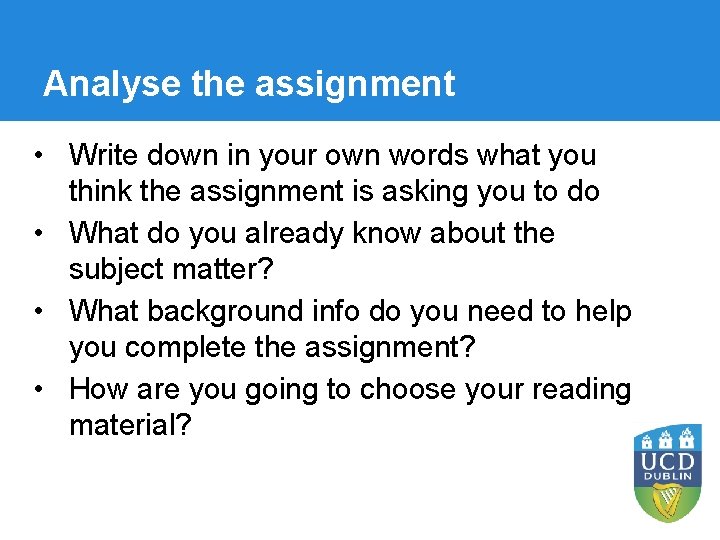
Analyse the assignment • Write down in your own words what you think the assignment is asking you to do • What do you already know about the subject matter? • What background info do you need to help you complete the assignment? • How are you going to choose your reading material?
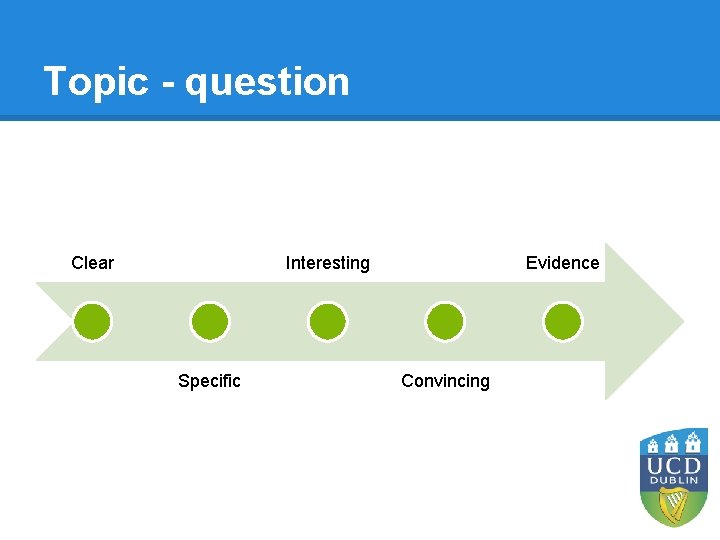
Topic - question Clear Interesting Specific Evidence Convincing
Reading as part of writing
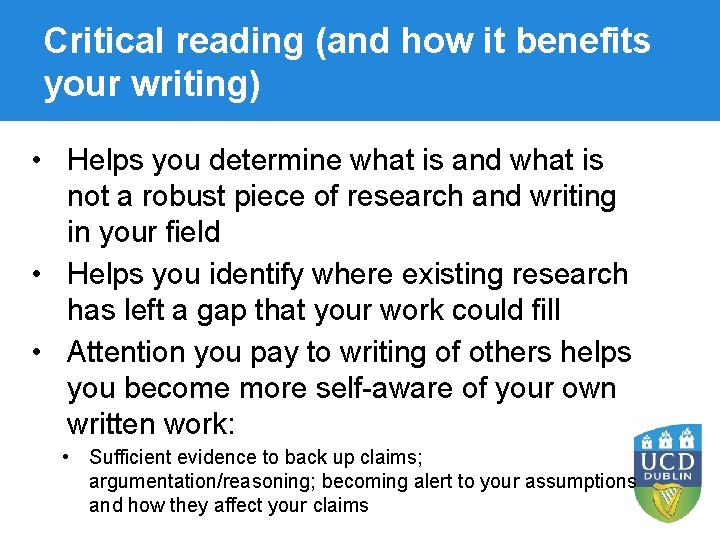
Critical reading (and how it benefits your writing) • Helps you determine what is and what is not a robust piece of research and writing in your field • Helps you identify where existing research has left a gap that your work could fill • Attention you pay to writing of others helps you become more self-aware of your own written work: • Sufficient evidence to back up claims; argumentation/reasoning; becoming alert to your assumptions and how they affect your claims
Critical reading? Some possible approaches • How do you go about reading an academic text? • Use parts of the text: abstract, contents, index, sub-headings, graphs, tables, introduction and conclusion • Skim to get the gist of the argument • Read with questions in mind
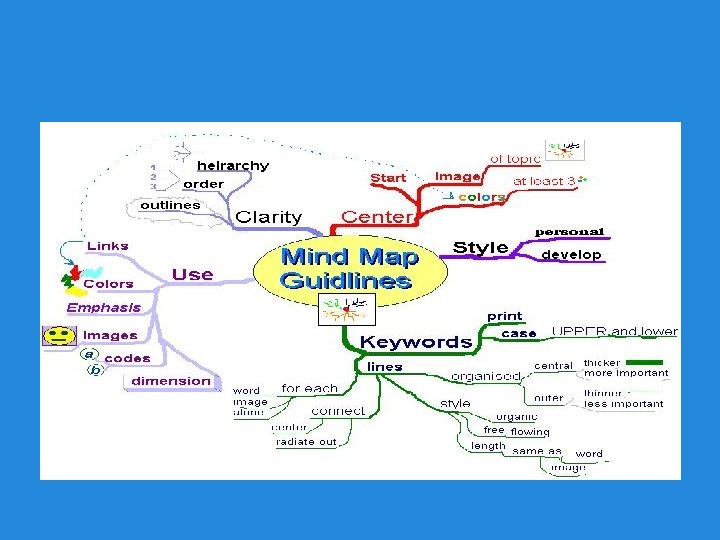
Critical reading? Some possible approaches • • Make notes/mind map/ use highlighter Write a summary in your own words Write a brief critical response Keep note of bibliographic details
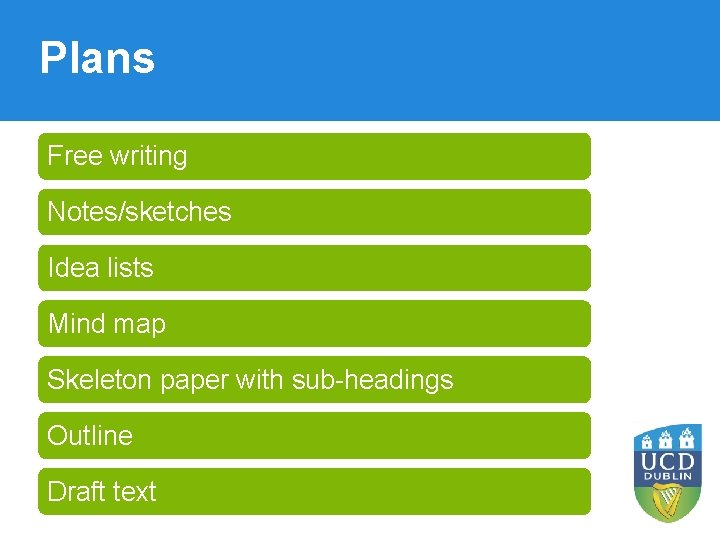
Plans Free writing Notes/sketches Idea lists Mind map Skeleton paper with sub-headings Outline Draft text
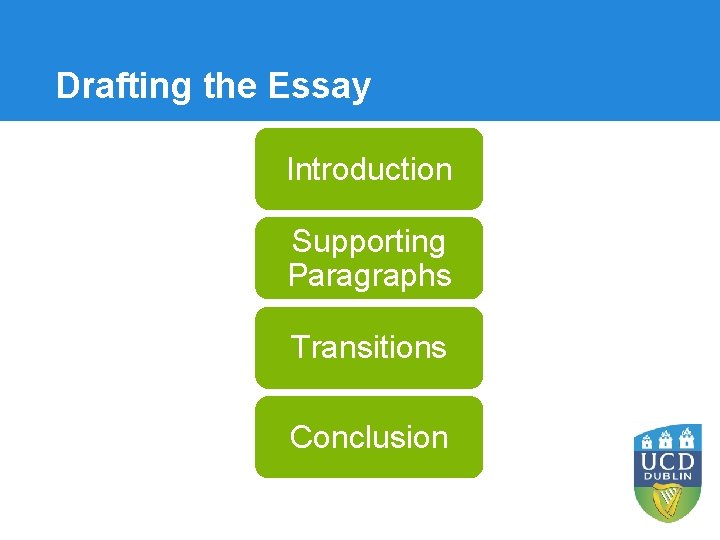
Drafting the Essay Introduction Supporting Paragraphs Transitions Conclusion
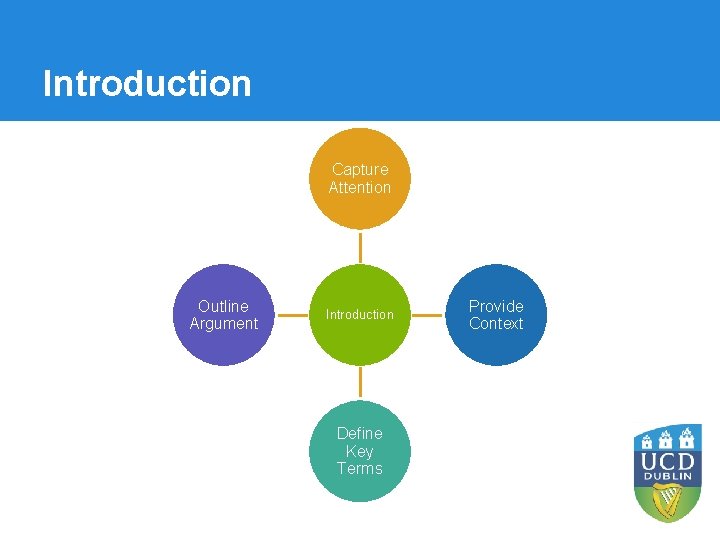
Introduction Capture Attention Outline Argument Introduction Define Key Terms Provide Context
Introduction Styles General Question Quote • You introduce your essay and several related points you intend to write about. • You begin by asking an important question that you then answer in the text of your essay. • You begin with a famous or compelling quote that relates to your essay.
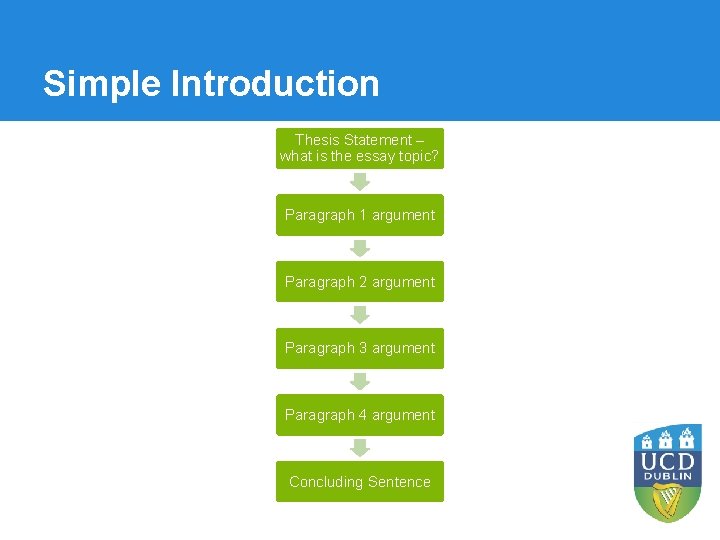
Simple Introduction Thesis Statement – what is the essay topic? Paragraph 1 argument Paragraph 2 argument Paragraph 3 argument Paragraph 4 argument Concluding Sentence
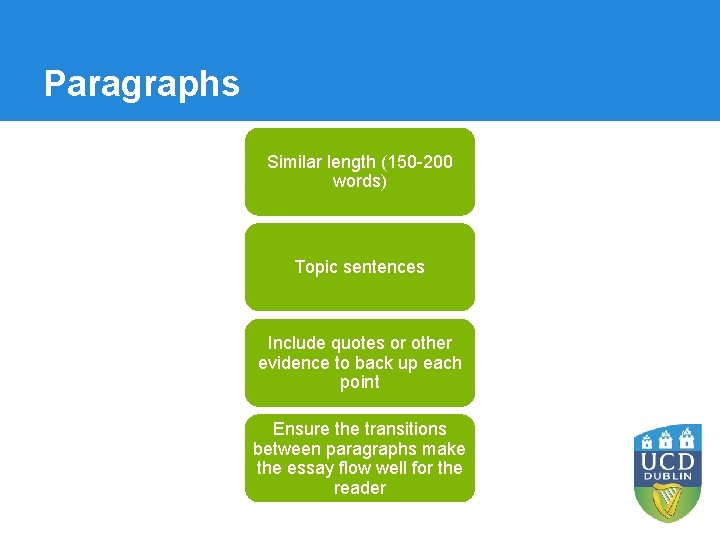
Paragraphs Similar length (150 -200 words) Topic sentences Include quotes or other evidence to back up each point Ensure the transitions between paragraphs make the essay flow well for the reader
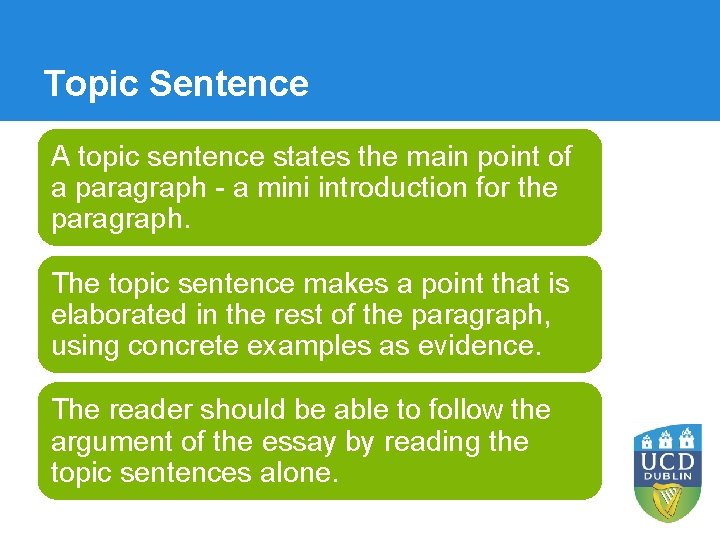
Topic Sentence A topic sentence states the main point of a paragraph - a mini introduction for the paragraph. The topic sentence makes a point that is elaborated in the rest of the paragraph, using concrete examples as evidence. The reader should be able to follow the argument of the essay by reading the topic sentences alone.
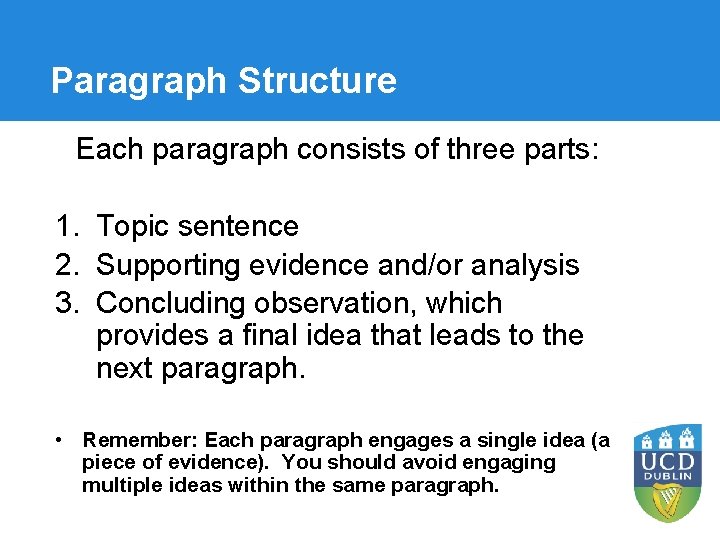
Paragraph Structure Each paragraph consists of three parts: 1. Topic sentence 2. Supporting evidence and/or analysis 3. Concluding observation, which provides a final idea that leads to the next paragraph. • Remember: Each paragraph engages a single idea (a piece of evidence). You should avoid engaging multiple ideas within the same paragraph.
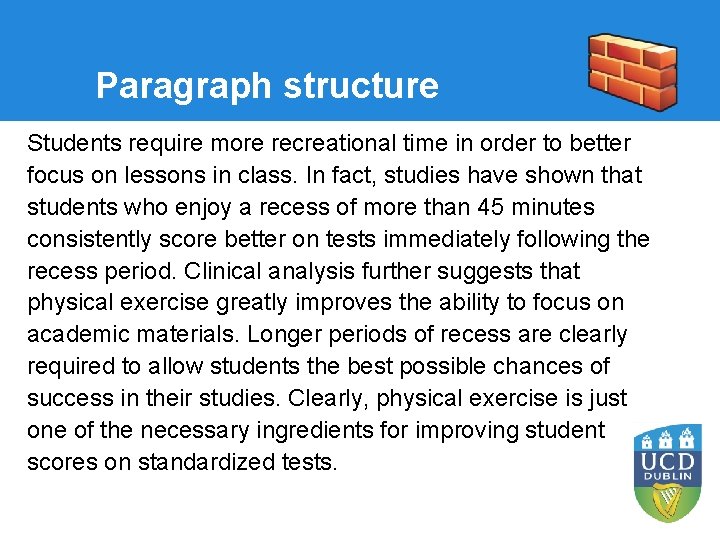
Paragraph structure Students require more recreational time in order to better focus on lessons in class. In fact, studies have shown that students who enjoy a recess of more than 45 minutes consistently score better on tests immediately following the recess period. Clinical analysis further suggests that physical exercise greatly improves the ability to focus on academic materials. Longer periods of recess are clearly required to allow students the best possible chances of success in their studies. Clearly, physical exercise is just one of the necessary ingredients for improving student scores on standardized tests.
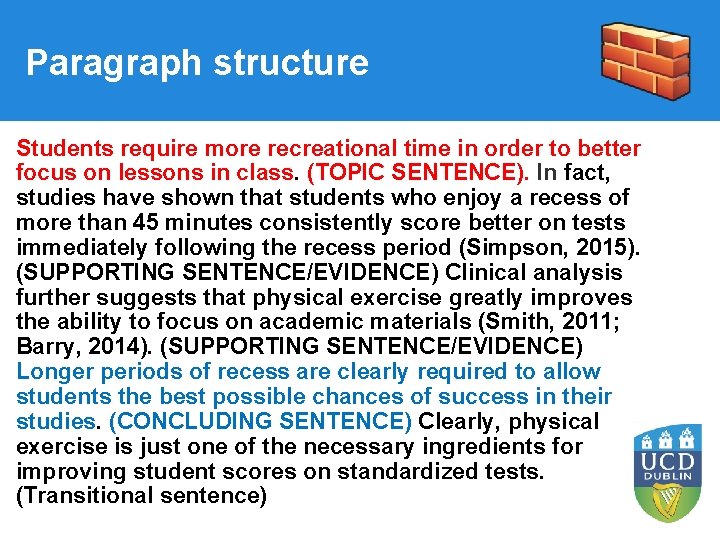
Paragraph structure Students require more recreational time in order to better focus on lessons in class. (TOPIC SENTENCE). In fact, studies have shown that students who enjoy a recess of more than 45 minutes consistently score better on tests immediately following the recess period (Simpson, 2015). (SUPPORTING SENTENCE/EVIDENCE) Clinical analysis further suggests that physical exercise greatly improves the ability to focus on academic materials (Smith, 2011; Barry, 2014). (SUPPORTING SENTENCE/EVIDENCE) Longer periods of recess are clearly required to allow students the best possible chances of success in their studies. (CONCLUDING SENTENCE) Clearly, physical exercise is just one of the necessary ingredients for improving student scores on standardized tests. (Transitional sentence)
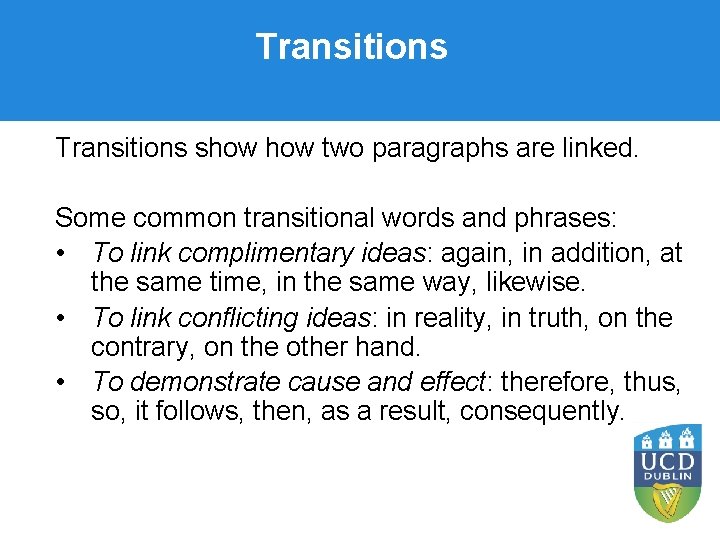
Transitions show two paragraphs are linked. Some common transitional words and phrases: • To link complimentary ideas: again, in addition, at the same time, in the same way, likewise. • To link conflicting ideas: in reality, in truth, on the contrary, on the other hand. • To demonstrate cause and effect: therefore, thus, so, it follows, then, as a result, consequently.
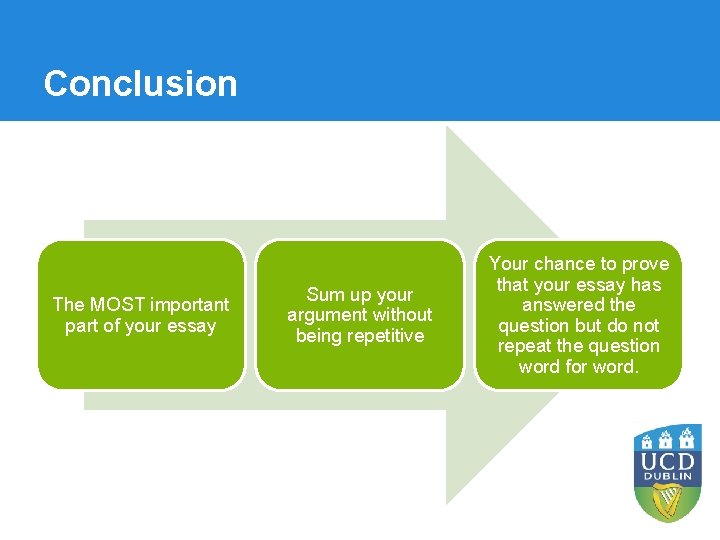
Conclusion The MOST important part of your essay Sum up your argument without being repetitive Your chance to prove that your essay has answered the question but do not repeat the question word for word.
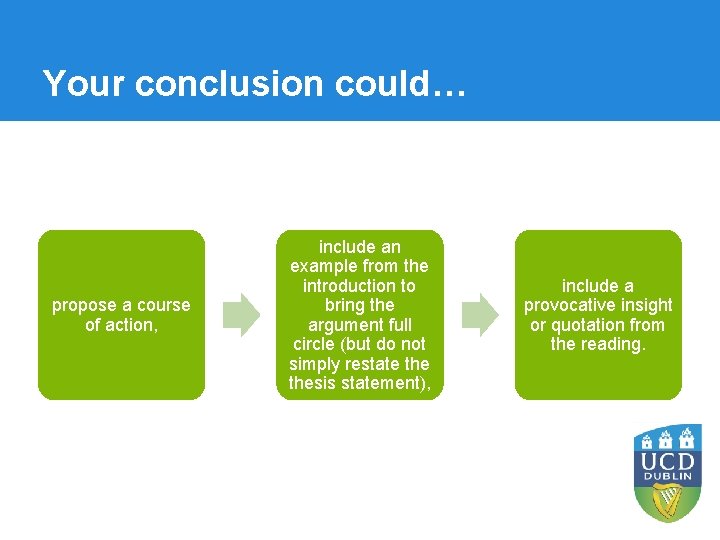
Your conclusion could… propose a course of action, include an example from the introduction to bring the argument full circle (but do not simply restate thesis statement), include a provocative insight or quotation from the reading.
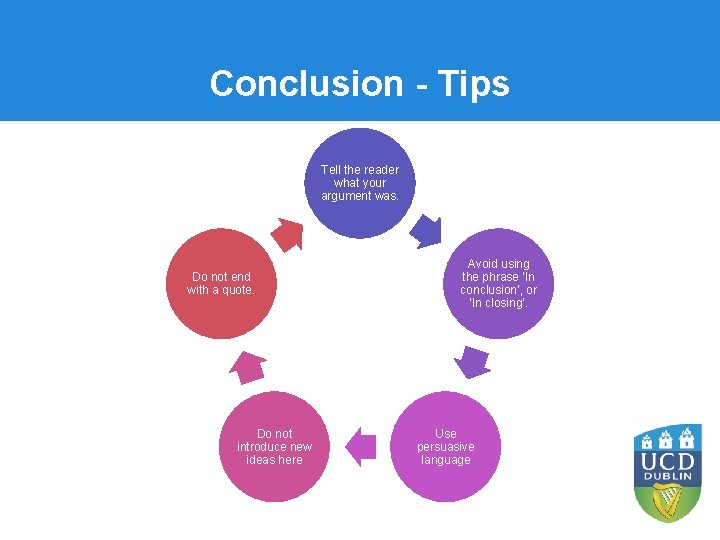
Conclusion - Tips Tell the reader what your argument was. Do not end with a quote. Do not introduce new ideas here Avoid using the phrase ‘In conclusion’, or ‘In closing’. Use persuasive language
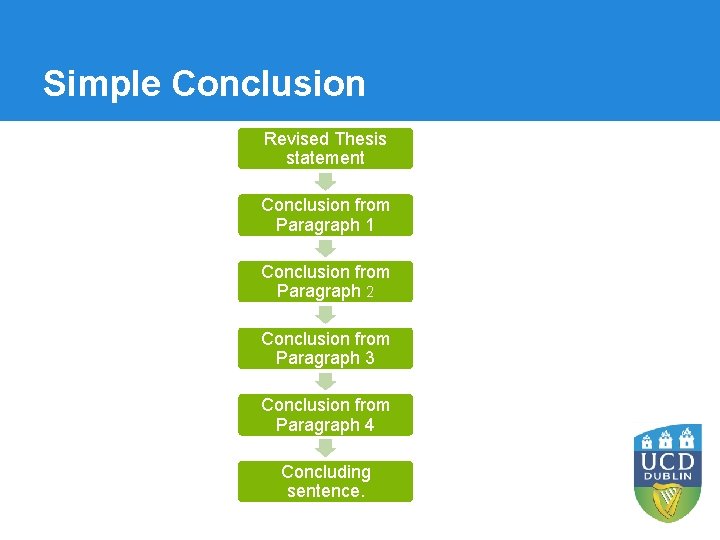
Simple Conclusion Revised Thesis statement Conclusion from Paragraph 1 Conclusion from Paragraph 2 Conclusion from Paragraph 3 Conclusion from Paragraph 4 Concluding sentence.
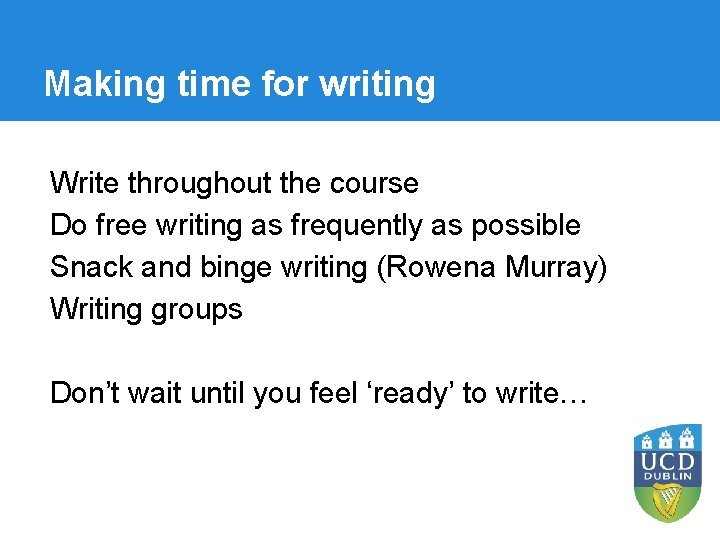
Making time for writing Write throughout the course Do free writing as frequently as possible Snack and binge writing (Rowena Murray) Writing groups Don’t wait until you feel ‘ready’ to write…