WILDLIFE RADIOTELEMETRY AND REMOTE MONITORING Joshua J Millspaugh

- Slides: 15
WILDLIFE RADIOTELEMETRY AND REMOTE MONITORING Joshua J. Millspaugh, Dylan C. Kesler, Roland W. Kays, Robert A. Gitzen, John H. Schulz, Christopher T. Rota, Catherine M. Bodinof, Jerrold L. Belant, and Barbara J. Keller
Introduction § Radiotelemetry provides novel information about animal locations and demographics § Biologists should be aware of the most appropriate tools for remote monitoring of wildlife § We consider many issues from design to equipment
Sampling Considerations and Study Objectives § Sampling considerations are critical ► Biologist assumes data are representative ► Proper sampling maximizes quality of study § Study objectives ► Identify target population and time period of interest ► Prioritize biological parameters and comparisons of interest ► Quantitative precision goals
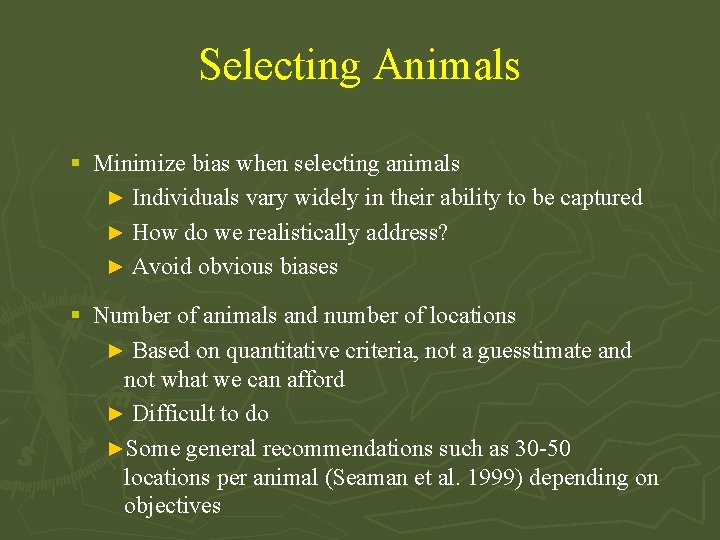
Selecting Animals § Minimize bias when selecting animals ► Individuals vary widely in their ability to be captured ► How do we realistically address? ► Avoid obvious biases § Number of animals and number of locations ► Based on quantitative criteria, not a guesstimate and not what we can afford ► Difficult to do ►Some general recommendations such as 30 -50 locations per animal (Seaman et al. 1999) depending on objectives
Data Collection and Management § Scheduling telemetry data collection Related to time frame of interest ► Benefits of systematic schedule ► § Data Management Often overlooked, but shouldn’t be ► Need better data sharing ►
Addressing Sources of Bias § Effects of transmitters ► One of the most important considerations ► Often not evaluated, but should be ► Ethical obligation § Location error ► Inaccurate and missing observations ► Many factors affect error
Equipment Considerations § Common considerations ► Which tag to use ► How to attached ► Data collection system ► Examples
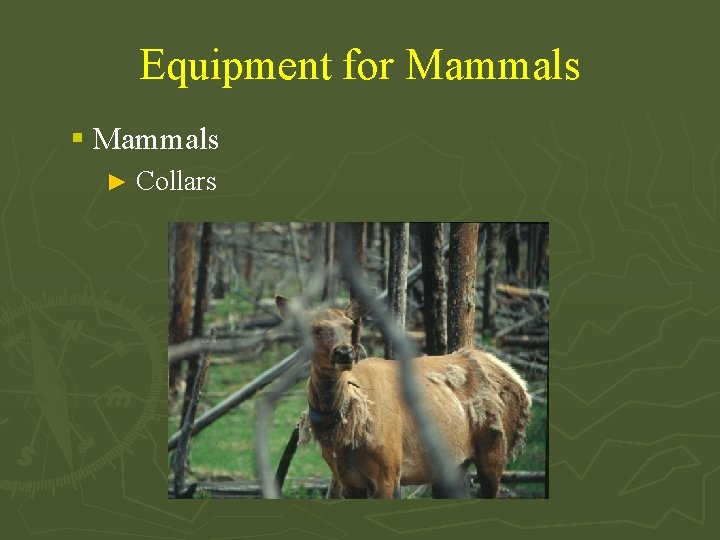
Equipment for Mammals § Mammals ► Collars
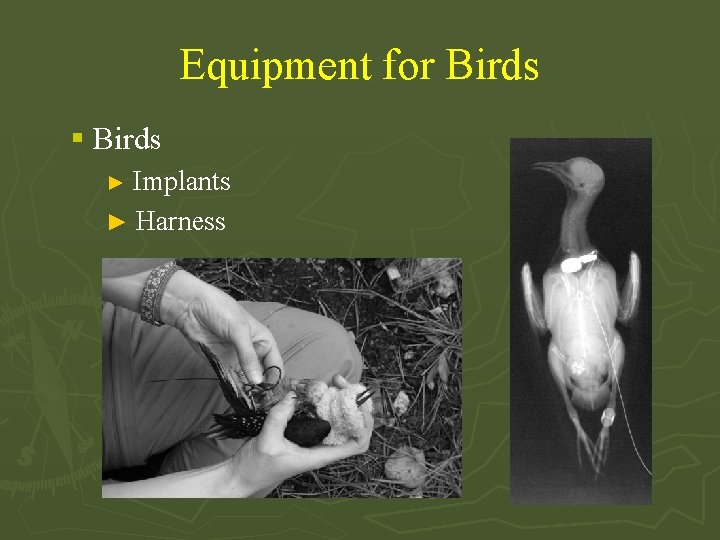
Equipment for Birds § Birds Implants ► Harness ►
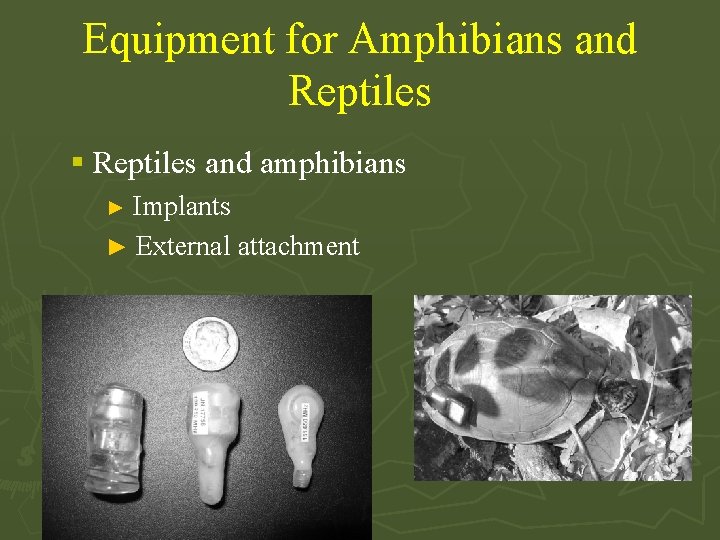
Equipment for Amphibians and Reptiles § Reptiles and amphibians Implants ► External attachment ►
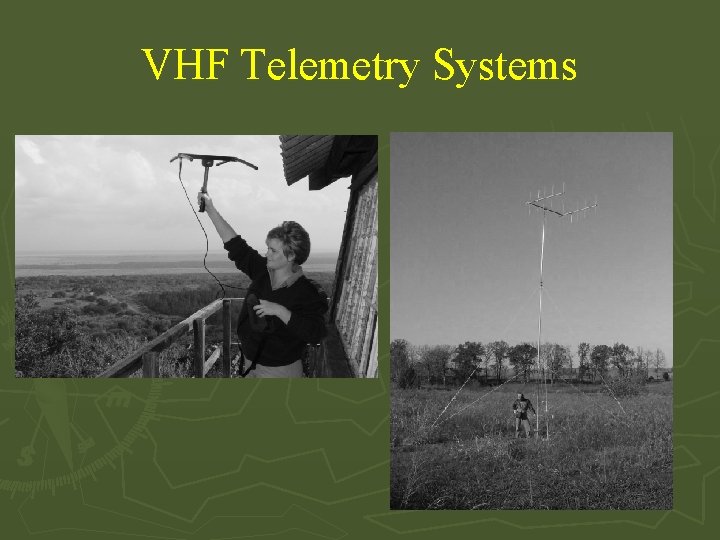
VHF Telemetry Systems
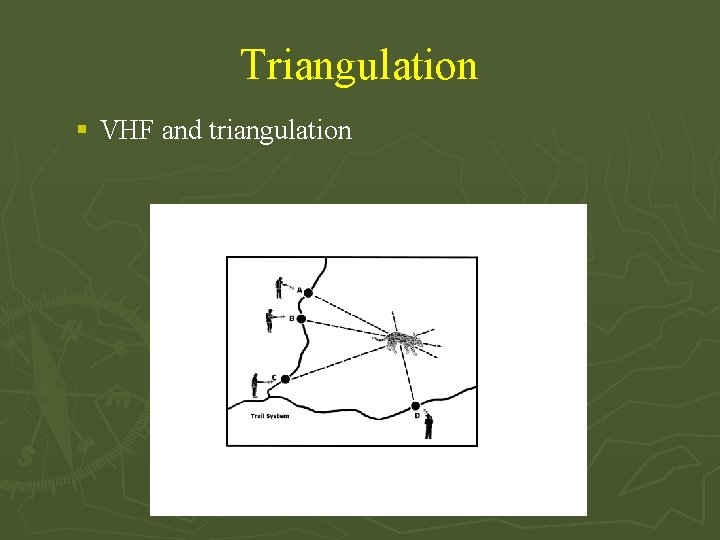
Triangulation § VHF and triangulation
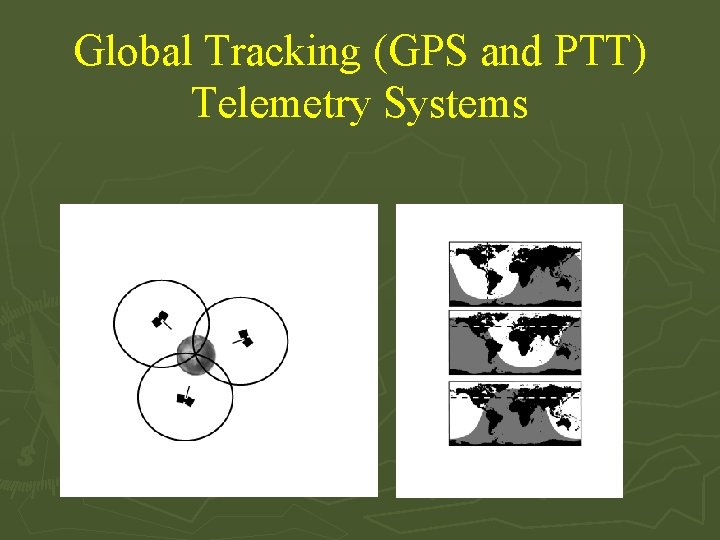
Global Tracking (GPS and PTT) Telemetry Systems
Sensors § Many sensors Mortality switch ► Accelerometer ► Body temperature ► Heart rate ► Video ►
SUMMARY ► ► ► ► Radiotelemetry powerful tool Sampling considerations are critical to project success Need clear objectives Use transmitter and attachment method that minimizes impacts to study species Several equipment options including VHF, GPS, PTT, among others Many useful sensors available Biologists should consult others, the literature and manufacturer to assess what works