WHAT IS THIS THIS IS NOT HOW EARTH





- Slides: 45
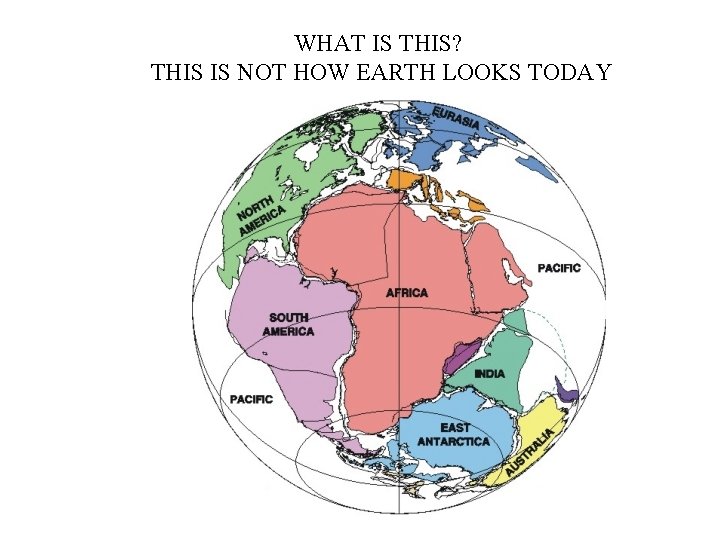
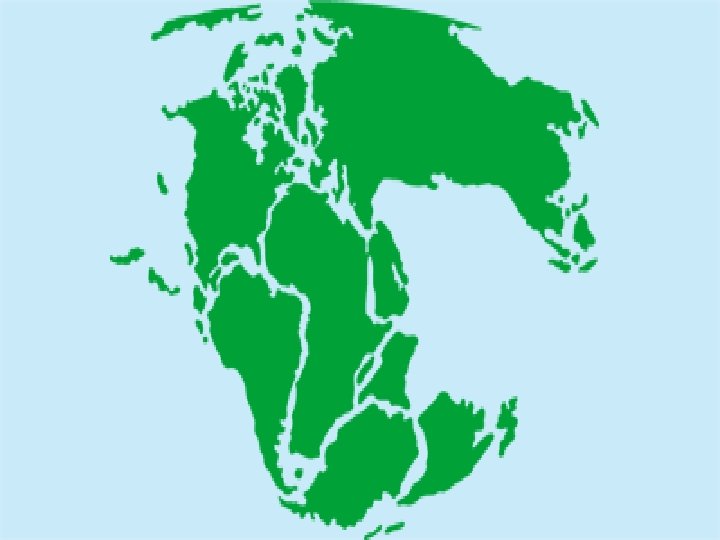
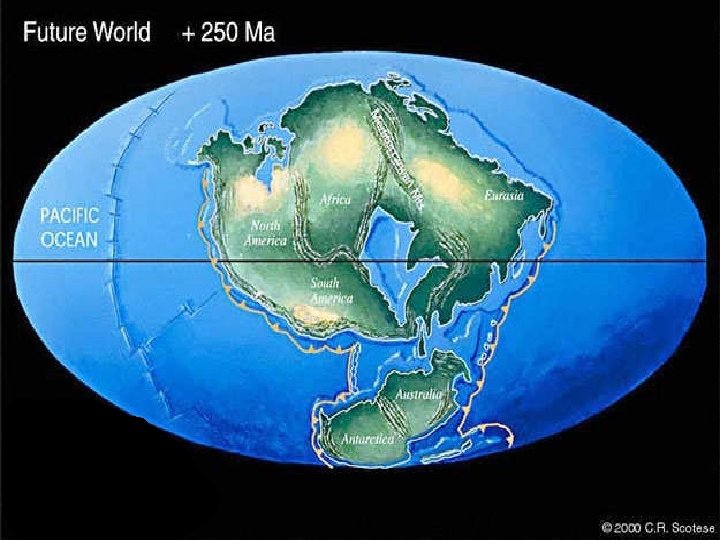
WHAT IS THIS? THIS IS NOT HOW EARTH LOOKS TODAY
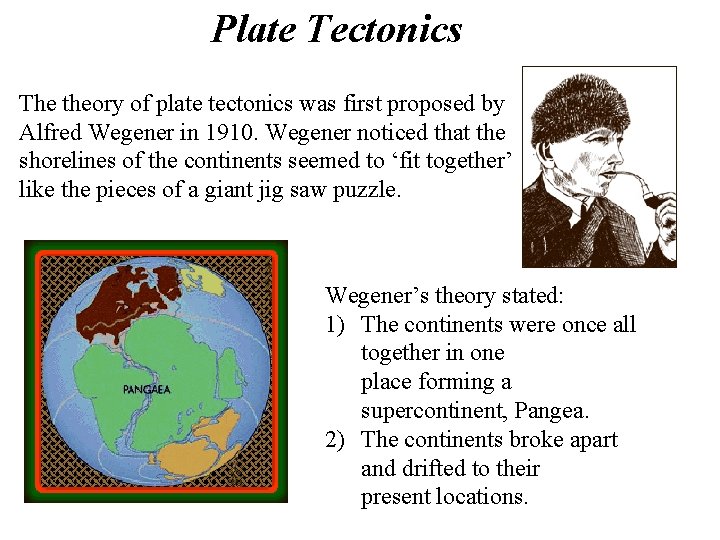
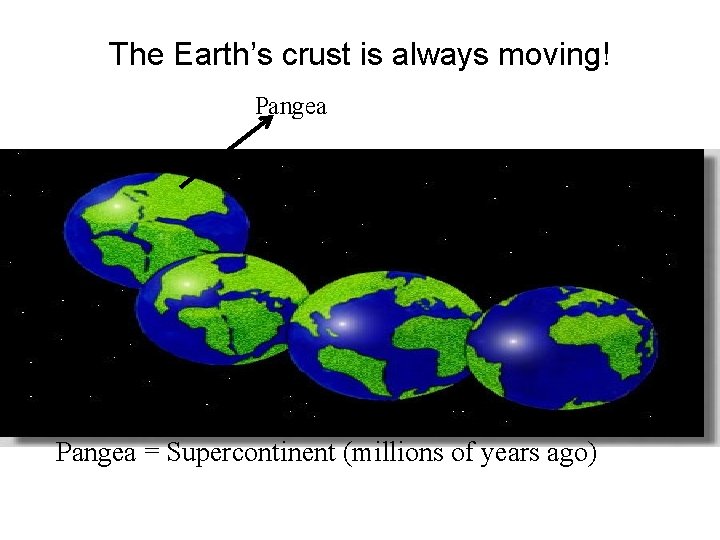
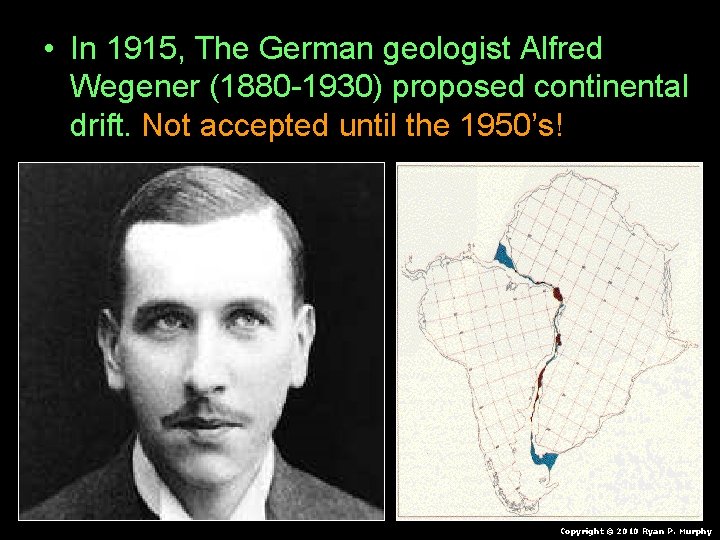
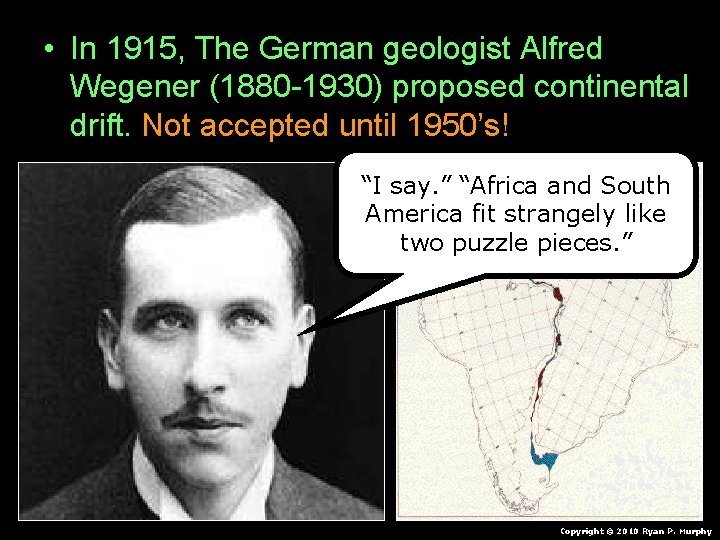
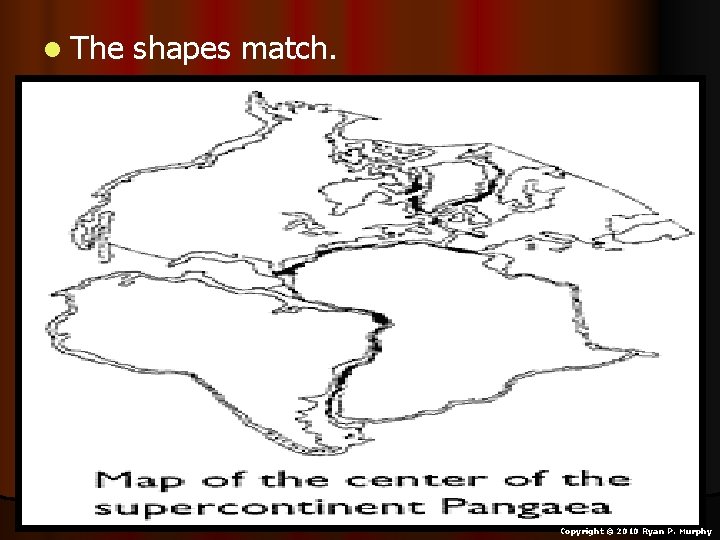
Plate Tectonics The theory of plate tectonics was first proposed by Alfred Wegener in 1910. Wegener noticed that the shorelines of the continents seemed to ‘fit together’ like the pieces of a giant jig saw puzzle. Wegener’s theory stated: 1) The continents were once all together in one place forming a supercontinent, Pangea. 2) The continents broke apart and drifted to their present locations.
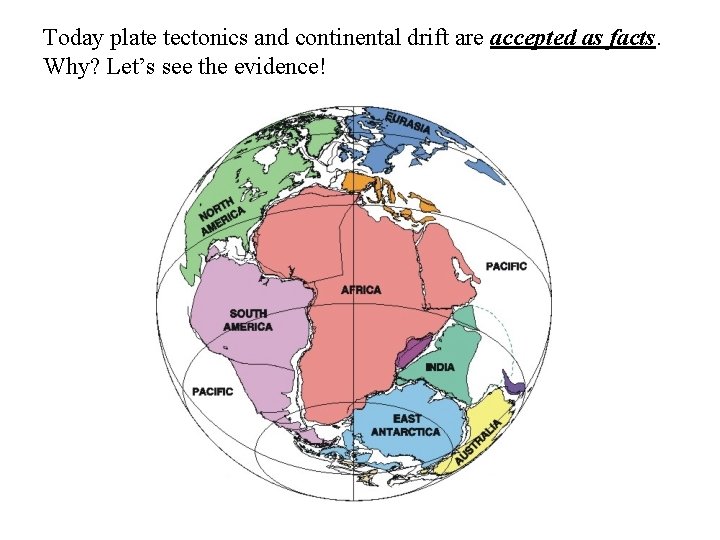
Today plate tectonics and continental drift are accepted as facts. Why? Let’s see the evidence!
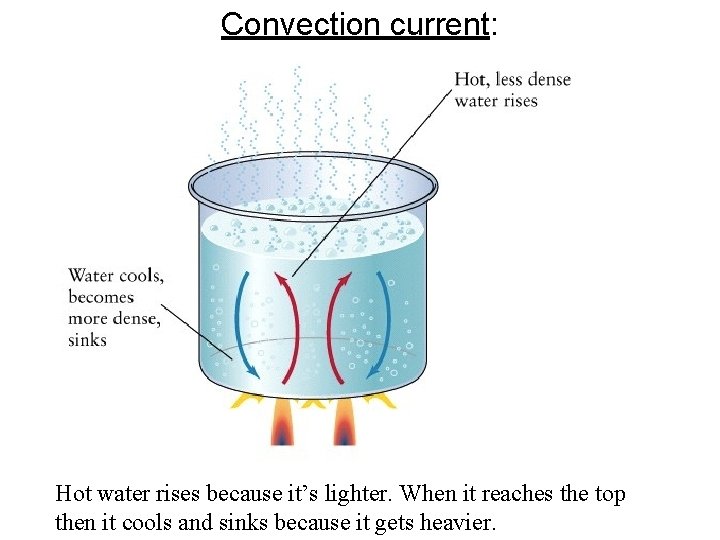
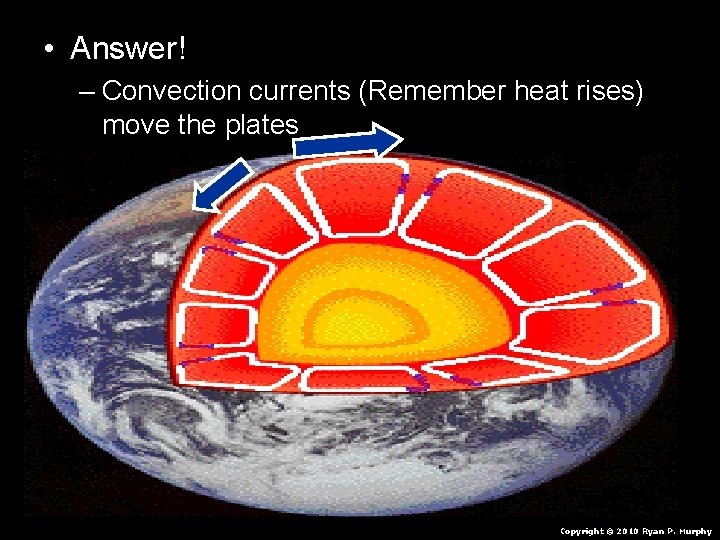
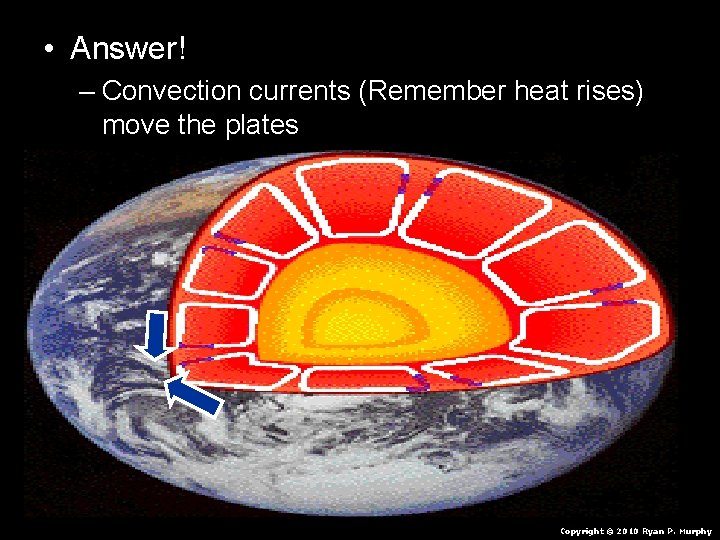
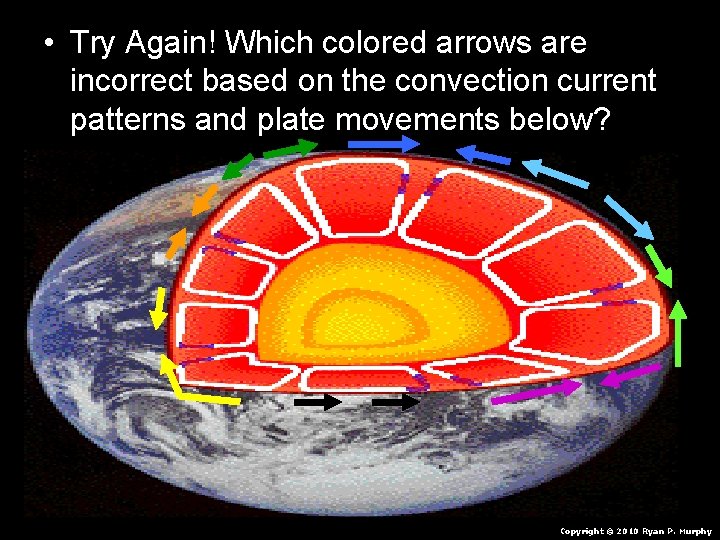
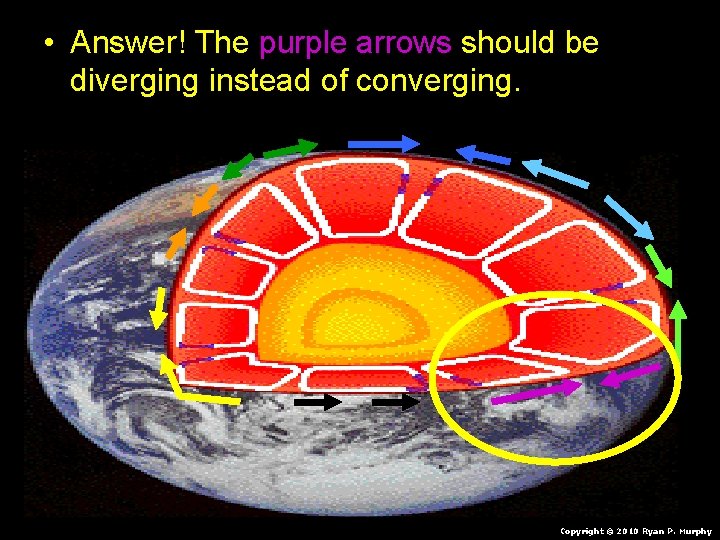
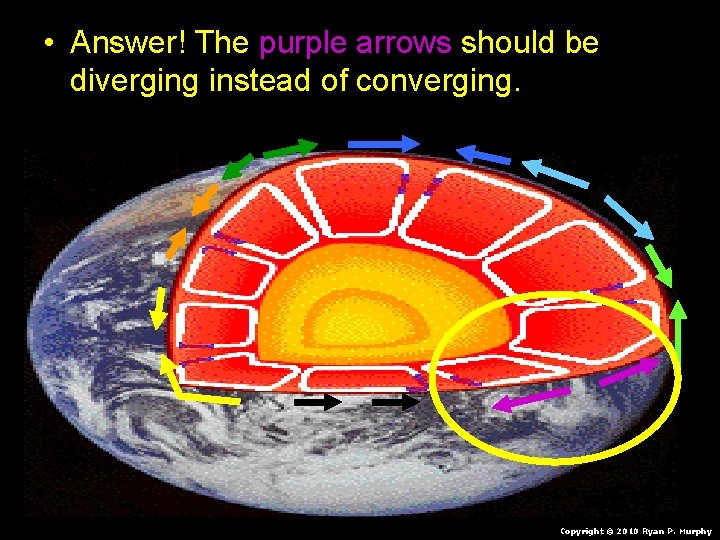
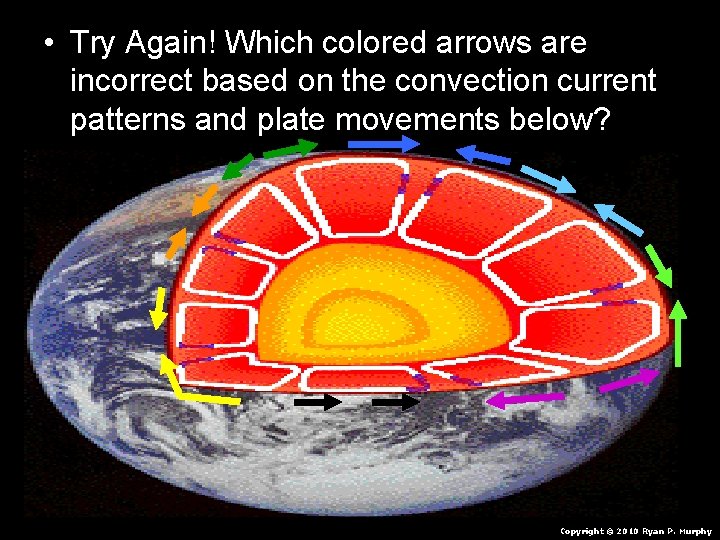
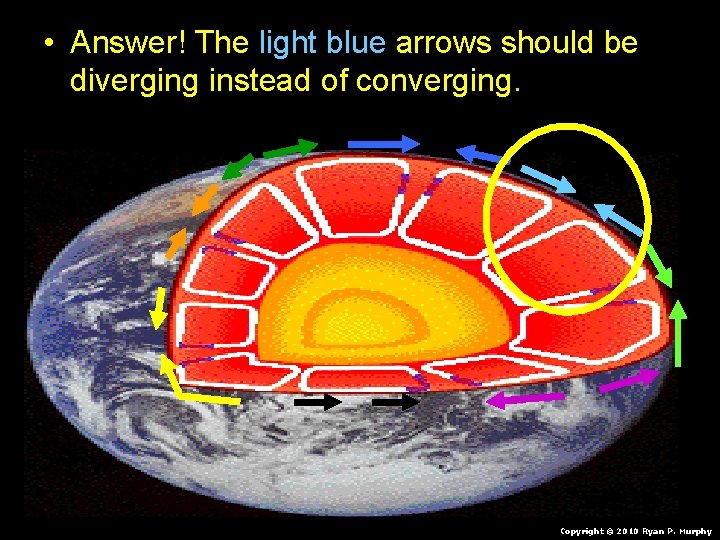
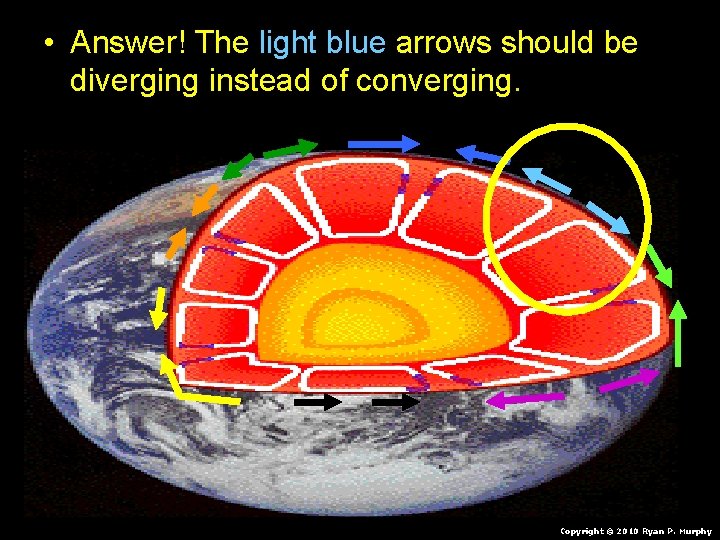
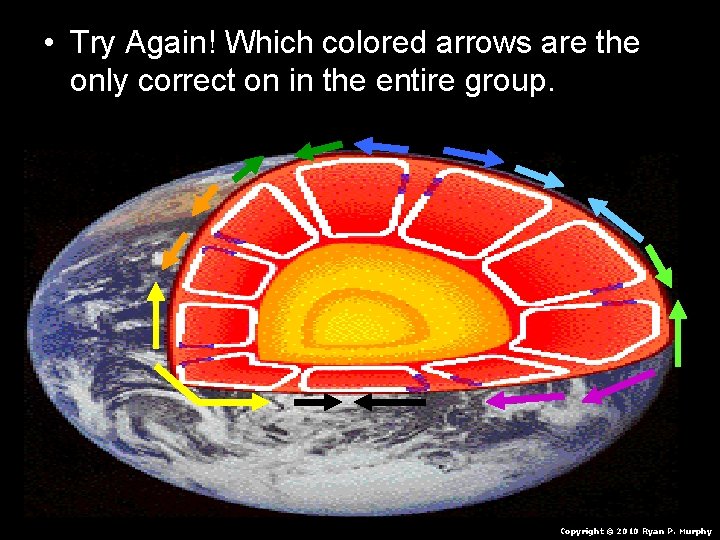
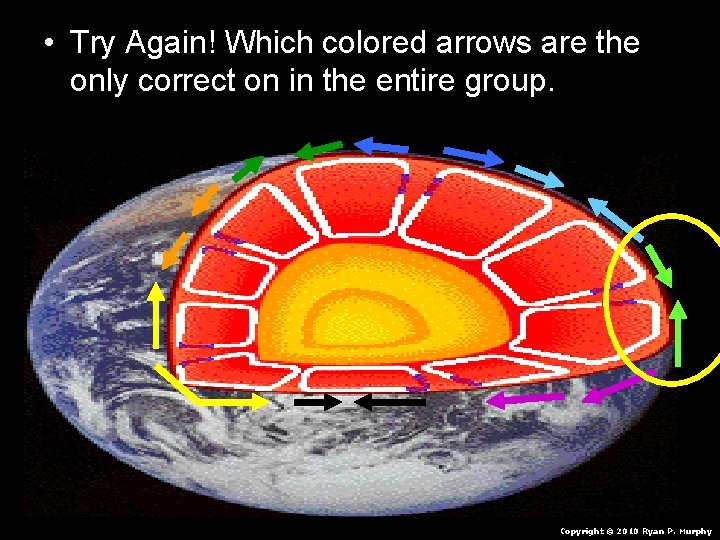
Convection current: Hot water rises because it’s lighter. When it reaches the top then it cools and sinks because it gets heavier.
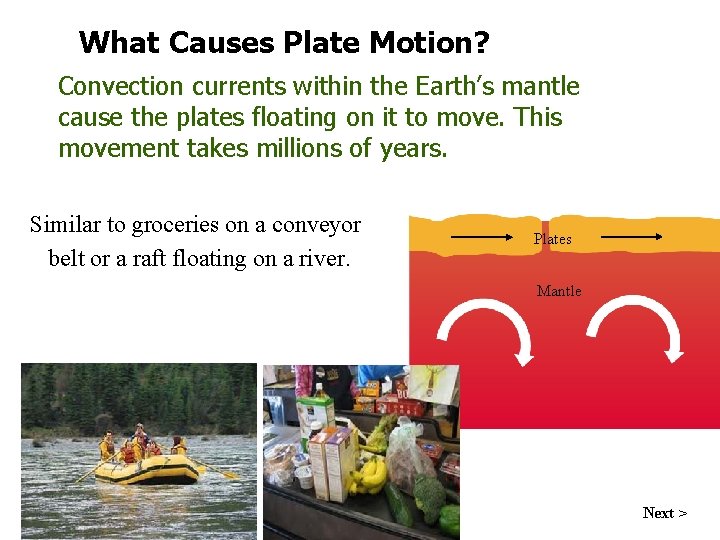
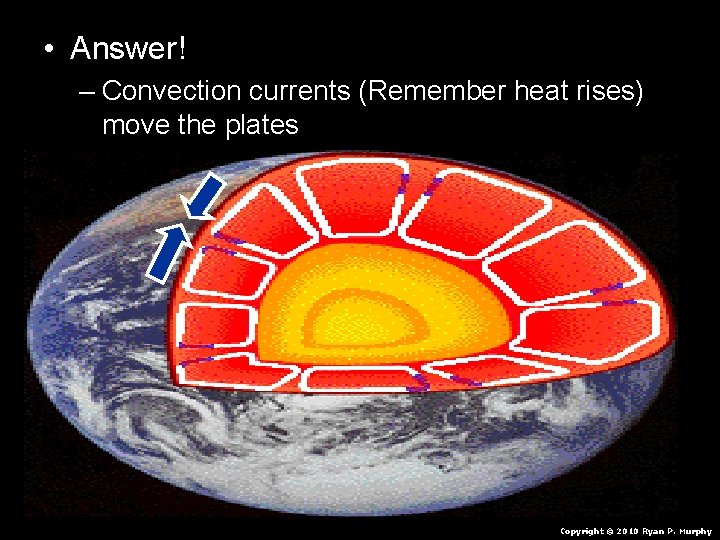
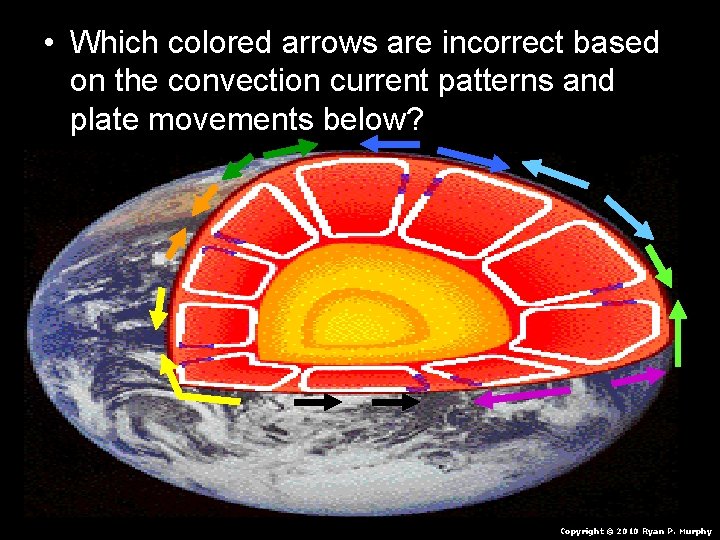
What Causes Plate Motion? Convection currents within the Earth’s mantle cause the plates floating on it to move. This movement takes millions of years. Similar to groceries on a conveyor belt or a raft floating on a river. Plates Mantle Next >
The Earth’s crust is always moving! Pangea = Supercontinent (millions of years ago)
l Continental Drift: The gradual movement of the continents across the earth. Copyright © 2010 Ryan P. Murphy
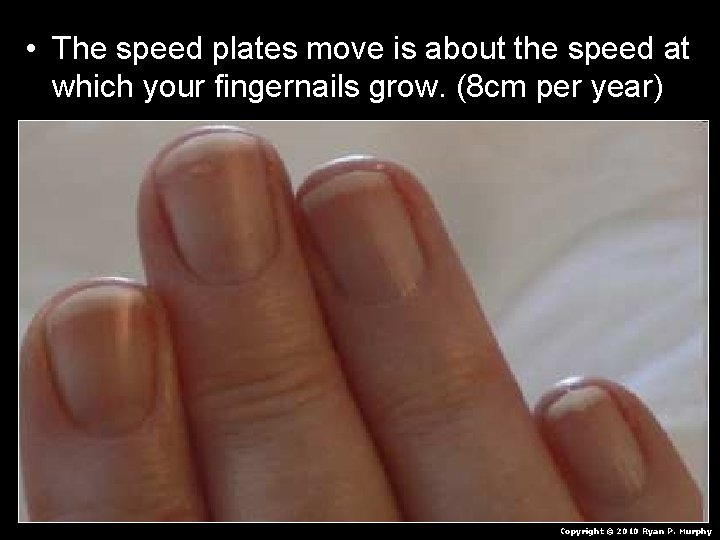
• The speed plates move is about the speed at which your fingernails grow. (8 cm per year) Copyright © 2010 Ryan P. Murphy
• In 1915, The German geologist Alfred Wegener (1880 -1930) proposed continental drift. Not accepted until the 1950’s! Copyright © 2010 Ryan P. Murphy
• In 1915, The German geologist Alfred Wegener (1880 -1930) proposed continental drift. Not accepted until 1950’s! “I say. ” “Africa and South America fit strangely like two puzzle pieces. ” Copyright © 2010 Ryan P. Murphy
l The shapes match. Copyright © 2010 Ryan P. Murphy
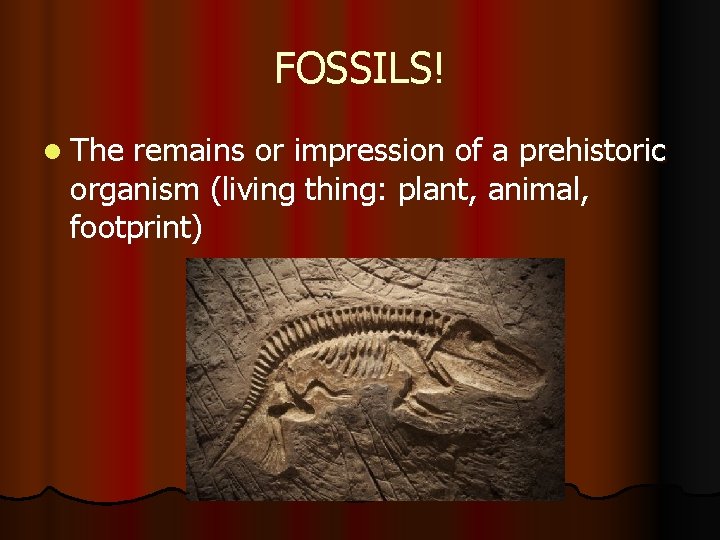
FOSSILS! l The remains or impression of a prehistoric organism (living thing: plant, animal, footprint)
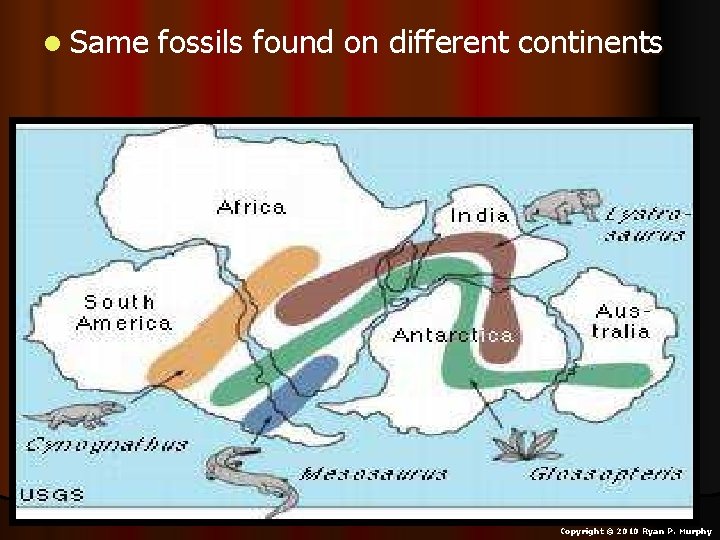
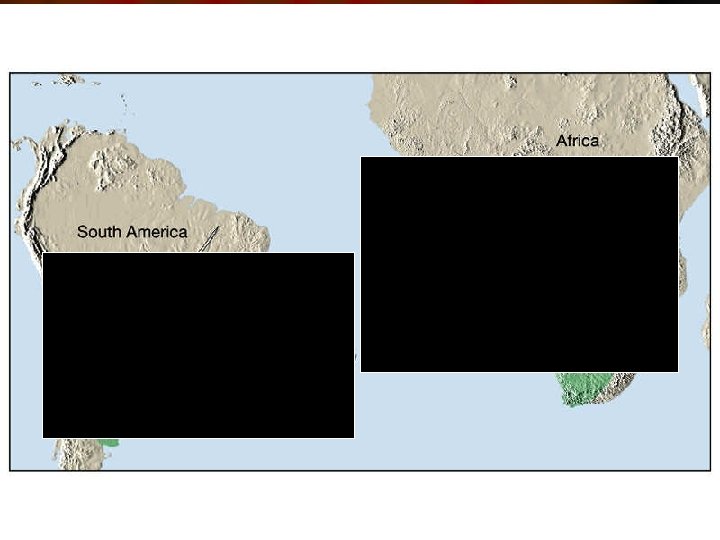
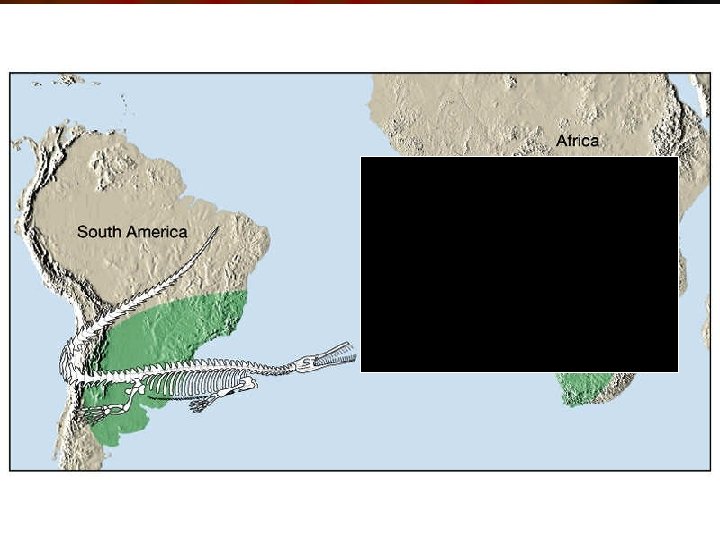
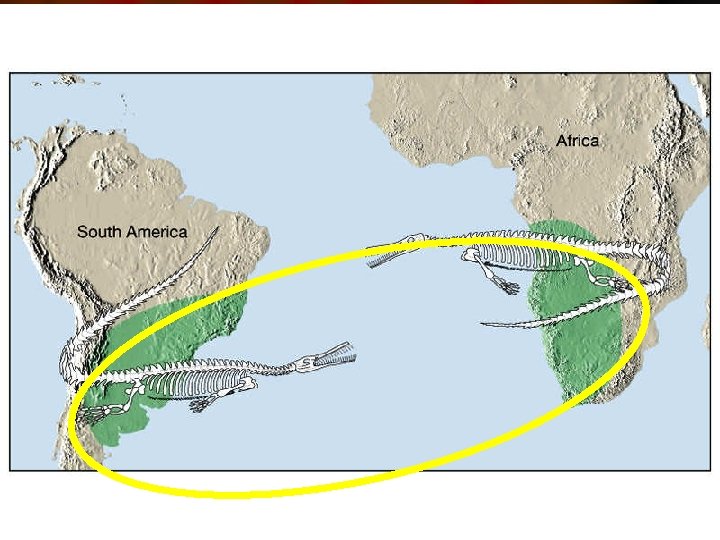
l Same fossils found on different continents Copyright © 2010 Ryan P. Murphy
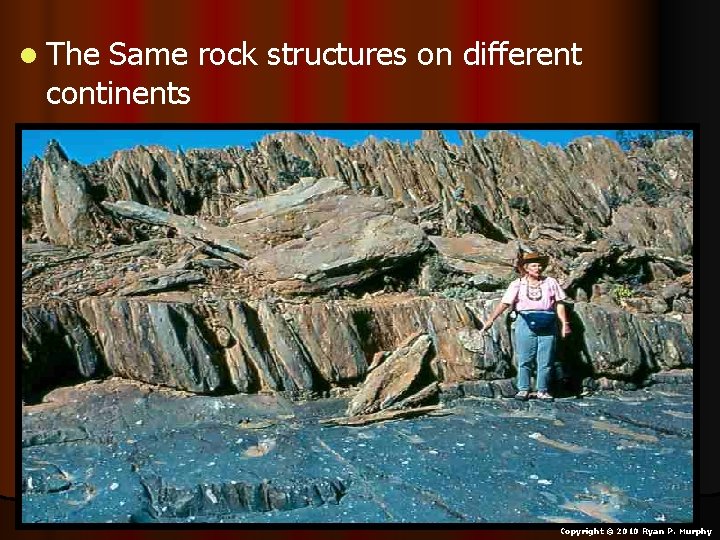
l The Same rock structures on different continents Copyright © 2010 Ryan P. Murphy
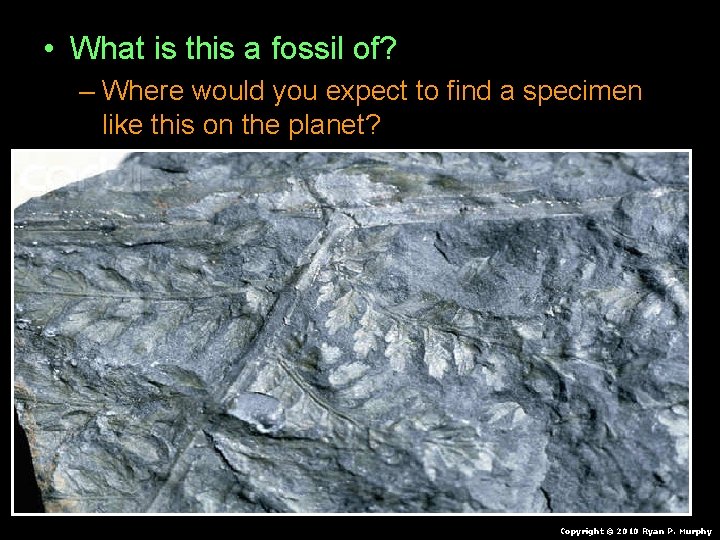
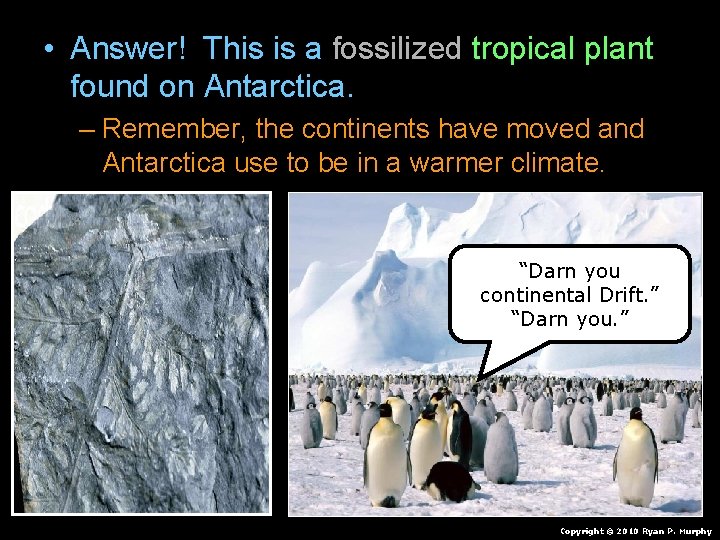
• What is this a fossil of? – Where would you expect to find a specimen like this on the planet? Copyright © 2010 Ryan P. Murphy
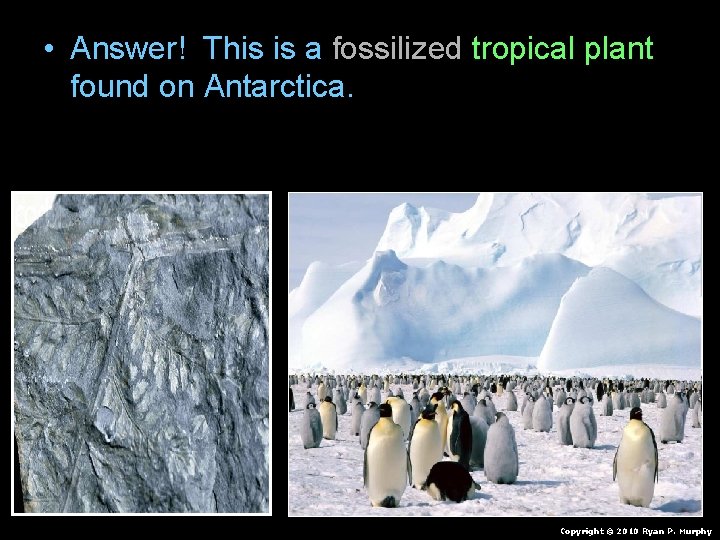
• Answer! This is a fossilized tropical plant found on Antarctica. Copyright © 2010 Ryan P. Murphy
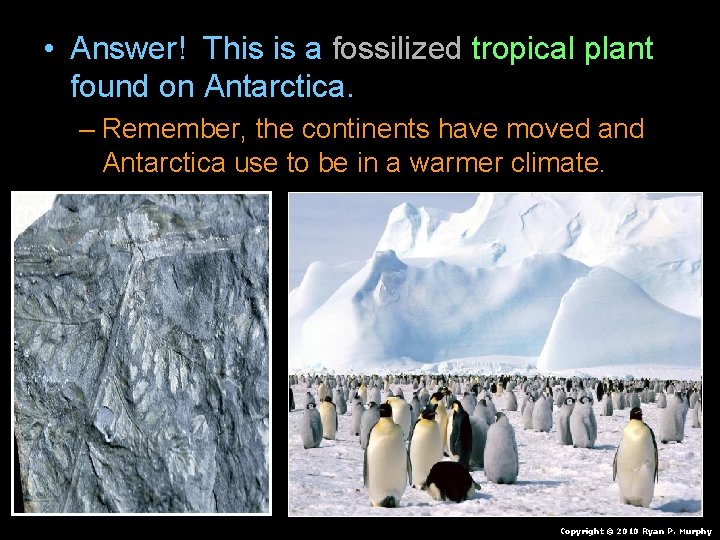
• Answer! This is a fossilized tropical plant found on Antarctica. – Remember, the continents have moved and Antarctica use to be in a warmer climate. Copyright © 2010 Ryan P. Murphy
• Answer! This is a fossilized tropical plant found on Antarctica. – Remember, the continents have moved and Antarctica use to be in a warmer climate. “Darn you continental Drift. ” “Darn you. ” Copyright © 2010 Ryan P. Murphy
CREATING PANGEA • Today you will be recreating Pangea using the fossil evidence. • Cut out the tectonic plates on your map and tape them on the other paper • Use the fossil evidence to help you line up the plates.
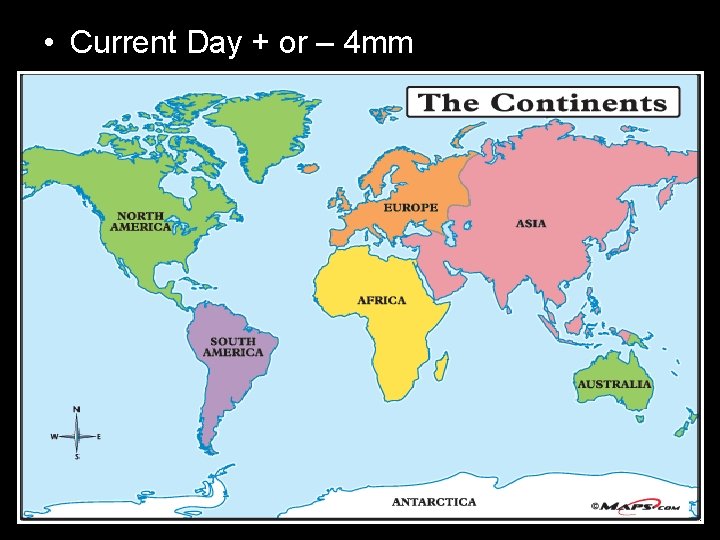
• Current Day + or – 4 mm
• What causes continental drift and plate tectonics? Copyright © 2010 Ryan P. Murphy
• Answer! – Convection currents (Remember heat rises) move the plates Copyright © 2010 Ryan P. Murphy
• Answer! – Convection currents (Remember heat rises) move the plates Copyright © 2010 Ryan P. Murphy
• Answer! – Convection currents (Remember heat rises) move the plates Copyright © 2010 Ryan P. Murphy
• Answer! – Convection currents (Remember heat rises) move the plates Copyright © 2010 Ryan P. Murphy
• Which colored arrows are incorrect based on the convection current patterns and plate movements below? Copyright © 2010 Ryan P. Murphy
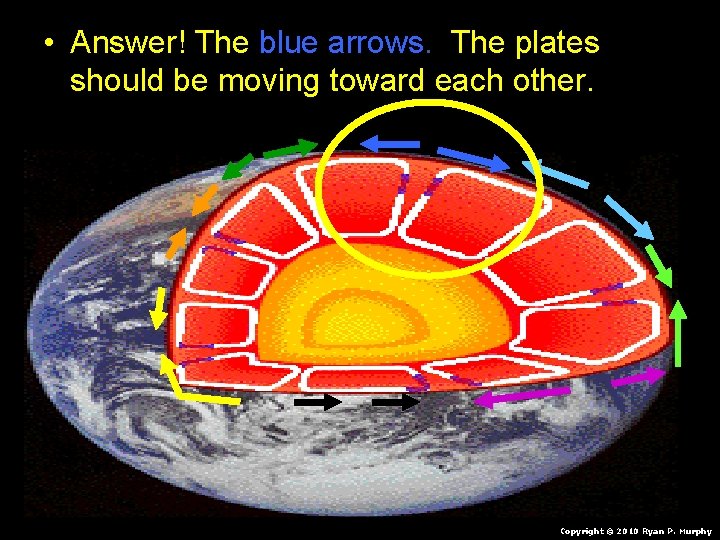
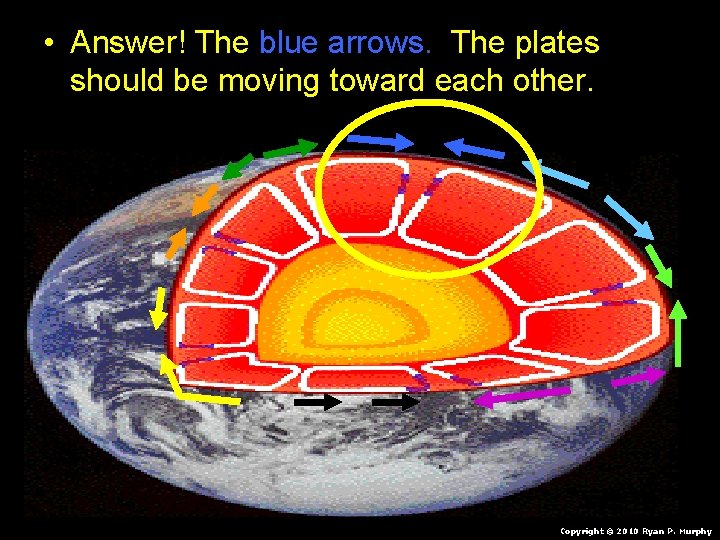
• Answer! The blue arrows. The plates should be moving toward each other. Copyright © 2010 Ryan P. Murphy
• Answer! The blue arrows. The plates should be moving toward each other. Copyright © 2010 Ryan P. Murphy
“Oh-no!” “We are trying it again. ”
• Try Again! Which colored arrows are incorrect based on the convection current patterns and plate movements below? Copyright © 2010 Ryan P. Murphy
• Answer! The purple arrows should be diverging instead of converging. Copyright © 2010 Ryan P. Murphy
• Answer! The purple arrows should be diverging instead of converging. Copyright © 2010 Ryan P. Murphy
“Oh-no!” “We are trying it one more time. ”
• Try Again! Which colored arrows are incorrect based on the convection current patterns and plate movements below? Copyright © 2010 Ryan P. Murphy
• Answer! The light blue arrows should be diverging instead of converging. Copyright © 2010 Ryan P. Murphy
• Answer! The light blue arrows should be diverging instead of converging. Copyright © 2010 Ryan P. Murphy
“Oh-no!” “We are trying it one more time. ”
• Try Again! Which colored arrows are the only correct on in the entire group. Copyright © 2010 Ryan P. Murphy
• Try Again! Which colored arrows are the only correct on in the entire group. Copyright © 2010 Ryan P. Murphy
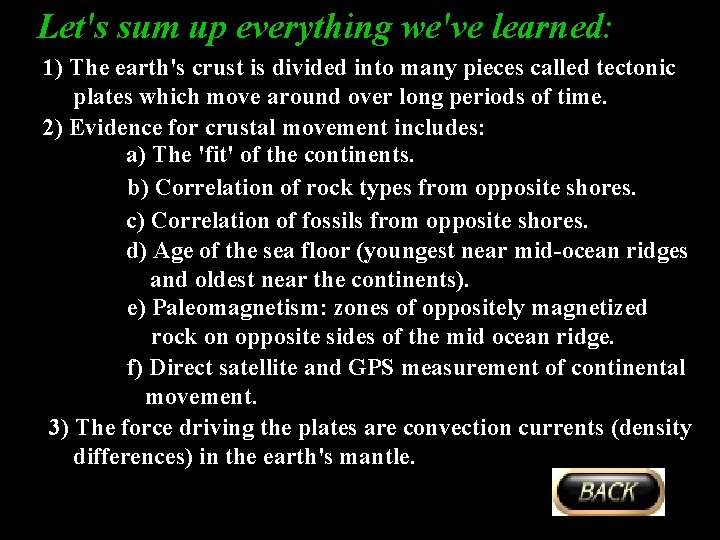
Let's sum up everything we've learned: 1) The earth's crust is divided into many pieces called tectonic plates which move around over long periods of time. 2) Evidence for crustal movement includes: a) The 'fit' of the continents. b) Correlation of rock types from opposite shores. c) Correlation of fossils from opposite shores. d) Age of the sea floor (youngest near mid-ocean ridges and oldest near the continents). e) Paleomagnetism: zones of oppositely magnetized rock on opposite sides of the mid ocean ridge. f) Direct satellite and GPS measurement of continental movement. 3) The force driving the plates are convection currents (density differences) in the earth's mantle.