What do these words mean Polygons Polyester Polygamy


- Slides: 50
What do these words mean?
Polygons Polyester Polygamy
What is Macromolecules b Many biological molecules such as proteins and nucleic acids are very large, consisting of thousands of atoms. Such giant molecules are known as macromolecules. b Most macromolecules are polymers, produced by linking small organic compounds called monomers
• Organic compounds are carbon compounds that occur naturally only in the bodies of living organisms.
ORGANIC MOLECULES b Organic compounds almost always contain hydrogen and oxygen and usually contain nitrogen. b They may also contain phosphorus and sulfur. b Produced only by living (organic) organisms.
ORGANIC MOLECULES b -Some organic compounds are used as given energy. Such as Carbohydrate, lipid, and protein. b Some organic compounds are used as structural material. Such as protein, carbohydrate, and lipid. b Some organic compounds are used as regulator. Such as protein and vitamins.
Inorganic Compounds b Living organisms also contain inorganic compounds ( all compounds that are not organic). b Inorganic compounds do not usually contain carbon. (co 2 is exception. ) b Some common inorganic compounds in organisms are water, carbon dioxide, various salts, and inorganic bases and acids.
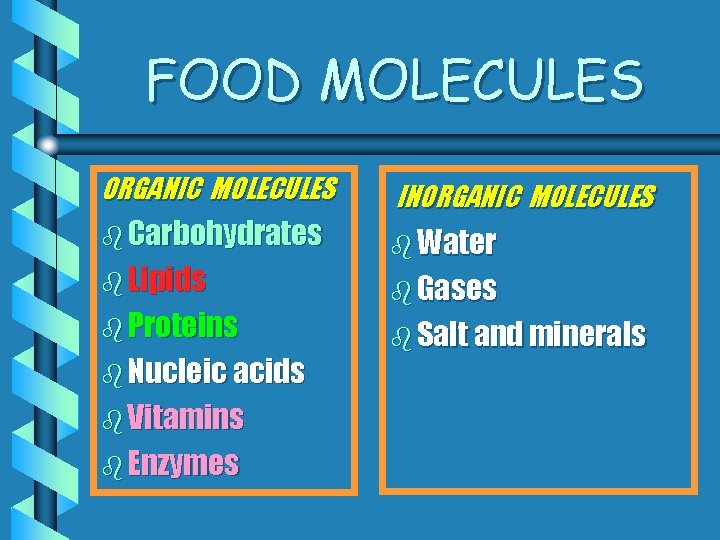
FOOD MOLECULES ORGANIC MOLECULES b Carbohydrates b Lipids b Proteins b Nucleic acids b Vitamins b Enzymes INORGANIC MOLECULES b Water b Gases b Salt and minerals
PROPERTIES: • Carbo= Carbon • Hydrate= Water = water of carbon.
Properties • All living cell contain carbohydrate. • Carbohydrates are made up of carbon(C), Hydrogen(H), and Oxygen(O). In ratio of 1 C to 2 H to 1 O (C 2 H O ). • Carbohydrates are synthesized by the plants at end of photosynthesis. But animals can not synthesize carbohydrate.
CARBOHYDRATES WHAT DO THEY DO?
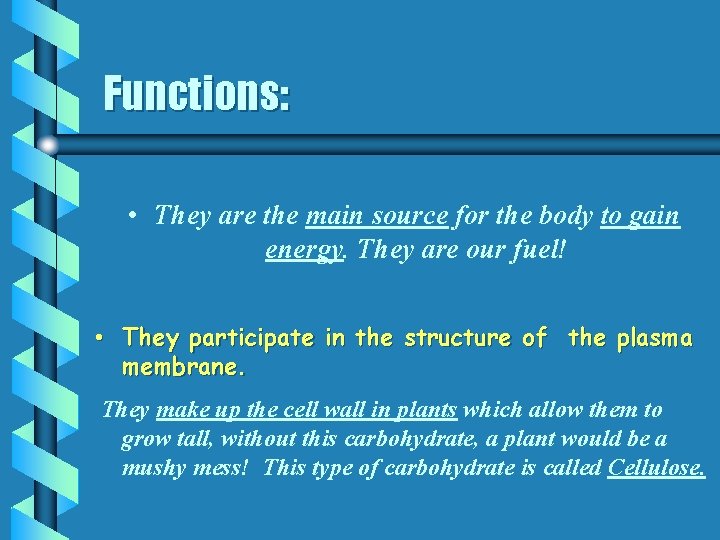
Functions: • They are the main source for the body to gain energy. They are our fuel! • They participate in the structure of the plasma membrane. They make up the cell wall in plants which allow them to grow tall, without this carbohydrate, a plant would be a mushy mess! This type of carbohydrate is called Cellulose.
CARBOHYDRATES WHERE ARE THEY FOUND?
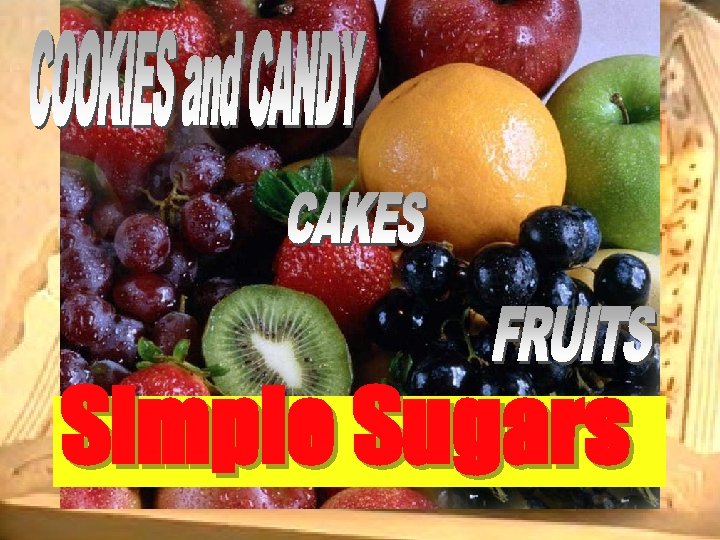
Simple Sugars
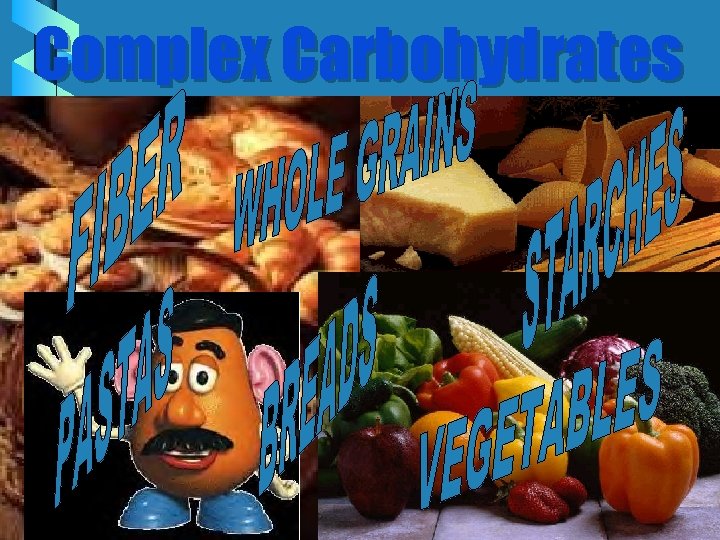
Complex Carbohydrates
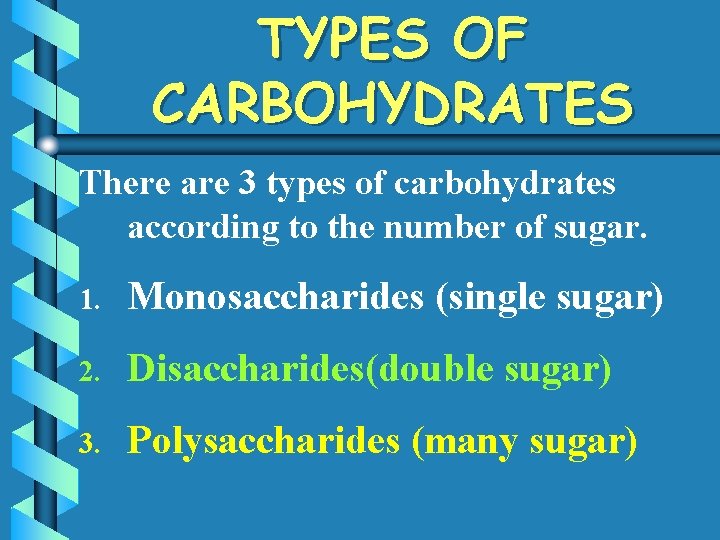
TYPES OF CARBOHYDRATES There are 3 types of carbohydrates according to the number of sugar. 1. Monosaccharides (single sugar) 2. Disaccharides(double sugar) 3. Polysaccharides (many sugar)
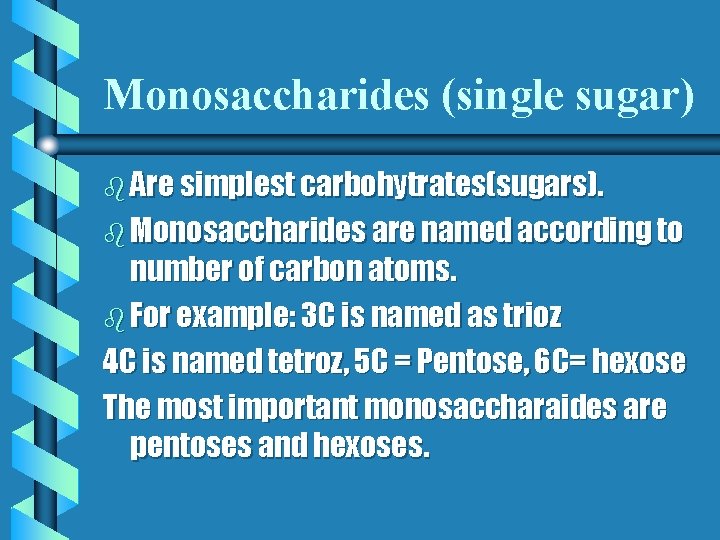
Monosaccharides (single sugar) b Are simplest carbohytrates(sugars). b Monosaccharides are named according to number of carbon atoms. b For example: 3 C is named as trioz 4 C is named tetroz, 5 C = Pentose, 6 C= hexose The most important monosaccharaides are pentoses and hexoses.
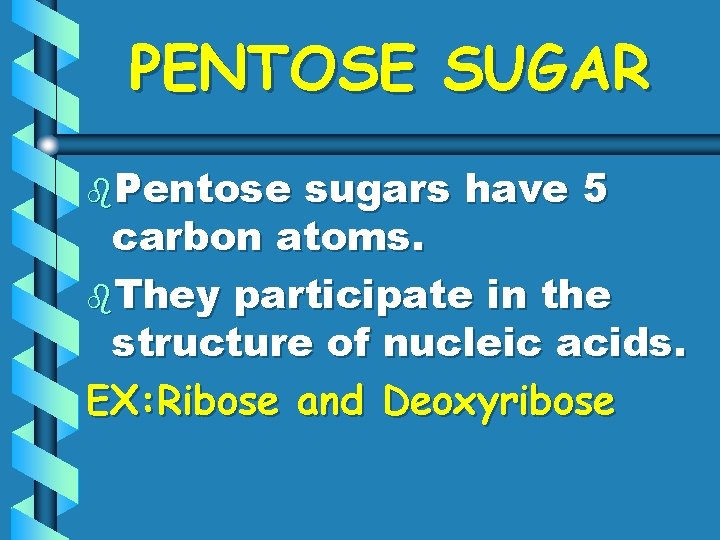
PENTOSE SUGAR b. Pentose sugars have 5 carbon atoms. b. They participate in the structure of nucleic acids. EX: Ribose and Deoxyribose
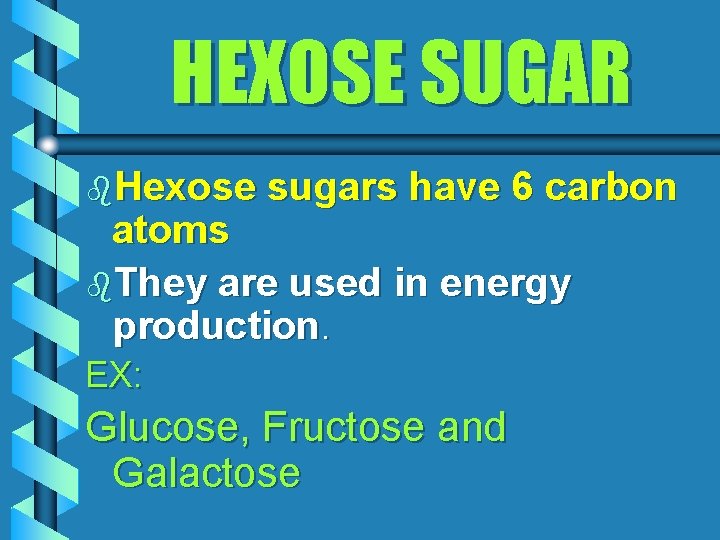
HEXOSE SUGAR b. Hexose sugars have 6 carbon atoms b. They are used in energy production. EX: Glucose, Fructose and Galactose
Monosaccharide GLUCOSE (Grape sugar)
CARBOHYDRATES Carbohydrates are chains (polymers) made of monomers. The most common monomer of carbohydrates is…
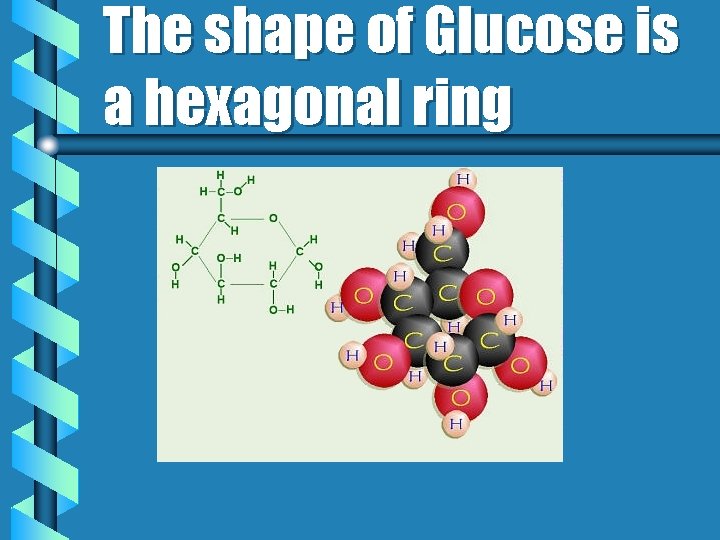
The shape of Glucose is a hexagonal ring
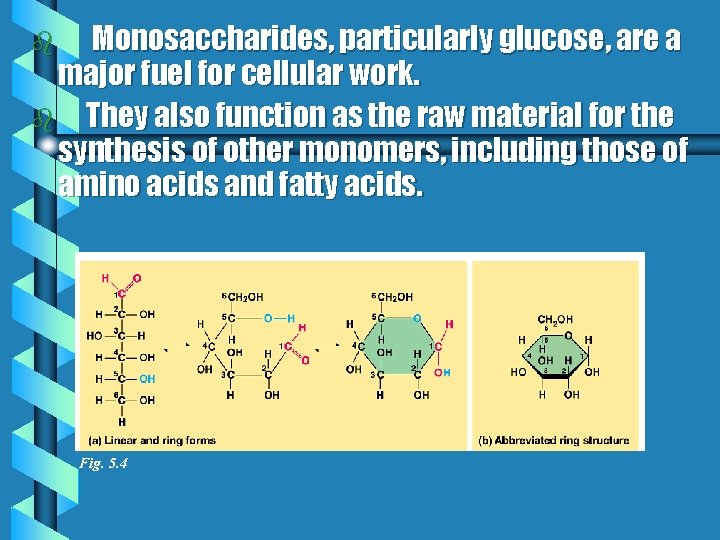
Monosaccharides, particularly glucose, are a major fuel for cellular work. b They also function as the raw material for the synthesis of other monomers, including those of amino acids and fatty acids. b Fig. 5. 4
GLUCOSE b. Plants produce glucose during the photosynthesis. b. The level of glucose within human blood normally remains constan, however its excess or deficiency results in the disorder known as diabetes mellitus
b. Amount of glucose is controlled by hormone in human blood.
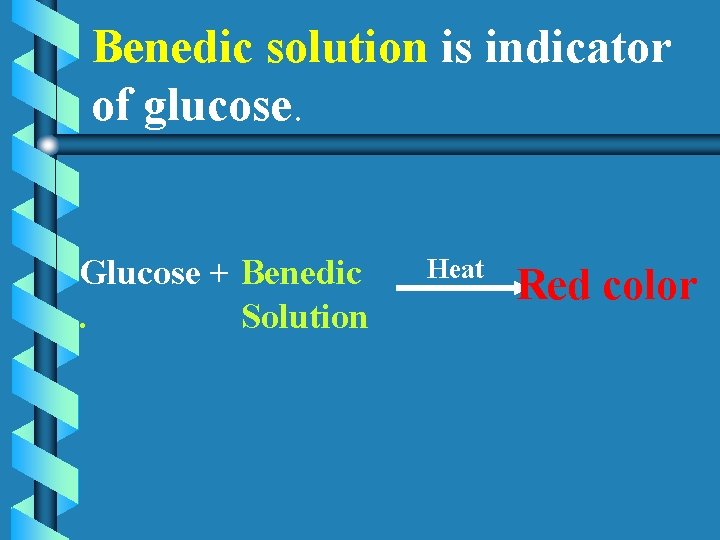
Benedic solution is indicator of glucose. Glucose + Benedic. Solution Heat Red color
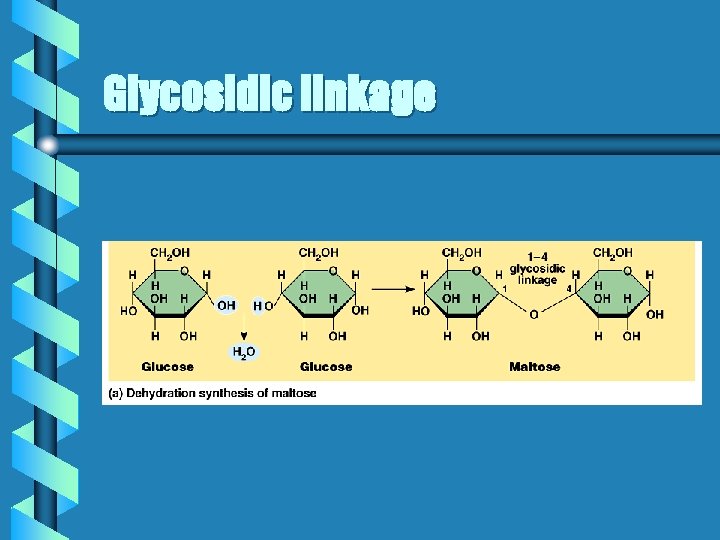
DISACCHARIDES b Disaccharides are double sugars. b Two monosaccharides chemically combine to form disaccharide. b Two monosaccharides can join with a glycosidic linkage to form a dissaccharide via dehydration.
Glycosidic linkage
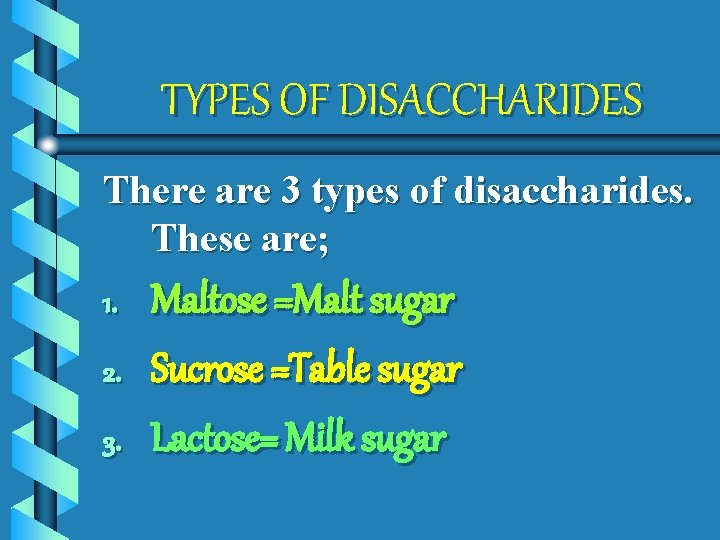
TYPES OF DISACCHARIDES There are 3 types of disaccharides. These are; 1. 2. 3. Maltose =Malt sugar Sucrose =Table sugar Lactose= Milk sugar
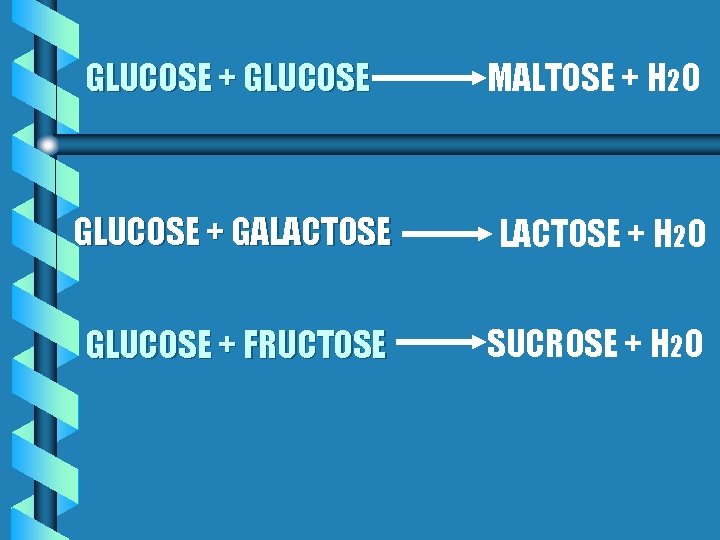
GLUCOSE + GLUCOSE MALTOSE + H 2 O GLUCOSE + GALACTOSE + H 2 O GLUCOSE + FRUCTOSE SUCROSE + H 2 O
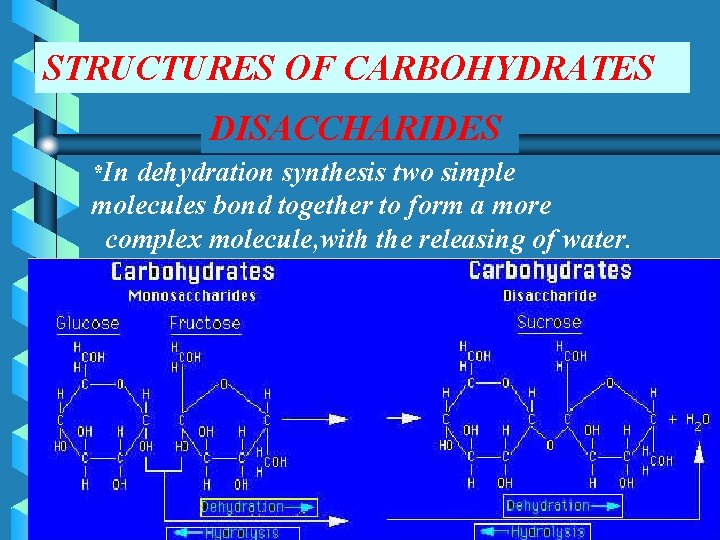
STRUCTURES OF CARBOHYDRATES DISACCHARIDES *In dehydration synthesis two simple molecules bond together to form a more complex molecule, with the releasing of water.
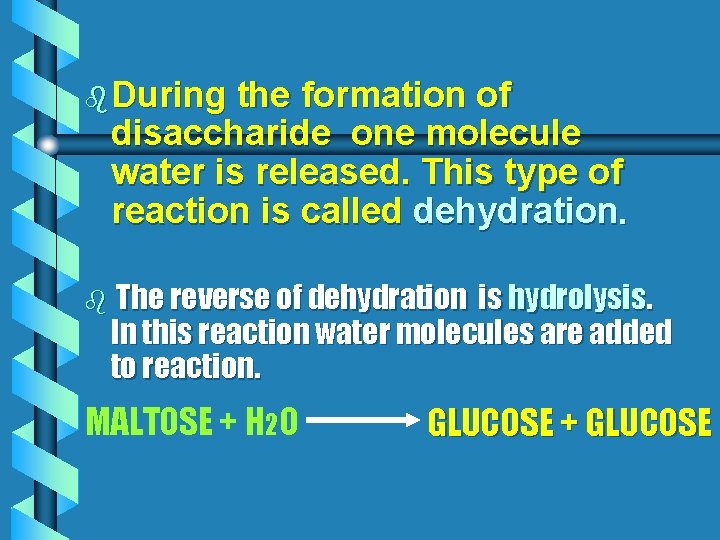
b During the formation of disaccharide one molecule water is released. This type of reaction is called dehydration. b The reverse of dehydration is hydrolysis. In this reaction water molecules are added to reaction. MALTOSE + H 2 O GLUCOSE + GLUCOSE
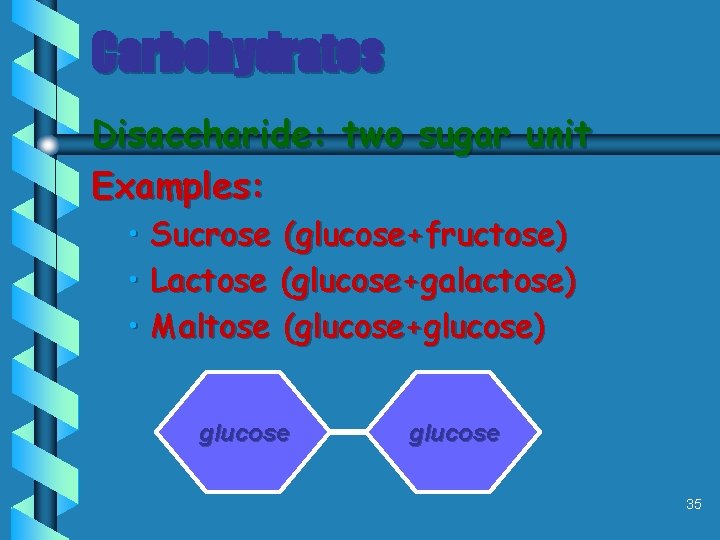
Carbohydrates Disaccharide: two sugar unit Examples: • Sucrose (glucose+fructose) • Lactose (glucose+galactose) • Maltose (glucose+glucose) glucose 35
POLYSACCHARIDES
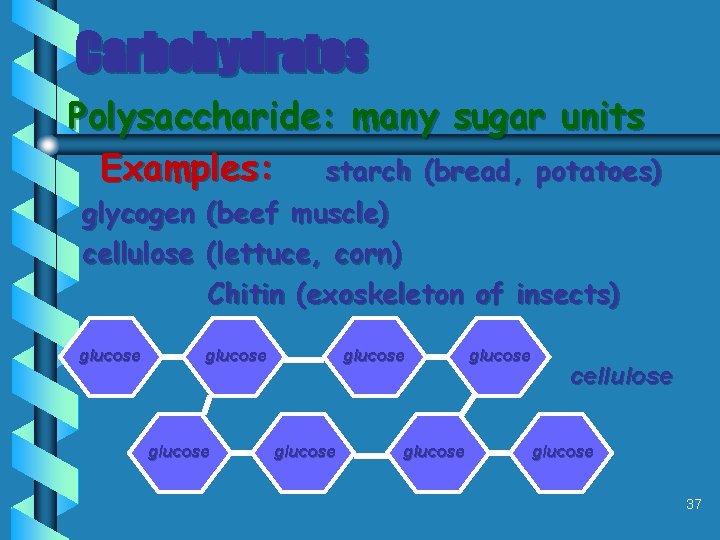
Carbohydrates Polysaccharide: many sugar units Examples: starch (bread, potatoes) glycogen (beef muscle) cellulose (lettuce, corn) Chitin (exoskeleton of insects) glucose glucose cellulose glucose 37
POLYSACCHARIDES b Simple sugars can be joined together by dehydration synthesis to form polysaccharides. b Polysaccharides are long chain of glucose. b There are glycosidic bond among of monosaccharides.
Starch, glycogen, cellulose and chitin are examples of polysaccharide. b Starch: It is found only in plants. Iodine or lugol are indicators of starch. b Glycogen: It is found certain animal cells. Glycogen is stored in the liver and muscle. b Cellulose: It participates in the structure of plant cell.
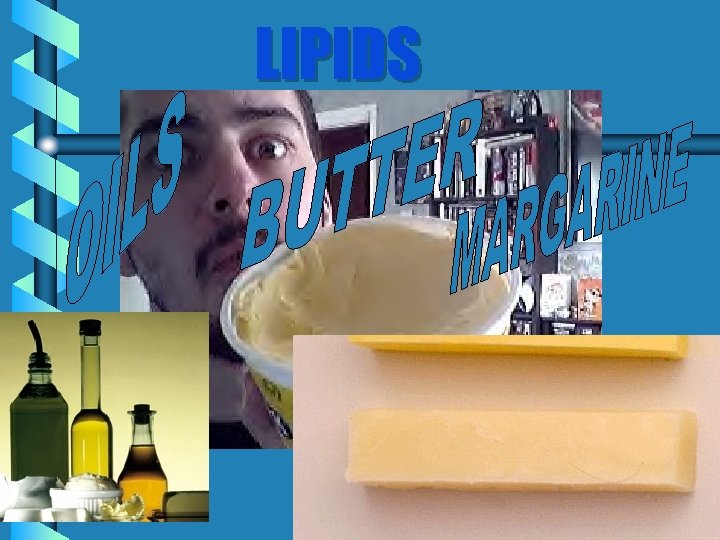
LIPIDS
LIPIDS Each lipid is made up of… THINK: “CHO”
• They are soluble in alcohol and ether but not in water. • Lipids are secondary source of energy for organisms. They release twice the energy produced by protein and carbohydrates.
• They give more energy than carbohyrates and proteins. • They participate in the structure of cell membrane • They are found in the structure of some hormones and works as chemical messengers. • They serve as protective of the organs surrounded by lipids. • They serve as regulator of the body head
LIPIDS Six functions of lipids: 1. Long term energy storage 2. Protection against heat loss (insulation) 3. Protection against physical shock 4. Protection against water loss 5. Chemical messengers (hormones) 6. Major component of membranes (phospholipids)copyright cmassengale 44
LIPIDS • In plants- in the seeds -------------------------- • In animals- in adipose tissue, connective tissue, in animals -------------------------- • Lipids make up the cell membrane of all cells.
LIPIDS
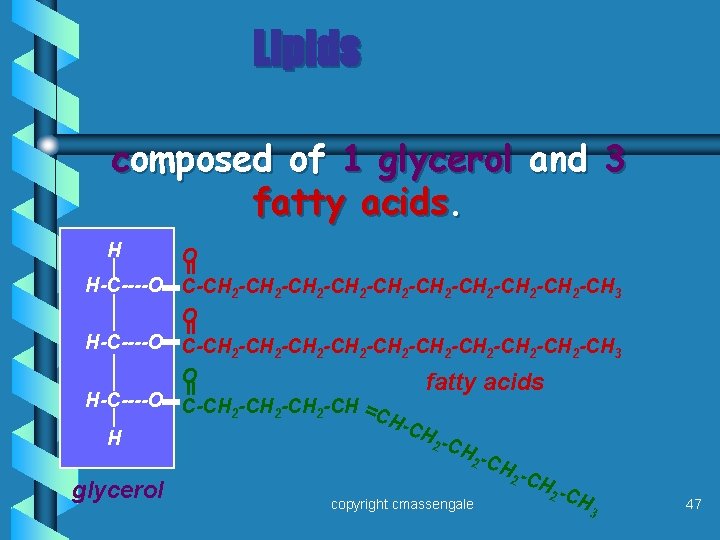
Lipids composed of 1 glycerol and 3 fatty acids. H = O H-C----O C-CH 2 -CH 2 -CH 2 -CH 2 -CH 2 -CH 3 O fatty acids H-C----O C-CH -CH = 2 2 2 CH -CH H 2 -C H 2 C Hglycerol 2 C H copyright cmassengale = = 3 47
Fatty Acids b There 1. 2. are two kinds of fatty acids Saturated fatty acids Unsaturated fatty acids
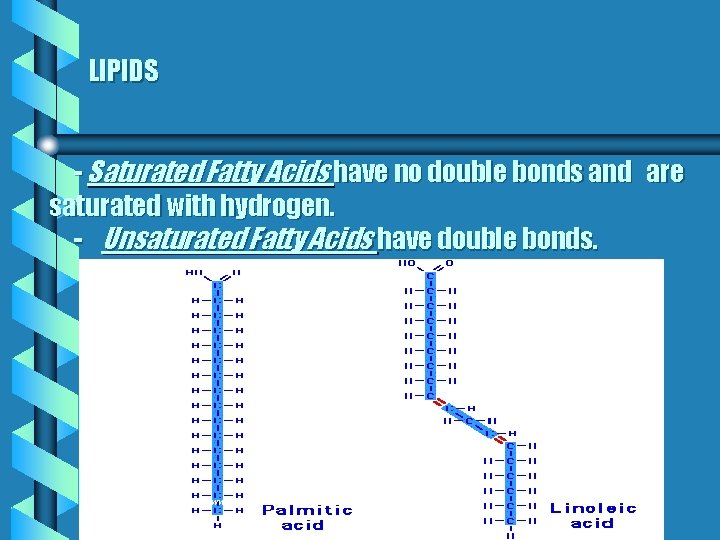
LIPIDS - Saturated Fatty Acids have no double bonds and are saturated with hydrogen. - Unsaturated Fatty Acids have double bonds. www. agen. ufl. edu/~chyn/age 2062/lect_02/3_16. gif
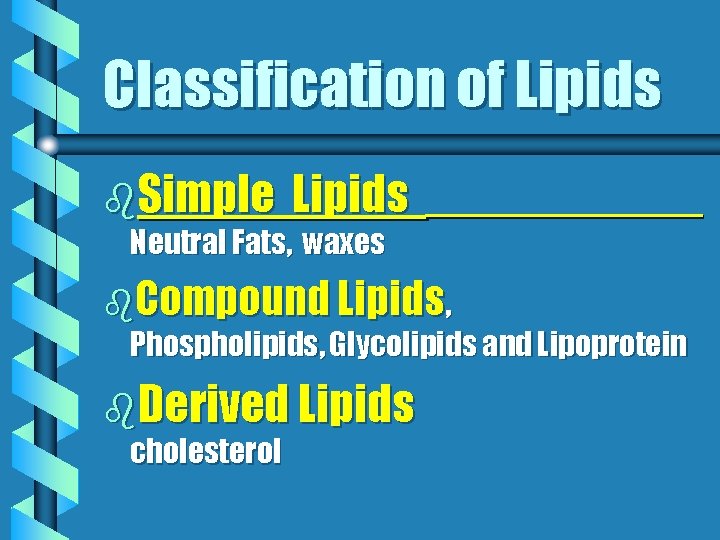
Classification of Lipids b. Simple Lipids Neutral Fats, waxes b. Compound Lipids, Phospholipids, Glycolipids and Lipoprotein b. Derived Lipids cholesterol