
Multifibre Strip Wool Acrylic Polyester Nylon Cotton Acetate
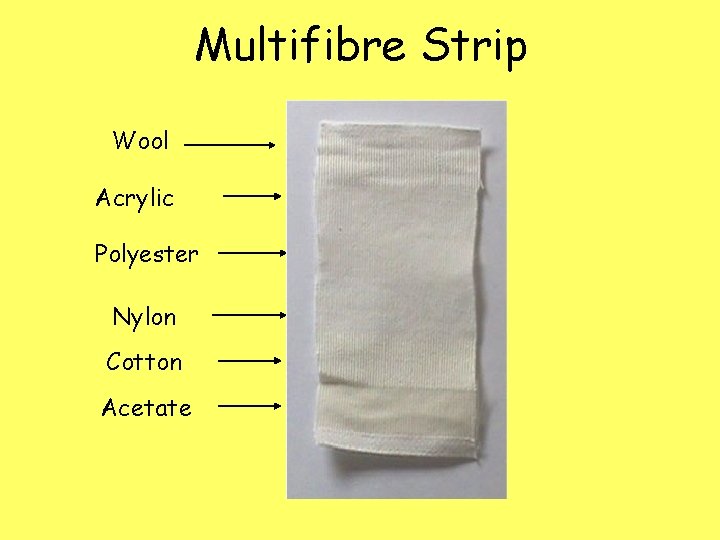
Multifibre Strip Wool Acrylic Polyester Nylon Cotton Acetate
What is the chemical make up of the different fibres? • Nylon – has NH 3 groups at end of the polymer chain only. Has amide bonds allowing for H Bonds. Relatively non polar • Polyesters – relatively non polar, can’t H bond • Cotton – lots of OH group so can H bond
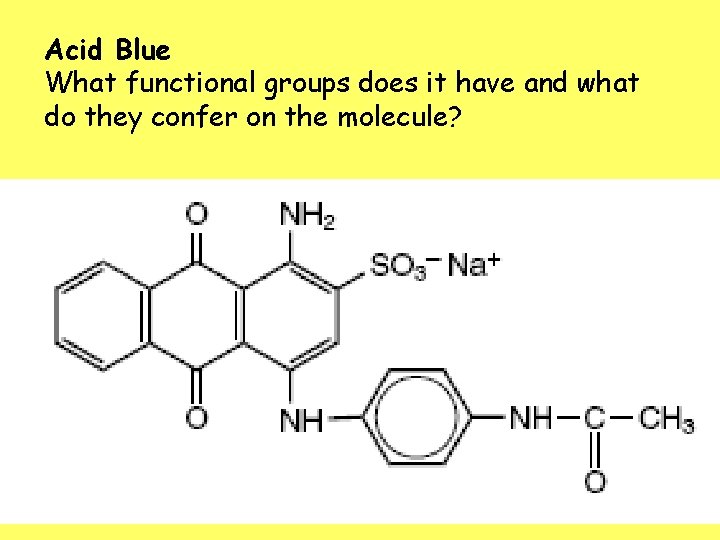
Acid Blue What functional groups does it have and what do they confer on the molecule?
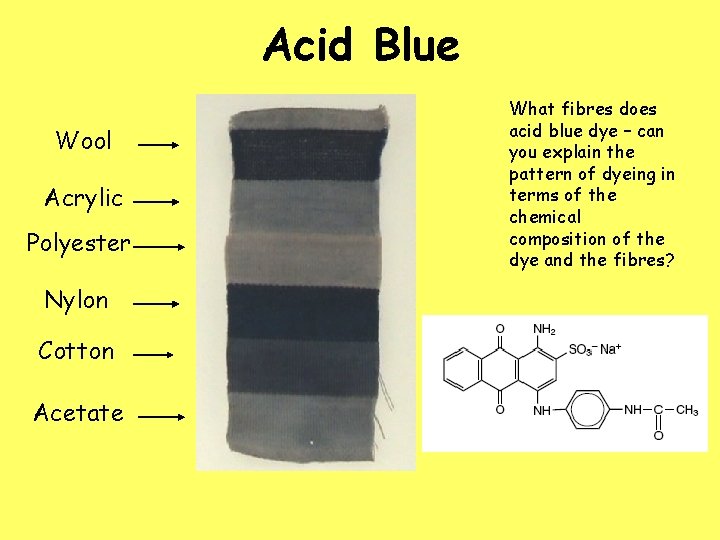
Acid Blue Wool Acrylic Polyester Nylon Cotton Acetate What fibres does acid blue dye – can you explain the pattern of dyeing in terms of the chemical composition of the dye and the fibres?
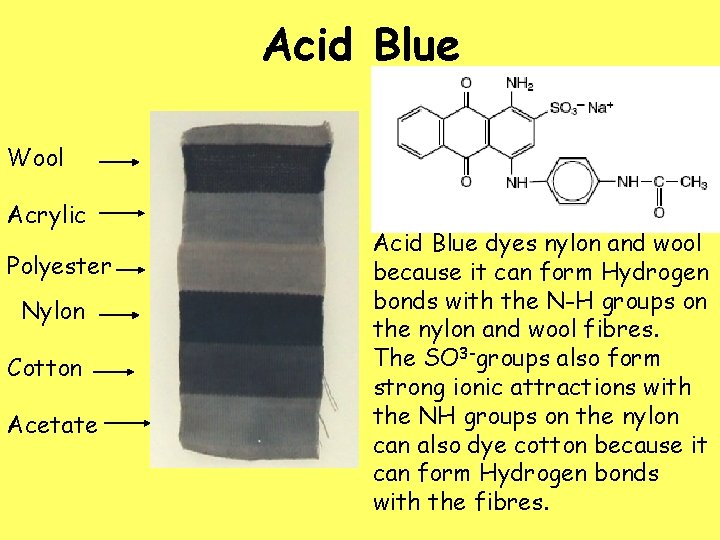
Acid Blue Wool Acrylic Polyester Nylon Cotton Acetate Acid Blue dyes nylon and wool because it can form Hydrogen bonds with the N-H groups on the nylon and wool fibres. The SO 3 -groups also form strong ionic attractions with the NH groups on the nylon can also dye cotton because it can form Hydrogen bonds with the fibres.
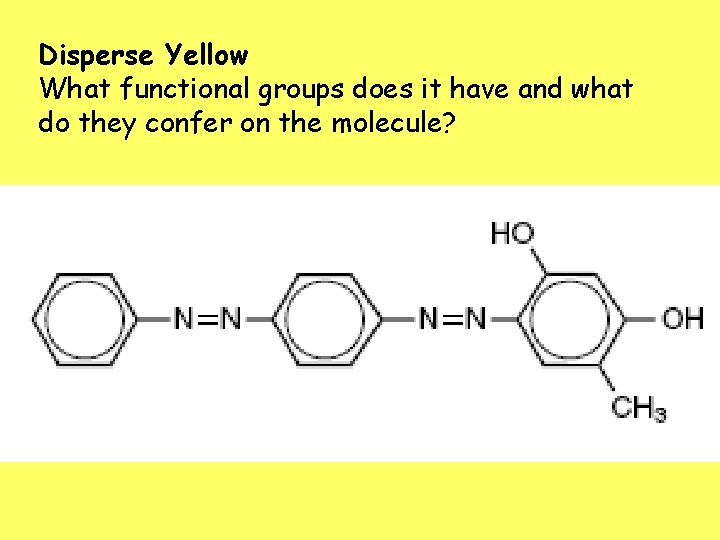
Disperse Yellow What functional groups does it have and what do they confer on the molecule?

Disperse Yellow Wool Acrylic Polyester Nylon Cotton Acetate What fibres does disperse yellow dye – can you explain the pattern of dyeing in terms of the chemical composition of the dye and the fibres?

Disperse Yellow Wool Acrylic Polyester Nylon Cotton Acetate Disperse yellow dyes both nylon and wool because it bonds by Instantaneous induced forces to the fibres. It does not dye cotton because it can not form sufficient Hydrogen bonds with the cotton fibres.
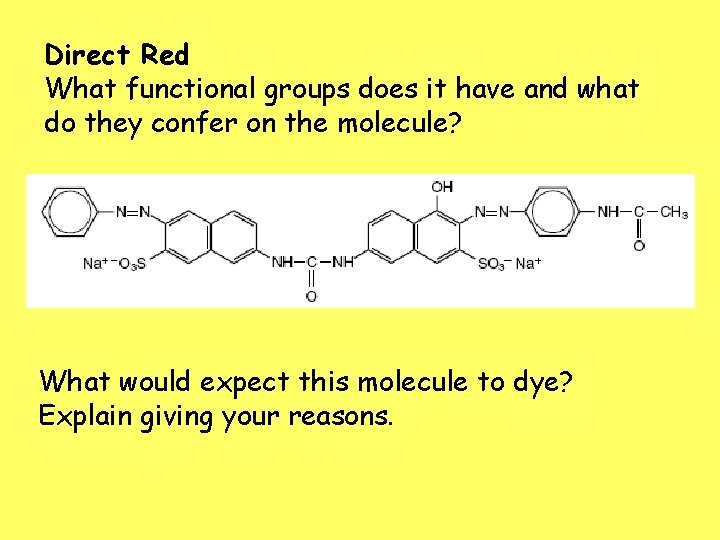
Direct Red What functional groups does it have and what do they confer on the molecule? What would expect this molecule to dye? Explain giving your reasons.

Direct Red Wool Acrylic Polyester Nylon Cotton Acetate What fibres does Direct Red dye? – can you explain the pattern of dyeing in terms of the chemical composition of the dye and the fibres?
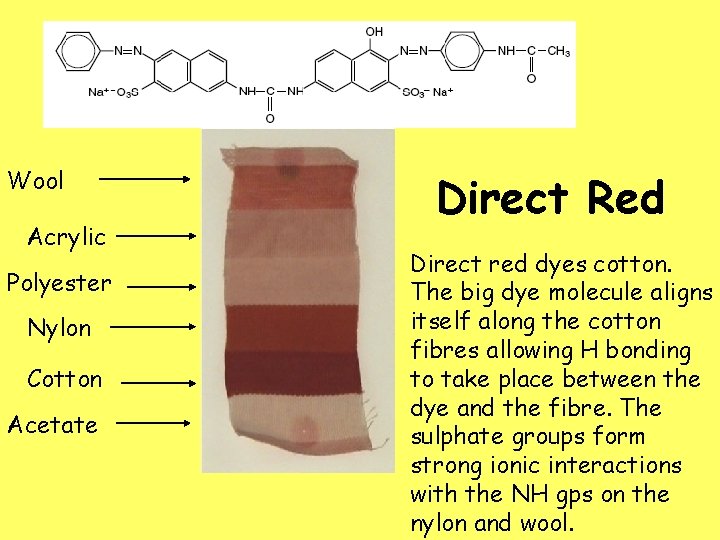
Wool Acrylic Polyester Nylon Cotton Acetate Direct Red Direct red dyes cotton. The big dye molecule aligns itself along the cotton fibres allowing H bonding to take place between the dye and the fibre. The sulphate groups form strong ionic interactions with the NH gps on the nylon and wool.
- Slides: 11