Week 8 Philippians and Philemon Zoninus collar and



- Slides: 32
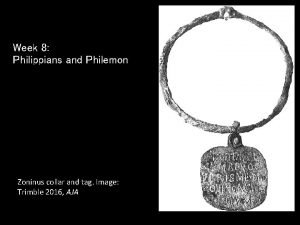
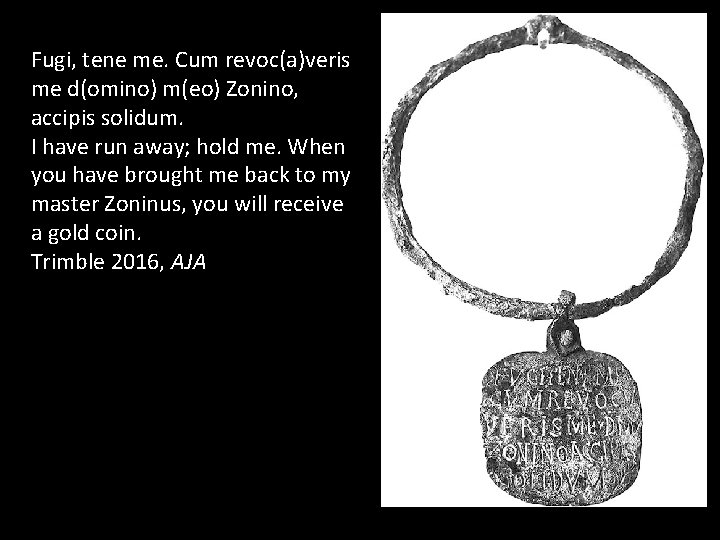
Week 8: Philippians and Philemon Zoninus collar and tag. Image: Trimble 2016, AJA
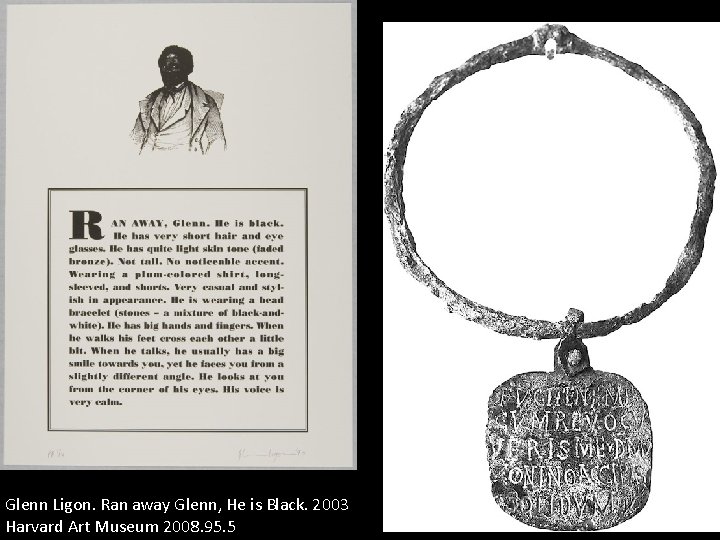
Fugi, tene me. Cum revoc(a)veris me d(omino) m(eo) Zonino, accipis solidum. I have run away; hold me. When you have brought me back to my master Zoninus, you will receive a gold coin. Trimble 2016, AJA
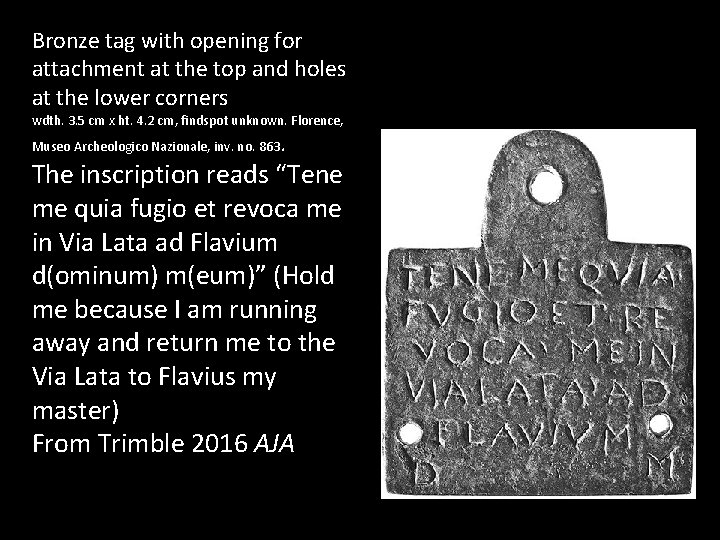
Bronze tag with opening for attachment at the top and holes at the lower corners wdth. 3. 5 cm x ht. 4. 2 cm, findspot unknown. Florence, Museo Archeologico Nazionale, inv. no. 863 . The inscription reads “Tene me quia fugio et revoca me in Via Lata ad Flavium d(ominum) m(eum)” (Hold me because I am running away and return me to the Via Lata to Flavius my master) From Trimble 2016 AJA
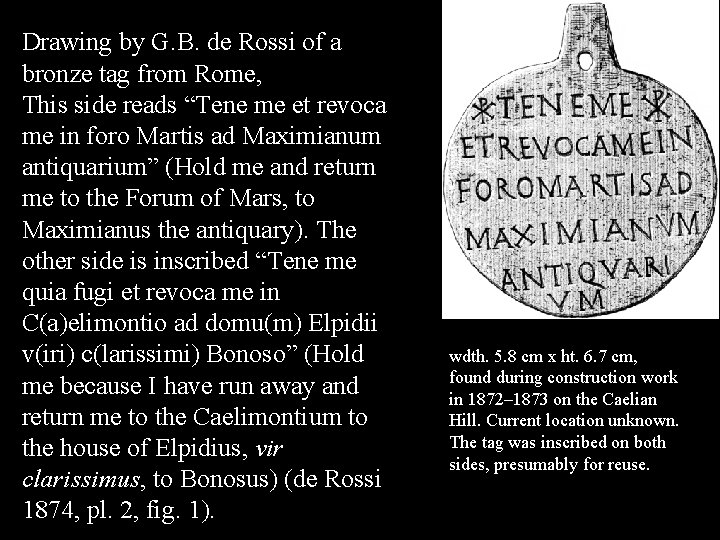
Drawing by G. B. de Rossi of a bronze tag from Rome, This side reads “Tene me et revoca me in foro Martis ad Maximianum antiquarium” (Hold me and return me to the Forum of Mars, to Maximianus the antiquary). The other side is inscribed “Tene me quia fugi et revoca me in C(a)elimontio ad domu(m) Elpidii v(iri) c(larissimi) Bonoso” (Hold me because I have run away and return me to the Caelimontium to the house of Elpidius, vir clarissimus, to Bonosus) (de Rossi 1874, pl. 2, fig. 1). wdth. 5. 8 cm x ht. 6. 7 cm, found during construction work in 1872– 1873 on the Caelian Hill. Current location unknown. The tag was inscribed on both sides, presumably for reuse.
Glenn Ligon. Ran away Glenn, He is Black. 2003 Harvard Art Museum 2008. 95. 5
Aristotle, Politics Seeing, then, that the state is made up of households, before speaking of the state we must speak of the management of the household. The parts of household management correspond to the persons who compose the household, and a complete household consists of slaves and freemen, now we should begin by examining everything in its fewest possible elements; and the first and fewest possible parts of a family are master and slave, husband wife, father and children.
Homologous subordinations in Aristotle Greek-barbarian soul-body human-animal ruler-ruled master-slave male-female
1259 a And since, as we saw, the science of household management has three divisions, one the relation of master to slave, of which we have spoken before, one the paternal relation, and the third the conjugal—for it is part of the household science to rule over wife and children (over both as over freemen, yet not with the same mode of government, but over the wife to exercise republican government and over the children monarchical); for the male is by nature better fitted to command than the female (except in some cases where their union has been formed contrary to nature) and the older and fully developed person than the younger and immature.
1260 a Hence there are by nature various classes of rulers and ruled. For the free rules the slave, the male the female, and the man the child in a different way. And all possess the various parts of the soul, but possess them in different ways; from the slave has not got the deliberative part of at all, and the female has it, but without full authority, while the child has it, but in an undeveloped form.
Jennifer Glancy “Pauline Christianity was an urban phenomenon. The relationships of slavery with which Paul was acquainted would have been principally the relationships of urban slavery. Slaves in Corinth or Philippi would not have been miners or agricultural laborers but, for example, craftspeople, prostitutes, managerial agents, and domestic slaves, including those whose domestic duties included sexual obligations. How would a new identity as a Christian affect an urban slave, and how did the presence of slaves and slaveholders in the population affect the growth and practices of the churches? ”
Household codes generally • outline relationships between three pairs of social classes • these classes are related reciprocally • one in each of three pairs is subordinate to the other
Household codes (Greek: peri oikonomias, German: Haustafeln) texts that outline duties and responsibilities for proper or ideal management of the oikos (usually translated “household, ” “house”) • • • Col 3: 18 -4: 1 Eph 5: 21 -6: 9 1 Tim 2: 8 -15; 5: 1 -2; 6: 1 -2 Titus 2: 1 -10. 3: 1 1 Pet 2: 11 -3: 12
Colossians 3: 18 Wives, be subject to your husbands, as is fitting in the Lord. 19 husbands, love your wives, and do not be harsh with them. 20 Children, obey your parents in everything, for this pleases the Lord. 21 Fathers, do not provoke your children, lest they become discouraged.
Colossians (continued) 22 Slaves, obey in everything those who are your earthly masters, not with eyeservice, as humanpleasers, but in singleness of heart, fearing the Lord. 23 whatever your task, work heartily, as serving the Lord and not humans, 24 knowing that from the Lord you will receive the inheritance as your reward; you are serving the Lord Christ. 25 for the wrongdoer will be paid back for the wrong he has done, and there is no partiality. 4: 1 Masters, treat your slaves justly and fairly, knowing that you have a Master in heaven.
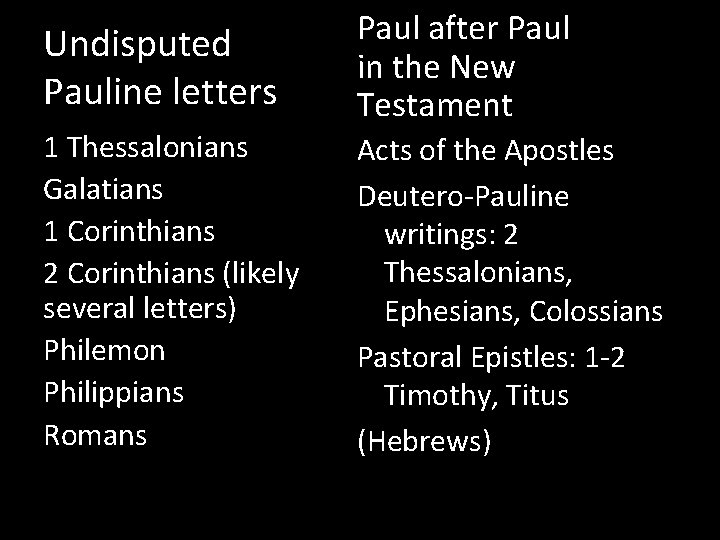
Undisputed Pauline letters Paul after Paul in the New Testament 1 Thessalonians Galatians 1 Corinthians 2 Corinthians (likely several letters) Philemon Philippians Romans Acts of the Apostles Deutero-Pauline writings: 2 Thessalonians, Ephesians, Colossians Pastoral Epistles: 1 -2 Timothy, Titus (Hebrews)
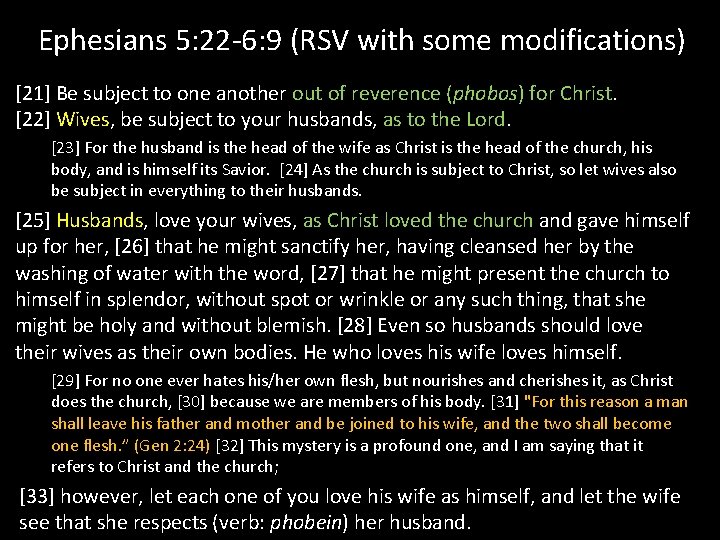
Ephesians 5: 22 -6: 9 (RSV with some modifications) [21] Be subject to one another out of reverence (phobos) for Christ. [22] Wives, be subject to your husbands, as to the Lord. [23] For the husband is the head of the wife as Christ is the head of the church, his body, and is himself its Savior. [24] As the church is subject to Christ, so let wives also be subject in everything to their husbands. [25] Husbands, love your wives, as Christ loved the church and gave himself up for her, [26] that he might sanctify her, having cleansed her by the washing of water with the word, [27] that he might present the church to himself in splendor, without spot or wrinkle or any such thing, that she might be holy and without blemish. [28] Even so husbands should love their wives as their own bodies. He who loves his wife loves himself. [29] For no one ever hates his/her own flesh, but nourishes and cherishes it, as Christ does the church, [30] because we are members of his body. [31] "For this reason a man shall leave his father and mother and be joined to his wife, and the two shall become one flesh. ” (Gen 2: 24) [32] This mystery is a profound one, and I am saying that it refers to Christ and the church; [33] however, let each one of you love his wife as himself, and let the wife see that she respects (verb: phobein) her husband.
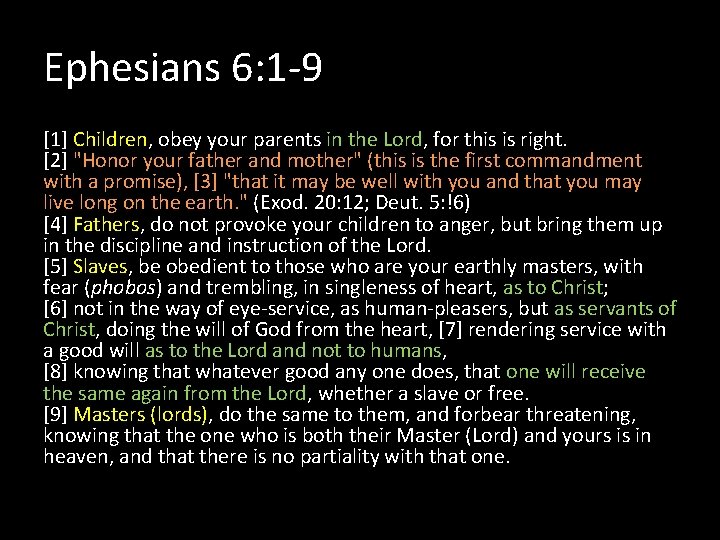
Ephesians 6: 1 -9 [1] Children, obey your parents in the Lord, for this is right. [2] "Honor your father and mother" (this is the first commandment with a promise), [3] "that it may be well with you and that you may live long on the earth. " (Exod. 20: 12; Deut. 5: !6) [4] Fathers, do not provoke your children to anger, but bring them up in the discipline and instruction of the Lord. [5] Slaves, be obedient to those who are your earthly masters, with fear (phobos) and trembling, in singleness of heart, as to Christ; [6] not in the way of eye-service, as human-pleasers, but as servants of Christ, doing the will of God from the heart, [7] rendering service with a good will as to the Lord and not to humans, [8] knowing that whatever good any one does, that one will receive the same again from the Lord, whether a slave or free. [9] Masters (lords), do the same to them, and forbear threatening, knowing that the one who is both their Master (Lord) and yours is in heaven, and that there is no partiality with that one.
Philemon What is Onesimus? runaway slave? truant slave? dispatched slave?
In sum (re: slavery, household codes) • Household codes (Haustafeln in German) are an ancient ideology of subordination: husband over wife, parents over children, masters over slaves. They appear in modified form in Christian literature such as 1 Timothy, Ephesians, Colossians. • Aristotle argues for the ontological inferiority of women and slaves to free elite males. • Slavery was a ubiquitous institution in the Roman world. • How should we read NT language of slavery, whether Paul as slave, Christ as slave, slaves in the community, ”slaves, obey your masters in the Lord”?
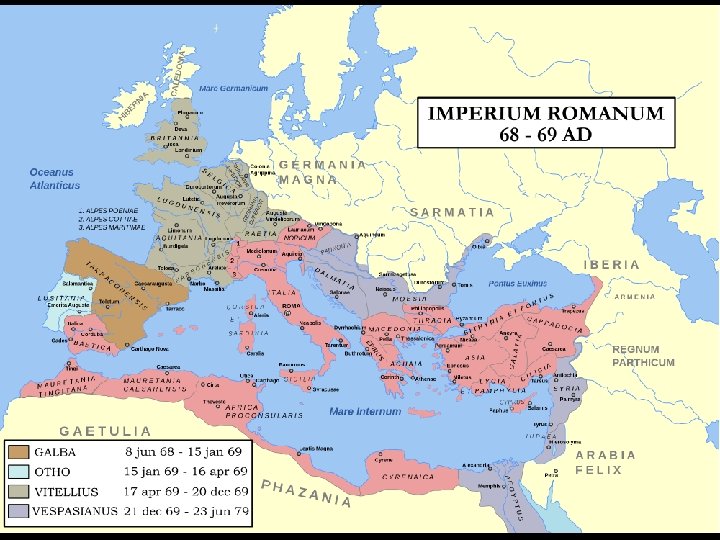
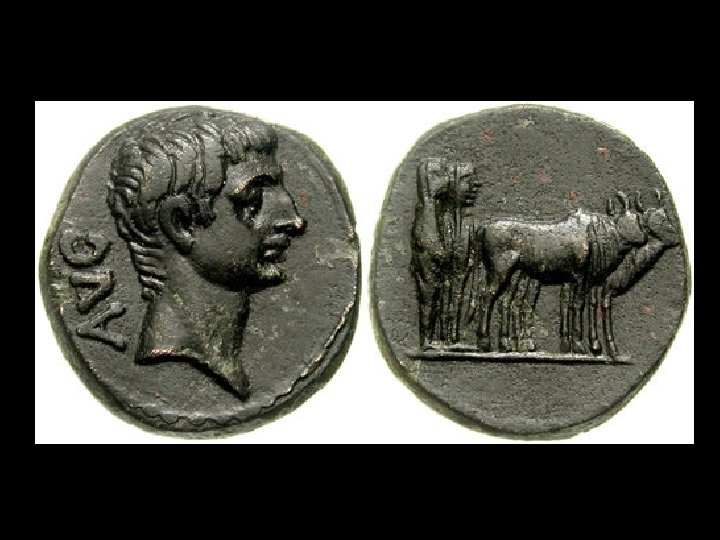
Roman Philippi The Letter to the Philippians
Philippians 3: 20 But our commonwealth is in heaven, and from it we await a Savior, the Lord Jesus Christ, 21 who will change our lowly body to be like his glorious body, by the power which enables him even to subject all things to himself. (Revised Standard Version)
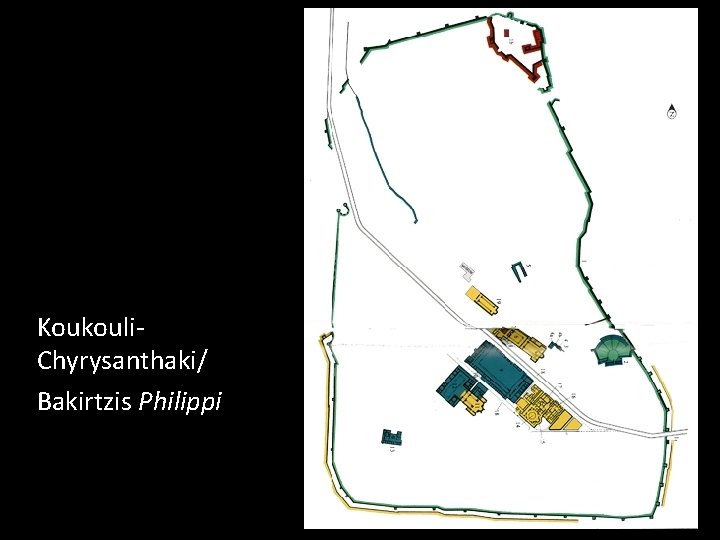
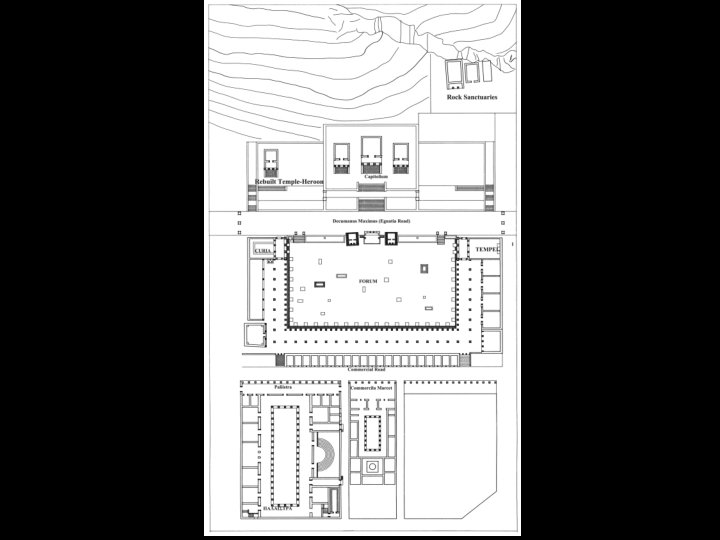
Koukouli. Chyrysanthaki/ Bakirtzis Philippi
late 42 BCE Octavian (who would become Augustus, the first emperor) and Antony triumph over Cassius and Brutus on the low plains to the southwest of Philippi
The soldiers encroached upon their neighbours in an insolent manner, seizing more than had been given to them and choosing the best lands; nor did they cease even when Octavian rebuked them and made them numerous other presents, since they were contemptuous of their rulers in the knowledge that they needed them to confirm their power, for the five years’ term of the triumvirate was passing away. . Appian Bell. Civ. 5. 13
Philippians 2 5 Have this mind among yourselves, which is also in Christ Jesus, 6 who, though he was in the form of God, did not count equality with God a thing to be grasped, 7 but emptied himself, taking the form of a servant, being born in human likeness. 8 And being found in human form , he humbled himself and became obedient unto death, even death on a cross. 9 Therefore God has highly exalted him and bestowed on him the name which is above every name, 10 that at the name of Jesus every knee should bow, in heaven and on earth and under the earth, 11 and every tongue confess that Jesus Christ is Lord, to the glory of God the Father.
An inscription found near Philippi Here lies Vitalis, who lived 16 years, Gaius Lavius Faustius’s homeborn slave and also his son, manager of the Apriana tavern, popular with the public, carried off by the gods. I ask you, wayfarers, if ever I gave short measure to profit my father, forgive. I ask, through those above and below: may you protect [my] father and mother. And be wel!l
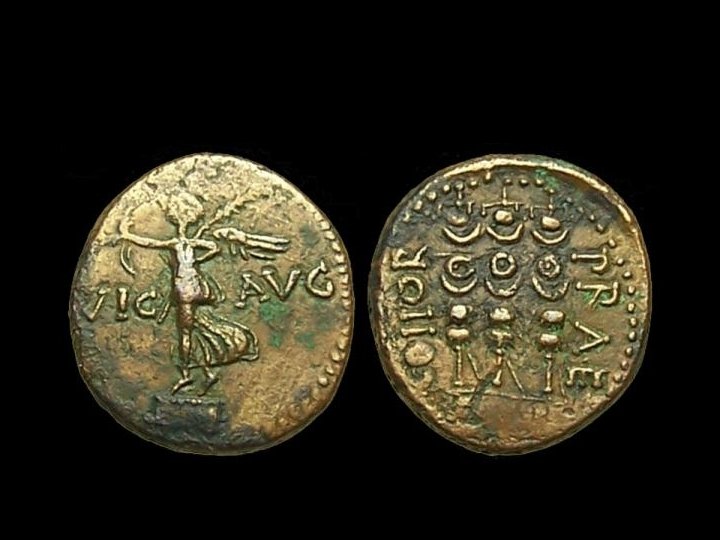
In sum (re: Philippi) Philippi: veteran colony occupied by Roman soldiers The land was taken, centuriated (divided), by the Romans approximately 70 -80 years before the writing of this letter. How would language of “commonwealth, ” “every knee shall bow” and “in the form of a slave, ” have been heard in Philippi in the 50 s CE?