Watershed Assessment and River Restoration Strategies Katie Halvorson
- Slides: 28
Watershed Assessment and River Restoration Strategies Katie Halvorson Earth and Physical Science Department Western Oregon University Monmouth, Oregon
Outline �Introduction �River Morphology § Fluvial Processes �Watersheds § What are they? �River Restoration § Criteria § What is river restoration? �Summary
RIVER MORPHOLOGY
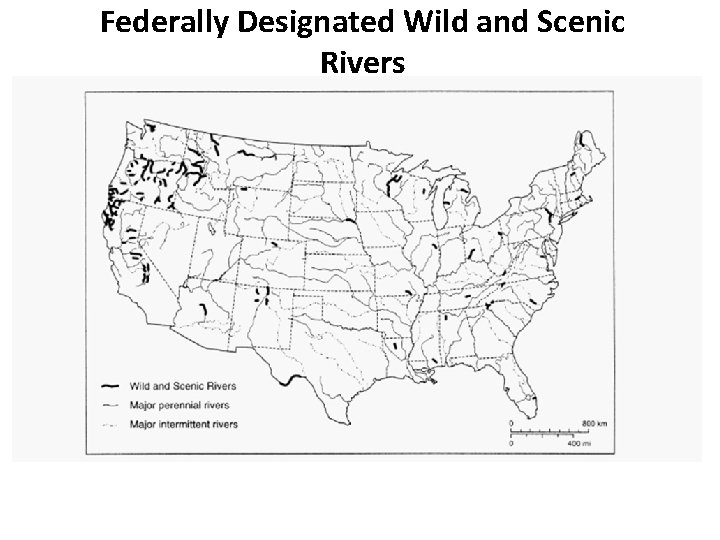
Federally Designated Wild and Scenic Rivers
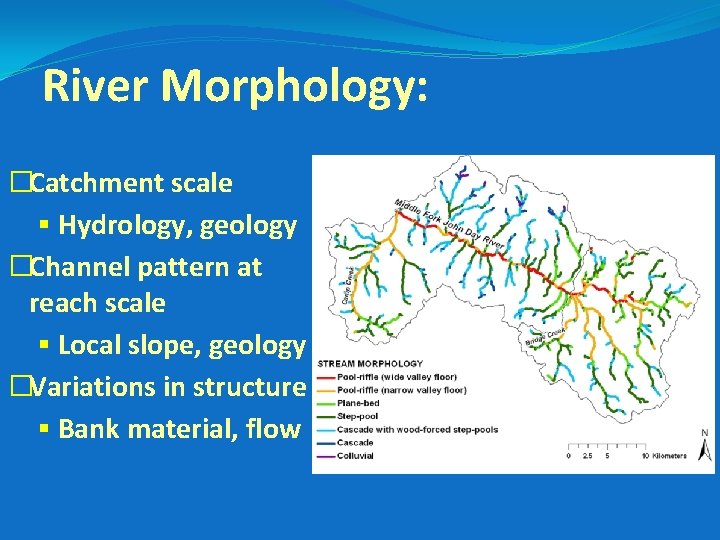
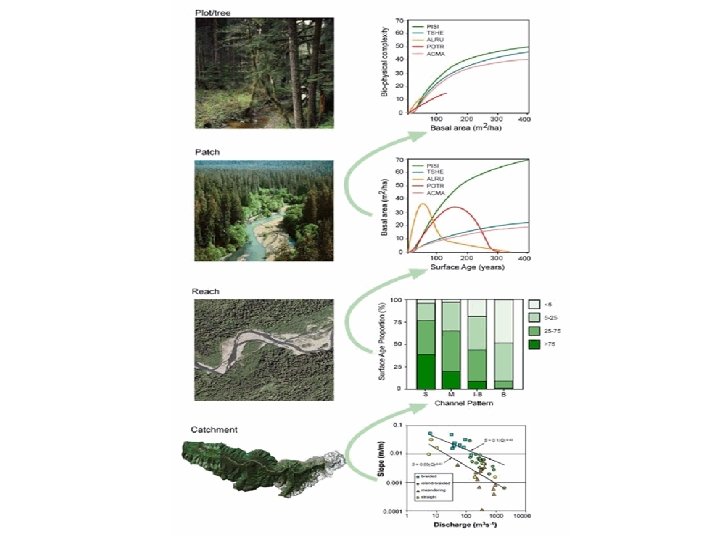
River Morphology: �Catchment scale § Hydrology, geology �Channel pattern at reach scale § Local slope, geology �Variations in structure § Bank material, flow
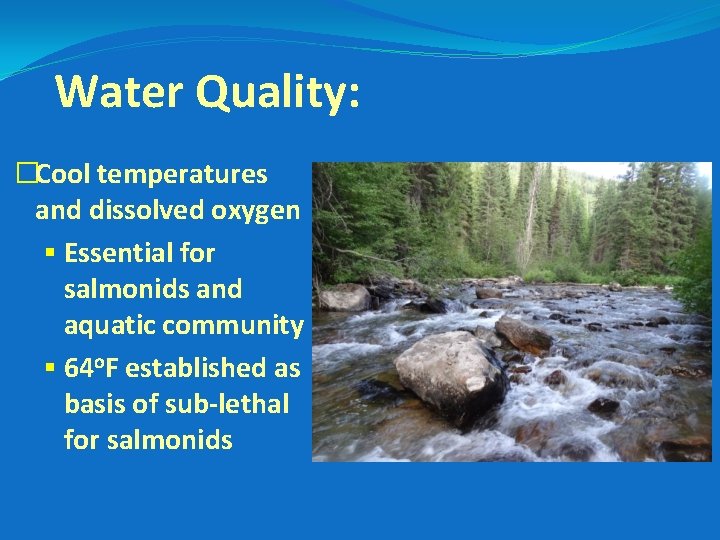
Water Quality: �Cool temperatures and dissolved oxygen § Essential for salmonids and aquatic community § 64 o. F established as basis of sub-lethal for salmonids
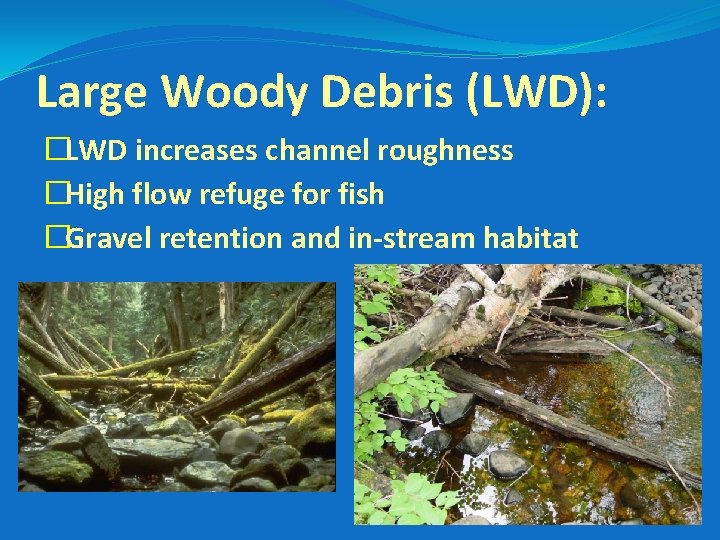
Large Woody Debris (LWD): �LWD increases channel roughness �High flow refuge for fish �Gravel retention and in-stream habitat
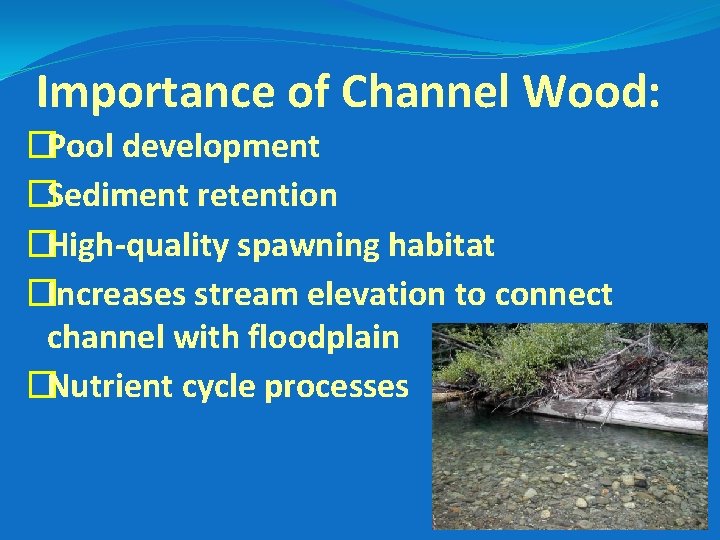
Importance of Channel Wood: �Pool development �Sediment retention �High-quality spawning habitat �Increases stream elevation to connect channel with floodplain �Nutrient cycle processes
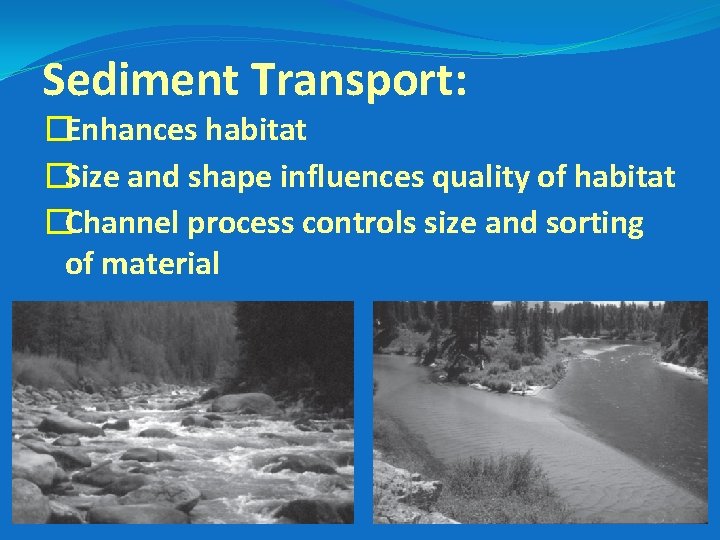
Sediment Transport: �Enhances habitat �Size and shape influences quality of habitat �Channel process controls size and sorting of material
WATERSHEDS
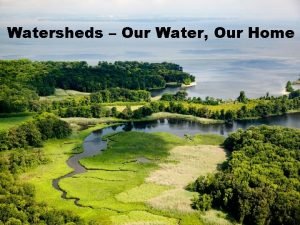
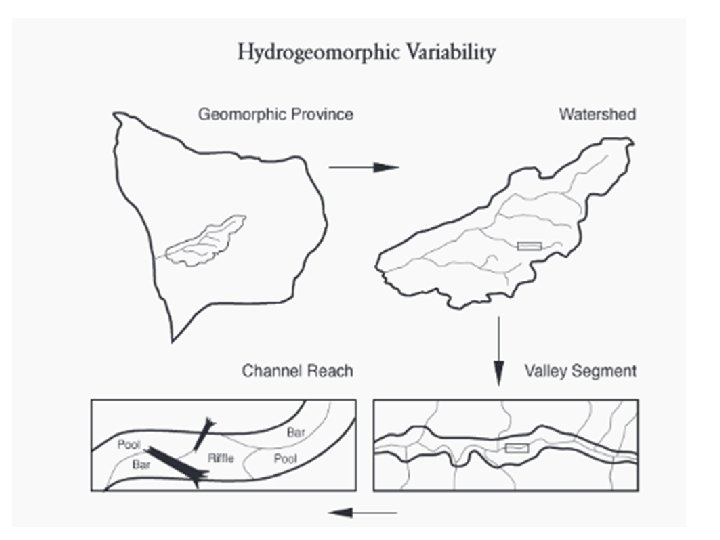
Significance of a Watershed: �“Area of land that drains downslope to the lowest point”- OWEB �Assessments should occur at the watershed level due to connectivity �Activity affecting the watershed at one location will affect the system downstream
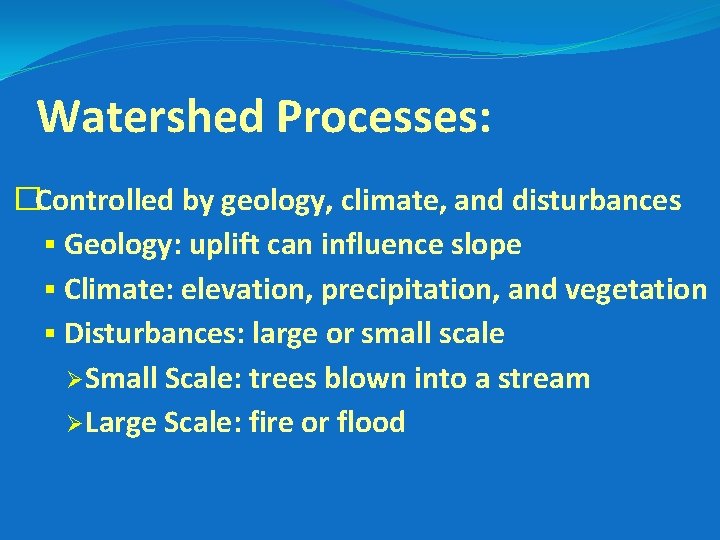
Watershed Processes: �Controlled by geology, climate, and disturbances § Geology: uplift can influence slope § Climate: elevation, precipitation, and vegetation § Disturbances: large or small scale Ø Small Scale: trees blown into a stream Ø Large Scale: fire or flood
RIVER RESTORATION
What is River Restoration? “assisting the establishment of improved hydrologic, geomorphic, and ecological processes in a degraded watershed system and replacing lost, damaged, or compromised elements of the natural system” (Wohl et al. , 2005)
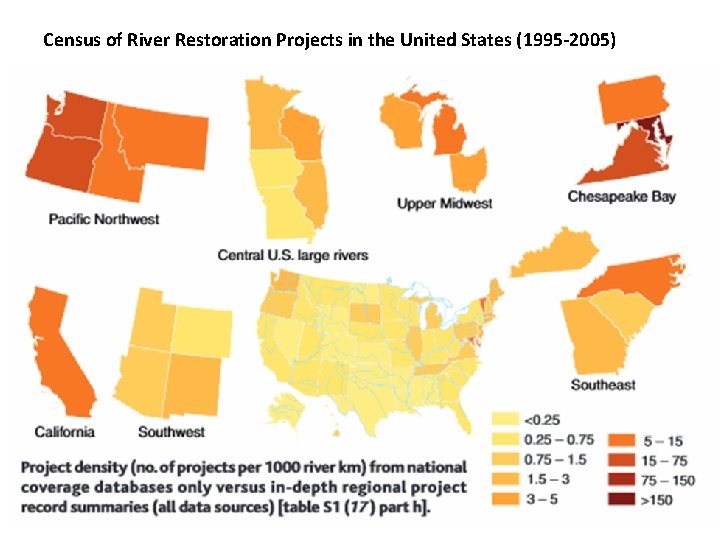
Census of River Restoration Projects in the United States (1995 -2005)
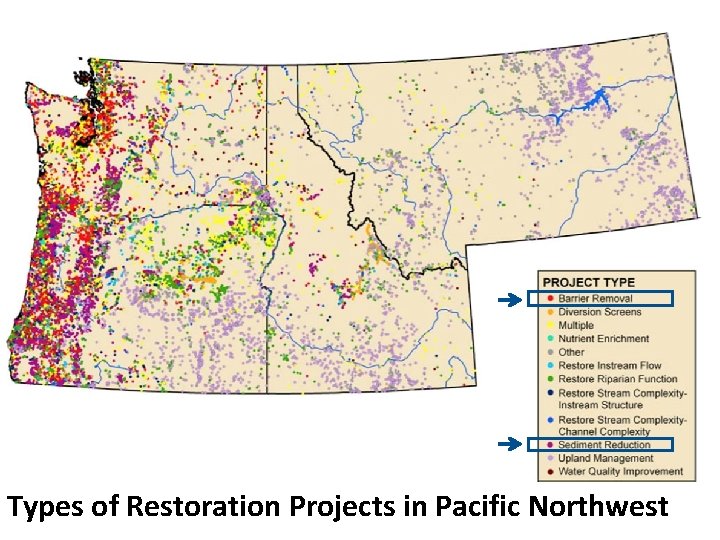
Types of Restoration Projects in Pacific Northwest
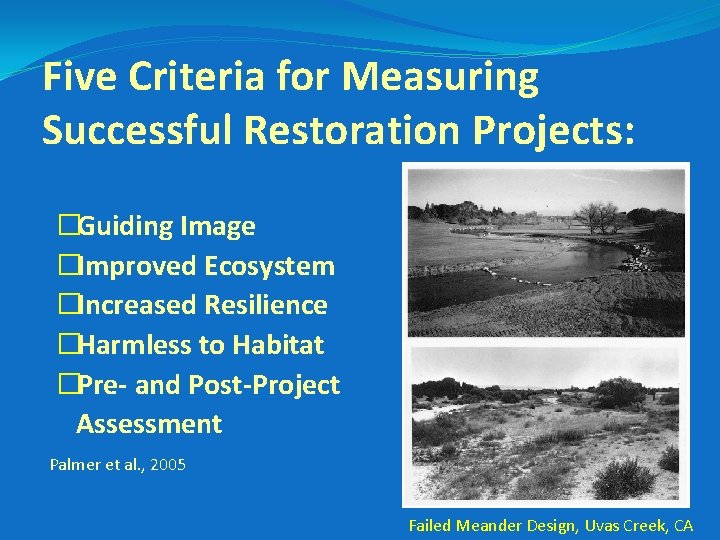
Five Criteria for Measuring Successful Restoration Projects: �Guiding Image �Improved Ecosystem �Increased Resilience �Harmless to Habitat �Pre- and Post-Project Assessment Palmer et al. , 2005 Failed Meander Design, Uvas Creek, CA
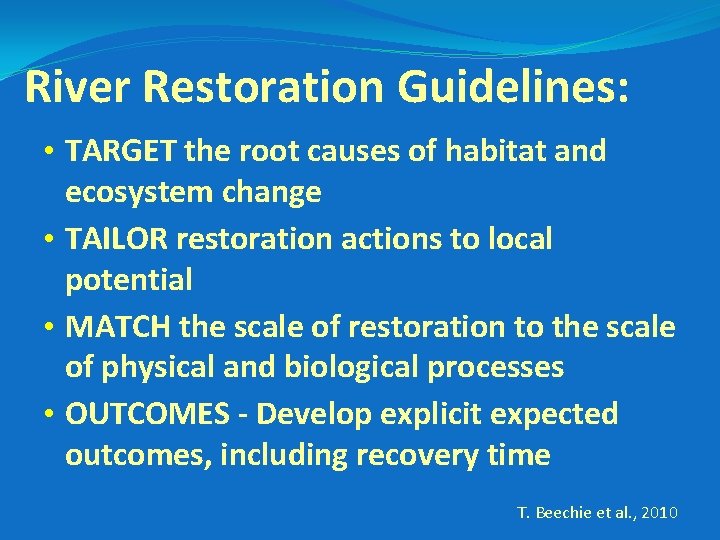
River Restoration Guidelines: • TARGET the root causes of habitat and ecosystem change • TAILOR restoration actions to local potential • MATCH the scale of restoration to the scale of physical and biological processes • OUTCOMES - Develop explicit expected outcomes, including recovery time T. Beechie et al. , 2010
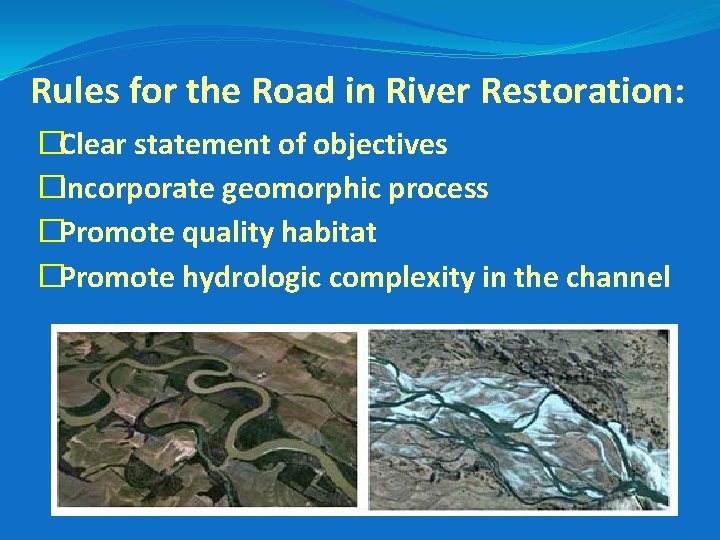
Rules for the Road in River Restoration: �Clear statement of objectives �Incorporate geomorphic process �Promote quality habitat �Promote hydrologic complexity in the channel
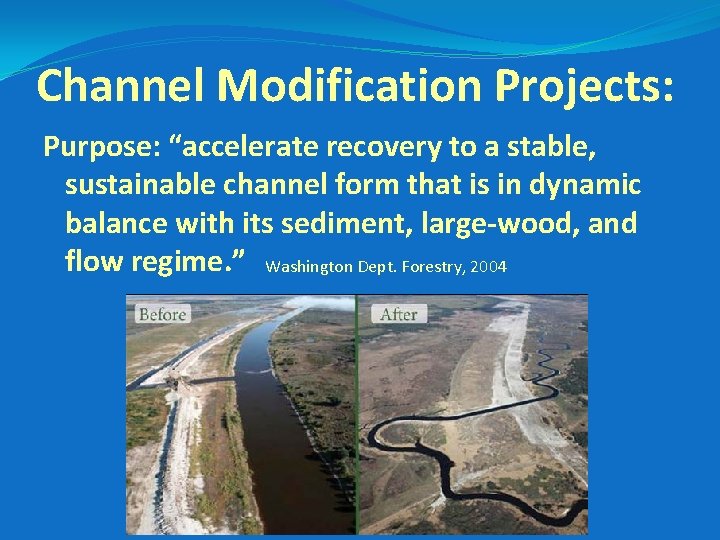
Channel Modification Projects: Purpose: “accelerate recovery to a stable, sustainable channel form that is in dynamic balance with its sediment, large-wood, and flow regime. ” Washington Dept. Forestry, 2004
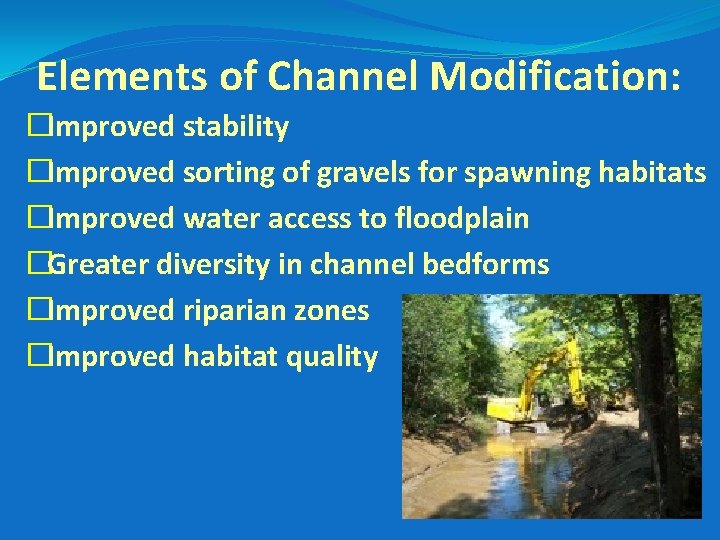
Elements of Channel Modification: �Improved stability �Improved sorting of gravels for spawning habitats �Improved water access to floodplain �Greater diversity in channel bedforms �Improved riparian zones �Improved habitat quality
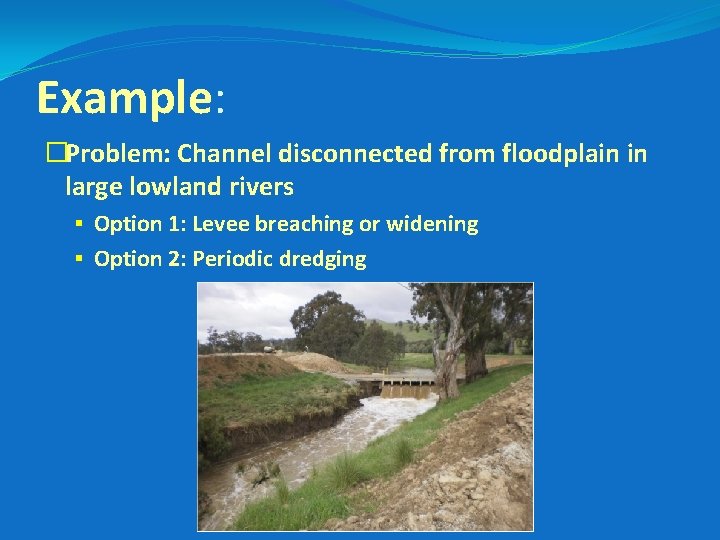
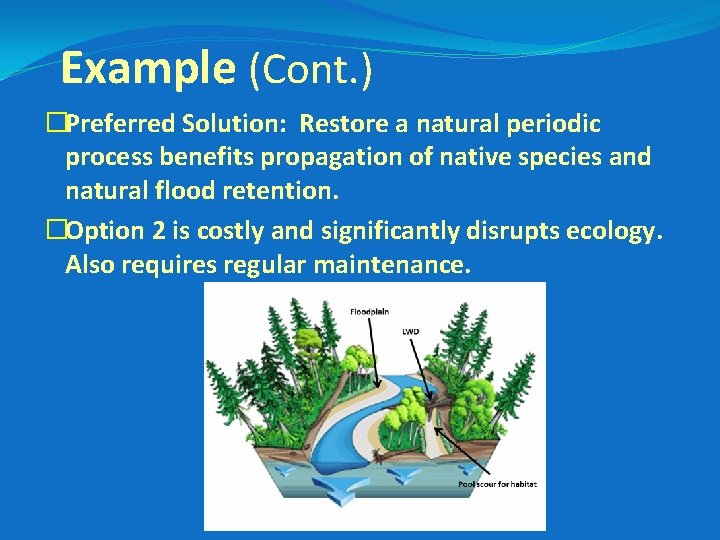
Example: �Problem: Channel disconnected from floodplain in large lowland rivers § Option 1: Levee breaching or widening § Option 2: Periodic dredging
Example (Cont. ) �Preferred Solution: Restore a natural periodic process benefits propagation of native species and natural flood retention. �Option 2 is costly and significantly disrupts ecology. Also requires regular maintenance.
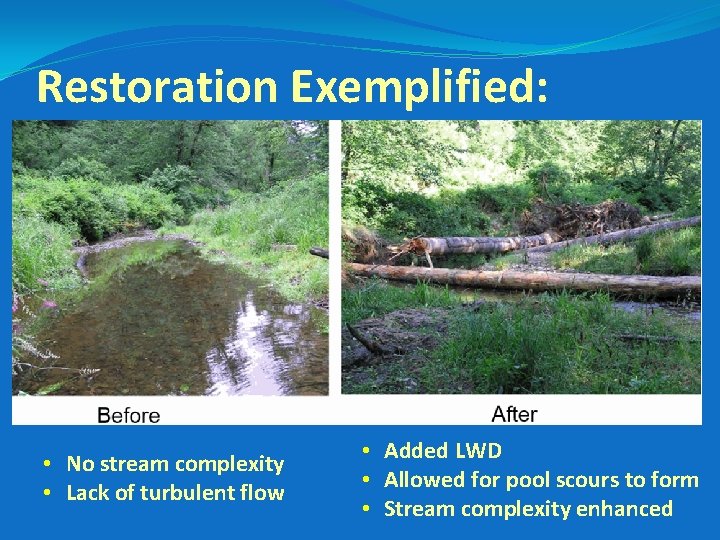
Restoration Exemplified: • No stream complexity • Lack of turbulent flow • Added LWD • Allowed for pool scours to form • Stream complexity enhanced
Summary �River restoration: “assisting the establishment of improved hydrologic, geomorphic, and ecological processes in a degraded watershed system and replacing lost, damaged, or compromised elements of the natural system” (Wohl et al. , 2005) �Requires process-based approach, with clear objectives and assessment strategy �Successful river restoration is important to increase the complexity of a river for habitats, water quality, and sediment transport
Five-Minute River Interlude https: //www. youtube. com/watch? v=8 Jq 1 U 8 Jy. HW 4 Youtube - Salmon Spawning