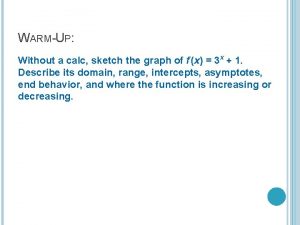
WARMUP Without a calc sketch the graph of

- Slides: 20
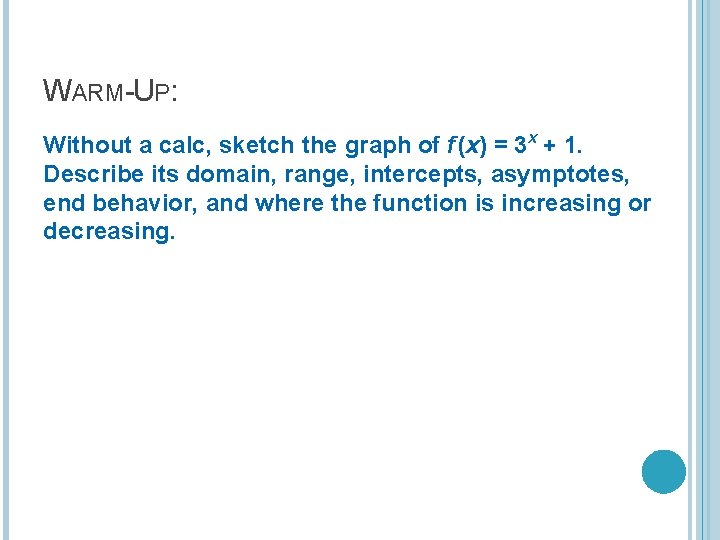
WARM-UP: Without a calc, sketch the graph of f (x) = 3 x + 1. Describe its domain, range, intercepts, asymptotes, end behavior, and where the function is increasing or decreasing.
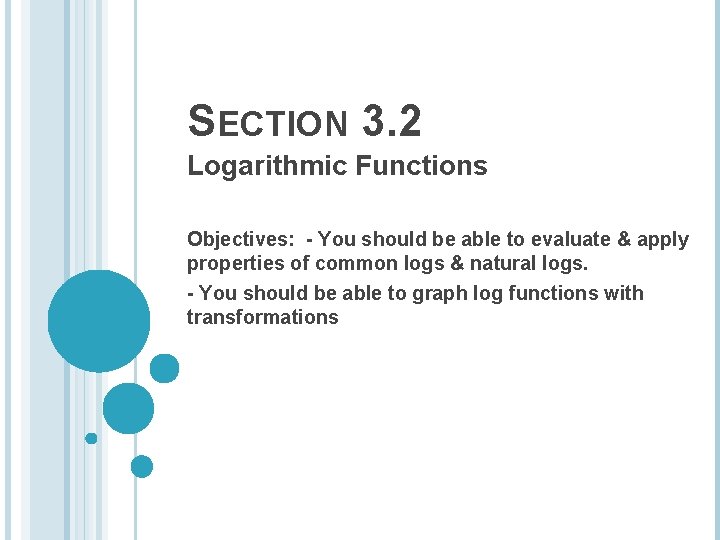
SECTION 3. 2 Logarithmic Functions Objectives: - You should be able to evaluate & apply properties of common logs & natural logs. - You should be able to graph log functions with transformations
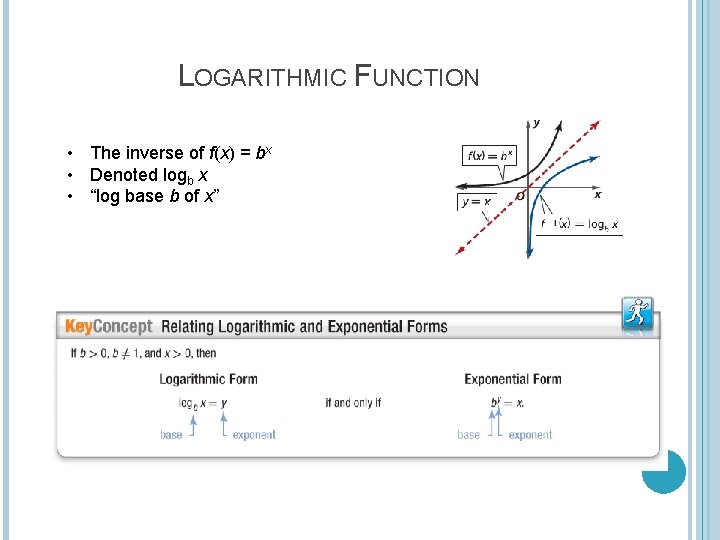
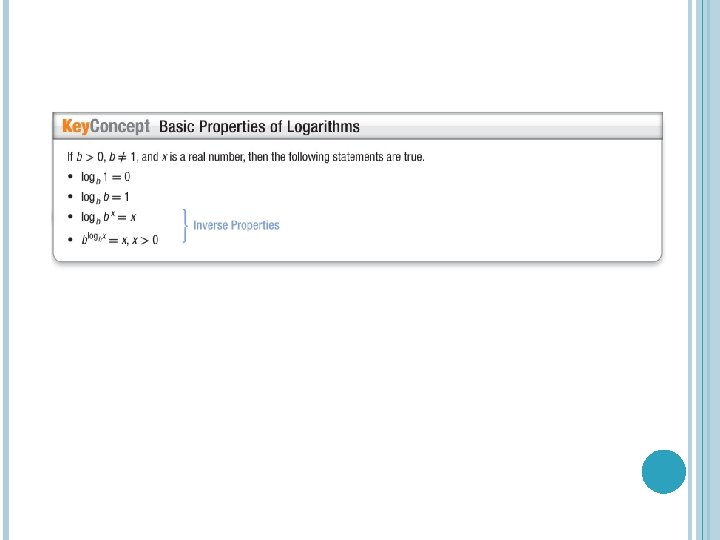
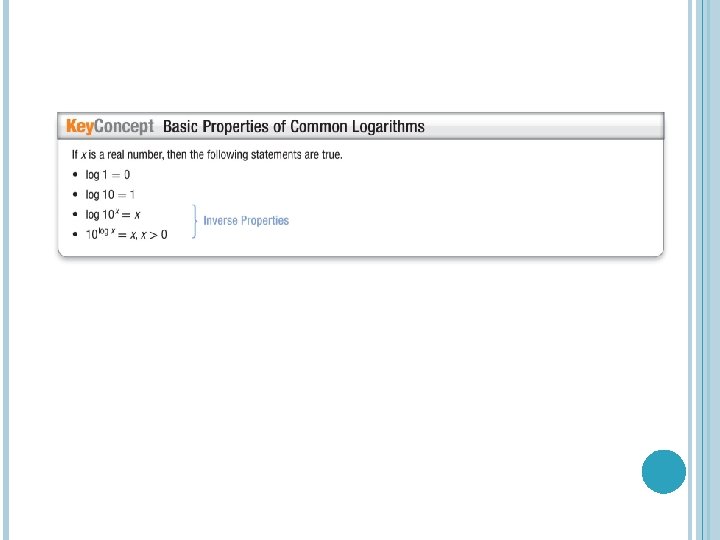
LOGARITHMIC FUNCTION • The inverse of f(x) = bx • Denoted logb x • “log base b of x”
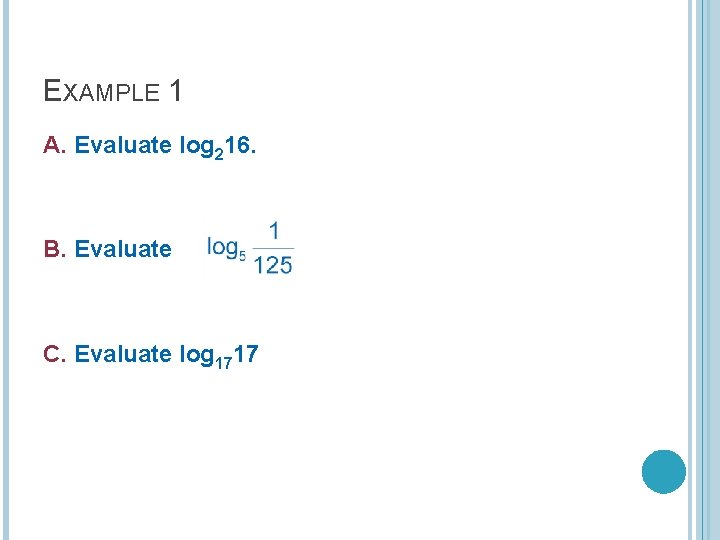
EXAMPLE 1 A. Evaluate log 216. B. Evaluate C. Evaluate log 1717
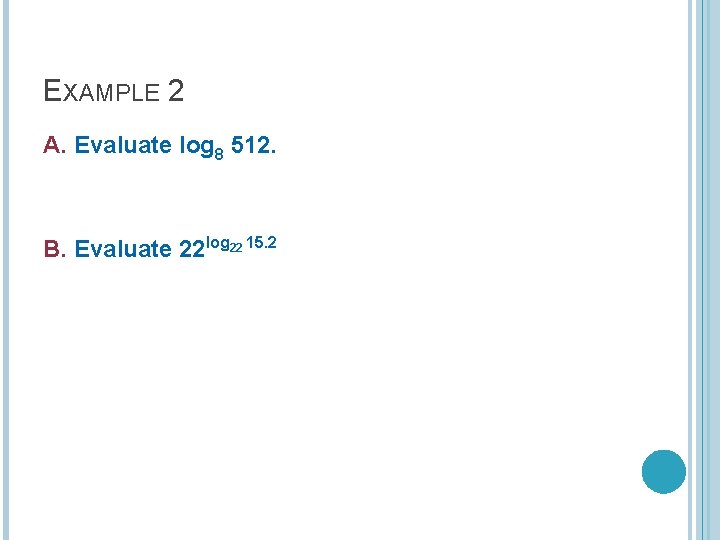
EXAMPLE 2 A. Evaluate log 8 512. B. Evaluate 22 log 22 15. 2
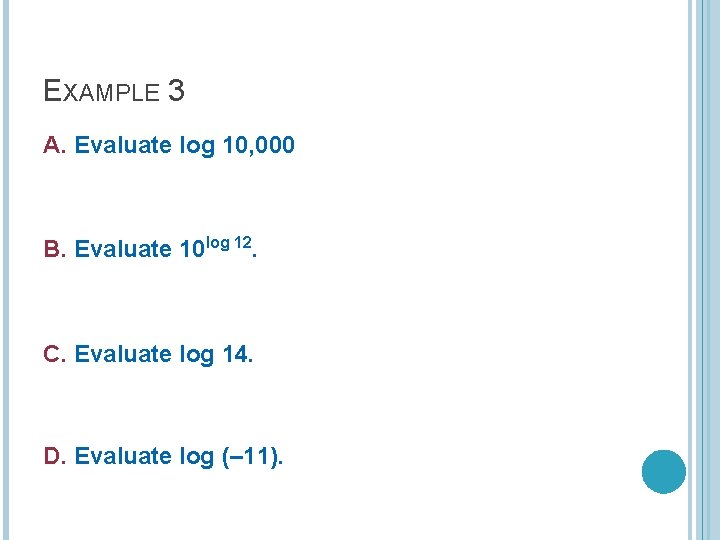
EXAMPLE 3 A. Evaluate log 10, 000 B. Evaluate 10 log 12. C. Evaluate log 14. D. Evaluate log (– 11).
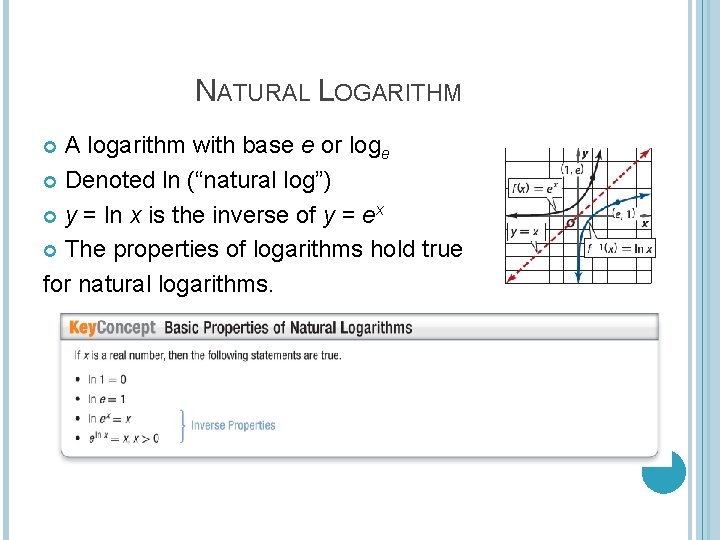
NATURAL LOGARITHM A logarithm with base e or loge Denoted ln (“natural log”) y = ln x is the inverse of y = ex The properties of logarithms hold true for natural logarithms.
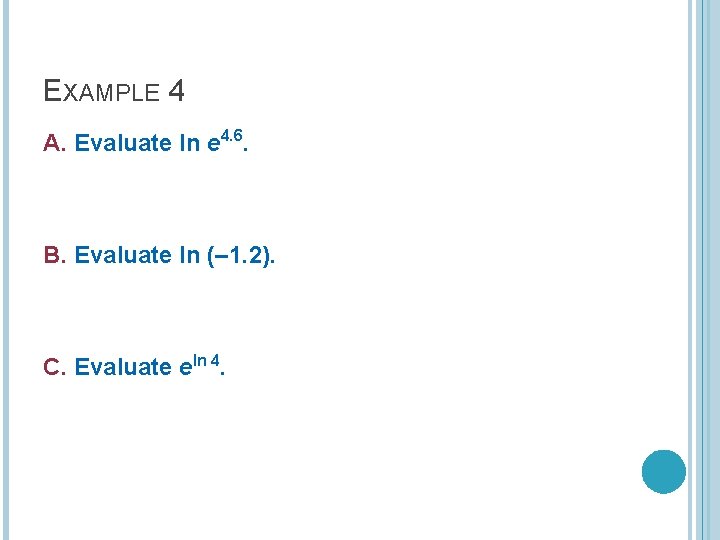
EXAMPLE 4 A. Evaluate ln e 4. 6. B. Evaluate ln (– 1. 2). C. Evaluate eln 4.
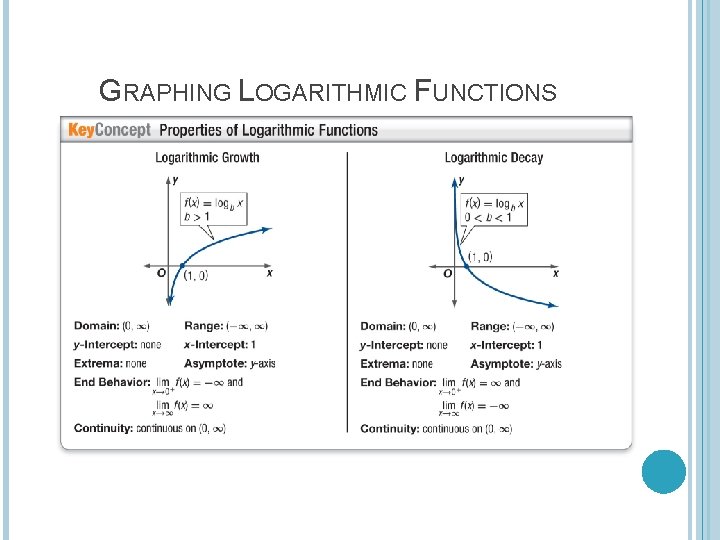
GRAPHING LOGARITHMIC FUNCTIONS
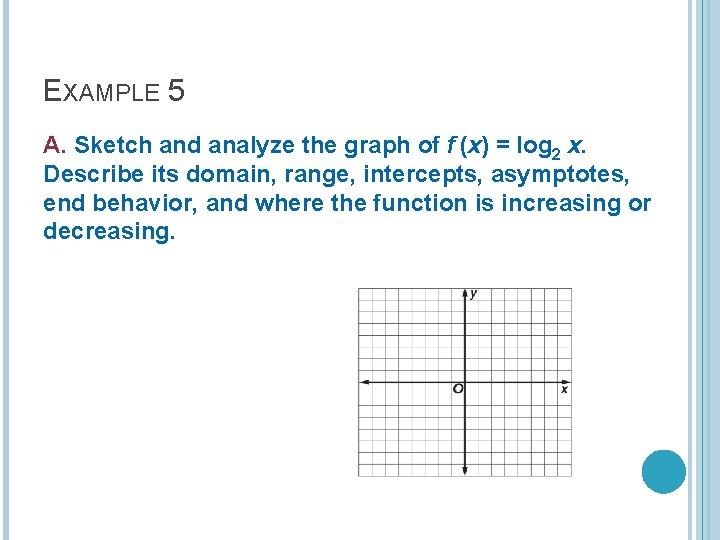
EXAMPLE 5 A. Sketch and analyze the graph of f (x) = log 2 x. Describe its domain, range, intercepts, asymptotes, end behavior, and where the function is increasing or decreasing.
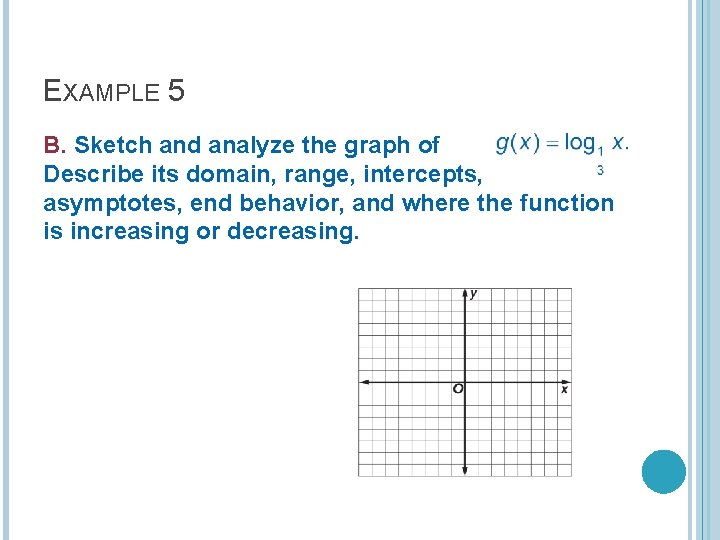
EXAMPLE 5 B. Sketch and analyze the graph of Describe its domain, range, intercepts, asymptotes, end behavior, and where the function is increasing or decreasing.
Transformation Vertical translation Horizontal translation Reflection Equation g(x) = + k g(x) = – k g(x) = – g(x) = Description *Shifts the graph of f(x) = upward k units. *Shifts the graph of f(x) = downward k units. *Shifts the graph of f(x) = to the left h units. Vertical asymptote x = h *Shifts the graph of f(x) = to the right h units. Vertical asymptote x = h *Reflects the graph of f(x) = about the x-axis *Reflects the graph of f(x) = about the y-axis
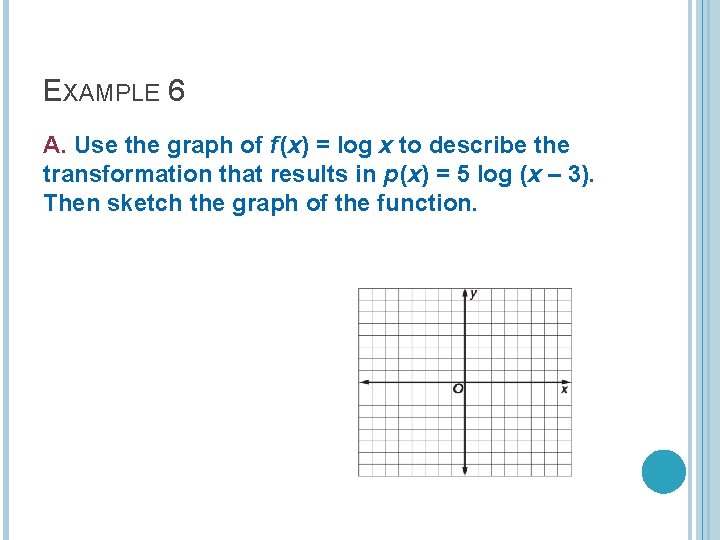
EXAMPLE 6 A. Use the graph of f (x) = log x to describe the transformation that results in p (x) = 5 log (x – 3). Then sketch the graph of the function.
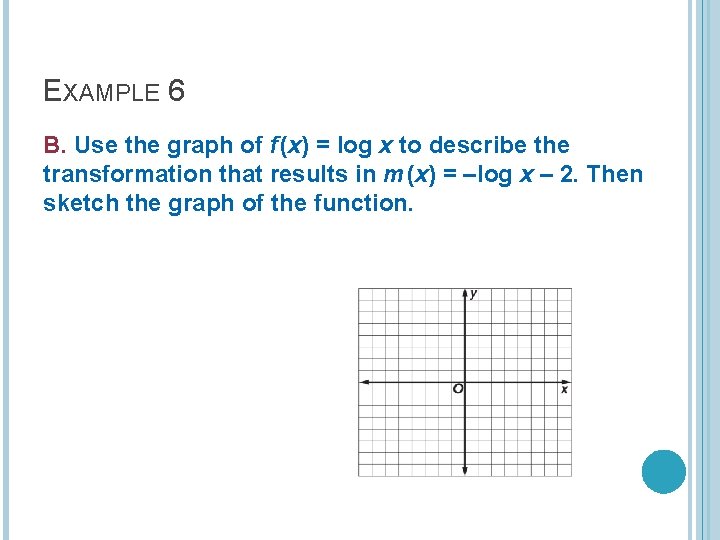
EXAMPLE 6 B. Use the graph of f (x) = log x to describe the transformation that results in m (x) = –log x – 2. Then sketch the graph of the function.
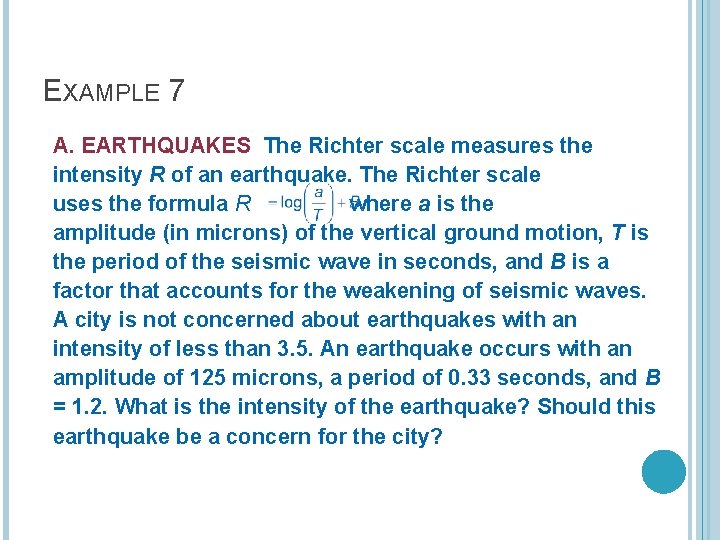
EXAMPLE 7 A. EARTHQUAKES The Richter scale measures the intensity R of an earthquake. The Richter scale uses the formula R where a is the amplitude (in microns) of the vertical ground motion, T is the period of the seismic wave in seconds, and B is a factor that accounts for the weakening of seismic waves. A city is not concerned about earthquakes with an intensity of less than 3. 5. An earthquake occurs with an amplitude of 125 microns, a period of 0. 33 seconds, and B = 1. 2. What is the intensity of the earthquake? Should this earthquake be a concern for the city?
EXAMPLE 7 B. Earthquakes with an intensity of 6. 1 or greater can cause considerable damage to those living within 100 km of the earthquake’s center. Determine the amplitude of an earthquake whose intensity is 6. 1 with a period of 3. 5 seconds and B = 3. 7.
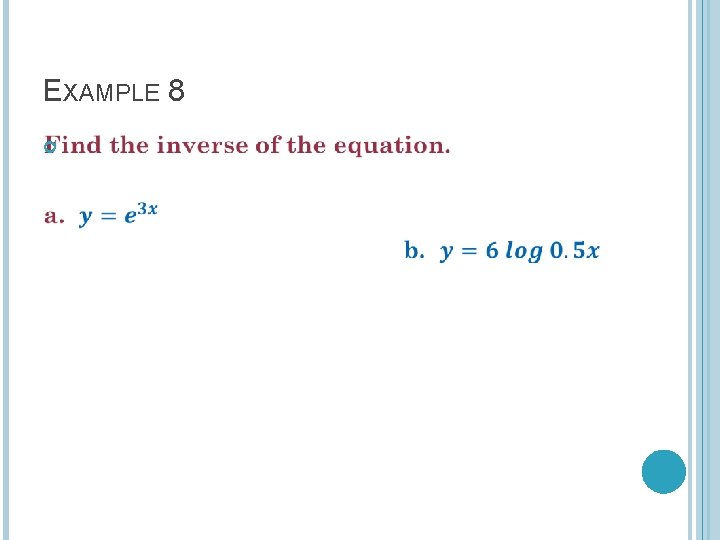
EXAMPLE 8
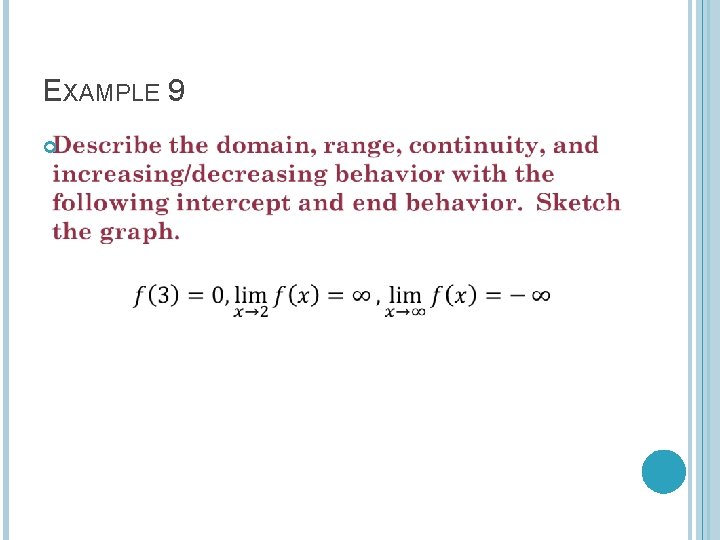
EXAMPLE 9