Voices Literature and Writing Workshop 3 Theme 2

- Slides: 53
Voices Literature and Writing Workshop #3 Theme 2: Perspective Taking 1
Theme 2: Perspective Taking 2
3
Contents 1. What is Perspective Taking? 2. Perspective Taking Instructional Strand Theme. Related Competencies 3. Perspective Taking Activities 4. Modeling Voices Core Activity #2: Standing in Your Partner’s Shoes 5. Integrated Perspective Taking, Language and Literacy Instruction 6. Perspective Taking and the Voices Goals 7. Perspective Taking and the CCSS 8. Perspective Taking Theme Implementation Plans 4
What Are the Goals of This Workshop? 1. Voices Theme #2. To be able to implement “Theme 2: Perspective Taking” in your classroom 2. Voices Core Activity #2. To be able to model the “Voices Core Activity #2: “Stand In Your Shoes” in your classroom 3. Integration of Social Development and Literacy. To understand how this Voices Theme and Core Activity promotes oral language, social development, listening comprehension, and writing 4. Theme Implementation Plan. To develop an implementation plan for this theme in your classroom 5
Perspective Taking Online Resources • VLW #3 Workshop Resources are available online at the Education for Democracy Institute website: https: //efd. global/social-perspective-taking-workshopresources/ • The VLW #3 Videos are available on: (https: //www. youtube. com/channel/UCXPYOXc. Wn 2 ECSbgl. KG sf. Hgw/) • References for this workshop are in Peace, Literacy, and Democracy (the Book) by Pat Walker (https: //efd. global/professional-development/peacedemocracy-book/) – Chapter 5: Social Perspective Taking 6
1. What is Perspective Taking? 7
Perspective Taking Definition In Voices, we define perspective taking as the ability to take, understand, and coordinate multiple points of view, including thoughts and feelings. 8
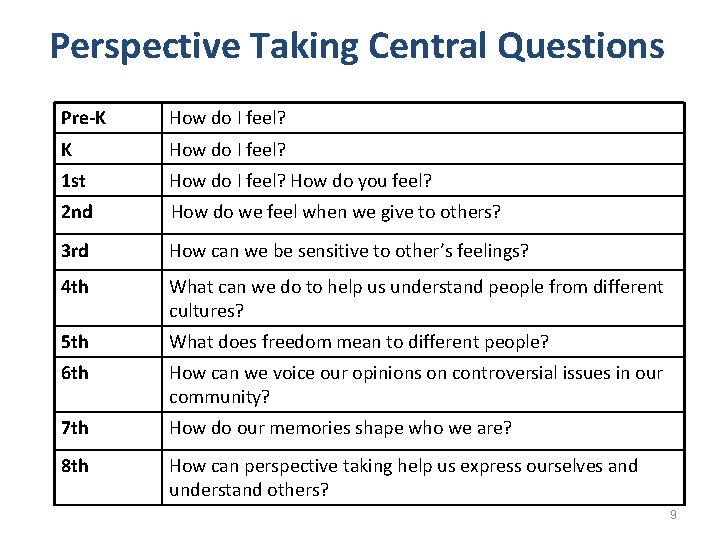
Perspective Taking Central Questions Pre-K How do I feel? 1 st How do I feel? How do you feel? 2 nd How do we feel when we give to others? 3 rd How can we be sensitive to other’s feelings? 4 th What can we do to help us understand people from different cultures? 5 th What does freedom mean to different people? 6 th How can we voice our opinions on controversial issues in our community? 7 th How do our memories shape who we are? 8 th How can perspective taking help us express ourselves and understand others? 9
Why Is Perspective Taking Important? 10
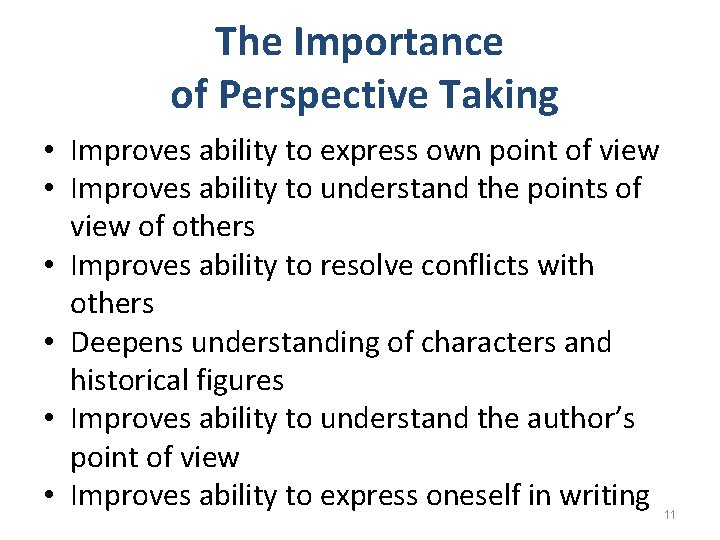
The Importance of Perspective Taking • Improves ability to express own point of view • Improves ability to understand the points of view of others • Improves ability to resolve conflicts with others • Deepens understanding of characters and historical figures • Improves ability to understand the author’s point of view • Improves ability to express oneself in writing 11
2. Perspective Taking Instructional Strand Theme-Related Competencies 12
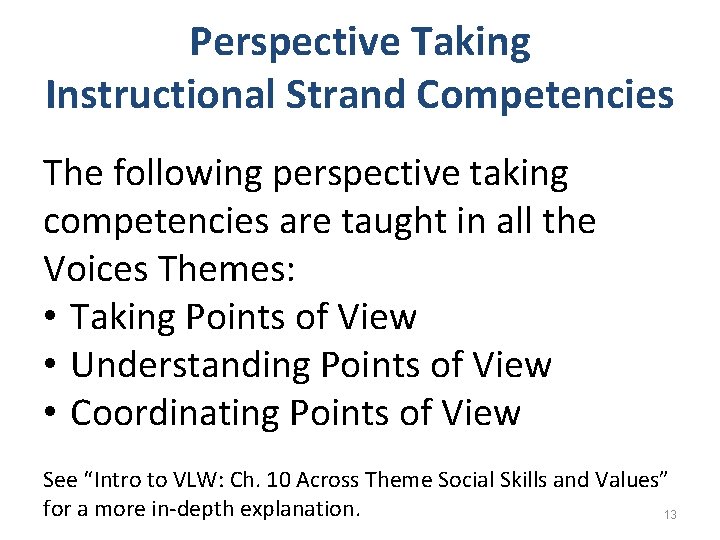
Perspective Taking Instructional Strand Competencies The following perspective taking competencies are taught in all the Voices Themes: • Taking Points of View • Understanding Points of View • Coordinating Points of View See “Intro to VLW: Ch. 10 Across Theme Social Skills and Values” for a more in-depth explanation. 13
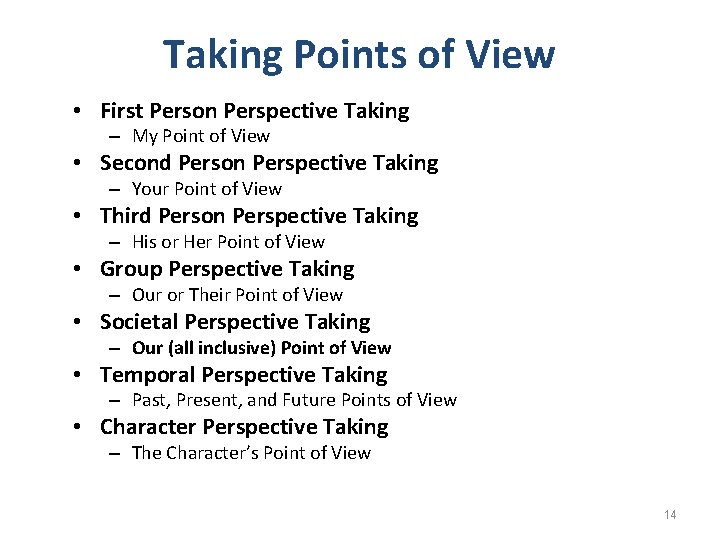
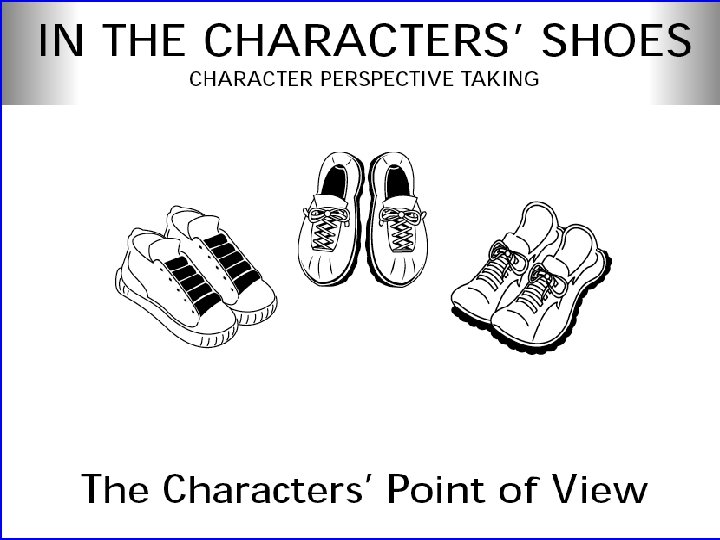
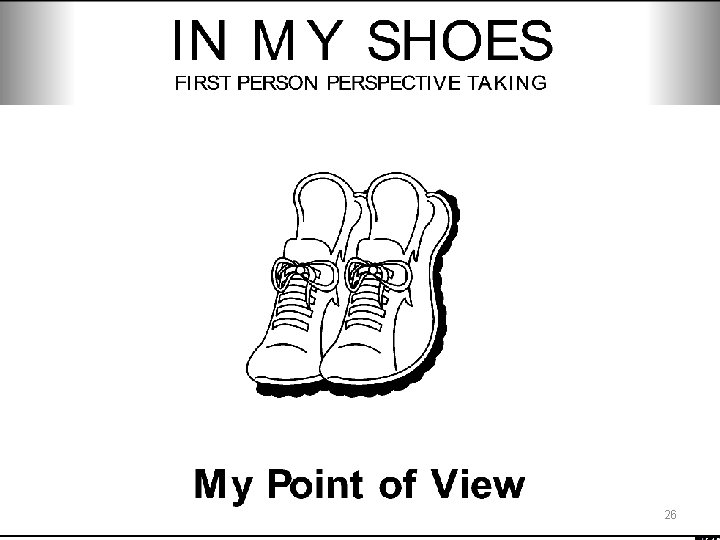
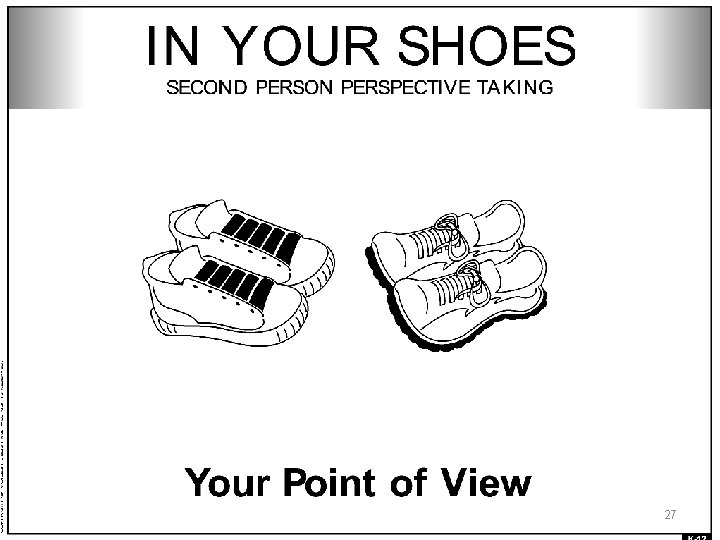
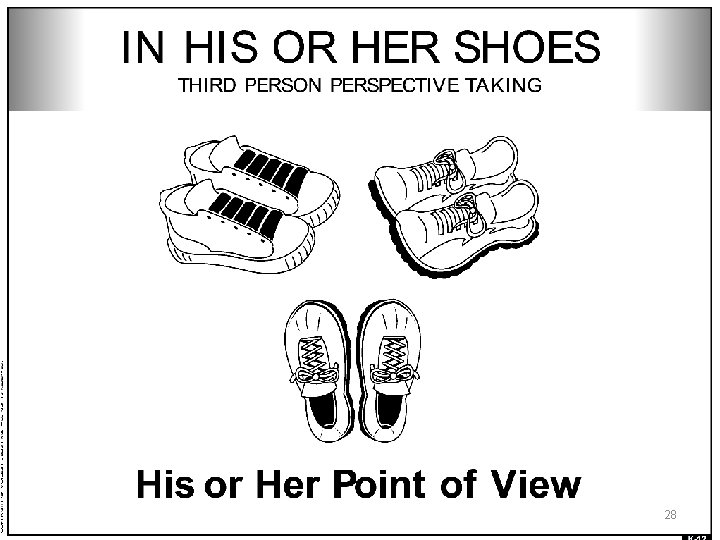
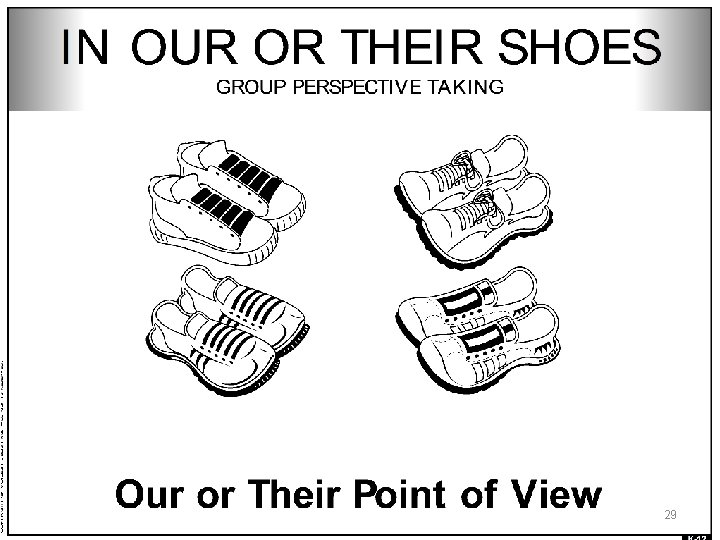
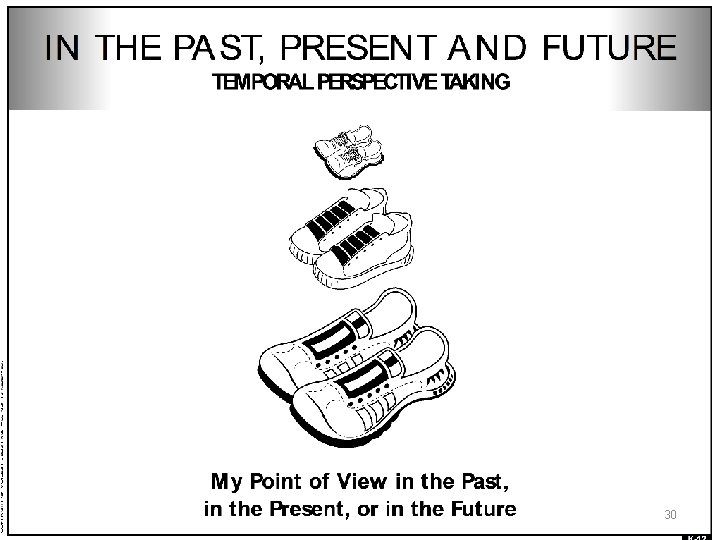
Taking Points of View • First Person Perspective Taking – My Point of View • Second Person Perspective Taking – Your Point of View • Third Person Perspective Taking – His or Her Point of View • Group Perspective Taking – Our or Their Point of View • Societal Perspective Taking – Our (all inclusive) Point of View • Temporal Perspective Taking – Past, Present, and Future Points of View • Character Perspective Taking – The Character’s Point of View 14
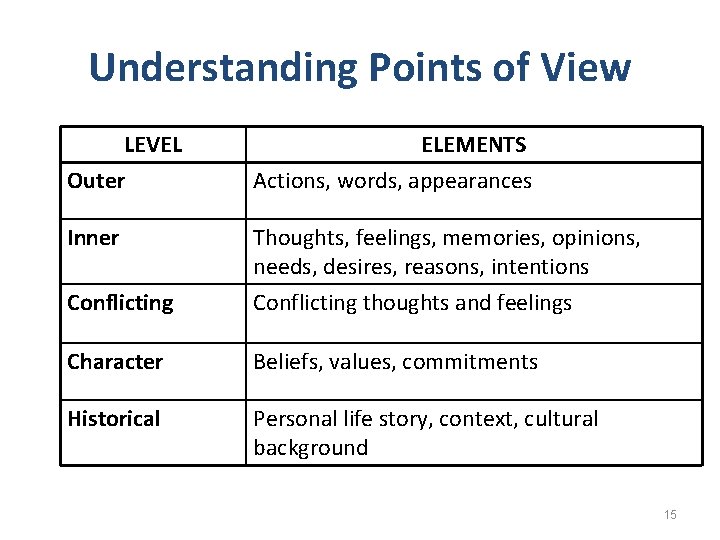
Understanding Points of View LEVEL ELEMENTS Outer Actions, words, appearances Inner Thoughts, feelings, memories, opinions, needs, desires, reasons, intentions Conflicting thoughts and feelings Character Beliefs, values, commitments Historical Personal life story, context, cultural background 15
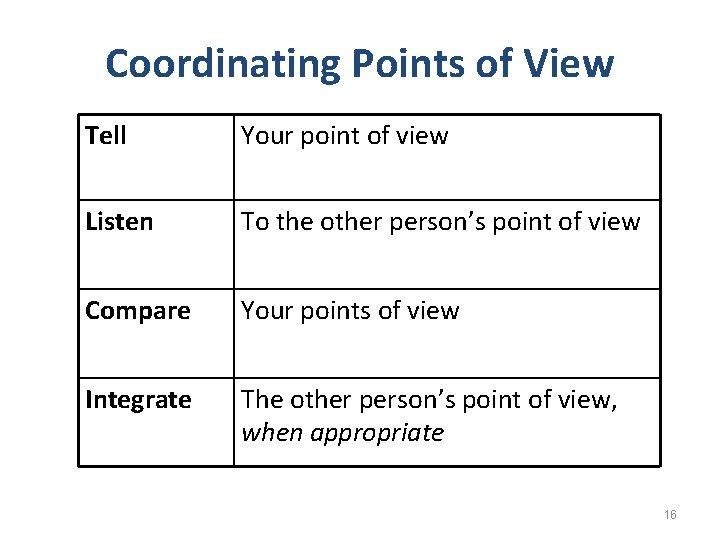
Coordinating Points of View Tell Your point of view Listen To the other person’s point of view Compare Your points of view Integrate The other person’s point of view, when appropriate 16
Perspective Taking Theme-Related Competencies In the Perspective Taking theme, the focus is on teaching the following perspective taking related emotional competencies: • Emotional Awareness • Sympathy and Empathy • Emotional Self-Management See “Intro to VLW: Ch. 4 Perspective Taking Related Emotional Skills” for a more in-depth explanation. 17
Emotional Awareness The ability of students to be aware of and understand their own and other’s feelings. 18
Sympathy and Empathy Sympathy is the ability to feel concern for others. Empathy is the ability to feel as the other person feels. 19
Emotional Self-Management The ability to manage the expression of emotions in relationships with others. 20
3. Perspective Taking Activities 21
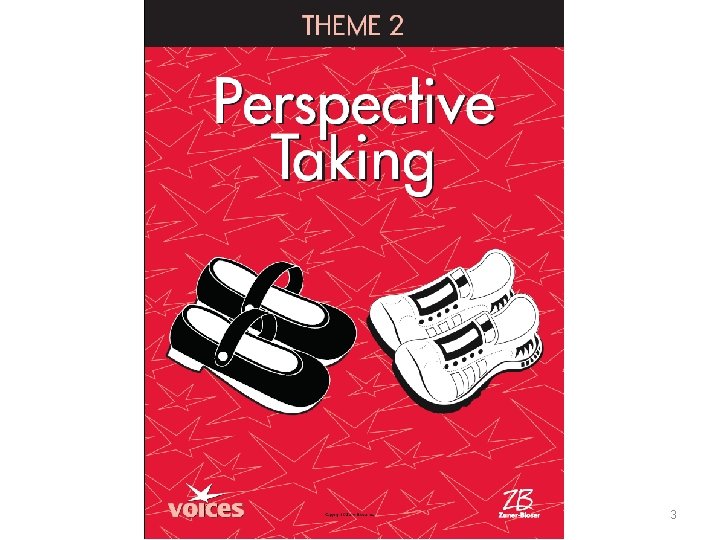
Perspective Taking Activities • • • Stand In the Shoes of the Characters Stand In My Shoes Stand In Your Shoes Stand In Our or Their Shoes In Past, Present, and Future Shoes Voices Core Activity #2: Stand in Your Partner’s Shoes 22
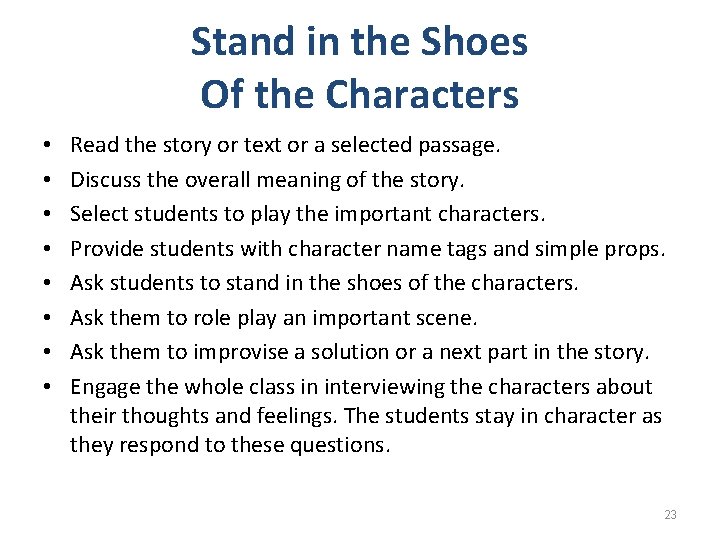
Stand in the Shoes Of the Characters • • Read the story or text or a selected passage. Discuss the overall meaning of the story. Select students to play the important characters. Provide students with character name tags and simple props. Ask students to stand in the shoes of the characters. Ask them to role play an important scene. Ask them to improvise a solution or a next part in the story. Engage the whole class in interviewing the characters about their thoughts and feelings. The students stay in character as they respond to these questions. 23
24
Video: In the Characters’ Shoes 6 th grade students at the Hernandez School in Boston stand in the shoes of the characters in the book Amazing Grace where the main character Grace is told by her classmates that she can’t be Peter Pan because she’s black and she’s a girl. Click here for video. 25
26
27
28
29
30
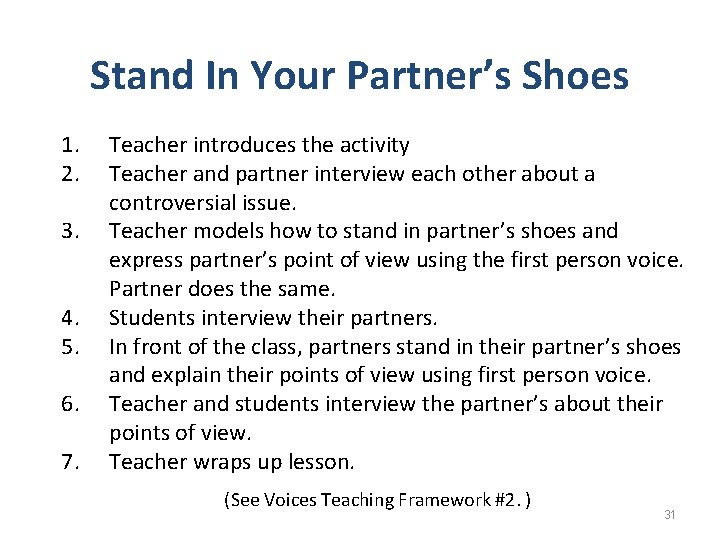
Stand In Your Partner’s Shoes 1. 2. 3. 4. 5. 6. 7. Teacher introduces the activity Teacher and partner interview each other about a controversial issue. Teacher models how to stand in partner’s shoes and express partner’s point of view using the first person voice. Partner does the same. Students interview their partners. In front of the class, partners stand in their partner’s shoes and explain their points of view using first person voice. Teacher and students interview the partner’s about their points of view. Teacher wraps up lesson. (See Voices Teaching Framework #2. ) 31
32
Video: Stand in Your Partner’s Shoes Kelmi, a 5 th grade student, stands in his teacher’s shoes, Ms. Granger. Harding Elementary Lebanon, PA Click here for video. 33
4. Modeling Voices Core Activity #2: Standing in Your Partner’s Shoes • Voices Coach and a partner model Voices Core Activity #2 for the group using an activity selected from the VLW curriculum. • Teachers select a partner and interview each other using the Voices Core Activity #2 from their grade level curriculum. See attached list of Voices Core Activity #2 for each grade. • Teacher partners stand in each other’s shoes in front of the class and express each other’s points of view. • The Voices Coach and the workshop participants interview the partners. 34
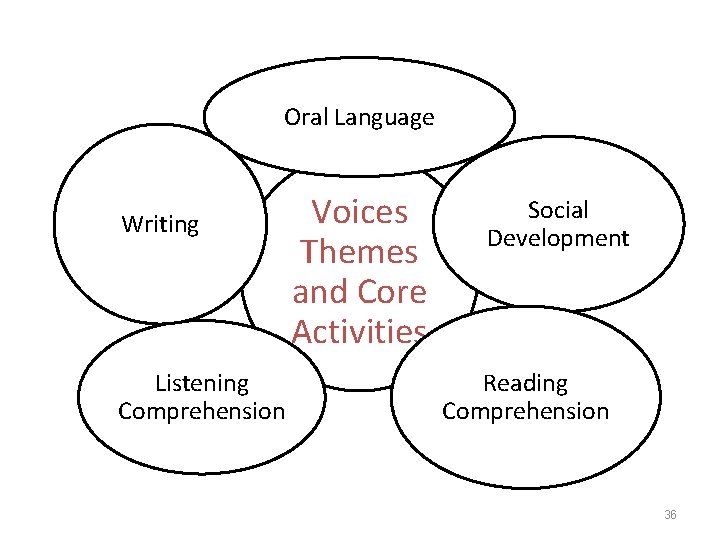
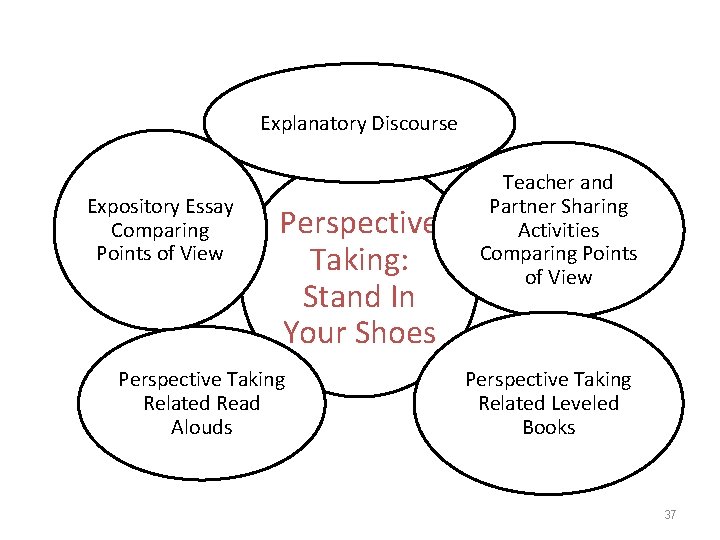
5. Integrated Perspective Taking, Language, and Literacy Instruction 35
Oral Language Writing Listening Comprehension Voices Themes and Core Activities Social Development Reading Comprehension 36
Explanatory Discourse Expository Essay Comparing Points of View Perspective Taking: Stand In Your Shoes Perspective Taking Related Read Alouds Teacher and Partner Sharing Activities Comparing Points of View Perspective Taking Related Leveled Books 37
6. PERSPECTIVE TAKING AND THE VOICES GOALS 38
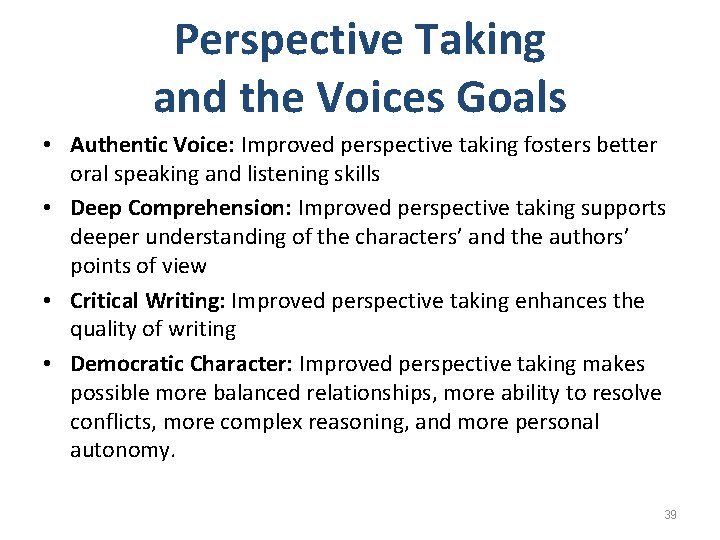
Perspective Taking and the Voices Goals • Authentic Voice: Improved perspective taking fosters better oral speaking and listening skills • Deep Comprehension: Improved perspective taking supports deeper understanding of the characters’ and the authors’ points of view • Critical Writing: Improved perspective taking enhances the quality of writing • Democratic Character: Improved perspective taking makes possible more balanced relationships, more ability to resolve conflicts, more complex reasoning, and more personal autonomy. 39
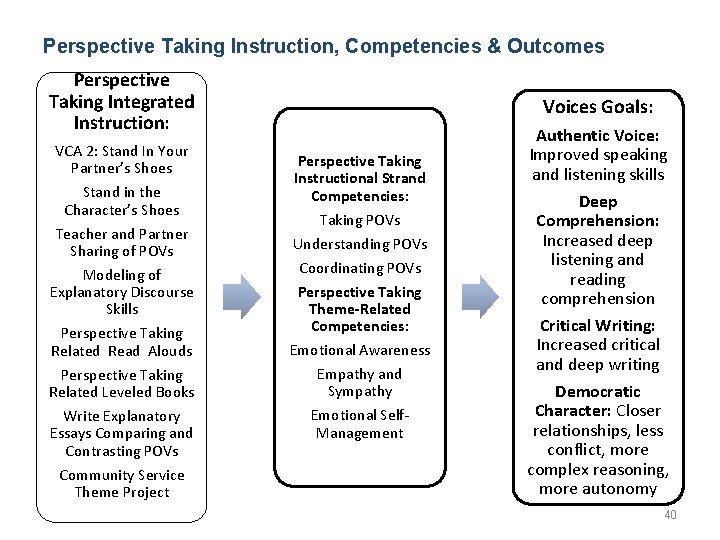
Perspective Taking Instruction, Competencies & Outcomes Perspective Taking Integrated Instruction: VCA 2: Stand In Your Partner’s Shoes Stand in the Character’s Shoes Teacher and Partner Sharing of POVs Modeling of Explanatory Discourse Skills Perspective Taking Related Read Alouds Perspective Taking Related Leveled Books Write Explanatory Essays Comparing and Contrasting POVs Community Service Theme Project Voices Goals: Perspective Taking Instructional Strand Competencies: Taking POVs Understanding POVs Coordinating POVs Perspective Taking Theme-Related Competencies: Emotional Awareness Empathy and Sympathy Emotional Self. Management Authentic Voice: Improved speaking and listening skills Deep Comprehension: Increased deep listening and reading comprehension Critical Writing: Increased critical and deep writing Democratic Character: Closer relationships, less conflict, more complex reasoning, more autonomy 40
7. PERSPECTIVE TAKING AND THE CCSS 41
Perspective Taking and the CCSS for Listening and Speaking • SL 1: Engage in collaborative discussions: Partner interview and Stand in Your Partner’s Shoes provides for close collaboration with partner which culminates in presentation to an discussion with the class. • SL 2: Summarize a text: Students summarize story or texts in Check Comprehension and evaluate it in Deepen Comprehension as they express their POVs about it. • SL 3: Summarize speaker’s points: Students summarize partner’s POVs from interviews when they practice standing in their shoes. 42
Perspective Taking: CCSS for Listening and Speaking Cont’d • SL 4: Report on a topic: Students orally compare and contrast POVs before writing Explanatory Compare and Contrast Essay. Students also engage in Community Service Theme Project and orally report about it in the Theme Wrap Up. • SL 5: Use multi-media to enhance presentation: Students present the results of their Community Service Projects using multi-media supports. • SL 6: Adapt speech to a variety of contexts: Students learn to adapt their speech to the various characters whose shoes they stand in including the use of various dialects. 43
Perspective Taking and the CCSS for Reading • RS 1: Close Reading (including Close Listening): Students use Deepen Comprehension questions to analyze text passages to determine the points of view of the characters and the author as well as their own. • RS 2: Central Ideas and Themes: Perspective taking provides coherent theme and central idea for listening and reading • RS 3: Development of Characters: Perspective taking provides focus for understanding development of characters over time (temporal perspective taking). • RS 4: Words and Phrases: Students learn the words and phrases of their partners through interviewing them and then analyze similar words and phrases as they shape the point of view of the characters. 44
Perspective Taking and the CCSS for Reading Cont’d • RS 5: Text Structure: Students use main idea and details graphic organizer to analyze the most important points of view in theme-related stories and texts. • RS 6: Points of View: Students use perspective taking skills to analyze the points of view of the characters and authors. • RS 7: Evaluate Content: Students evaluate the text, the pictures in the text, and the background video to interpret the points of view in the stories and texts. • RS 8: Reasons and Evidence: Students provide text references and research to support their interpretations of the points of view of the characters and the authors. 45
Perspective Taking and the CCSS for Reading Cont’d • RS 9: Compare and Contrast: Students use perspective taking skills to compare and contrast character, author, and student points of view. • RS 10: Text Complexity: This theme provides 3 -5 sophisticated on grade level read alouds texts that highlight contrasting points of view and 8 -12 theme-related leveled books that provide challenging text for all students. 46
Perspective Taking and the CCSS for Writing • WS 3: Informative/Explanatory Writing: Cumulative writing project is an explanatory essay that compares and contrast the student’s POV with his or her partner’s. Builds on Voices Core Activity #2. • WS 4: Writing for a Purpose: Perspective taking provides the ability to take other person’s points of view as a purpose for writing. • WS 5: Planning, Editing, and Rewriting: Voices provides 3 -4 one week writing projects (planning and writing) and then one 2 -3 week writing project which includes all phases of the writing process. 47
Perspective Taking and the CCSS for Writing Cont’d • WS 8: Draw Relevant Information from Experience: Student draw on their own experience and on their partner interviews for relevant information for their essays. • WS 9: Draw Evidence from Sources: Students also draw on and cite references from theme-related books they are reading. 48
8. DEVELOP PERSPECTIVE TAKING THEME IMPLEMENTATION PLANS 49
Theme 2 Implementation Questions 1. Begin and end dates for theme? 2. How can you make this theme relevant to your students? 3. How will you introduce theme? 50
Theme Implementation Questions Cont’d 4. 5. 6. 7. How will you prepare students for Voices Core Activity #2? Which activity will you model? How will you use theme posters that come with the TE (central question)? Other displays? The Voices Theme Posters. How can you integrate this theme into existing school wide activities? How can you integrate this theme into your social studies lessons? 51
Theme Implementation Questions Cont’d 8. What display will there be at the entrance of the school entrance introducing Voices and the Perspective Taking Theme? 9. How can you educate parents about theme? 10. How can you engage parents in support of theme, in particular Voices Core Activity #2: Stand in Your Partner’s Shoes? 11. Be sure to review the Community Service Theme Project.
Share Implementation Plans • Select one person from your group to take notes and present the highlights of your plan to the group. • Give your plans to the principal when the workshop is over. 53