
INTRODUCTION TO CAREER GUIDANCE WORKSHOP II Presentation at





- Slides: 28
INTRODUCTION TO CAREER GUIDANCE – WORKSHOP II Presentation at Ain Shams University Cairo, Egypt 28 th November 2017 Tristram Hooley
OVERVIEW In this session we are going to look at practicalities of career guidance. We will look at career counselling interviews Building school based programmes And at working with young people with special educational needs
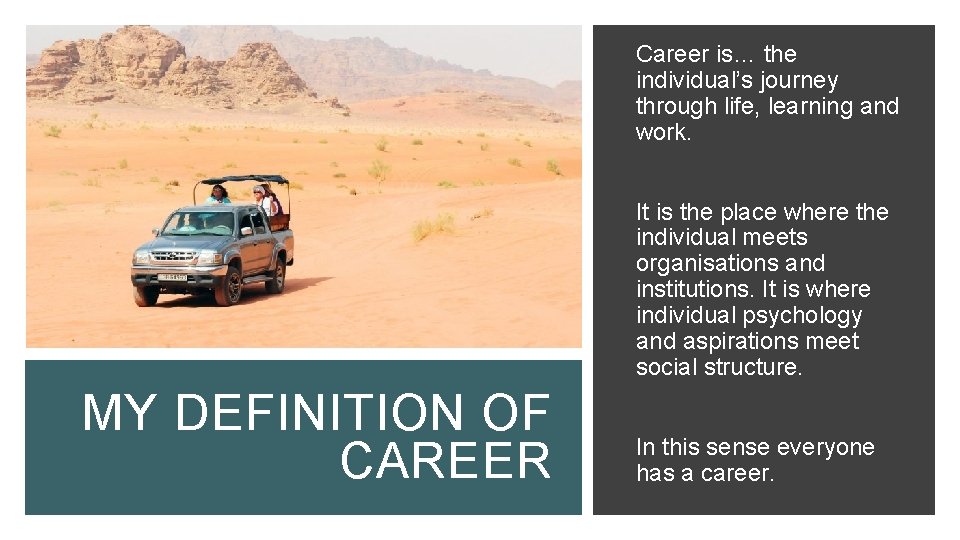
Career is… the individual’s journey through life, learning and work. It is the place where the individual meets organisations and institutions. It is where individual psychology and aspirations meet social structure. MY DEFINITION OF CAREER In this sense everyone has a career.
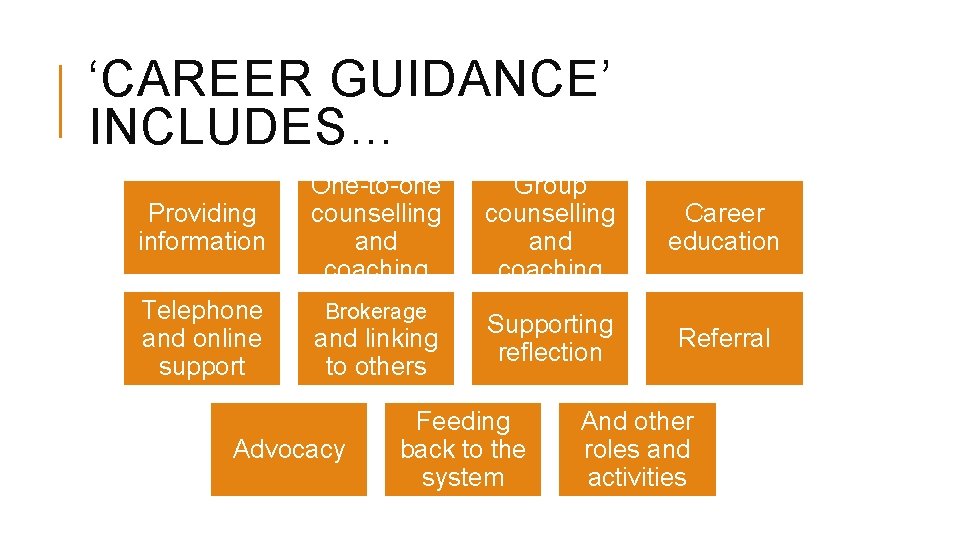
‘CAREER GUIDANCE’ INCLUDES… Providing information Telephone and online support One-to-one counselling and coaching Brokerage and linking to others Advocacy Group counselling and coaching Career education Supporting reflection Referral Feeding back to the system And other roles and activities
ONE-TO-ONE – THE CAREER COUNSELLING INTERVIEW
THE IMPORTANCE OF NARRATIVE AND STORIES
LIFE DESIGN People use stories to organize their lives, construct their identities, and make sense of their problems. Clients enter counseling with a story to tell about some transition. The stories people tell have a way of taking care of them. By holding those stories in the relationship, counselors enable clients to reflect on their lives. Dwelling in their own stories often destabilizes old ideas that block decision making and usually enables an awareness that prompts a choice. As clients give voice to their stories, they hear what they already know and find the answers which they seek. Mark Savickas
WHAT DO YOU DO? Help people to find and control their narrative. Are they telling you the same old story – how can you help them to a new story untold story – how can you help them to tell the missing part of their story unstoryed emotions – what is making them feel they way they feel transitional story – how can you help them to turn the transition into the story that they want empty story – how can you help them to connect to their story competing plots – how can you help them to focus on the story they want to tell
SAVICKAS STYLE INTERVIEW How can I be useful to you in constructing your career? Whom did you admire when your were growing up? List three role models. What magazines do you read regularly? What do you like about them? What TV shows do you like? And why? Tell me about your favourite book or movie. What do you do with your free time? Do you have a favourite saying or motto? What were your favourite and least favourite subjects in school and why?
A SOCIAL JUSTICE APPROACH TO CAREER COUNSELLING
CAREER GUIDANCE IS POLITICAL Careers education and guidance is a profoundly political process. It operates at the interface between the individual and society, between self and opportunity, between aspiration and realism. It facilitates the allocation of life chances. Within a society in which such life chances are unequally distributed, it faces the issue of whether it serves to reinforce such inequalities or to reduce them. Tony Watts
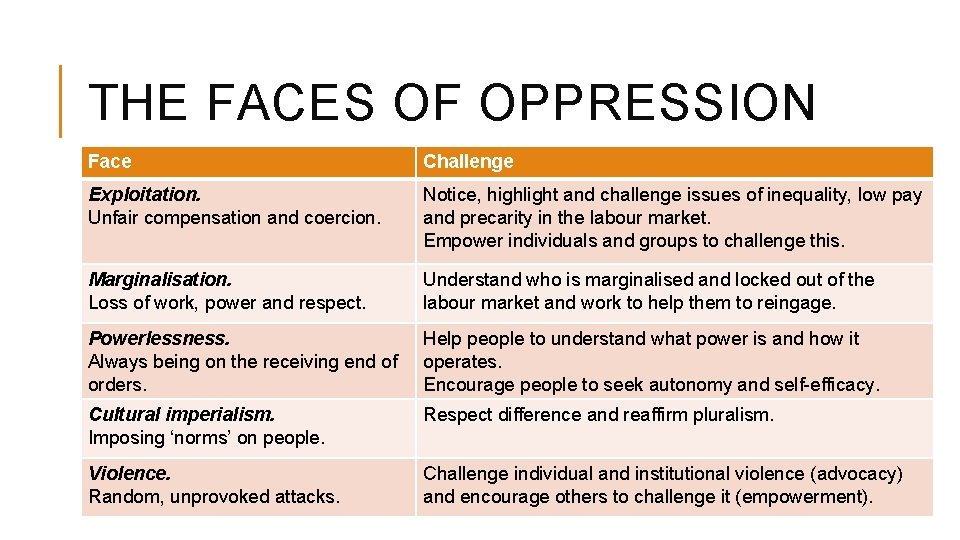
THE FACES OF OPPRESSION Face Challenge Exploitation. Unfair compensation and coercion. Notice, highlight and challenge issues of inequality, low pay and precarity in the labour market. Empower individuals and groups to challenge this. Marginalisation. Loss of work, power and respect. Understand who is marginalised and locked out of the labour market and work to help them to reingage. Powerlessness. Always being on the receiving end of orders. Help people to understand what power is and how it operates. Encourage people to seek autonomy and self-efficacy. Cultural imperialism. Imposing ‘norms’ on people. Respect difference and reaffirm pluralism. Violence. Random, unprovoked attacks. Challenge individual and institutional violence (advocacy) and encourage others to challenge it (empowerment).
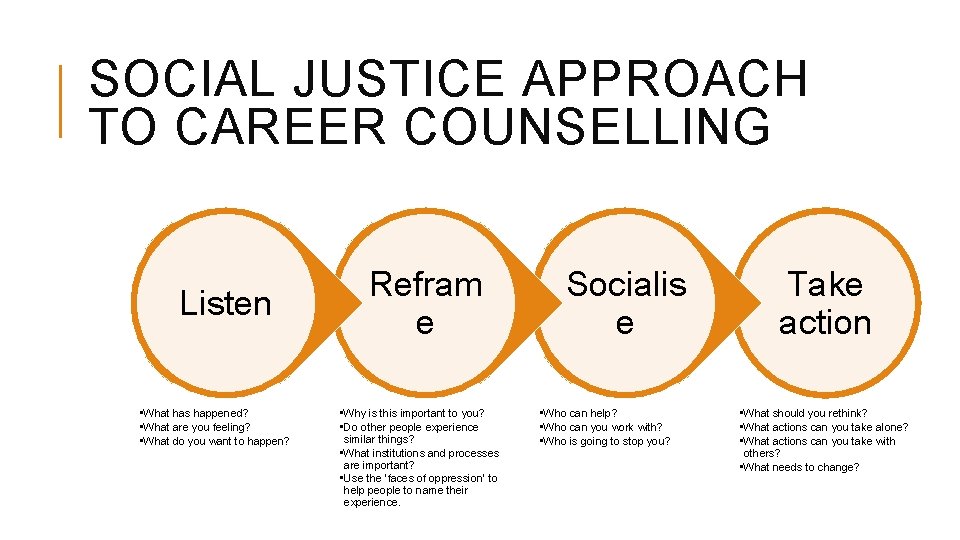
SOCIAL JUSTICE APPROACH TO CAREER COUNSELLING Listen • What has happened? • What are you feeling? • What do you want to happen? Refram e • Why is this important to you? • Do other people experience similar things? • What institutions and processes are important? • Use the ‘faces of oppression’ to help people to name their experience. Socialis e • Who can help? • Who can you work with? • Who is going to stop you? Take action • What should you rethink? • What actions can you take alone? • What actions can you take with others? • What needs to change?
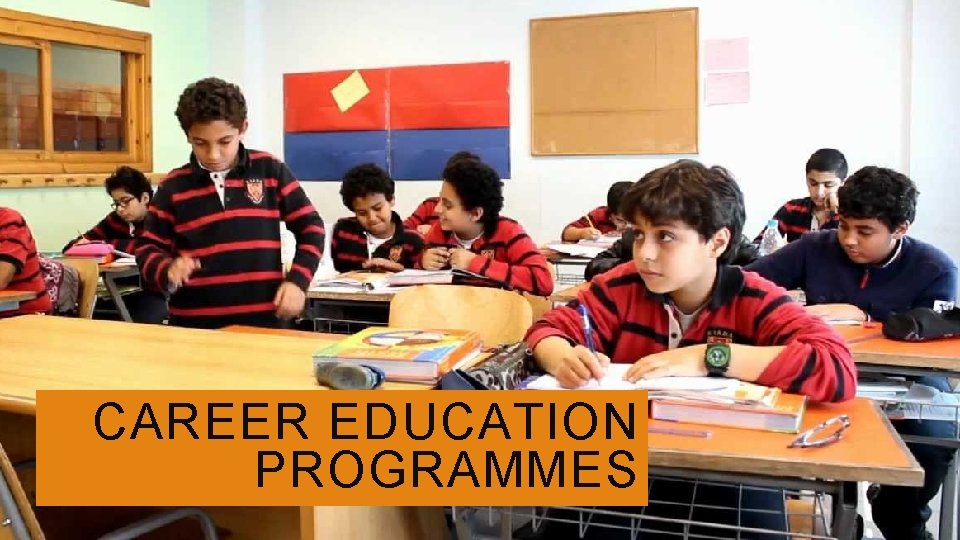
CAREER EDUCATION PROGRAMMES
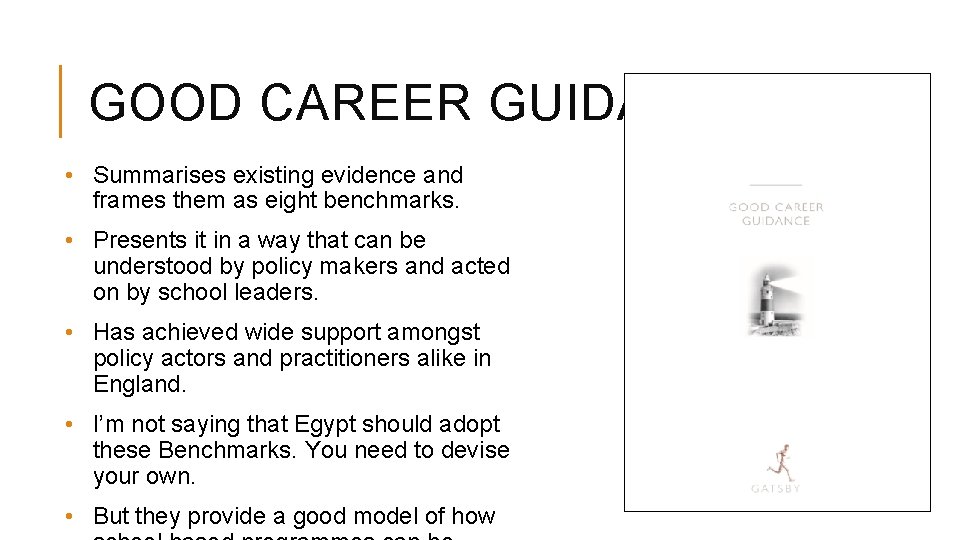
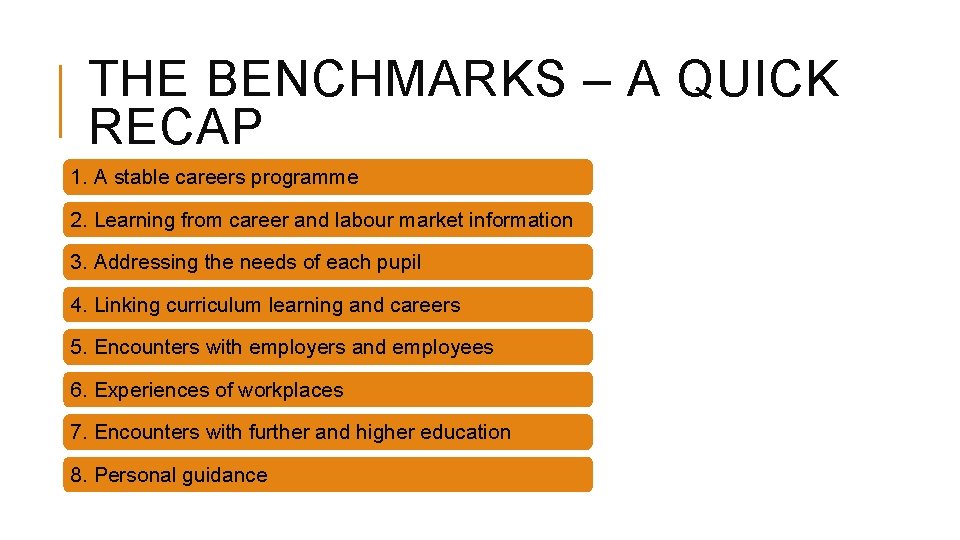
GOOD CAREER GUIDANCE • Summarises existing evidence and frames them as eight benchmarks. • Presents it in a way that can be understood by policy makers and acted on by school leaders. • Has achieved wide support amongst policy actors and practitioners alike in England. • I’m not saying that Egypt should adopt these Benchmarks. You need to devise your own. • But they provide a good model of how
THE BENCHMARKS – A QUICK RECAP 1. A stable careers programme 2. Learning from career and labour market information 3. Addressing the needs of each pupil 4. Linking curriculum learning and careers 5. Encounters with employers and employees 6. Experiences of workplaces 7. Encounters with further and higher education 8. Personal guidance
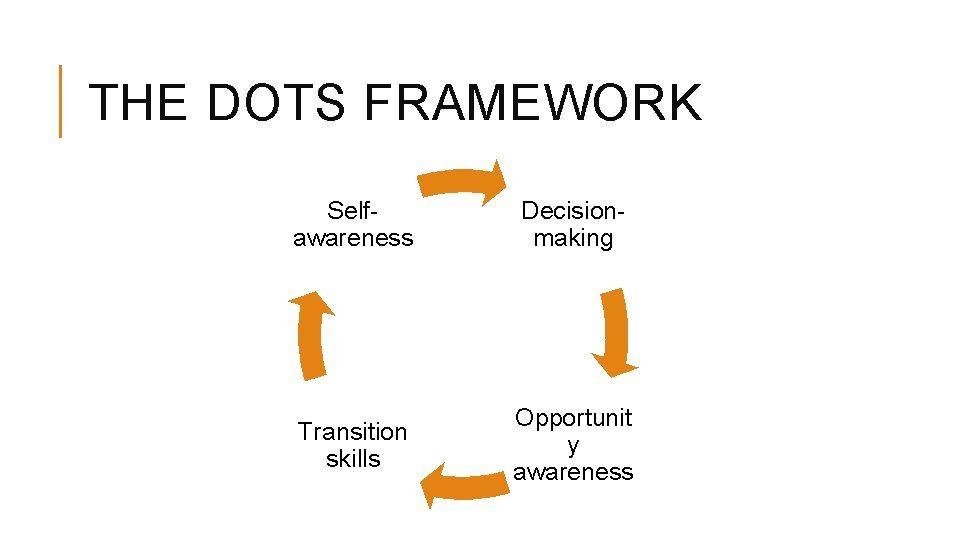
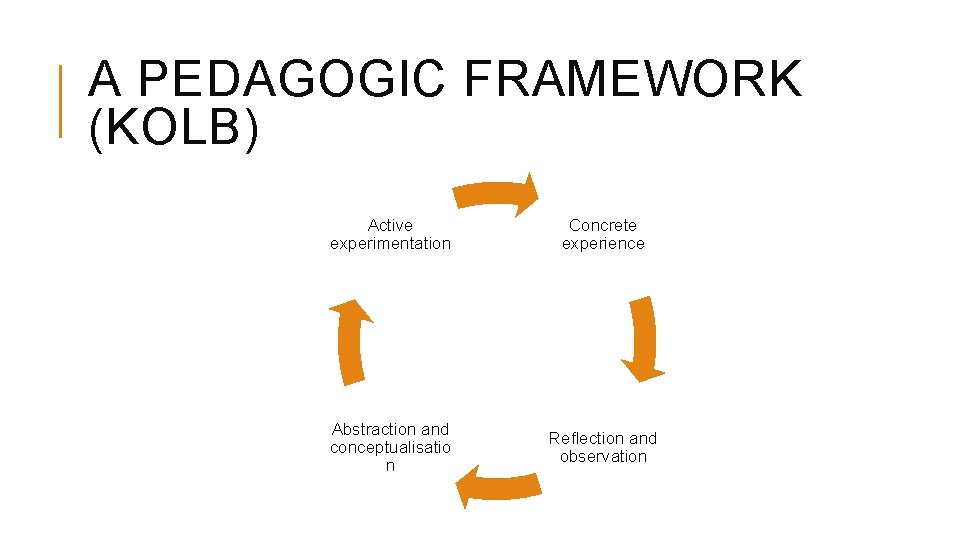
CMS FRAMEWORKS
THE DOTS FRAMEWORK Selfawareness Decisionmaking Transition skills Opportunit y awareness
A PEDAGOGIC FRAMEWORK (KOLB) Active experimentation Concrete experience Abstraction and conceptualisatio n Reflection and observation
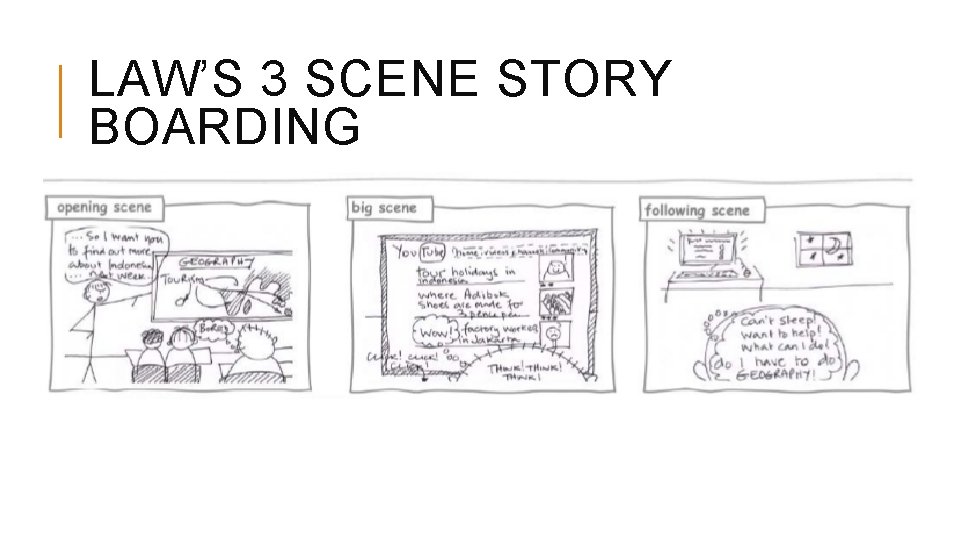
LAW’S 3 SCENE STORY BOARDING
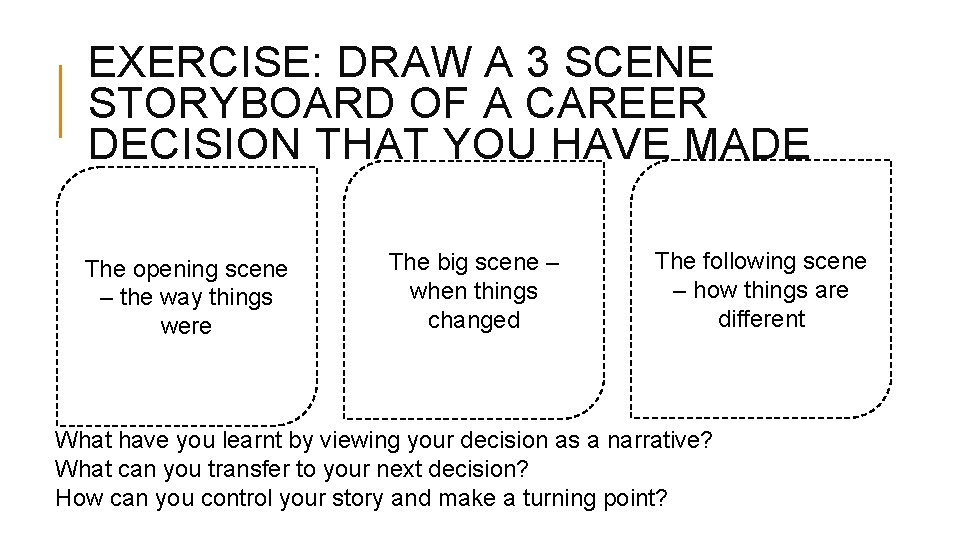
EXERCISE: DRAW A 3 SCENE STORYBOARD OF A CAREER DECISION THAT YOU HAVE MADE The opening scene – the way things were The big scene – when things changed The following scene – how things are different What have you learnt by viewing your decision as a narrative? What can you transfer to your next decision? How can you control your story and make a turning point?
YOUNG PEOPLE WITH SEND (UK DEFINITIONS) • A child or young person has Special Educational Needs (SEN) if they have a learning difficulty or disability which calls for special educational provision to be made for him or her. • Young people described as having special educational needs and disabilities (SEND) face unique challenges in transitioning from school to further learning and the workplace.
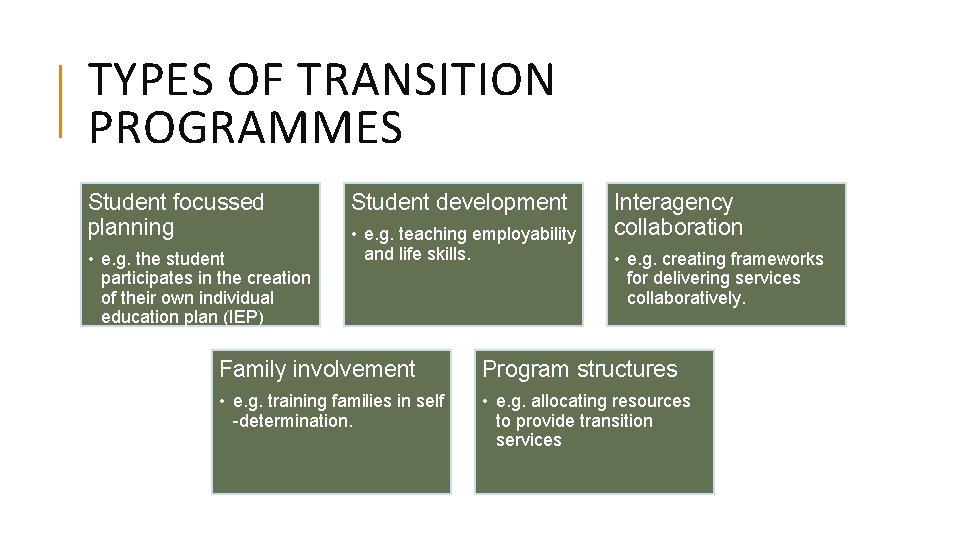
TYPES OF TRANSITION PROGRAMMES Student focussed planning • e. g. the student participates in the creation of their own individual education plan (IEP) Student development • e. g. teaching employability and life skills. Interagency collaboration • e. g. creating frameworks for delivering services collaboratively. Family involvement Program structures • e. g. training families in self -determination. • e. g. allocating resources to provide transition services
LESSONS FOR PRACTICE • Start young and maintain support across the life course/until the young person is established in the labour market • Ensure access to support (this should include career guidance, teacher support, agency support) • Involve families in the transition • Provide encounters and experience with employers, working people and workplaces • Ensure that career and employability learning and support continues in the workplace
REFERENCES Gatsby Charitable Foundation. (2014). Good Career Guidance. London: Gatsby Charitable Foundation. Hanson, J. , Codina, G. and Neary, S. (2017). Transition Programmes for Young Adults with SEND. London: The Careers & Enterprise Company. Hooley, T. (2015). Emancipate Yourselves from Mental Slavery: Self-Actualisation, Social Justice and the Politics of Career Guidance. Derby: International Centre for Guidance Studies, University of Derby. Hooley, T. and Sultana, R. (2016). Career guidance for social justice. Journal of the National Institute for Career Education and Counselling, 36, 2 -11. Kolb, D. A. (1984). Experiential Learning: Experience as the Source of Learning and Development. New Jersey: Prentice-Hall. Law, B. (2012). The uses of narrative: Three scene storyboarding – learning for living, http: //www. hiho. com/storyboarding/sb. L 4 L. pdf. Law, B. and Watts, A. G. (2015). Career education. In Hooley, T and Barham, L. Career Development in Policy and Practice: The Tony Watts Reader. Stafford: Reid, H. , & West, L. (2014). Telling Tales: Do Narrative Approaches for Career Counseling Count? . In Handbook of career development (pp. 413 -430). Springer New York. Savickas, M. L. (2015). Life Design Counseling Manual. Available at http: //vocopher. com/Life. Design. pdf [Accessed 11 th January 2017]
CONCLUSIONS Career guidance is a multi-modal activity. There are lots of things that you can do and lots of ways that you can do them. The key thing is to think about the needs of the client and to design career learning that can meet those needs.
TRISTRAM HOOLEY Director of Research, The Careers & Enterprise Company/ Professor of Career Education, University of Derby/ Professor II, Inland Norway University of Applied Science thooley@careersandenterprise. co. uk @pigironjoe Blog at http: //adventuresincareerdevelopment. wordpress. com