
Chapter 13 Building Careers and Writing Resumes 13
Chapter 13 Building Careers and Writing Resumes 13 -1
Learning Objectives After studying this chapter, you will be able to: • List some key steps to finding the ideal opportunity in today’s job market • Explain the process of planning your resume, including how to choose the best resume organization • Describe the tasks involved in writing your resume and list the sections to consider including in your resume • Name some of the mistakes you can make in your job search, and learn to avoid them. 13 -2
Writing the Story of You • Are you in college for a particular field? • What are you passionate about? • Think in terms of an image or theme you’d like to project 13 -3

Learning to Think Like an Employer 13 -4
Researching Industries and Companies of Interest “Detailed research, including talking to our customers, is so rare it will almost guarantee you get hired. ” ~ Recruiting Manager Alcon Laboratories 13 -5

Taking the Initiative to Find Opportunities 13 -6
Building Your Network • Use online or in-person career counseling • Utilize your school’s office of career services Seeking Career Counseling • Go to alumni functions • Join professional associations • Get active in organizations, such as the alumni association 13 -7
Avoiding Mistakes • Showing up late for an interview • Posting or tweeting something unprofessional • Failing to complete application forms correctly • Asking for information you can find yourself • Misspelling the name of a manager you’re writing to • Making mistakes on your resume or cover letter – such as grammatical and typographical errors, or having poor or inconsistent formatting on your resume 13 -8
Analyzing Your Purpose and Audience A resume is a brief, persuasive business message intended to stimulate an employer’s interest in meeting you and learning more about you. The purpose of a resume is not to get you a job, but rather to get you an interview. 13 -9
Gathering Pertinent Information JOBS Specific dates, companies, duties and accomplishments – especially internships EDUCATION Formal degrees, training certificates, academic awards and scholarships SKILLS Website management, software, fundraising, event management ACTIVITIES Sports team (especially leadership), Scouts, Greek Life, college clubs, college service 13 -10
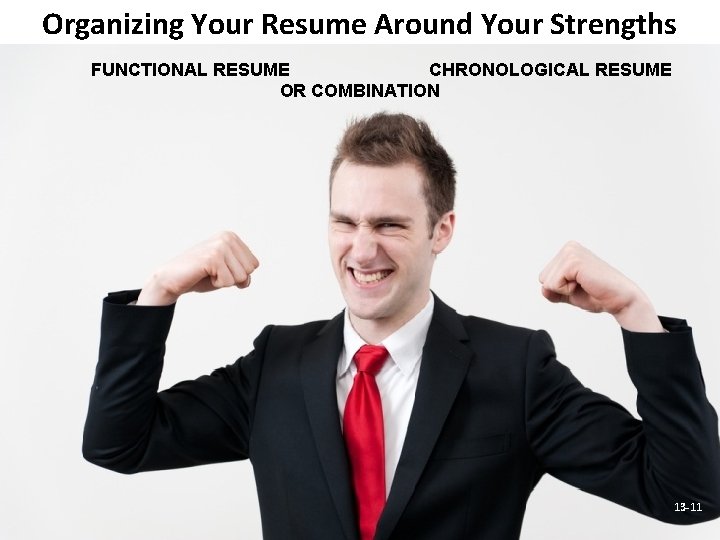
Organizing Your Resume Around Your Strengths FUNCTIONAL RESUME CHRONOLOGICAL RESUME OR COMBINATION 13 -11

Addressing Areas of Concern • • • Frequent job changes Gaps in work history Inexperience Overqualification Job termination for cause 13 -12
Keeping Your Resume Honest Adapting Your Resume to Your Audience 13 -13
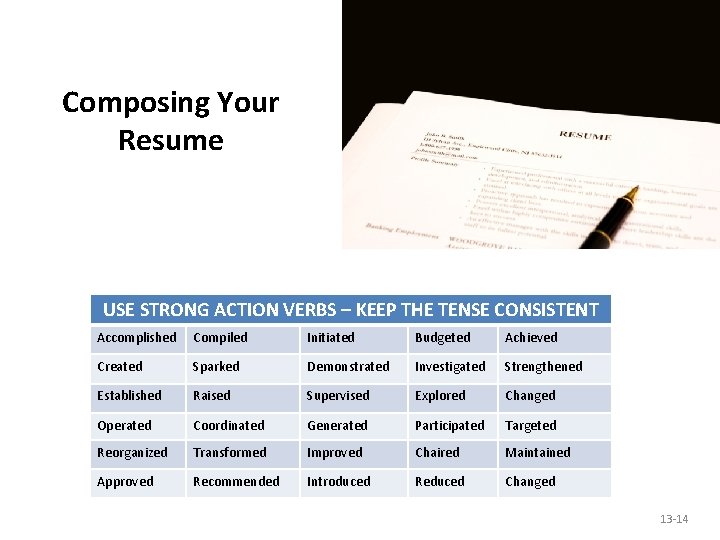
Composing Your Resume USE STRONG ACTION VERBS – KEEP THE TENSE CONSISTENT Accomplished Compiled Initiated Budgeted Achieved Created Sparked Demonstrated Investigated Strengthened Established Raised Supervised Explored Changed Operated Coordinated Generated Participated Targeted Reorganized Transformed Improved Chaired Maintained Approved Recommended Introduced Reduced Changed 13 -14
Revising Your Resume We’ll be doing an employment package in this class. 13 -15

Proofreading Your Resume 13 -16
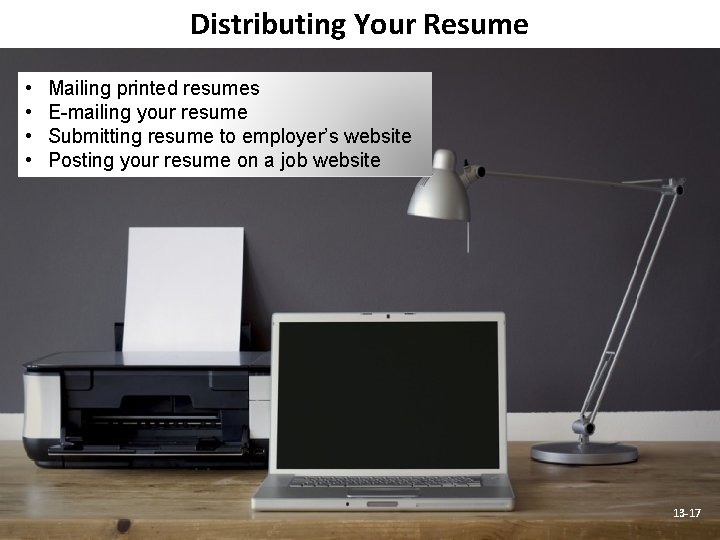
Distributing Your Resume • • Mailing printed resumes E-mailing your resume Submitting resume to employer’s website Posting your resume on a job website 13 -17
Learning Objectives: Check Your Progress • List some key steps to finding the ideal opportunity in today’s job market. • Explain the process of planning your resume, including how to choose the best resume organization. • Describe the tasks involved in writing your resume and list the sections to consider including in your resume. • Name some of the mistakes you can make in your job search, and learn to avoid them 13 -18
- Slides: 18