Vermicompost Use In Greenhouse Production Nutrient Management And
- Slides: 41
Vermicompost Use In Greenhouse Production: Nutrient Management And Disease Suppression Allison L H Jack Dr. Eric B. Nelson’s Laboratory Group Long Island Ag Forum 1 -14 -10
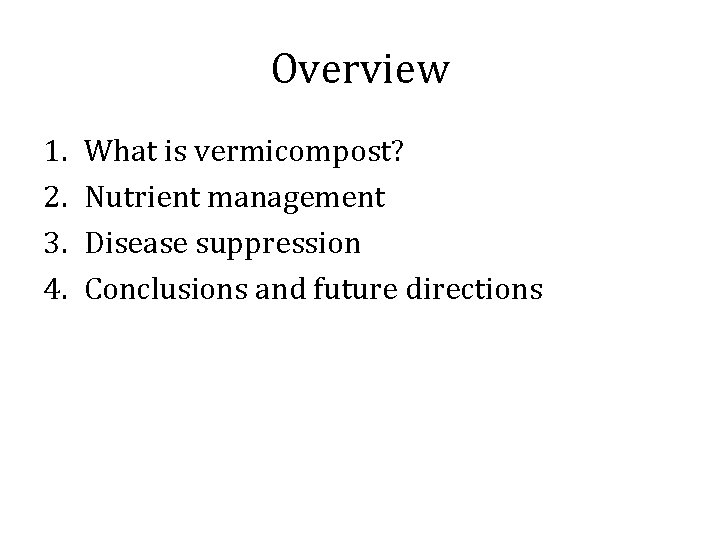
Overview 1. 2. 3. 4. What is vermicompost? Nutrient management Disease suppression Conclusions and future directions
1. What is vermicompost?
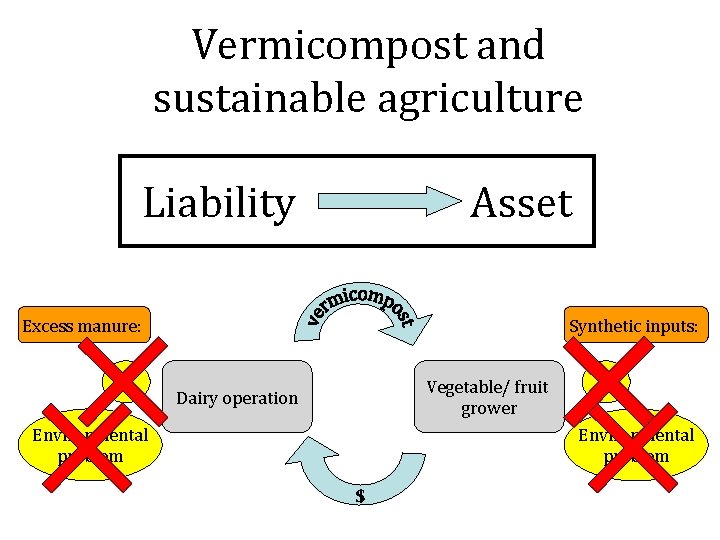
Vermicompost and sustainable agriculture Liability Asset Excess manure: $ Synthetic inputs: Vegetable/ fruit grower Dairy operation Environmental problem $
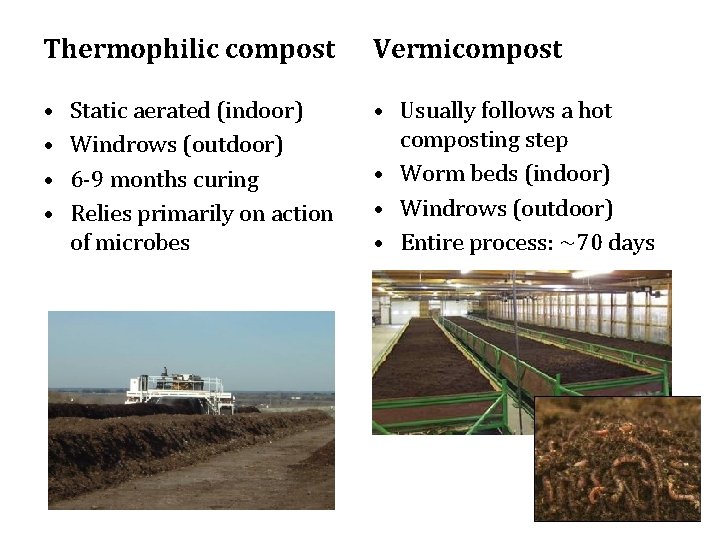
Thermophilic compost Vermicompost • • • Usually follows a hot composting step • Worm beds (indoor) • Windrows (outdoor) • Entire process: ~70 days Static aerated (indoor) Windrows (outdoor) 6 -9 months curing Relies primarily on action of microbes
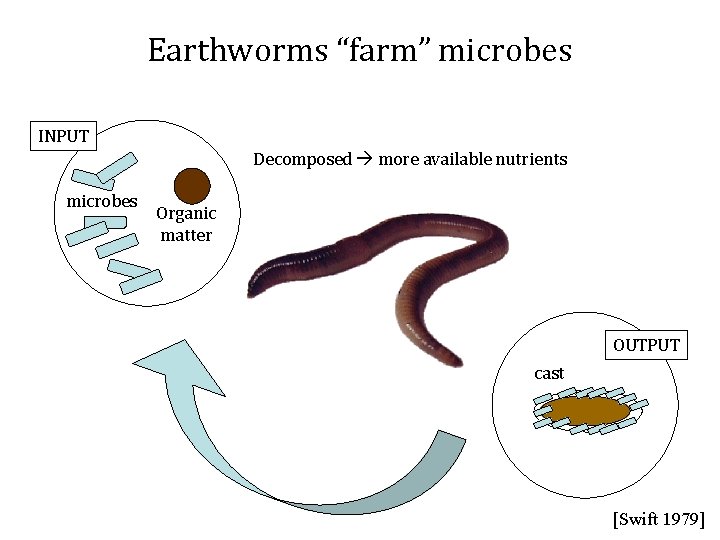
Earthworms “farm” microbes INPUT Decomposed more available nutrients microbes Organic matter OUTPUT cast [Swift 1979]
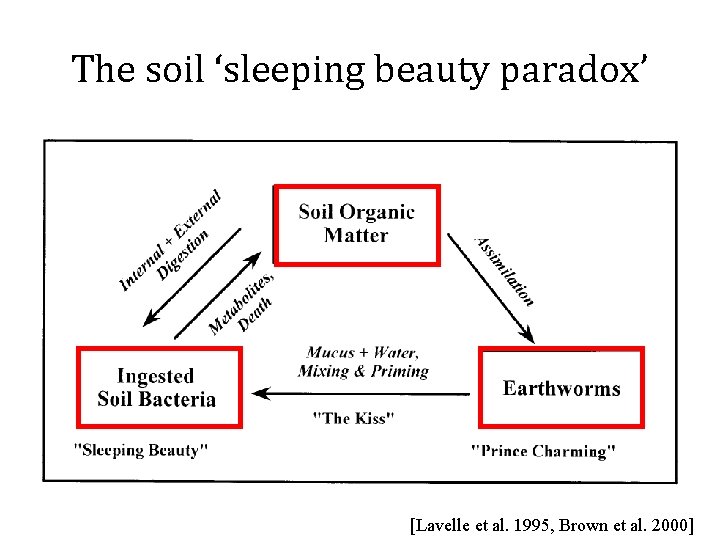
The soil ‘sleeping beauty paradox’ [Lavelle et al. 1995, Brown et al. 2000]
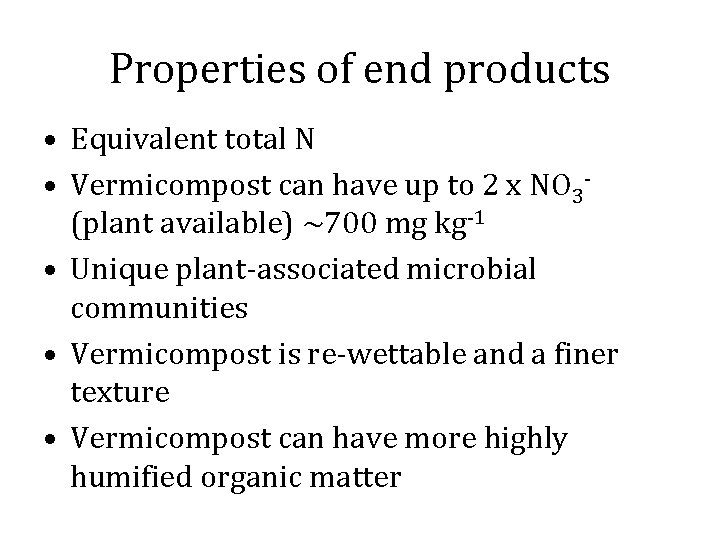
Properties of end products • Equivalent total N • Vermicompost can have up to 2 x NO 3(plant available) ~700 mg kg-1 • Unique plant-associated microbial communities • Vermicompost is re-wettable and a finer texture • Vermicompost can have more highly humified organic matter
2. Nutrient management
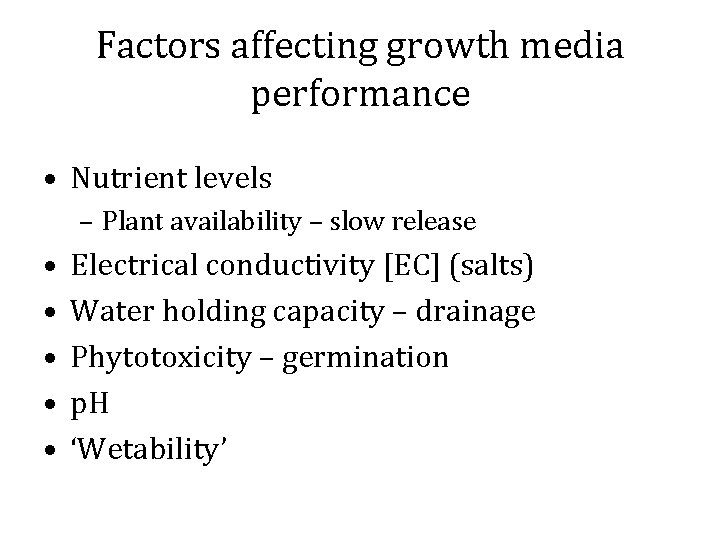
Factors affecting growth media performance • Nutrient levels – Plant availability – slow release • • • Electrical conductivity [EC] (salts) Water holding capacity – drainage Phytotoxicity – germination p. H ‘Wetability’
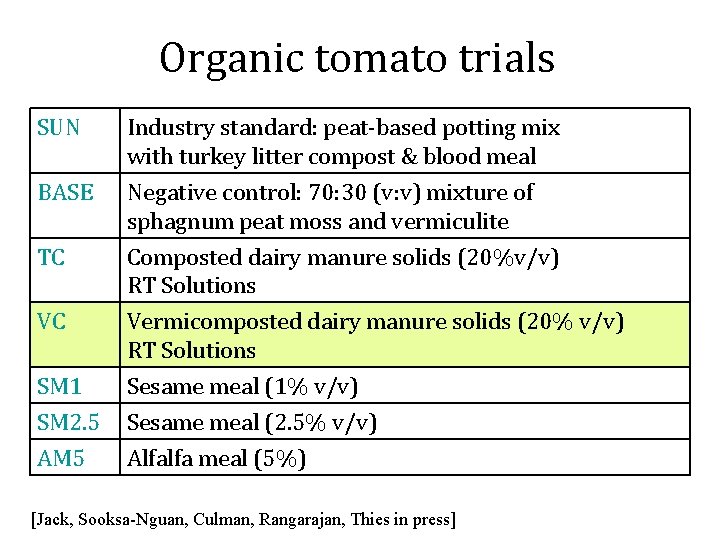
Organic tomato trials SUN BASE TC VC SM 1 SM 2. 5 AM 5 Industry standard: peat-based potting mix with turkey litter compost & blood meal Negative control: 70: 30 (v: v) mixture of sphagnum peat moss and vermiculite Composted dairy manure solids (20%v/v) RT Solutions Vermicomposted dairy manure solids (20% v/v) RT Solutions Sesame meal (1% v/v) Sesame meal (2. 5% v/v) Alfalfa meal (5%) [Jack, Sooksa-Nguan, Culman, Rangarajan, Thies in press]
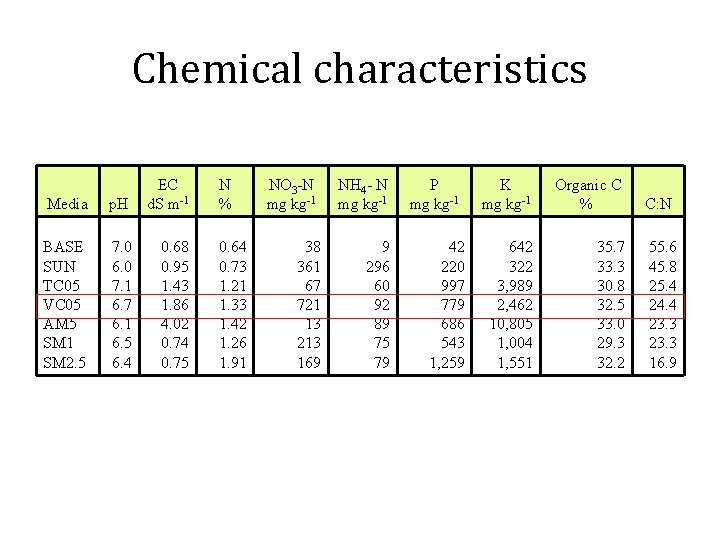
Chemical characteristics Media p. H EC d. S m-1 BASE SUN TC 05 VC 05 AM 5 SM 1 SM 2. 5 7. 0 6. 0 7. 1 6. 7 6. 1 6. 5 6. 4 0. 68 0. 95 1. 43 1. 86 4. 02 0. 74 0. 75 N % 0. 64 0. 73 1. 21 1. 33 1. 42 1. 26 1. 91 NO 3 -N mg kg-1 NH 4 - N mg kg-1 38 361 67 721 13 213 169 9 296 60 92 89 75 79 P mg kg-1 42 220 997 779 686 543 1, 259 K mg kg-1 Organic C % C: N 642 322 3, 989 2, 462 10, 805 1, 004 1, 551 35. 7 33. 3 30. 8 32. 5 33. 0 29. 3 32. 2 55. 6 45. 8 25. 4 24. 4 23. 3 16. 9
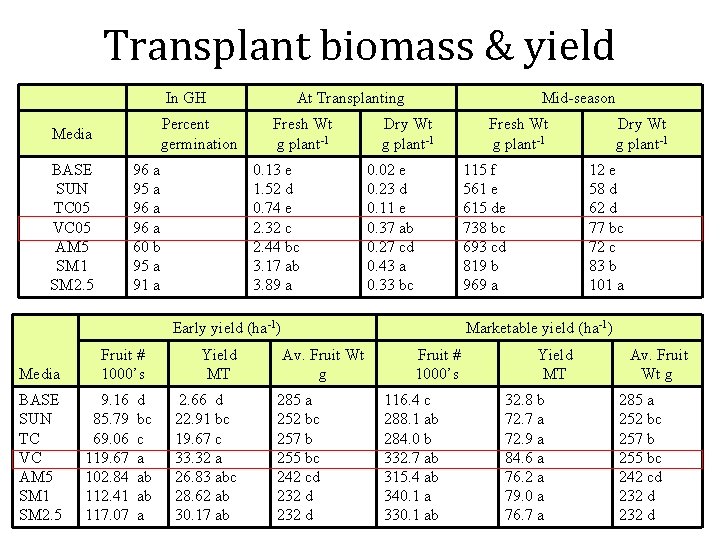
Transplant biomass & yield In GH Percent germination Media BASE SUN TC 05 VC 05 AM 5 SM 1 SM 2. 5 96 a 95 a 96 a 60 b 95 a 91 a At Transplanting Fresh Wt g plant-1 0. 13 e 1. 52 d 0. 74 e 2. 32 c 2. 44 bc 3. 17 ab 3. 89 a Mid-season Dry Wt g plant-1 0. 02 e 0. 23 d 0. 11 e 0. 37 ab 0. 27 cd 0. 43 a 0. 33 bc Early yield (ha-1) Media Fruit # 1000’s BASE SUN TC VC AM 5 SM 1 SM 2. 5 9. 16 d 85. 79 bc 69. 06 c 119. 67 a 102. 84 ab 112. 41 ab 117. 07 a Yield MT 2. 66 d 22. 91 bc 19. 67 c 33. 32 a 26. 83 abc 28. 62 ab 30. 17 ab Fresh Wt g plant-1 115 f 561 e 615 de 738 bc 693 cd 819 b 969 a Dry Wt g plant-1 12 e 58 d 62 d 77 bc 72 c 83 b 101 a Marketable yield (ha-1) Av. Fruit Wt g 285 a 252 bc 257 b 255 bc 242 cd 232 d Fruit # 1000’s 116. 4 c 288. 1 ab 284. 0 b 332. 7 ab 315. 4 ab 340. 1 a 330. 1 ab Yield MT 32. 8 b 72. 7 a 72. 9 a 84. 6 a 76. 2 a 79. 0 a 76. 7 a Av. Fruit Wt g 285 a 252 bc 257 b 255 bc 242 cd 232 d
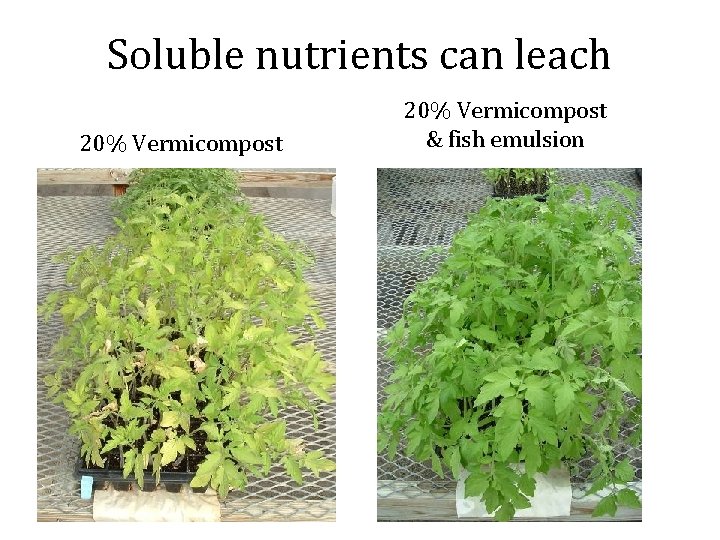
Soluble nutrients can leach 20% Vermicompost & fish emulsion
Mixtures of amendments • Out of 21 media tested, hog and dairy manure vermicomposts at 20% with a mixture of blood meal, green sand rock phosphate performed the best with tomato [Leonard & Rangarajan 2007] • May make nutrients in synthetic fertilizers more plant available [Mattson in progress]
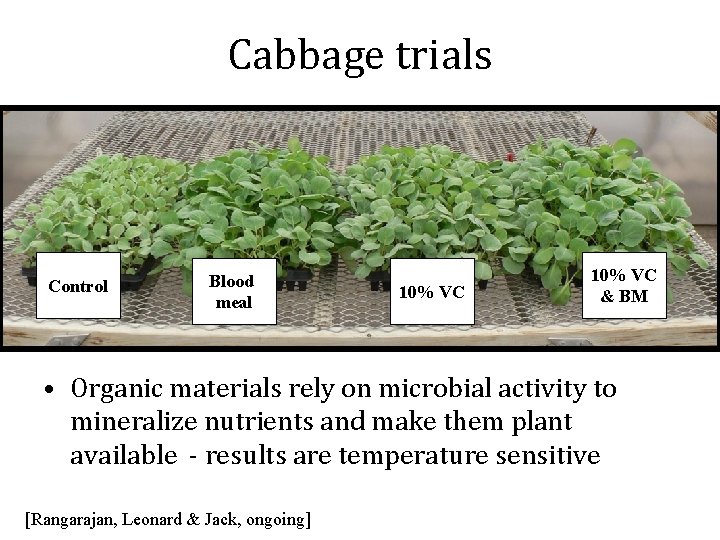
Cabbage trials Control Blood meal 10% VC & BM • Organic materials rely on microbial activity to mineralize nutrients and make them plant available - results are temperature sensitive [Rangarajan, Leonard & Jack, ongoing]
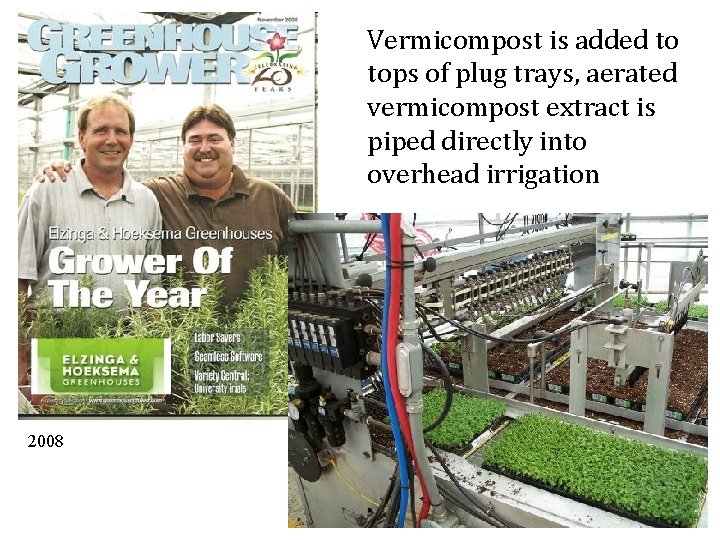
Vermicompost is added to tops of plug trays, aerated vermicompost extract is piped directly into overhead irrigation 2008
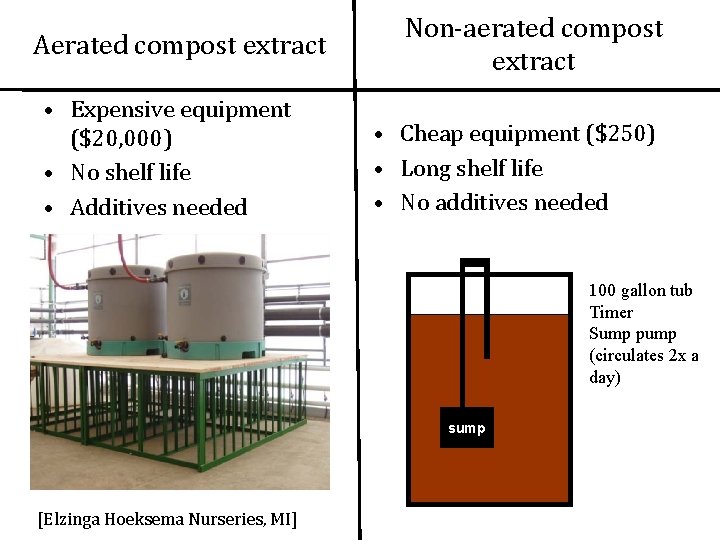
Aerated compost extract • Expensive equipment ($20, 000) • No shelf life • Additives needed Non-aerated compost extract • Cheap equipment ($250) • Long shelf life • No additives needed 100 gallon tub Timer Sump pump (circulates 2 x a day) sump [Elzinga Hoeksema Nurseries, MI]
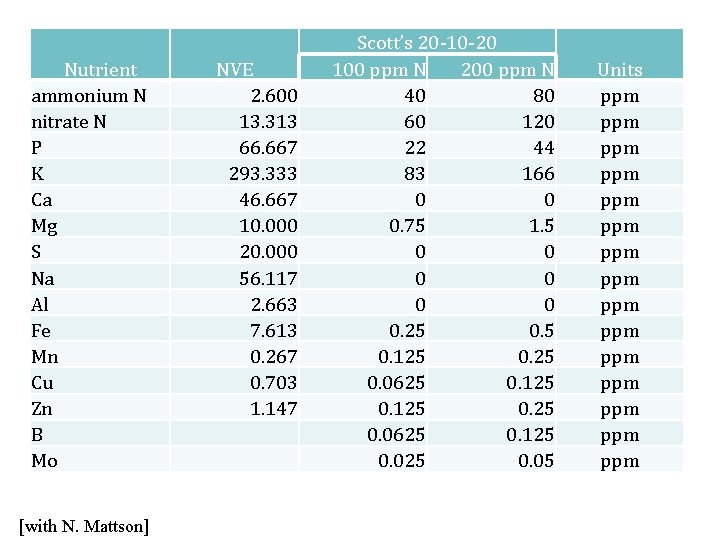
Nutrient ammonium N nitrate N P K Ca Mg S Na Al Fe Mn Cu Zn B Mo [with N. Mattson] NVE 2. 600 13. 313 66. 667 293. 333 46. 667 10. 000 20. 000 56. 117 2. 663 7. 613 0. 267 0. 703 1. 147 Scott’s 20 -10 -20 100 ppm N 200 ppm N 40 80 60 120 22 44 83 166 0 0 0. 75 1. 5 0 0 0 0. 25 0. 125 0. 0625 0. 125 0. 025 0. 05 Units ppm ppm ppm ppm
3. Disease suppression
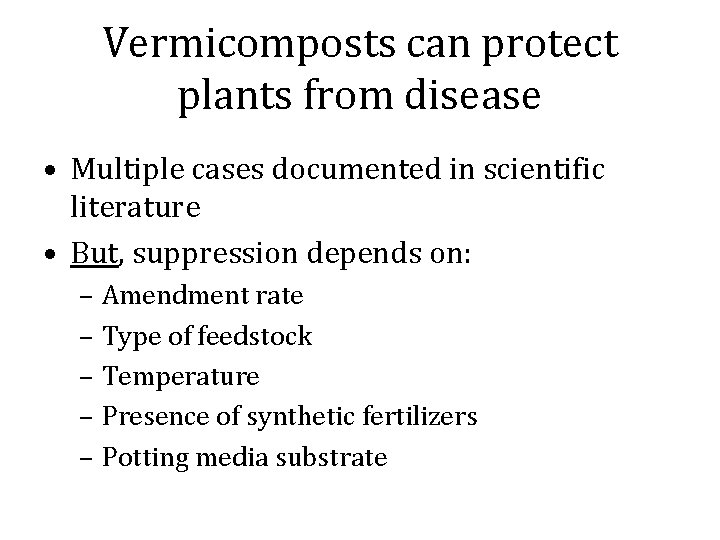
Vermicomposts can protect plants from disease • Multiple cases documented in scientific literature • But, suppression depends on: – Amendment rate – Type of feedstock – Temperature – Presence of synthetic fertilizers – Potting media substrate
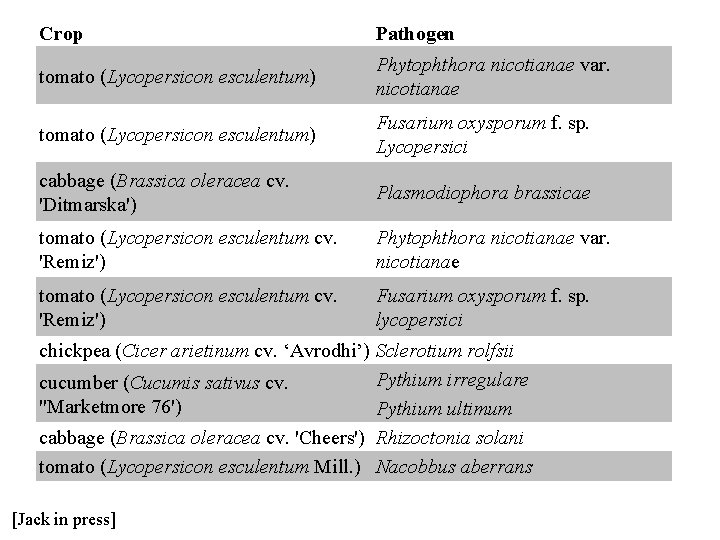
Crop Pathogen tomato (Lycopersicon esculentum) Phytophthora nicotianae var. nicotianae tomato (Lycopersicon esculentum) Fusarium oxysporum f. sp. Lycopersici cabbage (Brassica oleracea cv. 'Ditmarska') Plasmodiophora brassicae tomato (Lycopersicon esculentum cv. 'Remiz') Phytophthora nicotianae var. nicotianae tomato (Lycopersicon esculentum cv. 'Remiz') Fusarium oxysporum f. sp. lycopersici chickpea (Cicer arietinum cv. ‘Avrodhi’) Sclerotium rolfsii Pythium irregulare cucumber (Cucumis sativus cv. "Marketmore 76') Pythium ultimum cabbage (Brassica oleracea cv. 'Cheers') Rhizoctonia solani tomato (Lycopersicon esculentum Mill. ) Nacobbus aberrans [Jack in press]
It works…sometimes • Scientists don’t understand enough of how it works to predict if a compost will be suppressive or not • This is a major barrier to effective us of these materials for disease management • Cornell Soil Health program has developed soil testing that takes a more holistic approach i. e. beyond N-P-K
What do we know? • Single organism biological control is well understood in specific cases • Suppression of disease by a complex community of microbes is much more complicated!
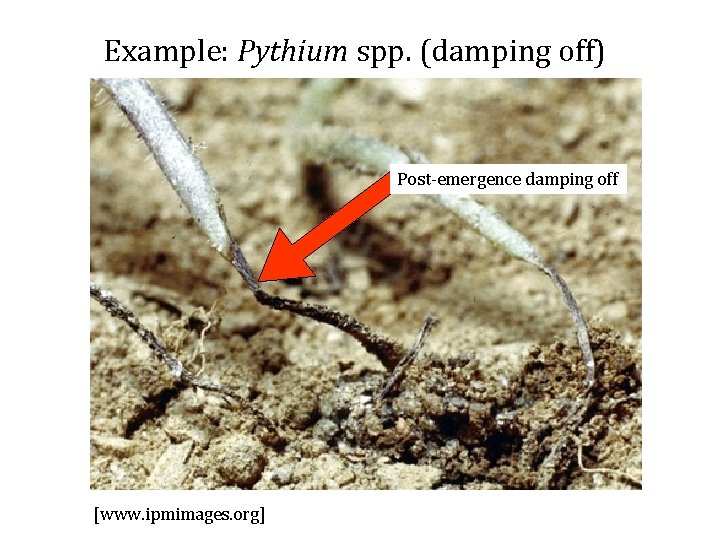
Example: Pythium spp. (damping off) Post-emergence damping off [www. ipmimages. org]
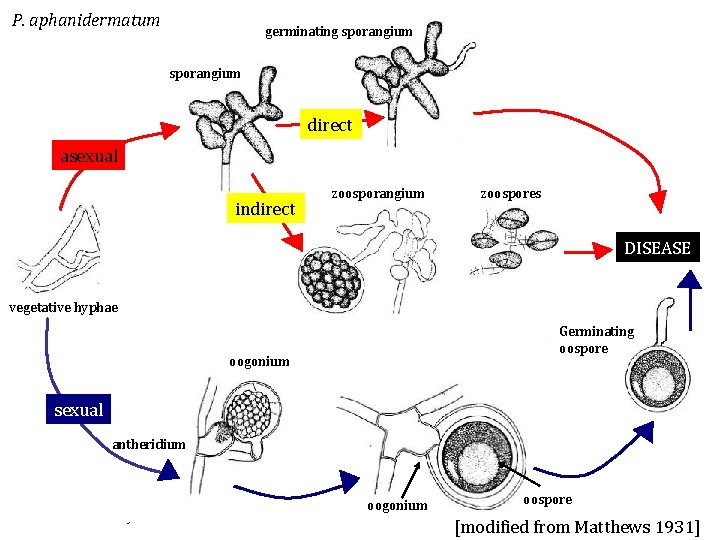
P. aphanidermatum germinating sporangium direct asexual indirect zoosporangium zoospores DISEASE vegetative hyphae Germinating oospore oogonium sexual antheridium A. Jack Cornell University 2008 oogonium oospore [modified from Matthews 1931]
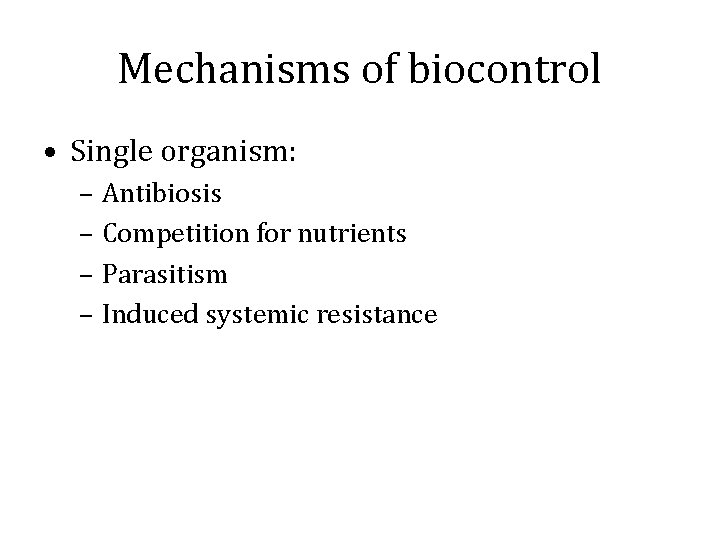
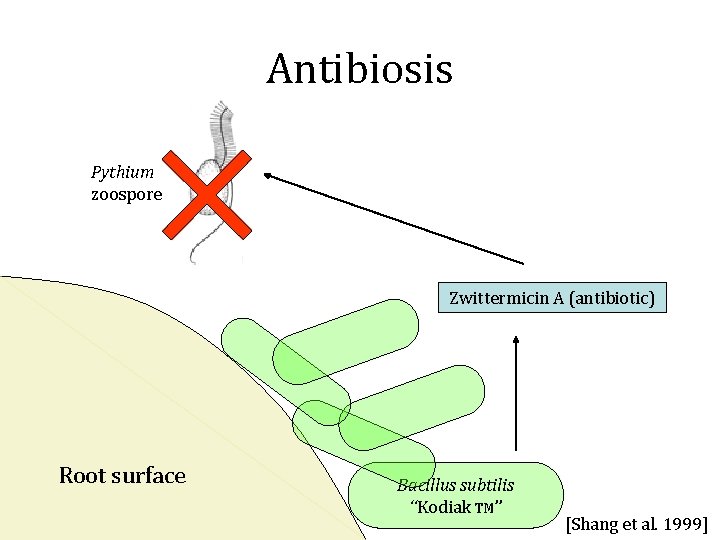
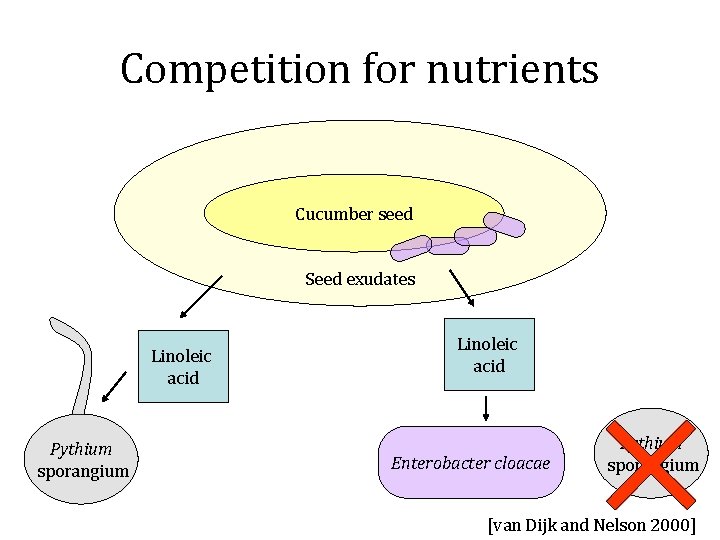
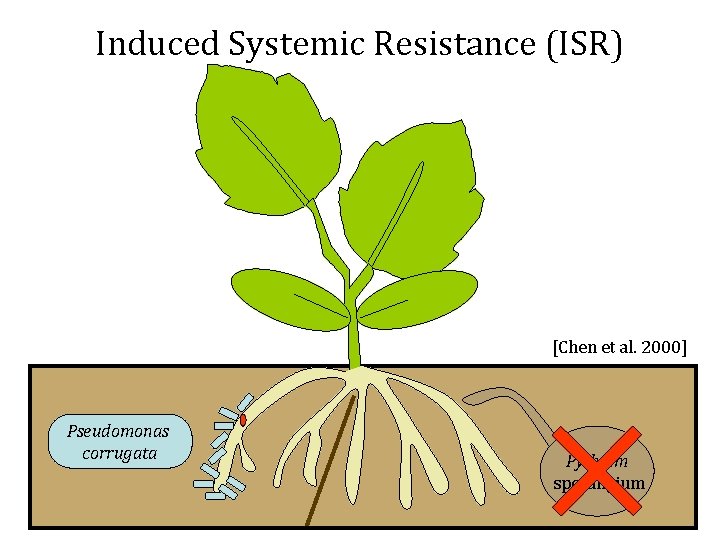
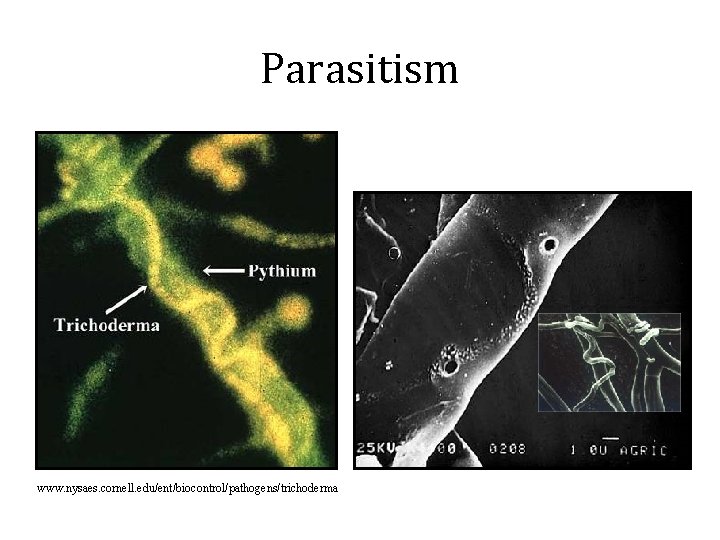
Mechanisms of biocontrol • Single organism: – Antibiosis – Competition for nutrients – Parasitism – Induced systemic resistance
Antibiosis Pythium zoospore Zwittermicin A (antibiotic) Root surface Bacillus subtilis “Kodiak TM” [Shang et al. 1999]
Competition for nutrients Cucumber seed Seed exudates Linoleic acid Pythium sporangium Linoleic acid Enterobacter cloacae Pythium sporangium [van Dijk and Nelson 2000]
Induced Systemic Resistance (ISR) [Chen et al. 2000] Pseudomonas corrugata Pythium sporangium
Parasitism www. nysaes. cornell. edu/ent/biocontrol/pathogens/trichoderma
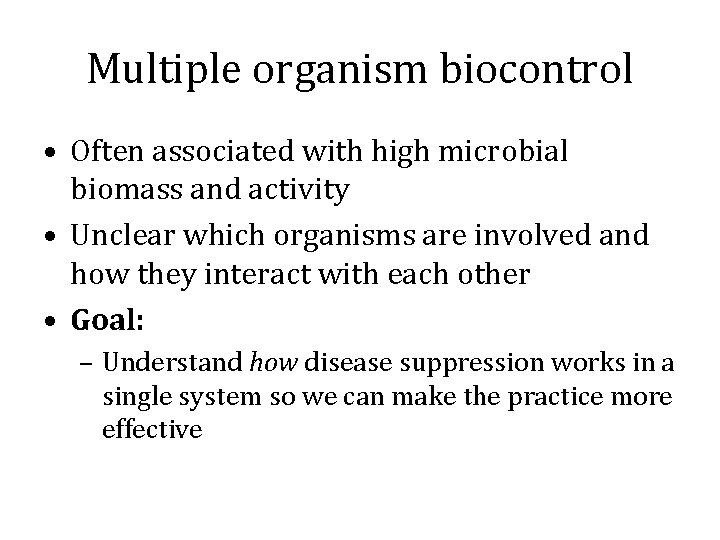
Multiple organism biocontrol • Often associated with high microbial biomass and activity • Unclear which organisms are involved and how they interact with each other • Goal: – Understand how disease suppression works in a single system so we can make the practice more effective
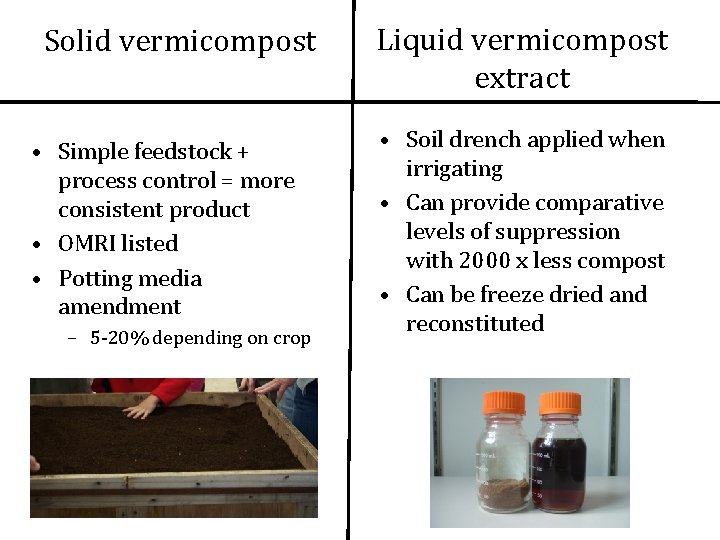
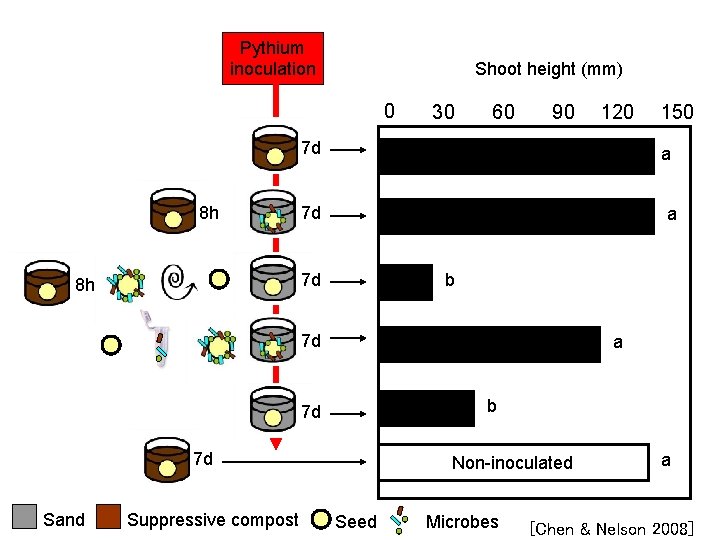
Solid vermicompost • Simple feedstock + process control = more consistent product • OMRI listed • Potting media amendment – 5 -20% depending on crop Liquid vermicompost extract • Soil drench applied when irrigating • Can provide comparative levels of suppression with 2000 x less compost • Can be freeze dried and reconstituted
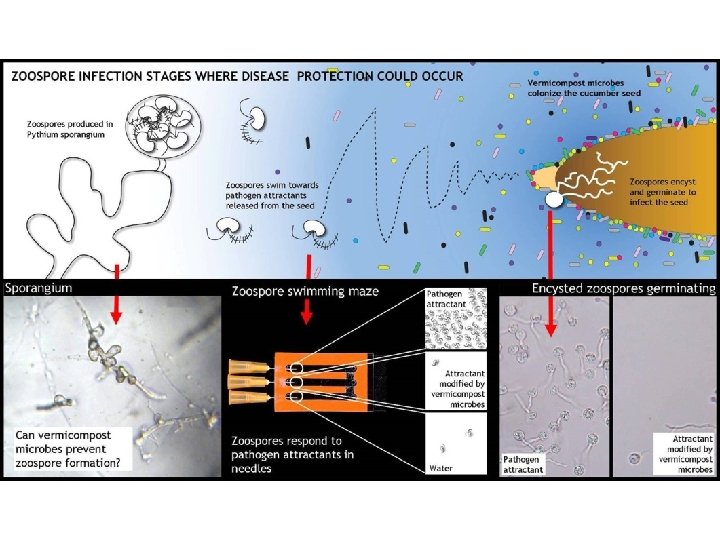
Zoospore pre-infection events
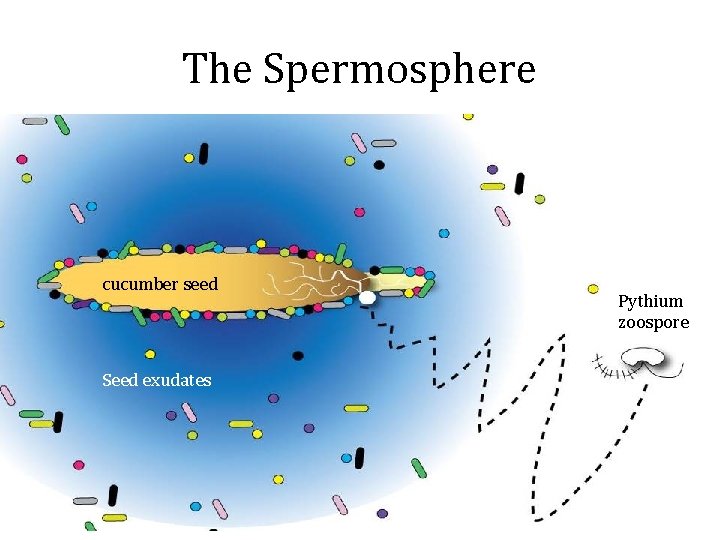
The Spermosphere cucumber seed Seed exudates A. Jack Cornell University 2008 Pythium zoospore
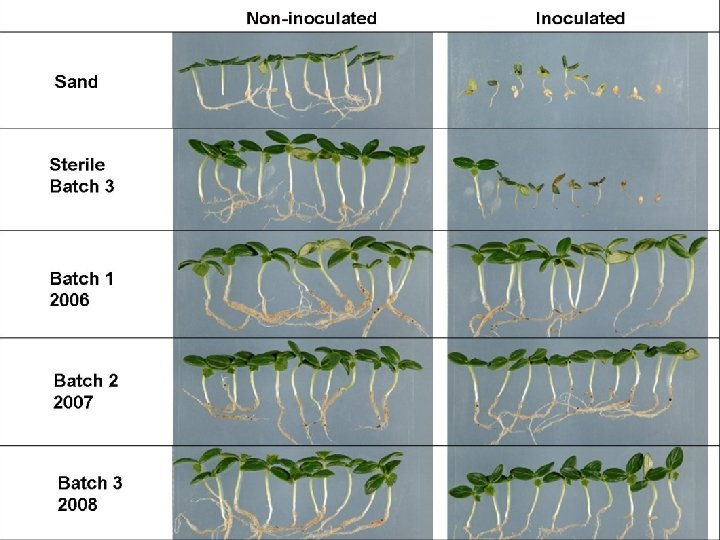
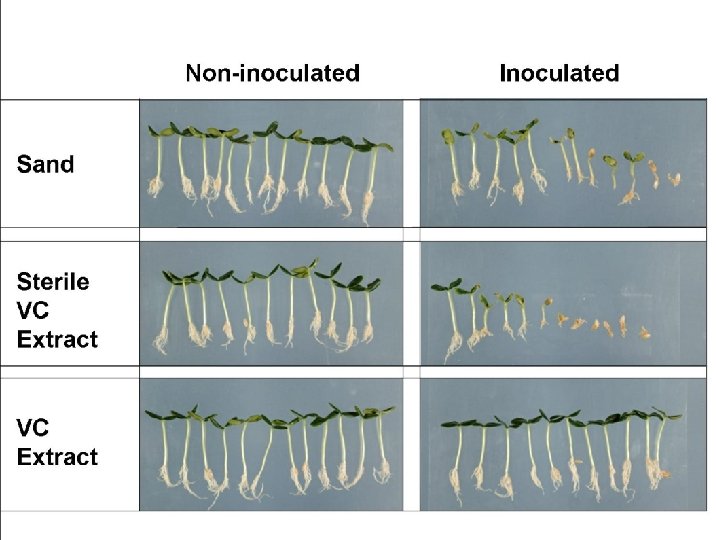
Pythium inoculation Shoot height (mm) 0 30 60 90 120 7 d 8 h a 7 d a b 7 d 8 h 7 d a b 7 d 7 d Sand Suppressive compost 150 Non-inoculated Seed Microbes a [Chen & Nelson 2008]
Conclusions • Vermicomposts are: – a valuable component in organic potting media for nutrient management – cultural practice for suppressing disease • Scientific understanding is not at a level where we can make predictions for specific composts • Consider collaborating with regional researchers to further develop these practices
Acknowledgements Nelson Lab: Mary Ann Karp Eric Carr Monica Minson Ellen Crocker Sarah Arnold Dave Moody Financial support: My committee: Eric Nelson (PPPMB) Anthony Hay (MICRO) Anu Rangarajan (HORT) Kathie Hodge (PPPMB) Scott Peters (EDUC) NYSTAR Center for Advanced Technology & USDA SBIR Phase I & II (with Worm Power) Department of Plant Pathology and Plant Microbe Biology USDA BARD Knight Institute for Writing in the Disciplines New York Farm Viability Institute Organic Farming Research Foundation Organic Crop Improvement Association Andrew W. Mellon Fellowship Industry collaborator: Tom Herlihy Worm Power SBIR Program Kent Loeffler – photo credits