
Greenhouse Structures GREENHOUSES Structures covered with transparent material


- Slides: 66
Greenhouse Structures
GREENHOUSES Structures covered with transparent material ¡ Allows sunlight to enter for plant growth and maintenance ¡ Artificially heated and cooled ¡
Uses Overwintering tender plants ¡ Starting seeds ¡ Starting cuttings ¡ Raising vegetables and flowers out of season ¡ Growing specialty plants ¡
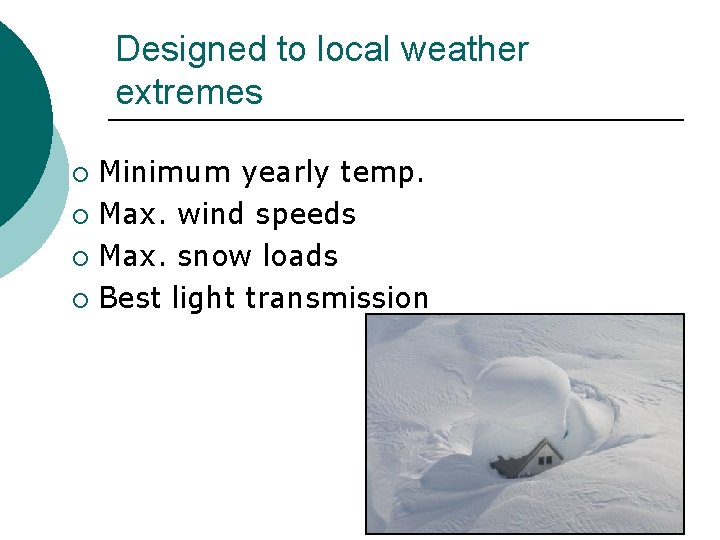
Designed to local weather extremes Minimum yearly temp. ¡ Max. wind speeds ¡ Max. snow loads ¡ Best light transmission ¡
Environmental considerations for plants Light ¡ Temperature ¡ Humidity ¡
Headhouse ¡ Office, storage, and work space from which greenhouses are located
Types of Greenhouses Attached ¡ Freestanding ¡
Attached Greenhouse ¡ Connected to building l l Floral shop Garden center Office Home
Attached Greenhouses ¡ Advantages: l l ¡ Less construction material needed Can be utilized to heat homes in winter, cool in summer through heat and humidity change Disadvantages l l Existing building can shade the greenhouse, limiting light needed for plants Ventilation and temperature are difficult to control.
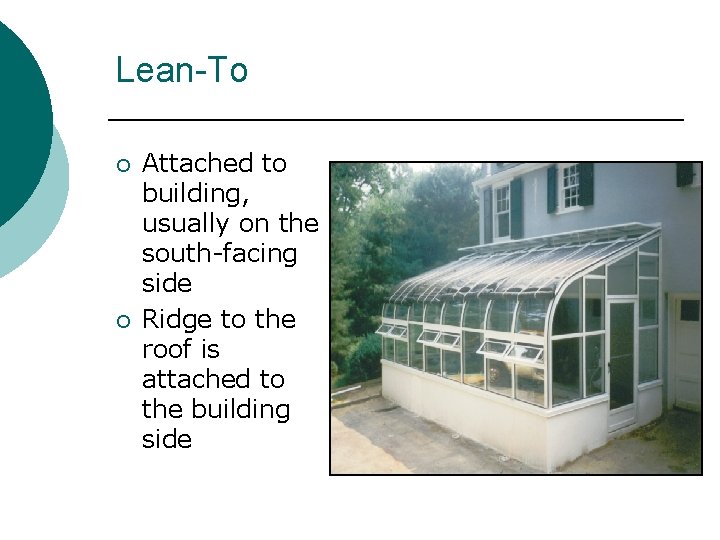
Lean-To ¡ ¡ Attached to building, usually on the south-facing side Ridge to the roof is attached to the building side
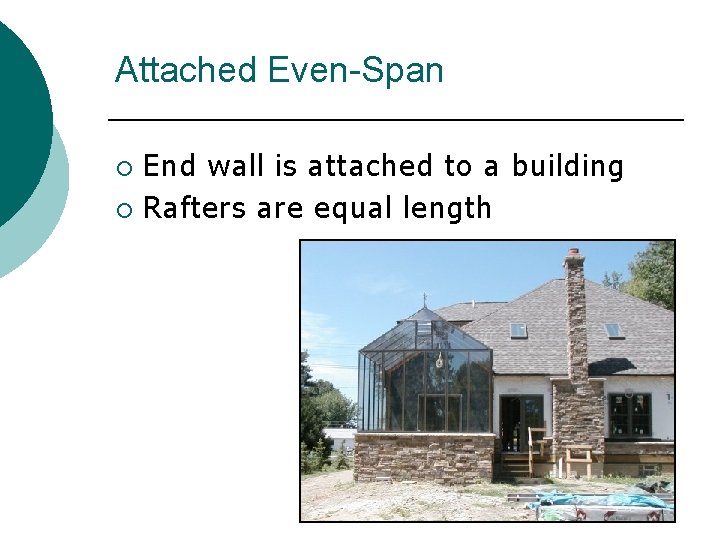
Attached Even-Span End wall is attached to a building ¡ Rafters are equal length ¡
Attached Even-Span ¡ Advantage l More available space l Disadvantage l More expensive to build and heat than a lean-To
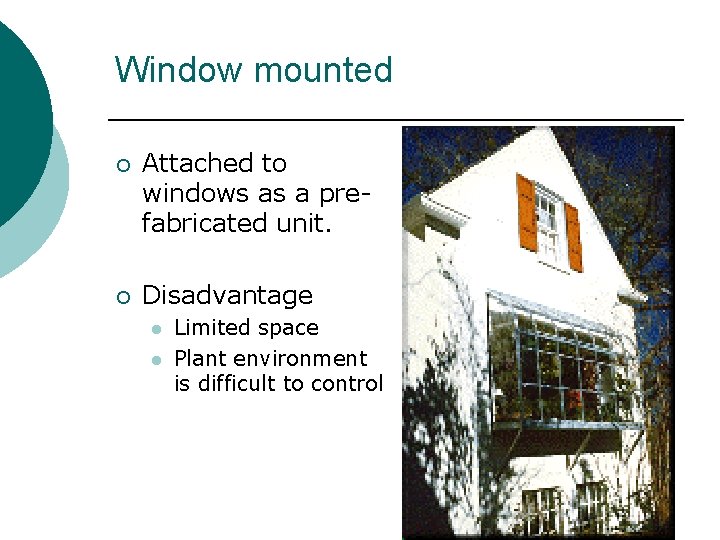
Window mounted ¡ Attached to windows as a prefabricated unit. ¡ Disadvantage l l Limited space Plant environment is difficult to control
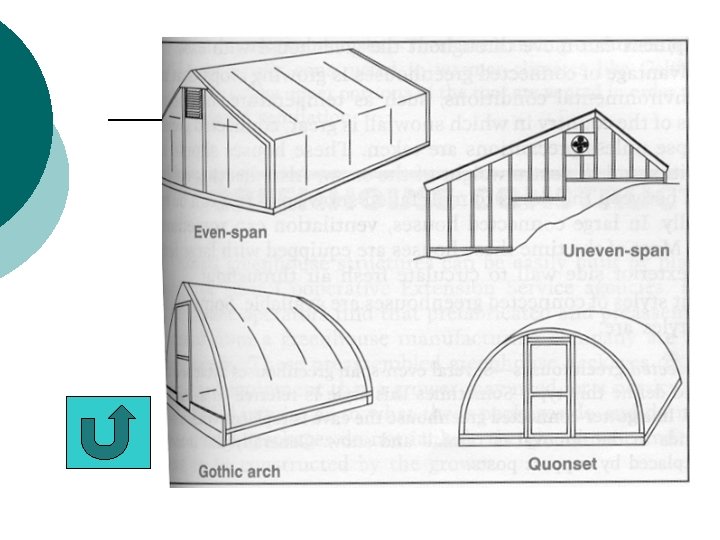
Freestanding Greenhouse Even Span ¡ Uneven- span ¡ Quonset ¡ Gothic Arch ¡
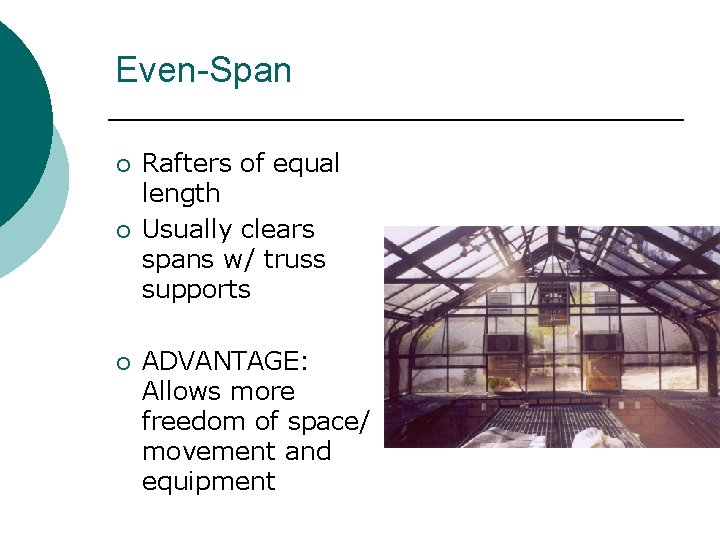
Even-Span ¡ ¡ ¡ Rafters of equal length Usually clears spans w/ truss supports ADVANTAGE: Allows more freedom of space/ movement and equipment
Uneven-Span Rafters of unequal length ¡ Usually used for hillside placement ¡ l l ADVANTAGES: maximizes sun light DISAVANTAGES: internal orientation of greenhouse can make working in it difficult
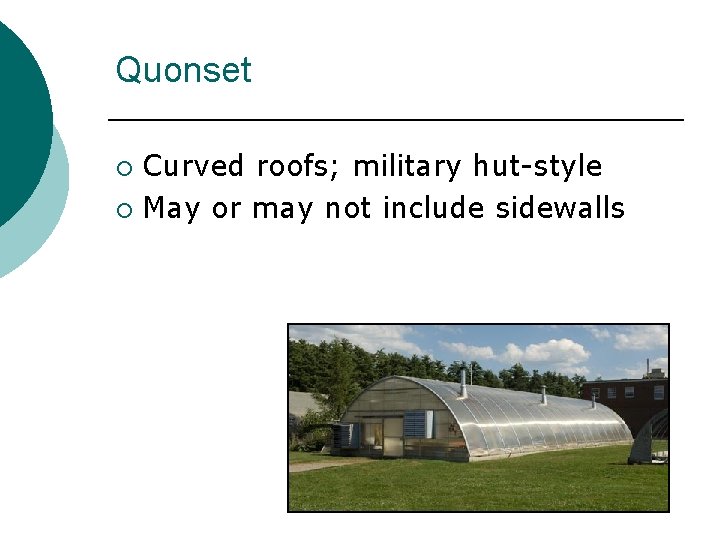
Quonset Curved roofs; military hut-style ¡ May or may not include sidewalls ¡
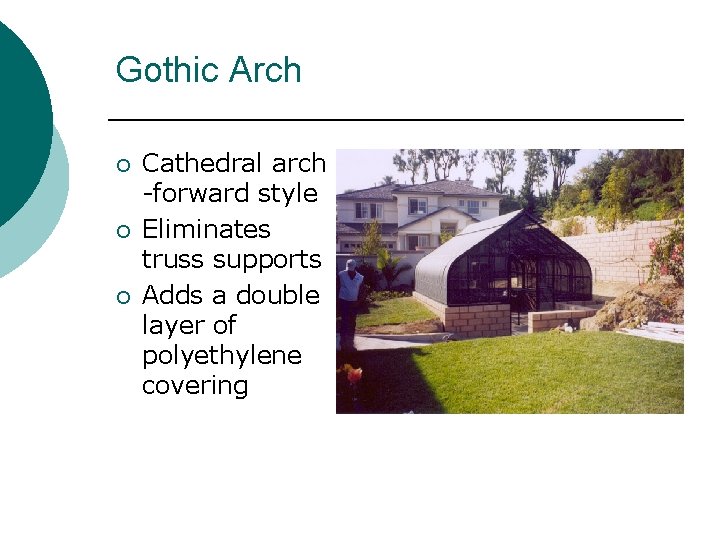
Gothic Arch ¡ ¡ ¡ Cathedral arch -forward style Eliminates truss supports Adds a double layer of polyethylene covering
Gothic Arch ¡ Advantages l l Less construction material Less land needed for spacing Heat conservative due to less exposure Workers and equipment can move through the buildings rather than between buildings
Gothic Arch ¡ Disadvantages l l Creating different environmental conditions for crops is more difficult Connected houses do not distribute snowfall weight well and can collapse Require heating cables to melt snow to prevent collapse Difficult to ventilate, requires fans to circulate
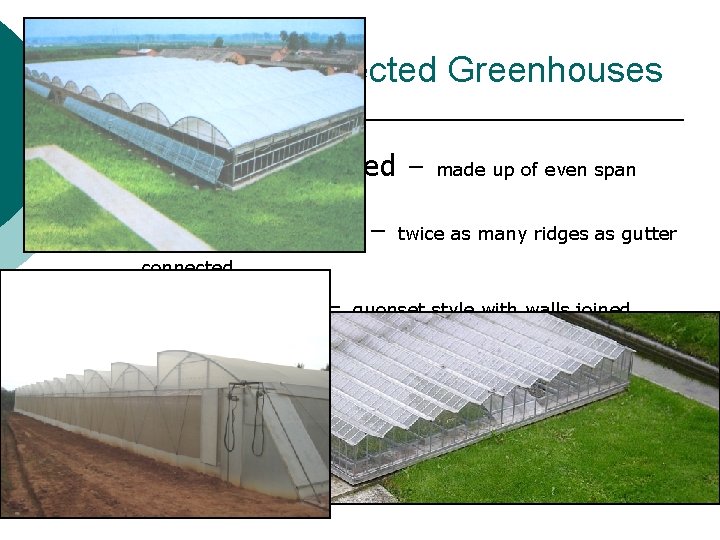
Types of Connected Greenhouses ¡ Gutter-connected – made up of even span greenhouses ¡ Venlo or Dutch – twice as many ridges as gutter connected Barrel Vault – quonset style with walls joined ¡ Sawtooth – lean to style joined together ¡
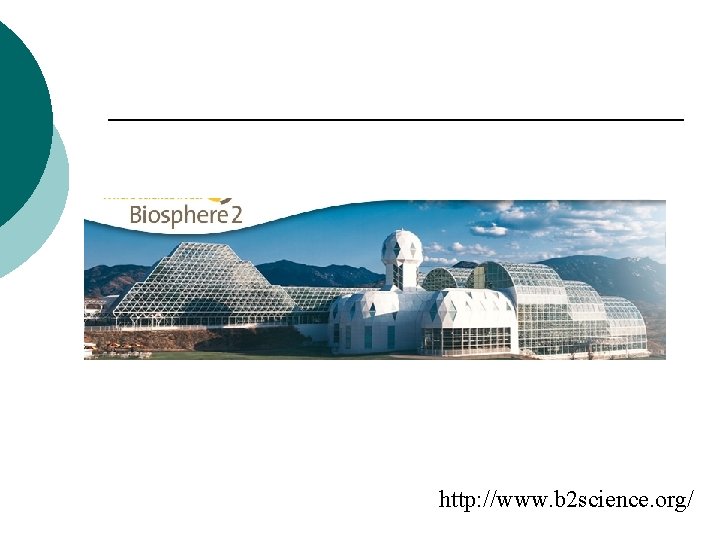
http: //www. b 2 science. org/
Review ¡ What is a greenhouse? ¡ What are the four types of freestanding green houses?
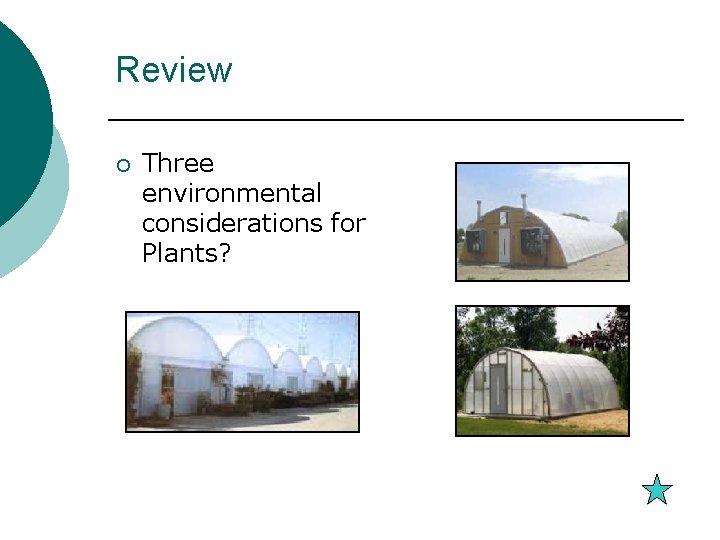
Review ¡ Three environmental considerations for Plants?
Objectives for the day What are the structural components of a greenhouse? ¡ What are five different ways of heating a greenhouse? ¡ What are three ways of cooling a greenhouse? ¡ What is a forcing structure? ¡
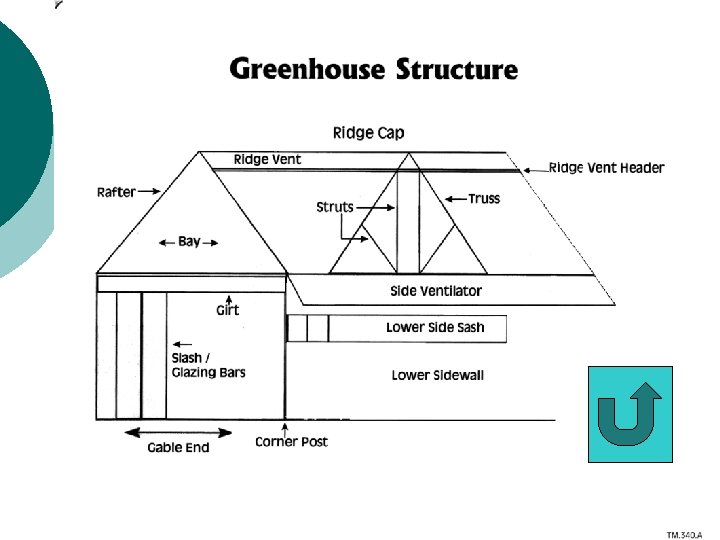
Components of Greenhouse Structure Frame ¡ Foundation ¡ Concrete Footings ¡ Sidewalls ¡
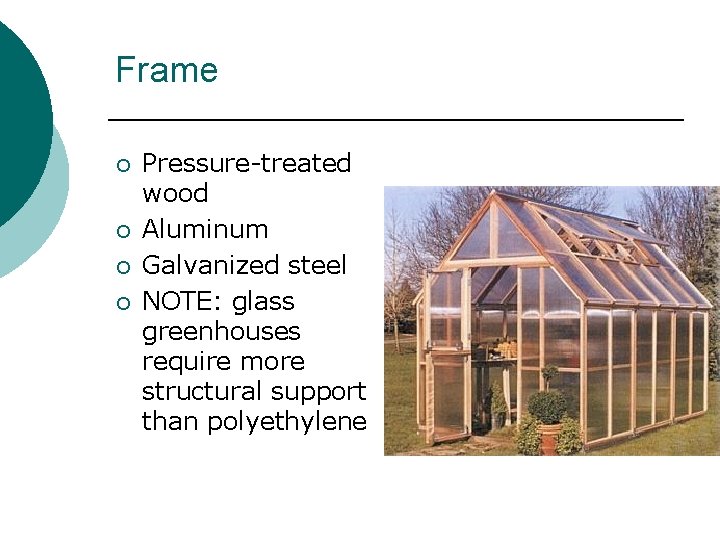
Frame ¡ ¡ Pressure-treated wood Aluminum Galvanized steel NOTE: glass greenhouses require more structural support than polyethylene
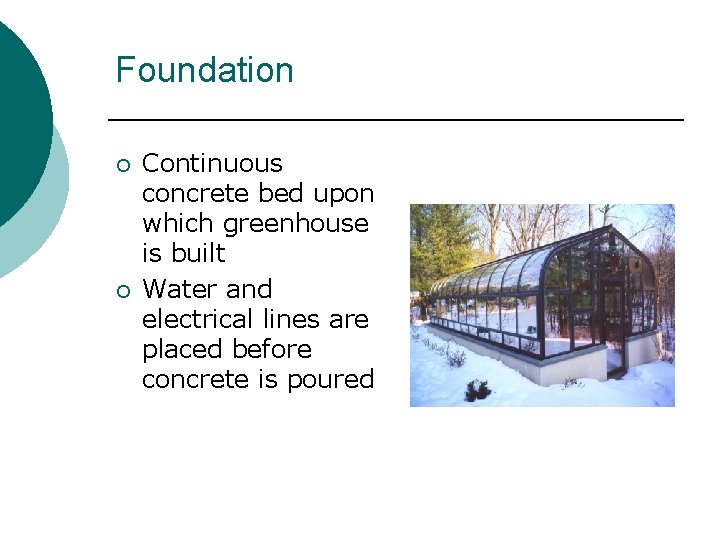
Foundation ¡ ¡ Continuous concrete bed upon which greenhouse is built Water and electrical lines are placed before concrete is poured
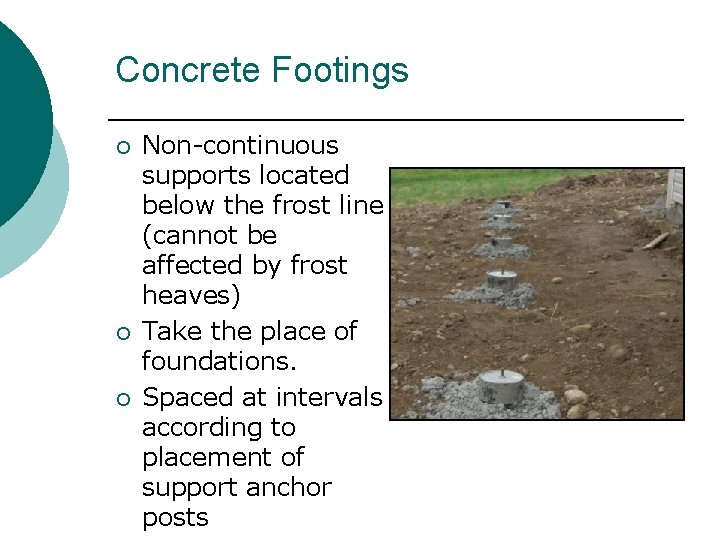
Concrete Footings ¡ ¡ ¡ Non-continuous supports located below the frost line (cannot be affected by frost heaves) Take the place of foundations. Spaced at intervals according to placement of support anchor posts
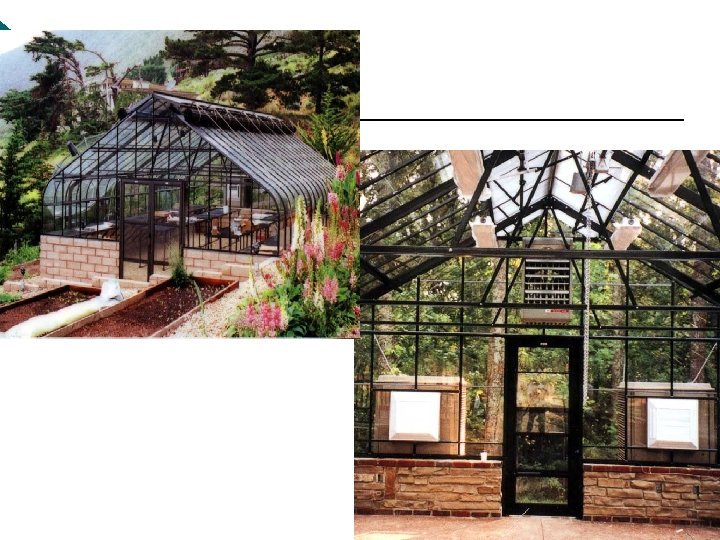
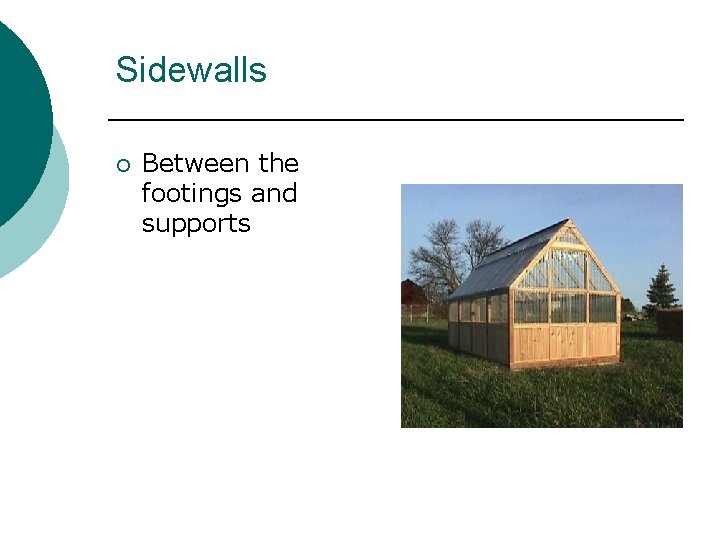
Sidewalls ¡ Between the footings and supports
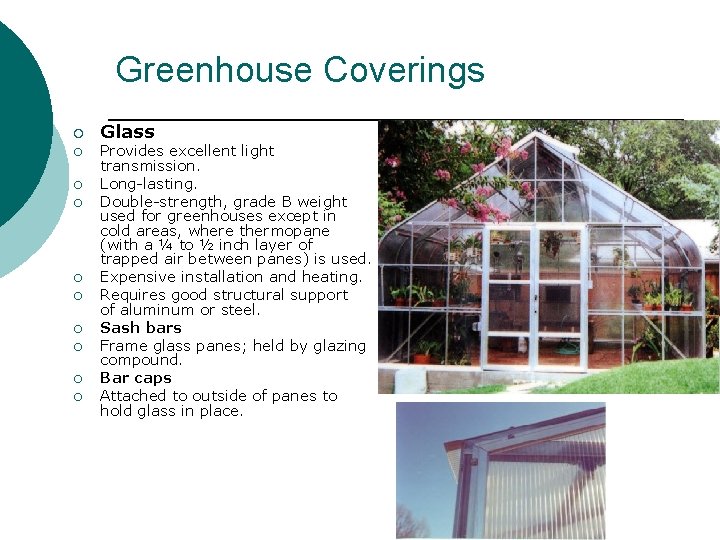
Greenhouse Coverings ¡ ¡ ¡ ¡ ¡ Glass Provides excellent light transmission. Long-lasting. Double-strength, grade B weight used for greenhouses except in cold areas, where thermopane (with a ¼ to ½ inch layer of trapped air between panes) is used. Expensive installation and heating. Requires good structural support of aluminum or steel. Sash bars Frame glass panes; held by glazing compound. Bar caps Attached to outside of panes to hold glass in place.
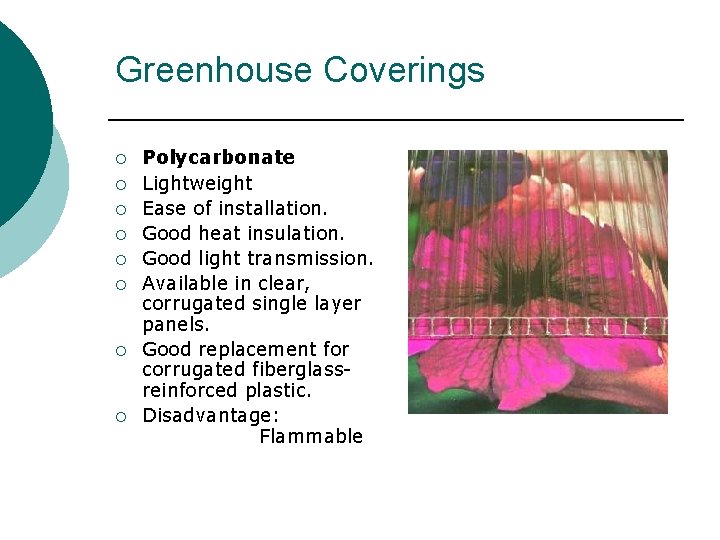
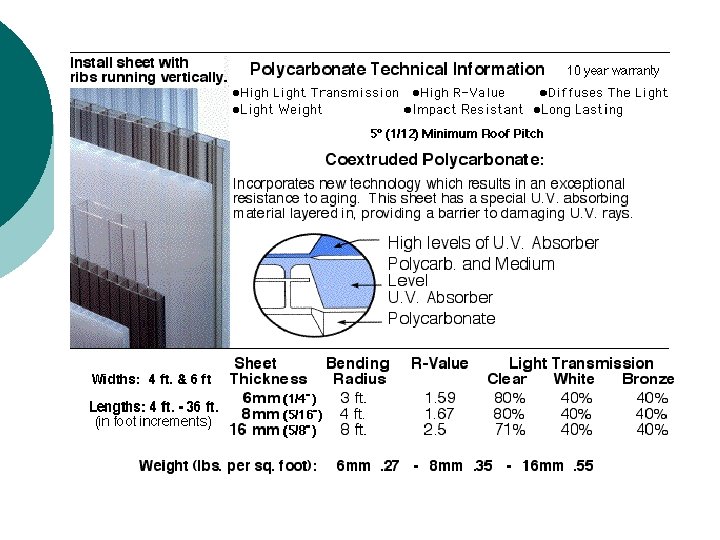
Greenhouse Coverings ¡ ¡ ¡ ¡ Polycarbonate Lightweight Ease of installation. Good heat insulation. Good light transmission. Available in clear, corrugated single layer panels. Good replacement for corrugated fiberglassreinforced plastic. Disadvantage: Flammable
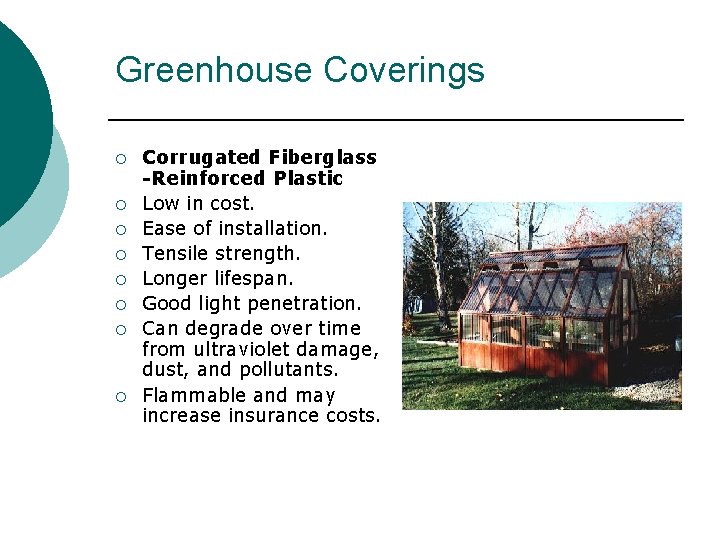
Greenhouse Coverings ¡ ¡ ¡ ¡ Corrugated Fiberglass -Reinforced Plastic Low in cost. Ease of installation. Tensile strength. Longer lifespan. Good light penetration. Can degrade over time from ultraviolet damage, dust, and pollutants. Flammable and may increase insurance costs.
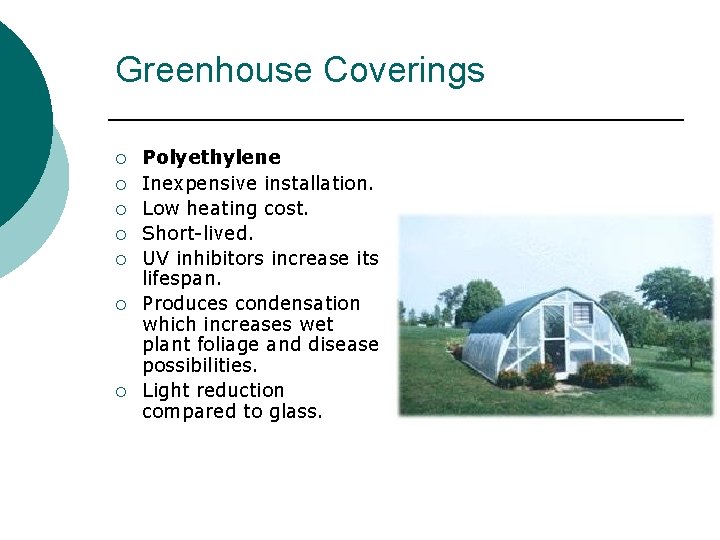
Greenhouse Coverings ¡ ¡ ¡ ¡ Polyethylene Inexpensive installation. Low heating cost. Short-lived. UV inhibitors increase its lifespan. Produces condensation which increases wet plant foliage and disease possibilities. Light reduction compared to glass.
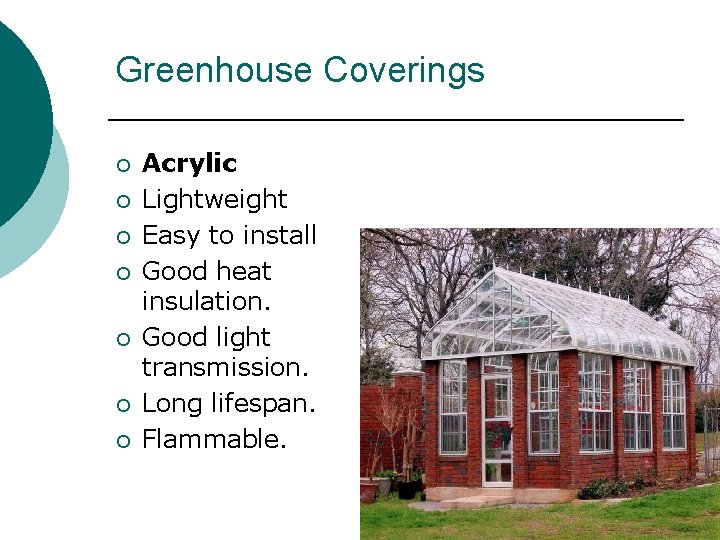
Greenhouse Coverings ¡ ¡ ¡ ¡ Acrylic Lightweight Easy to install Good heat insulation. Good light transmission. Long lifespan. Flammable.
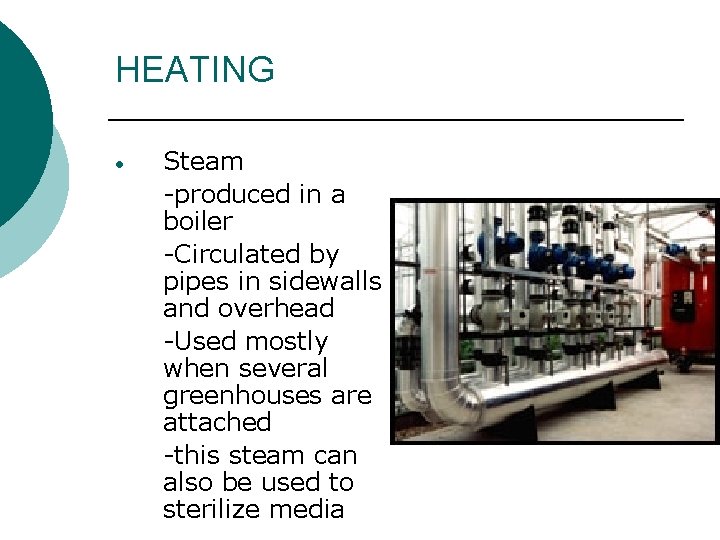
HEATING • Steam -produced in a boiler -Circulated by pipes in sidewalls and overhead -Used mostly when several greenhouses are attached -this steam can also be used to sterilize media
Heating (cont. ) • Hot water -similar to steam but used in smaller houses • Forced-Air -Local Units force hot air into houses -Can be moved through plastic overhead tubing
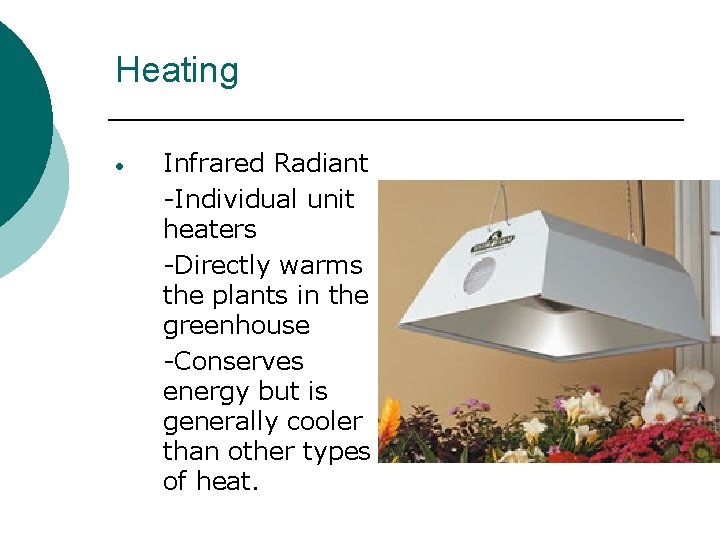
Heating • Infrared Radiant -Individual unit heaters -Directly warms the plants in the greenhouse -Conserves energy but is generally cooler than other types of heat.
Heating Con’t ¡ Solar l l Restricted to passive designs Crops require little additional heat
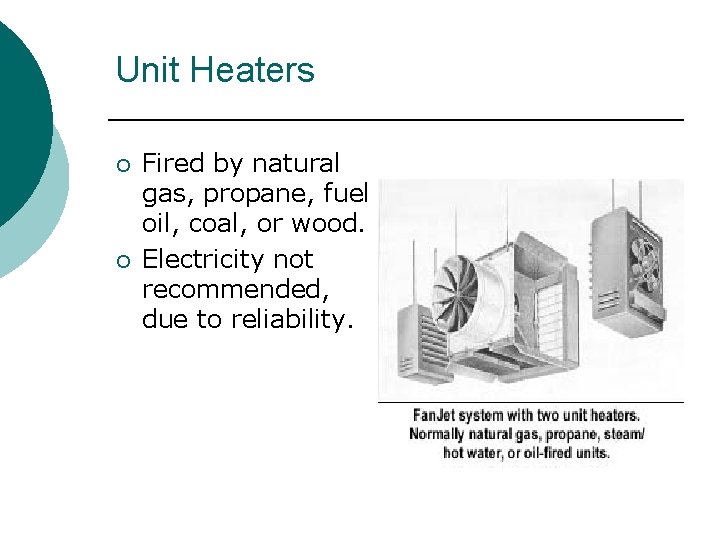
Unit Heaters ¡ ¡ Fired by natural gas, propane, fuel oil, coal, or wood. Electricity not recommended, due to reliability.
Determining size HVAC Climate ¡ Area of exposed greenhouse surface ¡ Type of construction and materials ¡ = # of BTU’s need maintain inside temp. ¡
Cooling
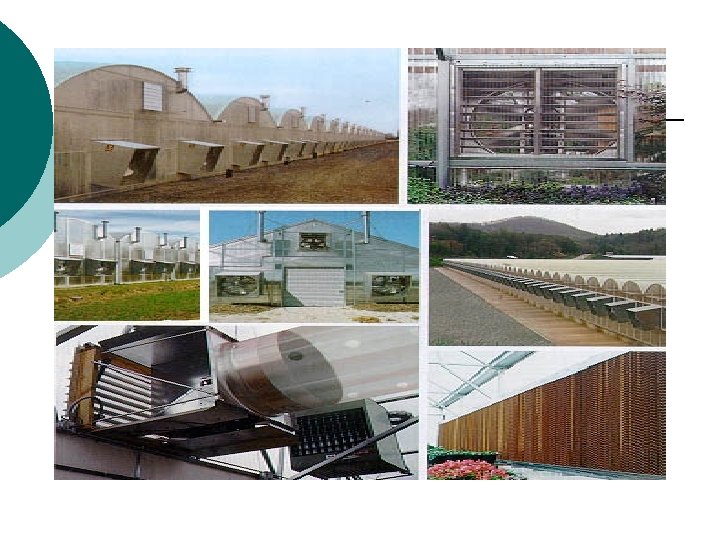
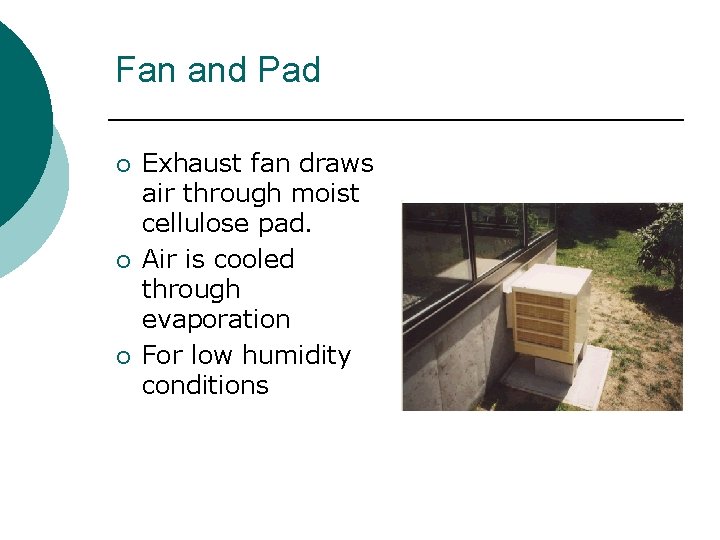
Fan and Pad ¡ ¡ ¡ Exhaust fan draws air through moist cellulose pad. Air is cooled through evaporation For low humidity conditions
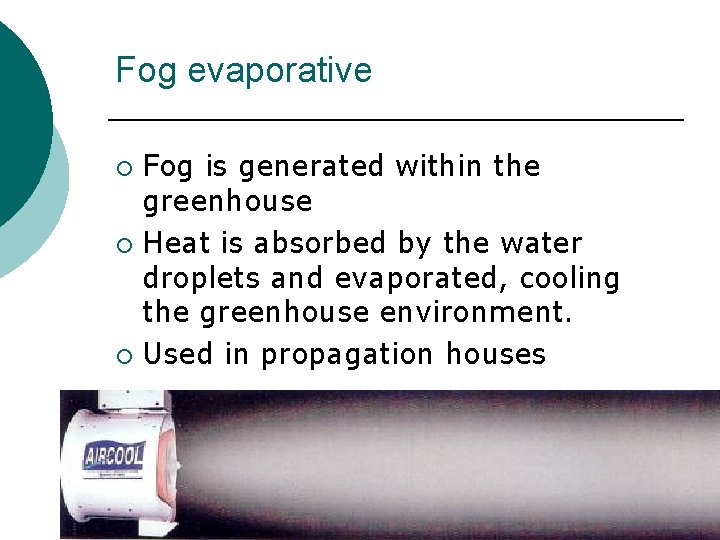
Fog evaporative Fog is generated within the greenhouse ¡ Heat is absorbed by the water droplets and evaporated, cooling the greenhouse environment. ¡ Used in propagation houses ¡
Ventilation
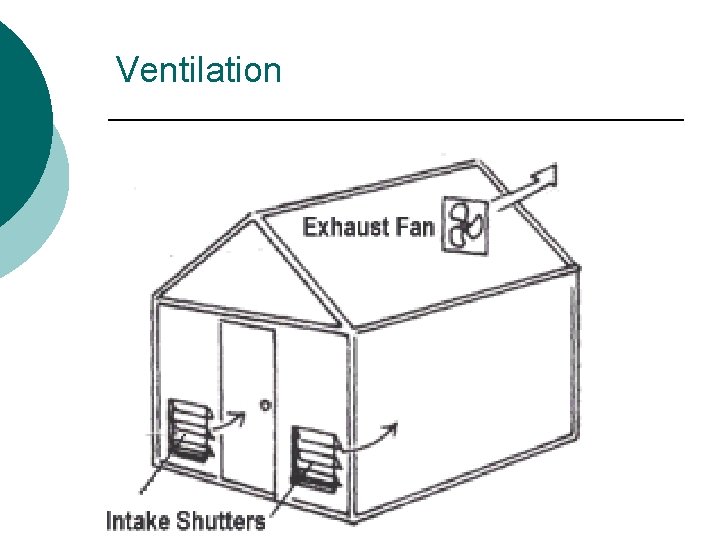
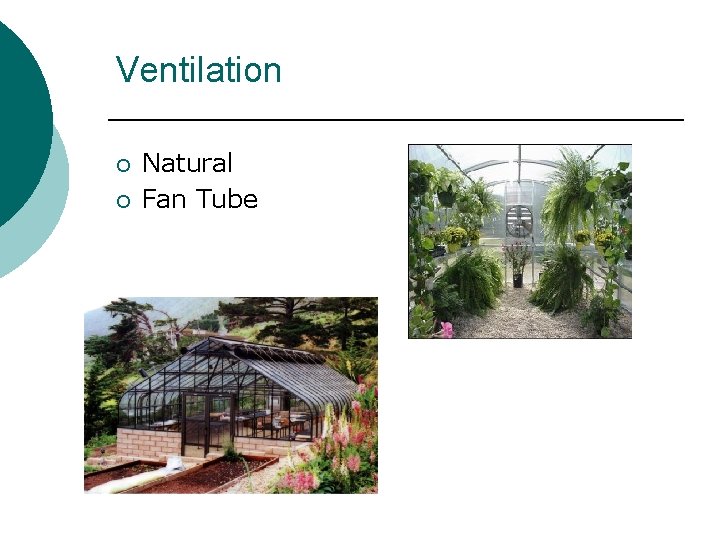
Ventilation ¡ ¡ Natural Fan Tube
Natural Air exchange is fostered through open ridge and side venting, under thermostatic control. ¡ Not advised for winter cooling due to possible plant injury ¡
Fan-Tube Fans bring in cool air which is mixed with warm air and distributed though holes in plastic tubing running the length of the greenhouse ¡ May be used in conjunction with heating systems ¡
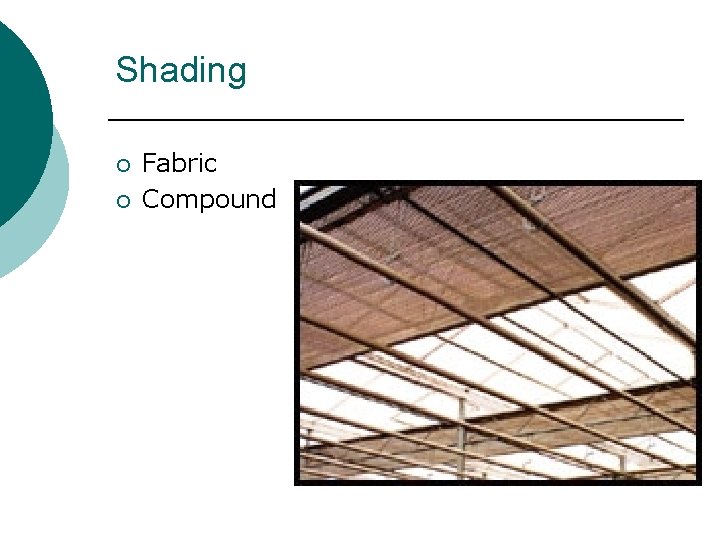
Shading ¡ ¡ Fabric Compound
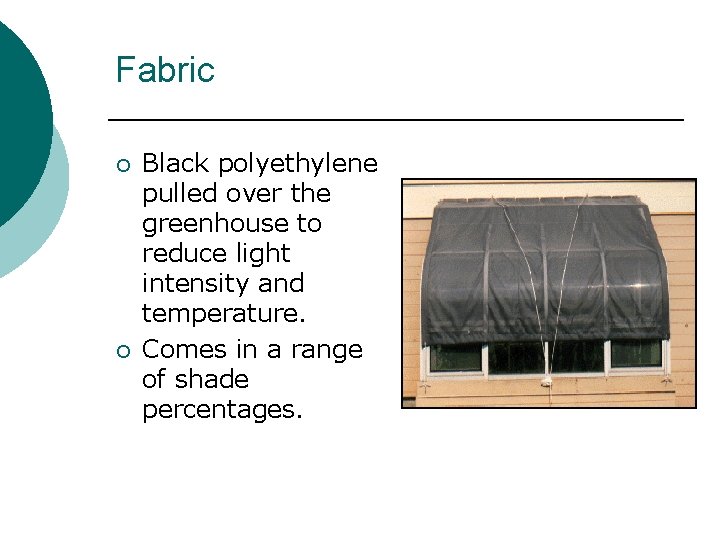
Fabric ¡ ¡ Black polyethylene pulled over the greenhouse to reduce light intensity and temperature. Comes in a range of shade percentages.
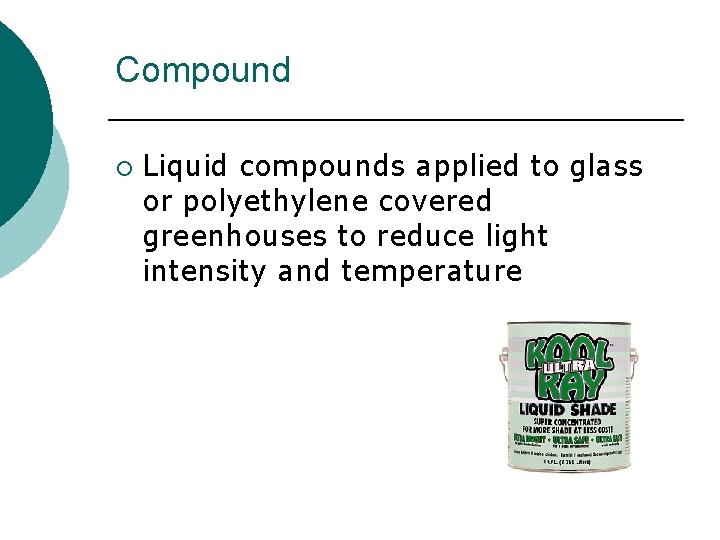
Compound ¡ Liquid compounds applied to glass or polyethylene covered greenhouses to reduce light intensity and temperature
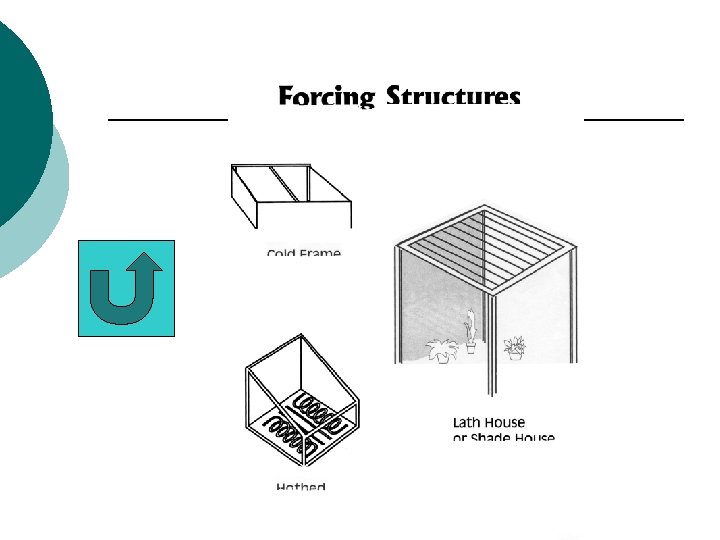
Forcing Structures Used in Raising Plants
Lath House/ Shade House Provides some shade and wind protection for plants ¡ Allows moisture and air to permeate structure ¡ Used as an outdoor setting for plants with some protection ¡
Cont’d Much smaller than a greenhouse ¡ For plant establishment, acclimatization, or plants requiring shade ¡ Weatherproofed wood or galvanized steel ¡ Frame is three sided: roof, back, two sides ¡
Con’t ¡ Covering l l Wooden roof is slatted to permit weather and light, but not full sunlight Plastic net fabric is commonly used, in a range of shade percentages
Overwintering Structures ¡ Cold Frame ¡ Hotbed
Cold Frame ¡ Unheated Structures l l l Wind protection and moderated temp. control Placed partially below ground level Frame is wood W/ hinged or sliding glass top opening or covering of plastic film Backs are higher and tops slanted down for weather protection Insulation can be used on tops of plants or containers
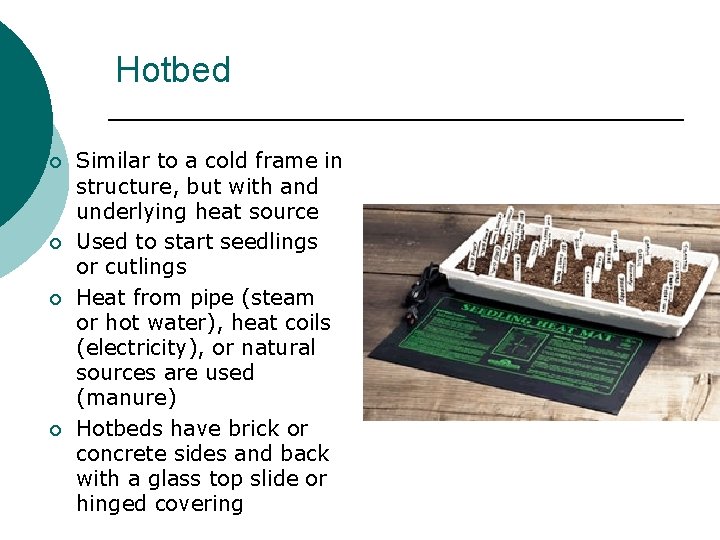
Hotbed ¡ ¡ Similar to a cold frame in structure, but with and underlying heat source Used to start seedlings or cutlings Heat from pipe (steam or hot water), heat coils (electricity), or natural sources are used (manure) Hotbeds have brick or concrete sides and back with a glass top slide or hinged covering
Review What are the structural components of a greenhouse? ¡ What are five different ways of heating a greenhouse? ¡ What are three ways of cooling a greenhouse? ¡ What is a forcing structure? ¡