Useful QI principles for NELA Dr Carolyn Johnston
- Slides: 27
Useful QI principles for NELA Dr. Carolyn Johnston Consultant anaesthetist NELA QI lead
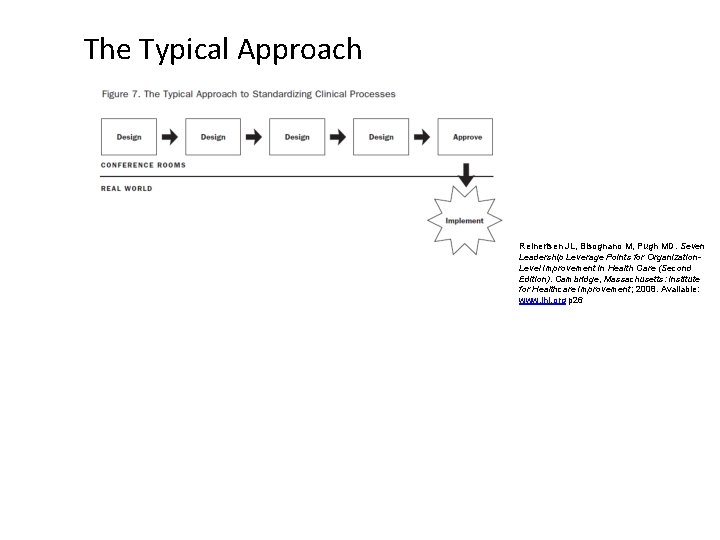
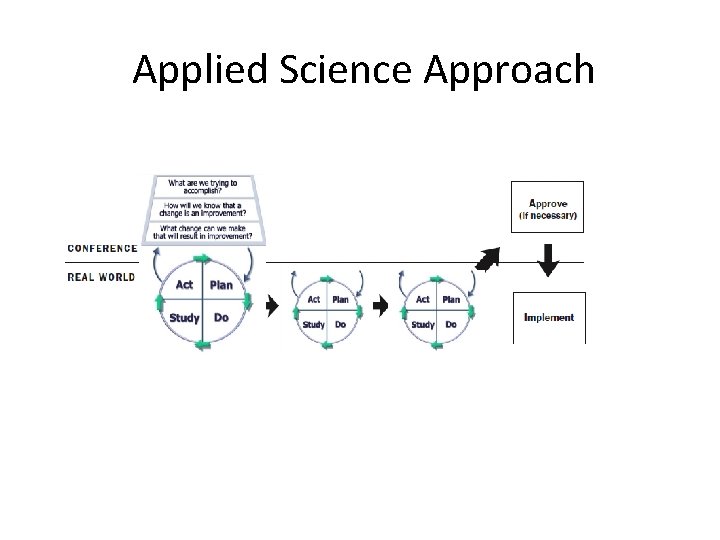
The Typical Approach Applied Science Approach Reinertsen JL, Bisognano M, Pugh MD. Seven Leadership Leverage Points for Organization. Level Improvement in Health Care (Second Edition). Cambridge, Massachusetts: Institute for Healthcare Improvement; 2008. Available: www. ihi. org p 26
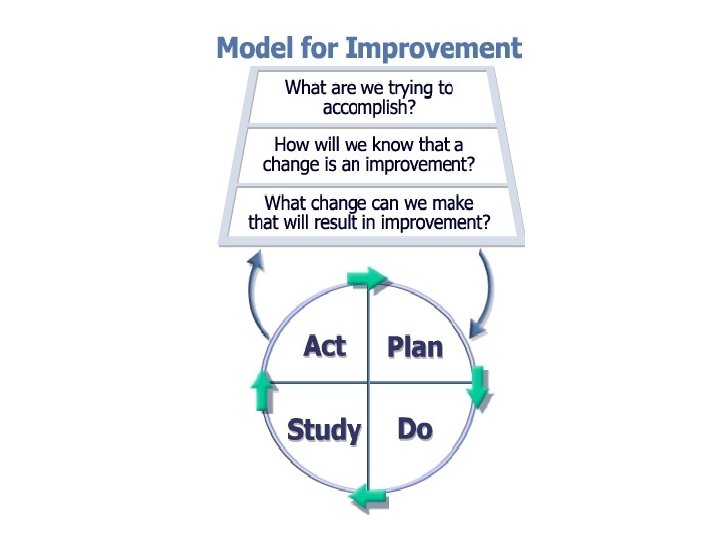
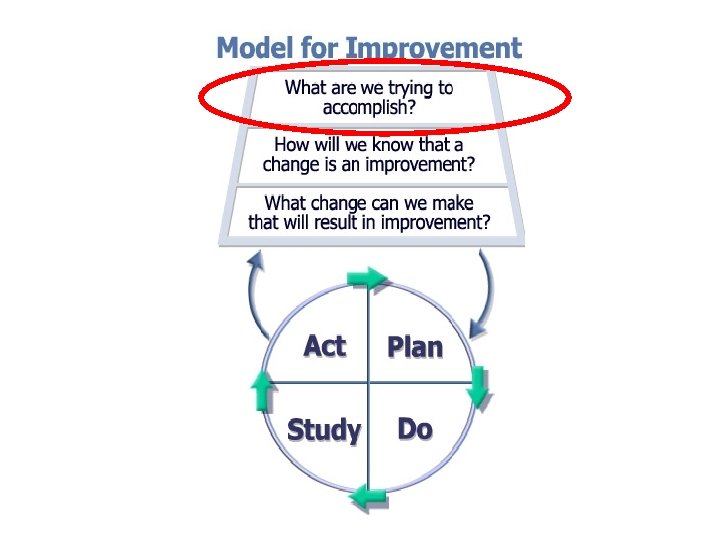
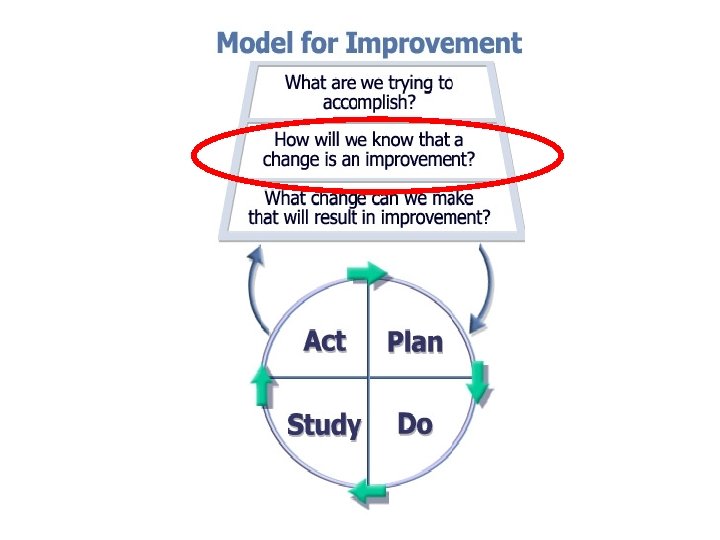
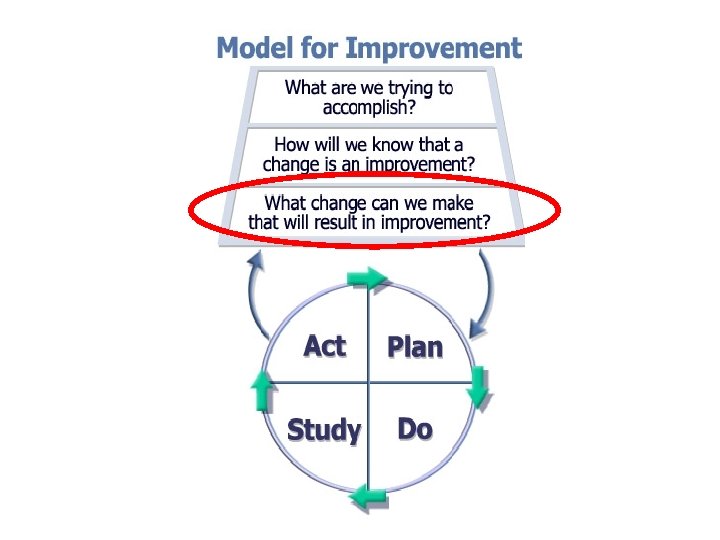
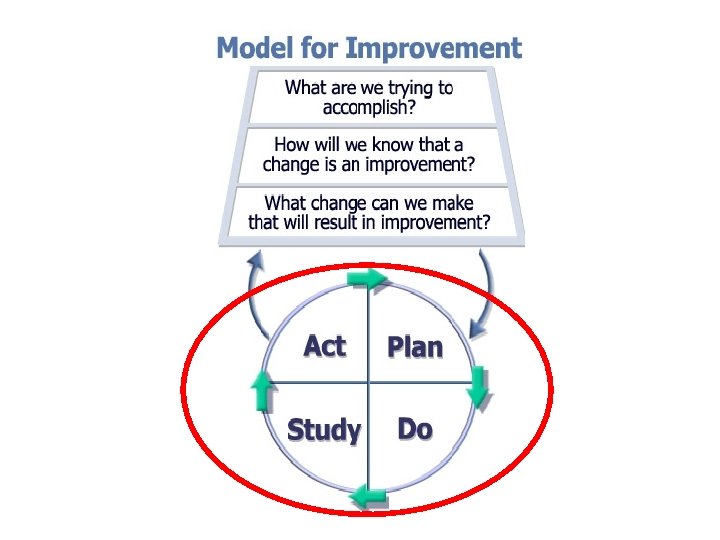
Model for Improvement Act on the plan - Testing
Applied Science Approach
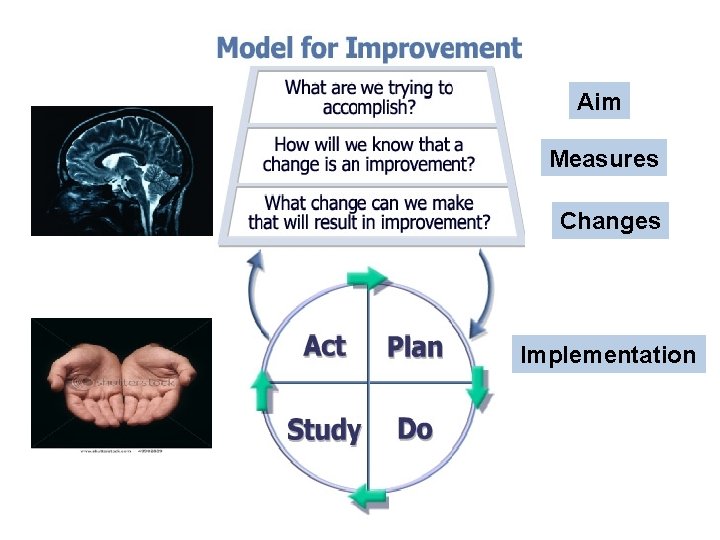
Model for Improvement Act on the plan - Testing Aim Measures Changes Implementation
Model for Improvement Act on the plan - Testing
What is your aim? • NELA standards come from consensus documents • Might decide other local aims based on need
Model for Improvement Act on the plan - Testing
Model for Improvement Act on the plan - Testing
Quality Improvement: What changes can we make that will result in an improvement?
Understanding your system: • Driver Diagrams • Process Mapping • Co Design (with patients or staff)
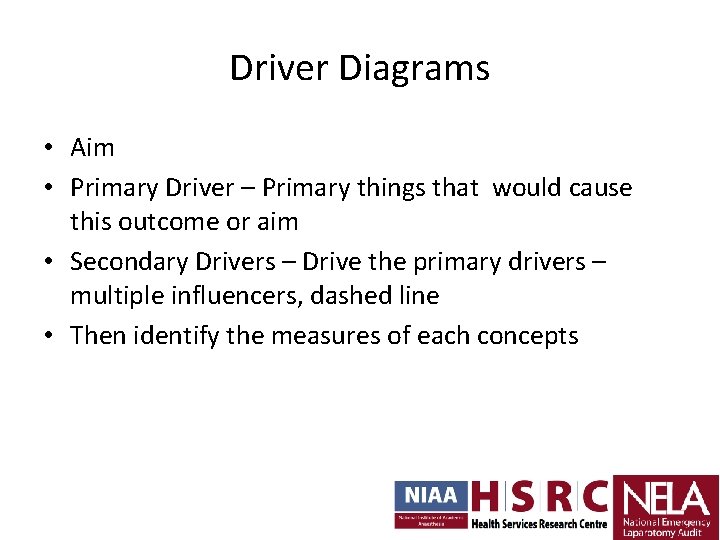
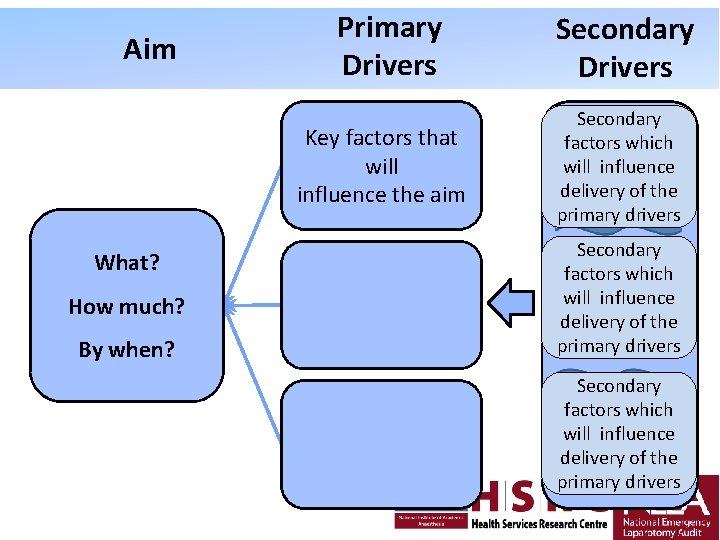
Driver Diagrams • Aim • Primary Driver – Primary things that would cause this outcome or aim • Secondary Drivers – Drive the primary drivers – multiple influencers, dashed line • Then identify the measures of each concepts
Aim Primary Drivers Key factors that will influence the aim What? How much? By when? Secondary Drivers Secondary factors which will influence delivery of the primary drivers
Breakout Next: • Create a driver diagram for improving emergency laparotomy length of stay • Spend 10 minutes in tables
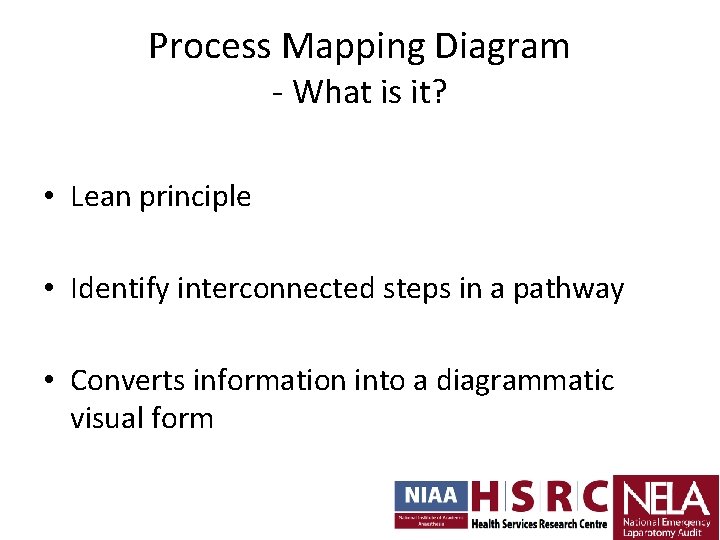
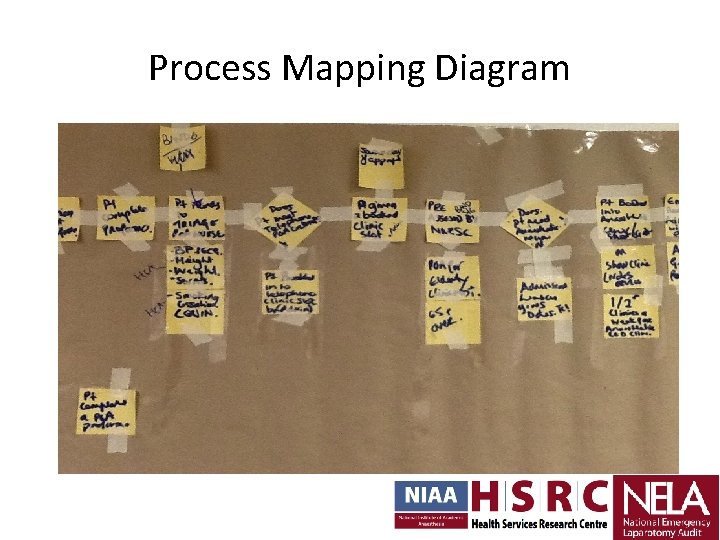
Process Mapping Diagram - What is it? • Lean principle • Identify interconnected steps in a pathway • Converts information into a diagrammatic visual form
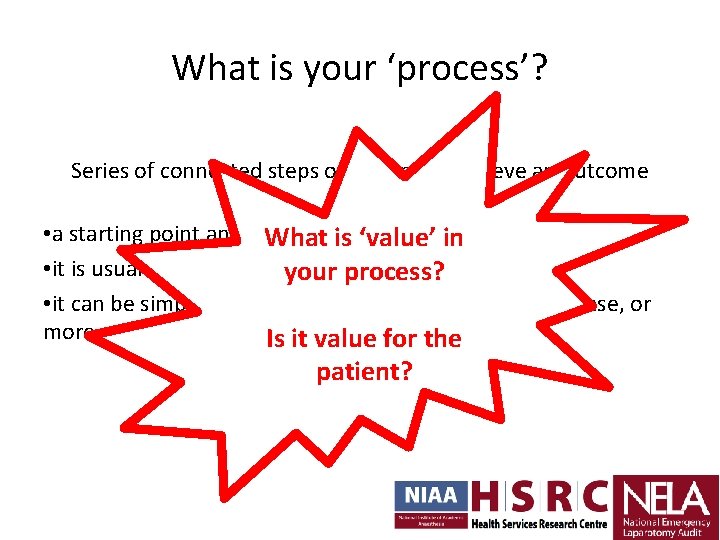
What is your ‘process’? Series of connected steps or actions to achieve an outcome • a starting point and an. What end point – “the scope” is ‘value’ in • it is usually linked to other processes your process? • it can be simple and short e. g. booking an emergency case, or more complex e. g. the Is whole laparotomy it value for thepathway patient?
Process Mapping Diagram
Breakout Write a process map for a part of the emergency laparotomy pathway at your hospital. What parts of the process could you measure? What parts could you change to make it more reliable or better?
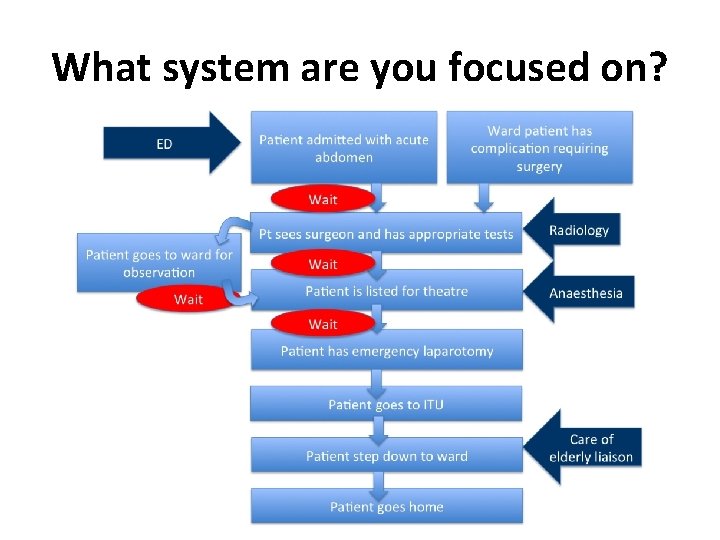
What system are you focused on?
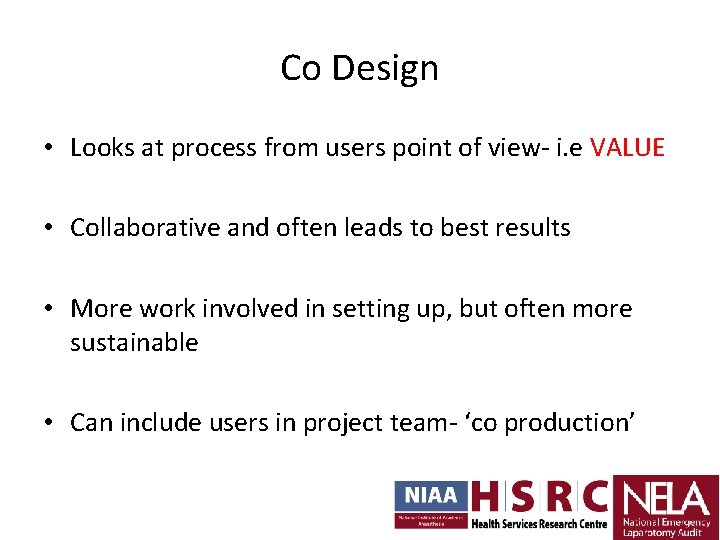
Co Design • Looks at process from users point of view- i. e VALUE • Collaborative and often leads to best results • More work involved in setting up, but often more sustainable • Can include users in project team- ‘co production’
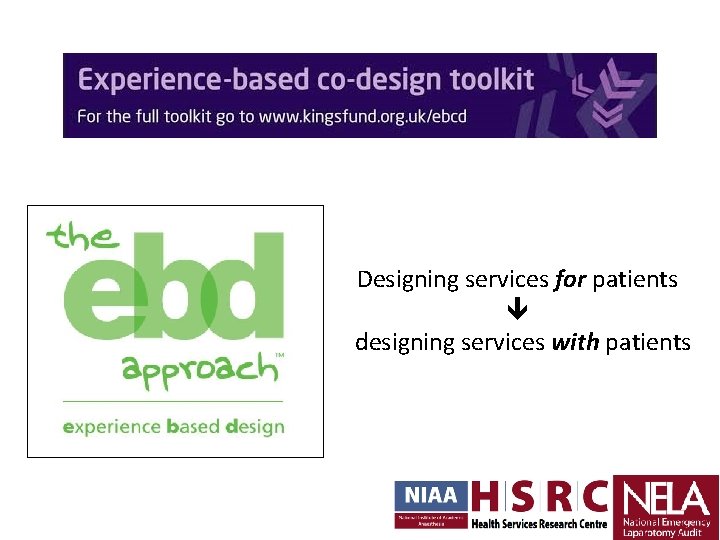
Designing services for patients designing services with patients
Model for Improvement Act on the plan - Testing
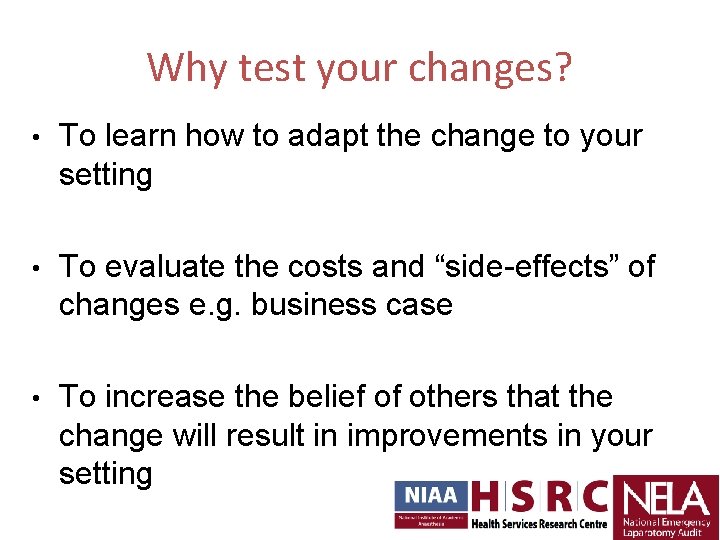
Why test your changes? • To learn how to adapt the change to your setting • To evaluate the costs and “side-effects” of changes e. g. business case • To increase the belief of others that the change will result in improvements in your setting
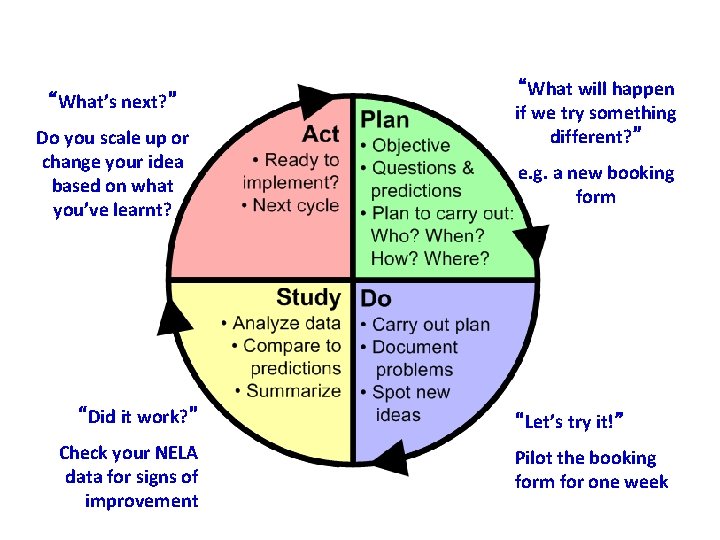
“What’s next? ” Do you scale up or change your idea based on what you’ve learnt? “Did it work? ” Check your NELA data for signs of improvement “What will happen if we try something different? ” e. g. a new booking form “Let’s try it!” Pilot the booking form for one week
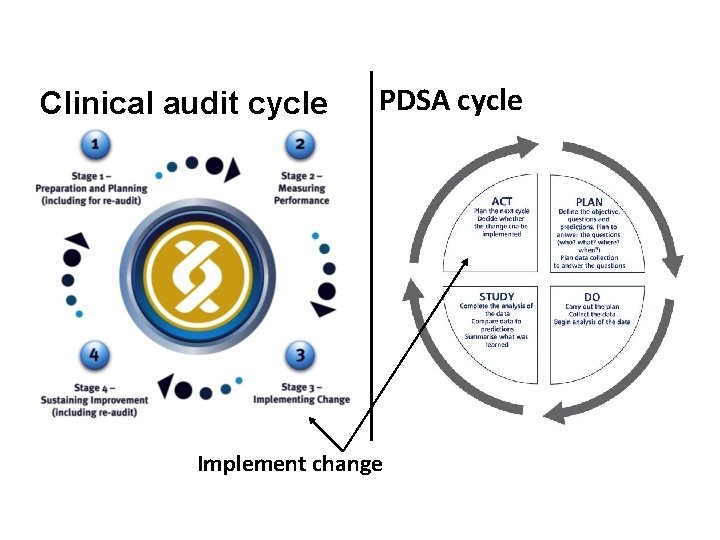
Clinical audit cycle PDSA cycle Implement change
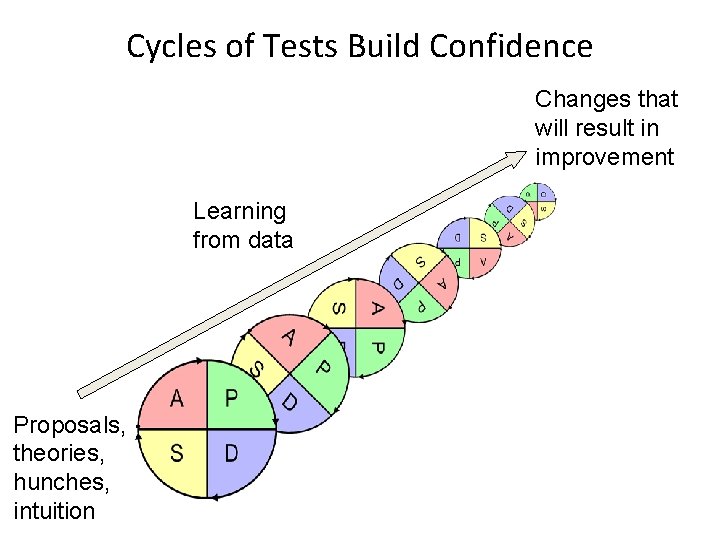
Cycles of Tests Build Confidence Changes that will result in improvement Learning from data Proposals, theories, hunches, intuition
Summary • Model for improvement is handy framework for making change • NELA standards, measures and reporting can help you do this • There a few simple tools to help you get change ideas e. g. driver diagrams etc.