Tropical Cyclone Structure Kate Musgrave CMMAP Colloquium July


- Slides: 9
Tropical Cyclone Structure Kate Musgrave CMMAP Colloquium July 22, 2008
My Previous Research n What do I do? Ø n Hurricane modeling Masters work Hurricane formation Ø Structure link – asymmetric convection played important role in formation of Gabrielle (2001) Ø
Motivation § Tropical cyclone forecasting Track Ø Intensity Ø n Ø Rapid intensification Structure n Concentric eyewalls, annular hurricanes, pinhole eyes
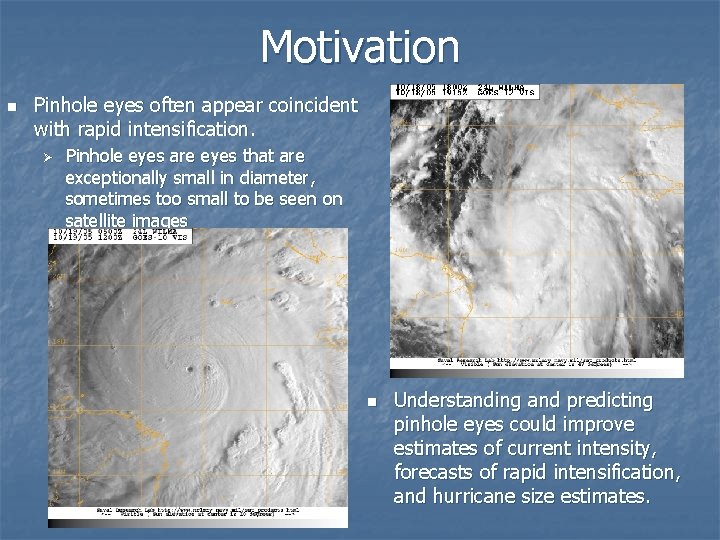
Motivation n Pinhole eyes often appear coincident with rapid intensification. Ø Pinhole eyes are eyes that are exceptionally small in diameter, sometimes too small to be seen on satellite images n Understanding and predicting pinhole eyes could improve estimates of current intensity, forecasts of rapid intensification, and hurricane size estimates.
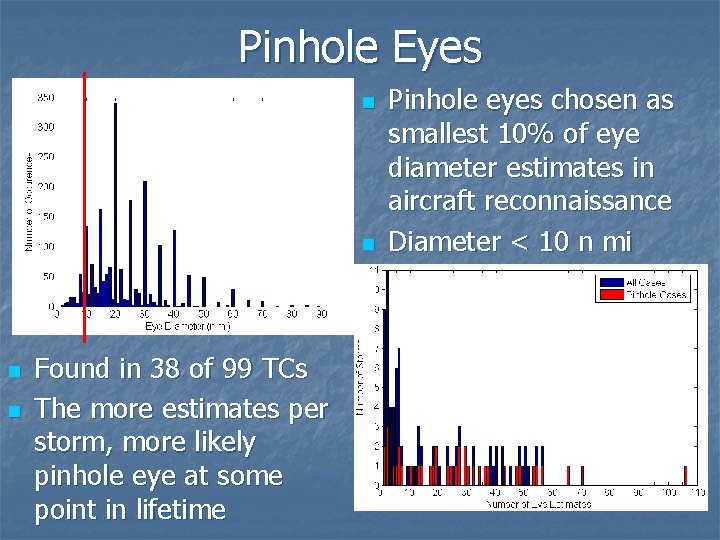
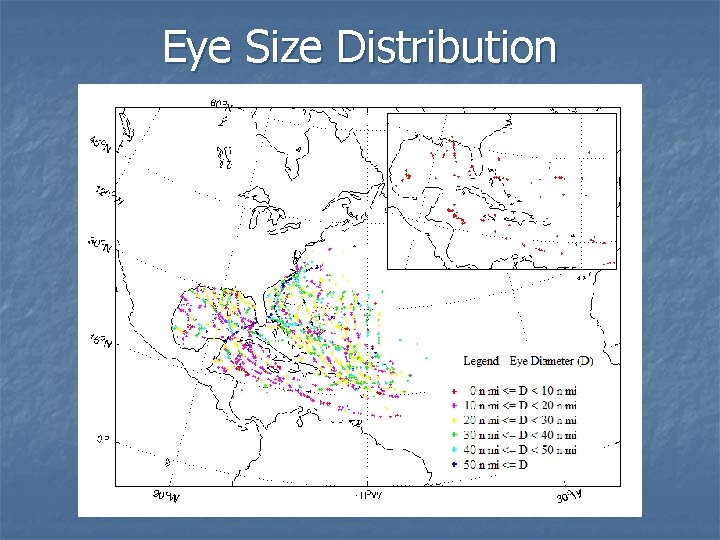
Pinhole Eyes n n Found in 38 of 99 TCs The more estimates per storm, more likely pinhole eye at some point in lifetime Pinhole eyes chosen as smallest 10% of eye diameter estimates in aircraft reconnaissance Diameter < 10 n mi
Eye Size Distribution
Future Plans n Tropical cyclone structure in climate models Ø As GCMs begin to approach mesoscale models in terms of resolution, how does the representation of tropical cyclones hold up?
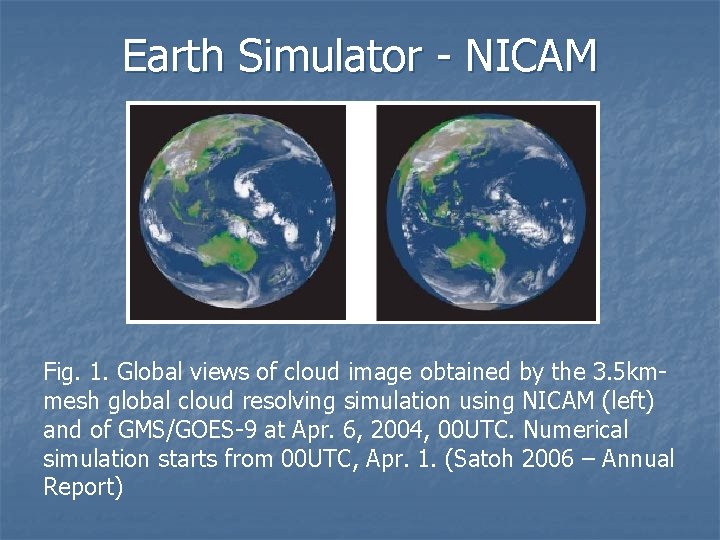
Earth Simulator - NICAM Fig. 1. Global views of cloud image obtained by the 3. 5 kmmesh global cloud resolving simulation using NICAM (left) and of GMS/GOES-9 at Apr. 6, 2004, 00 UTC. Numerical simulation starts from 00 UTC, Apr. 1. (Satoh 2006 – Annual Report)
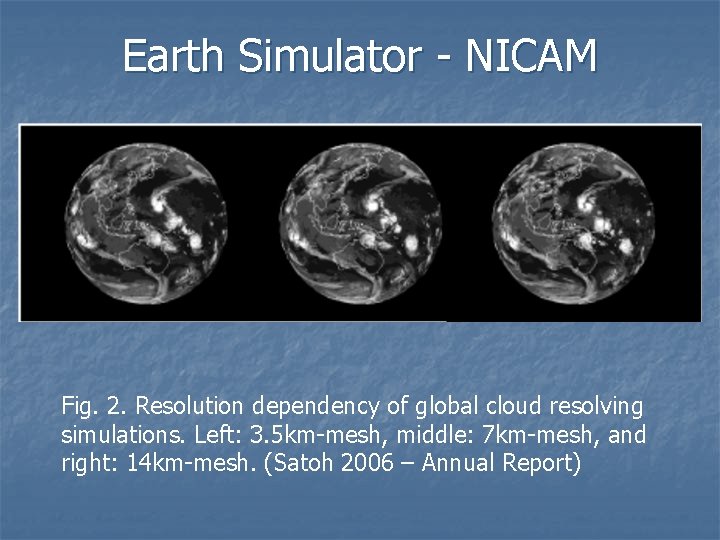
Earth Simulator - NICAM Fig. 2. Resolution dependency of global cloud resolving simulations. Left: 3. 5 km-mesh, middle: 7 km-mesh, and right: 14 km-mesh. (Satoh 2006 – Annual Report)