Topic 7 Functional Equations Dr J Frost jfrosttiffin

- Slides: 31
Topic 7: Functional Equations Dr J Frost (jfrost@tiffin. kingston. sch. uk) www. drfrostmaths. com Last modified: 31 st August 2015
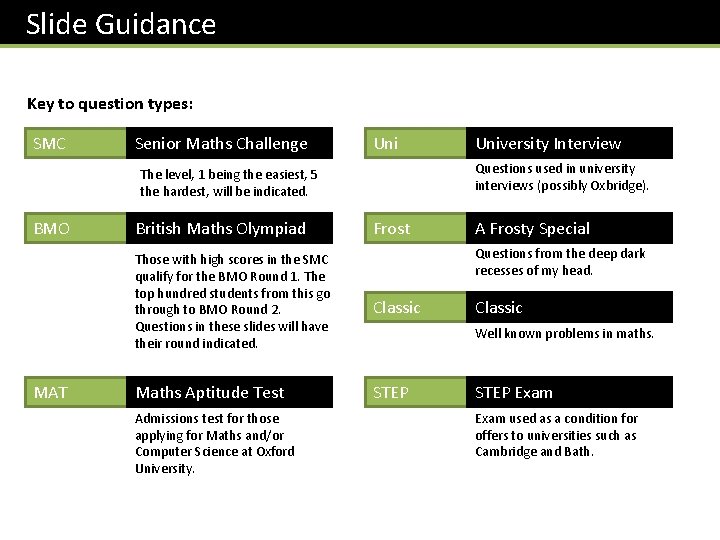
Slide Guidance Key to question types: SMC Senior Maths Challenge Uni Questions used in university interviews (possibly Oxbridge). The level, 1 being the easiest, 5 the hardest, will be indicated. BMO MAT British Maths Olympiad Frost A Frosty Special Questions from the deep dark recesses of my head. Those with high scores in the SMC qualify for the BMO Round 1. The top hundred students from this go through to BMO Round 2. Questions in these slides will have their round indicated. Classic Maths Aptitude Test STEP Admissions test for those applying for Maths and/or Computer Science at Oxford University Interview Classic Well known problems in maths. STEP Exam used as a condition for offers to universities such as Cambridge and Bath.
Slide Guidance ? Any box with a ? can be clicked to reveal the answer (this works particularly well with interactive whiteboards!). Make sure you’re viewing the slides in slideshow mode. For multiple choice questions (e. g. SMC), click your choice to reveal the answer (try below!) Question: The capital of Spain is: A: London B: Paris C: Madrid
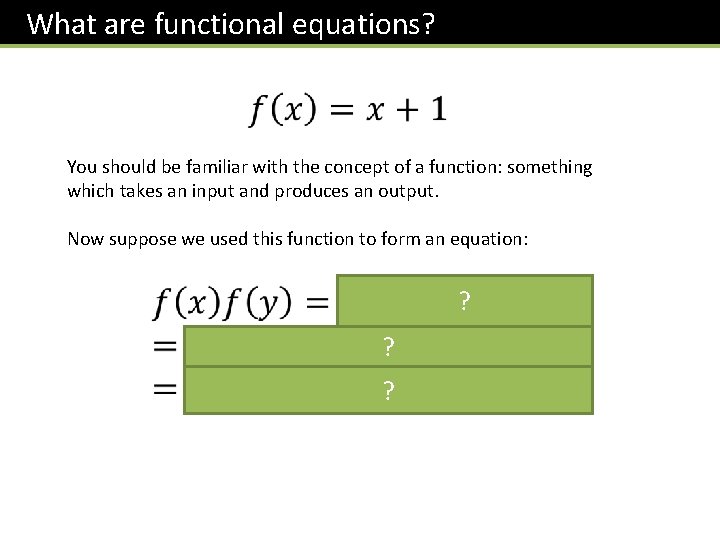
What are functional equations? You should be familiar with the concept of a function: something which takes an input and produces an output. Now suppose we used this function to form an equation: ? ? ?
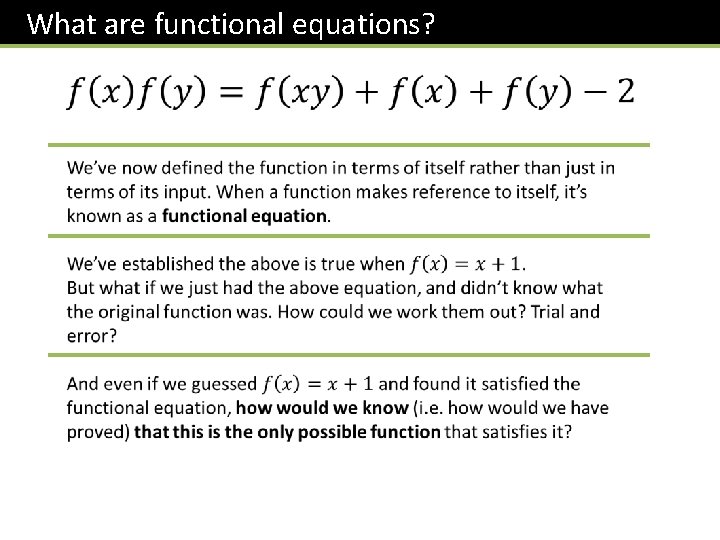
What are functional equations?
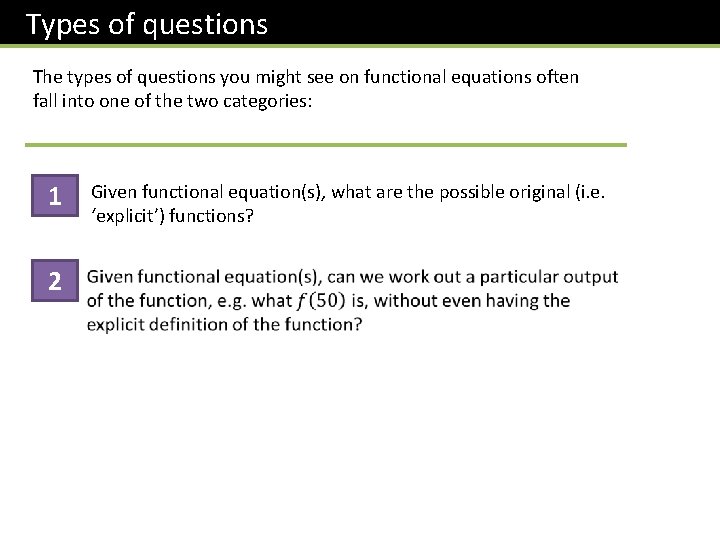
Types of questions The types of questions you might see on functional equations often fall into one of the two categories: 1 2 Given functional equation(s), what are the possible original (i. e. ‘explicit’) functions?
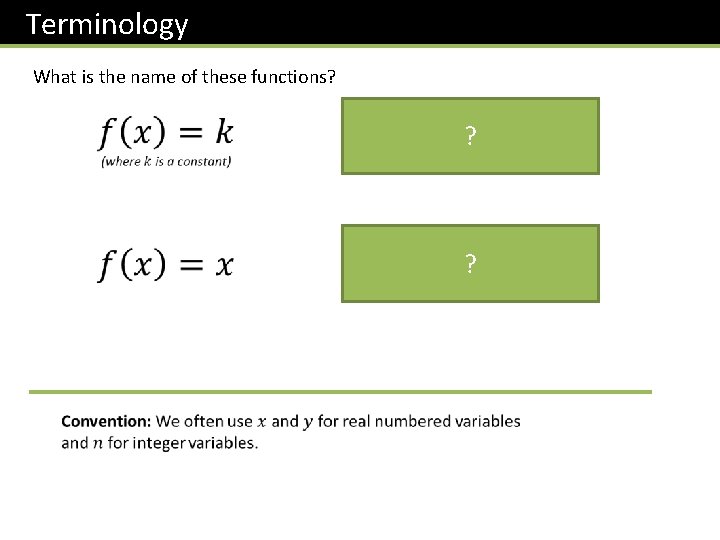
Terminology What is the name of these functions? Constant Function ? Identity Function ?
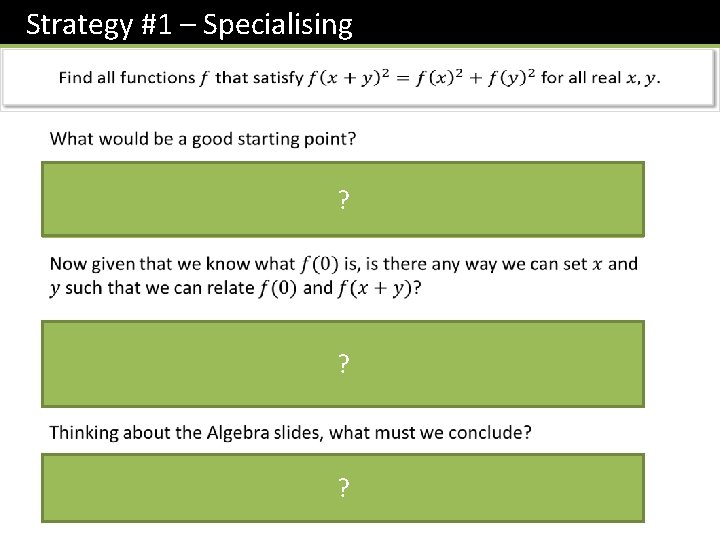
Strategy #1 – Specialising ?
Strategy #1 – Specialising ? ? ?
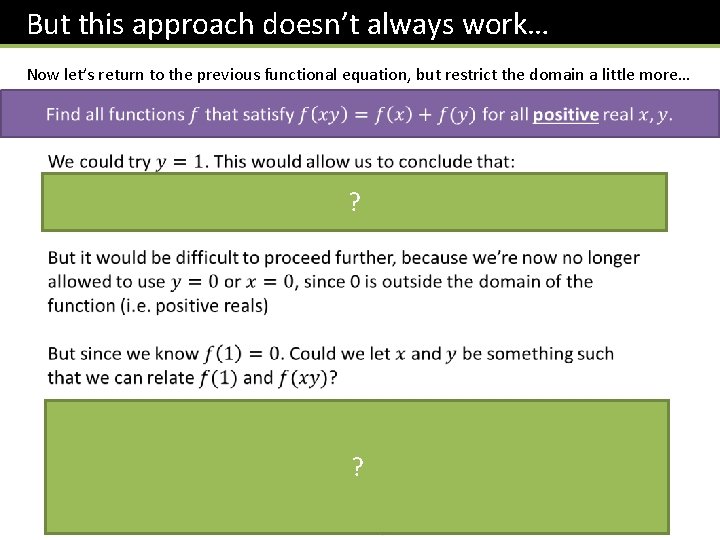
But this approach doesn’t always work… Now let’s return to the previous functional equation, but restrict the domain a little more… ? ?
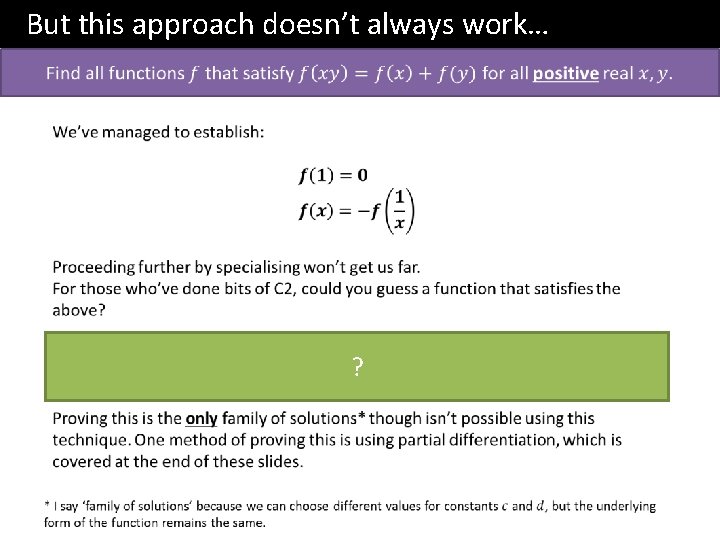
But this approach doesn’t always work… ?
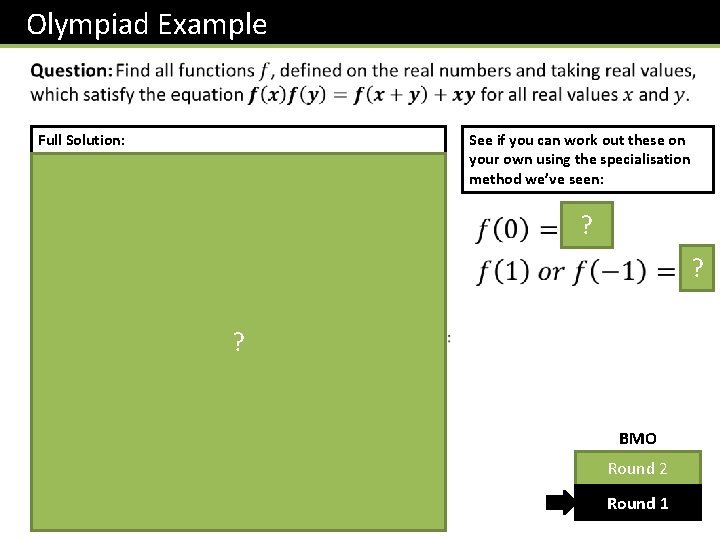
Olympiad Example Full Solution: See if you can work out these on your own using the specialisation method we’ve seen: ? ? ? BMO Round 2 Round 1
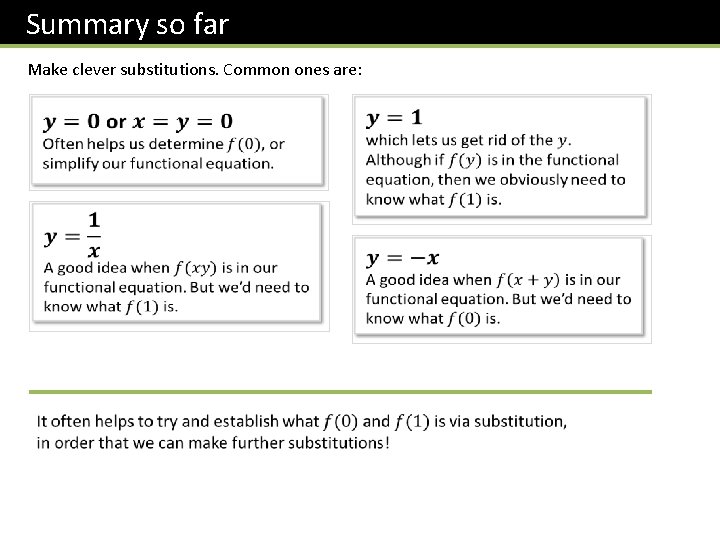
Summary so far Make clever substitutions. Common ones are:
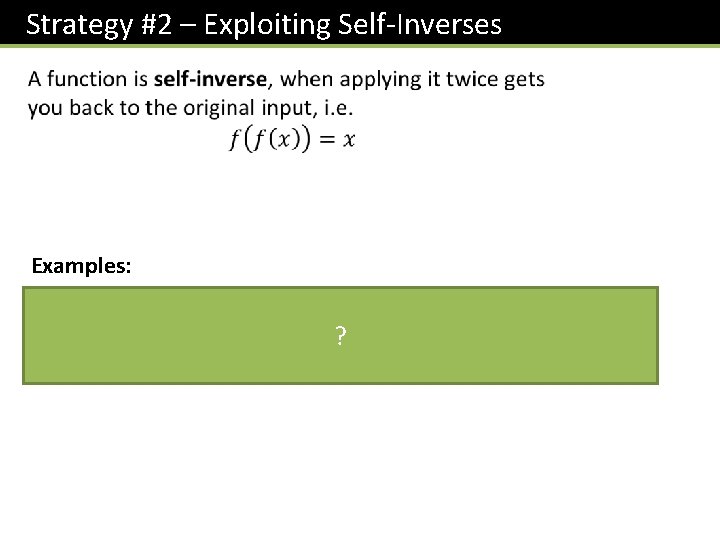
Strategy #2 – Exploiting Self-Inverses Examples: ?
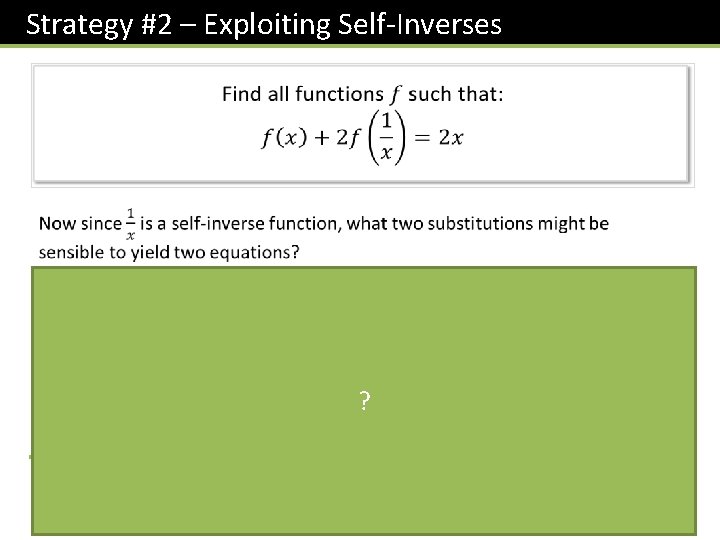
Strategy #2 – Exploiting Self-Inverses ? ?
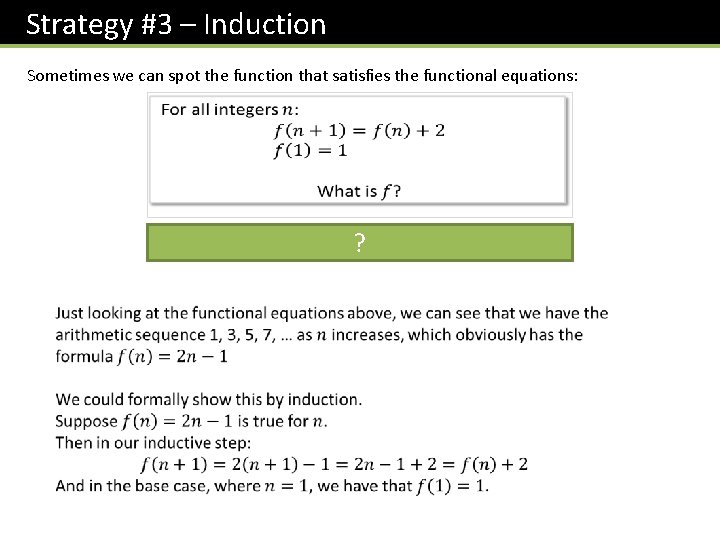
Strategy #3 – Induction Sometimes we can spot the function that satisfies the functional equations: ?
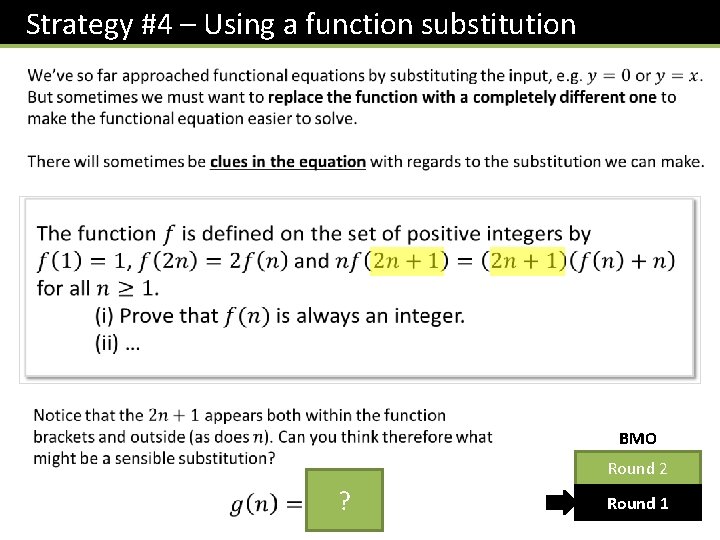
Strategy #4 – Using a function substitution BMO Round 2 ? Round 1
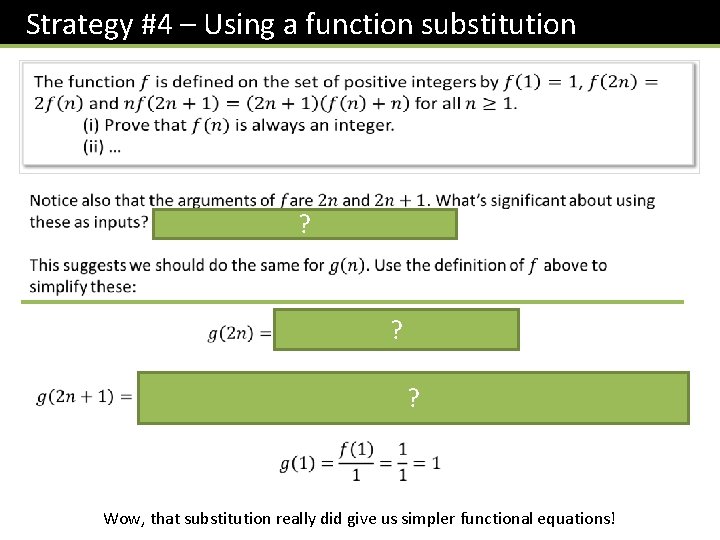
Strategy #4 – Using a function substitution ? ? ? Wow, that substitution really did give us simpler functional equations!
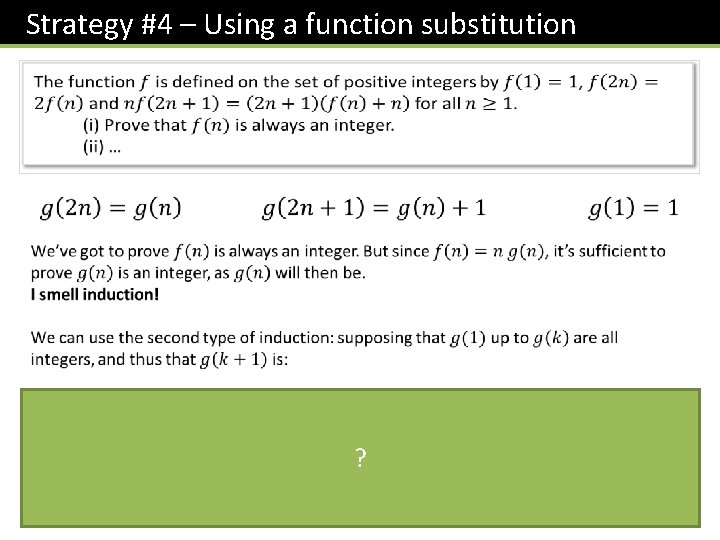
Strategy #4 – Using a function substitution ?
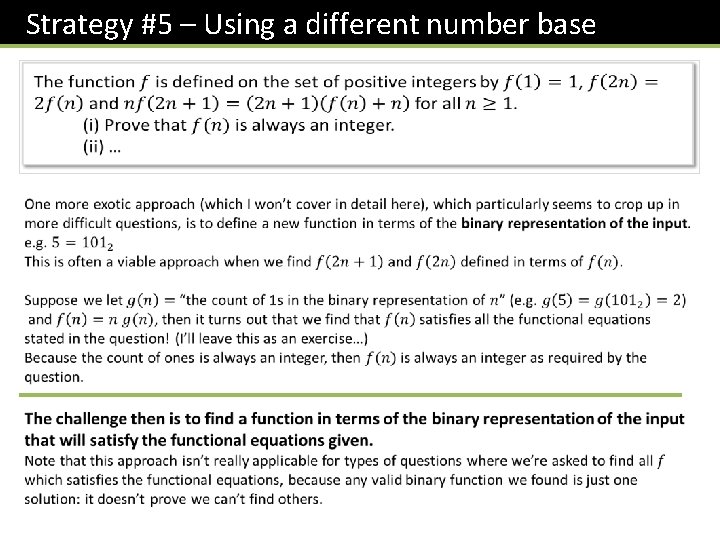
Strategy #5 – Using a different number base
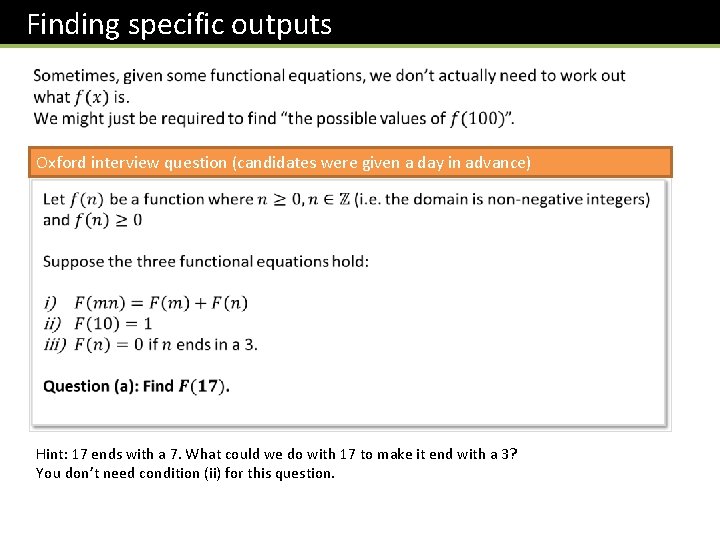
Finding specific outputs Oxford interview question (candidates were given a day in advance) Hint: 17 ends with a 7. What could we do with 17 to make it end with a 3? You don’t need condition (ii) for this question.
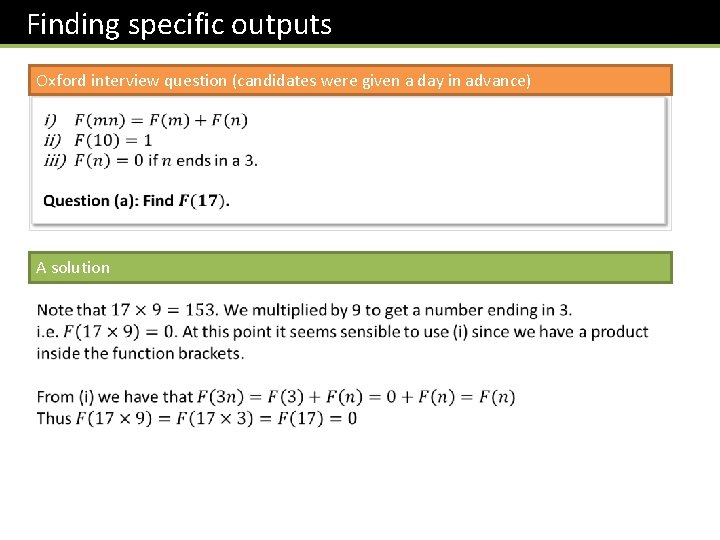
Finding specific outputs Oxford interview question (candidates were given a day in advance) A solution
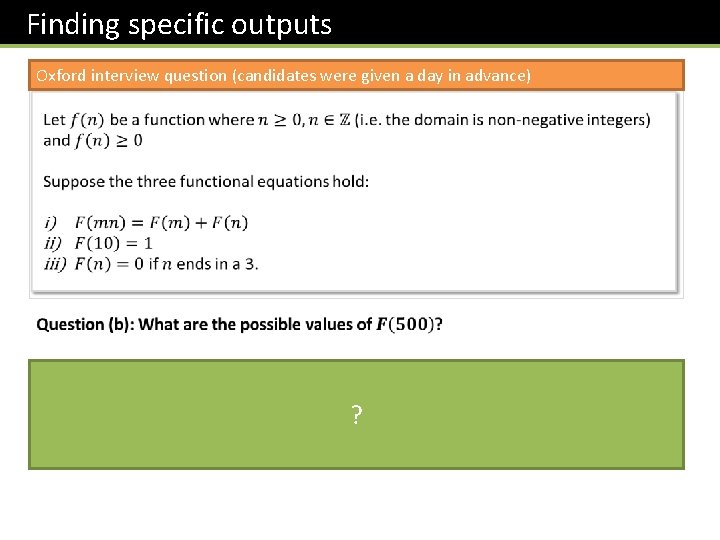
Finding specific outputs Oxford interview question (candidates were given a day in advance) ?
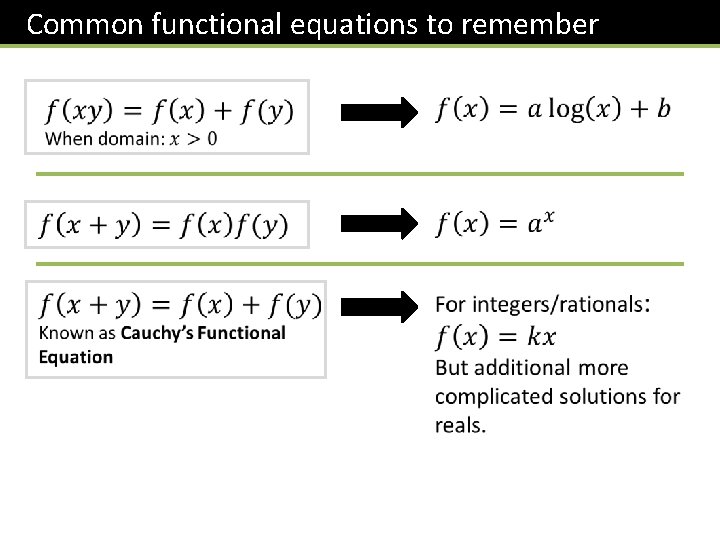
Common functional equations to remember
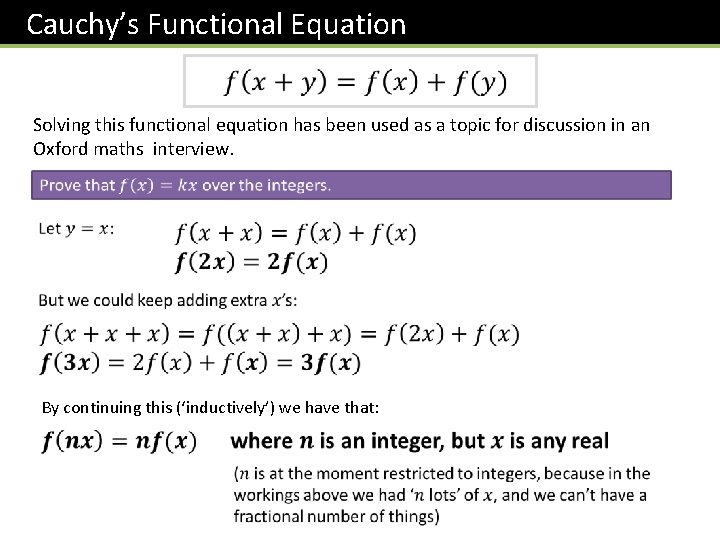
Cauchy’s Functional Equation Solving this functional equation has been used as a topic for discussion in an Oxford maths interview. By continuing this (‘inductively’) we have that:
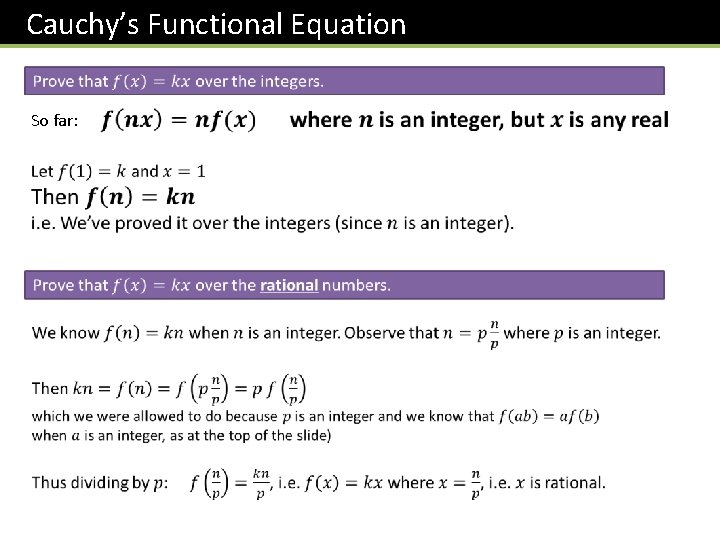
Cauchy’s Functional Equation So far:
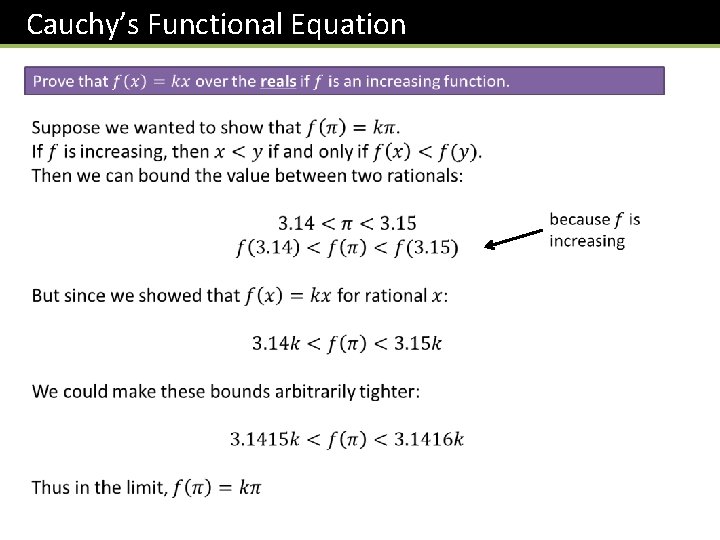
Cauchy’s Functional Equation
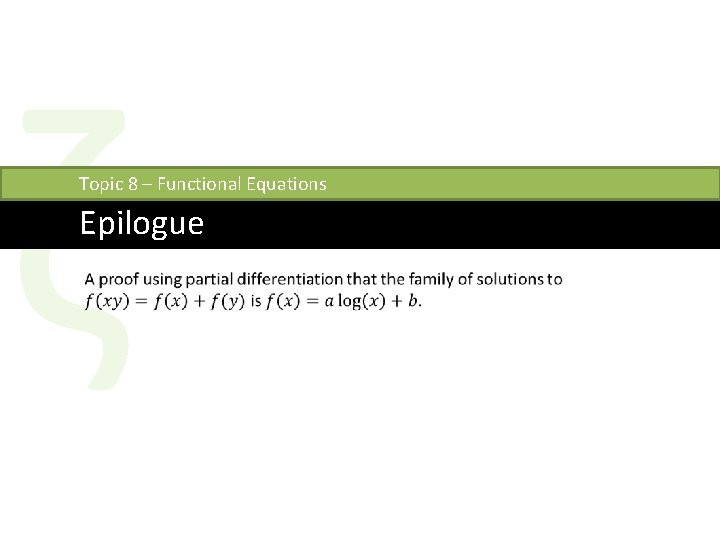
ζ Topic 8 – Functional Equations Epilogue
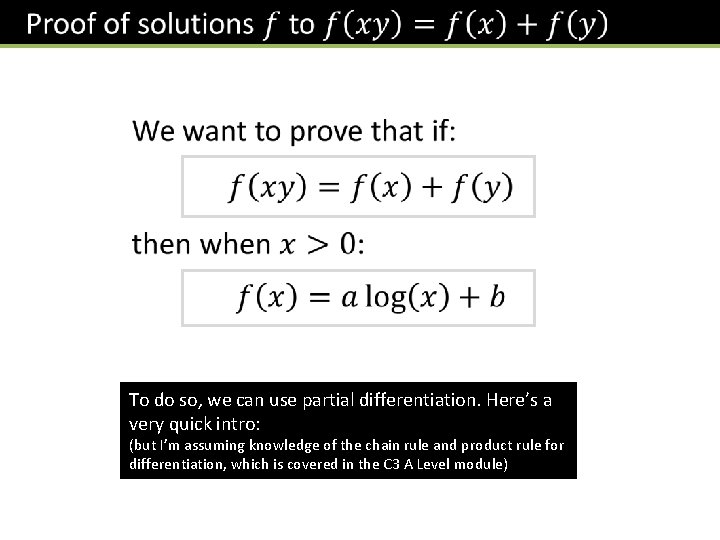
To do so, we can use partial differentiation. Here’s a very quick intro: (but I’m assuming knowledge of the chain rule and product rule for differentiation, which is covered in the C 3 A Level module)
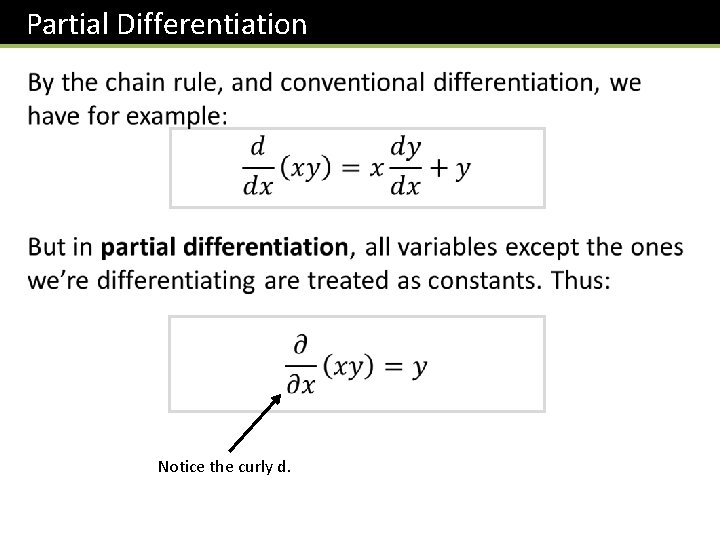
Partial Differentiation Notice the curly d.
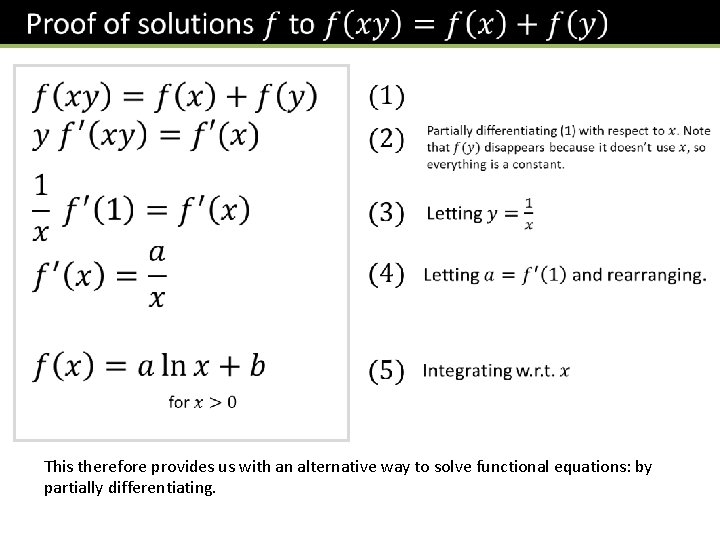
This therefore provides us with an alternative way to solve functional equations: by partially differentiating.