Theoretical Considerations Chapter 5 Location Lect 15 Location
- Slides: 27
Theoretical Considerations Chapter 5 -- Location Lect 15 -- Location 1
Location Decisions two parts l Orientation: Site versus Situation l Factors effecting a specific decision Lect 15 -- Location 2
Basic Decision Paradigms Two most basic issue l Site Based l Situation Based Lect 15 -- Location 3
SITE Lect 15 -- Location 4
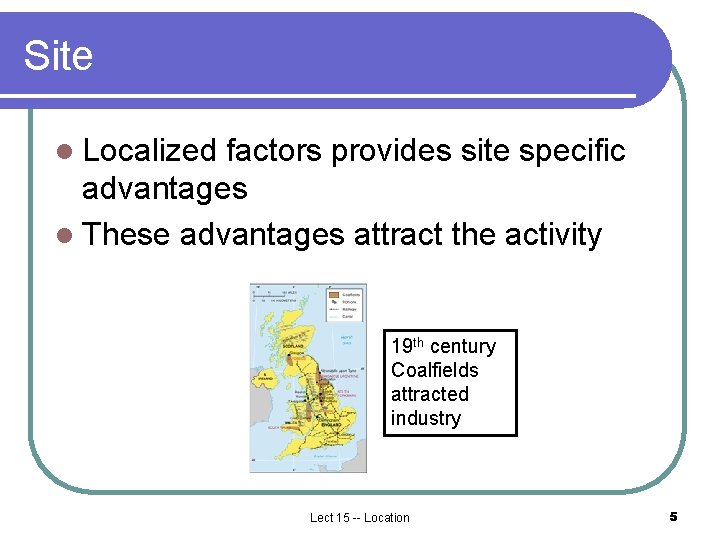
Site l Localized factors provides site specific advantages l These advantages attract the activity 19 th century Coalfields attracted industry Lect 15 -- Location 5
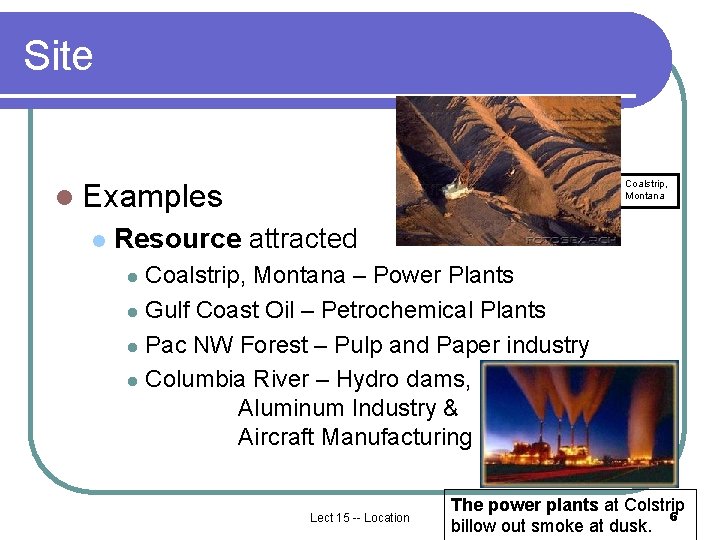
Site l Examples l Coalstrip, Montana Resource attracted Coalstrip, Montana – Power Plants l Gulf Coast Oil – Petrochemical Plants l Pac NW Forest – Pulp and Paper industry l Columbia River – Hydro dams, Aluminum Industry & Aircraft Manufacturing l Lect 15 -- Location The power plants at Colstrip 6 billow out smoke at dusk.
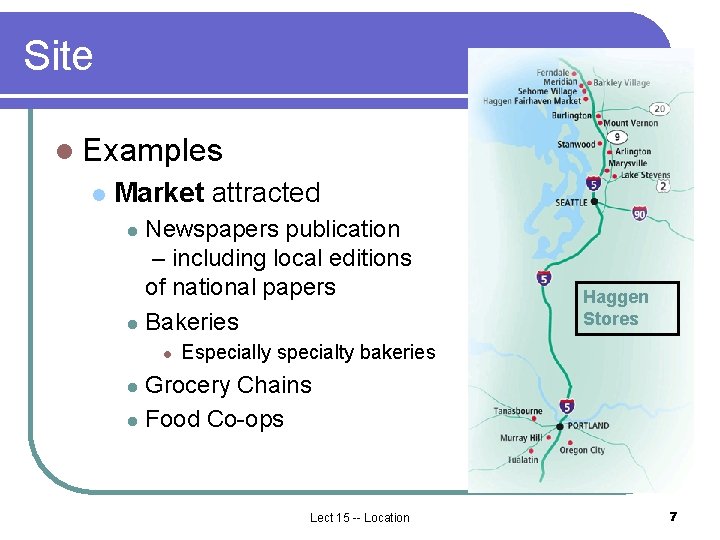
Site l Examples l Market attracted Newspapers publication – including local editions of national papers l Bakeries l l Haggen Stores Especially specialty bakeries Grocery Chains l Food Co-ops l Lect 15 -- Location 7
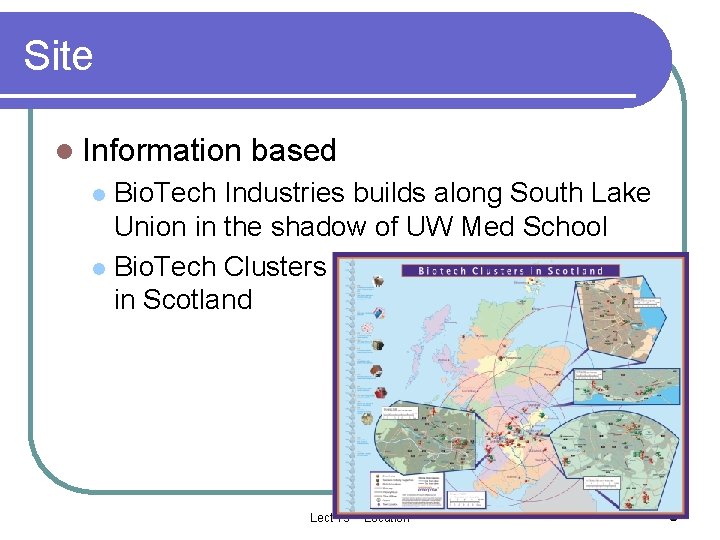
Site l Information based Bio. Tech Industries builds along South Lake Union in the shadow of UW Med School l Bio. Tech Clusters in Scotland l Lect 15 -- Location 8
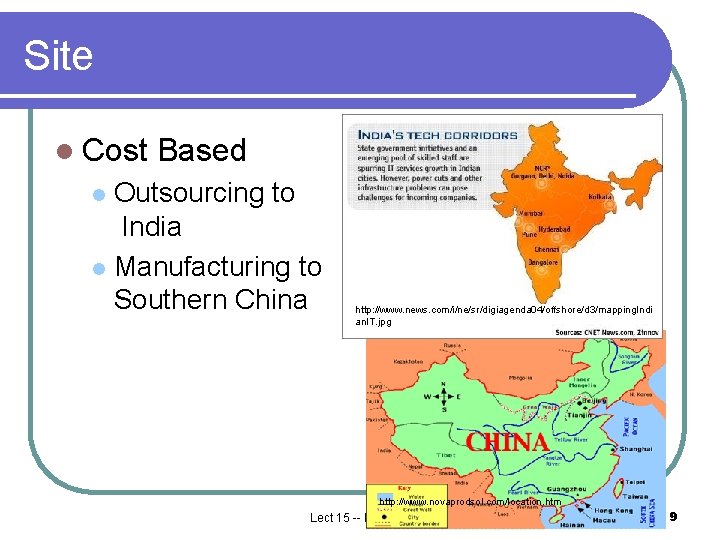
Site l Cost Based Outsourcing to India l Manufacturing to Southern China l http: //www. news. com/i/ne/sr/digiagenda 04/offshore/d 3/mapping. Indi an. IT. jpg http: //www. novaprodsol. com/location. htm Lect 15 -- Location 9
SITUATION Lect 15 -- Location 10
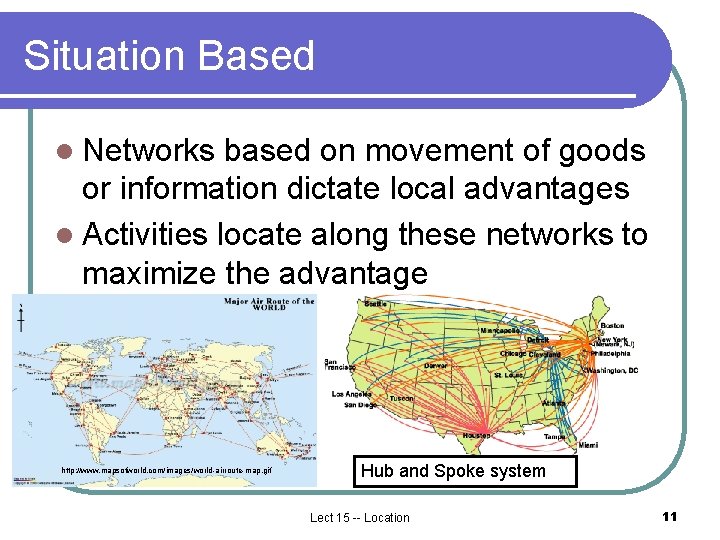
Situation Based l Networks based on movement of goods or information dictate local advantages l Activities locate along these networks to maximize the advantage http: //www. mapsofworld. com/images/world-airroute-map. gif Hub and Spoke system Lect 15 -- Location 11
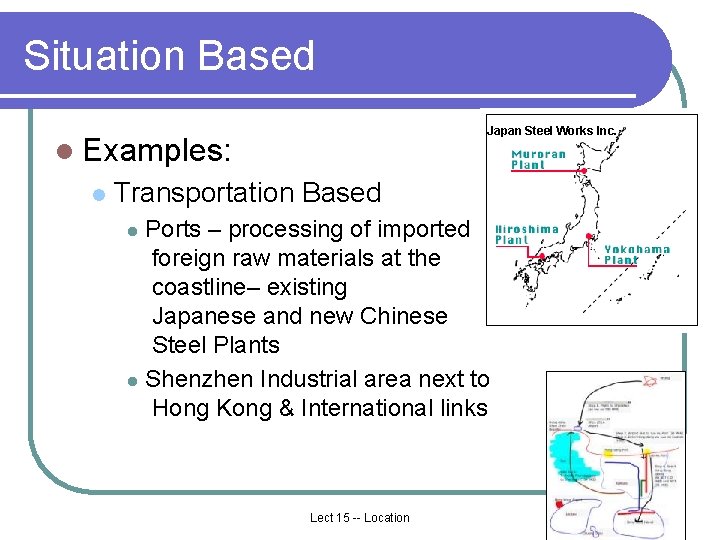
Situation Based Japan Steel Works Inc. l Examples: l Transportation Based Ports – processing of imported foreign raw materials at the coastline– existing Japanese and new Chinese Steel Plants l Shenzhen Industrial area next to Hong Kong & International links l Lect 15 -- Location 12
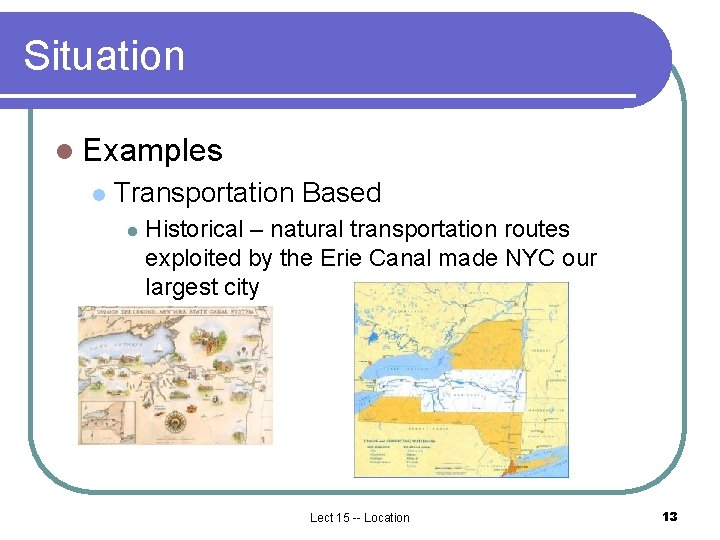
Situation l Examples l Transportation Based l Historical – natural transportation routes exploited by the Erie Canal made NYC our largest city Lect 15 -- Location 13
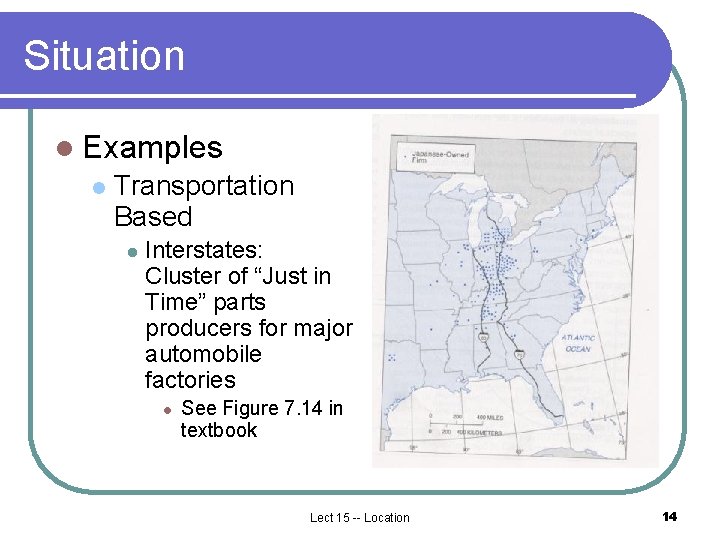
Situation l Examples l Transportation Based l Interstates: Cluster of “Just in Time” parts producers for major automobile factories l See Figure 7. 14 in textbook Lect 15 -- Location 14
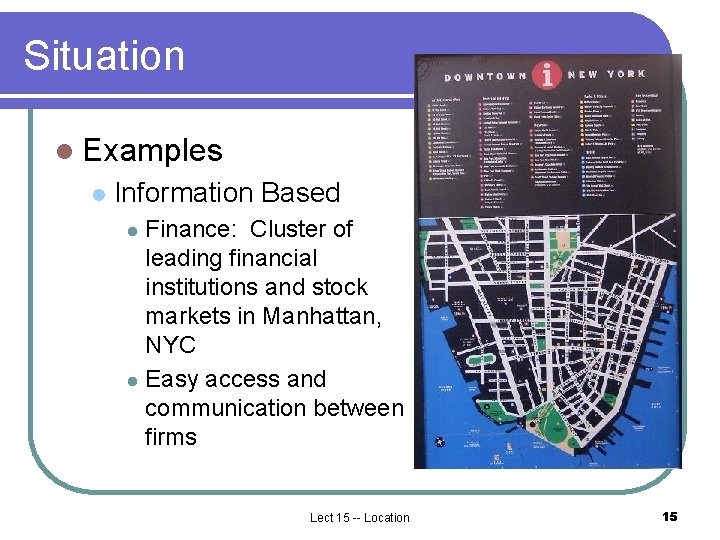
Situation l Examples l Information Based Finance: Cluster of leading financial institutions and stock markets in Manhattan, NYC l Easy access and communication between firms l Lect 15 -- Location 15
Final Word l All activities benefit in part from both Site and Situation Characteristics, but usually one or the other dominates the location decision Lect 15 -- Location 16
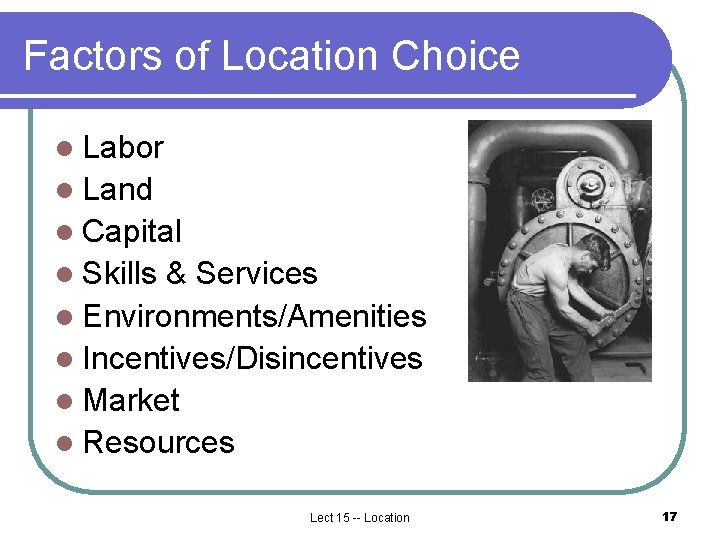
Factors of Location Choice l Labor l Land l Capital l Skills & Services l Environments/Amenities l Incentives/Disincentives l Market l Resources Lect 15 -- Location 17
Labor Impacts in a variety of ways l Cost l l l Hollowing Out Syndrome Anti-Union Syndrome China Syndrome? l Skills l High skill pursuit Lect 15 -- Location 18
Land Highly localized factor, impacts felt through l Zoning l Real Estate Cost l Infrastructure linkages l Roads, communications, utilities Lect 15 -- Location 19
Capital l Fixed l Infrastructure investment l Existence of roads, airports, utilities, schools… l Variable Finance – Banks, FDI, Venture Capital, Government Grants and Loans l Risk versus Return – security and price of borrowing l Lect 15 -- Location 20
Skills and Services l Critical mass that provides spatial economies of scale for similar specialized activities l Managerial l NYC, Chicago, LA and company headquarters l l Concentration of highly skill people and services to support their work Research and Development l Silicon Valley, Research Triangle… l Concentration of computer hardware and software firms and spin-off activities Lect 15 -- Location 21
Environment/Amenities l If you could work anywhere which is better Mississippi or Oregon? Explain why. Recreation l Climate l Culture l Lect 15 -- Location 22
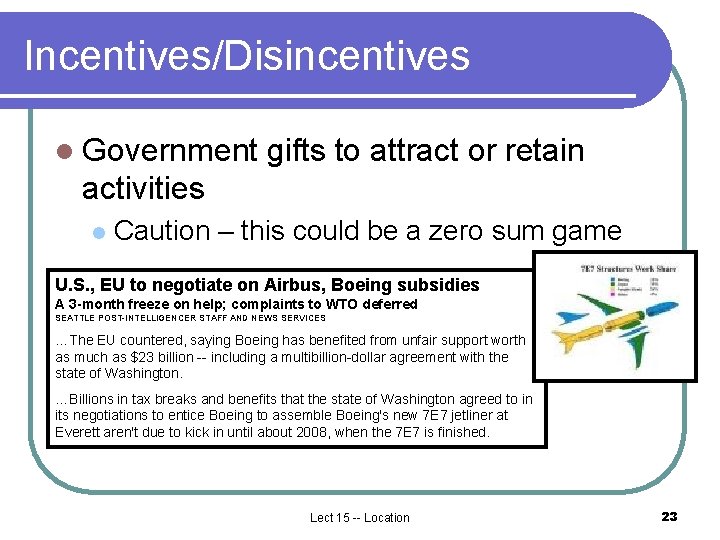
Incentives/Disincentives l Government gifts to attract or retain activities l Caution – this could be a zero sum game U. S. , EU to negotiate on Airbus, Boeing subsidies A 3 -month freeze on help; complaints to WTO deferred SEATTLE POST-INTELLIGENCER STAFF AND NEWS SERVICES …The EU countered, saying Boeing has benefited from unfair support worth as much as $23 billion -- including a multibillion-dollar agreement with the state of Washington. …Billions in tax breaks and benefits that the state of Washington agreed to in its negotiations to entice Boeing to assemble Boeing's new 7 E 7 jetliner at Everett aren't due to kick in until about 2008, when the 7 E 7 is finished. Lect 15 -- Location 23
Incentives/Disincentives l Government gifts to attract or retain activities l Caution – this could be a zero sum game l Disincentives also exist preventing certain types of activities or hindering them Movement of polluting activities off-shore l Medical device testing occurring in Mexico rather then US l Lect 15 -- Location 24
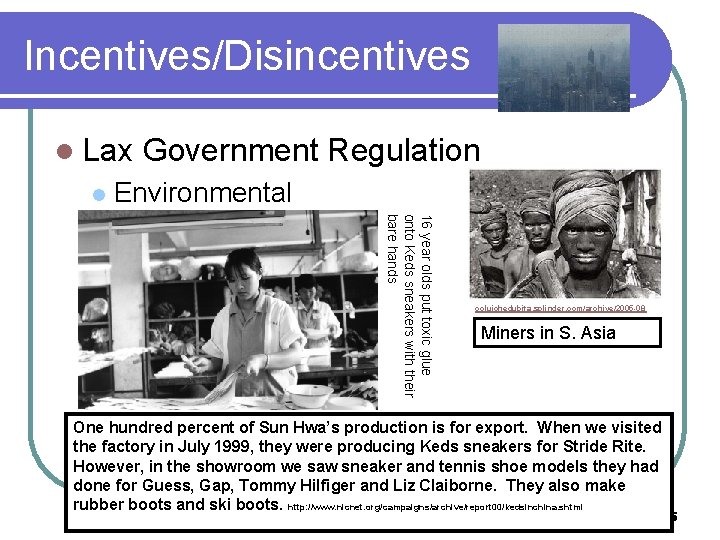
Incentives/Disincentives l Lax l Government Regulation Environmental 16 year olds put toxic glue onto Keds sneakers with their bare hands coluichedubita. splinder. com/archive/2005 -08 Miners in S. Asia One hundred percent of Sun Hwa’s production is for export. When we visited the factory in July 1999, they were producing Keds sneakers for Stride Rite. However, in the showroom we saw sneaker and tennis shoe models they had done for Guess, Gap, Tommy Hilfiger and Liz Claiborne. They also make rubber boots and ski boots. http: //www. nlcnet. org/campaigns/archive/report 00/kedsinchina. shtml Lect 15 -- Location 25
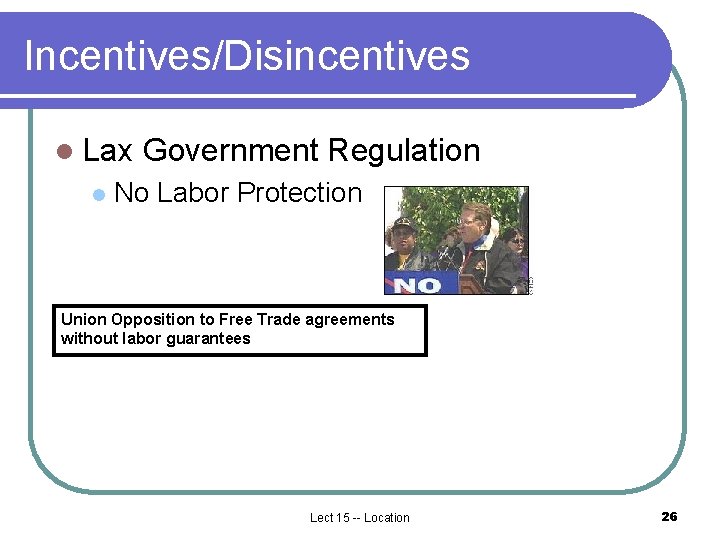
Incentives/Disincentives l Lax l Government Regulation No Labor Protection Union Opposition to Free Trade agreements without labor guarantees Lect 15 -- Location 26
Situation: Tutorial For Hub and Spoke System http: //virtualskies. arc. nasa. gov/research/tutorial 2 b. html Tutorial 2. b. Efficiency and Aviation Capacity The hub-and-spoke system has evolved over time under the design of the airline companies for their own ease in operations. It also has served to keep the cost down for maintaining their fleet. http: //virtualskies. arc. nasa. gov/research/tutorial 2 b. html Click Here to View Lect 15 -- Location 27