Theoretical Aspects of the Color Glass Condensate and

- Slides: 16
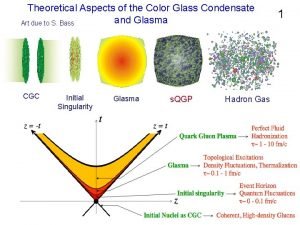
Theoretical Aspects of the Color Glass Condensate and Glasma Art due to S. Bass CGC Initial Singularity Glasma s. QGP Hadron Gas 1
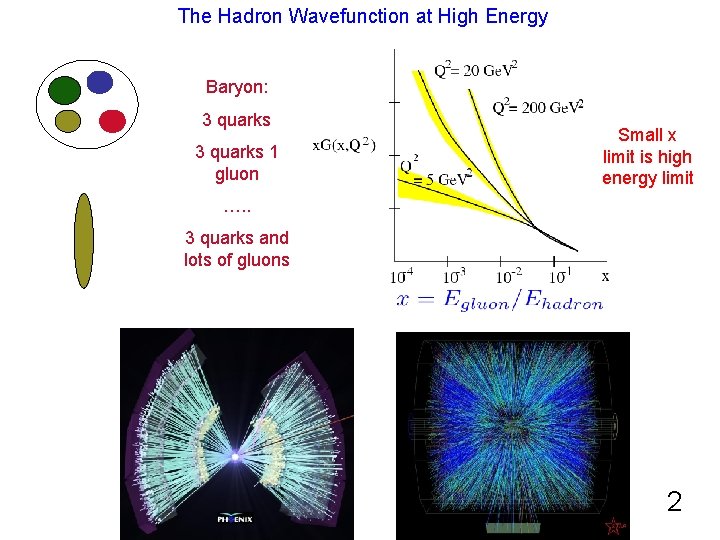
The Hadron Wavefunction at High Energy Baryon: 3 quarks 1 gluon Small x limit is high energy limit …. . 3 quarks and lots of gluons 2
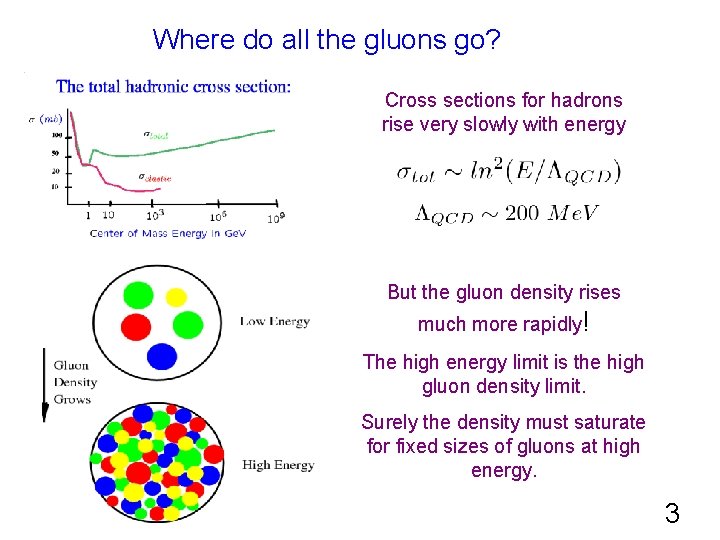
Where do all the gluons go? Cross sections for hadrons rise very slowly with energy But the gluon density rises much more rapidly! The high energy limit is the high gluon density limit. Surely the density must saturate for fixed sizes of gluons at high energy. 3
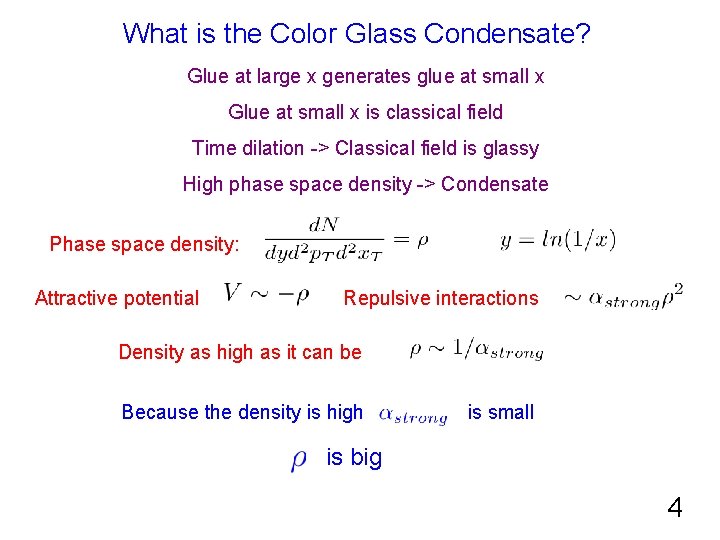
What is the Color Glass Condensate? Glue at large x generates glue at small x Glue at small x is classical field Time dilation -> Classical field is glassy High phase space density -> Condensate Phase space density: Attractive potential Repulsive interactions Density as high as it can be Because the density is high is small is big 4
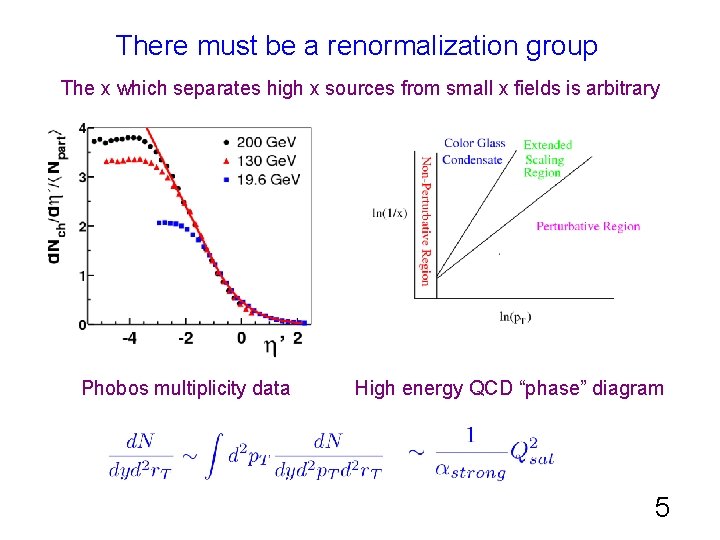
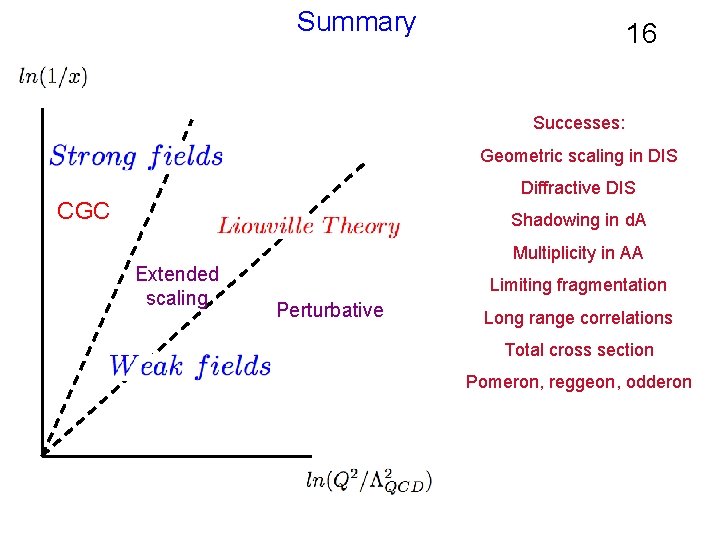
There must be a renormalization group The x which separates high x sources from small x fields is arbitrary Phobos multiplicity data High energy QCD “phase” diagram 5
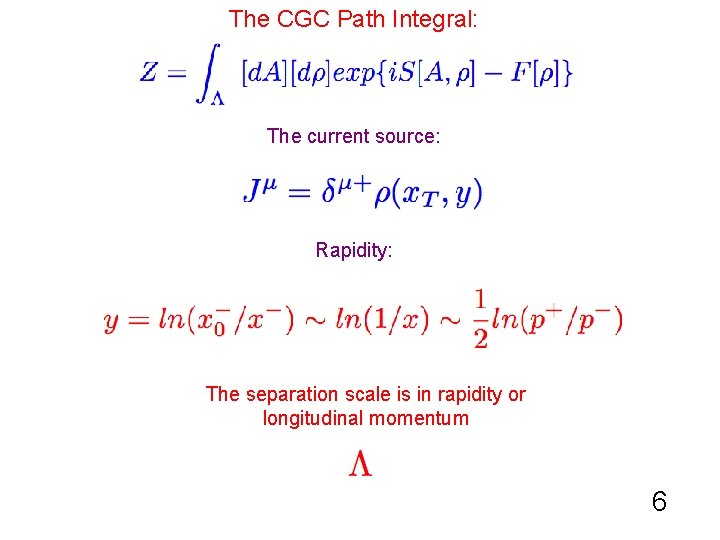
The CGC Path Integral: The current source: Rapidity: The separation scale is in rapidity or longitudinal momentum 6
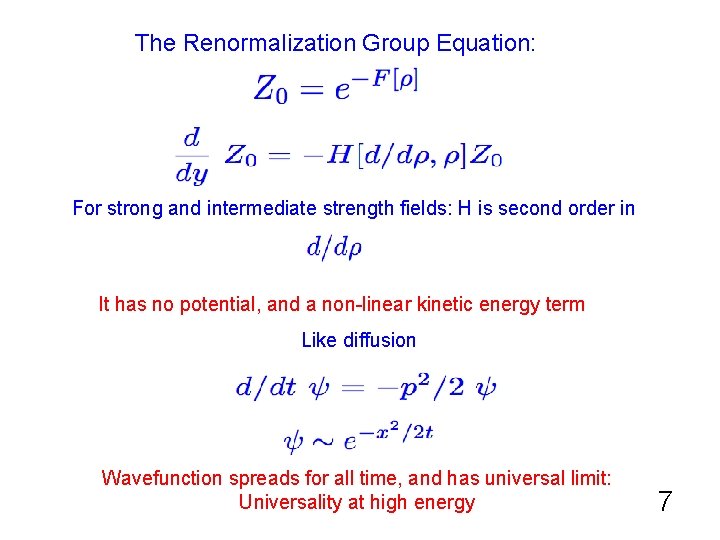
The Renormalization Group Equation: For strong and intermediate strength fields: H is second order in It has no potential, and a non-linear kinetic energy term Like diffusion Wavefunction spreads for all time, and has universal limit: Universality at high energy 7
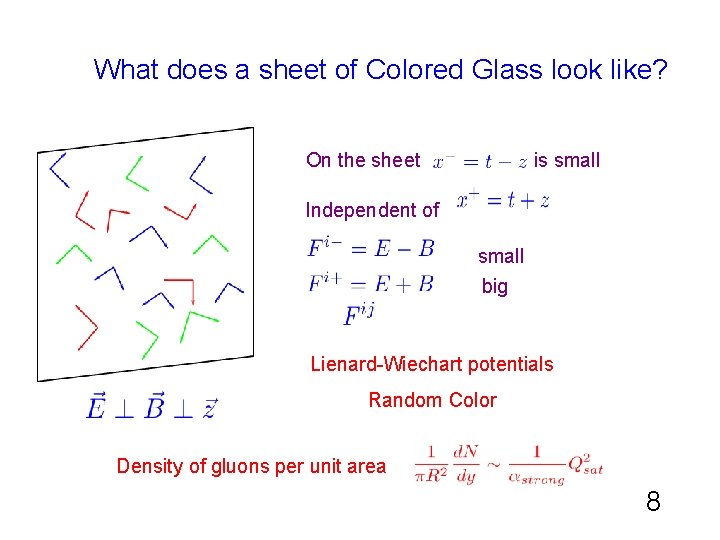
What does a sheet of Colored Glass look like? On the sheet is small Independent of small big Lienard-Wiechart potentials Random Color Density of gluons per unit area 8
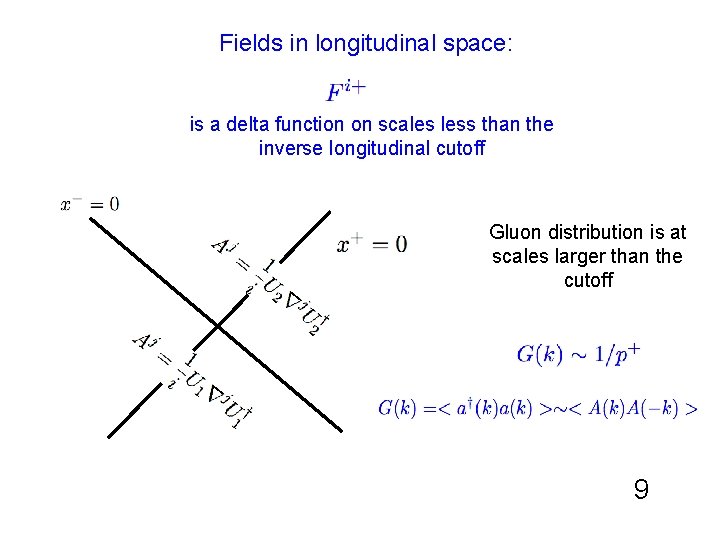
Fields in longitudinal space: is a delta function on scales less than the inverse longitudinal cutoff Gluon distribution is at scales larger than the cutoff 9
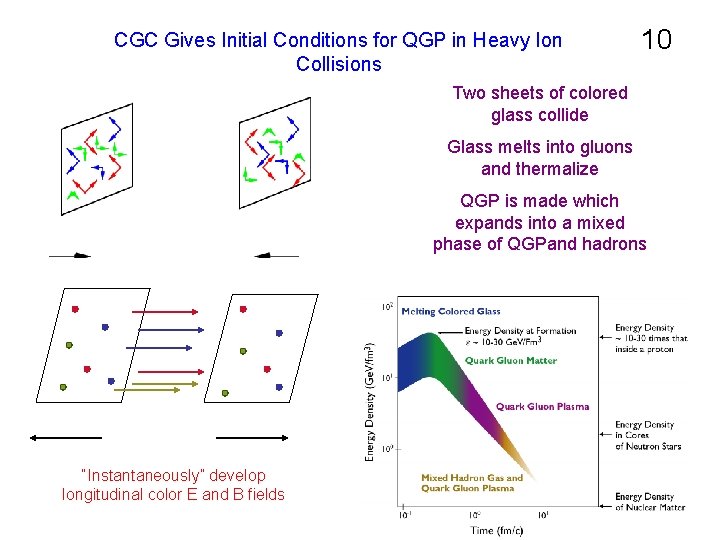
CGC Gives Initial Conditions for QGP in Heavy Ion Collisions 10 Two sheets of colored glass collide Glass melts into gluons and thermalize QGP is made which expands into a mixed phase of QGPand hadrons “Instantaneously” develop longitudinal color E and B fields
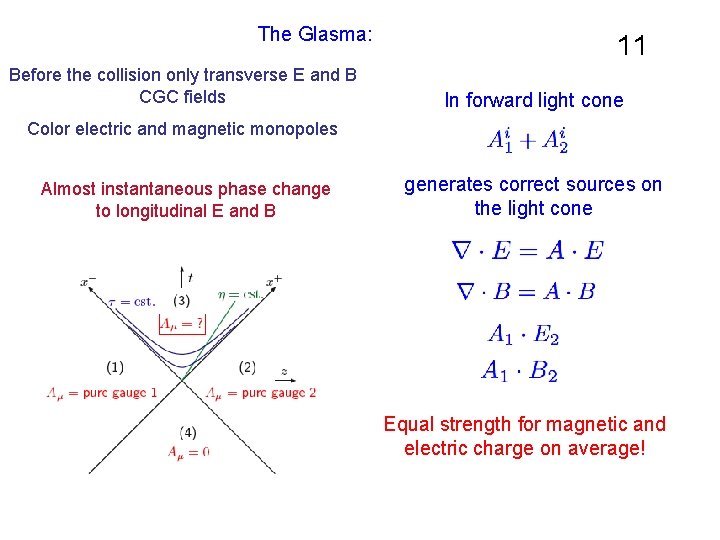
The Glasma: Before the collision only transverse E and B CGC fields 11 In forward light cone Color electric and magnetic monopoles Almost instantaneous phase change to longitudinal E and B generates correct sources on the light cone Equal strength for magnetic and electric charge on average!
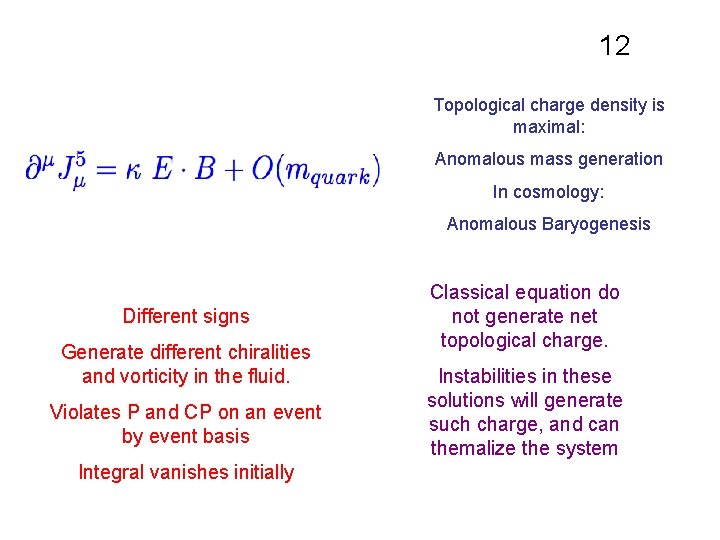
12 Topological charge density is maximal: Anomalous mass generation In cosmology: Anomalous Baryogenesis Different signs Generate different chiralities and vorticity in the fluid. Violates P and CP on an event by event basis Integral vanishes initially Classical equation do not generate net topological charge. Instabilities in these solutions will generate such charge, and can themalize the system
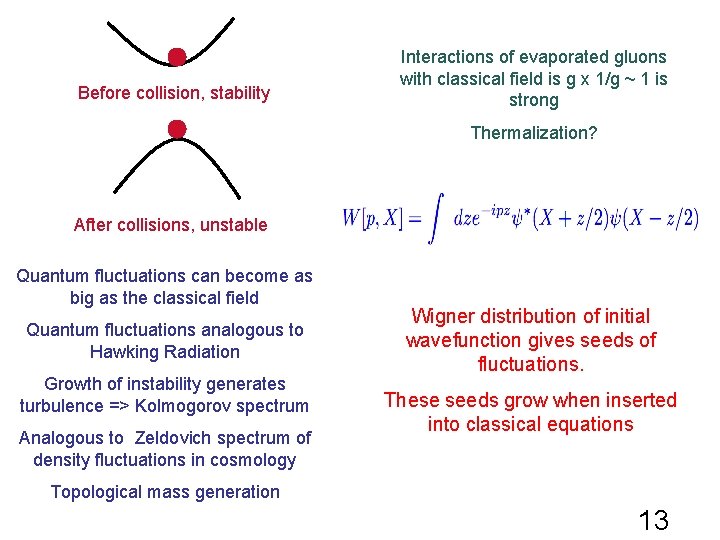
Before collision, stability Interactions of evaporated gluons with classical field is g x 1/g ~ 1 is strong Thermalization? After collisions, unstable Quantum fluctuations can become as big as the classical field Quantum fluctuations analogous to Hawking Radiation Growth of instability generates turbulence => Kolmogorov spectrum Analogous to Zeldovich spectrum of density fluctuations in cosmology Wigner distribution of initial wavefunction gives seeds of fluctuations. These seeds grow when inserted into classical equations Topological mass generation 13
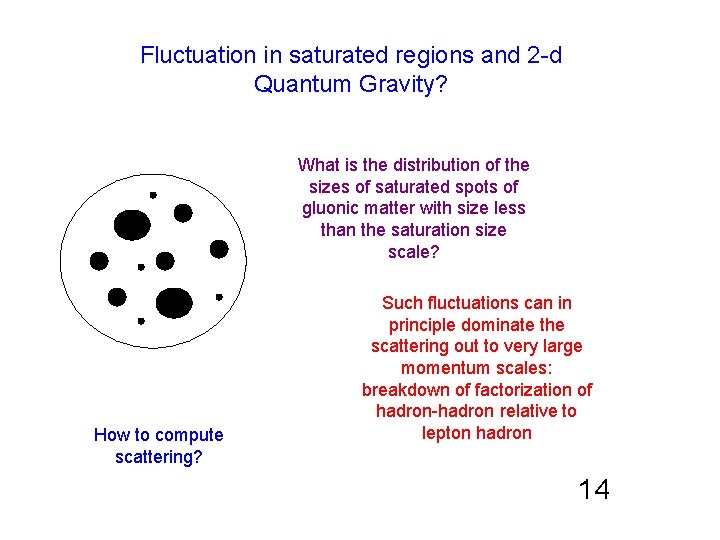
Fluctuation in saturated regions and 2 -d Quantum Gravity? What is the distribution of the sizes of saturated spots of gluonic matter with size less than the saturation size scale? How to compute scattering? Such fluctuations can in principle dominate the scattering out to very large momentum scales: breakdown of factorization of hadron-hadron relative to lepton hadron 14
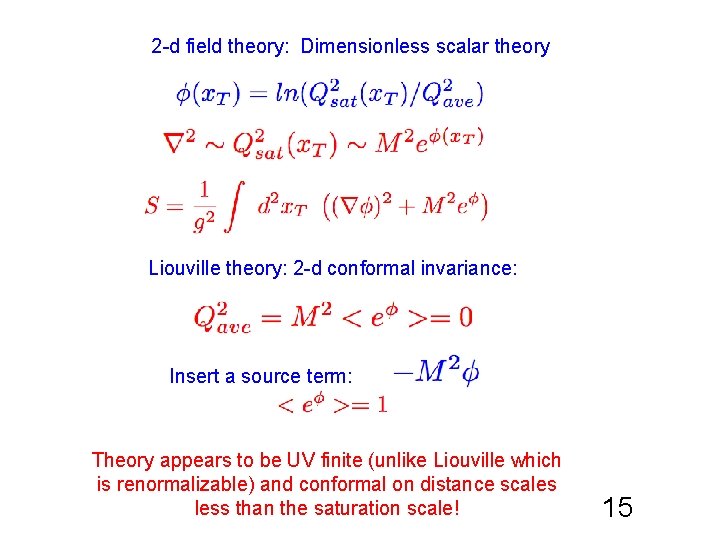
2 -d field theory: Dimensionless scalar theory Liouville theory: 2 -d conformal invariance: Insert a source term: Theory appears to be UV finite (unlike Liouville which is renormalizable) and conformal on distance scales less than the saturation scale! 15
Summary 16 Successes: Geometric scaling in DIS Diffractive DIS CGC Shadowing in d. A Multiplicity in AA Extended scaling Limiting fragmentation Perturbative Long range correlations Total cross section Pomeron, reggeon, odderon